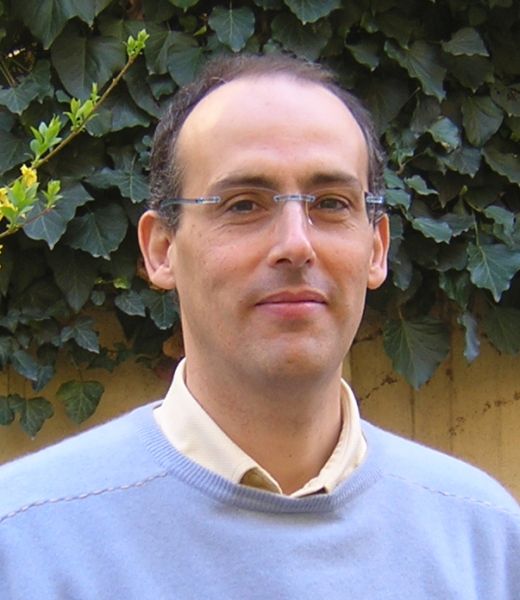
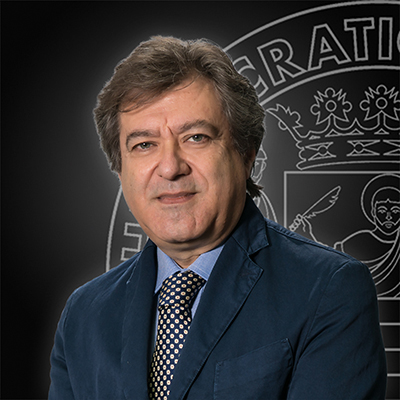
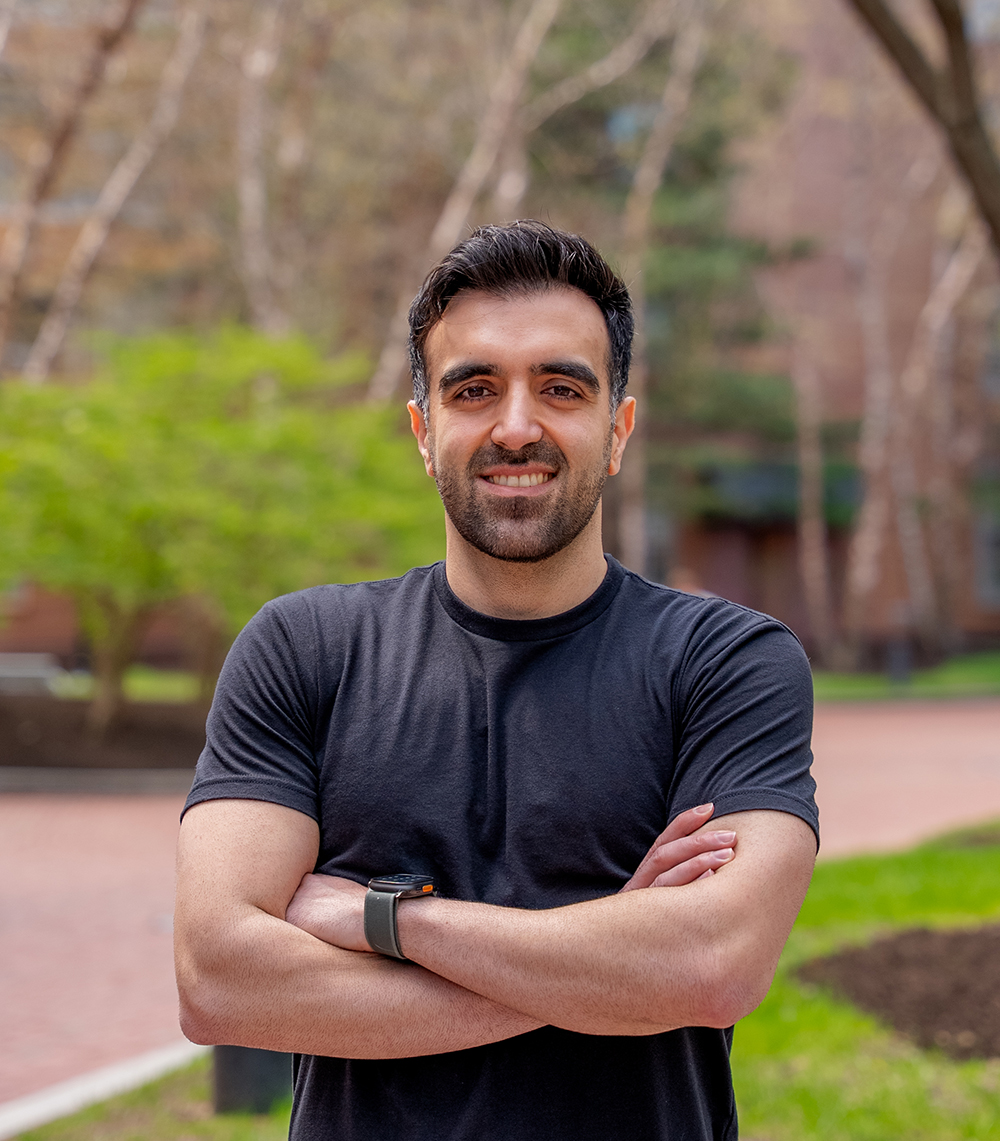
Thomas Winberry is an Assistant Professor of Finance at The Wharton School, University of Pennsylvania. His research focuses on macroeconomics, monetary economics, and computational economics with an emphasis on heterogeneous agent models and financial frictions. Recent work includes analyzing how firm heterogeneity affects monetary policy transmission, modeling financial frictions in innovation investment, and studying labor market policies through dynamic macroeconomic frameworks. He has published in top journals including the Quarterly Journal of Economics , American Economic Review , and Econometrica . His research explores themes like business cycle dynamics, investment networks, and inequality. He teaches courses on macroeconomics for MBAs and advanced macro-finance topics. His methodological contributions include computational approaches for heterogeneous agent models in Dynare.
Charbel ABDEL NOUR is a Research Teacher in the Department of Mathematical and Electrical Engineering (MEE) at IMT Atlantique, a leading French engineering school. His work focuses on the intersection of wireless communications, signal processing, and error correction coding. Based in Brest, France, he actively contributes to research in next-generation communication systems. Dr. ABDEL NOUR's research interests span wireless communications, 5G/6G technologies, Internet of Things applications, error correction coding, and massive MIMO systems. His work addresses critical challenges in modern communication systems including high-throughput requirements, low-latency constraints, and efficient spectrum utilization. His research demonstrates strong theoretical foundations with practical implementation considerations, often bridging the gap between algorithm design and hardware implementation. His recent publications (2023-2025) reveal a consistent focus on improving communication system performance through innovative coding techniques, particularly in turbo decoding architectures, FBMC systems, and spectrum access methods for IoT applications. His work shows progression from theoretical analysis to practical implementation, with several publications addressing both algorithmic improvements and hardware considerations. Multiple publications on turbo decoding architectures with performance improvements Research on FBMC/OQAM systems as alternatives to OFDM for 5G/6G Work on spectrum access techniques for massive IoT connectivity Studies on minimum distance estimation for error-correcting codes Application of machine learning techniques to communication problems Dr. ABDEL NOUR collaborates extensively with researchers across multiple institutions, including CNRS, INSA Rennes, and other French research organizations. His work often receives funding from significant national initiatives like the Beyond5G project and France Relance economic recovery plan. His research has practical applications in next-generation wireless systems, with potential impact on future communication standards.
Dr. Jaya Bishwal is an Associate Professor in the Mathematics & Statistics Department at the University of North Carolina at Charlotte. Her research expertise centers on Probability and Stochastic Processes, with applications in mathematical finance and statistical inference. Her extensive publication record demonstrates deep specialization in fractional processes, stochastic differential equations, and statistical estimation methods. Recent work focuses on advanced econometric applications including Levy process modeling, fractional Ornstein-Uhlenbeck systems, and volatility estimation in financial mathematics. Methodological innovations include developments in quasi-likelihood estimation, Kolmogorov distance analysis for estimators, bootstrap methods for financial derivatives, and asymptotic theory for nonergodic systems. Her research bridges theoretical probability and practical applications in quantitative finance.
Yang Liu is a researcher at the Institute of Computing Technology (ICT), Tsinghua University , and affiliated with the Beijing Academy of Artificial Intelligence . His work spans computational linguistics, machine translation, and dialogue systems, with additional collaborations in medical NLP and cross-lingual knowledge representation. Doctorate from Purdue University Collaborations with Microsoft, Amazon, and Facebook researchers Research focuses on Neural Machine Translation (NMT) advancements through: Self-supervised alignment and regularization Document-level context integration Robust translation frameworks for low-resource scenarios Adapter-based pluggable models Recent works extend to conversational AI, including: Subjective knowledge integration in task-oriented dialogue Context representation analysis for open-domain dialogue Synthetic conversation dataset generation Key contributions include: THUMT: Open-source NMT toolkit Earth Mover's Distance for lexicon induction Context Gates for translation fluency Publications demonstrate continuous engagement with top-tier conferences including ACL, EMNLP, and COLING, collaborating with prominent figures like Maosong Sun and Qun Liu.
Augusto Ferrante is a Full Professor at the Department of Information Engineering, University of Padova. His research spans control theory, quantum computing, and linear algebra, with a focus on optimal control, spectral estimation, and matrix analysis. University: University of Padova Department: Information Engineering Research Interests: Ferrante's work addresses theoretical and applied problems in control systems, including quantum control, Riccati equations, and covariance matrix estimation. His contributions bridge mathematical rigor with engineering applications, particularly in spectral analysis and optimization. Publications Trends: His recent work (2014-2012) emphasizes quantum channel estimation, entropy-based spectral methods, and generalized Riccati equations, reflecting a synthesis of control theory and quantum information science. Book Chapters: He has co-authored works on modeling, estimation, and control, including a 2007 Modeling, Estimation and Control volume dedicated to Giorgio Picci.
Pierre Hansen is a Professor at HEC Montréal since 1990, renowned for his contributions to operational research and optimization. He held the Data Mining Chair and directed the GERAD research center from 1996 to 2001. His multidisciplinary work spans over 15 disciplines, focusing on algorithm design, graph theory, and cluster analysis. He is a Fellow of the Royal Society of Canada (1999) and recipient of the Grand Prize for Excellence in Research (2013). Research interests include variable neighborhood search algorithms, graph spectra, and mathematical programming applications. His articles often explore optimization methods such as column generation, integral simplex decomposition, and geometric optimization problems like circle packing. His work impacts fields like data mining, network analysis, and computational geometry, with contributions to AutoGraphiX —a system for generating conjectures in graph theory. Hansen’s research integrates theoretical advancements with practical applications in operations research and decision sciences.
Yauhen Yakimenka is a Postdoctoral Research Associate in the Department of Electrical and Computer Engineering at the New Jersey Institute of Technology (NJIT). His research focuses on decentralized systems, privacy-preserving techniques, and coding theory. He holds expertise in machine learning, signal processing, and cybersecurity applications within distributed networks. Yauhen’s work addresses challenges in adversarial environments, including Byzantine attacks, differential privacy, and robust algorithm design for straggler-resilient systems. He has contributed to advancements in compressed sensing, LDPC codes, and information retrieval systems with privacy guarantees. His publications span topics such as secure matrix multiplication, fault-tolerant decentralized learning, and optimizing error correction for short LDPC codes. Research trends in his articles emphasize balancing performance, security, and privacy in distributed computing and communication systems. No scientific awards or grants are explicitly listed in the provided information. He currently advises no students, and no affiliated labs or teams are mentioned.
Catherine Douillard is a Professor in the Department of Mathematical and Electrical Engineering at IMT Atlantique. She holds an engineering degree from École Nationale Supérieure des Télécommunications de Bretagne (1988), a doctorate in electronics from the University of Western Brittany (1992), and accreditation to supervise research from the University of Southern Brittany (2004). Her research focuses on digital communications, error-correcting coding, iterative decoding, and coded modulations for multi-antenna and NOMA systems. She led the 'Coding, Constellations and Interleaving' group in DVB-NGH standardization (2010–2012) and received the IEEE/SEE Glavieux Award (2009) for industrial impact in coding. She chairs major coding symposiums like ISTC and leads projects such as NF-PERSEUS (5G networks) and AI4CODE (AI-driven FEC design). Her work emphasizes resource allocation in IoT, NOMA, and full-duplex systems. Key contributions include optimizing non-binary turbo codes for IoT, applying machine learning to interleaver design, and exploring full-duplex relay architectures. She supervises interdisciplinary teams across IMT Atlantique, Lebanese University, and international partners. Current projects address 6G challenges like low-latency decoding and coexistence of eMBB/URLLC services. Research awards include the Glavieux Prize and leadership in European initiatives (EPIC, FANTASTIC-5G). She contributes to standardization bodies (DVB) and chairs conferences, bridging academia and industry through projects like Beyond5G (sovereign 5G networks) and QCSP (NB-code for IoT).
Prof. Dr. Natalie Neumeyer is a Professor of Mathematical Statistics and its Applications at the Department of Mathematics, Faculty of Mathematics, Computer Science and Natural Sciences, University of Hamburg. Her research focuses on nonparametric and semiparametric statistics, model testing, curve estimation, bootstrap methods, and time series analysis. 2007–present: Professor (W3) at University of Hamburg 2006–2007: Junior Professor (W1) at University of Hamburg 1999–2006: Research Assistant at Ruhr-University Bochum Her academic activities include chairing examination committees for Master's and Diplom programs in Business Mathematics, editorial roles in journals like Annals of the Institute of Statistical Mathematics and Scandinavian Journal of Statistics , and leadership in the DMV Stochastics Section (2018–2023). Recent research involves generalized Hadamard differentiability in copula models, volatility change detection in time series, and specification testing in transformation models. Publications span top journals including Biometrika , Scandinavian Journal of Statistics , and Annals of the Institute of Statistical Mathematics . Her work combines theoretical advancements in empirical processes with practical applications in functional data analysis and financial modeling, demonstrated through a robust portfolio of 54 publications and collaborative projects.
Raffaele Cerulli is a Full Professor of Operations Research at the Department of Mathematics of the University of Salerno, Italy, where he also serves as Head of Department. He is a Member of the Scientific Committee of UMI (Unione Matematica Italiana) and Director of the Laboratory "Model and Applications of Mathematical Methods." His office is located at the Fisciano Campus, Building F2, First Floor, Room 026, with reception hours on Tuesdays from 3:00 PM to 5:00 PM and Wednesdays from 3:00 PM to 4:00 PM. Dr. Cerulli's research focuses on Operations Research, Combinatorial Optimization, and Network Theory . His work spans multiple application areas including wireless sensor networks, vehicle routing, spanning tree problems, and graph optimization. He has made significant contributions to problems involving labeled graphs, minimum branch vertices spanning trees, and maximum lifetime problems in sensor networks. His research combines theoretical developments with practical applications, particularly in transportation and network systems. Analysis of his recent publications (2022-2025) reveals continued strong activity in combinatorial optimization, with particular emphasis on flow problems, spanning tree variants, and sensor network optimization. His work demonstrates consistent methodological innovation, frequently employing exact algorithms, metaheuristics, and mathematical programming approaches to solve complex combinatorial problems. Many of his recent papers represent extensions or novel variants of classical optimization problems with practical constraints. Throughout his career, Dr. Cerulli has maintained extensive collaborations, particularly with researchers Carrabs, Gentili, and Raiconi, resulting in numerous joint publications across top-tier operations research journals. His work has contributed significantly to both theoretical developments and practical applications of optimization techniques in network systems.
Soheil Behnezhad is an Assistant Professor in the Department of Computer Science at Khoury College of Computer Sciences, Northeastern University. He previously served as a Motwani Postdoctoral Fellow at Stanford University and received his PhD from the University of Maryland (UMD) and BSc from Sharif University. Research Interests: His work centers on theoretical computer science, particularly the design and analysis of algorithms for large-scale data. Key areas include sublinear-time algorithms, dynamic algorithms, streaming algorithms, parallel computation (MPC), and graph sparsification, with a strong emphasis on matching, coloring, and clustering problems. Recent Trends in Publications: His recent publications (2023–2025) highlight groundbreaking work in dynamic and sublinear algorithms. He has made significant advances in maximum matching, edge coloring, and correlation clustering, often providing tight bounds or breaking longstanding approximation barriers. His work connects theoretical models with combinatorial structures such as Ruzsa-Szemerédi graphs and explores practical implications in massive data settings. Scientific Awards: NSF CAREER Award Google Research Award Best Paper Award at STOC'25 Best Paper Award at SODA'23 Charles A. Caramello Distinguished Dissertation Award Larry S. Davis Doctoral Dissertation Award Multiple invitations to TALG and HALG Advising and Grants: He advises multiple PhD students including Amir Azarmehr, Mohammad Saneian, and Alma Ghafari. His research is supported by an NSF CAREER Award and a Google Research Award, reflecting both federal and industry recognition of his impactful work. Labs and Teams: He co-organizes the Graph Simplification reading group with Ronitt Rubinfeld and Madhu Sudan and is a key member of the Theory Group at Northeastern University, fostering a collaborative environment for theoretical research.
Carlos Velasco is a Professor of Fundamentals of Economic Analysis at Universidad Carlos III de Madrid (UC3M) since 2007, with prior academic appointments at the University of Oxford and Universitat Autònoma de Barcelona. He earned his PhD from the London School of Economics, establishing the foundation for his expertise in econometric theory. His academic career includes positions as Junior Lecturer in Statistics at Oxford, Full Professor in Statistics and Econometrics at UC3M, and ICREA Research Professor in Economics at UAB. Professor Velasco's research program centers on dynamic econometric models and economic time series analysis, with significant applications in macroeconomics and finance. His methodological contributions span time series analysis, dynamic modeling, persistence phenomena, predictability frameworks, and causality testing, addressing both theoretical challenges and practical economic questions. Analysis of his publication record reveals consistent innovation in econometric methodology, particularly in handling complex time series properties including noninvertibility, noncausality, and heteroskedasticity. His work demonstrates increasing sophistication in model estimation techniques while maintaining strong connections to substantive economic phenomena like exchange rate dynamics and panel data structures. Professional recognition: Fellow of the Journal of Econometrics (2010) Professor Velasco has supervised 8 doctoral theses and directed multiple research projects, including the MAD-ECO network. His editorial service for leading journals such as Econometric Theory and Journal of Econometrics reflects his standing in the field. He serves as Associate Editor for Econometric Theory, Journal of Time Series Analysis, Journal of Time Series Econometrics, TEST, and the Spanish Economic Review. While specific laboratory facilities aren't detailed, his leadership of the MAD-ECO network indicates active participation in collaborative research frameworks focused on economic modeling, suggesting ongoing contributions to methodological advancements with practical economic applications.
Hung Viet Nguyen is a Research Fellow at the 5G Innovation Centre, University of Surrey, UK, within the Institute for Communication Systems. He holds a PhD in Electronics and Electrical Engineering from the University of Southampton (2013), an MEng in Telecommunications from Asian Institute of Technology (2002), and a BEng in Electronics & Telecommunications from Hanoi University of Science and Technology (1999). His research focuses on quantum communications, including quantum error correction, quantum algorithms, and quantum key distribution (QKD), alongside classical domains like cooperative communications, channel coding, and network coding. He has contributed to EU-funded projects such as CONCERTO and OPTIMIX, and his work bridges quantum and classical information systems. Key research areas include: - Quantum error correction codes and topological codes (e.g., surface codes, color codes) - Quantum network coding and quantum channel capacities - Network-coding aided cooperative communications - Applications in 5G-NR and future wireless systems Publications highlight advancements in QKD protocols over free-space optics, quantum turbo codes for memory channels, and quantum-assisted routing optimization. His work on classical-to-quantum coding isomers and Pareto-optimal routing algorithms underscores interdisciplinary innovation. Nguyen’s contributions also extend to MIMO systems, antenna optimization, and energy-efficient ad hoc networks. Labs/Teams: Active member of the 5G Innovation Centre and collaborator with the School of Electronics & Computer Science, University of Southampton.
Anthony Curatola is the Joseph F. Ford Professor of Accounting and a full Professor in the Department of Accounting at LeBow College of Business, Drexel University, where he has been a faculty member since 1989. He also serves as the coordinator of the accounting doctoral program and has held editorial roles including Editor of the Tax Column for Strategic Finance since 1992 and former editor of the Journal of Legal Tax Research . His research focuses on federal and state income tax policy, retirement income taxation, employee benefits, and fringe benefits taxation, with particular attention to gender disparities and cross-state implications. His work is supported by funding from the Louisiana Accounting and Education Foundation and the International Foundation of Employee Benefit Plans, and has been featured in The Washington Post , The Wall Street Journal , The New York Times , and Forbes Magazine . The most recent publications highlight trends in cannabis business taxation, behavioral influences on tax professionals, business and retirement tax planning, international tax evasion patterns, and financial reporting ethics. His scholarly output spans journal articles, books, monographs, and presentations at major academic conferences. Scientific Awards: 2016 President’s Service Award (Mid-Atlantic Council of IMA) 2016-2017 Outstanding Service Award (American Tax Association) 2016 Certificate of Service (Institute of Management Accountants) 2016 Council Award of Excellence (2014-2015) (Institute of Management Accounting) 2009-2010 Service Award (LeBow College of Business) 2006-2008 Center for Teaching Excellence (Drexel University - LeBow College of Business) 2003 R. Lee Brummet Award for Academic Excellence (Institute of Management Accountants) 1996-1997 DuPont Award for Teaching Excellence (LeBow College of Business- Department of Accounting) 1986-1987 Goudchaux’s-Maison Blanche Outstanding Teaching Award (LSU College of Business) Dr. Curatola has advised doctoral students through his role as program coordinator and has served on advisory boards of numerous journals including Journal of Forensic and Investigative Accounting , Strategic Finance , IMA Educational Case Journal , and Advances in Taxation . His research has been supported by external grants focused on retirement taxation and group-term life insurance premiums. He has made significant contributions to public discourse by providing expert input to the House Judiciary Committee on source tax law. He is actively engaged in academic service, contributing to the governance and quality of leading accounting journals through long-term advisory board memberships.
Prof. Dr. Anja Janßen is a university lecturer and professor at the Faculty of Mathematics, Otto von Guericke University Magdeburg since 2020. She was previously an Associate Professor at KTH Royal Institute of Technology Stockholm (2017-2020), Postdoctoral Researcher at University of Copenhagen (2015-2017), and held postdoctoral and teaching roles at University of Hamburg (2011-2015). She earned her Doctoral Degree in Mathematics (2010) and Diploma in Business Mathematics (2006) from University of Göttingen and Hamburg respectively. Doctoral Degree, Mathematics, University of Göttingen (2010) Diploma in Business Mathematics, University of Hamburg (2006) Anja Janßen specializes in Extreme Value Theory and Dependence Modeling . Her research focuses on analyzing rare events in multivariate observations and time series, particularly how model assumptions like GARCH/SV financial models or regular variation frameworks shape extreme event structures. She develops extremal inference techniques that incorporate these structures into estimation methods. Her recent publications (2020-2024) investigate threshold selection procedures, k-means clustering applications for extremes, spectral tail processes, and max-stable approximations for regularly varying time series. These works span statistical methodology, probability theory, and financial mathematics applications. Associate Editor for Extremes Journal Associate Editor for Stochastic Models Journal She teaches courses including Stochastic Processes, Extreme Value Statistics, Probability Theory, and Statistical Methods, with a focus on e-learning formats since 2020. Office hours are by appointment via email.