Milagros Fernández Pérez is a Professor at the University of Santiago de Compostela's Faculty of Philology, affiliated with the Department of Spanish Language and Literature, Theory of Literature and General Linguistics. She is a member of the Humanities Research Institute (iHUS) and the KOINÉ research group focused on interdisciplinary communication studies. Her doctoral thesis (1982) explored Chomskian generative-transformational grammar through a philosophy of science lens under Dr. Guillermo Rojo Sánchez's supervision. Her research interests span biolinguistics, clinical linguistics, child language development, and the intersection of language with cognitive and cultural factors. Key areas include corpus-based studies of child speech (Koiné Corpus), pragmatics in disordered language, and the application of linguistic theory to clinical contexts. She has published extensively on topics such as language acquisition mechanisms, interdisciplinary approaches to communication disorders, and theoretical linguistics' philosophical foundations. Her work bridges theoretical linguistics with applied domains, addressing language variation, sociolinguistic dynamics, and the methodological underpinnings of linguistic research. Recent publications (2025–2020) emphasize biolinguistics' role in understanding language evolution and the cognitive architecture of linguistic competence.
George Kotzoglou is an Associate Professor of Linguistics at the Department of Mediterranean Studies, University of the Aegean. He holds a Bachelor's from the National and Kapodistrian University of Athens, an MA and PhD from the University of Reading's School of Linguistics. His teaching experience includes institutions such as the University of Crete, Democritus University of Thrace, and National University of Athens. His research focuses on syntactic theory, generative syntax, and Mediterranean languages, with publications in journals like Lingua and volumes like Current issues in Mediterranean syntax . Research Interests: Grammatical description and syntactic theory Morphosyntactic analysis of Mediterranean languages Constraints on syntactic movement and locality Interjections and their syntactic integration He has contributed to educational materials, co-authoring a school textbook Grammar for 5th and 6th grade , and edited the volume Reading Working Papers in Linguistics 8 . His research participation includes the Polynesianity program (2016-2021) and the Education of Foreign and Returning Students program. Teaching and grants: Postgraduate program involvement: 'Technoglossy', 'Applied and Theoretical Linguistics' Contributions to archaeological research projects like the Kymisala Archaeological Survey
Molly Bendall is a Professor (Teaching) of English at the University of Southern California. She holds M.A. in Poetry from Johns Hopkins University (1987) and M.F.A. in English/Creative Writing from the University of Virginia (1986). As a poet and educator, she teaches courses in poetry workshops , Contemporary American Poetry , and Poetry of Women Around the Globe . Her research and creative work focus on ecopoetics , animal-human relations , and experimental forms . Her acclaimed collection Watchful interrogates human-nature boundaries through fragmented lyricism, while Under the Quick explores transient joy in linguistic innovation. Recent collaborations include Waterways and Dwellings with composer Molly Pease (2022). Key awards include the Gertrude Stein Award (2006-2007) and Pushcart Prizes . She serves as a judge for the Wonderland Awards (Doheny Library, 2016–2024) and organizes creative writing events for USC students, including career-focused lunch meetings and readings with alumni.
Ken Safir is a Distinguished Professor in the Department of Linguistics at Rutgers University, within the School of Arts and Sciences. His research centers on syntactic theory, binding, and the syntax of African and Germanic languages. He leads the Afranaph Project, an NSF-funded initiative to document anaphoric phenomena in African languages. Research Interests: His work focuses on the architecture of syntactic theory, anaphora and dependency, clausal complementation, movement, and the morphosyntax of understudied languages. He is especially known for his contributions to binding theory and the analysis of reciprocal and reflexive constructions in Bantu and other Niger-Congo languages. The most recent publications show a sustained focus on anaphora, phase theory, clausal selection, and morphosyntactic variation in African languages. His work combines formal syntactic theory with rich empirical data from fieldwork, often resulting in detailed grammar sketches and technical reports. The Afranaph Project has produced a comprehensive database and numerous open-access resources. NSF Grant BCS-0919086 (Afranaph Project) NSF Grant BCS-0523102 (Afranaph Project) Distinguished Professor Title (Rutgers University) Ken Safir has advised and collaborated with numerous graduate students and researchers, particularly in African linguistics. His work has been supported by continuous NSF funding, reflecting its significance in the field. He has contributed to major theoretical debates in generative grammar and has published extensively in top-tier journals. The Afranaph Project, under his leadership, maintains a robust infrastructure for linguistic data, including case files, questionnaires, and technical reports, serving as a vital resource for researchers worldwide.
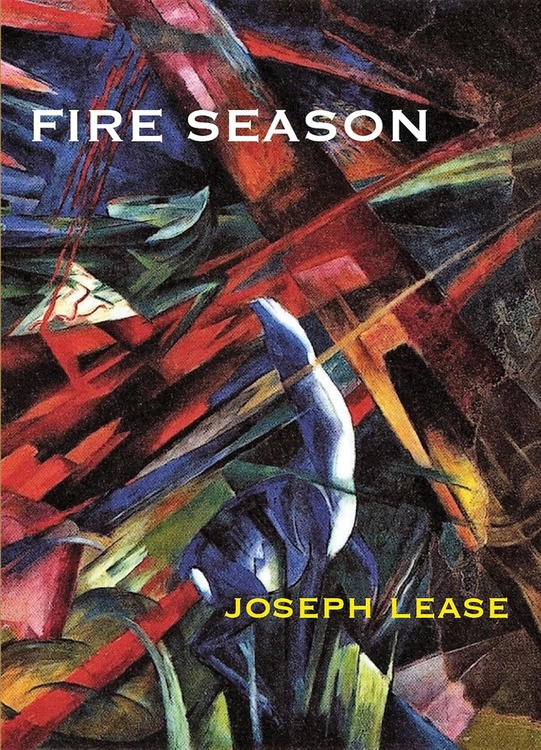
Joseph Lease is a Professor in the Writing and Literature Program at California College of the Arts (CCA), where he actively contributes to the academic and creative life of the institution. His work bridges literary scholarship, poetic innovation, and public engagement, placing him at the forefront of contemporary American poetry. Professor, Writing and Literature Program, California College of the Arts Advisory Board Member, Princeton Encyclopedia of Poetry and Poetics Featured Reader at institutions including Stanford, Yale, Brown, and the Poetry Project at St. Mark's Church Lease's research and creative interests center on the intersections of personal and collective trauma, spiritual inquiry, and lyrical innovation. His poetry explores themes of death, identity, environmental collapse, and emotional vulnerability through a confessional yet formally rigorous style. Influenced by Jack Spicer and the American avant-garde, Lease employs sparse vocabulary, open parentheses, and recursive syntax to evoke psychological and existential depth. His recent publications, including Fire Season (2023) and The Body Ghost (2018), reflect a sustained engagement with global and personal apocalypse, healing, and the fragility of being. These works have been recognized for their musicality, emotional intensity, and philosophical depth, establishing Lease as a vital voice in 21st-century poetry. Lease’s publications span major literary journals and anthologies such as The Best American Poetry , The Norton Anthology of Postmodern American Poetry , The New York Times , The Paris Review , and The Boston Review . His work often blends the secular and the sacred, using poetic form to navigate grief, memory, and political consciousness. His honors include: Academy of American Poets Prize Philip Whalen Award for Now What Multiple grants from Columbia University, Brown University, Harvard University, and CCA Lease has advised and influenced emerging writers through his teaching and public readings. Though no formal students are listed, his mentorship is evident through his role as an educator and his participation in literary communities. He has received institutional support through grants and awards that have enabled his creative output. His work has been featured in curated events at venues such as City Lights Books, the Yerba Buena Center for the Arts, and the AWP Conference, reflecting broad recognition in both academic and artistic circles. Lease is associated with PennSound, The Poetry Center at San Francisco State University, and KQED, where his readings are archived. He is also a member of the advisory board for the Princeton Encyclopedia of Poetry and Poetics , contributing to the scholarly infrastructure of poetic studies. His work continues to evolve through collaborations, performances, and publications that challenge and expand the boundaries of contemporary poetry.
Piotr Cegłowski is a Professor at the Faculty of English, Adam Mickiewicz University in Poznań. His research focuses on comparative linguistics, minimalist syntax, and the morphosyntax of Slavic languages, with an additional interest in language evolution. He holds a D. Litt. in English Linguistics and has been actively involved in academic organizing and presentations. Education: M.A. in English Linguistics (AMU, 2002) Ph.D. in English Linguistics (AMU, 2006) D. Litt. in English Linguistics (AMU, 2018) Research interests center on formal analysis of nominal expressions, subject properties in infinitival constructions, and interdisciplinary approaches to language structure. His work bridges generative syntax with Slavic linguistics. Scientific awards 2nd prize for best poster presentation at SLE 2017 Professional roles include organizing international conferences like "Information Structure meets Generative Syntax" (SLE 2014) and serving as head of part-time studies at the Faculty of English (since 2020). He has participated in over 20 academic events across Europe and the US since 2004.
Gianluca Lebani is a Researcher at Ca' Foscari University of Venice, affiliated with the Department of Comparative Linguistic and Cultural Studies and the Research Institute for Digital and Cultural Heritage. His roles include membership in the Management Committee of the University Scientific Instrumentation Service Center (CSA), the Board of Directors of the Bembolab Laboratory, and the Academic Senate. His research focuses on theoretical and comparative linguistics, dialectology, and computational linguistics. Key areas include variation in Italian and Italo-Romance dialects, semantic role analysis using transformer models, psycholinguistic investigations of grammatical gender, and historical document analysis. He also explores machine learning applications in language processing, such as baby language models (BAMBI) and Old Saxon poetry scansion algorithms. Recent work includes studies on possessive pronouns in dialects, indefiniteness in bilingual speakers, and the expression of semantic gender. His contributions span corpus-based methods, distributional semantics, and experimental psycholinguistics. Collaborations involve projects like VariOpInTA (Variation and Optionality in Italo-Romance) and computational frameworks like SYMPAThy for extracting word combinations. Lebani is active in academic service, contributing to institutional committees and editorial roles. His lab affiliations include Bembolab and the Digital and Cultural Heritage Institute. He regularly publishes in journals like RID, RIVISTA ITALIANA DI DIALETTOLOGIA and ISOGLOSS , and presents at conferences such as CLiC-it and QITL.
Hossam Ahmed is a Lecturer at the Leiden University Institute for Area Studies and coordinator of Arabic language courses. His academic affiliations include the Humanities faculty, with specific roles in Arabic Studies and International Studies programs. He teaches Middle Eastern Studies across BA, MA, and research MA levels. Research interests focus on Arabic computational linguistics, minimalist syntax, digital humanities, and methodologies in teaching Arabic as a foreign language. He is a member of the Comenius Network and received the Comenius Teaching Fellowship in 2020. Awards include recognition for teaching excellence, reflecting his contributions to pedagogical innovation in language education. His work bridges linguistic theory and practical applications in digital tools for language learning.
Luigi Rizzi is a Professor of General Linguistics at the Collège de France, focusing on theoretical syntax, syntactic cartography, and language acquisition. He has held academic positions at the University of Siena, the University of Geneva, MIT, UCLA, and ENS Paris. Research Areas : Universal principles in syntax, parametric models of linguistic variation, mapping of syntactic structures, and the interplay between adult grammar and language acquisition. Awards : Corresponding Fellow of the British Academy, Honorary Member of the Linguistic Society of America, Member of Academia Europaea, and International Honorary Member of the American Academy of Arts and Sciences. Publications span syntactic theory, minimalist program, and acquisition studies, including works on intervention effects, left periphery cartography, and the role of Merge in syntactic combinatorics. His teaching integrates adult grammar with developmental perspectives, emphasizing hierarchical representations and functional sequences.
Ángel Alonso-Cortés Manteca is a distinguished linguistics scholar affiliated with the Faculty of Philology at Complutense University of Madrid. With a career spanning from 1976 to 2022, he has established himself as a significant contributor to Spanish linguistics, historical linguistics, and theoretical linguistics. His academic profile includes 44 journal articles, 8 collective works, 13 reviews, 9 books, and direction of 3 doctoral theses, reflecting his substantial scholarly output and mentorship. His research interests span multiple dimensions of linguistic study, with particular emphasis on Spanish phonology, syntax, and historical development. He has made notable contributions to Basque language studies, examining its historical documentation and relationship with Spanish. His work on language evolution, from theoretical explorations of language origins to practical analyses of contemporary phenomena like Spanglish, demonstrates both breadth and depth in his scholarly approach. Alonso-Cortés Manteca has also engaged critically with major linguistic theories, from Saussurean structuralism to Chomskyan generative grammar, as evidenced by his publications examining these frameworks. His publication record shows consistent scholarly activity across five decades, with recent work including the 2022 RLD Corpus study of linguistic resources in Spanish law, demonstrating continued relevance and engagement with contemporary linguistic issues. His directed doctoral theses on Spanish phonology, spoken Spanish discourse patterns, and Spanish temporality reflect his influence on emerging scholars in the field. As an academic, Alonso-Cortés Manteca has contributed significantly to linguistic education through his textbooks, particularly the multiple editions of his "Lingüística" series, which have served as foundational resources for Spanish linguistics students. His work bridges theoretical linguistics with practical language analysis, making complex linguistic concepts accessible while maintaining scholarly rigor.