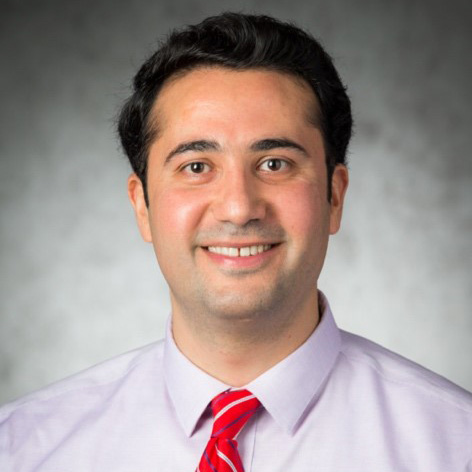
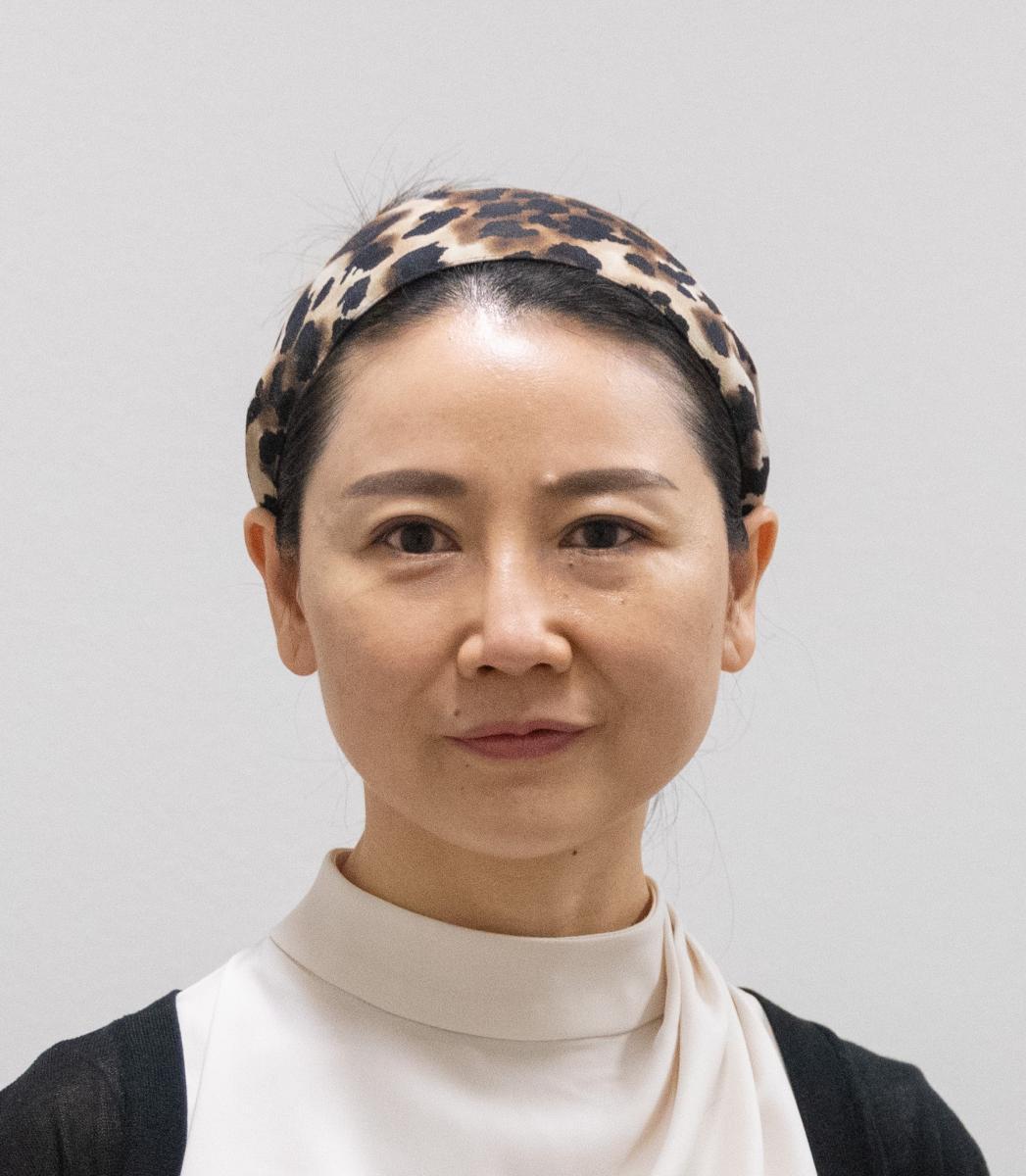
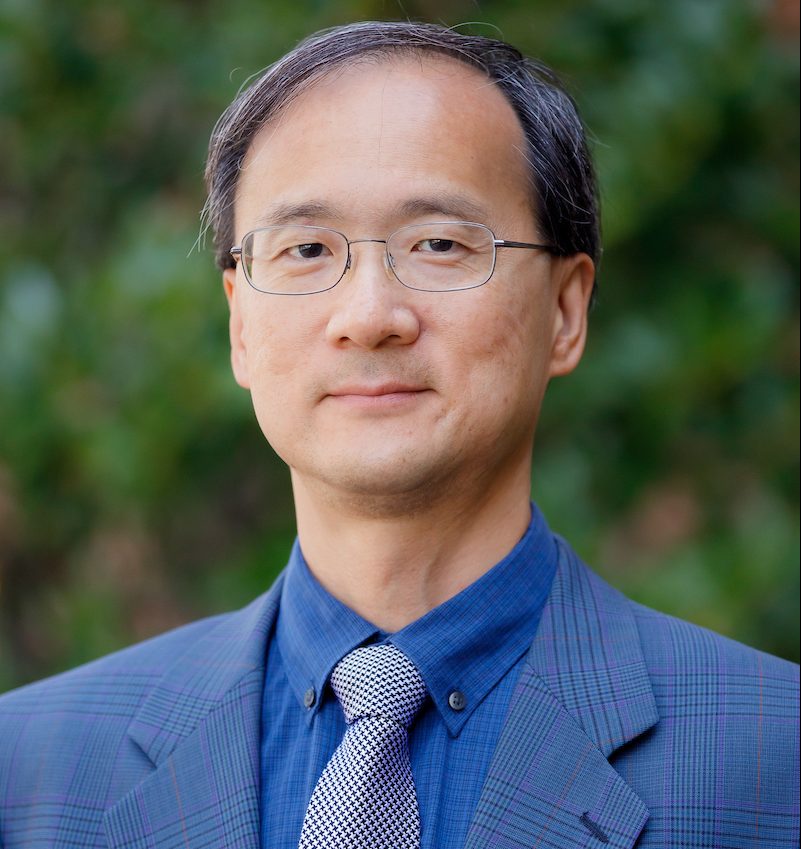
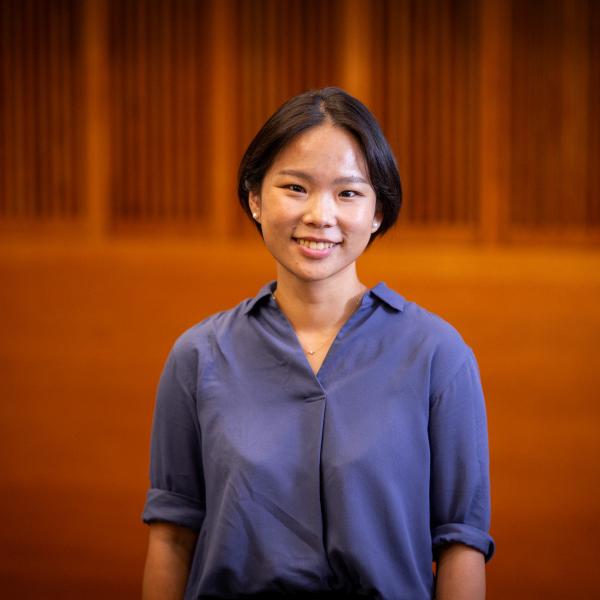
Zijian Shao is a Postdoctoral Research Associate at Princeton University's School of Engineering and Applied Science, affiliated with the Department of Electrical Engineering. His work focuses on advanced antenna design, electromagnetic modeling, and machine learning applications in RF/mmWave systems for 5G/6G telecommunications. Advisor: Kaushik Sengupta Email: zs9193@princeton.edu Office: Engineering Quadrangle Atrium Shao's research explores the intersection of machine learning and electromagnetic design , particularly for next-generation wireless communication. He specializes in antenna miniaturization , MIMO decoupling , and metasurface-enabled beamforming , with applications in sub-terahertz circuits and integrated sensing systems. His recent publications demonstrate expertise in deep learning-assisted inverse design of multi-port RF systems and spoof surface plasmon polariton-based antenna optimization . While no formal awards are listed, his work contributes to advancing compact, high-efficiency antenna arrays for 5G/6G networks.
Dr. Mortaza Saeidi-Javash is an Assistant Professor in the Department of Mechanical and Aerospace Engineering at California State University, Long Beach (CSULB). He joined in Fall 2022 following his Ph.D. in Mechanical Engineering from the University of Notre Dame, where he received the Prince Engineering Fellowship and Dehner Graduate Fellowship. His research focuses on developing next-generation flexible electronics using advanced materials and 3D printing technologies, particularly thermoelectric devices for wearable applications and multifunctional sensors for structural health monitoring. Dr. Saeidi-Javash's academic background includes interdisciplinary work combining materials science, additive manufacturing, and machine learning. His Ph.D. research emphasized aerosol jet printing and ultrafast flash sintering to create high-performance, low-cost thermoelectric devices. He has published extensively in journals like Advanced Materials and Nano Energy , with a focus on flexible electronics, energy harvesting, and sensor integration. His recent publications highlight innovations in machine learning-aided materials discovery, plasma sintering processes, and hybrid printing methods. These contributions address challenges in scalable manufacturing, energy efficiency, and wearable technology applications. Dr. Saeidi-Javash’s work bridges gaps between fundamental materials research and practical engineering solutions for sustainable energy systems and smart devices. Awards: Prince Engineering Fellowship (University of Notre Dame) Dehner Graduate Fellowship in Engineering (University of Notre Dame) Advising & Office Hours: Office: ECS-647 Office Hours: Wednesday 12:00-2:00 PM Advising Hours: Thursday 12:30-1:30 PM His research lab focuses on additive manufacturing of functional materials, with ongoing projects in thermoelectric energy conversion, wearable sensors, and biomaterials for cardiac tissue engineering.
Ulrich Vogt is a Professor in Applied Physics at Kungliga Tekniska Högskolan (KTH) and leads the X-ray Optics and Nanoimaging group within the Bio-Opto-Nano unit. He serves as Vice-head of the Applied Physics department for undergraduate education. His research focuses on developing advanced X-ray microscopy techniques, particularly at synchrotron facilities like MAX IV’s NanoMAX beamline. He specializes in X-ray optics, nanoimaging, and diffractive optical elements for applications in materials science, biology, and medicine. Key contributions include the design of the NanoMAX beamline, optimization of X-ray zone plates via metal-assisted chemical etching, and advancements in multi-beam ptychography. Vogt has pioneered compact X-ray microscopy systems using laser-plasma sources and liquid-jet targets. His work integrates nanofabrication, computational imaging, and synchrotron instrumentation to achieve sub-100 nm resolution in hard and soft X-ray regimes. Teaching responsibilities include courses on experimental physics, photonics, and X-ray applications. His lab collaborates internationally on projects like the European XFEL, emphasizing high-brightness sources and radiation-resistant optics. Recent innovations include adaptive multi-beam ptychography and stereo X-ray imaging for 3D nanoscale visualization. Research highlights span over 100 peer-reviewed articles, with a focus on coherence characterization, beamline instrumentation, and nanostructured materials. Vogt’s grants include a Röntgen-Ångström Cluster award supporting multi-beam ptychography and cryo-microscopy advancements.
Q. Jane Gu is a Professor at the School of Electrical and Computer Engineering at Georgia Tech since September 2024, holding the Ed and Pat Joy Professorship. Previously, she was at the University of California, Davis (2012–2024) and the University of Florida (2010–2012). She earned her Ph.D. in Electrical Engineering from UCLA in 2007. Her research focuses on high-efficiency, low-power interconnects, millimeter-wave, sub-mm-wave, and terahertz integrated circuits and systems for applications in communication, radar, and imaging. Notable contributions include sub-THz resonator-based sensors, dielectric waveguide interconnect channels, and energy-efficient transmitters. Recipient of NSF CAREER Award (2013) 2015 UC Davis Outstanding Junior Faculty Award 2017 and 2018 Qualcomm Faculty Awards 2019 UC Davis Chancellor’s Fellow 2022–2023 IEEE SSCS Distinguished Lecturer Her group has garnered nine best paper awards, including top honors at the 2016, 2017, and 2020 IEEE MTT-S International Microwave Symposia. Research interests span terahertz interconnects, millimeter-wave radar systems, and integrated circuits for high-speed communication. Publications reflect advancements in sensor design, high-frequency transceivers, and phased-array systems, emphasizing energy efficiency and signal integrity.
Professor Senthil Murugan Ganapathy is a Professor at the Optoelectronics Research Centre (ORC) at the University of Southampton, where he serves as Head of the Integrated Photonic Devices Group and Deputy Head of School (ORC) - Education. He also holds an Adjunct Professor position at the Indian Institute of Technology - Madras, Chennai, India. His research focuses on integrated photonic devices for biomedical and environmental applications, with particular expertise in Mid-IR materials and devices for point-of-care diagnostics. Professor Ganapathy received his Ph.D. in Photonic Materials in 2001 from the Indian Institute of Science, Bangalore. Following his doctorate, he completed post-doctoral fellowships at the University of Bordeaux, France (2001-2005) and Toyota Technological Institute, Japan (2001-2005) before joining the University of Southampton in April 2005. His research spans photonic materials to photonic systems, with current focus on Mid-IR/high-contrast materials and devices for biomedical sensing , on-chip spectroscopy , on-chip nanoscopy , environmental monitoring , and optical communication applications . He has made pioneering contributions in the field of novel optical microresonators and established a major Mid-IR characterization facility worth approximately £1M, which is unique for waveguide spectroscopy in the 2-13 μm spectral region. Recent publications demonstrate a strong trend toward biomedical applications of photonics, particularly in point-of-care diagnostics for conditions like neonatal respiratory distress syndrome. His work increasingly integrates photonics with data science approaches to enhance diagnostic capabilities, with multiple publications on liposome analysis, biomarker detection, and on-chip spectroscopy systems. Notable recognitions include: Dean's Award for 2012/2013 for "Outstanding Contributions in Teaching" for MSc (Photonic Technologies) Fellow of The Higher Education Academy of the UK Professor Ganapathy actively mentors the next generation of photonics researchers, currently supervising six PhD students. He has secured over £8 million in research funding as Principal Investigator and Co-Investigator, supporting projects including "MISSION (Mid-Infrared Silicon Photonic Sensors for Healthcare and Environmental Monitoring)" funded by EPSRC. His research group includes Dr. Aneesh Vincent Veluthandath and Dr. Waseem Ahmed, working collaboratively on cutting-edge photonic device development. He leads the Integrated Photonic Devices Group at the ORC, which operates the major Mid-IR characterization facility and has developed rapid bedside tests for diagnosing neonatal respiratory distress syndrome in premature babies, as featured in news outlets like News Medical and The Engineer.
Pedro Carlos De Barros Fernandes is an Associate Professor at Universidade Lusófona , Deputy Director of the 1st cycle in Biotechnology, and an integrated researcher at the Institute of Bioengineering and Biosciences (iBB-IST). He holds a PhD in Biotechnology (1999) and a Master in Biotechnology/Biochemical Engineering (1994) from Universidade Técnica de Lisboa (IST), along with a Chemical Engineering degree from IST (1989). A member of the Order of Engineers (ID 24667), he co-founded Biotrend, a Portuguese bioprocess development company. Education PhD in Biotechnology (1999), Universidade Técnica de Lisboa MSc in Biotechnology (1994), Instituto Superior Técnico BSc in Chemical Engineering (1989), Instituto Superior Técnico Research Interests span biocatalysis, enzyme immobilization for food and pharmaceutical applications, marine biotechnology, microfluidic device development for biosensing, and steroid bioconversions using mycobacterial systems. His work integrates process engineering principles with sustainable bioprocessing techniques. Publication Trends show a focus on microreactor technology, enzyme stabilization in non-conventional media, marine-derived biocatalysts, and food waste valorization. Key themes include biocatalytic process intensification, aqueous two-phase systems for biomolecule purification, and sustainable carbon sources for biopolymer production. Scientific Awards UTL/Santander Totta Scientific Award in Biological Engineering (2011) Advising has included supervision of 5 doctoral theses and over 32 master’s theses. His expertise extends to peer-reviewing scientific articles and evaluating R&D projects. Labs & Teams are associated with iBB-IST (Institute of Bioengineering and Biosciences) and BioRG (Universidade Lusófona), with contributions to the Ciência Viva program for science dissemination.
Dr. Patrick Kung serves as Associate Professor and Associate Department Head for Undergraduate Programs in the Department of Electrical and Computer Engineering at the University of Alabama's College of Engineering. His research spans nanotechnology, quantum computing, and terahertz photonics with significant contributions to metamaterials and optical systems. Research Focus: Dr. Kung specializes in terahertz spectroscopy, polarization-sensitive imaging, and nanoscale material engineering. His work integrates machine learning with optical systems for applications in underwater imaging, quantum networking, and biodegradable polymers. Recent projects include $1 million Department of Energy funding for quantum networking research (2024) and development of materials for slowing light propagation. Publication Trends: His recent publications (2022-2025) demonstrate a clear trajectory toward multimodal sensing systems combining terahertz technology, polarization control, and AI-driven image processing. Key themes include underwater object recognition using single-photon LiDAR, compact drone-compatible imaging platforms, and cryogenic photonic components for quantum applications. The work consistently bridges fundamental nanophotonics with practical engineering solutions. Department of Energy Funding ($1 Million for Quantum Networking Research, 2024) Dr. Kung actively mentors students in EPA-funded water disinfection projects using UV-LED technology and collaborates with industry partners through the Southeast Executives-on-Roster program. His laboratory work focuses on nanowire-based thin films and metamaterial absorbers, with applications in environmental monitoring and quantum communication hardware.
Robert C. Dunn is a Professor in the Department of Chemistry at the University of Kansas, where he leads an active research group focused on developing novel optical and spectroscopic techniques for chemical and biological analysis. His laboratory specializes in single-molecule detection methods, high-resolution microscopy, and advanced capillary electrophoresis systems. Professor Dunn's research interests span analytical chemistry, biophysics, and nanotechnology. His group develops instrumentation including backscatter interferometry, near-field scanning optical microscopy, and scanning resonator microscopy to study biological systems at the nanoscale. Key research areas include membrane biophysics (investigating lipid domains and protein dynamics), nuclear pore complex function, and the development of ultrasensitive detection methods for clinical diagnostics and biochemical analysis. His recent publications demonstrate strong focus on miniaturized separation and detection platforms, particularly high-speed capillary electrophoresis systems integrated with novel optical detection schemes. Research trends show advancement towards point-of-care diagnostic tools, with innovations in refractive index sensing, femtoliter-volume detection, and label-free biosensing applications. Professor Dunn mentors graduate and undergraduate researchers in his group, with current students including Prabhavie Opallage (graduate student), Stanslaus M Kariuki (undergraduate), and Mei Ling Upp (undergraduate). His laboratory is developing new chemical analysis approaches using optical techniques including whispering gallery mode sensing, scanning resonator microscopy, and single-molecule fluorescence imaging.
Jiayi Chen is an Assistant Professor of East Asian Languages and Cultures at Washington University in St. Louis (on leave from Fall 2024 to Spring 2025). She holds a PhD in East Asian Languages and Civilizations from the University of Chicago (2023). Her research focuses on early modern Chinese literature, game studies, theater, and Sino-Japanese cultural exchange. She is currently developing her dissertation, Reading Games in Early Modern China , into a book exploring the role of games in shaping literary epistemology and reality navigation in pre-digital China. Her ongoing projects include studies on virtual reality concepts in early modern Chinese culture, the interplay between games and theater, and the history of miniature books. With a background in museum studies, she emphasizes integrating academic research into public exhibitions and events. Chen’s work has been supported by prestigious institutions including the Japan Foundation and the Andrew W. Mellon Foundation. Her academic awards include a junior fellowship at the Mellon Society of Fellows in Critical Bibliography. While no specific grants are listed, her research has received sustained institutional support. She is affiliated with the Rare Book School and collaborates with colleagues on interdisciplinary projects bridging academia and public engagement.
Edward Nesbit is Senior Lecturer in Composition at King's College London's Department of Music within the Faculty of Arts & Humanities. He studied at Cambridge University, Guildhall School of Music and Drama, and King's College London under Julian Anderson and George Benjamin. His compositions are regularly performed by major ensembles including the London Sinfonietta, BBC Symphony Orchestra, and Philharmonia Orchestra at venues like Wigmore Hall and Royal Festival Hall. Research interests focus on: Contemporary choral and vocal composition techniques Integration of literary and dramatic elements in musical works Collaborative performance practices Community music engagement methodologies Recent compositions demonstrate diverse approaches to narrative storytelling through music, with frequent exploration of biblical/historical themes and nature-inspired programmatic elements. His work includes collaborations with the Choir of King's College London, resulting in commercial recordings on the Delphian label. Nesbit has secured funding including an AHRC Impact Acceleration Award for community music projects. He leads the 'Singing for Wellbeing' initiative developing choral repertoire for community engagement and directs composition studies at undergraduate/postgraduate levels.
Florian Muijres is an Associate Professor and Chairholder at the Experimental Zoology Group, Wageningen University & Research, where he leads the Animal Flight Lab. His research focuses on the biomechanics, aerodynamics, and flight control of natural flyers such as insects, birds, and bats, with applications in bio-inspired robotics and ecological solutions like mosquito traps and flapping-wing drones. He holds a PhD from Lund University (Sweden) and conducted postdoctoral research at the Dickinson Lab, University of Washington (USA). Research Interests: Merging experimental and computational methods, his work explores primary research on flight mechanics (e.g., mosquito evasion, butterfly gliding) and applied studies (e.g., drone design, pollinator behavior in greenhouses). His lab uses advanced videography and robotic models to study flight dynamics under real-world conditions. Labs & Teams: The Animal Flight Lab collaborates with biologists, physicists, and engineers to investigate flight adaptations in mosquitoes, bumblebees, and pied flycatchers. Projects include developing high-efficiency traps and analyzing flight performance in complex environments.
Rikky Muller is an Associate Professor of Electrical Engineering and Computer Sciences at UC Berkeley, holding the S. Shankar Sastry Professorship in Emerging Technologies. She is Co-director of the Berkeley Wireless Research Center (BWRC), a Core Member of the Center for Neural Engineering and Prostheses (CNEP), and an Investigator at the Chan-Zuckerberg Biohub. Her research focuses on implantable/wearable medical devices, low-power wireless systems, and neurotechnology for neurological applications. Education: PhD (2013), UC Berkeley; BS and M.Eng. (2004), MIT, all in EECS. Prior roles include IC designer at Analog Devices and co-founder of Cortera Neurotechnologies (acquired). Research interests include neural interfaces, closed-loop neuromodulation, and biomedical microelectronics. Notable contributions include Neural Dust (ultrasonic implants), wireless EEG systems, and seizure prediction hardware. Awards: MIT TR35 Innovator, NAE Gilbreth Lectureship, NSF CAREER Award, IEEE SSCS New Frontier Award Grants: Bakar Fellows, Hellman Fellowship, NSF CAREER Labs: Muller Lab (UC Berkeley EECS), Chan-Zuckerberg Biohub collaborations
Vivek Boominathan is an Assistant Research Professor in the Department of Electrical and Computer Engineering at Rice University. He is affiliated with the GLEE lab (Geometry, Light, & Imaging lab). His research focuses on computational imaging, combining computer vision, machine learning, applied optics, and nanofabrication to develop innovative imaging systems for applications such as robotics, medical sensing, and virtual/augmented reality. He has contributed to projects like PhlatCam (a lensless camera) and NeuWS (neural wavefront shaping). His work bridges optics, algorithms, and materials science to overcome traditional limitations in imaging systems. Boominathan's research interests include lensless imaging, optical meta-devices, turbulence mitigation, and bio-inspired imaging systems. He has developed systems like Foveated thermal imaging prototypes and real-time lensless microscopes. His lab emphasizes interdisciplinary approaches, integrating hardware design with machine learning. Key projects include: NeuWS: Neural wavefront shaping for imaging through scattering media CoIR: Compressive implicit radar for sensing applications FlatCam and PhlatCam: Ultra-thin lensless imaging devices Bioluminescence imaging in marine species His work has been published in top venues like Science Advances, Optica, and IEEE TPAMI. He collaborates with institutions like NASA JPL and industry partners on applied imaging solutions. Current research trends emphasize sensor-algorithm co-design and high-speed imaging systems for AR/VR applications. Boominathan holds a PhD in Electrical Engineering and has extensive postdoctoral experience in computational imaging. He advises projects in the GLEE lab and mentors students in hardware-software co-design for imaging systems. His lab focuses on translating theoretical innovations into practical devices with commercial potential.
Mary Stuart is a Lecturer in Zero Carbon at the University of Derby, affiliated with the College of Science and Engineering. Her research focuses on advancing low-cost hyperspectral imaging technologies for environmental applications, particularly in glaciology, peatland ecology, and extreme environment monitoring. She specializes in leveraging smartphone-based platforms and affordable instrumentation to democratize environmental data collection. Key research areas include developing field-deployable systems for ice sheet analysis, peat health assessment, and environmental monitoring in remote locations. Her work emphasizes practical solutions for climate change research through innovative sensor design and calibration techniques. Mary has contributed to over 8 peer-reviewed articles, with notable outputs in journals like Science of The Total Environment and Remote Sensing . Her research outputs have garnered 91 total views and 39 downloads, highlighting the growing interest in accessible environmental sensing technologies. Her current projects explore spectral calibration methods for mobile sensors and the application of low-cost systems in extreme environments. Mary’s work bridges the gap between cutting-edge technology and real-world environmental challenges, prioritizing cost-effective solutions for global sustainability efforts.
Cynthia Sung is an Associate Professor in the Mechanical Engineering and Applied Mechanics department at the University of Pennsylvania's School of Engineering and Applied Science, with secondary appointments in Computer and Information Science and Electrical and Systems Engineering. She directs the Sung Robotics Lab, focusing on computational methods for robot design, origami robotics, planning for distributed systems, and fabrication of reconfigurable systems. Her lab is funded by NSF, ONR, ARO, NASA, and Penn Health-Tech. Her research spans four key areas: Computational co-design integrating mechanical, electronic, and software components Soft/origami robotics leveraging compliance for adaptable systems Distributed planning for multi-robot coordination Novel fabrication techniques for deployable structures Publications show consistent focus on robotic mechanisms with recent trends in magnetic origami reconfiguration (2025), underwater jet coordination (2025), educational robotics kits (2025), and tunable-stiffness actuators (2024). Article keywords predominantly fall in Robotics, Material Science, and Control Systems. Awards & Recognition ONR Young Investigator Award (2023) NSF CAREER Award (2019) Johnson & Johnson Women in STEM2D Scholars Award (2020) Popular Mechanics Breakthrough Award (2017) Research Teams & Advising Leads the GRASP Lab-affiliated Sung Robotics group. Current doctoral students include Zhiyuan Yang (jet propulsion), Daniel Feshbach (kinematic design), and Gabriel Unger (reconfigurable structures). Recent graduates include Yipeng Zhang (MSc, SALP robotics) and Christopher Kim (PhD, self-sensing actuators).