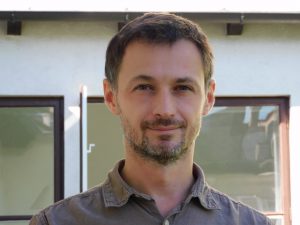
Réka Kassai is a Lecturer in the Department of Clinical Psychology and Addiction at Eötvös Loránd University (ELTE), affiliated with the Institute of Education. Her research focuses on mindfulness interventions, executive function development in children, ADHD, stress management, and parenting behaviors. She is also a PhD student exploring these areas further. Her work frequently employs meta-analytic methods and randomized controlled trials to evaluate intervention efficacy. Key research interests include: Neurocognitive development in children and adolescents Mindfulness-based interventions for cognitive and emotional regulation Impact of socioeconomic factors on psychological outcomes Parenting behaviors and developmental disorders Her recent publications analyze the effects of mindfulness practices on cortisol levels, executive function disparities among preschoolers, and the relationship between ADHD symptoms and parenting styles. She leads the Cognitive Development and Education Research Group, focusing on bridging clinical psychology with educational practices. Professional activities include advising on doctoral research (as seen in her doktori.hu profile) and maintaining an active publication record across multiple disciplines. Contact details include kassai.reka@ppk.elte.hu and the Institute's Budapest office at Kazinczy u. 23-27.
Zsuzsanna Dömötör is an Assistant Professor at Eötvös Loránd University, affiliated with the Institute of Health Promotion and Sport Sciences. She is a member of the Psychophysiology of Physical Sensations and Emotions Research Group and serves on the Research Transparency Committee. Her work focuses on environmental health psychology, interoception, and placebo/nocebo effects in modern health contexts. Research interests include idiopathic environmental intolerance attributed to electromagnetic fields (IEI-EMF), health anxiety, and the physiological impacts of nature connection. Her studies combine experimental designs with clinical and epidemiological approaches, exploring both subjective experiences and objective measurements in health-related phenomena. Key themes in her publications address electromagnetic hypersensitivity, yoga-based interventions, and the role of interoception in somatic symptoms. She critiques simplistic diagnostic methods for environmental sensitivities and emphasizes multidisciplinary approaches to understanding modern health worries. Her work also examines superstitious behaviors in sports and placebo effects in magnetic therapy applications.
Luke McEllin is a Research Fellow at Central European University (CEU), holding concurrent appointments in the Department of Cognitive Science, the Social Mind Center, and the Center for Belief Update and Debiasing (DEBIAS). Based in Vienna at Quellenstrasse 51, Office A 507, his work centers on the cognitive and behavioral mechanisms underlying human social coordination. Education: PhD in Cognitive Science, Central European University McEllin's research program investigates how non-verbal communicative processes enable joint action coordination, employing motion tracking and psychophysical methodologies to quantify interpersonal dynamics. His recent work extends into the relationship between joint action and commitment mechanisms, bridging social cognition with decision theory. This interdisciplinary approach spans cognitive science, experimental psychology, and social neuroscience, with implications for understanding cooperative behavior and social cognition disorders. No scientific awards are documented in available sources. Current advising relationships and research grants are not specified in public profiles, though his affiliation with DEBIAS suggests involvement in belief-update research initiatives. McEllin actively contributes to CEU's Social Mind Center and DEBIAS research ecosystems, participating in collaborative projects that integrate cognitive modeling with empirical social interaction studies.
Gabriella Vámos is an Assistant Professor at Eötvös Loránd University, Faculty of Humanities, active in the Department of Material Ethnography. She holds a PhD in Hungarian and Comparative Folkloristics (2023) and has been dedicated to teaching since 2018, with experience at both ELTE and Semmelweis Museum of Medical History. PhD in Hungarian and Comparative Folkloristics (2023, summa cum laude ) MA and BA in Ethnography from ELTE Her research focuses on: Workers' folklore culture during the socialist period Naturopathy and folk medicine (19th–20th centuries) Health education and information systems Her publications include 2023 studies on healthcare narratives during socialism and cultural resistance, while her 2023 conference report highlights international ethnographic collaborations. She received the 3rd Place award at XXXI. OTDK Humanities Section (2013).
Buttercup Vekety is an Assistant Professor at the Institute of Educational Sciences, Faculty of Pedagogy and Psychology, Eötvös Loránd University. Located at 1075 Budapest, Kazinczy Street 23-27., Room 411, their educational activities include supervising undergraduate theses (BA Psychology, BA Educational Science) and co-supervising master's theses (MA Psychology, MA Educational Sciences). Research interests span mindfulness-based interventions, ADHD/behavioral problems in childhood, executive functions development, and art therapy applications. They actively participate in the Cognitive Development and Education Research Group and the MTA-ELTE Momentum Adaptation Research Group, focusing on cognitive adaptation mechanisms. Recent publications (2018-2020) demonstrate a consistent focus on mindfulness efficacy across different populations, utilizing diverse methodologies from meta-analyses to psychophysiological measurements. Key themes include ADHD symptom reduction, neurocognitive correlates of mindfulness, and age-specific intervention designs. Current research projects include: Momentum Call, Adaptation Research Group (LP-2018-21/2018): "Key elements of effective adaptation in challenging environments" Neurofeedback-assisted mindfulness program evaluation for primary school children
Vlad Naumescu is a Professor in the Department of Sociology and Social Anthropology at Central European University (CEU), with additional affiliations as Faculty at the Social Mind Center and Executive Committee Member of the Center for Religious Studies. Based in Vienna, he is currently on sabbatical for Winter and Spring 2025. His interdisciplinary work bridges anthropology, religious studies, cognitive science, and visual ethnography. His educational background includes an MA in Social Anthropology from the National School of Political and Administrative Studies in Bucharest, Romania, and a PhD jointly awarded by the Max Planck Institute for Social Anthropology and Martin Luther University Halle, Germany. Naumescu’s research centers on the anthropology of religion, particularly focusing on Eastern Christianity, religious transmission, ritual, time and temporality, ethics, and the interplay between religious and secular formations in postsocialist contexts. His fieldwork spans Western Ukraine, Romanian Old Believers, and Syrian Christians in Kerala, South India. A key recent focus is on pedagogies of prayer and the sensory training involved in Orthodox spiritual life. His recent publications reveal a strong trend toward interdisciplinary inquiry, combining cognitive anthropology, visual methods, and political theology. Themes include the theopolitics of canonical territory, diaspora, monasticism, and the sensory dimensions of religious practice. He frequently engages with visual anthropology, producing and supervising documentary films such as Bread of Life , Birds' Way , and Material Religion: Silent Encounters . A new ‘Great Schism’? Theopolitics of communion and canonical territory in the Orthodox Church (2020) Pedagogies of prayer: teaching Orthodoxy in South India (2019) Old Believers’ passion play: the meaning of doubt in an Orthodox ritualist movement (2013) He has played a pivotal role in developing interdisciplinary research and training initiatives, including the SMASH and SMASH PRO doctoral programs on the Social Mind, which integrate cognition, culture, and sociality. He founded the Visual Studies Platform and the Advanced Certificate Program in Visual Theory and Practice , reflecting his commitment to innovative ethnographic methods and multimodal scholarship. While no formal scientific awards are listed, his leadership in program development and high-impact publications in journals like Anthropology Today and CSSH underscores his scholarly influence. He has supervised students and mentored visual projects, including photo essays and interactive media, though specific advisee names are not provided. Naumescu’s work is deeply collaborative, often involving cross-institutional and interdisciplinary teams. His ongoing exploration of new media for ethnographic storytelling suggests a future trajectory integrating digital tools with anthropological practice. The labs and teams he contributes to—such as the Social Mind Center and Visual Studies Platform—foster experimental, boundary-crossing research on religion, cognition, and visual culture.
Anett Szabó-Bartha is an Associate Professor at the Department of Personality and Health Psychology within the Faculty of Humanities and Social Sciences at Gáspár Károli Reformed University. She holds a PhD in Psychology from the University of Debrecen (2007) and has extensive clinical qualifications including Clinical and Mental Health Psychologist (2005) and Family Therapist (2008). Dr. Szabó-Bartha completed her MA in Psychology at the University of Debrecen in 2001 and defended her doctoral dissertation on "The study of illness representation among individuals with various chronic illnesses and their spouses." Her academic journey includes teaching positions at both the University of Debrecen and her current institution, where she has progressively taken on leadership roles including Head of the Clinical Department at the Institute of Psychology since 2025. Her primary research interests focus on couple and family therapy, health psychology, and clinical psychology, with particular emphasis on schema therapy, acceptance-based approaches, and relationship dynamics. Dr. Szabó-Bartha has developed expertise in Acceptance and Commitment Therapy (ACT) and has contributed significantly to the validation of psychological assessment tools in Hungarian contexts. Her work often explores how cognitive schemas influence partner selection and relationship patterns, as evidenced by her 2024 monograph "Sémakémia" (Schema Chemistry). Her recent publications demonstrate a consistent focus on psychological measurement, with numerous validation studies of assessment instruments related to fear of happiness, fear of empathy, thought suppression, and self-criticism. She has also conducted important research on therapeutic relationships in online versus in-person settings, particularly relevant during the pandemic period. Dr. Szabó-Bartha has received significant recognition for her work, including the Publication of the Year Award from Gáspár Károli Reformed University in both 2017 and 2022, as well as the 1st prize in the poster section from the Hungarian Psychological Society in 2019. These awards reflect the quality and impact of her contributions to psychological science in Hungary. As an active member of the Hungarian Family Therapy Association and Hungarian Psychological Society, she contributes to the broader academic community through conference presentations, editorial work, and leadership roles. Her academic service includes mentoring students, serving as Deputy Head and later Head of the Psychology Workshop at the Benda Kálmán College (2013-2022), and currently leading the Clinical Department at the Institute of Psychology. Dr. Szabó-Bartha maintains an active research program with strong clinical applications, bridging theory and practice in psychological assessment and therapy. Her work on schema therapy and relationship dynamics continues to influence both academic discourse and clinical practice in Hungary.
Katalin Nagyváradi is an Assistant Professor at the Institute of Sport Sciences at Szombathely , part of Eötvös Loránd University (ELTE). She specializes in applied exercise physiology, focusing on sports performance, spinal health, and recreational sports development. Her research group, Mészáros János Applied Exercise Physiology Research Group , explores topics such as strength training metrics, pediatric physical activity, and AI-driven exercise planning. Education: No formal education details provided in texts Affiliations: Active in multiple sports medicine and orthopedics initiatives Her research interests span exercise physiology , sports medicine , and recreational sports trends . Notable studies include spinal health in adolescents, core strength analysis in fencing, and the role of coaches in athlete nutrition. She also investigates modern fitness trends post-pandemic and the ergonomics of electronic devices. Recent publications highlight innovative approaches, such as AI integration in exercise planning and the preventive measures for neck pain (SMS nyak syndrome). Her work bridges clinical insights with practical applications in sports training and public health. Awards: None explicitly mentioned in provided texts. Grants and advising details unavailable. Labs/Teams: Member of the Mészáros János Research Group, focusing on applied exercise physiology and sports performance metrics.
Boglárka Vekety is an Assistant Professor at Eötvös Loránd University (ELTE), affiliated with the Faculty of Pedagogy and Psychology and the Institute of Educational Sciences. She is a member of the Cognitive Development and Education Research Group and the MTA-ELTE Momentum Adaptation Research Group. Her research focuses on mindfulness-based interventions, ADHD in childhood, executive function development, and the application of art therapy in educational settings. Her teaching activities include supervising BA and MA theses in Psychology and Educational Sciences. She has contributed to projects such as the Momentum Call-funded 'Key elements of effective adaptation in challenging environments,' examining neurofeedback-assisted mindfulness programs for children. Recent works include a meta-analysis on mindfulness interventions for childhood behavioral issues and presentations on EEG oscillations linked to mindfulness. She maintains a permanent leave status but remains active in research and academic advising. Contact: vekety.boglarka@ppk.elte.hu, Room 411, Budapest.
Phillip Zarrilli is Professor of Drama at the University of Exeter, internationally recognized for developing a psychophysical approach to actor training that synthesizes principles from yoga, Asian martial arts (particularly Kalari), and contemporary Western performance practices. His methodology emphasizes the inseparability of mind and body in the actor's process, cultivating what he terms 'pre-expressional awareness' through rigorous physical conditioning. Zarrilli's research focuses on cross-cultural performance practices, with particular expertise in Kathakali dance-drama and its integration with contemporary theater. His work bridges Eastern and Western performance philosophies, creating a unique methodology that has influenced actor training globally. Key areas of exploration include the application of yogic principles to performance, the interpretation of challenging modern texts (particularly Beckett and Genet), and the documentation of traditional South Indian performance forms. His publications and video resources demonstrate significant contributions to performance studies, particularly in psychophysical acting methodology. The available materials show consistent focus on the relationship between actor-as-doer and the action itself, re-examining in both practice and theory how physical training directly informs psychological depth in performance. Specialized in Kathakali Dance-Drama documentation and interpretation Expert in Kalari martial arts application to actor training Developed distinctive psychophysical methodology for contemporary theater Focus on Beckett and Genet performance interpretation Zarrilli's work represents a significant contribution to cross-cultural performance studies, creating practical bridges between traditional Indian performance philosophies and contemporary Western theater practice. His approach has influenced actor training programs internationally, offering alternatives to psychologically-based methodologies through its emphasis on embodied awareness and physical readiness.