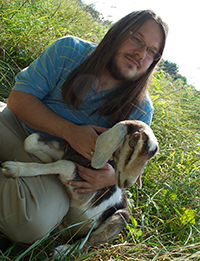
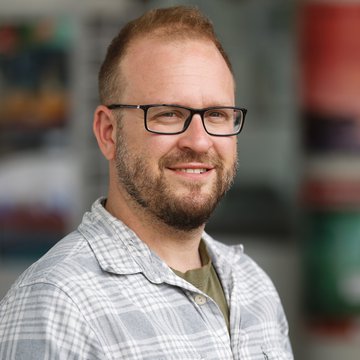
Jay Strader is a Professor in the Department of Physics and Astronomy at Michigan State University, where he serves as Graduate Director for the astronomy PhD program and Associate Chair for astronomy. His research focuses on compact objects, particularly black holes and neutron stars in globular clusters, neutron star binaries in Fermi gamma-ray sources, and intermediate-mass black holes. He has received a Packard Fellowship for Science and Engineering and grants from NSF and NASA. His research group includes postdoc Ryan Urquhart, graduate students Thomas Do and Rebecca Kyer, and several undergraduates, with past students like Teresa Panurach (now director of NoVEL Consortium) and Samuel Swihart (NRC fellow at Naval Research Lab). Education: PhD in Astronomy, UC-Santa Cruz/Lick Observatory Awards: Packard Fellowship Collaborations: Member of Rubin Observatory's Stars, Milky Way, and Local Volume science collaboration since 2008 Previous Positions: Hubble Fellow and Menzel Fellow at Harvard-Smithsonian Center for Astrophysics (2007-2012) Program Initiatives: Co-founder of PAREDS program for early research opportunities at MSU His work has been supported by NSF and NASA grants, and he has contributed to studies on black holes in M22, hypervelocity globular clusters around M87, and transitional millisecond pulsars. His group collaborates with Laura Chomiuk and contributes to data catalogs like the M31 globular cluster velocity dispersion database.
Alyson M. Brooks is an Associate Professor in the Department of Physics and Astronomy at Rutgers University, part of the School of Arts and Sciences. Her research focuses on galaxy formation and evolution, particularly using cosmological simulations to study dark matter dynamics, stellar abundances, and galactic structures. She holds a PhD in Astronomy from the University of Washington (2008) and has held prestigious fellowships, including the Sherman Fairchild Fellowship at Caltech and the Grainger Postdoctoral Fellowship at UW-Madison. Brooks has been recognized with awards such as the 2015 Alfred P. Sloan Research Fellowship and the 2019 Maria Goeppert Mayer Award from the American Physical Society. Her educational background includes a B.A. in Physics with Astronomy from Macalester College (2000) and an M.S. in Astronomy from the University of Washington (2004). Her research interests span topics like the interplay between baryonic processes and dark matter, chemical evolution in dwarf galaxies, and the role of feedback mechanisms in galaxy formation. Brooks is actively involved in outreach, including founding the RU-PREP program to support undergraduate research and mentoring initiatives. Brooks has authored over 100 refereed publications, with recent work exploring the resolved stellar populations of dwarf galaxies using the James Webb Space Telescope and analyzing dark matter halo properties through simulations. Her scientific contributions have advanced understanding of galaxy kinematics, dark matter interactions, and the evolution of galactic structures across cosmic time.
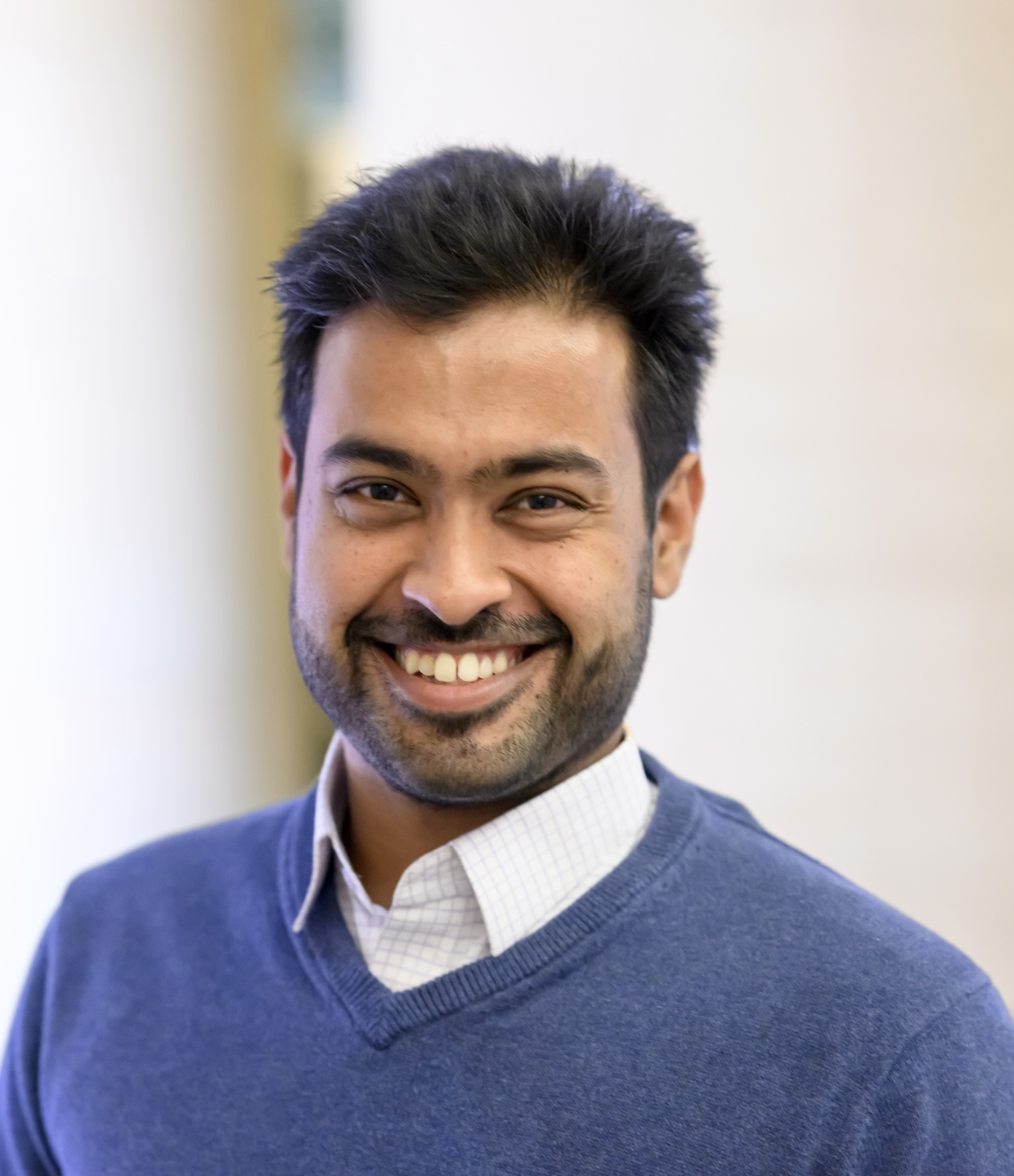
Kishalay De is an Assistant Professor in the Department of Astronomy at Columbia University and an Associate Research Scientist at the Center for Computational Astrophysics, Flatiron Institute. His research focuses on using wide-field imaging surveys to study cosmic transients from stellar binaries in the Milky Way and distant Universe. He specializes in analyzing data from missions like Palomar Gattini-IR (PGIR), Zwicky Transient Facility (ZTF), and NASA's WISE telescope to understand stellar cataclysms and their role in shaping the universe via gravitational waves and electromagnetic signatures. Affiliations: Columbia University, Flatiron Institute Education: PhD in Astrophysics (Caltech, 2021), B.Sc. Physics (Indian Institute of Science, 2016) His work includes discovering heavily obscured novae in the Galactic plane and characterizing infrared transients linked to stellar mergers and black hole accretion. He is leading a project analyzing 15 years of WISE archival data to study transient mid-infrared phenomena. Awards: NASA Einstein Fellowship (2021–2024), Kavli Institute Fellowship.
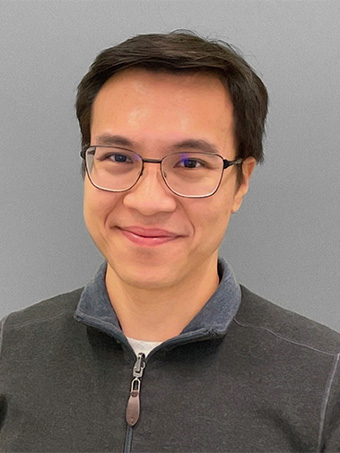
Marc HON is an Assistant Professor at the National University of Singapore (NUS) under the NUS Presidential Young Professorship, specializing in time-domain astronomy and machine learning applications for NASA missions including Kepler, TESS, and the Roman Space Telescope. His work focuses on characterizing stellar populations and discovering novel astrophysical phenomena through data-driven methodologies. His research spans asteroseismology for probing stellar interiors and Galactic archaeology to map the Milky Way's evolution using variable stars, alongside exoplanetary science investigations into planetary system evolution, habitable worlds, and James Webb Space Telescope atmospheric characterization. A core methodology involves developing machine learning frameworks like deep learning classifiers and generative models for large-scale astronomical datasets. HON's publication trends (2018-2024) reveal consistent innovation at the astrophysics-ML intersection, with emphases on red giant asteroseismology, exoplanet dynamics, and scalable analysis pipelines for space telescope data. Key contributions include flow-based stellar evolution emulators, deep learning oscillation detectors, and large-scale TESS Galactic archaeology studies. Scientific recognition includes: NASA Hubble Fellowship (2020) He actively contributes to major international collaborations as a member of both the TESS and Kepler Asteroseismic Science Consortia, with direct involvement in MIT's TESS mission operations and data pipelines.
Don Figer is a Professor in the College of Science at the Rochester Institute of Technology (RIT) and serves as the Director of the Center for Detectors (CfD) and Founder of the Rochester Imaging Detector Laboratory, the Center for Detectors, and the Future Photon Initiative (FPI). He previously co-founded and directed the Independent Detector Testing Laboratory at the Space Telescope Science Institute for the James Webb Space Telescope, where his team characterized infrared detectors. His educational background includes: BA from Northwestern University MS from the University of Chicago Ph.D. from the University of California Dr. Figer's research spans astronomical instrumentation (infrared detectors, photonics, and quantum optics) and astrophysics (massive stars, young star clusters, and the Galactic center). He is renowned for identifying the Pistol star as one of the most massive known stars and for making the first direct measurement of an upper limit to stellar masses. His work has led to over 300 publications with 8,500+ citations and an h-index of 48. His research articles from the early 2010s consistently focus on massive star formation in Milky Way star-forming regions and the Galactic center, utilizing multiwavelength observations and advanced detector technologies. These studies advanced understanding of massive star clusters, interstellar medium dynamics, and nuclear star-forming rings through infrared spectroscopy and hydrodynamics simulations. Dr. Figer has secured substantial research funding: Center for Detectors: 32 externally funded projects annually (~$6 million) Future Photon Initiative: 43 ongoing grants ($7.7 million) and 24 new grants ($5.7 million) in 2024 He founded the Center for Detectors, operating nine laboratories with seven professors and over two dozen students, and the Future Photon Initiative uniting eleven RIT research groups to develop photonic devices for astrophysics, quantum computing, and biophotonics applications.
Norm Murray is a Professor at the Canadian Institute for Theoretical Astrophysics (CITA) within the University of Toronto . With a Ph.D. from UC Berkeley (1986), his research spans nonlinear dynamics , planetary formation , solar system evolution , and active galactic nuclei . His work combines theoretical physics with observational data from radio telescopes, X-ray satellites, and cosmological simulations. Recent research focuses on galaxy formation (via FIRE simulations), dark matter interactions in dwarf galaxies, and AGN disk dynamics . He employs machine learning for planetary collision modeling and investigates the interplay of magnetohydrodynamics and radiative transfer in quasar environments. Publications highlight his expertise in computational astrophysics, spanning topics from cosmic molecular gas mapping to the stability of exoplanetary systems.
Prof. Dr. Michael Kramer is a Professor of Astrophysics at the University of Manchester and a Scientific Member (Managing Director) at the Max Planck Institute for Radio Astronomy. He leads the COMPACT Research Group and specializes in radio astronomical fundamental physics. University of Manchester: Professor for Astrophysics Max Planck Institute for Radio Astronomy: Managing Director, Radio Astronomical Fundamental Physics Research Interests: Dr. Kramer focuses on pulsars , neutron stars , and gravitational physics , using these as tools to test general relativity , detect gravitational waves , and study transients in the Milky Way. Recent Research Trends: His 15 most recent publications emphasize fast radio bursts (FRBs) , axion dark matter searches , black hole imaging , and pulsar timing arrays for gravitational wave detection. Studies include the M87 jet, Galactic Center magnetars, and MeerKAT telescope optimizations.
Christopher Kochanek is a Professor and Ohio Eminent Scholar in the Department of Astronomy at The Ohio State University, affiliated with the College of Arts and Sciences. His expertise lies in cosmology, gravitational lensing, and supernovae. He earned his Ph.D. from the California Institute of Technology (1989) and a B.A. from Cornell University (1985). His research focuses on using gravitational lensing to study dark energy, dark matter substructures, and quasar accretion disks. He pioneered time-domain astronomy, exploring variability in massive stars and quasars, and co-led the ASAS-SN project for all-sky supernova detection. Key achievements include the Dannie Heineman Prize for Astrophysics (2020) and the AAS Beatrice M. Tinsley Prize (shared 2020). His work spans binary neutron star mergers, Milky Way mass estimation, and dust-obscured stellar explosions. Recent studies analyze supernova progenitors and long-term variability trends in transient events. Awards: Heineman Prize (2020), Tinsley Prize (2020) Grants & Projects: ASAS-SN collaboration with Prof. Stanek, dark energy constraints via lensing, and Milky Way dynamics. Labs/Teams: Active in the Ohio State Astronomy Instrumentation Group and ASAS-SN observatory network.
Martin Rey is a Lecturer in the Department of Physics at the University of Bath, specializing in theoretical astrophysics with a focus on galaxy formation and evolution. His research employs advanced computational methods to investigate fundamental questions about dark matter, star formation, and cosmic structure. His primary research interests include: Modeling the formation and co-evolution of stars, galaxies, and cosmic structures Using supercomputers for detailed fluid dynamics models of galaxies Investigating the nature of dark matter and its distribution Exploring the formation of the first stars and early universe processes Understanding how chemical elements permeate the Universe Dr. Rey's research portfolio reveals a strong concentration in Dark Matter Physics (100%), Dwarf Galaxy Physics (80%), Galactic Evolution Physics (74%), and Stellar Mass Physics (63%). His recent publications demonstrate expertise in radiation-hydrodynamics simulations, particularly through the EDGE project framework, which examines various aspects of dwarf galaxy physics and dark matter distribution. His notable scientific achievements include: Christopher Skinner Prize for outstanding PhD research (2020) Fellow of the Royal Astronomical Society (awarded December 7, 2024) Beecroft Fellowship (awarded September 1, 2021) Dr. Rey is actively engaged in research leadership as Co-Principal Investigator on the MEGATRON project (2023-2028) and Engineering Dwarf Galaxy project (2019-2027), and as Co-Investigator on the Vintergatan project (2020-2025). He serves as a peer reviewer for prestigious journals including Monthly Notices of the Royal Astronomical Society, Astronomy & Astrophysics, and The Open Journal of Astrophysics, and regularly presents at international conferences such as his Maynooth University seminar (November 2024) and First Galaxies conference (April 2025).
Kyle Dawson is a Professor of Physics and Astronomy at the University of Utah, where he has been employed since 2009. He currently serves as both a full Professor and Director of Graduate Studies in the Department of Physics and Astronomy, having progressed from Assistant Professor (2008-2015) to Associate Professor (2015-2019) before achieving his current position in 2019. His institutional affiliation places him within the College of Science at the University of Utah, a major research university in the western United States. Dawson earned his BA in Physics from Cornell University in 1998, followed by a PhD in Physics from the University of California, Berkeley in 2004. After completing his doctoral studies, he served as a postdoctoral researcher at the Lawrence Berkeley National Laboratory before joining the University of Utah faculty. His educational background in physics provided the foundation for his transition into observational cosmology, where he has made significant contributions through large-scale spectroscopic surveys. Professor Dawson's research focuses on observational cosmology through large spectroscopic surveys designed to measure the fundamental properties of the universe. He is currently the co-Spokesperson for the Dark Energy Spectroscopic Instrument (DESI), a major cosmological survey that has produced numerous high-impact publications in 2024-2025. Previously, he served as Principal Investigator for the Extended Baryon Oscillation Spectroscopic Survey (eBOSS), which concluded in 2020 with final cosmological measurements. His work centers on measuring baryon acoustic oscillations to constrain cosmic expansion history, dark energy properties, neutrino masses, and to test General Relativity. His research group employs techniques including galaxy clustering analysis, quasar astrophysics, and large-scale structure mapping to address fundamental questions in cosmology. The analysis of Dawson's recent publications reveals a strong focus on extracting cosmological constraints from the DESI survey data. His work spans multiple aspects of cosmological analysis, including baryon acoustic oscillation measurements, full-shape power spectrum analysis, imaging systematics mitigation, and cross-correlation studies with cosmic microwave background data. The publications demonstrate collaborative work with large international teams and contribute to increasingly precise measurements of cosmological parameters, with particular attention to dark energy equation of state, neutrino masses, and potential deviations from General Relativity. Professor Dawson has secured significant research funding throughout his career, including multiple grants from the Department of Energy (DOE), NASA, and the National Science Foundation. His grant portfolio includes leadership roles in major cosmological surveys like DESI and eBOSS, as well as support for postdoctoral researchers and graduate students. His research group has mentored numerous students who have gone on to successful careers in academia, industry, and data science fields. Dawson leads a vibrant research group at the University of Utah focused on cosmological data analysis from large spectroscopic surveys. His current team includes two postdoctoral researchers (Angela Berti and Sarah Eftekharzadeh) and a graduate student (Allyson Brodzeller). The group specializes in galaxy clustering analysis, quasar astrophysics, and machine learning applications to spectroscopic data. The research environment fosters collaboration with international teams working on DESI and related cosmological surveys, providing students with opportunities to engage with cutting-edge cosmological research and large-scale data analysis techniques.
Elizabeth Blanton is a Professor of Astronomy at Boston University's College of Arts & Sciences, where she serves as Director of Undergraduate Studies. Her research primarily focuses on high-energy astrophysics and observational astronomy, with emphasis on galaxy clusters, radio galaxies, and AGN feedback mechanisms. She utilizes multi-wavelength approaches including X-ray, optical, infrared, and radio observations. Education: Ph.D., Columbia University M.Phil., Columbia University M.A., Columbia University A.B., Vassar College Professor Blanton's research centers on clusters of galaxies, particularly studying the X-ray emission from the intracluster medium using the Chandra X-ray Observatory. She investigates how central radio sources powered by supermassive black holes interact with and heat the surrounding gas, which has important implications for galaxy formation and evolution. Her work also explores using radio sources as tracers for high-redshift galaxy clusters for cosmological studies. Her publication record shows consistent research on galaxy cluster dynamics, particularly focusing on phenomena like gas sloshing, shock waves, and cavities created by AGN feedback. The research spans multiple wavelengths with heavy emphasis on X-ray observations from the Chandra Observatory, complemented by optical, infrared, and radio data. Her work has significantly contributed to understanding how energy from supermassive black holes affects the evolution of galaxy clusters. Notable Press Coverage: "Abell 2052: A Galaxy Cluster Gets Sloshed" featured in BU Research Magazine 2012, Chandra press release, NASA press release, and National Geographic image of the week "NGC 5813: An Intergalactic Weather Map" covered in Chandra and NASA press releases "Cosmic Battle Creates Milky-Way Sized Tunnel" featured in Naval Research Lab press release "NGC 1553: Black Holes in Distant Galaxy Points to Wild Youth" covered in Chandra press release Professor Blanton teaches a range of astronomy courses from introductory to graduate level, including Principles of Astronomy II, Stellar and Galactic Astrophysics, Introduction to Astrophysics, and Observational Techniques. Her Observational Techniques course provides hands-on experience with telescopes at Boston University and Lowell Observatory in Arizona. She leads research within the Interdisciplinary Cosmology Group at Boston University, which includes members from the Departments of Astronomy, Physics, and Data Sciences. Her work on galaxy clusters and AGN feedback continues to advance our understanding of the formation and evolution of large-scale structures in the universe.
Michelle Borkin is an Assistant Professor in the Khoury College of Computer Sciences at Northeastern University’s Boston campus, where she co-leads the Visualization @ Khoury Lab and co-directs the Northeastern Visualization Consortium (NUVis). She additionally serves as Affiliated Faculty with the NULab for Text, Maps, and Networks and with the Information Design & Data Visualization Program in the College of Arts, Media, and Design. Education PhD, Applied Physics, Harvard University School of Engineering and Applied Sciences (2014) MS, Applied Physics, Harvard University BS, Astronomy & Astrophysics and Physics, Harvard University Research Interests Borkin’s research integrates data visualization and human-computer interaction to create novel techniques that enable discovery across disciplines. Her work spans: Multidimensional brushing-and-linking methodologies 3D data visualization and selection techniques Tree and network visualization Visualization evaluation methodologies and perception/cognition theory Accessibility and visualization for social good Medical and astrophysical visualization applications Publication Trends Across more than 50 peer-reviewed papers, Borkin’s research exhibits three dominant threads: (1) foundational studies on visualization perception and memorability, (2) design and evaluation of novel interactive tools for complex data (medical, astronomical, political, and social media), and (3) methodological contributions such as the Design Study “Lite” Methodology that accelerate visualization pedagogy and community-engaged research. Awards & Honors CHI 2020 Best Paper Award IEEE VIS 2020 Best Poster Honorable Mention IEEE VIS 2018 Best Poster Award NSF Graduate Research Fellowship NDSEG Graduate Fellowship TED Fellow Advising & Grants Borkin currently advises five PhD students—Jane Adams, Mackenzie Creamer, Franc O, Aditeya Pandey, and Laura South—and has previously mentored Michail Schwab and Uzma Haque Syeda. Her research has been supported by NSF, NDSEG, and TED fellowships, as well as internal Northeastern awards. Labs & Teams Co-Lead, Visualization @ Khoury Lab Co-Director & Co-Founder, Northeastern Visualization Consortium (NUVis) Affiliated Faculty, NULab for Text, Maps, and Networks Affiliated Faculty, Information Design & Data Visualization Program, CAMD
Vicente Rodriguez-Gomez is an Associate Professor at the Instituto de Radioastronomía y Astrofísica (IRyA) of the Universidad Nacional Autónoma de México (UNAM) in Morelia. He previously served as a Postdoctoral Fellow at Johns Hopkins University and the Harvard-Smithsonian Center for Astrophysics. His research focuses on galaxy formation and evolution, cosmological simulations, and data analysis. PhD in Astronomy & Astrophysics from Harvard University (2016), with a Secondary Field in Computer Science and Engineering. AM in Astronomy from Harvard University (2012). Bachelor's in Physics from UNAM (2009). His key research interests include galaxy mergers, hydrodynamics, and morphological diagnostics. He has developed software tools like statmorph for galaxy morphology analysis and SubLink for merger tree analysis in simulations. Rodriguez-Gomez has authored/co-authored 68 refereed publications and holds grants from NASA, XSEDE, and UNAM. Recent work emphasizes cosmological simulations (e.g., IllustrisTNG), exploring merger dynamics, black hole impacts, and galaxy cluster evolution. He has advised three graduate students and serves as an academic referee for journals like the Astrophysical Journal and Monthly Notices of the Royal Astronomical Society. Outreach activities include popular media features in Scientific American and The Atlantic, and public talks on cosmological simulations and galaxy evolution.
Dr. Noam Libeskind is a faculty member and group head of the Cosmography and Large-Scale Structure group at the Leibniz-Institut für Astrophysik Potsdam (AIP). He specializes in mapping the Universe's large-scale structure and using these maps to simulate the local environment. His work bridges observational and theoretical astrophysics, focusing on galaxy formation, the Local Group dynamics, and cosmographic reconstructions. He has held professorial positions, including at the Institute of Two Infinities (Université de Lyon-1) until 2021. Current projects include leading trans-national initiatives on cosmic web impacts (with Purple Mountain Observatory) and gravity tests via Local Group simulations (with Polish Academy of Sciences). Libeskind’s research interests include satellite galaxies, matter distribution reconstructions, and alignments of galaxies relative to their environments. His work has been featured in Scientific American and Sky & Telescope , highlighting contributions such as cosmography of the Local Universe and dark matter studies. Key collaborations span institutions like Hebrew University, Shanghai Astronomical Observatory, and Durham University. He leads projects like CLUES (Constrained Local UniversE Simulation) and HESTIA (High-resolution Environmental Simulations) to model the Local Universe. His team’s efforts have been recognized, including a 2024 municipal award for organizing impactful scientific meetings. Publications span cosmological simulations, galactic dynamics, and observational cosmology, with a focus on advancing understanding of the Milky Way, Andromeda, and their surrounding structures.
Nassim Bozorgnia is an Assistant Professor in the Department of Physics at the University of Alberta and a Tier 2 Canada Research Chair in Astroparticle Physics. He specializes in theoretical astroparticle physics and dark matter phenomenology, focusing on dark matter's particle nature and its implications for direct/indirect detection experiments. His research uses cosmological simulations and observational data to study dark matter distribution in galaxies like the Milky Way. Education: Ph.D. in Physics, UCLA (2012), Dissertation: 'Ion Channeling in Direct Dark Matter Detection' M.S. in Physics, San Francisco State University (2006) B.S. in Physics, Kharazmi University (2004) Research Interests: His work explores dark matter interactions, galactic distribution modeling, and astroparticle physics. Key areas include: Dark matter direct detection using crystal detectors Impact of Large Magellanic Cloud on dark matter signals Velocity-dependent annihilation radiation Dark matter distribution correlations with stellar kinematics Grants & Awards: Canada Research Chair (2022–2027) Natural Sciences and Engineering Research Council (NSERC) Discovery Grant (2020–2025) McDonald Institute Highly Qualified Personnel Pooled Resources (2021–2023) Recipient of multiple fellowships including UCLA's Cota Robles Fellowship Teaching & Supervision: Currently supervising 6 Ph.D./M.S. students and mentoring EXPLORE program participants Teaches courses like 'Physical Cosmology' and 'Dark Matter: from cosmology to underground searches' Developed the EXPLORE international research collaboration program Labs & Collaborations: Active in collaborations like the EXPLORE program and international initiatives such as GRAPPA and IPPP. His work integrates cosmological simulations (EAGLE, APOSTLE) with observational datasets to refine dark matter models.