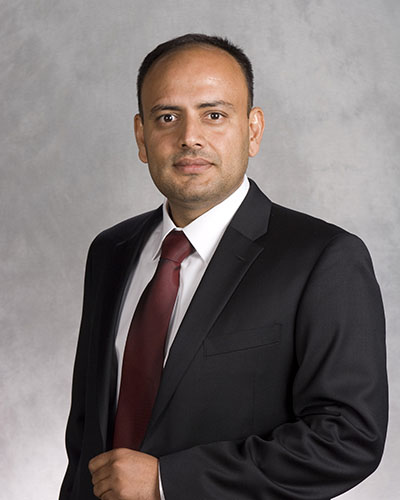
Shaji A. Khan is an Associate Professor of Information Systems and Technology and Associate Dean of Undergraduate Programs at the University of Missouri-St. Louis (UMSL)'s College of Business Administration. He holds a Ph.D. in Business Administration from UMSL and has a background in Computer Science and Commerce. His research focuses on cybersecurity education, IT outsourcing, business process offshoring, and entrepreneurial innovation. Khan leads UMSL's Cybersecurity Institute and has developed interdisciplinary cybersecurity programs including graduate/undergraduate certificates and minors. He has secured over $294K in Department of Defense funding for cybersecurity labs. His teaching spans information security, data networks, systems administration, and programming. He has published extensively in top journals like Journal of Business Venturing and Journal of Strategic Information Systems . Notable awards include the Paul Gray Award for thought-provoking IT outsourcing research and multiple teaching accolades. Khan also serves as a media expert on cybersecurity matters and organizes STLCyberCon conferences attracting 700+ attendees annually. Professional service includes roles on the Graduate Studies Committee and leadership in international conferences like ICIS. His industry experience includes founding TechQED Inc. and leading a high school as principal/CTO earlier in his career. Technical expertise spans cybersecurity tools, cloud platforms, and programming languages.
James Bellingham is the Bloomberg Distinguished Professor of exploration robotics at Johns Hopkins University, holding primary appointments in the Department of Mechanical Engineering and the Applied Physics Laboratory's Asymmetric Operations Sector. He serves as executive director of the Johns Hopkins Institute for Assured Autonomy and is a member of the Data Science and AI Institute. With over 30 years of expertise, Bellingham pioneered small, high-performance autonomous underwater vehicles (AUVs), leading global expeditions across polar and oceanic regions. His work bridges robotics innovation with environmental monitoring, including oil spill response, Arctic exploration, and NASA collaborations for extraterrestrial oceanic exploration. Bellingham's educational background includes BS, MS, and PhD in physics from MIT. He previously led Woods Hole Oceanographic Institution's Marine Robotics Consortium, creating advanced prototyping facilities and fostering entrepreneurship in robotics. His leadership roles span institutional boards such as the Naval Studies Board and OceanX. His research focuses on advancing AUV capabilities for adaptive sampling, fault detection, and interdisciplinary oceanography. Over 50 publications demonstrate his technical contributions, including AUV design, environmental hazard mapping, and collaborative robotic systems. Awards include National Academy of Engineering induction and military honors for public service.
Brian M Deal serves as a Professor of Landscape Architecture within the School of Architecture at the University of Illinois at Urbana-Champaign, holding additional appointments in Urban and Regional Planning, the European Union Center, the Center for Latin American and Caribbean Studies, and the National Center for Supercomputing Applications (NCSA). His expertise bridges sustainable planning theory, energy systems, and spatial modeling to develop practical decision-support tools for community development and climate resilience. His educational foundation includes a PhD in Regional Planning (2002), Master of Architecture (1997), and BS in Architectural Studies (1983), all earned at the University of Illinois at Urbana-Champaign. Prior academic experience encompasses a decade of professional architecture practice and senior research at the Army Construction Engineering Research Laboratory (CERL), where he specialized in sustainable military facility design using spatial simulation. Deal's research centers on sustainable planning systems and climate adaptation, with current projects examining urbanization impacts on Korean rural amenities, advancing the University of Illinois' climate action plan (iCAP), and developing next-generation 'sentient' planning support systems. His work integrates land-use modeling, energy systems analysis, and decision-support technologies to address complex urban environmental challenges through interdisciplinary collaboration. Recent publications reveal a pronounced shift toward data-driven sustainability solutions, featuring AI applications for carbon-neutral planning, multi-scaled green infrastructure optimization, and socio-ecological modeling. Key themes include urban carbon sequestration, post-pandemic park dynamics, and climate-resilient coastal design, demonstrating consistent innovation in translating theoretical frameworks into actionable planning tools for real-world implementation. Professor Deal's scientific awards and honors were not detailed in the provided text. As faculty mentor to the Student Sustainability Committee and chair of campus sustainability planning efforts, Deal actively guides student development and institutional policy. His leadership of the LEAM Laboratory and SEDAC involves managing research grants focused on urban resilience, energy systems, and climate adaptation, fostering partnerships with government agencies and community organizations to deploy planning tools that directly impact community decision-making processes. Deal directs the Land Use Evolution and Impact Assessment Modeling (LEAM) Laboratory and Smart Energy Design Assistance Center (SEDAC), leading interdisciplinary teams in developing spatial simulation models and decision-support systems. His operational leadership extends to authoring the university's climate action plan and chairing campus sustainability committees, positioning him at the nexus of academic research, institutional policy, and community engagement for sustainable urban futures.
Dr. Jemma King is an Honorary Fellow at the School of Psychology , The University of Queensland , focusing on biomarkers of stress and emotional intelligence. She has contributed to research on workplace stress, military psychology, and psychoneuroimmunology. Education: PhD in Emotional Intelligence and Workplace Stress (2020), Honours Thesis on Emotional Intelligence and Cyber-Ostracism (2012) Her research explores how emotional intelligence buffers physiological stress responses in virtual environments and high-stress occupations. Recent work links circadian alignment to psychological resilience and leadership performance. Publications span journal articles , conference proceedings , and theses , emphasizing cortisol and HRV as stress markers. She supervises doctoral students, including projects on circadian rhythms and leadership stress , and has received funding from the Commonwealth Department of Defence. Dr. King is also a media expert for biomarkers of stress testing, wearable emotion tracking (WHOOP, Wim Hof Method), and workplace interventions.
Colby C. Swan is a Professor in the Department of Civil and Environmental Engineering at the University of Iowa's College of Engineering, where he has been a faculty member since 1993. He leads the Swan Research Lab and maintains active memberships in ASCE, ASME, ISSMO, and USACM, contributing to computational mechanics and digital human modeling research. His educational background includes a PhD in Civil Engineering from Princeton University (1993), an MS in Ocean Engineering from the University of Miami (1985), and a BS in Civil Engineering from the University of Maine (1983). Professor Swan's research spans Computational Mechanics , Topology Optimization , and Biomechanics , with pioneering work on multi-scale computational clothing models for digital humans and structural topology optimization of compliant mechanisms. His lab develops physics-based simulation frameworks for applications in civil infrastructure, protective clothing design, and bone adaptation phenomena, integrating advanced computational methods with real-world engineering challenges. His publication trends reveal a sustained focus on digital human modeling (notably the Santos virtual human environment) and topology optimization, with significant contributions to continuum structural optimization, woven fabric mechanics, and human locomotion analysis. Recent work emphasizes virtual prototyping for protective systems and computational morphogenesis for structural design. American Society of Civil Engineers (ASCE) American Society of Mechanical Engineers (ASME) The Fiber Society International Society for Structural & Multidisciplinary Optimization (ISSMO) United States Association for Computational Mechanics (USACM) Professor Swan directs the Swan Research Lab, which collaborates on interdisciplinary projects involving computational modeling for engineering design and human performance analysis. His work bridges civil engineering with biomechanics through digital human simulation, particularly in protective gear development and structural optimization applications.
Navid Faraji, MD is an Assistant Professor in both the Department of Radiology and Department of Anatomy at Case Western Reserve University School of Medicine. He also serves as Associate Program Director for the Diagnostic Radiology Residency at UH Cleveland Medical Center, where he actively mentors medical students and residents in radiology research initiatives. University: Case Western Reserve University School: School of Medicine Departments: Radiology, Anatomy Academic Rank: Assistant Professor Email: navid.faraji@uhhospitals.org His research spans two primary domains: Radiology Education and Musculoskeletal Imaging . Recent publications demonstrate expertise in: Educational technology integration (e.g., Anki flashcards) Emergency fracture detection tool validation Bone marrow edema patterns in athletes/military trainees Gender equity initiatives in radiology pipeline AI-human collaboration in diagnostic imaging Cross-modality image registration techniques Scientific accolades include the Wei-Shen Chin Award for Medical Student Teaching (2022) . His 2023-2025 publications focus on optimizing radiology workflows, ballet dancer injuries, and incidental lesion analysis, with emerging themes in synthetic imaging and psychological safety frameworks.
Rodrigo Rico Bini is a Senior Lecturer at La Trobe University's Rural Health School, where he leads the Discipline of Exercise Science & Physiology and coordinates the Bachelor of Exercise Science program. His research focuses on quantitative analysis of human movement to improve athletic performance and reduce injury risks, specializing in cycling and running biomechanics using motion capture, force measurements, and AI modeling. He holds editorial positions at multiple sports science journals including Journal of Science and Cycling and Sports Biomechanics . His professional affiliations include the Holsworth Biomedical Research Centre and AUT-SPRINZ research institute. Dr. Bini's educational background includes a PhD in Biomechanics from Auckland University of Technology (2009-2011), an MSc from UFRGS Brazil (2006-2008), and a BPhEd from UFRGS (2000-2005). His research demonstrates consistent focus on sports biomechanics applications, with recent work exploring AI-driven motion analysis, equipment ergonomics, and active transportation health impacts. Key thematic trends include technological validation studies (wearables, neural networks), injury prevention strategies, and performance optimization across cycling, running, and occupational activities. Fellow of the International Society of Biomechanics in Sport Mid Career Research Award 2024 - La Trobe Rural Health School Certificate of Excellence in Reviewing: Physical Therapy in Sport AUT Laptop Scholarship First place, II Biofenac Brazilian Award for Exercise Science Dr. Bini supervises graduate students and leads industry collaborations, including an Australia Post-funded project on cycling biomechanics in postal delivery. He directs biomechanics research through the Holsworth Biomedical Research Centre and maintains international partnerships with institutions in New Zealand and Brazil.
Ayden Mccarthy is a Lecturer at the Department of Health Sciences within Macquarie University's Faculty of Medicine, Health and Human Sciences. His research focuses on biomechanics, military science, and wearable technology integration for physical performance assessment. Ph.D. in Health Sciences Specializes in predictive modeling and biomechanical validation Active in military ergonomics and wearable sensor research His work applies machine learning to military manual handling and load carriage biomechanics , with recent studies examining 3D body scanning accuracy and joint angle measurement systems under armor conditions. Publications emphasize physical fitness assessment and gender-specific performance metrics in tactical mobility tasks. Article trends show specialization in military ergonomics , biomechanical modeling , and wearable technology validation , with interdisciplinary connections to computer science and health informatics . Collaborations span Medicine , Sports Science , and Engineering domains. Scientific Awards: Best Student Presentation, ABC Sydney (2023) Correspondence available via ayden.mccarthy@mq.edu.au or ayden.mccarthy@hdr.mq.edu.au .
Professor Jitesh H. Panchal is a Professor of Mechanical Engineering and Associate Head of Undergraduate Programs at Purdue University's School of Mechanical Engineering. His research focuses on computational design of socio-technical systems, secure manufacturing, and collaborative engineering processes. He holds a PhD from Georgia Tech and has received numerous awards including the NSF CAREER Award (2010) and ASME's Guest Associate Editor Award (2019). Education: Ph.D. (Mechanical Engineering), Georgia Tech, 2005 M.S. (Mechanical Engineering), Georgia Tech, 2003 B.Tech. (Mechanical Engineering), IIT Guwahati, 2000 Research Interests: His work integrates computational methods with human factors, addressing challenges in secure design, additive manufacturing, and decision-making frameworks. Recent trends show focus on AI-driven design optimization, cybersecurity in manufacturing, and policy frameworks for defense acquisitions. Awards: ASME Journal of Mechanical Design Guest Associate Editor Award (2019) NSF CAREER Award (2010) Robert E. Fulton SEIKM Best Paper Award (2013) Ruth and Joel Spira Award (2018) Advising & Grants: His research is supported by grants from NSF and industry partnerships. He advises graduate students in design engineering and manufacturing systems, though no specific student names are listed. Labs: Directs the Design Engineering Lab at Purdue (DELP) , focusing on computational design methodologies and secure manufacturing technologies.
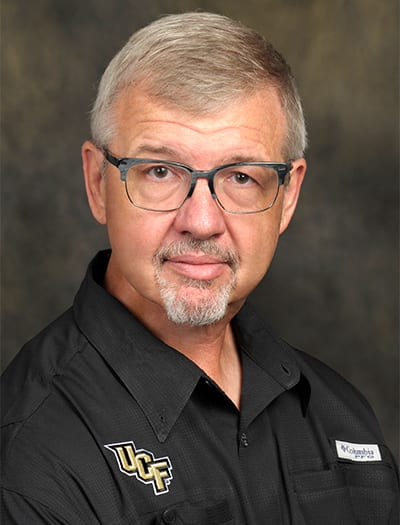
Clint Bowers is a Professor in the Department of Psychology at the University of Central Florida's College of Sciences. His research focuses on leveraging technology to address psychological disorders, including developing games for anxiety prevention in military personnel and alcohol abuse prevention in college students. He also explores virtual/augmented reality applications for PTSD treatment and clinical training innovations, translating learning science into practical tools for clinicians. Key areas of study include first responder mental health, workplace coaching efficacy, and team resilience in healthcare. Notable achievements include the 2018 Pegasus Professor award. His work emphasizes scalable interventions like mobile apps for emergency workers and VR exposure therapy trials. Collaborations focus on medical team performance, stress management, and digital health literacy. Recent research highlights include evaluating school shooting prevention strategies, revalidating mental health stigma scales for first responders, and advancing gamified learning platforms for healthcare training. His lab explores emerging technologies' ethical and practical implications in mental health delivery systems.
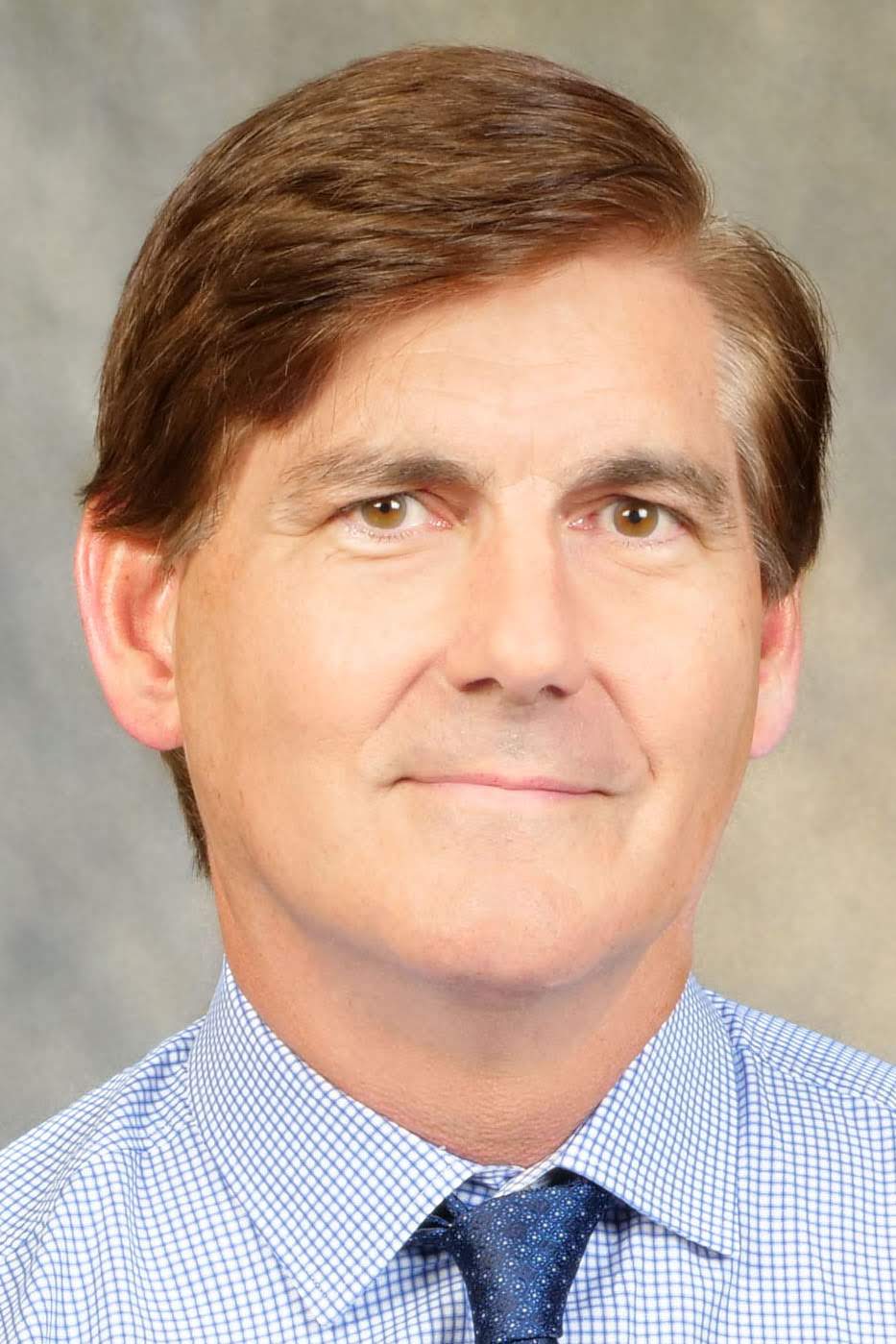
Ronald G. Driggers is a Professor at the University of Central Florida’s College of Optics and Photonics (CREOL), specializing in electro-optical and infrared imaging systems. Previously, he held senior leadership roles including Superintendent of the Optical Sciences Division at the Naval Research Laboratory (NRL) and Director of the U.S. Army’s Night Vision and Electronic Sensors Directorate (NVESD). He has extensive experience managing large-scale research programs exceeding $100M and over 200 personnel. Dr. Driggers earned his Ph.D. in Electrical Engineering from the University of Memphis (1990). His research focuses on sensor systems for military and environmental applications, including target detection, thermal imaging, and spectral analysis. He has authored five books, over 130 papers, and served as Editor-in-Chief for SPIE’s Optical Engineering and OSA’s Applied Optics. Awards: OSA Fellow, SPIE Fellow, 2003 Military Sensing Symposium Fellow, 2002 Army Engineer of the Year, and 2001 Naval Engineering Duty Officer of the Year. Advising: Supervised PhD students Steven Butrimas (2020) and Robert Short (2020). Labs/Teams: Collaborates with military and academic groups, including the Army Research Laboratory and NRL, on advanced sensor technologies. His work bridges academic and defense sectors, emphasizing practical applications of optical engineering in surveillance, environmental monitoring, and threat detection.
Christine Jeoffrion is a Professor of Occupational Psychology at Université Grenoble Alpes, where she directs the Doctoral School of Human Sciences and leads the "Risk and Change Accompaniment" axis at the Inter-university Psychology Laboratory. With extensive international engagement through organizations like EAOHP and IAAP, her work bridges occupational health, organizational psychology, and psychosocial risk prevention. Key affiliations: Université Grenoble Alpes, Université de Tours, INRS, CNAM Leadership roles: Doctoral School Director (2024+), CNU member (2024-2028), HCERES expert (2023+) Her research focuses on workplace psychological and physical health, examining organizational factors affecting well-being through 15+ funded projects like ANR PacBot (€670k) and CDP BOOT (€850k). Current PhD students explore virtual reality interventions, prison worker coping mechanisms, and organizational transformations for meaningful work. Recent publications analyze cobot impacts on work quality, telework dynamics, and bullying consequences. She has co-edited special issues for International Journal of Environmental Research and Public Health and Psychologie du travail et des Organisations . Her 2023 Légion d'honneur recognition underscores her field leadership. As a thesis advisor, she has directed 34+ doctoral candidates across France and Gabon, including works on intercultural competence, healthcare worker stress, and managerial innovation. She contributes to European research networks through symposium organization and journal editorial boards.
Rebecca A. Zakrajsek is an Associate Professor of Sport Psychology at the University of Tennessee, affiliated with the Department of Kinesiology, Recreation, and Sport Studies (KRSS) within the College of Education, Health, and Human Sciences. She holds certifications as a Certified Mental Performance Consultant (CMPC®) and has over 15 years of academic experience, transitioning from Assistant Professor (2011–2017) to her current role. Education: PhD in Sport & Exercise Psychology (West Virginia University), MA in Counseling and Sport Psychology (West Virginia University), BS in Psychology (Baldwin-Wallace College). Research focuses on applied sport psychology, including consultation efficacy, coach development, and mental training integration across sport personnel. Key areas include sport injury rehabilitation, interprofessional collaboration between mental health and performance services, and optimizing athlete-coach relationships through evidence-based strategies. Recent work highlights trends in NCAA Division I sport psychology service utilization, military ROTC mental skills programs, and strength & conditioning coaches' perceptions of psychological strategies. Over 50 peer-reviewed articles and book chapters demonstrate expertise in athlete well-being, coaching education, and interdisciplinary practice. Zakrajsek serves as co-director of the Applied Sport Psychology Laboratory, Associate Editor for Case Studies in Sport and Exercise Psychology , and chairs the AASPF Community Outreach Grant Committee. She actively reviews for 6+ top-tier journals and maintains leadership roles in professional organizations like AASP.
Salvatore Livatino is an Associate Professor in Virtual Reality and Robotics at the University of Hertfordshire, UK. He holds a MSc in Computer Science from the University of Pisa (1993) and a PhD in Computer Science and Engineering from Aalborg University, Denmark (2003). His academic journey includes roles as Research Fellow and Associate Professor at Aalborg University, as well as visiting positions at institutions like INRIA Grenoble and the University of Edinburgh. He leads the Communications and Intelligent Systems research group and directs the Virtual Reality and Robotics Laboratory. His research focuses on immersive technologies (VR/AR/XR), stereoscopic 3D visualization, and teleoperation systems for applications in robotics, healthcare, and command-and-control interfaces. He has contributed to over 30 peer-reviewed publications and secured funding for projects such as the Innovate UK-backed 'iDOC: AI Empowered Document Authoring' (2023–2025) and 'Immersion for Care: Using Extended Reality in Healthcare Training' (2025–2027). Teaching expertise includes problem-based learning, 3D visualization, and immersive game design. His work spans interdisciplinary collaborations in robotics, AI, and healthcare, emphasizing practical applications of virtual environments.
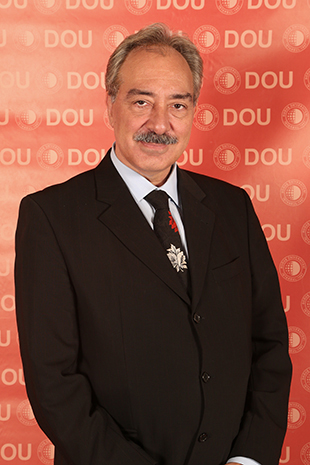
Prof. Dr. Ahmet Zafer ŞENALP is a Professor at the Department of Mechanical Engineering (English Program) at Doğuş Üniversitesi. He holds a PhD in Mechanical Engineering from ODTÜ (1998) and has extensive experience in CAD/CAM Robotics and metal forming processes. His academic career includes roles at Gebze Yüksek Teknoloji Enstitüsü (1999–2012 as Assistant Professor, promoted to Associate Professor by 2012) and Gebze Teknik Üniversitesi (until his retirement as an Associate Professor in 2019). His research focuses on finite element analysis, metal forming, plasticity theory, and ergonomic design. Education: BSc (1989), MSc (1991), and PhD (1998) in Mechanical Engineering from ODTÜ. He worked at ODTÜ CAD/CAM Robotics Center (1989–1998) and served in the military on the Panter Obüs project (1998–1999). Research Interests: Finite Element Analysis (FEA) applied to biomechanics, pressure vessels, prosthetics, and manufacturing processes. He also explores metal forming techniques, CAD/CAM integration, and material deformation mechanics. Publications span FEA-based studies on human joint forces, pressure vessel buckling, prosthetic design, and manufacturing optimization. His work often bridges computational methods with practical engineering challenges. Teaching includes courses on FEA fundamentals, mechanical vibrations, and design methodologies in both Turkish and English.