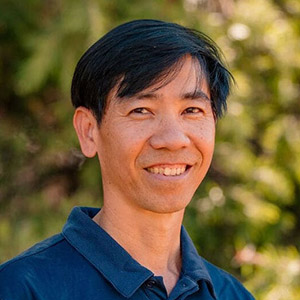
Dr. An Vu Vi is a Freshwater Fish Ecologist and Research Fellow at the Gulbali Institute, specializing in fish migration, hydropower impacts, and aquatic ecosystem management. Previously, he worked at the Fisheries Ecology and Aquatic Resources Division of Vietnam's Research Institute for Aquaculture No2. His research focuses on mitigating the ecological effects of infrastructure development in the Mekong region, particularly using otolith chemistry to study fish migrations. Expertise: Fish ecology, hydropower, river management, and conservation biology. Key Projects: Investigating fish migration patterns in the Mekong, assessing impacts of irrigation and hydropower on aquatic biodiversity. Publications emphasize migration strategies, climate change effects, and fish passage technologies. Collaborates with international partners like FAO and CSU.
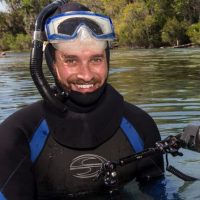
Sean Landsman is an Assistant Professor, Teaching Stream in the Department of Biology at Carleton University, affiliated with the Faculty of Science. His research focuses on fisheries science, science communication, and aquatic conservation. He teaches courses in science communication and actively practices science outreach through freelance writing and photography for outlets like National Geographic and CBC. His research interests include the behavior of fish post-capture, conservation policy evaluation, urban aquatic ecosystems, and anadromous fish ecology. He emphasizes interdisciplinary collaboration between scientists and engineers to improve fish passage infrastructure and advocates for knowledge co-production in fisheries management. Landsman actively recruits undergraduate students for Honours programs and offers opportunities for students interested in science communication through creative writing, photography, and multimedia. His recent publications highlight topics such as freshwater biodiversity frameworks, fish behavior in regulated waterways, and the societal impacts of conservation policies. While no scientific awards are explicitly listed, his work demonstrates a strong commitment to both academic research and public engagement. His teaching and outreach efforts aim to bridge the gap between scientific research and broader societal understanding.
Dr. Demetra Andreou is a Professor in Environmental Science at Bournemouth University, focusing on conservation biology, aquatic ecosystems, and disease ecology. Her research integrates genomic tools, environmental DNA (eDNA), and telemetry to address challenges in species conservation, emerging diseases, and microplastic impacts in freshwater systems. She leads projects funded by the European Commission, Severn Rivers Trust, and the Fisheries Society of the British Isles, with a strong emphasis on global sustainability goals like Life Below Water and Climate Action. Education: PhD in Biological Sciences, Cardiff University (2010) MRes in Ecology and Environmental Management, University of York (2005) BSc (Hons) in Biology, Trent University, Canada (2003) Research Interests: Conservation of migratory fish species (e.g., sea lamprey, shad) using eDNA and telemetry. Emerging diseases and host-parasite co-evolution, focusing on pathogens like Sphaerothecum destruens. Microplastic distribution and impacts in freshwater biota and ecosystems. Grants & Funding: European Commission Marie Curie Fellowship (to Dr. Miguel Soares). Severn Rivers Trust PhD studentships. Fisheries Society of the British Isles-funded research on microplastic effects. Advising & Collaborations: PhD students: Caterina Antognazza, Peter Davies, Ben Parker. Collaborators include Prof. Robert Britton, Dr. Chris Williams (Environment Agency), and international teams in France and China. Labs & Teams: Works within interdisciplinary teams at Bournemouth University, focusing on eDNA applications, parasite genomics, and freshwater ecosystem health. Engages in global initiatives like the Unlocking the Severn LIFE project.
Mats Grahn is a Professor at Södertörn University, affiliated with the Natural Sciences, Technology and Environmental Studies school. His research focuses on evolutionary biology, genetics, and environmental sustainability, particularly studying genetic diversity in marine and terrestrial species. He leads a major project on PFAS pollution in the Baltic Sea, investigating how these 'forever chemicals' affect aquatic organisms and ecosystems. Grahn also teaches courses in evolution, population genetics, and statistics, supervising student research projects. His work spans conservation genetics, population genomics, and ecotoxicology. Key research areas include the maintenance of genetic variation in wild populations, impacts of environmental contaminants like PFAS, and the role of major histocompatibility complex (MHC) genes in immune function. Collaborations include international teams studying coral reefs, Baltic Sea mussels, and fish populations. Current initiatives involve quantifying PFAS concentrations near sewage treatment plants and assessing their ecological effects using novel fluorine mass balance (FMB) techniques. Grahn's projects emphasize interdisciplinary approaches, integrating molecular genetics with environmental monitoring and policy advocacy.
Lorenzo Ciannelli is a Professor in the Department of Natural Sciences at the University of Agder, focusing on marine fish ecology, climate change impacts on Arctic ecosystems, and spatial-temporal dynamics of fish populations. His work integrates ecological theory with empirical data to address fisheries management challenges. Research Interests: Marine spatial ecology, climate-fisheries interactions, population dynamics, predator-prey relationships, and ecosystem-based management. Publications: Over 15 peer-reviewed studies spanning 2004–2022, with recurring themes in climate-driven survival patterns, spatial distribution modeling, and phase transitions in marine fish recruitment. Collaborations: Extensive international partnerships with institutions studying Arctic cod, Barents Sea ecosystems, and Gulf of Alaska salmon dynamics.
Petra de Goeij is a Researcher at the University of Groningen , specifically within the Faculty of Science and Engineering and the Conservation Ecology Group . Her work focuses on avian ecology, behavioral patterns of waterbirds, and conservation strategies for migratory species. Dr. de Goeij specializes in Eurasian Spoonbill research, tracking their foraging habits , nesting dynamics , and population trends across the Wadden Sea and Mauritania . Her innovative use of back-mounted accelerometers has provided groundbreaking insights into prey ingestion rates. 2025: Studied Caspian Tern diet variation in Mauritania 2024: Explored sex-specific nest attendance in waterbirds 2023: Developed biotelemetry methods for spoonbill monitoring 2022: Authored spoonbill biography Sinagote 2018: Discovered fish-dominated diets in Dutch spoonbill populations
Christopher Rota is an Associate Professor in the Department of Wildlife and Fisheries Resources at West Virginia University's Davis College of Agriculture, Natural Resources and Design. As Program Coordinator for Wildlife and Fisheries Resources, he specializes in applied vertebrate ecology with a focus on developing advanced statistical techniques to analyze ecological datasets. His research spans wildlife population dynamics, habitat interactions, and conservation strategies. Recent publications highlight collaborations on national camera-trap surveys (SNAPSHOT USA), mammal responses to human activity, spatial ecology of pests, and statistical methodologies for wildlife monitoring. Current projects examine impacts of energy extraction on mule deer mortality, post-mining habitat selection by black bears, wetland restoration effects on small mammals, and migratory connectivity in Canada Warblers. His group integrates field data with computational models to address conservation challenges.
Dr. Jay R. Rooker is a Regents Professor and McDaniel Chair of Sustainable Marine Fisheries at Texas A&M University at Galveston, with a joint appointment in the Department of Ecology and Conservation Biology at Texas A&M's College Station campus. His research focuses on marine fish ecology, population connectivity, and habitat dynamics using geochemical markers and telemetry. Ph.D. in Marine Science, University of Texas at Austin (1997) M.S. in Marine Science, University of Puerto Rico (1991) B.S. in Biology, Gustavus Adolphus College (1985) Research centers on marine fish community/population ecology , habitat selection , and survival mechanisms . Key methods include otolith chemistry , stable isotopes , and acoustic/satellite telemetry to study migratory patterns and trophic dynamics. Recent publications highlight work on Atlantic tarpon migration , yellowfin tuna nursery origins , and bluefin tuna thermal sensitivity . Studies span Gulf of Mexico , North Atlantic , and Caribbean Sea , emphasizing trans-oceanic connectivity and ecosystem impacts . Scientific accolades include the Regents Professor title (Texas A&M, 2014–present) and Brazil’s Special Visiting Research Fellowship (2015–2018). Current projects examine Gulf of Mexico deep-pelagic fauna and marine protected area efficacy . Advises four graduate students and has mentored 15 former lab members . Grants include NOAA, NSF, and Sea Grant funding for research on red snapper abundance , bluefin tuna genetics , and artificial reef ecosystems .
Scott Miller serves as an Adjunct Assistant Professor in the Department of Watershed Sciences at Utah State University, where his research integrates field ecology with applied watershed management. His work addresses critical human-ecosystem interactions through long-term monitoring of aquatic systems across the Intermountain West. Research interests emphasize: Aquatic Ecosystem Dynamics : Mechanisms linking hydrological alteration (e.g., irrigation, hydropower) to macroinvertebrate drift, fish behavior, and nutrient cycling Disturbance Ecology : Quantifying resilience thresholds in streams facing grazing, water abstraction, and multi-stressor impacts Monitoring Innovation : Developing protocols for National Park Service and BLM AIM programs using biological traits and causal modeling Publication analysis (2012-2020) reveals consistent focus on anthropogenic impacts: 73% examine water management effects on invertebrates/fish, 20% develop monitoring frameworks, and 7% address wind erosion. Key methodological signatures include multi-scale habitat modeling, taxonomic enumeration protocols, and experimental exclosures for riparian restoration. His work bridges fundamental stream ecology with actionable conservation strategies for federal land managers.
R. J. David Wells is a Professor and Graduate Program Chair in Marine Biology at Texas A&M University at Galveston, holding the Chancellor EDGES Fellowship and the George P. Mitchell Endowed Chair in Sustainable Fisheries. He maintains dual appointments in the Department of Marine Biology (Galveston) and the Department of Ecology and Conservation Biology (College Station). Dr. Wells earned his B.S. in Biology from Oregon State University (1998), M.S. in Wildlife & Fisheries Sciences from Texas A&M University (2002), and Ph.D. in Oceanography & Coastal Sciences from Louisiana State University (2007). His educational background has positioned him as a leading researcher in marine fish ecology. Wells directs the Shark Biology and Fisheries Science Lab, where research focuses on the biology and ecology of sharks and bony fishes across marine ecosystems. His work spans an offshore-to-inshore continuum from open ocean systems to estuarine seascapes, with emphasis on habitat use, movement dynamics, trophic ecology, life history information, and anthropogenic impacts on fishery resources. The lab's ultimate goal is to provide scientific information for conservation and sustainability of marine resources. Analysis of his recent publications (2023-2025) reveals a strong focus on using advanced techniques like acoustic telemetry, vertebral chemistry analysis, and habitat modeling to understand shark and fish population connectivity, movement patterns, and environmental influences. His work spans multiple geographic regions including the Gulf of Mexico, Caribbean Sea, and Pacific Ocean, with particular emphasis on elasmobranchs and commercially important fish species. Chancellor EDGES Fellow George P. Mitchell Endowed Chair in Sustainable Fisheries Dr. Wells actively mentors graduate students, currently advising eight graduate students (four Ph.D. and four M.S. candidates) while maintaining an extensive list of successful alumni. His research is supported by various funding sources, with opportunities for financial support through designated university accounts for the Shark Biology and Fisheries Science Lab. The lab collaborates extensively with researchers across institutions to address complex fisheries science questions. The Shark Biology and Fisheries Science Lab maintains strong connections with the Gulf Research Institute for Highly Migratory Species (GRiHMS) and conducts field research across diverse marine habitats. The lab's work integrates multiple methodologies including telemetry, chemical ecology, and habitat modeling to address contemporary fisheries management challenges.
Christopher S. DePerno is a Professor in the Department of Forestry and Environmental Resources at North Carolina State University, serving as FWCB (Fisheries, Wildlife, and Conservation Biology) Coordinator. He holds a B.S. from Central Michigan University (1990), M.S. from Purdue University (1994), and Ph.D. from South Dakota State University (1998). His research focuses on population ecology and management of large mammals, particularly black bears, bobcats, and northern bobwhite, with an emphasis on predator-prey interactions, habitat use, and urban wildlife dynamics. Key projects include evaluating the BearWise program’s impact on urban black bear behavior and public perception, studying antibiotic-resistant pathogens in wildlife, and analyzing prescribed fire effects on habitat quality and avian species. He has secured over $2.5 million in grants from agencies like US Fish & Wildlife Service and NC Wildlife Resources Commission. Education: B.S., Central Michigan University, 1990 M.S., Purdue University, 1994 Ph.D., South Dakota State University, 1998 Research interests span wildlife disease ecology, urban wildlife management, and conservation biology. Notable work includes genomic analysis of Listeria in black bears and spatial modeling of coyote behavior in military landscapes. He collaborates on interdisciplinary projects addressing human-wildlife conflict mitigation and ecosystem restoration. Grants and Projects: $842,186 Urban Black Bear Study (2019–2024): Evaluates BearWise program impacts on bear behavior and public compliance. $444,985 Asheville Watershed Urban Bear Study (2016–2019): Assesses urban/suburban bear population dynamics and harvest strategies. $316,038 Fort Bragg Habitat Matrix (2014–2019): Connects management actions to population viability for endangered species. Labs/Teams: Active in the NC State Wildlife and Fisheries program, leading field studies on black bears, river otters, and bobcats. Collaborates with state agencies and military installations on applied conservation projects.
Stephen Roady serves as Senior Lecturing Fellow of Law at Duke Law School and Professor of the Practice of Marine Science & Conservation at Duke's Nicholas School of the Environment, with additional affiliation as Faculty Fellow at the Nicholas Institute for Environmental Policy Solutions. His career spans over three decades in environmental litigation and policy advocacy. Research focuses on ocean conservation law, climate change impacts on marine ecosystems, transboundary species management, environmental governance frameworks, and the application of public trust doctrine to marine environments. Key areas include deep seabed mining regulations, marine mammal protection, and fisheries sustainability. Recent publications explore international collaboration for marine migratory species conservation, public participation in seabed mining governance, and legal frameworks for recognizing fish as food resources. Scholarship emphasizes practical applications of environmental law to address biodiversity loss and climate challenges. Major awards include Harvard Law School's Wasserstein Public Interest Fellowship and Duke School of the Environment's Professor of the Year recognition. International engagement includes advising Pacific Island nations and contributing to International Seabed Authority regulatory frameworks. Current projects involve developing legal instruments for deep seabed mining regulation and enhancing U.S.-Canadian cooperation on marine species conservation.
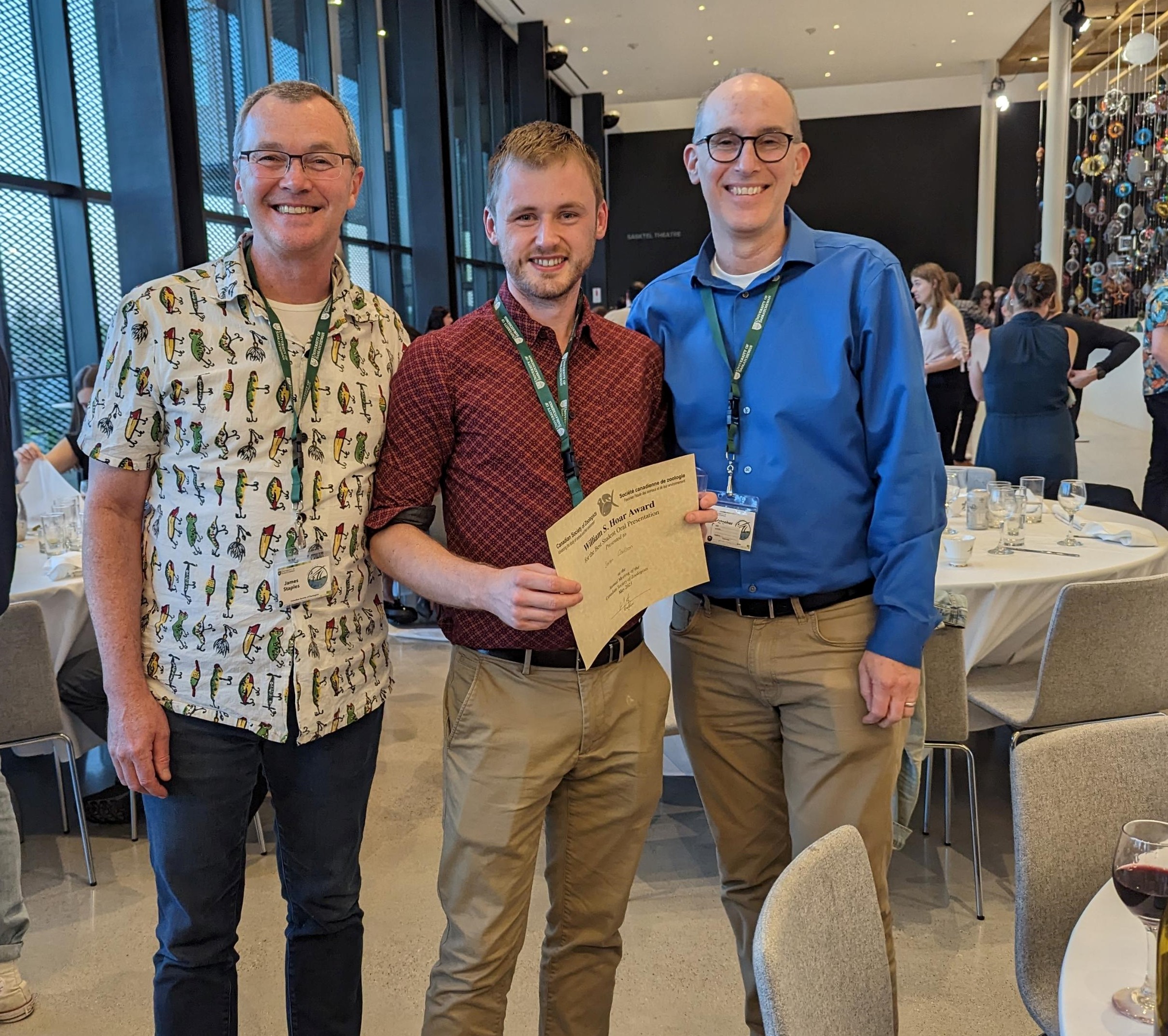
Jim Staples is a Professor in the Department of Biology at Western University's Faculty of Science. His research program focuses on understanding how metabolic systems of animals adapt to environmental challenges, particularly in endothermic animals dealing with cold temperatures. He leads an active laboratory studying hibernation metabolism, with a focus on 13-lined ground squirrels as a model organism. Dr. Staples' research interests center on comparative physiology and biochemistry, with specific expertise in metabolic adaptation during hibernation and torpor. His work examines metabolic reduction at cellular, mitochondrial, and enzyme levels, investigating how animals like ground squirrels survive winter by entering hibernation where body temperatures may fall below freezing and metabolic rates are reduced by over 90%. He employs advanced techniques including mitochondrial respirometry, molecular biology, and imaging to understand the mechanisms of metabolic suppression and thermogenesis. Analysis of Dr. Staples' recent publications reveals a strong focus on mitochondrial metabolism during hibernation across multiple species. His work spans from fundamental mechanisms of metabolic suppression to practical applications in understanding energy conservation in extreme conditions. The research demonstrates interdisciplinary approaches combining physiology, biochemistry, molecular biology, and comparative studies across mammals, birds, and insects. Dr. Staples actively mentors graduate students, with several current PhD candidates and numerous former students who have gone on to successful careers in academia and industry. His laboratory provides opportunities for students interested in metabolic biochemistry and comparative physiology, with guaranteed teaching assistant funding and summer support for graduate students. His laboratory utilizes advanced techniques including MRI imaging of hibernating animals, mitochondrial respirometry, and molecular analyses to investigate metabolic adaptations. The research has implications for understanding metabolic diseases, organ preservation, and the fundamental limits of mammalian physiology.
Tim Nuttle is an Adjunct Assistant Professor and Principal/Founder of Oikos Ecology LLC, a consulting firm specializing in ecological planning and ecosystem restoration. With over 28 years of experience, he focuses on wetland, stream, and forest ecology; restoration ecology; green infrastructure; ecological modeling; and statistical analysis. His work bridges ecological science with practical applications in collaboration with engineers, planners, and environmental professionals. Research Interests include understanding complex, species-rich ecological systems, their responses to human-caused environmental changes, and strategies for restoration and management. He emphasizes interdisciplinary collaboration and the integration of ecological theory into real-world projects. Representative Publications highlight his expertise in stream restoration, trophic dynamics, and the long-term impacts of herbivore overabundance. His recent work (2022) involves conservation leadership through the ESA Nominations Committee. Contact : nuttle.tim@gmail.com
Andre Boustany is a Researcher at Duke University's Nicholas School of the Environment, specializing in marine conservation and fisheries ecology. He is affiliated with the Marine Geospatial Ecology Lab under Dr. Patrick Halpin, focusing on pelagic fish and fisheries management. His work integrates geospatial statistics, electronic tagging, and genetics to study tuna, billfish, and shark migration patterns, habitat utilization, and population structure. He actively advises NOAA through roles in the Atlantic Highly Migratory Species Advisory Panel, US ICCAT Advisory Committee, and IATTC Scientific Advisory Subcommittee, promoting evidence-based policies for pelagic fish management in the Atlantic and Pacific Oceans. His research emphasizes reducing bycatch and enhancing fishing efficiency through applied ecological approaches. Key contributions include developing dynamic ocean management strategies, analyzing impacts of mesoscale eddies on tuna catch, and tracking bluefin tuna movements using satellite and acoustic tags. Recent grants include projects funded by the University of North Carolina - Chapel Hill focused on telemetry and marine resource management. Scientific contributions span habitat modeling, species distribution analysis, and the socio-political dimensions of fisheries governance. His work frequently addresses the intersection of technological advancements (e.g., tagging, genomics) with ecological and conservation challenges. He collaborates across disciplines to bridge gaps between scientific findings and policy implementation, particularly for highly migratory species. Professional service includes advisory roles shaping international fisheries policies, while his lab’s interdisciplinary approach addresses both ecological and human dimensions of marine resource management.

.jpg)