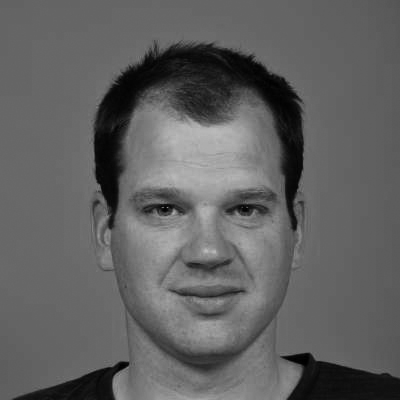
Henri Sumelius is a Researcher at Åbo Akademi University's Faculty of Science and Engineering, Department of Environmental and Marine Biology. He earned his PhD in Aquatic Sciences from the University of Helsinki in 2020, focusing on population dynamics of flounders in the Baltic Sea. Currently, he works on the Finnish Nature Panel's LITORE project, assessing coastal marine biodiversity and developing conservation guidelines for decision-makers. PhD in Aquatic Sciences (University of Helsinki, 2020) Project Researcher, LITORE Project (Åbo Akademi University) Former Project Manager, EU Interreg RETROUT (HELCOM) Dr. Sumelius specializes in aquatic biology and ecology, with expertise in Baltic Sea flounders, population dynamics, Bayesian modeling, and conservation biology. His work bridges ecological research with population genetics, biomanipulation, and environmental policy. His publications focus on marine biodiversity, cryptic speciation in flounders, climate change impacts on coastal ecosystems, and habitat conservation. Key themes include population modeling, environmental drivers, and conservation policy development. He collaborates with organizations like HELCOM and the Finnish Nature Panel, contributing to river restoration projects and marine biodiversity assessments. His research informs environmental policy through interdisciplinary approaches combining ecology, genetics, and habitat monitoring.
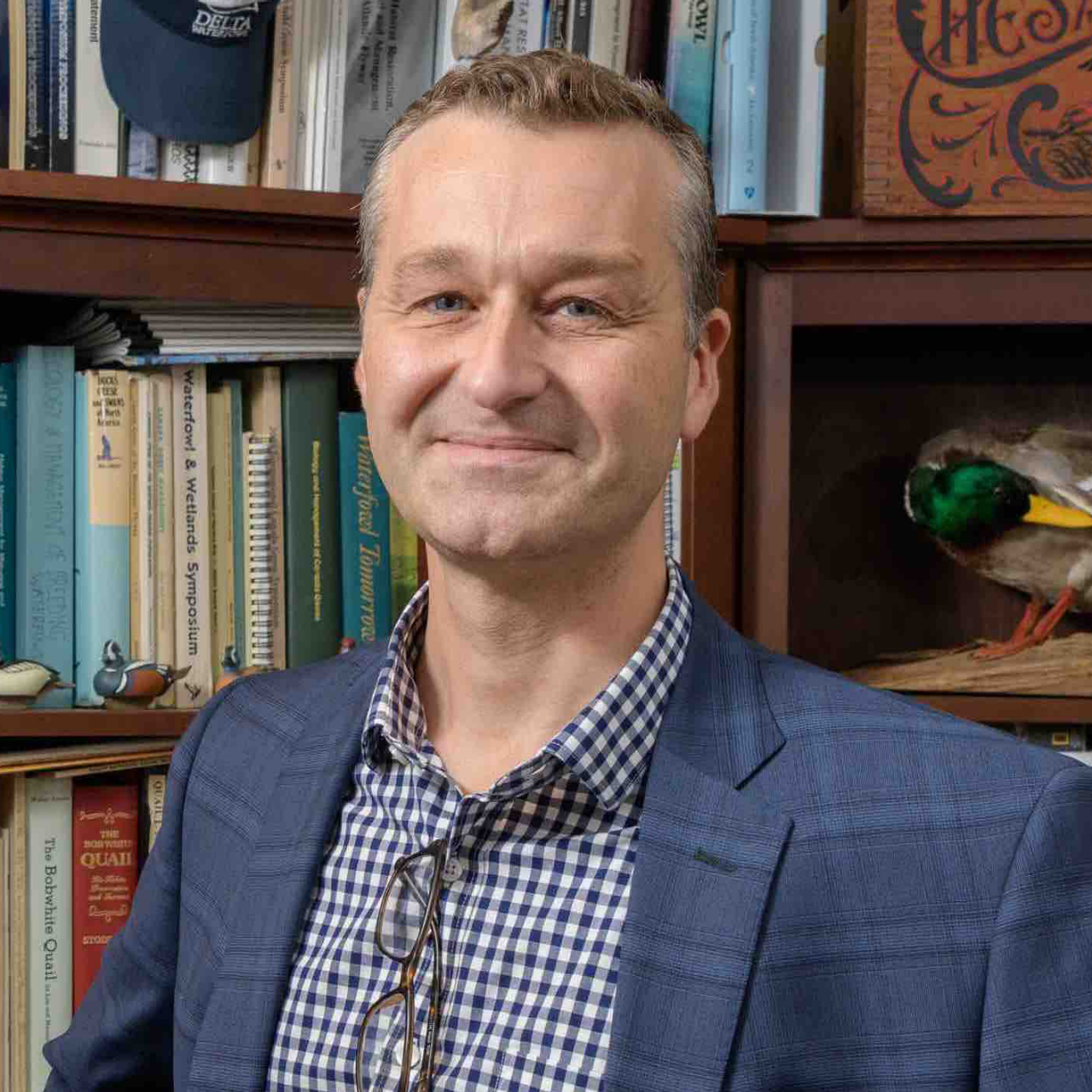
Chris Williams is a Professor of Wildlife Ecology at the University of Delaware in the Department of Entomology and Wildlife Ecology. He holds joint appointments in the Biden School of Public Policy & Administration and affiliations with the Quantitative Biology and Delaware Environmental Institute . Previously served as Associate Provost for Sustainability (2023-2024) and has held positions from Assistant to Associate Professor at the same institution. Ph.D. in Wildlife Ecology with a minor in Natural Resource Policy (University of Wisconsin, 2001) M.S. in Wildlife Ecology (University of Wisconsin, 1996) B.S. in Zoology and Botany (Miami University, 1994) Dr. Williams specializes in wildlife ecology with a focus on waterfowl and nongame species . His research spans bioenergetics , habitat modeling , avian influenza dynamics , and environmental policy , particularly concerning the New Jersey Pine Barrens , Delmarva Peninsula , and Atlantic Flyway systems. Publications frequently address carrying capacity estimation, time-energy budgets , and covey dynamics . His 15 most recent articles (2024-1994) reveal consistent work in waterfowl ecology , habitat modeling , and policy analysis . Key trends include avian influenza transmission in waterfowl, Arctic goose population dynamics , and human-wildlife conflict resolution through policy innovations. Notable collaborations span institutions including University of Wisconsin , University of Florida , and U.S. Fish & Wildlife Service . Scientific recognition includes: 2014 Dennis Raveling Scholarship 2014-15 Ankney Scholarship 2013 Outstanding Book Award (Texas Chapter, The Wildlife Society) As an advisor, Williams has mentored 35+ graduate students and postdocs across Wildlife Ecology , Energy & Environmental Policy , and Biological Sciences . Current projects involve renewable energy impacts on Arctic geese, wood duck nest box studies, and avian influenza transmission models. He leads research teams at the UD Waterfowl and Upland Gamebird Center and contributes to Delaware’s environmental policy through the Sustainability Council.
Christian Tudorache is a University lecturer at Leiden University's Leiden Institute of Biology (IBL) within the Animal Sciences department. His research focuses on fish migration patterns, eel population dynamics, and the behavioral adaptations of aquatic species under environmental stresses. Notably, he has studied eel reproduction challenges and their declining populations, utilizing artificial river systems to understand migratory behaviors. Key research areas include the ecological roles of 'ugly fish' in ecosystems, the impact of environmental changes on fish biology, and the interplay between social behavior and stress responses in species like zebrafish. His work often bridges fundamental biology with applied conservation challenges. Recent media engagements include discussions on eel population declines and fish behavioral studies in Dutch waters. While no formal awards are listed, his contributions to fish migration research are highlighted through collaborative projects and public outreach. Advising: Supervises PhD candidate Dani Crowley. No grants or specific lab affiliations detailed in available texts.
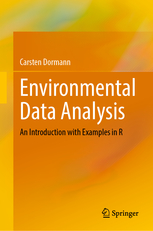
Carsten Dormann is a Full Professor at the University of Freiburg since 2011, working in the Department of Biometry and Environmental System Analysis within the Faculty of Biology. His work bridges statistical methodology with ecological applications, focusing on improving analytical approaches in environmental science. He leads research on statistical ecology, species distribution modeling, and plant-pollinator interactions, with a strong emphasis on methodological rigor and evidence-based environmental science. Professor Dormann completed his Diploma (equivalent to an MSc) in Biology at the University of Kiel (1996), followed by a PhD in Plant Ecology from the University of Aberdeen (2001) under Dr. Sarah Woodin and Prof. Steve Albon. He earned his Habilitation at the University of Göttingen (2008), and worked as a PostDoc and Senior Research Scientist at the Helmholtz Center for Environmental Research-UFZ (2002-2011) before joining Freiburg. Dr. Dormann's research focuses on comparing, challenging and improving the toolbox of statistical ecology . He investigates how ecological datasets, often small but complex, can be properly analyzed when common statistical approaches may fail. His work emphasizes formal statistical integration of ecological models and data , advocating for rigorous representation of ecological understanding through quantitative predictions. He champions an evidence focus in environmental science , drawing parallels with evidence-based medicine to promote transparent evaluation of causal mechanisms. Specific areas include spatial autocorrelation, null models, collinearity, species distribution modeling, and plant-pollinator interactions. His recent publications reveal a strong focus on ecological network analysis, species distribution modeling under climate change, and methodological improvements in ecological statistics. The research spans theoretical developments in network topology and practical applications in conservation, with increasing integration of machine learning approaches while maintaining ecological interpretability. A notable trend is the emphasis on temporal dynamics in ecological systems and developing more robust methods for predicting ecological responses to environmental change. Professor Dormann currently supervises twelve PhD students across various ecological and statistical topics, with an extensive record of past supervision spanning over thirty doctoral candidates. His teaching contributions include authoring the textbook Environmental Data Analysis: An Introduction with Examples in R (2017) and developing statistics courses for environmental sciences. He maintains an active scholarly blog discussing methodological challenges in ecology, with recent posts addressing species richness metrics, bias-variance trade-offs, and the relationship between ecological science and policy. His work bridges theoretical statistical development with practical ecological applications, emphasizing scientific credibility and methodological rigor throughout.
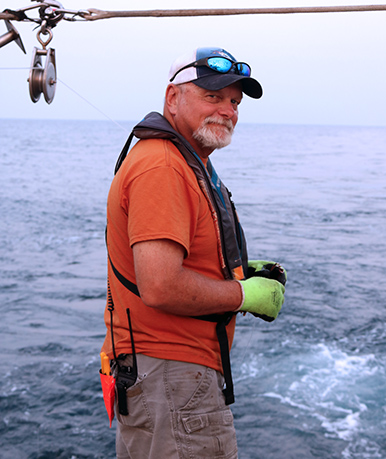
Steve Murawski is a Research Professor and St. Petersburg Downtown Partnership Peter R. Betzer Endowed Chair at the University of South Florida (USF) College of Marine Science. He serves as Director and Principal Investigator for the Center for Ocean Mapping and Innovative Technologies (COMIT), a NOAA Office of Coast Survey cooperative agreement, and formerly directed the Gulf of Mexico Research Initiative-funded Center for Integrated Analysis and Modeling of Gulf Ecosystems (C-IMAGE). Dr. Murawski earned his Ph.D. from the University of Massachusetts-Amherst in 1984. His research focuses on population dynamics of exploited marine species, anthropogenic stress impacts on ecosystems, and ecosystem modeling. Specializing in Fisheries Biology, Marine Ecology, Pollution Impacts, Ocean Mapping, and Undersea Technologies, he develops science-based approaches for marine resource sustainability. His recent publications (2023-2025) reveal strong emphasis on Gulf of Mexico ecosystem dynamics, advanced bathymetric mapping techniques, and pollution impacts. Key trends include multiscale terrain modeling (e.g., MultiscaleDTM), genetic population analyses, oil spill effects, and contaminant studies (PFAS, PAHs), demonstrating integration of geospatial technology with ecological assessment. Dr. Murawski's scientific recognition includes: Department of Commerce Gold Medal Senior Executive Service Meritorious Rank Award Elected Fellow of the American Association for the Advancement of Science As Principal Investigator for COMIT and former C-IMAGE Director, he secured multi-million-dollar funding from NOAA and GoMRI. His educational initiatives like Scientist at Sea enhance geoscience diversity through research-integrated training. Dr. Murawski formerly served as Chief Scientist of the National Marine Fisheries Service, providing foundational science for global fisheries management. He leads COMIT's five focus areas: Uncrewed Systems, Enhanced Geodetic Observations, Applied Hydrography, Forecasting & Remote Sensing, and Coastal Network Development. His C-IMAGE consortium involved 18 institutions across 5 countries studying Deepwater Horizon impacts, producing 250+ publications and $36.6M in research.
Tim Nuttle is an Adjunct Assistant Professor and Principal/Founder of Oikos Ecology LLC, a consulting firm specializing in ecological planning and ecosystem restoration. With over 28 years of experience, he focuses on wetland, stream, and forest ecology; restoration ecology; green infrastructure; ecological modeling; and statistical analysis. His work bridges ecological science with practical applications in collaboration with engineers, planners, and environmental professionals. Research Interests include understanding complex, species-rich ecological systems, their responses to human-caused environmental changes, and strategies for restoration and management. He emphasizes interdisciplinary collaboration and the integration of ecological theory into real-world projects. Representative Publications highlight his expertise in stream restoration, trophic dynamics, and the long-term impacts of herbivore overabundance. His recent work (2022) involves conservation leadership through the ESA Nominations Committee. Contact : nuttle.tim@gmail.com
Patrick Harris serves as a Teaching Associate Professor in the Department of Biology at East Carolina University, conducting research on marine fish life history patterns and species distribution dynamics. His work examines ecological responses to anthropogenic and environmental pressures in Atlantic coastal ecosystems. Research interests include: Long-term life history analysis of marine fish populations Impacts of fishing mortality on reef fish communities Environmental change effects on fish population dynamics Atlantic southeastern U.S. reef fish ecology Pan-oceanic distribution of deep-water species (wreckfish, barrelfish) Migratory behavior of pelagic fish species Based in Howell Hall (room N108), Professor Harris maintains active research programs with contact available via harrispa@ecu.edu or 252-737-2082. His expertise bridges fisheries science, marine ecology, and conservation biology within the Department of Biology's academic framework.
Dr. Stefan Woltmann is a Professor of Biology at Austin Peay State University (APSU) and serves as Director and Principal Investigator of the Center of Excellence for Field Biology. His research integrates avian ecology, conservation genetics, and field-based studies of neotropical birds, with a geographic focus spanning the Gulf Coast, Central America, and Atlantic seaboard. Education: Ph.D. in Ecology and Evolutionary Biology, Tulane University (2010) M.S. in Biology, University of Southern Mississippi (2000) B.A. in Environmental Science, S.U.N.Y. College at Purchase (1993) Research Focus: Dr. Woltmann investigates avian responses to environmental change, including oil spill impacts on Seaside Sparrows, genetic structure of bird populations, and tropical forest fragmentation effects. His lab employs genetic tools alongside field ecology to address conservation challenges in coastal and rainforest ecosystems. Publication Trends: Recent work (2014–2021) emphasizes population genetics of Seaside Sparrow subspecies along the Gulf and Atlantic coasts, pollution impacts from the Deepwater Horizon spill, and conservation applications. Earlier studies (2007–2013) explored tropical bird ecology in Costa Rica and Nicaragua, hybridization dynamics, and migration stopover habitats. Laboratory: Leads the Woltmann Bird Lab under the Center of Excellence for Field Biology, conducting field research across diverse avian habitats. No lab website is provided.
Dr. Roeland Bom is a Postdoctoral Researcher in the Coastal Systems Department at the Royal Netherlands Institute for Sea Research (NIOZ), specializing in marine organism responses to environmental change. His work spans international field sites including Oman's Barr Al Hikman mudflats, Guinea-Bissau's Bijagós Archipelago, and North Sea ecosystems. Dr. Bom's research focuses on migration ecology of shorebirds (particularly Bar-tailed Godwits), intertidal ecosystem dynamics , and climate change impacts on avian populations . His innovative work combines GPS telemetry with historical ecological data to establish baselines for measuring biodiversity change. Recent projects examine how warming climates homogenize migratory bird subspecies and track epic migration routes across three continents. His publication record demonstrates consistent output in marine ecology journals, with recent work published in Journal of Natural History and ZooKeys . Key findings include the discovery of new burrow morphologies in Omani mudflats, documentation of skate recovery in the North Sea, and recognition of a new bar-tailed godwit subspecies. Dr. Bom maintains active collaborations with: University of Amsterdam (climate-bird interactions) Sultan Qaboos University (Oman migration tracking) University of Aveiro (West African fieldwork) WWF (North Sea conservation initiatives) His research methodology integrates cutting-edge telemetry with historical ecological analysis, providing unique insights into ecosystem resilience under rapid environmental change. Current work emphasizes real-time migration tracking through radio transmitters and citizen science platforms, particularly for Bar-tailed Godwits wintering in the Middle East.