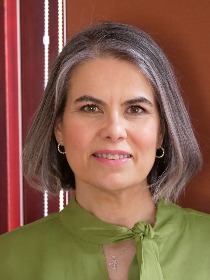
Swantje Falcke is an Assistant Professor in Economic and Social History at Utrecht University's Department of History and Art History. As part of the College of Humanities, her research focuses on migrant integration, naturalization, and the interplay between environmental change and migration patterns. Areas of Expertise: Migration and Societal Change, Pathways to Sustainability, In-Equality Studies Academic Background: PhD in Economics (2017) at Utrecht University, Post-Doc in Political Science at Maastricht University Her interdisciplinary work examines: Education-labor market mismatches among Dutch migrants Impact of German citizenship law reforms on naturalization Long-term effectiveness of refugee integration policies Environmental change effects on migration dynamics Scientific recognition includes: Duncan Black Award (2014) for political economy research NWO XS grant (2024) for environmental migration studies Her publications demonstrate methodological rigor, combining longitudinal analysis, policy evaluation, and empirical economic testing.
Rik Crutzen is a Full Professor at the Faculty of Health, Medicine and Life Sciences, Maastricht University, specializing in health promotion and digital interventions. His research focuses on leveraging technology to improve health behaviors across diverse populations, including adolescents, older adults, and immigrant communities. He leads projects in the CAPHRI research group for Promoting Health & Personalised Care. Research trends include: Digital health innovations (e.g., helplines, apps, algorithms) Chronic disease management (post-COVID-19, dementia risk) Health equity in immigrant populations (cervical cancer, maternal care) Behavioral interventions (physical activity, sleep, STI prevention) Systematic reviews and mixed-methods studies He has supervised 22 academic works and contributed to datasets on activity patterns and sleep-activity correlations. His work spans public health policy, health education, and technology integration.
Beatriz Noheda is a Full Professor of Functional Nanomaterials at the University of Groningen's Faculty of Science and Engineering, where she chairs the Solid State Materials for Electronics group at the Zernike Institute for Advanced Materials. She also serves as the founding Director of the Groningen Cognitive Systems and Materials center (CogniGron). Her academic journey began with a PhD in Physics from the Autonomous University of Madrid in 1996, followed by research positions at Brookhaven National Laboratory and various European institutions before joining Groningen through the prestigious Rosalind Franklin Fellowship program in 2004. Her research interests span the physics of functional materials with particular emphasis on ferroelectric, piezoelectric, and multiferroic thin films . She investigates the relationship between structure and functionality, focusing on nano-domain control through strain engineering and the unique properties of domain walls. Her work bridges fundamental physics with two promising application areas: piezoelectric energy harvesting for low-power electronics and the development of novel materials for neuromorphic computing . This dual focus reflects her vision of enabling the next technological revolution through materials science. Noheda's publication record shows a clear evolution from fundamental structural studies of ferroelectric materials toward cutting-edge research in hafnia-based ferroelectrics and neuromorphic computing materials. Her most recent work focuses on oxygen migration in hafnium-zirconium oxide systems, metal-insulator transitions in nickelates, and the development of novel ferroelectric phases suitable for next-generation electronic devices. These publications demonstrate her leadership in advancing the field from basic understanding toward practical applications in memory devices and cognitive computing systems. Fellow of the American Physical Society (2011) - awarded for fundamental structural studies of new phases in perovskite-type ferroelectric materials and domain nanostructures IEEE Robert E. Newnham Ferroelectrics Award (2020) - for outstanding contributions to understanding giant piezoelectricity in lead zirconate titanate Member of the Netherlands Academy of Technology and Innovation (AcTI) (2022) Elected Senior member IEEE (2021) Rosalind Franklin Fellowship (2004) - enabling her successful academic career in Groningen Noheda has secured substantial research funding throughout her career, including a Rosalind Franklin Fellowship (2004-2009), VIDI-NWO Fellowship (2004-2008), TOP-NWO project on Functional Nanowalls (2007-2012), multiple Zernike Institute Dieptestrategie grants, and a significant TOP-PUNT grant (2016-2021). She has supervised numerous students and early-career researchers, contributing to the development of the next generation of materials scientists. Her leadership extends to editorial roles on prestigious journals including Science, Physical Review Applied, and npj Quantum Materials. As Director of CogniGron, Noheda leads an interdisciplinary center focused on developing materials and systems for cognitive computing. Her team combines expertise in functional oxides, nanoelectronics, and neuromorphic engineering to create novel computing paradigms inspired by the human brain. The center represents a strategic initiative at the University of Groningen to position itself at the forefront of cognitive systems research.
Sarah Bracke is a Professor in Sociology of Gender and Sexuality at the Faculty of Social and Behavioural Sciences, University of Amsterdam . Her work critically examines intersections of gender, sexuality, race, and secularism, particularly in European contexts. She is deeply engaged in analyzing systemic crises—capitalist, nationalist, and ecological—and their impact on marginalized communities. Current Affiliation : University of Amsterdam, Faculty of Social and Behavioural Sciences. Research Focus : Gender theory, reproductive rights, anti-LGBTQ+ mobilizations, secularism, and the political dimensions of care economies. Bracke’s research emphasizes the deliberate erosion of gender, reproductive, and LGBTQ+ rights, often highlighting transnational collaborations among far-right and mainstream political forces. She connects these issues to broader crises, including climate change, capitalist precarity, and nationalist rhetoric. Her work advocates for feminist coalitions that transcend traditional boundaries, prioritizing care ethics and collective solidarity over exclusionary frameworks. Her recent publications explore topics like the racialized dimensions of reproductive politics, the secularist underpinnings of European ‘Muslim Question’ discourse, and the role of academia in resisting oppressive systems. Although no specific awards or advisees are mentioned in the text, Bracke’s scholarship consistently bridges feminist theory, critical race analysis, and critiques of neoliberalism, urging transformative responses to global crises.
Elly Konijn is a Full Professor at the Faculty of Social Sciences and Humanities and Network Institute of Vrije Universiteit Amsterdam, holding the Fenna Diemer-Lindeboom Endowed Chair. As chair of the Media Psychology Amsterdam program, her work bridges media psychology, social robots, affective processing, and adolescent media use . Research Pillars : Relating to media figures, virtual humans, and social robots Media-based reality perceptions and moral standards Adolescent media effects (cyberbullying, video games, body image) Recent Publications explore emotional bonding with robots, narrative complexity in film, and media's impact on adolescent cognition. Her 2025 Communication Theory article introduces a framework for human-artificial others relationships. Scientific Recognition : KNAW/NWO Eurekaprijs (2015) Computable Award (2021) Network Institute Competitive Research Funding (2025) She supervises 16 PhD students and leads projects like ROBOT-BOND (ERC Advanced Grant 2025-2029) and Communicating with Social Robots (2020-2025). Her documentaries (e.g., Alice Cares ) translate research into public discourse.
Valentina Mazzucato is Professor of Globalisation and Development at the Faculty of Arts and Social Sciences, Maastricht University, where she teaches and leads research in transnational migration and development. She founded and directed the research programme on Globalisation, Transnationalism and Development (2012–2020), co-founded the MA Globalisation and Development Studies, and led the development of the interdisciplinary BSc Global Studies. She is a member of the Royal Netherlands Academy of Arts and Sciences (KNAW) and has held leadership roles in major research initiatives including the ERC Consolidator Grant project MO-TRAYL. Her educational background includes a BA in Political Science and French Literature from Williams College, an MSc in Agricultural Economics from Michigan State University, and a PhD cum laude from Wageningen Agricultural University on indigenous soil and water conservation in Burkina Faso. Her research focuses on transnational migration between Africa and Europe, particularly the socio-economic and cultural impacts on migrants, their families, and communities. She employs mixed methods and multi-sited research designs, pioneering the simultaneous matched sample methodology. Her recent work explores transnational youth mobility, return visits, remittances, and temporalities of migration. The articles from 2024–2025 reveal a strong thematic consistency in migrant youth, transnational identity, methodological innovation, and policy implications, reflecting her leadership in interdisciplinary migration scholarship. ERC Consolidator Grant (2017–2023) for MO-TRAYL project Elected member of the Royal Netherlands Academy of Arts and Sciences (KNAW), 2019 Prof. Mazzucato has secured multiple international grants from NWO, NORFACE, and the ERC, enabling her to build transnational research teams and mentor PhD candidates and early-career researchers. She supervises Bachelor’s and Master’s theses and externally examines PhDs internationally. She is actively involved in policy engagement, having advised Queen Beatrix and participated in EU and NGO forums on migration and development. She also co-created a play with Ghanaian migrants to translate research into public dialogue. She leads the Transnational Links and Livelihoods Group and collaborates across institutions including Princeton University (Center for Migration and Development), African universities, and policy organizations. Her work bridges academic research, teaching innovation, and societal impact.
Dr. Shanshan Lan is a researcher affiliated with the University of Amsterdam’s Faculty of Social and Behavioural Sciences, where she contributes to the Moving Matters programme group. Her work focuses on urban anthropology, migration patterns, and racial formations across Asia and Euro-America. She examines transnational student mobility, global cities, African diasporas in China, and Chinese diasporas in the U.S., with a particular emphasis on class dynamics and social change. Her research employs ethnographic methods, including walking ethnography in urban environments, to explore how race and migration intersect with globalization. Notable projects include studies on African communities in Guangzhou, the role of the Catholic Church in African diasporas, and the experiences of Western entrepreneurs during the pandemic. Key Interests: Transnational migration, racial knowledge circulation, pandemic sociology, and global urban studies. Recent Focus: Whiteness studies in China, precarious migrant identities, and the impact of globalization on education and labor markets. Lan has received recognition for her work, including the Honorary Mention of the 2006 SUNTA Graduate Student Prize. Her publications span academic journals and edited volumes, addressing topics from racial inclusion policies to transnational business networks.
Marcel Lubbers is a Professor of Interdisciplinary Social Science: Relations between groups and cultures at Utrecht University's Faculty of Social and Behavioural Sciences. He leads the European Research Centre on Migration and Ethnic Relations (ERCOMER) and serves as a board member of the Interuniversity Center for Social Science Theory and Methodology (ICS). As associate editor of the European Sociological Review (ESR), he significantly influences academic discourse in migration and political sociology. His work represents Utrecht University in the focus area Migration and Societal Change, connecting research with broader societal implications. Professor Lubbers' research program centers on migration's societal impacts, particularly examining how immigration influences nationalism, Euroscepticism, and voting behavior. His work adopts both macro-level perspectives on societal cohesion and micro-level analyses of immigrant integration processes. Recent publications reveal his focus on political extremism, interethnic relations, and the psychological mechanisms behind public attitudes toward migration. His methodology combines large-scale survey analysis, comparative European studies, and longitudinal approaches to track attitude changes over time. Lubbers' scholarly output shows consistent engagement with contemporary political challenges, including analyses of radical right voting patterns, the workplace as a setting for interethnic contact, and the impact of national nostalgia on political attitudes. His research demonstrates methodological sophistication through meta-analyses, mixed-methods approaches, and innovative survey designs like the Dutch Parliamentary Election Study and Dutch Ethnic Minority Election Study. Through web publications on platforms like Stukroodvlees.nl and contributions to the Migration Advisory Council, Lubbers actively bridges academic research and public policy debates. His work provides evidence-based insights on migration policy, electoral behavior, and societal integration that inform both scholarly and policy discussions in the Netherlands and beyond.
Dr. Anouk Smeekes is an Associate Professor at Utrecht University's Department of Interdisciplinary Social Science, within the Faculty of Social and Behavioural Sciences. She leads research in the Youth Studies chairgroup, focusing on youth responses to societal challenges like climate change, populism, and colonial legacies. Her teaching spans the MERM Research Master (Ethnic Prejudice course), YDSC Master (thesis coordination), and ISS bachelor programs, while also serving on the Faculty's Exam Committee. Her research explores social/political psychology mechanisms through thematic pillars: Emotional responses of youth to societal disruptions National nostalgia's role in shaping political attitudes Intergroup relations in multicultural societies Climate anxiety and civic engagement pathways Recent publications demonstrate strong emphasis on collective nostalgia, identity politics, and youth psychology. Works frequently examine how historical narratives influence contemporary intergroup conflicts and radicalization, with increasing focus on climate-related anxieties (2020-2024). Methodologically, she employs cross-cultural comparisons across 27+ countries. Awards & Recognition: Rae and Dr. Dan Landis Outstanding Dissertation Award (2015) Research Leadership: CONCILIARE Horizon Europe project co-leader (2024-2027): Examining Europe's colonial heritage transitions Principal investigator: Youth climate anxiety/hope dynamics study (Faculty-funded) Supervises 10+ Master's theses annually in Migration/Ethnic Relations programs
Prof. Jessica Roitman is a Full Professor at Vrije Universiteit Amsterdam, holding dual appointments in the Faculty of Social Sciences and Humanities (Religious History and Heritage) and the Amsterdam Sustainability Institute. She specializes in Jewish Studies, focusing on social and cultural history of Jews from the early modern period through the 19th century, with expertise in Caribbean, Atlantic, and colonial histories. She co-leads the 'Traces of the Transcendent' research programme at CLUE+ and serves as editor-in-chief for the Journal of Early American History . Her roles include supervising BA, MA, and PhD theses and teaching courses on antisemitism, Amsterdam Jewish Culture, and religious heritage. Education: PhD in History, Leiden University (2009) MA in Latin American Studies, Vanderbilt University (1996) BA in Religion, Maryville College (1993) Her research explores intersections of minorities, ethnicity, and religion in colonial contexts. She actively engages in public discourse through media contributions addressing contemporary issues like academic activism and university policies. She serves on the board of Stichting Het Menasseh Ben Israel Instituut, furthering Jewish socio-cultural research.
Sergio Carrera serves as Senior Research Fellow and Head of the Justice and Home Affairs Unit at the Centre for European Policy Studies (CEPS), a prominent Brussels-based think tank. Additionally, he holds the position of Adjunct Professor at the Paris School of International Affairs (PSIA) in SciencesPo, France, where he contributes to academic teaching and research in international affairs. Dr. Carrera's academic background includes a Ph.D. on immigration and citizenship from Maastricht University (The Netherlands), an LL.M. in European, Comparative and International Law from the University of Maastricht, and a Law Degree from Universidad de Salamanca in Spain. His extensive educational foundation in European and international law underpins his expertise in EU justice and home affairs policy. His primary research interests focus on EU justice and home affairs (JHA) law and the Area of Freedom, Security and Justice policy, with particular emphasis on migration, asylum, citizenship, and Schengen policies. Dr. Carrera's expertise also extends to EU criminal justice law and police cooperation, examining their impacts on data protection, privacy, and the rights of the defense. His work consistently addresses the intersection between security measures and fundamental rights within the European context. Dr. Carrera has produced an extensive body of scholarly work, with over 190 published publications according to the available information. His recent research has particularly focused on EU-US data transfers, rule of law challenges in the context of migration management, global asylum governance, and the evolving landscape of EU security policy. His publications demonstrate a consistent concern with ensuring that security and migration policies uphold fundamental rights and the rule of law. Among his notable contributions are policy analyses on the European Green Deal's implications for climate policy, assessments of the EU's response to the Ukraine crisis, and examinations of the impact of the Trump administration on EU security policy. His research often bridges academic analysis with practical policy recommendations for EU institutions. Dr. Carrera leads and participates in numerous research projects addressing critical issues in EU policy. Current initiatives include "Reclaiming our past, rebuilding our future: new approaches to fighting antigypsyism" (2024-2026) and the "Study on Mapping Civil Dialogue Practices in the EU Institutions" (2024-2025). Previous significant projects include "Global Asylum Governance and European Union's Role" (ASILE, 2019-2023), "Pan-European Response to the ImpactS of COVID-19" (PERISCOPE, 2020-2023), and "IT tools and methods for managing migration FLOWS" (ITFLOWS, 2020-2023). His work has been commissioned by various EU institutions, including the European Parliament's Policy Department for Citizens' Rights and Constitutional Affairs, demonstrating the policy relevance and impact of his research. Dr. Carrera's expertise is frequently sought for task forces addressing timely issues such as EU-US data transfers, digital justice, and cross-border cooperation in criminal matters.
Nando Sigona is Professor of International Migration and Forced Displacement and Director of the Institute for Research into Superdiversity (IRiS) at the University of Birmingham, UK. He serves within the School of Geosciences Human Geography and Spatial Planning in the Urban Geography department, where he leads significant research on migration policy and forced displacement. His research spans critical areas including undocumented migration, the migration-citizenship nexus, naturalisation and denaturalisation processes, Romani politics and anti-Gypsyism, EU asylum systems, Brexit impacts on European mobility, and child and youth migration. Sigona's work is characterized by its policy relevance and theoretical innovation in understanding contemporary migration governance. His recent publications demonstrate a clear trend toward examining the intersection of migration enforcement, digital platforms, and labor markets, particularly evident in his 2025 research on migrant food delivery riders in Birmingham. His scholarly output spans foundational theoretical works like The Oxford Handbook of Superdiversity (2022) to urgent contemporary analyses of migration enforcement in the gig economy. Sigona has received significant research funding including Horizon Europe support for the I-CLAIM project (Improving the living and labour conditions of irregularised migrant households in Europe), where he serves as co-Investigator and Scientific Director. His work has been published across leading journals including Sociology, Social Anthropology, Antipode, Journal of Ethnic and Migration Studies, and Ethnic and Racial Studies. Founding editor of Migration Studies (Oxford University Press) Lead editor for Global Migration and Social Change book series (Bristol University Press) Director of the Institute for Research into Superdiversity (IRiS) His recent blog posts and media commentary reveal active engagement with contemporary policy debates, particularly regarding Labour's immigration enforcement strategies targeting migrant workers in the gig economy. Sigona's research team has documented a 79% increase in immigration raids in Birmingham since Labour came to office, based on Freedom of Information data (FOI2025 07429).
Dr. Floris Peters is an Assistant Professor in Interdisciplinary Social Science at Utrecht University, specializing in Migration, Cultural Diversity, and Ethnic Relations. He holds a PhD from Maastricht University (2015) on citizenship's role in immigrant integration. His research focuses on citizenship policies, migration integration, and large-N administrative data analysis. Previously, he was a postdoctoral researcher in the ERC-funded 'Migrant Life Course and Legal Status Transition' (MiLifeStatus) project (2018–2021) and a Visiting Research Fellow at Malmö Institute for Studies of Migration, Diversity and Welfare (MIM). His work bridges migration studies, public policy, and social capital effects. Research interests include citizenship naturalization dynamics, socio-economic integration of migrants, and policy evaluation. Notable contributions explore the impact of dual citizenship, naturalization costs on immigrant decisions, and social capital's role in organ donation. Awards include the FASOS Valorisation Prize (2018) and APSA honors (2017). His interdisciplinary approach combines quantitative methods with policy analysis, addressing migrant life course trajectories and institutional conditions. He collaborates across institutions, leveraging administrative data to understand integration pathways and policy outcomes.
Dr. Debraj Roy is a Visiting Professor at the University of Amsterdam (UvA), affiliated with the Faculty of Science, Mathematics and Computer Science and the Informatics Institute. His research focuses on agent-based modeling, socio-economic dynamics, environmental resilience, and blockchain technology. He investigates complex systems such as urban slums, disaster recovery, and climate adaptation using computational methods like remote sensing and machine learning. His work bridges theory and practice, offering insights into policy design for sustainable development and social equity. Key research interests include slum dynamics, poverty traps, and the application of blockchain oracles for decentralized systems. He employs advanced techniques such as global sensitivity analysis and manifold learning to explore multi-scale socio-environmental challenges. His recent articles highlight trends in carbon pricing, flood risk valuation, and multi-agent systems. Earlier work concentrated on urban inequality in cities like Bangalore and Mexico City, leveraging geospatial and statistical tools. No scientific awards or grants are explicitly listed. His advising and team collaborations are unspecified in the provided text.
Pál Nyiri is a Full Professor at the Vrije Universiteit Amsterdam, affiliated with the Faculty of Social Sciences and Humanities. He holds positions in the departments of Social and Cultural Anthropology and Art and Culture, History, Antiquity, as well as the Mobilities, Beliefs and Belonging research group. His research focuses on Chinese elite mobility, nationalism, Eastern European immigration politics, and comparative studies of Eastern Europe and China. Nyiri supervises PhD theses on topics including migrant worker advocacy, the jade trade, Chinese museum education, and maternity concepts among Chinese women in the Netherlands. Education: He studied chemistry and Asian Studies in the Soviet Union, Hungary, and the U.S., earning doctorates in history (Moscow State University) and sociology (Hungarian Academy of Sciences). Prior to joining VU Amsterdam, he taught at Macquarie University in Sydney. Research Interests: Nyiri explores how Chinese elites navigate global spaces, the intersection of nationalism and transnationalism, and migration-driven cultural transformations. His work bridges anthropology, sociology, and political science, with a focus on contemporary China’s global engagements. Scientific Awards: He was a 2003-2004 fellow at the Wissenschaftskolleg zu Berlin. He serves on editorial boards for journals like The China Journal and The Australian Journal of Anthropology , and chairs the academic committee of the International Institute of Social History. Teaching and Grants: He teaches migration studies, nationalism, and the politics of history. His recent grants and collaborations involve analyzing Chinese corporate strategies in Europe, middle-class migration motivations, and transnational digital nationalism. Labs/Teams: Active in the MOBB research group, focusing on global mobilities and inequalities. He co-edits the New Mobilities in Asia book series with Amsterdam University Press.