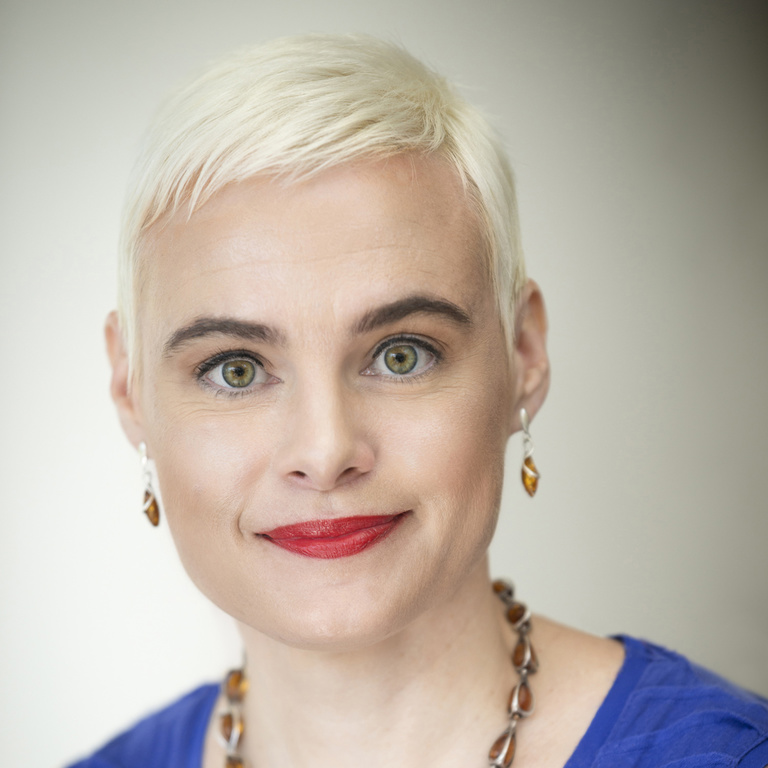
María José Álvarez Álvarez is a Professor at the Universidad de León , affiliated with the Faculty of Health Sciences (Ponferrada) and the Department of Nursing and Physiotherapy . She leads the research group SALBIS: Salud, Bienestar, Ingeniería y Sostenibilidad Sociosanitaria . PhD in Health Sciences from Universidad de León (2017) Specializes in physiotherapy, historical healthcare systems, and social dimensions of health Her research spans neuroscience , social history , and community health , with recent work on antimicrobial resistance awareness, oligodendrocyte dynamics in ischemia, and 18th-century healthcare institutions. Her publications blend historical analysis with contemporary public health challenges. Key article themes include: Early Modern Iberian social structures Neuroprotective mechanisms in stroke models Historical evolution of charitable institutions
Tommaso Cavazza is an Assistant Professor and Group Leader at the Faculty of Medicine, University of Zurich, where he leads the Cavazza Lab for Cellular Embryogenesis and Genome Editing. His lab is part of the Department of Reproductive Endocrinology and affiliated with the Department of Molecular Life Sciences. He is also a member of the University Research Priority Program 'Human Reproduction Reloaded – H2R,' supporting interdisciplinary research in reproductive technologies. Assistant Professor, University of Zurich Group Leader, Cavazza Lab Member, URPP-H2R Program Department of Reproductive Endocrinology, Faculty of Medicine Tommaso Cavazza earned his PhD in Biomedicine from the Centre for Genomic Regulation (Barcelona) and conducted postdoctoral research at the Max Planck Institute for Multidisciplinary Sciences (Göttingen) under Melina Schuh. His work focused on embryonic aneuploidy and live imaging of bovine embryos. His research centers on understanding the cellular mechanisms of early mammalian embryogenesis, particularly the causes of embryonic failure such as aneuploidy and DNA damage in zygotes. The lab uses bovine embryos as a model system due to their similarity to human embryogenesis, combined with high-resolution live microscopy, proteomics, genomics, and CRISPR-based genome editing. The ultimate goal is to improve assisted reproductive technologies (ARTs) and evaluate the safety of germline editing. The 15 most recent publications reflect a strong focus on cell division, spindle dynamics, genome stability, and early development. Key themes include aneuploidy origins, zygotic DNA repair, chromatin remodeling, and CRISPR applications. Techniques span advanced imaging, molecular genetics, and quantitative analysis, with publications in top journals like Cell , Nature , and Nature Structural & Molecular Biology . Tommaso Cavazza is actively mentoring PhD students and postdoctoral researchers, including Ying Cai and Bernhard Magerl. His lab receives institutional funding through the UZH URPP-H2R program, enabling interdisciplinary collaboration with experts in ethics, law, and genome editing (e.g., Gerald Schwank group). The lab emphasizes ethical research standards, explicitly avoiding work on human embryos and using only bovine embryos derived from slaughterhouse byproducts. The Cavazza Lab is embedded in a rich research ecosystem, collaborating with clinical and basic scientists. The lab's work has implications for infertility treatment, conservation biology, and the ethical development of genome editing in reproduction.
Ronny Decorte is an Associate Professor at the Faculty of Medicine , KU Leuven , affiliated with the Department of Imaging & Pathology under the Forensic Biomedical Sciences unit. His research bridges forensic genetics , population genetics , and ancient DNA analysis , focusing on Y-chromosome evolution, familial kinship estimation, and post-mortem molecular processes. As Promotor of projects like 'An interdisciplinary mission to unravel historical mysteries through the Y-chromosome' (2025-2026) and 'The genetics behind historical socio-demography in Flanders' (2021-2025), Decorte integrates genetic data with historical narratives. His publications emphasize Y-chromosomal phylogeny , forensic DNA profiling , and microbiome applications in forensics . His contributions include developing tools like YMrCA for Y-ancestor time estimation and CSYseq for high-resolution Y-SNP/STR typing. He also explores post-mortem molecular dynamics (e.g., thanatotranscriptome DNA repair) and serves on institutional councils including the Faculty of Medicine Council and Biomedical Sciences Library Council .
Femida Handy serves as a Professor at the University of Pennsylvania's School of Social Policy and Practice, where she directs the PhD in Social Welfare program and holds Affiliated Faculty status with the Organizational Dynamics program under the College of Liberal and Professional Studies. Her academic leadership spans nonprofit sector economics, volunteering dynamics, and global philanthropy research, with a focus on cross-cultural comparative analysis. Her educational credentials include: Master of Arts (MA) from York University, Toronto Master of Environmental Studies (MES) from York University, Toronto Doctor of Philosophy (PhD) from York University, Toronto Research interests center on nonprofit entrepreneurship, micro-finance mechanisms, and environmental behavior transmission across generations. She investigates pandemic impacts on prosocial engagement, cultural phenomena like Hallyu's influence on youth well-being, and institutional factors affecting philanthropy. Her work bridges theoretical frameworks with practical nonprofit management challenges. Recent publications (2023-2025) reveal three critical trends: pandemic-induced transformations in volunteer/donor behavior, intergenerational environmental practices, and global philanthropy patterns. Articles analyze refugee nonprofit volunteering, unemployment-prosocial engagement links, and cultural boundary reshaping through phenomena like K-Pop, demonstrating methodological diversity across international contexts. Dr. Handy co-edited the award-winning Palgrave Handbook on Global Philanthropy and published prize-winning articles in top journals. Her editorial leadership as former Editor-in-Chief of Nonprofit and Voluntary Sector Quarterly further underscores scholarly recognition. As Director of the PhD in Social Welfare program, she mentors doctoral candidates while shaping curriculum development. Her editorial roles and book authorship indicate substantial research funding history, though specific grants aren't detailed in sources. The children's book on ecological footprint demonstrates public engagement beyond academic publishing.
Sarah Ifft Decker is an Assistant Professor of History at Rhodes College, specializing in the intersections of gender, religion, and daily life in the medieval Mediterranean. Her teaching emphasizes diverse perspectives in the global Middle Ages, analyzing primary sources to challenge dominant narratives centered on Christian elites. She has published extensively on Jewish women's roles in medieval Catalan cities. Education: Ph.D. (Yale, 2017), M.A. (Jewish Theological Seminary, 2011), B.A. (Swarthmore, 2009) Research focuses on marginalized medieval communities, particularly Jewish women's experiences in economic and legal contexts. Her award-winning book The Fruit of Her Hands examines gendered labor patterns in Barcelona, Girona, and Vic between 1250-1350. Current projects explore Jewish legal adaptation in Christian environments and anti-Judaism in medieval representations. Academic output reveals interdisciplinary engagement with medieval economic networks, family law, and interfaith dynamics. Articles span topics like credit systems, marriage patterns, and legal documentation practices across religious communities in the Iberian Peninsula. Recipient of the prestigious 2024 La corónica International Book Award for her scholarship on medieval women's history. Regular contributor to academic discourse through book reviews in journals like Jewish Historical Studies and Speculum . Host of the public history podcast Media-eval: A Medieval Pop Culture Podcast , addressing modern interpretations of medieval history since 2018. Actively examining representations of medieval Jews in contemporary media through her article project on cinematic depictions.
Robin D. Clark, MD is a Professor in the School of Medicine with dual appointments in the Pathology Division (Department of Pathology and Human Anatomy) and Pediatric Genetics Division (Department of Pediatrics). He earned his AB from Smith College in 1975 and MD from the University of Arizona in 1978. His research focuses on medical genetics and rare disease diagnostics, with specialization in: Neonatal genetic disorders and dysmorphology Whole exome sequencing applications in clinical care Genotype-phenotype correlations in developmental syndromes Teratogenic effects of prenatal exposures Recent publications (2018-2025) demonstrate strong emphasis on: Rapid genomic diagnostics implementation in neonatal intensive care Novel gene-disease associations (e.g., FLVCR1, PLS3, RHOBTB2) Clinical characterizations of rare syndromes Prenatal and perinatal genetic counseling applications
Lisa Pope Fischer is an Associate Professor of Anthropology in the Department of Social Science at the New York City College of Technology, part of the City University of New York (CUNY) system, under the School of Arts & Sciences. Her academic work focuses on post-socialist Hungary, examining memory, identity, gender, aging, and cultural continuity through ethnographic research. Ph.D. in Anthropology, University of California, Los Angeles (UCLA), 2001 M.A. in Anthropology, University of Michigan, Ann Arbor B.A. in Anthropology, University of California, Los Angeles Her research interests lie at the intersection of cultural anthropology and post-socialist studies, with a strong emphasis on life histories of elderly Hungarian women , the kitsch-ification of communist material culture , and the ritualization of ethno-nationalism . She uses narrative and textual analysis to explore how personal and collective identities are reconstructed in the wake of political transformation. Her work bridges feminist theory, memory studies, and political anthropology, often focusing on marginalized voices and everyday practices. Her recent publications and fieldwork reveal a consistent thematic trajectory: the symbolic endurance of the socialist past in contemporary Hungarian society. Through studies on foodways, healthcare, nostalgia, and religious rituals, she demonstrates how cultural memory is actively reinterpreted rather than passively inherited. Her forthcoming book with Brill Publishing, Symbolic Traces of Communist Legacy in Present Day Hungary , synthesizes this research into a major contribution to postcolonial and post-socialist theory. She has been recognized with multiple PSC-CUNY research awards (2011–2016) and earlier support from Fulbright and the Hungarian government . Her academic service includes presenting at the American Anthropological Association and international conferences, as well as invited talks such as the Scholars Exchange series at CUNY. Faculty Fellowship Publication Program (2012) PSC-CUNY Awards 42–47 ($35,670 total) Fulbright Graduate Research Fellowship (1996–1997) Hungarian Government Grant (1996–1997) UCLA Dissertation Year Fellowship (2000) Lisa Pope Fischer teaches courses including Introduction to Anthropology, Gender and Culture, Witchcraft and Religion, and Sociology of Aging. She mentors students through collaborative ethnographic projects and is currently editing video interviews into a documentary for classroom use. Her research continues to explore how global forces intersect with local identities in post-socialist contexts.
Inara Verzemnieks is an Associate Professor in the Department of English at the University of Iowa, affiliated with the Nonfiction Writing Program within the College of Liberal Arts and Sciences. Her work bridges literary art, journalism, and historical inquiry, focusing on personal and collective memory in the aftermath of war and displacement. Her research centers on creative nonfiction, particularly immersive narratives that explore exile, trauma, family history, and cultural memory. She emphasizes deep, on-the-ground engagement with subjects, seeking stories that transcend spectacle through sustained presence and empathy. Her approach blends memoir, ethnography, and literary journalism to reconstruct silenced histories, especially those of the Baltic region in the 20th century. The themes across her recent works reflect a consistent focus on war memory, intergenerational trauma, material culture, and the landscapes of loss. Her publications span personal essays, travel narratives, and historical reconstructions, often drawing from Latvian and Eastern European contexts. She investigates how silence, objects, names, and places carry the weight of unspoken pasts. Pushcart Prize Rona Jaffe Writer’s Award Pulitzer Prize Finalist in Feature Writing Verzemnieks mentors students through her role in the Nonfiction Writing Program and contributes to graduate education at Iowa. Though no specific grants are listed, her acclaimed memoir and high-profile publications suggest sustained support for her research and writing. Her work embodies a commitment to narrative as a form of historical recovery and emotional truth. She conducts field-based research, often returning to Latvia to trace familial and historical paths, but no formal lab or research team is mentioned. Her methodology is deeply personal and observational, rooted in immersive storytelling rather than institutional collaboration.
Paula Pierozan is a researcher at Stockholm University's Department of Environmental Science, specializing in environmental toxicology and epigenetic mechanisms. With a PhD in biochemistry from Brazil's Federal University of Porto Alegre, she has dedicated her career to investigating effects of environmental pollutants like phthalates and perfluoroalkyl substances (PFAS) on cellular processes. Current focus on neurotoxicology and paternal epigenetic inheritance Department of Environmental Science affiliation Active in teaching Toxicology for Environmental Scientists (MI7015) and Research Trends in Toxicology (MI8016) Her research spans endocrine disruption , reproductive toxicology , and neurodevelopmental vulnerability , with particular emphasis on environmental pollutants' impact on testicular function , immune regulation , and epigenetic modifications . Recent work demonstrates application of 3D testicular models and high-content screening for assessing chemical toxicity at low concentrations. Key findings include mitochondrial membrane potential disruption in aquatic organisms, epigenetic alterations in breast cancer models , and developmental neurotoxicity patterns in neural stem cells. Her publications span journals like Archives of Toxicology , Environment International , and Cell Death and Disease .
Maryline Moulin is a prominent geophysics researcher specializing in plate tectonics, continental margin evolution, and integrated seismic analysis. She has led major oceanographic campaigns including PAMELA-MOZ05/03 and MAGIC projects, focusing on passive margins in the South Atlantic and East African regions. 2003 PhD from University of Western Brittany 2016 Project Leader for PAMELA campaigns Key collaborator in 15+ international seismic studies Her research spans diverse methodologies: Wide-angle seismic (OBS) profiling Multi-channel seismic (MCS) interpretation Gravity and magnetic anomaly analysis 3D structural modeling (Placa3D) Seismo-stratigraphic analysis Recent publications (2023-2025) reveal patterns in: Proto-oceanic crust formation Passive margin segmentation Quaternary contourite systems Transform margin tectonics Deep crustal architecture
Francisco Chacon Jimenez is a researcher affiliated with the Universidad de Murcia, focusing on social history, family studies, and local history. He earned his doctorate in 1977 with a thesis on 16th-century Murcia under Dr. Pere Molas Ribalta. His work explores early modern Spanish society, emphasizing family power structures, social reproduction, and Mediterranean regional dynamics. Universidad de Murcia Departamento de Historia (implied through collaborations) His research spans family dynamics, social mobility, and power elites, with collaborations on topics like Poder, Familia y Consanguinidad and Familias, experiencias de cambio y movilidad social . Key themes include household typology, inheritance systems, and rural society. Major publications analyze Murcia's 16th-century society, Castilian family property continuity (1988), and Lorca's 18th-century social reproduction (2002). He co-edited works like Reflexiones Sobre La Familia (2000) and HOGAR Y FAMILIA. MOVILIDAD SOCIAL (2000), contributing to debates on historical demography and social inequality.
Jan Gunnar Cederquist is an Assistant Professor at the Department of Computer Engineering, Instituto Superior Técnico, Technical University of Lisbon, since 2006. He is also a member of the SQIG (Security and Quantum Information Group) at IT (Instituto de Telecomunicações). His research focuses on mathematical modeling, formal specification, and verification, particularly in security protocols and language-based security. His work spans software verification, type theory, and cryptographic protocol analysis. He has contributed to fields like non-repudiation protocols, RBAC, audit logic, and distributed security. He has taught courses ranging from Software Specification to Language-Based Security at the PhD and MSc levels. His students include MSc candidates Fernando Mário Machado Marques and Carlos Magno Gaspar Vasconcelos. Previously, he held postdoctoral positions at the University of Twente, CWI, INRIA, and Imperial College London. He has chaired tracks at ACM SAC conferences (2010–2011) and served on program committees for security and formal methods events. His industry experience includes roles at Prover Technology and SEMCON.
Merita Zulfiu is a Full-time Associate Professor at the Faculty of Contemporary Social Sciences , South East European University (SEEU), Tetovo, Republic of North Macedonia. Her work focuses on the intersection of foreign direct investment (FDI), labor market dynamics, migration studies, and public policy in transition economies, particularly in the Western Balkans. PhD in Economics , Staffordshire University, UK (2014) MSc in Economics , Staffordshire University, UK (2007) Diploma in Marketing , SEEU (2004) Her research explores wage inequality, skill intensity, and brain drain in Macedonia, with recent publications addressing FDI impacts , public sector governance , and gender perspectives in energy efficiency . She contributes to regional conferences on migration, governance, and integration. Key trends in her 15 most recent articles include economic policy in transition economies , academic migration patterns , public administration reforms , and gender equity in policy design . While no explicit awards are listed, her work spans interdisciplinary collaborations with institutions like the International Labour Organization (ILO) and Transnational Press London.
Dr. Hemanth Tummala , Senior Lecturer in Genetics and Molecular Biology at the Blizard Institute, Queen Mary University of London, specializes in inherited bone marrow failure syndromes (IBMF) and their link to leukemia. His research employs next-generation sequencing and patient-derived stem cells to model diseases like dyskeratosis congenita (DC), focusing on telomere maintenance, ribosome biogenesis, and transcription-associated DNA repair. Education: BSc in Biotechnology (Bangalore University, India); PhD at The Roslin Institute (Edinburgh). Research: Identified novel genes (e.g., TYMS ) and digenic mechanisms (e.g., TYMS-ENOSF1 interactions) in DC, with implications for cancer therapy toxicity and targeted treatments like PAPD5 inhibitors. Publications: Key work includes studies on telomere biology, nucleotide metabolism, and genetic modifiers in IBMF. Teaching: Co-module lead for advanced genetics courses and PBL facilitator.
Dr. Tomokazu Kawashima (Tomo Kawashima) is an Associate Professor at the University of Kentucky's Martin-Gatton College of Agriculture, Food and Environment, Department of Plant and Soil Sciences. He earned his Ph.D. in Molecular, Cell, and Developmental Biology from the University of California (2009) and a B.S. from the University of Tsukuba (2002). His research focuses on the molecular and cellular mechanisms governing plant sexual reproduction, seed development, and cytoskeleton dynamics in flowering plants and land plant evolution. He pioneered real-time live-cell imaging methods to study fertilization processes in Arabidopsis thaliana, revealing F-actin's role in sperm nuclear migration and the evolutionary transition from microtubule to F-actin-based systems in land plants. Recent publications highlight his work on dehydrin protein interactions, peri-germ cell membranes, coenocytic endosperm dynamics, and gene silencing in pollen cells. His lab investigates how environmental factors like temperature influence seed growth and yield. Scientific awards include the National Science Foundation award for plant fertilization research and editorial board memberships at The Plant Cell Plant & Cell Physiology PLOS Genetics . He mentors graduate researchers and recruits undergraduate students for projects on plant reproduction.