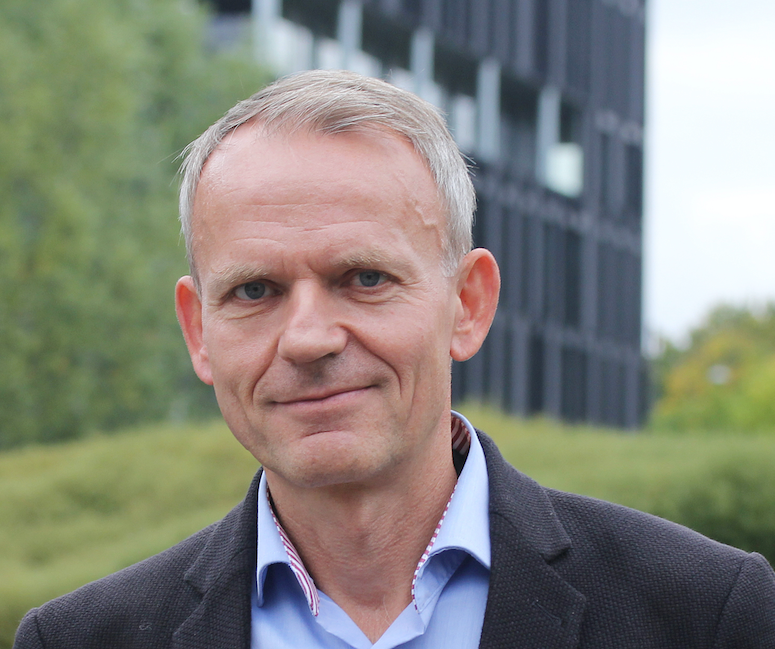
Jakub Stachowski is an Associate Professor at the Department of Sociology and Political Science, Norwegian University of Science and Technology (NTNU). His research focuses on international migration, local community dynamics, and rural sociology, with particular expertise in Polish migrant experiences in Norway. He explores intersections between mobility, social integration, and place-based identities through ethnographic methods. Current project: War's Edges examines how border communities in Norway and Poland adapt to the Ukraine war's impacts. Key themes: socio-spatial isolation, health practices among migrants, and ethical challenges in rural ethnography. His recent publications analyze superdiversity in rural areas, recognition gaps in agricultural migration, and translocal social anchoring. He teaches courses on inequality, welfare, and social theory.
Elin Strand Larsen serves as an Associate Professor in the Department of Information Technology and Communication at Østfold University College, where she is Deputy Head of the Area Studies Research Group (AreaS) and contributes to the Digital Communication (DIGICOM) research group. Based in Halden, she teaches core courses in the Bachelor in International Communication and Bachelor in Digital Media and Design programs, including spring 2024 coordination of Media Studies (SFB50316) and supervision of bachelor theses (SFB58022). Her academic foundation stems from a 2014 PhD in media and journalism from the University of Oslo, where her dissertation When a woman has to apologize... Mediated scandals, female politicians and rhetorical defense strategies analyzed rhetorical defenses by eight female politicians and trade union leaders during political scandals. This work established her expertise in gendered political communication and apology rhetoric. Dr. Larsen's research centers on media integrity in digital environments, with key interests spanning fake news and fact-checking mechanisms, political scandal dynamics, female politicians' rhetorical strategies (apologia), and crisis communication frameworks. Her work critically examines how misinformation spreads during conflicts like the Israel-Hamas war, how female politicians navigate media scandals, and how trust erodes in polarized digital societies—often revealing gendered double standards in political accountability. Analysis of her 15 most recent publications (2015-2024) shows persistent engagement with misinformation combat through fact-checking initiatives (e.g., CrossCheck), rhetorical analysis of political crises, and interdisciplinary explorations of borders/trust in digital societies. Her scholarship frequently appears in edited volumes on trust, alliances, and border studies, demonstrating strong collaborative patterns with researchers like Franck Orban and Sondre Lindahl. As an educator, she integrates research into bachelor-level teaching on media systems and digital design, emphasizing real-world applications of crisis communication theory. Her leadership in AreaS and DIGICOM facilitates cross-disciplinary projects examining digital society challenges, though specific lab structures or grant funding isn't detailed in available texts.
Dag Sjøberg is a Professor at the Department of Informatics (Ifi), University of Oslo . He also holds a part-time position at SINTEF Digital . His research focuses on empirical software engineering with emphasis on development processes , agile methodologies , technical debt , and programming skill assessment . Research Interests: Empirical methods (controlled experiments, case studies) Construct validity frameworks Agile and Lean practices Microservices architecture Software quality and maintainability Scientific Achievements: Led Simula Research Laboratory's Software Engineering department ranked #1 globally (2004-2008) Developed Guidelines for Construct Validity in software engineering research Extensive publication record in top venues like IEEE Transactions and Journal of Systems and Software Academic Background: Cand.scient. in Informatics (University of Oslo, 1987) PhD in Software Engineering (University of Glasgow, 1993) Professional Involvement: Co-founder and board member of three IT companies Former research director at Simula Research Laboratory (2001-2008) Current head of the Programming and Software Engineering research section at Ifi
Laavanya Kathiravelu is a Professor at the Department of Sociology and Social Geography, University of Oslo. Previously, she held academic positions at Nanyang Technological University (Singapore) and the Max Planck Institute (Germany). Her research focuses on international migration, labor migrants, nationalism, race and ethnicity, urban diversity , and theorizations of race beyond the 'West' . Education: PhD from Macquarie University (Australia) Research interests span migration theory, racial hierarchies, urban social cohesion, and comparative analyses of Singapore and the Arabian Gulf. Her work examines how migrants navigate citizenship frameworks, xenophobia, and labor exploitation in global cities. Recent publications explore topics like invisible racial privilege in Asia, cross-cultural taboos in Singapore, and migration conceptualizations outside Western paradigms. Her articles highlight intersections of race, labor, and urbanization. Scientific awards include: John Lent Best Paper Award (2023) Fulbright Visiting Research Scholar Award (2022) Princeton University Fung Global Fellowship (2015-2016) JCI Ten Outstanding Young Persons Award (2019) Kathiravelu has advised on global migration frameworks and continues to investigate the socio-political dynamics of migrant communities in urban contexts.
Dániel Péter Biró is a Professor of Composition at the Grieg Academy – Department of Music, University of Bergen, Norway. His academic and artistic trajectory spans institutions including Princeton University (PhD 2004), University of Victoria, Utrecht University, and Harvard University. Current research integrates music composition with philosophy (Spinoza), computational ethnomusicology, and Jewish/Islamic chant analysis Key projects: Sounding Philosophy (Norwegian Artistic Research Program 2021-2024), Computational Ethnomusicology (since 2007) His research interests focus on historicized composition, where melodic contours from oral traditions (Jewish Torah trope, Qur’an recitation) are algorithmically analyzed and transformed into contemporary works. This bridges medieval musical syntax with modern computational methods, exploring memory citation, negative space in historical dialogue, and philosophical concepts like Spinoza's Geist and intuition . Scientific awards include: Guggenheim Fellowship (2017) Ernst von Siemens Music Foundation grants (2010, 2012) Radcliffe Institute Fellowship (2014-2015) Internal Research Grants from University of Victoria and Princeton University His compositions are published by Edition Gravis, with recordings featured on Neos Music and German radio (Deutschlandfunk).
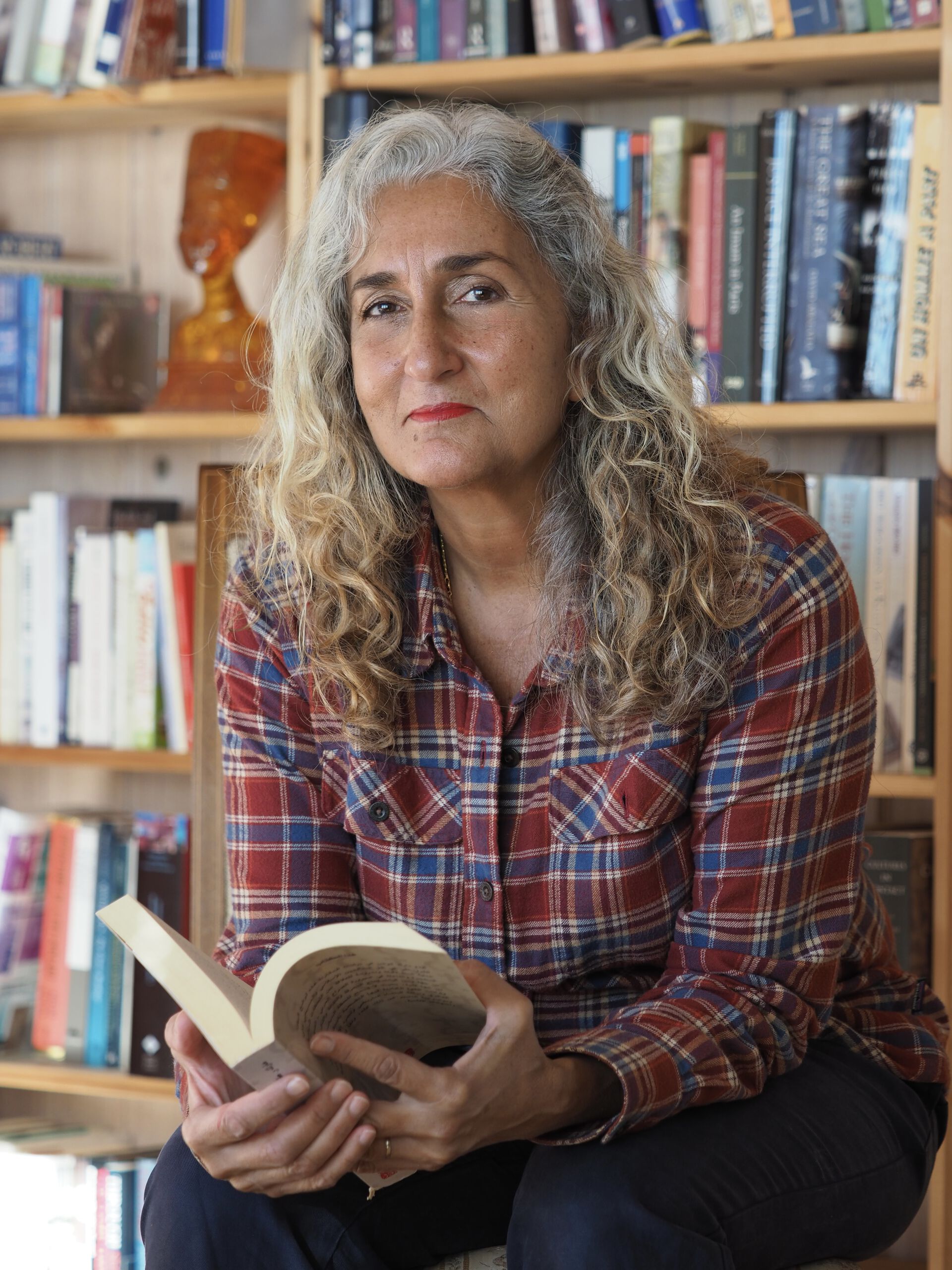
Nefissa Naguib is a Professor of Social Anthropology at the University of Oslo, affiliated with the Department of Social Anthropology. Her research focuses on culturally complex societies across the Mediterranean, Middle East, Brazil, Norway, and Spain. Key thematic interests include global moments, migrations, humanitarianism, history, maritime lifeworlds, food systems, and Islamic heritage. Regional expertise spans the Mediterranean, Middle East, and transoceanic connections. Her monographs include Nurturing Masculinities: Men, Food and Family in Contemporary Egypt and co-edited volumes such as Reconceiving Muslim Men: Love and Marriage, Family and Care in Precarious Times , which challenge traditional gender norms in Arab societies. Current projects bridge anthropology, history, and global migration through initiatives like Out of the Blue (human and material migrations), We Have Given you Gardens (botany and Islamic heritage), and Feeling the Heat (environmental labor in the Middle East). Nefissa leads the Feeling the Heat project and collaborates with the CMI Centre on Law and Social Transformation. She has directed programs like the Arab World Program and Cultures and Politics of Faith. Courses taught include advanced topics in food anthropology, Middle Eastern studies, and gender kinship. Research Highlights: Pioneering work on water as an agent of history, humanitarian practices in the Arctic, and transnational gender dynamics. Awards: Al Jazeera documentary nomination (2010) for War, Women, Welfare in Jerusalem . Grants: Research Council of Norway, Norwegian Ministry of Foreign Affairs, and Norwegian Program for Development grants. Labs/Teams: Core member of YALLA (politics and aesthetics of everyday life in MENA) and leads interdisciplinary collaborations.
Bengt Erik Höglund is an Adjunct Professor at the Department of Natural Sciences, University of Agder. He holds a PhD from Uppsala University (2001) and has extensive postdoctoral experience (2001-2007) followed by a senior researcher role at the Technical University of Denmark (2007-2014). His research focuses on behavior neuroendocrinology in fish and crustaceans, emphasizing stress physiology, coping styles, and aquaculture welfare. He has coordinated courses in human physiology at UiA since 2005 and supervised four PhD students (2011, 2013) and two master’s students (1999, 2011). His recent work explores chronic stress impacts on fish neuroendocrine profiles, environmental acidification effects, and cardiac morphological development in salmon. Key themes include stress resilience, environmental signaling, and behavioral adaptations to anthropogenic changes. Collaborative projects involve hydropower impacts, predator cue responses, and aquaculture system dynamics. Notable contributions include studies on depression-like profiles in salmon, hydrogen sulphide dynamics in recirculating systems, and neuroendocrine indicators of allostatic load. He has participated in interdisciplinary initiatives like the Blekeprosjektet (2014–2017) and projects on hydropower-induced behavioral selection in salmon.
Ketil Lenert Hansen is a Professor at the UiT The Arctic University of Norway , affiliated with the Research Group for Child Welfare and Family Counselling under the College of Social Sciences . His work focuses on Sámi health and identity , mental health among Indigenous populations , and impacts of ethnic discrimination on psychosocial well-being. Research Leadership: Principal Investigator of the Mihá Study (Sámi Youth Mental Health) and Arctic Childhood Study (violence and health in Arctic Norway). Academic Contributions: Published extensively on Indigenous resilience , historical trauma , and cultural well-being in Sámi communities. Recent Articles (2024-2025) examine: Links between land use , cultural identity , and neuroethical frameworks in Indigenous contexts Psychosocial challenges faced by Sámi youth due to discrimination and assimilation policies Health disparities and resilience mechanisms in Arctic populations Scientific Recognition: Selected for the Fulbright Arctic Initiative Cohort 3 (2021-23) Featured speaker at the ISPCAN Congress 2024 Member of international networks: UArctic Thematic Network on Indigenous Health , InvolveMENT (mental health services for minority youth) Contact: ketil.lenert.hansen@uit.no
Marianne Hafnor Bøe is a Professor of Religious Studies at the University of Stavanger, specifically within the Faculty of Educational Sciences and Humanities and the Department of Cultural Studies and Languages. Her academic work focuses on the intersections of religion, law, and gender, with a particular emphasis on Shia Islam, Islamic family law, and Muslim communities in Norway and Iran. She has conducted extensive ethnographic research, including studies on Mahr (Islamic dowry) in Norway, the role of Muslim women in Western Norway, and the Shia community in Norway. Ph.D. in Religious Studies, University of Bergen (2013) Postdoctoral Fellow, Research Council of Norway (2015-2018) Affiliated with the University of Bergen in an adjunct professor role (2024-2026) Visiting Scholar at SOAS, University of London (2011), University of Copenhagen (2022), and Northeastern University (2016-2017) Her research interests include: Gender equality in Islamic law Religious didactics and education Shia Islam in diasporic contexts Legal pluralism and religious practice Feminist interpretations of Islam Religious minorities in Europe Her publications span 15 recent articles (2022-2025) analyzing topics such as: Iranian family law reforms Shia material religion Gender dynamics in Islamic chaplaincy Muslim youth culture in Norway Protest aesthetics in Iranian movements Religious legal systems in multicultural societies She serves as: Vice-Dean for Education at the Faculty of Educational Sciences and Humanities Chairman of KIFO (Institute for Church, Religion and Philosophy Research) Editorial member of DIN - Journal for Religion and Culture
Ivar Midtkandal is a Professor at the University of Oslo's Department of Geosciences, specializing in the Section for Study of Sedimentary Basins. His work focuses on sedimentology, tectonostratigraphy, and planetary geology with a particular emphasis on CO2 storage and basin evolution. He is affiliated with research groups such as Basin Studies and CO2 Storage. Research interests include rift basin dynamics, fault seal analysis, and sedimentary architecture. His projects involve Arctic petroleum exploration (ARCEx), CO2 containment (COTEC), and Triassic reservoir prediction (FORCE Triassic). Recent studies explore topics like fault complexities in CO2 storage sites and seismic geomorphology of submarine canyons. Midtkandal's work integrates field data, seismic interpretation, and experimental methods. He leads initiatives like the VISTA Centre for CO2 Storage in Volcanic-Sedimentary Systems (VICCO) and collaborates internationally on projects such as NOR-R-AM2 (volcanism and tectonics). Publications span 20+ years, addressing topics like Paleogene basin development, sedimentation records of glacial cycles, and volcanic influences on basin evolution. His research bridges geology, geophysics, and environmental science, with applications to energy and climate challenges.
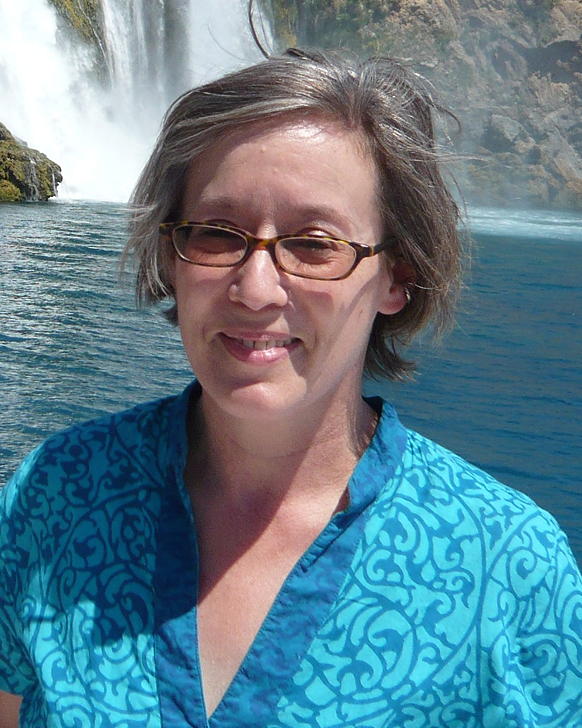
Dr. Silje Kristiansen is an Associate Professor at the University of Bergen, holding dual affiliations with the Centre for Climate and Energy Transformation (CET) and the Department of Information Science and Media Studies. Her work bridges communication studies and environmental science to address critical climate challenges through effective communication strategies. PhD from University of Zurich, Switzerland Postdoctoral research at Northeastern University funded by Swiss National Science Foundation Former Assistant Professor at SUNY College of Environmental Science and Forestry Dr. Kristiansen's research centers on understanding how media frames climate change and environmental issues, and how the public perceives and responds to this information. She has particular expertise in sustainable food systems, examining media coverage of sustainable eating and public opinion on sustainable diets. Her work combines media content analysis, survey research, and qualitative methods to investigate communication patterns across different cultural contexts. She frequently employs comparative approaches to understand how environmental issues are framed differently across national media systems. Her recent publications demonstrate a clear trajectory from nuclear energy risk communication (her doctoral work) toward increasingly focused research on food systems and climate change. There's a notable shift toward practical applications of communication research, particularly regarding sustainable dietary behaviors and corporate climate communication. Her work shows strong methodological diversity, employing content analysis, survey research, and qualitative approaches across multiple cultural contexts. Swiss National Science Foundation's Early Postdoc.Mobility fellowship Dr. Kristiansen actively supervises MA theses on topics related to climate change communication, media framing of environmental issues, and sustainable food systems. She serves as Associate Editor for the journal Environmental Communication and has held leadership positions including Co-Chair of the Science and Environment Communication section at ECREA and Immediate Past Chair of the Environmental Communication Division of the International Communication Association. She is also a collaborator on the international study 'Trust in Science and Science-Related Populism' with Professor Håvard Haarstad. Her teaching portfolio includes courses on media and communication, environmental communication, and research methods. As part of CET, Dr. Kristiansen contributes to interdisciplinary research on climate and energy transformations, working with colleagues across environmental science, policy, and communication disciplines to develop communication strategies that support effective climate action and public engagement with environmental issues.
Marie Dave Amundsen is an Adviser and Senior Lecturer in the Department of Archaeology at the University of Oslo. She holds a PhD from the University of Oslo (2021) and has been actively involved in research, education, and outreach. Currently, she leads the ArCHe project (2023–present), focusing on archaeological coastal heritage. Her academic journey includes roles as a field archaeologist, tour guide, and research assistant. She earned an M.A. (2013) and B.A. (2011) in Archaeology from the University of Oslo. Her research interests span gold technology, material culture, and the Early Iron Age to Migration Period in Scandinavia. She has contributed to projects like the HEI: Heritage Experience Initiative (2022–2024) and has organized conferences such as the ViS-konference. Her work bridges archaeology with social chronology and landscape studies, reflecting her commitment to interdisciplinary approaches. Publications highlight her expertise in Migration Period graves, gender archaeology, and settlement patterns. Though no scientific awards are noted, her academic contributions and leadership in projects underscore her impact in the field.
Lena Magnusson Turner is a Professor in Urban and Social Geography at Oslo Metropolitan University (OsloMet), affiliated with the Centre for Welfare and Labour Research – Norwegian Social Research (NOVA), specifically within the Ageing Research and Housing Studies research group. Her work bridges human geography, urban studies, and social policy, focusing on spatial inequality and housing dynamics. Research Interests: Lena's research centers on residential mobility, housing choice, segregation, and socioeconomic inequality across the life course. She investigates how geography shapes life opportunities, particularly through neighborhood effects, housing careers, and spatial contexts influencing education, employment, and intergenerational mobility. Her work integrates quantitative methods and policy analysis, with a strong emphasis on urban governance and social justice. Publication Trends: Her recent publications (2020–2025) reveal a consistent focus on spatial inequality, neighborhood effects, and housing dynamics. Key themes include intergenerational mobility, immigrant integration, gender disparities in labor market and housing outcomes, and the impact of urban policies. Her work frequently appears in leading journals such as Urban Studies , Population, Space and Place , and Journal of Ethnic and Migration Studies , reflecting interdisciplinary engagement across geography, sociology, and economics. Scientific Projects: A Fair Chance? How Geography Shapes Life Opportunities (Research Council of Norway): Examines how spatial contexts shape socioeconomic outcomes. HOUSINGWEL – Centre for Housing and Welfare Research : Acts as a national hub for housing and welfare research. Past projects include studies on start-up loans in Oslo, housing inequality, and labor market integration of immigrants (UPMIN). Grants and Advising: Lena leads major externally funded research projects, including those financed by the Research Council of Norway. While specific advisees are not listed, her collaborative publications suggest active supervision and mentoring of junior researchers and students. She has co-authored works with PhD candidates and early-career scholars, indicating a strong advisory role. Labs and Research Teams: She leads the Ageing Research and Housing Studies group at NOVA and is a key contributor to the BOVEL research center, a national node for housing and welfare research in Norway. She is also an active member of the European Network for Housing Research (ENHR) Coordination Committee, enhancing international collaboration.
Erika Hagelberg is a Professor at the University of Oslo’s Department of Biosciences, Faculty of Mathematics and Natural Sciences. Her work bridges ancient DNA analysis, human molecular genetics, and molecular evolution. Key Research: Ancient DNA typing, population migration (Pacific/SE Asia), Viking Age genetics, Mary Rose crew analysis. Awards: 2016 Cheney Senior Fellowship (Leeds Humanities Research Institute). Publications: 15+ peer-reviewed articles on DNA in historical contexts, Romanov identification, and Pacific colonization. Interdisciplinary Projects: Co-led Thanatos: Dead Bodies – Live Data (Hierapolis, Turkey) and current Norwegian Research Council studies on race/ethnicity in genetic variation research. Teaching: Postgraduate courses on language evolution and scientific writing at UiO.
Stian Bones is a Professor of History at UiT The Arctic University of Norway, affiliated with the Department of Archaeology, History, Religious Studies and Theology. His research focuses on Norwegian and international history in the 20th century, with particular emphasis on Norwegian foreign and security policy Cold War dynamics in Norway and the Nordic countries World War II history Arctic and High North politics Russian-Norwegian relations His work explores intersections between memory politics , geopolitical conflicts , and military history , analyzing how historical narratives shape contemporary security debates. Recent publications examine Russian strategic patterns in the Arctic , security dilemmas , and NATO's future posture . Professor Bones is a member of the research groups From North Front to Ice Front and The Presence of the Past , contributing to interdisciplinary projects on war memories and Arctic geopolitics. He teaches courses spanning Norwegian international politics , Cold War history , and Norse-Russian relations .