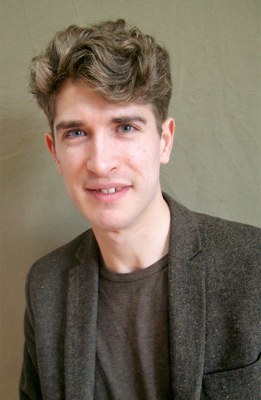
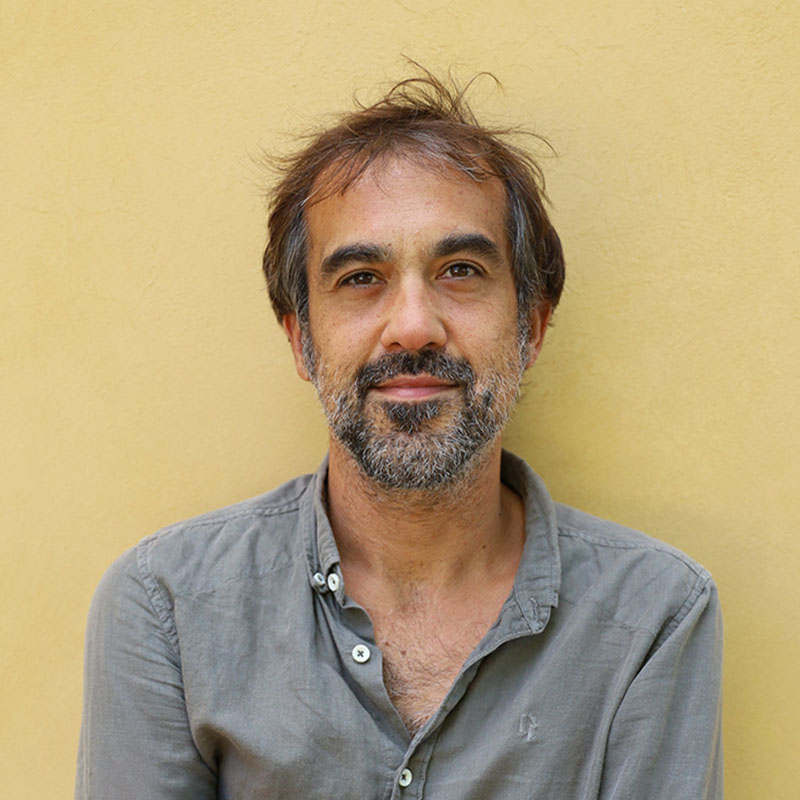
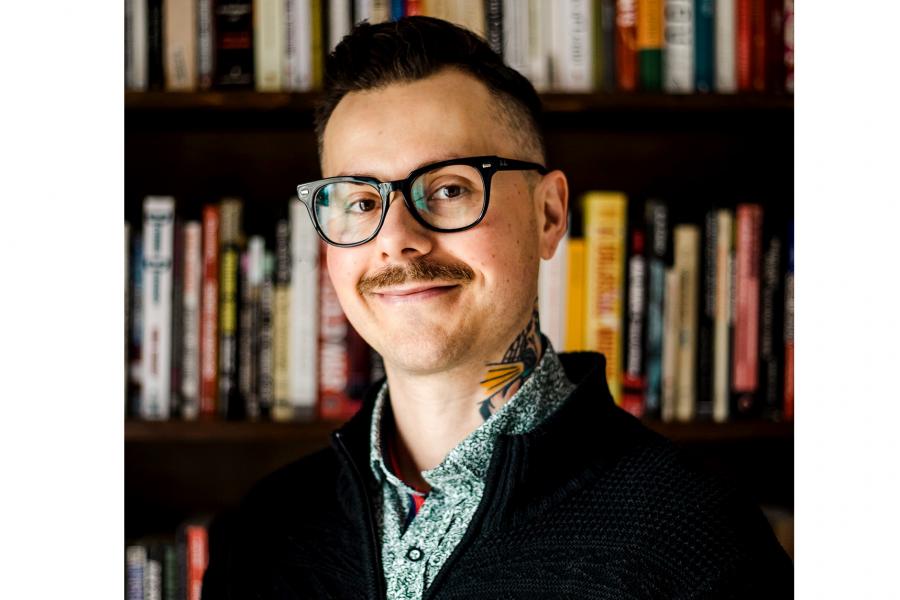
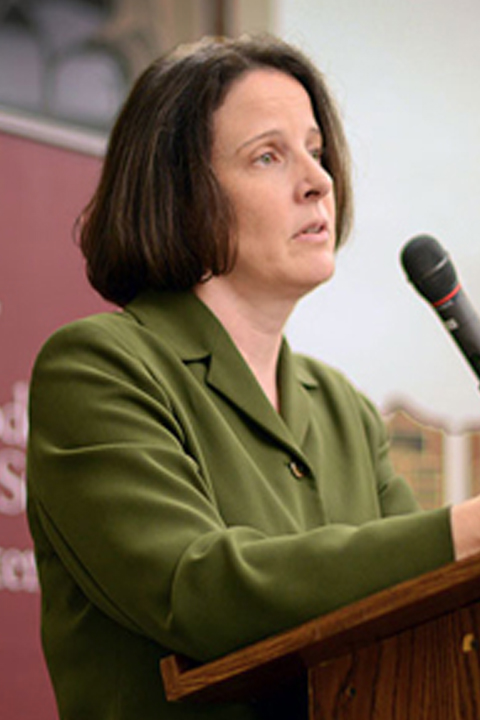
Dr. Victor Kempf is a postdoctoral researcher at the Institut für Philosophie , Humboldt-Universität zu Berlin, since March 2025. He completed his PhD at Goethe-Universität Frankfurt in 2017 and focuses on social and political philosophy from a critical theory perspective.
Lisa Gilman is a Professor of Folklore and English at George Mason University, and the outgoing Editor-in-Chief of the Journal of American Folklore . Her research focuses on refugee arts initiatives, intangible cultural heritage, and the intersections of performance, gender, and politics in global contexts. She has conducted extensive fieldwork in Malawi, Turkey, France, and the U.S., emphasizing marginalized communities. Her academic journey includes a PhD in Folklore from Indiana University, followed by roles at the University of Oregon and Mzuzu University (Malawi). Key awards include the Fulbright Teaching/Research Award and Rippey Innovative Teaching Award. She produced the documentary Grounds for Resistance , exploring anti-war activism among U.S. veterans. Her current project, the Dzaleka Art Project , collaborates with refugees in Malawi to document cultural creativity and advocate for visibility. This work has been featured in the Wilson Center and Smithsonian publications. Gilman teaches courses on public humanities, ethnographic fieldwork, and digital storytelling, integrating community engagement with academic rigor. Her publications span topics from African expressive culture to UNESCO policy impacts, with notable books including My Music, My War and co-edited volumes like Africa Every Day . Grants include funding from the Woodrow Wilson Center and the National Endowment for the Arts.
Elias Dinas is a Full-time Professor in the Department of Political and Social Sciences at the European University Institute (EUI). He holds the Swiss Chair in Federalism, Democracy, and International Governance. His research focuses on political socialization, authoritarian legacies, and research methodology. Dinas earned his PhD in Political Science from the EUI in 2010. His research interests include the impact of historical traumas on political attitudes, experimental methods, and the dynamics of norm change. He collaborates with institutions like the Graduate Institute in Geneva through seminars, conferences, and methodological workshops. Recent work explores topics such as ideology mapping via AI, the electoral effects of early voting experiences, and the interplay between migration crises and public policy. His research has been published in top journals like the American Political Science Review and highlighted in outlets like The New York Times. Received the Michael Wallerstein Award (2019) for his work on migration and hostility. Supervises 14 students researching memory politics, norm change, and intergroup relations. Leads projects on post-authoritarian ideologies, German political identity, and elite-driven norm erosion. His teaching and supervision emphasize causal inference, experimental design, and quantitative methods, reflecting his commitment to rigorous political analysis.
Adam King is an Assistant Professor in the Labour Studies Program at the Faculty of Arts, University of Manitoba. His research focuses on labor regulation, employment standards enforcement, Indigenous labor dynamics, deindustrialization impacts, and labor market policy. He co-investigates a SSHRC Partnership Grant project on migrant labor in settler-colonial contexts. Education: PhD in Sociology (York University, 2019) MA in History (University of Toronto, 2011) BA in Sociology/History (Trent University, 2010) His research examines the political economy of labor regulation, including enforcement mechanisms in federally regulated sectors and contested Indigenous labor relations. He analyzes deindustrialization's social consequences and contributes to debates on job guarantee proposals and right-wing populism's influence on labor movements. Recent publications explore topics like Indigenous labor law frameworks, precarious creative workers' unionization, and gendered identities in deindustrializing communities. He actively engages with media outlets such as CBC, The Globe and Mail, and The Maple's 'Class Struggle' newsletter.
Joanne Lee is a Senior Lecturer in the Department of Italian Studies at the University of Warwick. She holds a PhD from the University of Bristol and has taught at Cardiff University and Bristol University prior to joining Warwick in 2008. Her administrative roles include Head of Italian Studies until September 2024 and Co-head of the School of Modern Languages and Cultures (SMLC) starting January 2025. BA in Italian and Language Studies (Cardiff University, 1999) MA in Literature in European Cultures (Cardiff University, 2003) PhD (University of Bristol, 2008) Her research spans travel writing , Italian emigration/immigration , post-war women writers , and Italy's colonial memory . Recent work examines decolonizing urban spaces through Igiaba Scego's works and sustainable travel in Paolo Rumiz's pedestrian journeys. She explores ethical dimensions of travel writing, including sustainability and cosmopolitan ethics, with a focus on globalization's impact on migration narratives. Selected publications include analyses of Laura Pariani's migration novels, Soviet-Italian Cold War travel discourses, and postcolonial memory in Italian literature. She has collaborated on interdisciplinary projects addressing slow travel , virtual tourism , and post-pandemic tourism patterns. Awards include Senior Fellowship of the Higher Education Academy and Fellowship of the Warwick International Higher Education Academy.
Elizabeth Blake is an Associate Professor of Russian and Division Coordinator in the Department of Languages, Literatures and Cultures at Saint Louis University's College of Arts and Sciences. Her research focuses on 19th-century Russian literature, particularly Dostoevsky and Tolstoy, with emphases on empire studies, exile cultures, and religious dialogues between Russian Orthodoxy and Polish/French Catholicism. She has published two major books: *Dostoevsky and the Catholic Underground* (2014) and *Travels from Dostoevsky’s Siberia* (2019). Her work bridges literary analysis with historical context, examining themes like human rights, cultural mobility, and gender roles. Blake teaches courses ranging from language proficiency to advanced topics in Russian literature and cinema, including *Russian and Soviet Cinema* and *Dostoevsky Through the Centuries*. She has received numerous grants including Mellon and Fulbright-Hays awards for research in Russia and Poland. Her academic career includes extensive reviews for journals like *Slavic Review* and *Canadian Slavonic Papers*, alongside professional involvement with organizations such as the North American Dostoevsky Society. Blake’s teaching excellence is recognized through awards like the Spirit of the Billiken Award (2016), reflecting her impact on both scholarship and student mentorship.
Armin Falk is a Professor of Economics at the University of Bonn, leading the BonnEconLab since 2004 and co-founding the briq Institute on Behavior & Inequality. He holds affiliations with the IZA, DIW, CEPR, and Max-Planck-Institut. His research focuses on behavioral economics, exploring how social preferences like fairness and trust influence decision-making, and investigates early childhood development's role in inequality. Falk has received prestigious awards, including the Leibniz Prize and Yrjö Jahnsson Award. His work combines lab experiments, field studies, and representative data analysis. Education includes a PhD in Economics from the University of Zurich after studies in Economics, Philosophy, and History at the University of Cologne. Key research highlights include global climate action support studies (Nature Climate Change, 2024), socioeconomic disparities in child development (JPE, 2021), and global economic preferences surveys (QJE, 2018). He co-authored the book *Warum es so schwer ist, ein guter Mensch zu sein* to popularize behavioral economics. Awards include recognition for contributions to behavioral and development economics. Mentoring programs like *Balu und Du* aim to reduce educational inequality. His work bridges academic research with public discourse through media contributions and policy engagement.
Kyung-Ho Cha serves as Junior Professor of Modern German Literature at the University of Bayreuth's Faculty of Languages & Literature within the Department of New German Literature. His academic journey includes studies at Bonn, Oxford, and Columbia University, followed by doctoral work at Technical University Berlin completed in 2010. His research centers on three interconnected domains: literature-science intersections with focus on evolutionary biology and Walter Benjamin's writings; literary representations of migration; and human rights discourse in contemporary literature. This tripartite framework informs his critical analysis of authors like Elfriede Jelinek and Fatih Akin. Cha's publications reveal consistent engagement with transnational themes, particularly examining German-Turkish cultural dynamics, refugee narratives, and ethical dimensions of literary representation. His work demonstrates methodological rigor in bridging literary analysis with philosophical and scientific discourse. German National Merit Foundation Fellowship DAAD Fellowship ICI Berlin Institute Fellowship DFG Fellowship Volkswagen-Foundation Support Harvard Mahindra Humanities Center Fellowship (2011-2012) Cha has directed significant research projects including the DFG-funded 'Seelenwanderung und literarische Kommunikation' at Freie Universität Berlin and contributed to the DFG Graduiertenkolleg 'Körper-Inszenierungen'. His editorial work on human rights literature demonstrates leadership in establishing interdisciplinary scholarly dialogues. Current research continues to explore migration narratives within the 'Future Migration' initiative at Bayreuth.
Laura Maria Lojo Rodriguez is a Professor in the Department of English and German Philology at the University of Santiago de Compostela , specializing in British literature and modernist/postmodernist fiction. She leads the Discourse and Identity research group (GI DI-1924), focusing on English language, literature, and culture through interdisciplinary frameworks. Her work intersects with the Humanities Research Institute (iHUS) . Her research spans: Gender and identity in Woolfian studies Migration narratives in contemporary short fiction Postcolonial themes in British-Irish literature Ecocritical and posthuman anxieties in Johnson's works Recent publications examine border politics, maternal discourses, and cross-cultural literary bonds. She has also contributed to translation studies, particularly Woolf's Spanish reception. Her academic output bridges literary theory with socio-political analysis.
Emma Pierson is an Assistant Professor of Computer Science at the University of California, Berkeley, affiliated with the Berkeley Artificial Intelligence Research Lab (BAIR) , Computational Precision Health , and the Center for Human-Compatible AI . She focuses on developing data science and machine learning methods to address issues in healthcare equity and social inequality . Her work includes studies on race adjustments in clinical algorithms, migration patterns, and leveraging LLMs for health equity. Education: Ph.D. in Computer Science from Stanford University (2020), Master’s in Statistics from the University of Oxford. Prior roles include Assistant Professor at Cornell Tech, Senior Researcher at Microsoft Research, and data scientist at 23andMe and Coursera. Research Interests: Her research spans fair clinical prediction , sparse autoencoders , health disparities , and algorithmic fairness . Notable projects include the MIGRATE dataset for granular migration analysis and studies on policing disparities. Awards: NSF CAREER Award, Rhodes Scholarship, Hertz Fellowship, MIT Technology Review 35 Innovators Under 35, and Samsung AI Researcher of the Year. She writes a statistics blog ( Obsession with Regression ) and contributes to media outlets like The New York Times and FiveThirtyEight . Labs/Teams: Leads the MIGRATE project, a collaboration to analyze fine-grained migration data. Engages in interdisciplinary work across AI, healthcare, and social science.
Sarah Bracke is a Professor in Sociology of Gender and Sexuality at the Faculty of Social and Behavioural Sciences, University of Amsterdam . Her work critically examines intersections of gender, sexuality, race, and secularism, particularly in European contexts. She is deeply engaged in analyzing systemic crises—capitalist, nationalist, and ecological—and their impact on marginalized communities. Current Affiliation : University of Amsterdam, Faculty of Social and Behavioural Sciences. Research Focus : Gender theory, reproductive rights, anti-LGBTQ+ mobilizations, secularism, and the political dimensions of care economies. Bracke’s research emphasizes the deliberate erosion of gender, reproductive, and LGBTQ+ rights, often highlighting transnational collaborations among far-right and mainstream political forces. She connects these issues to broader crises, including climate change, capitalist precarity, and nationalist rhetoric. Her work advocates for feminist coalitions that transcend traditional boundaries, prioritizing care ethics and collective solidarity over exclusionary frameworks. Her recent publications explore topics like the racialized dimensions of reproductive politics, the secularist underpinnings of European ‘Muslim Question’ discourse, and the role of academia in resisting oppressive systems. Although no specific awards or advisees are mentioned in the text, Bracke’s scholarship consistently bridges feminist theory, critical race analysis, and critiques of neoliberalism, urging transformative responses to global crises.
Adam Drazin is a Tutor in the Department of Anthropology at University College London (UCL), specializing in design anthropology, material culture, and consumption. He works at the intersection of academia and public engagement, collaborating with NGOs, corporate clients, and research clusters such as the ‘Business of Fashion, Textiles and Technology’ at the London College of Fashion. His research explores domesticity, care ethics, and material practices in Romania, Ireland, and the UK. Research Focus: Design anthropology, material culture, domestic consumption, and transnational home-making practices. Geographic Scope: Romania, Ireland, UK, with attention to Romanian diaspora communities. Editorial Roles: Co-editor of Home Cultures , former editor of Journal of Material Culture . Projects: Studio of Material Life, ethnographic consultancy via UCL’s Ethnographic Insights Lab. His recent work emphasizes textile innovation, care ethics in domestic spaces, and critiques of material cultures within design. Publications include Design Anthropology in Context (2021) and The Social Life of Materials (2015). He mentors postgraduate researchers and contributes to public anthropology through consultancy.
Aylwyn Scally is a researcher at the Department of Genetics, University of Cambridge, specializing in human evolutionary genetics and ancestry. His work focuses on computational and mathematical models of genome evolution, leveraging population-scale datasets and archeogenetic evidence to explore ancient human populations and their spatial dynamics. University: University of Cambridge Department: Department of Genetics Fields of Interest: Human Evolutionary Genetics, Population Genetics, Ancestry Analysis, Paleobiology, Environmental Genomics, Genome Evolution Scally's research integrates spatial dynamics into genetic models, offering insights into demographic, social, and cultural factors in ancient populations. His methodologies have broader applications for studying other species as genomic data becomes available. Recent publications highlight his work on mutation rate analysis, historical migration patterns, and ancestral population structures. These studies often employ computational simulations and large-scale genomic datasets to address evolutionary questions. He is associated with the Cambridge NERC Doctoral Landscape Awards (CREATES) and C-CLEAR DTP, contributing to training and collaborative research in genetics and environmental genomics.
Homi K. Bhabha is the Anne F. Rothenberg Professor of the Humanities at Harvard University. His work spans colonial and postcolonial theory, cultural change, cosmopolitanism, and human rights within aesthetic contexts. He has been a pivotal figure in the Department of Comparative Literature since its inception as a graduate program in 1904. Education BA (1970) - University of Bombay MPhil/MA/DPhil (1990) - Christ Church, Oxford Bhabha's research focuses on cultural hybridity , ambivalence in colonial discourse , and postcolonial ethics . His theoretical frameworks analyze authors like Joseph Conrad, Walter Benjamin, and Toni Morrison through lenses of identity, power, and globalization. While his recent works On Art and A Global Measure await publication, his seminal texts like The Location of Culture (1994) and Framing Fanon (2005) remain foundational in postcolonial studies. These works explore sub-fields including: Transnational memory frameworks Psychoanalytic colonial critique Decolonizing discourse Visual culture in postcolonialism Temporal suspensions in cultural production Global trauma narratives
Bettina Migge is a Full Professor in the School of Languages, Cultures and Linguistics at University College Dublin, where she has been a faculty member since 2004. She previously held academic positions at Goethe University Frankfurt and earned her PhD in Linguistics from The Ohio State University. She served as Head of School from 2016 to 2021 and has held leadership roles in research centers and committees, including the Royal Irish Academy and the Society for Pidgin and Creole Linguistics, of which she is President until 2023. She is Co-Editor of the Journal of Pidgin and Creole Languages and actively contributes to COST Action LITHME, focusing on language and technology. Her educational background includes studies at Universität Hamburg, Université de Cameroun, Freie Universität Berlin, and The Ohio State University, culminating in a PhD focused on African languages in creole genesis, with fieldwork in Suriname and Benin. She is fluent in Dutch, English, French, German, and Ndyuka/Pamaka. Bettina Migge's research centers on sociolinguistics, language contact, and creole languages, with a focus on multilingual contexts undergoing rapid social change such as urbanization and migration. Her work spans French Guiana, Suriname, and Ireland, examining structural and socio-pragmatic aspects of language use, linguistic landscaping, and computer-mediated communication. She has led significant projects like the trilingual DicoNenge(e) dictionary and has explored the role of AI in reshaping language practices. Her recent publications reflect a critical engagement with the impact of AI and machine learning on language, revealing colonial continuities in language technologies and questioning dataist ideologies. She investigates how language is materially produced in both colonial and digital contexts, emphasizing power, authenticity, and control. She has received research funding from the National Science Foundation (USA), IRCHSS, IRC, Ulysses grants, and French research units like SeDyL. Her collaborative projects include work on complementation in creoles, South Dublin English, and language practices in multilingual border zones. Bettina Migge supervises MA and PhD students in sociolinguistics, linguistic landscaping, and World Englishes. She is involved in numerous editorial and professional associations, including the Society for Caribbean Linguistics and The Global Council on Anthropological Linguistics. She has coordinated modules such as World Englishes, Sociolinguistics, and Research in Creole Languages. She leads and participates in public engagement activities, including workshops on AI in linguistics, multilingualism in Ireland, and dictionary launches. Her research team includes collaborators from Europe and beyond, and she is committed to participatory and ethnographically grounded approaches in language documentation and analysis.