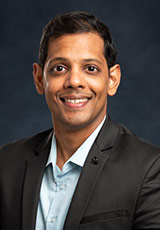
Shivam Saxena is an Assistant Professor in the Department of Electrical and Computer Engineering at the University of New Brunswick, located in Head Hall D65, Fredericton. His research focuses on smart grid technologies, including distributed energy resource integration, blockchain applications for energy trading, electric vehicle-grid interactions, and resilient microgrid design. This work addresses decarbonization challenges through technological and market innovations. Publications demonstrate a strong emphasis on real-world implementation, with field-tested solutions for V2X integration, blockchain-based transactive energy, and distributed control systems. Recent work explores novel applications in agricultural energy management and trust mechanisms for decentralized systems.
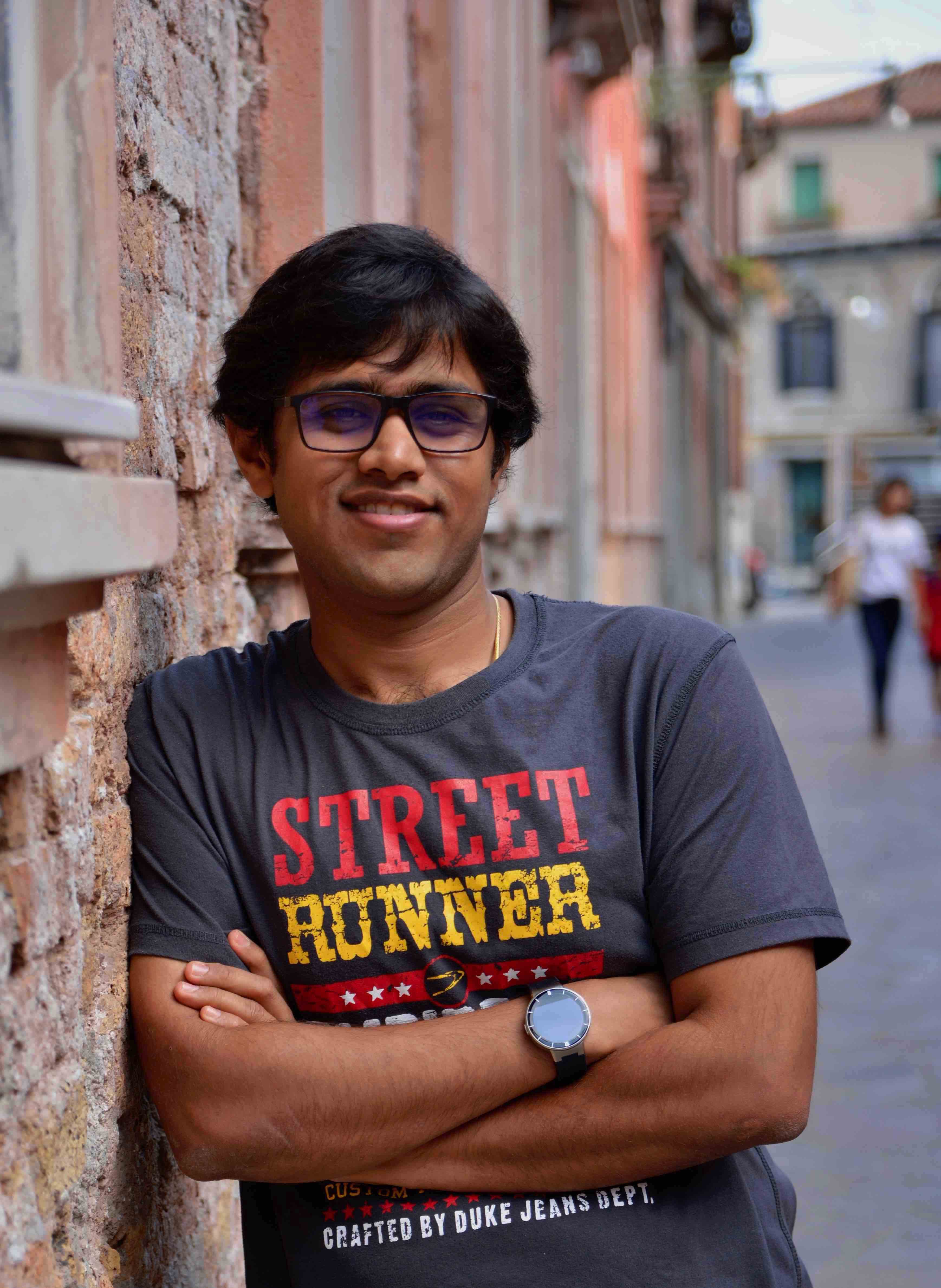
Arpan Gujarati is a Sessional Lecturer in the Department of Computer Science at the University of British Columbia (UBC), affiliated with the Systopia Lab. He teaches graduate and undergraduate courses such as CPSC 538G (Distributed Systems), CPSC 416 (Operating Systems), and CPEN 432 (Real-Time System Design). He holds a PhD from the Max Planck Institute for Software Systems and TU Kaiserslautern, where he was supervised by Björn B. Brandenburg. PhD: Max Planck Institute for Software Systems & TU Kaiserslautern (2020) Undergraduate: Birla Institute of Technology and Science (BITS Pilani) Postdoctoral Researcher: MPI-SWS Research Associate: UBC Software Development Engineer: Citrix R&D, India His research focuses on real-time and distributed systems, with applications in cyber-physical systems, fault tolerance, and machine learning reliability. He investigates scheduling algorithms, reliability analysis, and the integration of learning-enabled components into safety-critical systems. His work combines theoretical analysis with practical system implementations, often involving real-world testbeds and open-source tools. His recent publications span top-tier venues including RTSS, OSDI, ECRTS, DSN, and Middleware, with a strong emphasis on performance predictability, resilience of ML systems, and real-time communication. His work frequently addresses challenges in timing guarantees, fault tolerance, and system reliability in both cloud and embedded environments. SIGBED Paul Caspi Memorial Dissertation Award Best Paper Award at RTSS 2022 Distinguished Artifact Award at OSDI 2020 Best Student Paper Award at Middleware 2017 Outstanding Paper Award at RTCSA 2025 He advises several PhD students and undergraduate researchers at UBC, including Heng Zhao, Aida Aminian, Zainab Saeed Wattoo, and Philip Schowitz. He has led multiple research projects involving robotic arms, NVIDIA Holoscan, FreeRTOS, and distributed key-value stores. His lab work emphasizes reproducibility, open datasets, and practical system building. He has served on program committees for RTSS, RTAS, ECRTS, and Middleware, and contributes to journals such as Real-Time Systems and JSys.
Thomas Henzinger is a Professor at the Institute of Science and Technology Austria (ISTA), where he leads the Henzinger Thomas Group focused on improving software reliability through mathematical methods. He previously served as ISTA's President (2009–2022) and held academic positions at EPFL, Max Planck Institute, UC Berkeley, and Cornell University. Education: Dipl.-Ing. in Computer Science (Johannes Kepler University, Austria), M.S. in Computer and Information Sciences (University of Delaware), PhD in Computer Science (Stanford University), and Honorary Doctorates from Fourier University (France) and Masaryk University (Czech Republic). The group's research spans concurrent systems , embedded systems , quantitative model checking , runtime monitoring , and trustworthy AI . They develop tools like HyTech and VAMOS, emphasizing predictability, robustness, and fairness in safety-critical software. Recent publications highlight trends in quantitative automata , fairness in AI , quantum algorithms , and automata theory , reflecting interdisciplinary applications from cyber-physical systems to neural networks. Collaborative projects include SPyCoDe (security foundations) and VAMOS (software monitoring). Honors & Awards: 2024 Fellow of the Royal Society 2020 Member, US National Academy of Sciences 2015 Royal Society Milner Award 2012 Wittgenstein Award 2006 ACM and IEEE Fellow 1995 NSF CAREER and ONR Young Investigator Awards Henzinger advises current and former PhD students including Mahyar Karimi, Pavol Kebis, and Mathias Lechner. His grants include ERC Advanced Grants (QUAREM, VAMOS) and FWF funding (Wittgenstein Award, NFN RISE). Labs & Teams: He leads the Henzinger Thomas Group at ISTA, collaborating with FORSYTE (TU Wien) and contributing to EU-funded initiatives. The group integrates postdocs, PhD students, and interns in formal methods and system verification.
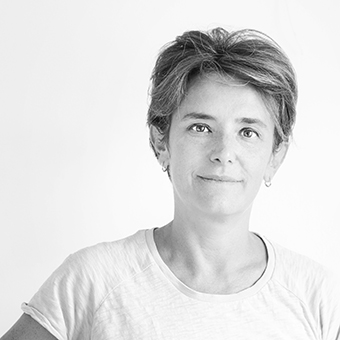
Cristiana Bolchini is a Professor at the Department of Electronics, Information and Bioengineering (DEIB) at Politecnico di Milano. She holds a PhD in Automation and Computer Science Engineering (1997) and a Laurea in Electronic Engineering (1993), both from Politecnico di Milano. Her research focuses on dependable systems, fault tolerance, and embedded systems design, with recent work on ICT solutions for smart buildings and energy efficiency. She coordinates projects such as the FP7 SAVE initiative and serves on technical committees for conferences like DATE and DAC. Education: PhD in Automation & Computer Science (1997), Laurea in Electronic Engineering (1993), both from Politecnico di Milano. Research interests span dependability (fault modeling, diagnosis), heterogeneous architectures, and sustainable smart environments. She collaborates with Prof. Giuliana Iannaccone on foresight for sustainable built environments and has led EU-funded projects like the SAVE initiative. Publications include over 150 refereed papers on dependability and context-awareness. She holds editorial roles for journals such as IEEE Transactions on Computer-Aided Design and ACM Transactions on Embedded Computing Systems. Awards include IEEE Senior Member status and two Cisco University Research Program Fund gifts (2012, 2014). Academic roles include Rector’s delegate for Southeast Asia relations and leadership of Technology Foresight workgroups. She teaches courses on computer science fundamentals and dependable systems, emphasizing problem-solving and programming in Python and C.
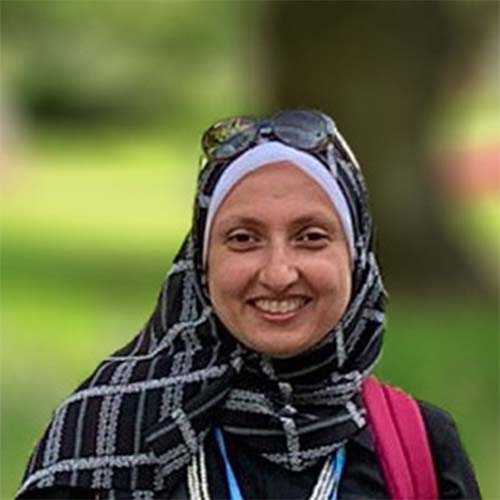
Hoda Hassan is an Associate Professor in the Department of Information Sciences and Technology at George Mason University. Her work bridges theoretical and applied domains in computer networks, Mobile Ad Hoc Networks (MANETs), and the convergence of Artificial Intelligence (AI) and the Internet of Things (IoT). Education : PhD in Computer Engineering from Virginia Tech (2010), MSc and BSc in Computer Science from the American University in Cairo (2005, 1992). Research Interests focus on designing intelligent and secure network systems. She has developed innovative frameworks, including a BLE computer-aided design toolkit for MANETs, which was commercialized by Skymind Malaysia. Her work spans AI integration in IoT, anomaly detection, cloud computing models, and network architecture evolution. Academic Leadership includes pioneering roles in founding The Knowledge Hub (TKH) Universities in Egypt and leading the Computing and Computer Science Program at Coventry University's UK offshore branch (2019–2022). Her research has been supported by a significant 2 million Egyptian Pound grant from ITAC Egypt (2015–2017).
Robert Soulé is an Associate Professor in the Departments of Computer Science and Electrical Engineering at Yale University, and holds an Adjunct Professor position at the Università della Svizzera italiana (USI) in Lugano, Switzerland. His research focuses on distributed systems, networking, and applied programming languages, with notable contributions to in-network computing, consensus protocols, and energy-efficient systems. He received his B.A. from Brown University and his Ph.D. from New York University, followed by postdoctoral work at Cornell University. Education: B.A. in Computer Science, Brown University, 1999 Ph.D. in Computer Science, New York University, 2012 Research Interests: Dr. Soulé’s work spans distributed systems, networking, and programming languages, emphasizing practical systems such as in-network computing, consensus algorithms (e.g., NetPaxos), and carbon-aware networking. His research bridges theory and practice, addressing challenges in scalability, performance, and sustainability. Articles Trends: Recent work includes innovations in quantum networks (algebraic specifications), carbon-aware networking (energy efficiency), and system optimization (e.g., P4-based data plane verification). He explores network programmability, microservices acceleration, and zero-copy serialization techniques. Awards: Best Paper Awards at ACM DEBS 2012, NSDI 2018, and CoNEXT 2020 Google Faculty Research Award IBM Invention Plateau Award Advising and Grants: He has advised numerous PhD students and postdocs, including Pietro Bressana (Intel Corporation) and Theo Jepsen (Stanford Postdoc). His grants support projects in networked systems, distributed computing, and sustainable infrastructure. Labs/Teams: Active in Yale’s Systems Research group, collaborating on projects like NetChain (sub-RTT coordination) and P4-based systems (e.g., P4xos for consensus). Engages with industry through partnerships on microservices optimization and energy-efficient networking.
Eunsuk Kang is an Associate Professor in the Software and Societal Systems Department at Carnegie Mellon University's School of Computer Science. Their research focuses on the intersection of software engineering and formal methods, emphasizing rigorous modeling and analysis techniques to create safe, secure, and reliable systems. PhD in Computer Science from MIT Postdoctoral scholar at NSF ExCAPE program Former connected vehicles researcher at Toyota Their research interests span software design, requirements engineering, modeling, specification and verification, system safety, security, and cyber-physical systems (CPS). Recent projects explore robustness in evolving environments, specification engineering, automated reasoning for complex systems, and safety/resilience mechanisms in ML-based CPS. Publications highlight advancements in Signal Temporal Logic decomposition, LTL specification learning, and requirement-driven adaptation frameworks. Selected scientific contributions include: tl;dr: Chill, y’all – AI will not devour SE (Onward! Essays 2024): Critical perspective on AI integration in software engineering FairSense (ICSE 2025): Long-term fairness analysis for ML-enabled systems AlloyMax (ESEC/FSE 2021): Relational specification satisfaction techniques As an educator, Kang teaches graduate courses in software design and formal methods, including: 17-423/723: Designing Large-Scale Software Systems 17-614 & 624: Formal Methods 17-445/645: Software Engineering for AI-enabled Systems 17-651: Models of Software Systems Service activities include: Program co-chair for SEAMS 2026 Co-organizer of Dagstuhl Seminar on Specification Engineering Co-organizer of International Workshop on Designing Software Program committee member for ICSE, OOPSLA, ASE, and specialized conferences Notable research collaborations include work with: Ben-hau Chia (PhD student) Parv Kapoor (PhD student) Yiliang (Leo) Liang (PhD student) Sumon Biswas (Postdoc) Rômulo Meira-Góes (Postdoc)
Jean-Marc Jezequel is a Professor of Software Engineering at University of Rennes , affiliated with CNRS , Inria , IRISA , and Institut Universitaire de France (IUF) . His research focuses on Model-Driven Engineering , Software Product Lines , Dynamic Adaptation , and Executable Meta-languages . Key Contributions : Pioneering work in aspect-oriented and model-driven approaches for software evolution Foundational research on model transformations (e.g., UMLAUT framework) Advances in testing and validation of distributed systems Research Trends from his recent publications include: Intelligent modeling assistance integrating machine learning Contextual variability modeling for complex systems Runtime model execution for self-adaptive systems Formal methods and constraint resolution for UML validation Collaborations include researchers from Luxembourg, Montreal, Colorado State University, and INRIA.
Dr. Jia Rao is an Associate Professor in the Department of Computer Science and Engineering at the University of Texas at Arlington, College of Engineering. He previously served as an Assistant Professor at the University of Colorado, Colorado Springs from 2012 to 2016. His research spans operating systems, distributed and parallel computing, cloud computing, virtualization, and machine learning. Education: Ph.D., Computer Engineering, Wayne State University, 2011 M.S., Computer Science, Wuhan University, 2006 B.S., Computer Science, Wuhan University, 2004 Dr. Rao's research focuses on building adaptive, scalable, and efficient computer systems for cloud and data center environments. His interests include resource management, performance modeling, adaptive scheduling, and quality-of-service (QoS) guarantees in virtualized and containerized systems. He combines machine learning and feedback control techniques with low-level system design to improve efficiency, fairness, and predictability in heterogeneous and multi-tenant environments. An analysis of his recent publications reveals a strong trend toward memory and resource management innovations in cloud-native systems. His work explores tiered memory architectures, secure container deployment, preemptive multitasking for deep learning, and efficient packet processing in container networks. These efforts reflect a consistent focus on optimizing system-level performance, security, and scalability in modern data centers. Scientific Awards: NSF CAREER Award (2019) Best Paper Award, APSys (2016) Best Paper Award, ICAC (2013) Best Paper Nomination, HPCA (2013) Best Paper Nomination, HPDC (2013) Best Paper Award, Middleware (2021) Researcher of the Year, UCCS (2014) Dr. Rao actively advises students and serves on dissertation and thesis committees for numerous Ph.D. and Master’s candidates. He leads federally funded research projects supported by the National Science Foundation, including a major CAREER grant on virtualized architectures and collaborative big data initiatives. His research has been sponsored by NSF, IEEE, and Intel Corporation, reflecting strong industry and academic collaboration. He leads and contributes to major research labs and teams focused on cloud systems, operating systems, and performance optimization. His team has produced high-impact work in top-tier venues such as OSDI, SOSP, ATC, EuroSys, and ICDCS. Current and future work includes next-generation memory architectures using CXL, intelligent resource provisioning, and resilient container networking.
Alysson Neves Bessani is an Associate Professor at the Informatics Department of Faculdade de Ciências da Universidade de Lisboa, Portugal, and a member of the LaSIGE research group. His work focuses on distributed systems, Byzantine fault tolerance, and cybersecurity, with significant contributions to blockchain consensus and intrusion-tolerant architectures. Academic Rank: Associate Professor University: Universidade de Lisboa School: Faculdade de Ciências Department: Informatics Department Research Groups: LaSIGE, Navigators Research Interests span distributed systems design, Byzantine fault tolerance, adaptive consensus protocols, and secure multi-cloud storage. His work bridges theoretical foundations with practical implementations like the BFT-SMaRt library and the Vawlt startup. Scientific Awards include multiple Test-of-Time Awards (DSN'24, DSN'21), IBM Faculty Award (2017), and Best Student Paper at Middleware'19. He has advised numerous PhD and Master’s students, contributing to advancements in fault-tolerant systems. Publications (15 most recent) reveal trends in Byzantine consensus optimization, blockchain integration, and AI-driven threat detection. His interdisciplinary work combines distributed computing with genomics and IoT security, reflecting a broad impact across computer science.
Garth Gibson is a Professor in the Computer Science Department and Department of Electrical and Computer Engineering at Carnegie Mellon University's School of Computer Science. He serves as Co-Director of the Master of Computational Data Science program and as Associate Dean for Master's Programs. Gibson has been a faculty member at CMU since 1991, after receiving his Ph.D. and M.Sc. in Computer Science from the University of California at Berkeley and a Bachelor of Mathematics in Computer Science and Applied Mathematics from the University of Waterloo. Gibson's research focuses on large-scale parallelism in computer systems, secondary memory system technologies and optimization, scalable file and key-value storage systems, scalable machine learning, and systematic testing for large scale systems. His work bridges theoretical concepts with practical implementations, with a strong emphasis on shepherding technological advances from academic research to commercial reality. He has made significant contributions to RAID technology, network-attached secure disks (NASD), and parallel file systems that have shaped industry standards and products. Gibson's recent publications reveal a strong trend toward data-intensive scalable computing, with increasing focus on machine learning systems, distributed storage solutions, and high-performance computing infrastructure. His research has evolved from foundational storage technologies to address the challenges of petascale and exascale computing environments, with particular attention to the intersection of storage systems and machine learning workloads. The papers demonstrate a consistent theme of addressing system scalability challenges through innovative architectural approaches. Scientific Awards: 2014 Fellow of the IEEE for contributions to the performance and reliability of transformative storage systems 2012 Fellow of the ACM for contributions to the performance and reliability of storage systems 2012 Jean-Claude Laprie Award in Dependable Computing Industrial/Commercial Product Impact Category 2011 SIGOPS Hall of Fame for the SIGMOD88 RAID paper 1999 Reynold B. Johnson Information Storage Award 1999 Allan Newell Award for Research Excellence 1998 Test of Time Award 1991 A.C.M. Doctoral Dissertation Award (tied for second) Gibson has advised numerous graduate students who have gone on to influential positions in both academia and industry, including Swapnil Patil who won first place in the 2010 ACM Graduate Student Research Competition. He has secured significant research funding through initiatives like the DOE Petascale Data Storage Institute and the Intel Science and Technology Center for Cloud Computing. His research has been supported by collaborations with national laboratories including Los Alamos, Sandia, Oak Ridge, Pacific Northwest, and Lawrence Berkeley. Gibson founded CMU's Parallel Data Laboratory (PDL) in 1993, which has grown into a vibrant research community comprising 6-9 faculty members, 2-3 dozen students, and 4-10 staff. The PDL operates with guidance from the Parallel Data Consortium, which includes 15-25 companies interested in parallel data systems. He also founded Panasas Inc. in 1999, a scalable storage cluster company that has deployed technology in national laboratories, energy sectors, and other high-performance computing environments. More recently, Gibson established the Big Learning research group and created the Systems Major curriculum within CMU's Master of Computational Data Science program.
Christopher Gill is a Professor of Computer Science & Engineering at the McKelvey School of Engineering, Washington University in St. Louis. He joined the faculty in 2001 after roles as a research associate and industry experience at companies like SBC Communications and Teknivent Corp. His research focuses on real-time, embedded, and cyberphysical systems, emphasizing system software architectures and assurance of timing, memory, and fault-tolerance in heterogeneous environments. Education: DSc, Washington University in St. Louis, 2002 MS, Missouri University of Science & Technology, 1997 BA, Washington University in St. Louis, 1987 (English & Biology, cum laude, National Merit Scholar) Research Interests: Professor Gill develops novel system software for distributed real-time systems, addressing software complexity and unpredictable environments. His work spans middleware, operating systems, virtualization, and trustworthy AI in cyberphysical systems (as part of the Center for Trustworthy AI in CPS). Awards & Affiliations: NSF CAREER Award recipient ACM Distinguished Member (2022) Vice Chair, IEEE Technical Committee on Real-Time Systems (2020–present) Teaching & Labs: He employs a lab-based approach, emphasizing hands-on software engineering. His lab focuses on high-quality software design and implementation, with projects in earthquake safety applications (e.g., cyberphysical systems for structural health monitoring).
Greg Stitt is a Professor in the Department of Electrical and Computer Engineering at the University of Florida, affiliated with the College of Engineering. His research focuses on reconfigurable computing, FPGA acceleration, embedded systems, and compiler design. He has received notable awards including the NSF CAREER Award (2012-2017) and the Undergraduate Teacher of the Year Award (2014). His work emphasizes elastic computing frameworks, intermediate fabrics for FPGA virtualization, and warp processors for dynamic hardware/software partitioning. Education: PhD, Computer Science, University of California-Riverside, 2007 BS, Computer Science, University of California-Riverside, 2000 Research Interests: Reconfigurable computing, FPGAs, GPUs, and their applications in high-performance computing Compiler optimization and synthesis techniques for embedded systems Elastic computing frameworks for heterogeneous systems Approximate computing and energy-efficient architectures Grants & Awards: National Science Foundation (NSF) grants for elastic computing (CNS-0914474) and intermediate fabrics (CNS-1149285) Recognition for contributions to FPGA-based scientific computing tools Teaching: Current courses include Reconfigurable Computing 2 and Digital Design Past course offerings span embedded systems, compiler design, and hardware architecture Labs & Teams: Active research in FPGA acceleration, novel architectures, and security for reconfigurable systems Contributions to the Novo-G scalable reconfigurable supercomputing project
Prof. Dr.-Ing. Stefan Schulte is a Full Professor at Hamburg University of Technology, leading the Institute for Data Engineering and the Christian Doppler Laboratory Blockchain Technologies for the Internet of Things (CDL-BOT). He holds a diploma in Economics and a Bachelor's in Computer Science from the University of Oldenburg, followed by a Master's in Information Technology (with Merit) from the University of Newcastle. After completing his PhD at TU Darmstadt in 2010, he held roles as Postdoctoral Researcher at TU Wien, Assistant Professor (tenure-track), and eventually Associate Professor before joining TU Hamburg in 2021. His research focuses on data engineering, blockchain technologies applied to IoT, elastic computing, and quality-of-service (QoS) aspects in smart systems. Notable contributions include work on fog computing, federated learning, and cross-blockchain interoperability. He has published over 140 papers in top-tier venues like IEEE Transactions on Services Computing and ACM Computing Surveys. Key awards include Best Paper Awards at the IEEE International Conference on Blockchain (2020) and the European Conference on Service-Oriented and Cloud Computing (2023). Prof. Schulte chairs major conferences such as the IEEE International Conference on Fog and Edge Computing (ICFEC 2025) and serves on editorial boards for journals like IEEE Transactions on Services Computing. He leads CDL-BOT, a lab exploring blockchain applications in IoT and manufacturing. His industrial collaborations include projects like SIMPLI-CITY (smart mobility) and CREMA (cloud-based manufacturing). Current research emphasizes blockchain interoperability, federated learning frameworks, and edge-AI systems. He actively reviews proposals for the German Research Foundation, EU programs, and industry initiatives.
Mikel Bueno Viso is a Researcher at Cranfield University's School of Aerospace, Transport and Manufacturing, affiliated with the Centre for Robotics and Assembly. His work focuses on Robotics , Industrial Automation , and Flexible Manufacturing Systems . He holds a BSc and MSc in Industrial Engineering from the University of the Basque Country and a Robotics MSc from Cranfield University. His research centers on ROS 2-based frameworks , robot perception , and modular middleware for reconfigurable manufacturing. Key projects include developing software architectures for object detection , pose estimation , and seamless robot integration . Mikel is currently a part-time PhD candidate investigating Flexible and Reconfigurable Manufacturing . His 2024-2025 publications demonstrate applications in Reconfigurable robotic cells Modular software frameworks Industry 4.0 automation His work leverages technologies like YOLOv8 for object detection and OpenCV for pose estimation, aiming to transform traditional manufacturing through software abstraction and interoperability .