Arjun Guneratne is a Professor of Anthropology and Chair at Macalester College, specializing in socio-cultural anthropology, ethnic identities, globalization, and environmentalism, with a focus on South Asia (Sri Lanka and Nepal). He holds a PhD from the University of Chicago and has conducted extensive research on the Tharu ethnic group in Nepal, exploring their identity formation, environmental transformations, and state interactions. Education: B.A. in Anthropology from Dartmouth College PhD in Anthropology from the University of Chicago Research Interests: His work bridges anthropology, environmental studies, and colonial history. Notable projects include studies on Tharu ethnicity, biodiversity conservation in Sri Lanka, and the history of Sri Lankan ornithology. He co-edited Pathways to Power: The Domestic Politics of South Asia and authored Many Tongues, One People: The Making of Tharu Identity in Nepal . Professional Roles: Former Editor of Himalaya journal Committee member of the Field Ornithology Group of Sri Lanka Contributor to environmental NGOs like the Environmental Foundation Ltd. Teaching: Courses include Ethnographic Interviewing, Environmental Anthropology, and South Asian Societies. His work often intersects with science, such as his course Anthropology through Science Fiction and research on ornithology. Grants & Labs: Active in environmental and cultural conservation initiatives, though specific grants are not detailed. Collaborates with South Asian scholars and institutions on regional studies.
Chitralekha Zutshi is a Professor of History at the College of William & Mary, specializing in Modern South Asia and the Indian Ocean World. She holds two endowed professorships and has received prestigious awards such as the 2014 Plumeri Award for Faculty Excellence. Her research focuses on Islamicate identities, nationalism, and historical thought, with a particular emphasis on Kashmir's contested histories and political dynamics. She has authored multiple acclaimed books, including Sheikh Abdullah: The Caged Lion of Kashmir (2024) and edited volumes like Kashmir: History, Politics, Representation (2018). Her work challenges monolithic narratives of religious conflict, emphasizing the complexities of class, gender, and caste in Kashmir's socio-political landscape. Zutshi's academic contributions extend to teaching and program development. She founded the William & Mary study abroad program in Goa/Bengaluru and co-directed the Asian and Middle Eastern Studies Program. Her courses include 'Indian Ocean Worlds,' 'War and Peace in Postcolonial South Asia,' and 'Kashmir: Past, Present, and Future.' Her scholarly articles have appeared in The Journal of Asian Studies , Modern Asian Studies , and Economic and Political Weekly . She also engages with public discourse through contributions to KashmirConnected and media outlets like India Today and W&M News . Awards: Plumeri Award (2014), NEH Fellowship (2005-2006), Kluge Fellowship (2008) Grants: Senior Research Fellowship (American Institute of Indian Studies, 2014-2015) Leadership: International Advisory Board member of South Asia: Journal of South Asian Studies Zutshi’s research bridges academia and public engagement, addressing themes of historical memory, political agency, and the intersection of identity with colonial and postcolonial power structures.
France Winddance Twine is a Professor of Sociology at the University of California, Santa Barbara (UCSB), with affiliations at Cambridge University's Sociology of Reproduction research group. She holds a Ph.D. from UC Berkeley and has held prior positions at Duke University and the University of Washington, where she founded the Latin American Studies unit in the Jackson School of International Studies. Her work focuses on intersectional analyses of race, gender, technology, and inequality, particularly through ethnographic and visual methodologies. Education: Ph.D. in Sociology, UC Berkeley Key Research Areas: Racial literacy, queer reproduction, tech industry inequality, feminist science studies, visual sociology Twine's research bridges multiple disciplines, addressing global racial formations, digital labor markets, and anti-racist strategies. Her concept of 'racial literacy' emphasizes intellectual and cultural practices countering anti-Black racism. Recent work examines Silicon Valley's caste systems and barriers faced by women and minorities in tech. Awarded the 2020 ASA Race, Gender & Class Distinguished Career Award, she also secured a $225K Mellon Foundation grant for interdisciplinary seminars on migration and race. She founded UCSB's Technologies for Justice Lab, fostering collaborations between humanities/social sciences and STEM fields to advance equity in technology. Teaching includes courses on digital technologies, racial justice, and ethnographic methods. Her eleven authored/edited books include A White Side of Black Britain (2010) and Geek Girls: Inequality and Opportunity in Silicon Valley (2022).
Anne Waldrop is a Professor at Oslo Metropolitan University, affiliated with the Faculty of Teacher Education and International Studies, specifically within the Department of International Studies and Interpreting Education and the Development Studies program. Her academic work is deeply rooted in social anthropology with a strong regional focus on South Asia, particularly India. Institution: Oslo Metropolitan University Faculty: Faculty of Teacher Education and International Studies Department: Department of International Studies and Interpreting Education Research Group: Development, Power and Inequality (UMU) Waldrop's research centers on urban anthropology, with particular attention to power dynamics, caste systems, class structures, and slum communities in India. Her work extensively examines women's movements, political activism, and gender politics within the South Asian context. She has developed a specialized expertise in studying grassroots political participation among women in urban slums, documenting how class consciousness, neighborhood relations, and resistance strategies operate in marginalized communities. Her methodological approach often involves deep ethnographic engagement, as evidenced by her work on gaining access to middle-class women in urban India. Analysis of Waldrop's recent publications reveals a consistent focus on Indian urban sociology, with particular attention to gendered experiences of political participation, economic inequality, and social mobility. Her work bridges anthropological theory with practical political analysis, examining how structural inequalities manifest in everyday life. The research demonstrates a longitudinal perspective, with some studies following communities for decades to understand patterns of vulnerability and resistance. Her methodological contributions to urban anthropology, particularly regarding research access in complex social settings, have strengthened qualitative approaches in the field. Waldrop has made significant contributions to public discourse through numerous dissemination activities, including encyclopedia entries for Store norske leksikon on topics like women's rights in India and caste systems. She regularly engages with contemporary issues through media appearances and panel discussions, such as her commentary on major protests following a doctor's murder in India and analyses of India's economic growth alongside persistent social inequalities. Her academic service includes editorial work and participation in scholarly conferences focusing on urban crises and social transformation. Professor Waldrop leads research within the Development, Power and Inequality research group (UMU), where she examines structural inequalities through the lens of urban anthropology. Her work connects local experiences in Indian slums to broader theoretical frameworks about power, resistance, and social change. She has established OsloMet as a significant center for South Asian urban studies, fostering international collaborations with scholars across the region. Her research methodology emphasizes long-term engagement with communities, allowing for nuanced understandings of how political consciousness develops (or fails to develop) in contexts of extreme inequality.
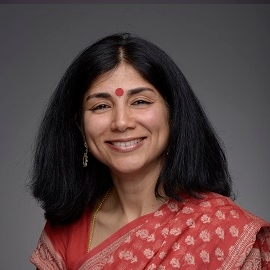
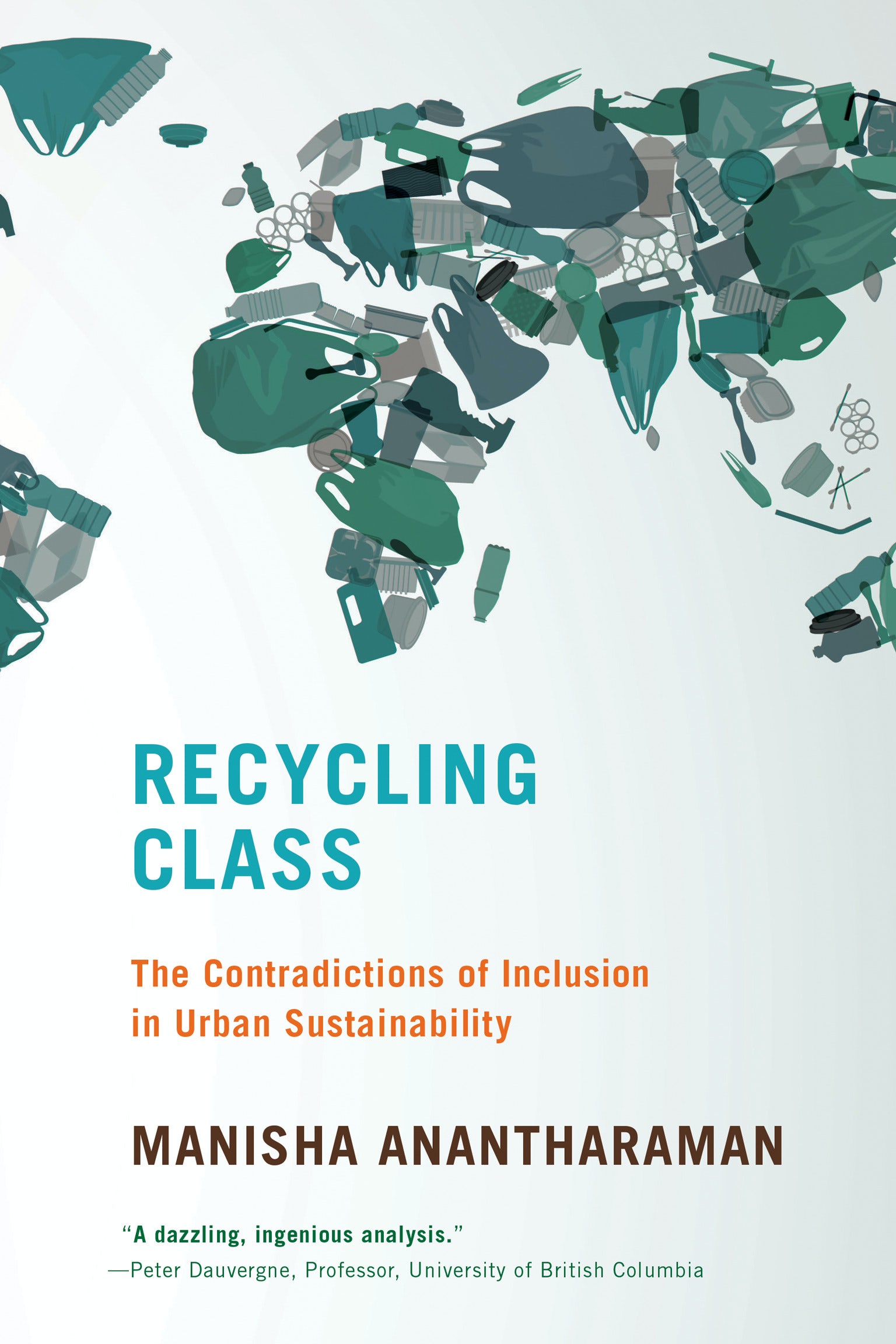
Manisha Anantharaman is an Assistant Professor at the Center for the Sociology of Organizations (CSO), Sciences Po in Paris, where she joined in January 2024. She was previously an Associate Professor at Saint Mary’s College of California in the Global Studies and Environmental Studies programs. Her research lies at the intersection of sociology, environmental studies, and political ecology, with a focus on the socio-cultural and political dynamics of ecological transitions in the Global South. PhD, Environmental Science, Policy and Management, University of California, Berkeley (2015) MA, Integrative Bio-sciences, University of Oxford (2008), Inlaks Scholar Alba Viotto Visiting Professorship, University of Geneva (2019) Her research critically examines how economic ideologies, socio-cultural identities, and power relations shape sustainability practices and environmentalism, particularly focusing on intersectional inequalities of race, class, caste, and gender. She is the author of the book Recycling Class (MIT Press, 2024), which presents an ethnographic study of waste labor and middle-class environmentalism in Bengaluru, India, critiquing 'performative environmentalism' and the limitations of inclusion without structural reform. Her work spans themes of circular economy, informal labor, green public spaces, digital infrastructures of consumption, and sustainable well-being. Her recent publications reflect a strong trend in critical sustainability, analyzing everyday practices, urban green spaces, and the politics of consumption through feminist, postcolonial, and intersectional lenses. She employs ethnographic and community-based methodologies to understand how marginalized communities navigate environmental transitions and assert their rights. Pandemic Pedagogic Excellence Award (2021) Inlaks Scholar (2008) Alba Viotto Visiting Professorship, University of Geneva (2019) Anantharaman is actively engaged in advising and research grants. She is a co-Principal Investigator on a €1.3 million Belmont Forum project studying digitalization and sustainable consumption across five countries. She also serves as an Associate Editor for Elementa: Science of the Anthropocene and Consumption and Society . Her policy work includes collaborations with Chatham House and UNEP, where she contributes to reports on circular economy and consumption, emphasizing marginalized perspectives. She teaches courses in Environmental Justice, Environmental Sociology, and Qualitative Methods at Sciences Po, and has extensive teaching experience at institutions like UC Berkeley and the University of Geneva. She is a key member of the Center for the Sociology of Organizations at Sciences Po, participating in seminars on ecological sense and social-ecological transitions. Her research projects involve collaboration with scholars from Sweden, Norway, Turkey, and Japan, as well as engagement with municipal governments, civil society, and digital designers through design workshops. She is currently launching a comparative study on informal work in the circular economy across Asian and African cities.
Dr. Shalini Grover is a Visiting Fellow at the International Inequalities Institute (III) at the London School of Economics (LSE). She holds a PhD from the University of Sussex and previously served as an Associate Professor in Anthropology at the Institute of Economic Growth (University of Delhi). Her research focuses on marriage, kinship, global care chains, transnationalism, and domestic labor in India and transnationally. Grover's work critiques cultural relativist assumptions about marriage practices and explores historical-anthropological dimensions of domestic service. She has conducted fieldwork across India, Scandinavia, France, and the US, and co-edited a Special Journal Issue on Care-Domestic Labour (2018). Grover currently leads two major grants: a British Academy-funded study on male domestic-care labor in India and an LSE RISF project examining colonial networks of domestic workers in South India. She supervises LSE Masters students and contributes to the III’s academic programs. Grover is also a co-founder of LSE’s Racial Justice Working Group. Her research highlights evolving gender roles in legal behavior, the racialization of domestic work, and postcolonial inequalities in care economies. Notable publications include her 2011 book *Marriage, Love, Caste and Kinship Support* (republished 2018) and historical-anthropological analyses of ayahs’ mobility. Grover’s work bridges anthropology with policy, having collaborated with UNIFEM and the IDS (University of Sussex). She has also contributed to public debates on marriage and domestic labor through media op-eds and her personal website. Grover’s current projects include reconstructing colonial-era domestic worker networks and analyzing contemporary care labor dynamics. Her interdisciplinary approach combines anthropology, history, and law to address systemic inequalities in global care economies. She has mentored students globally and taught at SOAS, O.P. Jindal University, and Ambedkar University.
David S. Parker is a Professor of History at Queen's University, specializing in urban South America's socio-legal and social history, particularly focusing on the middle class. He holds a Ph.D. from Stanford University (1991), an M.A. in Latin American Studies (1986), and a B.A. from Wesleyan University (1982). His research examines themes like dueling culture, urban social problems, and middle-class identity in 19th- and 20th-century South America. Current work explores global comparisons of urban social issues through SSHRC funding. Research & Publications : Parker authored key works such as The Pen, the Sword, and the Law: Dueling and Democracy in Uruguay (2022) and Latin America's Middle Class: Unsettled Debates and New Histories (2012). His scholarship bridges legal history, urban sociology, and transnational class analysis. Recent media engagements include a 2023 talk on Uruguayan dueling legality and a 2024 article in History Today . Awards : Recipient of Queen's University's History Department Teaching Award (2019) and Principal's Teaching Award (2018), reflecting his dedication to pedagogy. His research has been recognized via the James A. Robertson Prize for White-Collar Lima . Teaching & Supervision : Teaches courses on modern Latin America, revolutions, race, and urban social history. Supervises graduate students focusing on urban South America, emphasizing Peru, Chile, Argentina, and Uruguay. Courses include HIST 286: Latin America from 1850 to Today and HIST 866: Race and Ethnicity in Latin America . Labs/Teams : Engaged in SSHRC-funded research on global comparisons of urban social issues. Collaborates with international scholars through publications and conferences.
Amit Ahuja is an Associate Professor at the University of California, Santa Barbara (UCSB), and serves as Faculty-in-Residence at Manzanita Village and San Rafael Residence Halls. His research focuses on inclusion/exclusion dynamics in multiethnic societies, with expertise in comparative politics, ethnicity, social movements, security, and South Asia. He earned his Ph.D. from the University of Michigan in 2008. Key research projects include his award-winning book *Mobilizing the Marginalized: Ethnic Parties without Ethnic Movements* (2019), co-edited *Internal Security in India: Violence, Order, and the State* (2023), and ongoing work on national army-building in multiethnic states. He has held fellowships at the Woodrow Wilson International Center and received grants from the National Endowment for the Humanities and the American Institute of Indian Studies. His teaching spans undergraduate and graduate courses on South Asian politics, military politics, poverty politics, and social movements. Awards include the 2020 New India Foundation Prize and the 2015 Margret T. Getman Service to Students Award. His research examines themes such as caste dynamics, skin color preferences, anticorruption politics, and electoral administration in India. Current projects explore military roles in internal security and the interplay between ethnicity, identity, and state-building processes in South Asia. His work bridges theoretical frameworks with empirical analysis of contemporary political challenges in multiethnic societies.
Nimah Mazaheri is an Associate Professor of Political Science and Dean of Academic Affairs at Tufts University's School of Arts and Sciences. She holds a PhD from the University of Washington (2011). Her research focuses on energy, environmentalism, and economic development in the Global South, particularly in the Middle East. Key works include Hydrocarbon Citizens (2022) and Oil Booms and Business Busts (2016). She previously served as Chair of the Political Science Department (2022–2024) and held postdoctoral fellowships at Princeton and Harvard. Education: PhD, University of Washington, 2011. Research interests span comparative political economy, oil politics, environmental governance, and Middle Eastern socio-political dynamics. Her work examines how resource wealth shapes governance, public goods provision, and societal attitudes. Recent studies analyze climate change perceptions in the Middle East and environmental degradation in Arab nations. Publications reflect interdisciplinary engagement with resource politics, entrepreneurship in developing economies, and the interplay of colonial legacies and economic policy. Awards include fellowships at prestigious institutions like the Harvard Belfer Center and Princeton's Policy School. Teaching includes courses on comparative politics, research methods, and ethics in international relations. She advises students through senior thesis and internship programs, fostering applied political analysis.
Laurence Chamlou is a Lecturer at the University of Reims Champagne-Ardenne, affiliated with the UFR Letters and Human Sciences. She specializes in British literature, translation studies, and orientalism, with a focus on postcolonial and cultural hybridity themes. She holds a Doctorate from the University of Paris III (1995), preceded by a DEA in English (1991) and Aggregation in Literature (1991). Her teaching spans British, American, and Commonwealth literature across undergraduate and graduate levels, including supervision of Capes and Agrégation candidates. She also teaches translation techniques for LEA programs and document synthesis for Capes. Chamlou’s research explores cross-cultural dynamics, colonial discourses, and literary representations of identity. Notable works include analyses of Gertrude Bell’s translations, Kazuo Ishiguro’s narratives, and Salman Rushdie’s Shalimar the Clown . She contributed to the CIRLEP research team, supervising doctoral students and serving on academic committees (2002–2008). Her publications (20+ articles and books) critically examine texts like Hafez’s poetry, Daryush Shayegan’s identity theories, and William Jones’s linguistic works, bridging literary analysis with cultural and historical contexts.
Alejandra Cubero Val is an Associate Professor at the Universidad Carlos III de Madrid . Her work focuses on global cinema studies with a particular emphasis on North African and South Asian contexts. She investigates gender representation in film, postcolonial cultural dynamics, and the intersection of media with political movements and social change. Her research spans topics ranging from feminist film activism in Algeria to the role of documentary cinema in documenting revolutionary movements across the Middle East and South Asia. Her academic contributions emphasize the analysis of marginalized voices in film and media, particularly focusing on women’s roles as filmmakers and subjects of representation. She has conducted extensive studies on Algerian and Tunisian cinema, exploring how these mediums challenge political and social norms. Her work also delves into the cultural and political landscapes of Afghanistan, India, and Equatorial Guinea, addressing issues such as media evolution in conflict zones, gendered professionalization in architecture, and the legacy of colonialism in contemporary media. Cubero Val has published widely on transnational cinema, feminist theory, and postcolonial studies, with a notable focus on the documentary genre as a tool for memory preservation and cultural resistance. She has also explored the interplay between media, politics, and identity in transitional societies, including Spain’s post-dictatorship era and India’s modernization processes. Despite her prolific output, her profile does not mention awards or grants, though her extensive publication record reflects sustained academic engagement. She teaches at the University Carlos III de Madrid and maintains active research collaborations in cultural studies across multiple continents.
Professor Chris Fuller is a leading academic in the Department of Anthropology at the London School of Economics (LSE). His research focuses on South Asia, particularly India, with expertise in Hinduism, caste systems, and colonial history. He has conducted extensive fieldwork in Kerala (1971–72) and the Madurai temple (1976–2001), examining kinship structures among Nayars and temple rituals of Tamilnadu. His work bridges anthropology, history, and sociology, addressing themes of globalization, urbanization, and caste transformation. Notable projects include: ESRC-funded research on Tamil Brahman communities (2003–2008), resulting in the book Tamil Brahmans: The Making of a Middle-Class Caste . Studies on middle-class professionals in Chennai, linking IT growth to social mobility. Research Interests: Fuller’s work explores the intersection of religion, politics, and socio-economic change. He has analyzed how traditional elites adapt to modernity, such as Tamil Brahmans transitioning into transnational urban professionals. His publications critique colonial-era anthropological frameworks while illuminating contemporary caste dynamics. Key Contributions: His 2023 book re-examines H.H. Risley’s role in British India, highlighting colonial anthropology’s impact on governance. Earlier works, like The Camphor Flame (2004), dissect popular Hinduism’s socio-political roles. Current research traces the historiography of Indian anthropology. Collaborations: Long-term partnership with Haripriya Narasimhan has produced seminal studies on caste, gender, and migration. His interdisciplinary approach integrates archival research, ethnography, and policy analysis. Labs/Teams: Research activities are centered at LSE’s Anthropology Department, collaborating with global institutions on South Asian studies. Active in CIVICA (European University Alliance), fostering transnational academic networks.
Keshia Stephanie Dsilva is a PhD Candidate in Social Psychology at the University of Helsinki, focusing on how women and women’s issues are constructed in Indian gender justice advocacy campaigns. She holds a Research Master’s in Social Psychology from the University of Helsinki (2018) and a BA Honors in Social Policy from the University of York (2013). Her research interests include social representations, visual methodologies, post-colonial and decolonial theories, and social change in India. She explores topics such as violence against women, the role of law enforcement in gender advocacy, and digital advocacy’s inclusivity challenges. Her work often intersects with neoliberal feminism and social inequality in urban India. Her publications span peer-reviewed journals like the Journal of Community and Applied Social Psychology and the Journal of Social and Political Psychology, emphasizing empirical and theoretical contributions to gender advocacy discourse. She has presented at international conferences and engaged in media discussions on gender issues and social exclusion. Dsilva has served as a Student Representative at the University of Helsinki (2020–2022) and has reviewed manuscripts for academic journals. Her activities include invited talks on topics like caste-class-gender intersections and media contributions discussing women’s rights campaigns.
Dr. Kavita Daiya is a Professor of English and Women’s, Gender, and Sexuality Studies at George Washington University (GWU), where she also serves as Associate Dean of Academic Innovation. She previously directed the Women’s, Gender, and Sexuality Studies Program (2018–2021) and founded the Immigration and Migration Studies Micro-Minor in GWU’s Columbian College of Arts and Sciences (CCAS). Her academic career includes visiting roles at Albright College (NEH Chair, 2015–2016) and the University of Pennsylvania (Mellon Fellow, 2012–2015). She holds a PhD in English from the University of Chicago and has been a visiting scholar at Oxford University and a Ford Foundation Fellow. Her research focuses on postcolonial literatures, transnational feminisms, migration, and digital humanities. Key works include Violent Belongings (2008) on Partition narratives and Graphic Migrations (2020), analyzing diasporic displacement through graphic media. She edits interdisciplinary volumes like Graphic Narratives from South Asia and South Asian America (2019), exploring visual storytelling on gender, caste, and environmental justice. Dr. Daiya’s awards include the 2022 Excellence in Graduate Mentoring Award and leadership roles in GWU’s Global Women’s Institute and Sigur Center for Asian Studies. Her work with the 1947 Partition Archive highlights digital methods for preserving migration histories. She teaches courses on globalization, feminist theory, and South Asian literature. Affiliations: Global Women’s Institute, Sigur Center for Asian Studies, Peace Studies Program Leadership: Dean’s Council member, former M.A. English Program Director (2010–2014) Publications: Over 20 peer-reviewed articles in journals like PMLA and Journal of Postcolonial Writing
Kenneth Bo Nielsen is an Associate Professor in the Department of Social Anthropology at the University of Oslo. He holds a PhD from the University of Oslo’s Centre for Development and the Environment (SUM) and an MA from the University of Copenhagen. His research focuses on land conflicts, political economy, Hindu nationalism, and state formation in India, with a particular emphasis on West Bengal and Goa. Nielsen’s work bridges anthropology, sociology, and political science, analyzing intersections between large-scale structures and everyday life. His key contributions include the 2018 book *Land Dispossession and Everyday Politics in Rural Eastern India*, and collaborative works like *The Great Goa Land Grab* (2022) and *Authoritarian Populism and Bovine Political Economy in Modi’s India* (2024). He leads the Norwegian Network for Asian Studies and hosts the Nordic Asia Podcast, frequently commenting on Indian affairs in international media. Research interests span caste, class, gender, and environmental governance, with recent publications addressing farmers’ movements, Hindu nationalist statecraft, and India’s neoliberal policies. His interdisciplinary approach integrates agrarian Marxism, political ecology, and critical legal studies to understand contemporary Indian socio-political dynamics.