Professor Melanie Dirks is the Department Chair of Psychology at McGill University, specializing in Clinical Psychology and Developmental Science . Her research focuses on mapping social and emotional skills across childhood, adolescence, and young adulthood, with emphasis on peer/sibling relationships and their impact on psychological symptoms. Uses multimodal methodologies: observational studies, daily diaries, emotion recognition tasks Current projects: friendship quality maintenance, interpersonal victimization in youth, emotional communication dynamics Key research themes from publications include: Peer Relationships : Dissolution patterns, prosocial behavior, bullying, and dating aggression Emotional Processing : Vocal emotion recognition, neural reward responses, stress-neuroimaging links Contextual Influences : Family dynamics, socioeconomic status, post-pandemic social changes Her lab ( CASC Lab ) trains students in advanced social-emotional assessment techniques, with notable advisees including *Morningstar, *Gilbert, and *Santucci. Google Scholar articles (2014-2025) demonstrate expertise in developmental psychopathology, social neuroscience, and cross-cultural mental health determinants.
Arturo Deza is an Assistant Professor of Computer Science at Universidad de Ingeniería y Tecnología (UTEC) in Lima, Peru, and CEO of Artificio, a research-driven company advancing autonomous driving technology. His academic work bridges neuroscience, machine learning, and computer vision, focusing on adversarial robustness, foveated systems, and human-machine perception. He holds a PhD in Dynamical Neuroscience from UCSB and a B.S. in Mechatronics Engineering from Universidad Nacional de Ingenieria. His research has been recognized with awards like the EB-1A Green Card for Extraordinary Ability and the Harvard Brain Initiative Travel Award. Deza's interdisciplinary approach includes contributions to image virality analysis, peripheral representation modeling, and bio-inspired AI. His recent talks and publications address topics ranging from autonomous driving challenges to neuro-symbolic AI integration. Education : PhD in Dynamical Neuroscience, UCSB (Vision and Image Understanding Lab) B.S. in Mechatronics Engineering, Universidad Nacional de Ingenieria Research Interests : Adversarial Robustness in Deep Learning Foveated Vision Systems Human-Machine Perception Autonomous Driving Technology Bio-inspired AI Models Awards : EB-1A Green Card for Extraordinary Ability in the Sciences Harvard Brain Initiative Young Scientist Travel Award NVIDIA Best Poster Award (2015) Professional Roles : Assistant Professor, UTEC (since Aug 2023) CEO & Co-Founder, Artificio (Lima-based autonomous driving tech) His recent work emphasizes practical AI applications, including the Robusto-1 dataset for autonomous driving evaluation and studies on adversarial robustness in perception systems. Deza also actively contributes to academic reviewing (ICLR, NeurIPS, CVPR) and organizes workshops like the Shared Visual Representations in Human and Machine Intelligence (SVRHM) at NeurIPS.
Fatima Boukari is an Associate Professor in Computer Science within the Division of Physics, Engineering, Mathematics and Computer Sciences at Delaware State University. Her research bridges artificial intelligence, deep learning, and mathematical modeling to develop robust solutions for biomedical engineering, cell biology, and agricultural technology challenges. Education: B.Sc. in Computer Science Engineering from University of Annaba, Algeria Dual M.Sc. degrees in Computer Systems Architectures and Parallel Computing from Algeria-Glasgow Ph.D. in Mathematics & Physics from Delaware State University Dr. Boukari's research centers on foundational Deep Learning architectures and mathematical modeling applied to biomedical diagnostics and cell dynamics analysis. Her work in reinforcement learning and transfer learning enhances decision-making for autonomous systems, while her cognitive modeling research decodes human perception using EEG data. She pioneers multi-modal distributed learning systems that maintain privacy across heterogeneous sensor networks, addressing critical gaps in military ISR applications. Her recent publications reveal a strong trajectory toward spectral data analysis for medical diagnostics and AI-driven cognitive modeling , with increasing emphasis on trustworthy AI solutions for healthcare and environmental sustainability. The consistent focus on cell segmentation/tracking algorithms demonstrates her commitment to advancing biomedical image analysis. Scientific Awards: No scientific awards, prizes, or fellowships listed in available information Dr. Boukari has mentored over 40 undergraduate and 2 graduate students from underrepresented STEM backgrounds. Her active research portfolio includes: NSF CISE grant for biomolecular detection using physics-informed machine learning Air Force RITA/UARC project on neuroscience computational modeling Air Force project building robust multi-modal distributed learning systems DE-CTR ACCEL project for COVID-19 respiratory disease diagnosis NSF grant for Delaware and Mid-Atlantic Data Science Corps Research scientist role in AI-CLIMATE National AI Research Institute She leads the Applied Interdisciplinary Data Science (AIDA) Laboratory and serves as Project Lead for the CAST E-IoT Center's four agricultural research thrusts. As Team Lead of the 1890 Working Group on Artificial Intelligence, she drives initiatives addressing climate change resilience and food security through responsible AI development.
Steven K. Shevell is the Eliakam Hastings Moore Distinguished Service Professor of Psychology and Ophthalmology & Visual Science at the University of Chicago. He is affiliated with the graduate programs in Computational Neuroscience and Integrative Neuroscience, and has served as chair of the latter. His research focuses on visual perception, chromatic adaptation, and neural mechanisms underlying color and form processing. Education: B.A. in Psychology from Stanford University, M.S. in Engineering, M.A. in Statistics, and Ph.D. in Mathematical Psychology from the University of Michigan Shevell's work explores chromatic ambiguity in mid-level vision, neural mechanisms of color perception, and feature-binding errors in visual processing. His research has been funded by NIH grants (R01EY026618, R01EY004802) and spans topics like binocular rivalry, color motion integration, and perceptual grouping. Recent publications address divisive normalization in ambiguous neural representations, interocular similarity grouping, and chromatic adaptation's role in visual processing. His contributions to journals include founding associate editor of the Journal of Vision and editor of the Optical Society of America's The Science of Color .
Prof Francesca Iacopi is an Adjunct Professor at the Faculty of Engineering & Information Technology , University of Technology Sydney (UTS). She also holds an adjunct position at Purdue University, IN, USA, and serves as Imec Fellow & Director of the Indiana R&D Center for Imec USA. With a PhD in Electrical Engineering/Materials Science from Katholieke Universiteit Leuven (2004) and MSc in Physics (1996) from Sapienza University of Rome, she has 20+ years of leadership in semiconductor R&D and academic innovation. IEEE Fellow & Elected Board of Governors Member (2021-2026) Inaugural Editor-in-Chief, IEEE Transactions on Materials for Electron Devices Chief Investigator & Industry Liaison Chair, ARC Centre of Excellence for Transformative Meta-Optical Systems Research Focus spans graphene electronics , additive manufacturing for microwave components , and energy-efficient nanodevice design . Her work bridges semiconductor industry experience (GlobalFoundries, IMEC) with academic breakthroughs in epitaxial graphene integration , nanoscale thermal emitters , and brain-machine interface sensors . Key Trends in her recent publications: 3D-printed metasurfaces for wireless communication, Fermi level tuning in graphene devices, and high-temperature operando characterization of graphene growth mechanisms. These align with her broader vision of multi-functionality on silicon platforms. Scientific Recognition : Australian Research Council Future Fellowship (2012-2016) Gold Graduate Student Award (2003, Materials Research Society) Global Innovation Award (2014) IEEE Fellowship (2024) Leadership & Education : Founded UTS's Bachelor of Engineering (Hons) Major in Electronics. Serves on UTS Academic Board (2021) and leads the Integrated Nano Systems Lab . Her teaching spans semiconductor physics, nanofabrication, and IoT component design, emphasizing cross-domain integration of CMOS, photonics, and energy storage systems.
Daniele Nardi is a Full Professor at Sapienza University of Rome, affiliated with the Faculty of Information Engineering, Computer Science, and Statistics, and the Department of Computer, Control, and Management Engineering "A. Ruberti". He has held this position since 2000 and previously served as a researcher (1988) and associate professor (1992) at the same institution. His academic journey began with a Laurea in Electronic Engineering from Politecnico di Torino (1981) and a Specialization in Control Systems Engineering from Sapienza (1984). Research interests include: Cognitive Robotics Robotic Soccer Emergency Response Robotics Assistive Robotics for Elderly Precision Agriculture Robotics Recent article trends focus on: Synthetic data generation for agricultural monitoring LLM-driven multi-agent planning systems Signal temporal logic applications in robotics Self-supervised learning techniques Virtual reality-based HRI evaluation Embodied AI and online grounding Scientific recognition includes: IJCAI Publisher's Prize 1991 Intelligenza Artificiale award 1993 RoboCup Mid-Size II Place 1998 AAMAS Best Robotic Demo 2008 ECCAI Fellow 2009 He leads the Cognitive Robot Teams laboratory and serves as President of the RoboCup Federation since 2011. As Presidente del Consiglio d'Area in Computer Engineering since 2004, he has shaped academic governance. His teaching includes Seminars in Artificial Intelligence and Robotics at the Master in AI and Robotics program, and Complements of Programming at the undergraduate level.
Dr. CHEN Xiaolong is an Associate Professor and Doctoral Supervisor in the Department of Electrical and Electronic Engineering at Southern University of Science and Technology (SUSTech) since May 2024, having previously served as Assistant Professor from 2018-2024. His office is located in Engineering Building 223 (South Tower) at SUSTech's campus in Shenzhen, China. Dr. Chen earned his Ph.D. in Physics from Hong Kong University of Science and Technology (2010-2014) and completed his undergraduate studies in the Special Class for Gifted Young at University of Science and Technology of China. Prior to joining SUSTech, he held postdoctoral positions at Yale University (2016-2018) and University of Cambridge (2015-2016). His research focuses on pioneering work with two-dimensional materials, particularly in the areas of black phosphorus transistors, photodetectors, and light-emitting devices. Dr. Chen's work spans several key domains including miniaturized spectrometers, bulk photovoltaic effects, and infrared optoelectronics. His research has led to groundbreaking advances in single-detector-based on-chip spectrometers, polarizers, and black phosphorus mid-infrared optoelectronic devices. Analysis of his recent publications reveals a strong emphasis on van der Waals heterostructures, particularly with black phosphorus variants, for infrared detection and energy harvesting applications. His work demonstrates consistent innovation in developing novel photoelectric effects and constructing functional optoelectronic devices with new principles and mechanisms. 2022 Shenzhen Ten Excellent Young Teachers 2022 IEEE ICOCN Young Scientist Award 2019 Premier Award, the Fourth SUSTech Teaching Competition for Young Teachers 2019 Shenzhen High-level Talents 2023 & 2024 SUSTech Outstanding Doctoral Dissertation Supervisor Awards Dr. Chen actively supervises graduate students, with multiple doctoral candidates under his guidance as evidenced by his Outstanding Dissertation Supervisor awards. His research group maintains active recruitment for postdoctoral researchers and graduate students, with annual openings for 1-2 master's students (50,000 RMB scholarship) and 1-2 doctoral students (100,000 RMB scholarship). The group maintains a dedicated website for sharing research protocols and findings. His laboratory focuses on low-dimensional materials research, particularly exploring novel photoelectric effects and constructing functional optoelectronic devices. The research group maintains strong collaborations with other institutions as evidenced by co-authorships with researchers from Yale, Cambridge, and other international universities.
Kevin Weiner is an Associate Professor at the University of California, Berkeley, joining the department in January 2018. He leads the Cognitive Neuroanatomy Lab and focuses on the structural and functional basis of visual perception, particularly face processing in high-level visual cortex. His research employs multi-modal methodologies combining functional measurements (high-resolution fMRI, electrocorticography) with anatomical analyses in vivo (diffusion imaging, cortical folding) and post-mortem (cytoarchitecture, myeloarchitecture). Core interests include visual perception mechanisms, domain-specific brain regions, comparative neuroanatomy across species, developmental neuroscience, and translational applications for neurological patient populations. Analysis of his publication record reveals consistent expertise in fusiform gyrus organization and face-processing networks. His work demonstrates increasing integration of histological validation with neuroimaging, alongside growing emphasis on open science practices and translational clinical applications in recent years. Dr. Weiner mentors graduate students and directs the Cognitive Neuroanatomy Lab, which prioritizes collaborative research, data sharing initiatives, and science communication efforts while advancing mechanistic models of brain structure-function relationships.
Julian Padget is a Reader (equivalent to Associate Professor) in the Department of Computer Science at the University of Bath, with extensive affiliations across multiple research centers including the EPSRC Centre for Doctoral Training in Statistical Applied Mathematics (SAMBa), Water Innovation and Research Centre (WIRC), UKRI CDT in Accountable, Responsible and Transparent AI, Centre for Therapeutic Innovation, and Institute for Digital Security and Behaviour (IDSB). His work bridges computer science with energy systems, healthcare, and digital governance through interdisciplinary collaborations. Padget's research centers on multiagent systems , agent architecture , norm representation and reasoning , and fusing symbolic and statistical AI , with significant contributions to distributed ledgers, policy modeling, and narrative models. His fingerprint analysis reveals dominant connections to multi-agent systems (100%), web services (72%), and normative frameworks (48%), reflecting his focus on creating ethically aligned autonomous systems for complex socio-technical environments. Recent work demonstrates increasing integration of AI with energy infrastructure and biomedical applications. Analysis of his 15 most recent publications shows a clear trajectory toward operationalizing AI ethics, particularly in bias management and trust frameworks, while maintaining strong foundations in multiagent coordination. His energy sector research increasingly focuses on digital spine architectures for data sharing, and biomedical collaborations explore molecular imaging techniques for cancer research. The consistent thread across domains is the development of governance frameworks for autonomous systems. Padget actively supervises doctoral students with 23 supervised works documented and serves as Principal Investigator on major grants including EPSRC-funded energy network projects (2025-2026) and Innovate UK collaborations with the BBFC. His policy impact is evidenced by parliamentary testimony in March 2025 that generated coverage across 16 news outlets. Current projects emphasize AI for agile energy networks, value-aware agent architectures, and statutory compliance frameworks for online media. His laboratory ecosystem spans the IAAPS Innovation Bridge and Institute for Digital Security and Behaviour, focusing on translating theoretical agent frameworks into practical applications for energy systems, digital governance, and health interventions. The Water Innovation and Research Centre provides critical infrastructure for his energy-related simulations, while therapeutic innovation collaborations enable biomedical applications of his norm-representation frameworks.
Professor Lawrence Phillips is currently Associate Provost at Regent's University London, leading on research and workload management. He has over 15 years of experience in academic leadership, including roles as Head of Department/School at the University of Northampton (2006-2012), Liverpool Hope University (2003-2006), and Goldsmiths College (1999-2003). His academic background in 19th- and 20th-century British and American Literature informs his expertise in Liberal Arts-based education. PhD in English, Goldsmiths College, University of London (2002) MA in English Literature, University of Sussex (1997) BA (Hons) English, University of Leeds (1996) Lawrence's research interests span Postcolonial Theory, Urban Studies, and the literary representation of space and place (especially cities). His work explores the intersections of empire writing, Victorian and Edwardian London, and contemporary British Fiction, with a focus on authors like Robert Louis Stevenson and Jack London. The 15 most recent publications highlight his focus on colonial and postcolonial discourse, urban dystopia, and the Gothic imagination. These works cover broad disciplines such as Postcolonial Literature, Urban Studies, and Dystopian Fiction, with sub-fields including racial representation, class struggles, and spatial metaphors in literary narratives. Fellow of the Royal Society of Arts (FRSA) Senior Fellow of the Higher Education Academy Lawrence has supervised numerous master's dissertations and currently serves as an external supervisor for three PhD students at the University of Northampton. He has secured grants such as the British Academy Conference Grant (2007, 2005) and AHRC scholarships (1998-2001) for doctoral research. His teaching and course development experience includes English and American Literature at undergraduate and postgraduate levels, as well as research skills training.
Yağız Aksoy is an Assistant Professor in the School of Computing Science at Simon Fraser University (SFU), leading the Computational Photography Lab. His research focuses on inverse rendering and computational photography, aiming to enable 3D physical control over light and geometry in image editing and movie post-production. His work is funded by NSERC, CFI, BC government, Adobe Research, and Meta Reality Labs. Education: PhD in Computer Science, ETH Zurich (2019), supervised by Marc Pollefeys. Postdoctoral research at MIT CSAIL with Wojciech Matusik and Disney Research Zurich. MSc in Computer Engineering, Middle East Technical University (2013). Research Interests: His lab develops physically-based methods for relighting, intrinsic image decomposition, HDR reconstruction, and monocular depth estimation. Recent breakthroughs include Physically Controllable Relighting (SIGGRAPH 2025) and Colorful Diffuse Intrinsic Decomposition (SIGGRAPH Asia 2024, Best Paper Honorable Mention). Grants & Awards: Best Paper Award Honorable Mention at SIGGRAPH Asia 2024. NSERC Discovery Grant, CFI John R. Evans Leaders Fund, and BC Early Career Research Award. Industry partnerships with Adobe and Meta. Students & Lab: Supervises PhD/MSc students including Chris Careaga, Sebastian Dille, and Mahdi Miangoleh. The lab's Computational Photography Studio operates in a production environment, emphasizing real-world applicability. Active projects include RGB+NIR editing, dynamic scene rendering, and physically-aware compositing tools.
Krzysztof Pancerz is a Professor at the Department of Computer Science within the Faculty of Philosophy at John Paul II Catholic University of Lublin (KUL), Poland. His institutional affiliation is formalized as "prof. KUL" with contact address at Al. Racławickie 14, 20-950 Lublin. He holds dual doctorates: PhD in Computer Science (2006) and DSc in technical sciences (2018) from the Polish Academy of Sciences in Warsaw. His research spans Computational Intelligence and Medical Diagnostics , with emphasis on machine learning for cancer detection using Raman/FTIR spectroscopy. Key areas include: Knowledge discovery from biomedical spectral data Ontology-based information systems Unconventional computing models Deep learning for disease biomarker identification Recent publications (2022-2025) demonstrate consistent focus on cross-disciplinary applications, particularly in oncology and reproductive health diagnostics. He actively organizes scientific workshops including: International Workshop on AI in Medical Applications (FedCSIS conferences, 2011-2018) Knowledge and Data Engineering in Medicine (KES conferences since 2018) His research leadership includes managing the Ministry of Science-funded project on non-invasive laryngeal disease diagnostics and contributing to the EU FP7 PhyChip project on slime mould computing. Current thesis supervision includes topics like fruit leaf recognition and financial deposit forecasting using neural networks. Professional engagement: Member of Polish Fuzzy Sets Society (POLFUZZ) ORCID: 0000-0002-5452-6310 Publications indexed in arXiv, dblp, PubMed
Professor Amir H Gandomi is a leading academic in data science and artificial intelligence at the University of Technology Sydney, where he serves as Professor of Data Science at the Data Science Institute within the Faculty of Engineering and Information Technology. An ARC DECRA Fellow with over 450 journal papers and 14 books, his research has garnered more than 70,000 citations with an H-index exceeding 110. Ranked 18th among over 17,000 researchers in Genetic Programming bibliography and 24th in Artificial Intelligence & Image Processing by Stanford University, Prof. Gandomi is recognized as one of the world's most influential scientific minds. His research interests span machine learning, evolutionary computation, global optimization, and big data analytics, with applications across healthcare, structural engineering, environmental science, and cybersecurity. He has developed innovative frameworks like Adaptive Strategy Management for large-scale optimization and Boundary Update methods for constrained optimization problems. His work bridges theoretical advancements with practical implementations in diverse fields including medical diagnostics, renewable energy site selection, and smart infrastructure. Prof. Gandomi's publication portfolio demonstrates consistent high-impact contributions across multiple disciplines, with recent work focusing on AI-driven healthcare solutions, optimization algorithms, and climate modeling. His research shows strong interdisciplinary connections between computer science, engineering, and medical applications, with particular emphasis on practical implementations of theoretical frameworks. The breadth of his work reflects both deep technical expertise and the ability to apply computational methods to solve real-world problems across various domains. 2024 IEEE TCSC Award for Excellence in Scalable Computing (MCR) 2023 Achenbach Medal from Stanford University 2022 Walter L. Huber Prize (highest-level mid-career civil engineering research award) 2025 Sigma Xi Young Investigator Award 6 consecutive years as Clarivate Analytics Highly Cited Researcher AmCham Alliance Award in AI As a dedicated educator and mentor, Prof. Gandomi has supervised numerous research students in evolutionary machine learning, structural health monitoring, and uncertainty-aware AI systems. His funded research projects include Amazon Research Awards for medical report generation, Climate Change AI grants for drought prediction, and Digital Finance CRC projects for cyber threat detection. He leads the Data Science Institute's efforts in developing practical AI solutions while maintaining strong industry partnerships and international collaborations across multiple continents.
Matthias Zwicker is the Elizabeth Iribe Chair for Innovation and the Phillip H. and Catherine C. Horvitz Professor of Computer Science at the University of Maryland, where he currently serves as the Chair of the Department of Computer Science. He joined UMD in March 2017 as the Reginald Allan Hahne Endowed E-Nnovate Professor in Computer Science. Prior to UMD, he was a professor at the University of Bern, Switzerland (2008-2017), Assistant Professor at UC San Diego (2006-2008), and a post-doctoral associate at MIT (2003-2006). PhD from ETH Zurich, Switzerland (2003) Matthias Zwicker's research focuses on the intersection of artificial intelligence and computer graphics, with the goal of enabling next-generation AR/VR and computer graphics applications. His work spans several key areas including point-based graphics, gradient-domain rendering, image processing, and 3D reconstruction. He has made significant contributions to surface splatting, texture synthesis, and denoising techniques. His recent work increasingly integrates deep learning approaches with traditional computer graphics techniques. Zwicker's recent publications (2021-2022) show a strong trend toward integrating deep learning with computer graphics, particularly in 3D reconstruction, rendering, and animation. His work increasingly focuses on neural radiosity, point cloud processing, and differentiable rendering techniques. There's a clear emphasis on improving perceptual quality in graphics applications, with many papers addressing challenges in AR/VR systems. His research group frequently publishes at top venues including SIGGRAPH, CVPR, and ICCV. BEST STUDENT PAPER AWARD! at VISAPP 2018 As an active member of the UMD community, Zwicker has served as a University Senator for the CS department, as a faculty co-lead in developing the new Immersive Media Design major, and as a faculty mentor in the Gemstone Honors Program. His service includes conference leadership roles such as papers co-chair for IEEE/Eurographics Symposium on Point-Based Graphics, Eurographics, and Eurographics Symposium on Rendering. Zwicker leads research in the Brendan Iribe Center for Computer Science and Engineering at UMD (room 5244). His work builds on his previous leadership of the Computer Graphics Group at the University of Bern, where he served as head of the group and as director of undergraduate and graduate studies. His research continues to push boundaries in the integration of AI and graphics for next-generation visual computing applications.
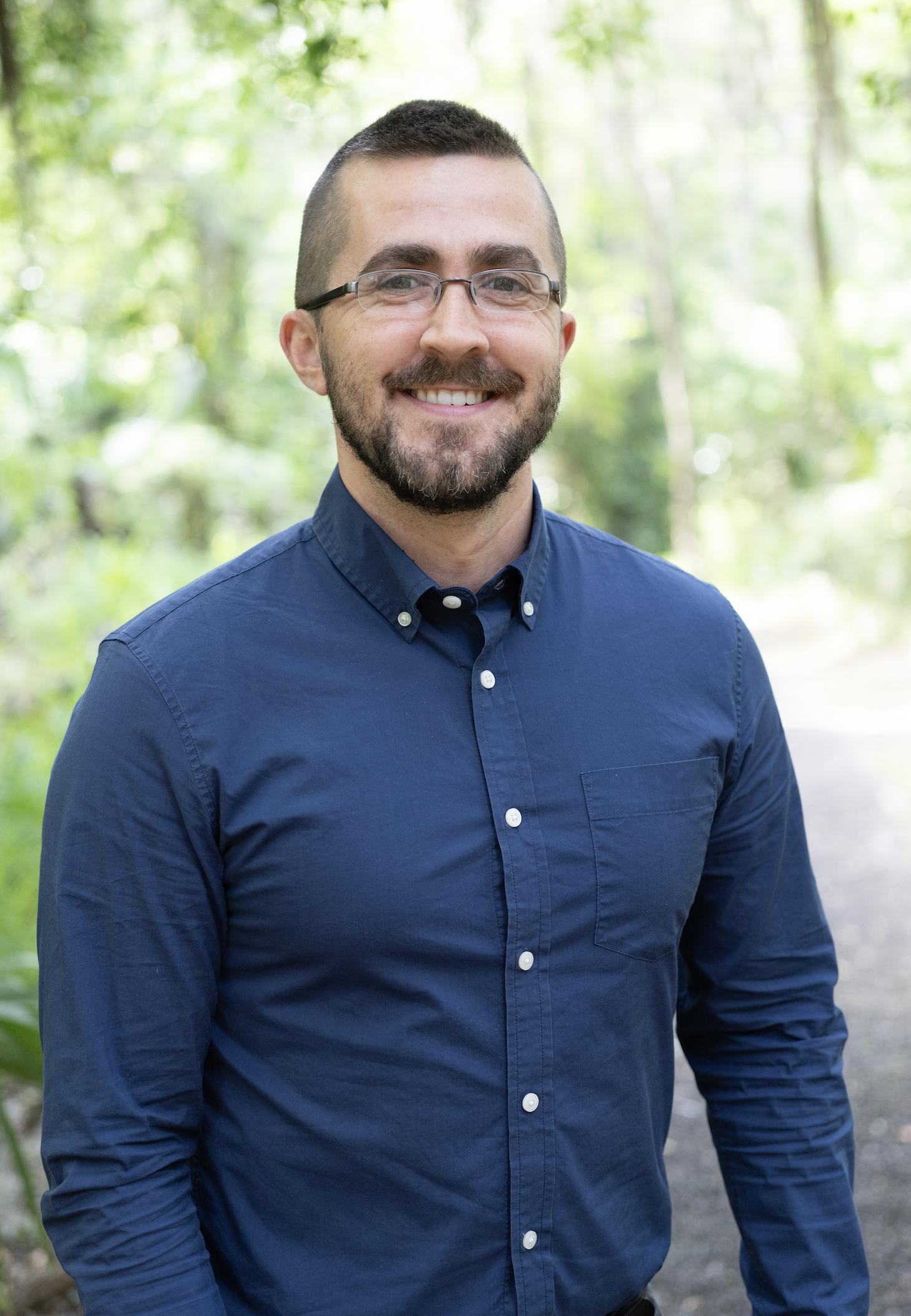
Brian Odegaard is an Assistant Professor in the Department of Psychology at the University of Florida, affiliated with the College of Liberal Arts & Sciences. His research focuses on understanding how attention and metacognition influence perceptual decision-making and the neural basis of conscious experience. Key areas include peripheral vision perception, multisensory integration, and reality monitoring in humans and AI. Education Ph.D., Psychology (Behavioral Neuroscience & Computational Cognition), UCLA, 2015 M.A., Psychology, UCLA, 2011 B.A., Psychology & Music (Piano Performance), Calvin College, 2009 Research Interests Dr. Odegaard investigates: Perceptual decision-making in peripheral vision, funded by the Office of Naval Research Reality monitoring in humans and large language models Multisensory integration mechanisms and their neural substrates Consciousness theories and their empirical validity Computational modeling of metacognitive processes Key Contributions Recent work includes studies on color perception in peripheral vision, metacognitive sensitivity in AI collaboration, and critiques of Integrated Information Theory. His team uses virtual reality and psychophysical methods to explore visual change detection and saccadic dynamics. Awards & Funding Young Investigator Award, Office of Naval Research Funding from Templeton World Charity Foundation Lab & Collaborations He leads the Perception, Attention, and Consciousness Lab at UF, training graduate students like Saurabh Ranjan (reality monitoring), Joseph Pruitt (peripheral vision), and Trevor Caruso (performance-matched paradigms). Collaborations include Alan Lee (Lingnan University) on change blindness and David Rosenthal (CUNY) on consciousness theories.