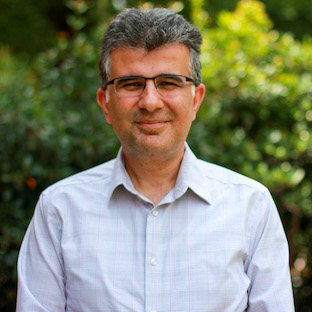
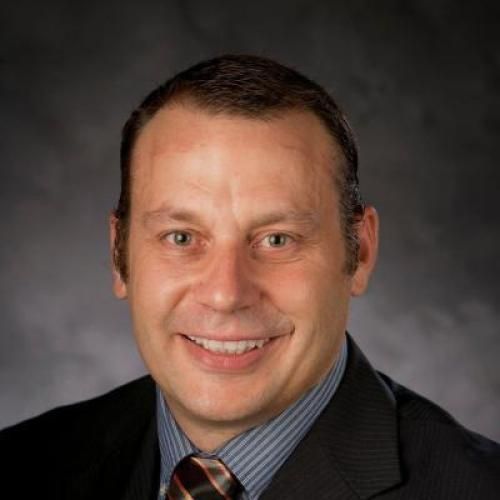
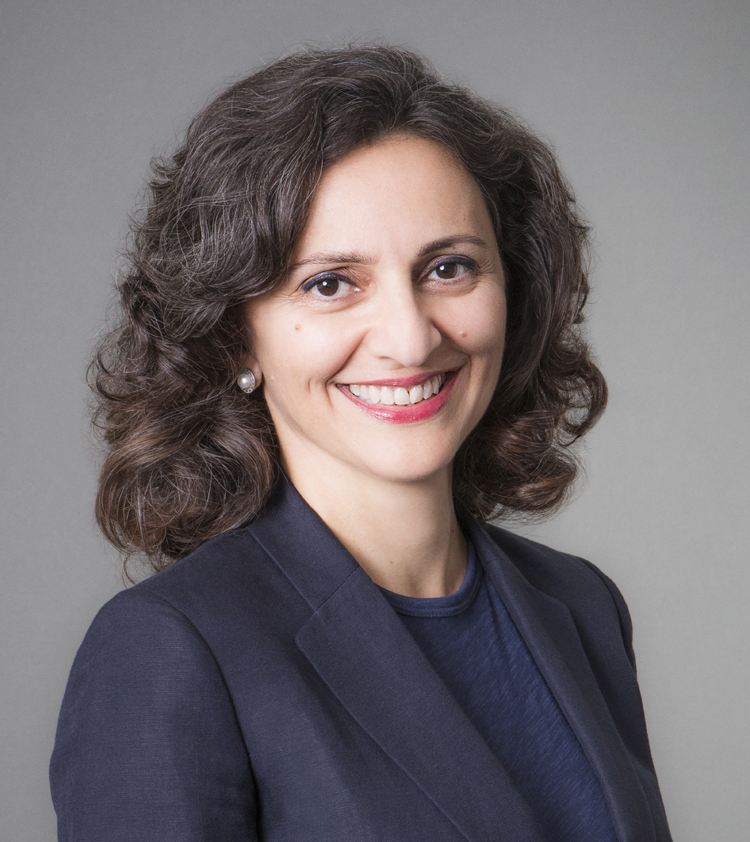
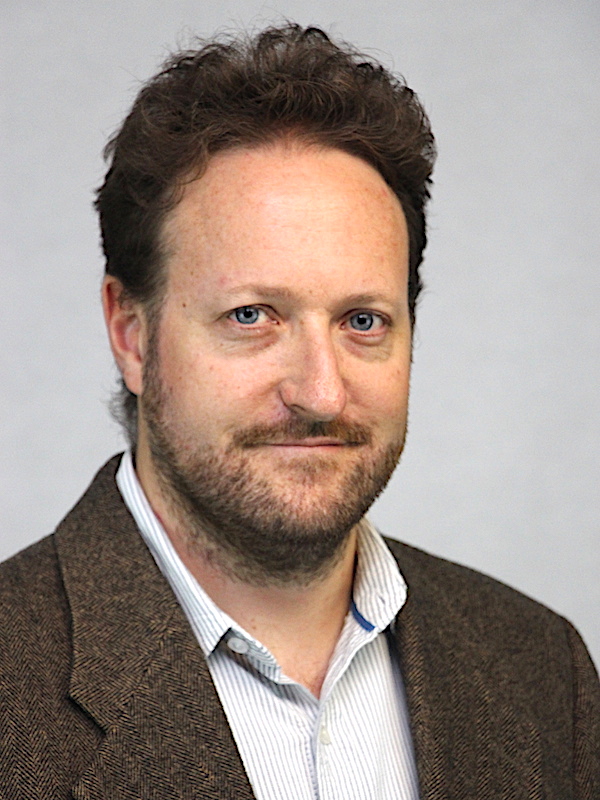
Gerrit Holl is a researcher affiliated with the University of Reading, specializing in atmospheric remote sensing and climate data analysis. His work focuses on satellite-based measurements, error characterization, and validation of climate data records using instruments like HIRS, ACE-FTS, and TANSO-FTS, with particular emphasis on Arctic observations and greenhouse gases like methane. Research interests include: Atmospheric remote sensing using infrared and microwave sensors Climate data record creation and uncertainty quantification Cross-validation of satellite and ground-based measurements Radiative transfer modeling and optimized frequency grids Error analysis in satellite humidity and ice water path retrievals Recent publications analyze methane trends, radiance uncertainties, and sensor intercomparisons, often involving collaborations with institutions in Europe and Canada. Key applications include improving climate models and satellite data assimilation frameworks.
Mehmet Kurum is an Associate Professor in the School of Electrical & Computer Engineering at the University of Georgia and holds the Paul B. Jacob Endowed Chair. He concurrently serves as an Adjunct Professor at Mississippi State University (MSU). His roles include academic leadership, research, and teaching in electrical engineering and remote sensing. Dr. Kurum earned his B.S. from Bogazici University (Turkey), M.S. and Ph.D. from George Washington University (USA), followed by postdoctoral work at NASA Goddard. He previously served as Assistant and Associate Professor at MSU from 2016 to 2023. His research focuses on microwave remote sensing , particularly using satellite and UAS-based systems for environmental sustainability in agriculture. Key projects involve NASA missions (SMAP, SNOOPI, NISAR, CYGNSS) and developing spectrum-efficient technologies to address modern challenges like soil moisture estimation under forest canopies and RFI mitigation. Dr. Kurum has secured grants from DOD, NASA, NSF, and USDA. His work emphasizes GNSS reflectometry , LiDAR integration , and deep learning for precision agriculture and environmental monitoring. Awards include the NSF CAREER Award for innovative spectrum recycling research. His recent efforts include the SNOOPI CubeSat mission for P-band remote sensing and the SWIFT-SAT project addressing radiometer/communication coexistence. He collaborates with interdisciplinary teams on forest canopy modeling, soil moisture retrieval algorithms, and UAS-based sensor development.
Hiroshi Matsuo is an Associate Professor at the Graduate University for Advanced Studies (SOKENDAI), affiliated with the Department of Astronomical Science under the School of Physical Sciences. He conducts research at the National Astronomical Observatory of Japan (NAOJ), focusing on advanced instrumentation for radio astronomy in millimeter, submillimeter, and terahertz bands. His research interests center on Radio Astronomy and Terahertz Instrumentation , particularly the development of superconducting tunnel junction detectors , cryogenic readout electronics , and applications of intensity interferometry (Hanbury-Brown and Twiss method). His work enables high angular resolution imaging through photon bunching and delay time measurements, with proposed implementations in Antarctic and space-based interferometers. The body of his recent publications reflects a strong trend in astronomical instrumentation and observational cosmology , especially using facilities like ALMA and JWST. His research spans detector physics, atmospheric transparency, and observations of distant galaxies and active galactic nuclei during the reionization epoch. Key themes include photon counting , aperture synthesis , and high-resolution mapping in submillimeter wavelengths. Terahertz and Far-Infrared Windows Opened at Dome A, Antarctica (Nature Astronomy, 2016) Detection of an oxygen emission line from a high-redshift galaxy (Science, 2016) Far-infrared intensity interferometry for high angular resolution imaging (SPIE, 2020) Dr. Matsuo has been actively involved in advising research students and contributing to large-scale international collaborations. His projects often involve development of cutting-edge instrumentation and participation in major observational campaigns. While specific grants are not listed, his sustained publication record in top-tier journals suggests consistent funding support from national and international agencies. He is a key member of the radio astronomy instrumentation team at NAOJ, contributing to both ground-based and space-based observational technologies. His work at Dome A in Antarctica highlights his involvement in extreme-environment astronomy and site characterization for future observatories.
Dr. Detlef Born is a Researcher at the Leibniz Institute of Photonic Technology (IPHT) in Jena, Germany, working within the Research Department Photonics and Quantum Detection and specifically in the Work group Radiometry. His research focuses on developing advanced imaging systems using superconducting detector technologies for security applications and fundamental physics investigations. Dr. Born's primary research interests center around superconducting detector technology, particularly transition-edge sensors (TES) and superconducting quantum interference devices (SQUIDs) for submillimeter-wave and terahertz imaging. His work spans both applied security technology and fundamental physics, with significant contributions to understanding fluxoid dynamics in type-II superconductors, Josephson junction behavior, and quantum detection phenomena. His research has enabled the development of passive video imaging systems operating at 350 GHz with exceptional sensitivity (pixel NETD well below 1 K), allowing for security screening at standoff distances of up to 25 meters with high spatial resolution. Analysis of Dr. Born's publication record from 2012-2025 reveals a consistent focus on advancing superconducting detector technology for security applications while simultaneously exploring fundamental superconducting phenomena. His work demonstrates a progression from foundational research on detector materials and quantum effects toward increasingly sophisticated integrated imaging systems capable of real-time video at practical standoff distances. The research spans multiple subfields including cryogenic detector physics, quantum transport phenomena, and optical system design for submillimeter radiation. Dr. Born collaborates extensively with researchers across multiple institutions, as evidenced by his publication record. His work involves sophisticated experimental setups requiring cryogenic systems operating below 1 K, precision optical components including free-form mirrors, and advanced electronic readout systems. The research group he works within at IPHT appears to be a leading center for developing practical applications of superconducting detector technology for security screening and scientific instrumentation.
Fabio Madonna is an Associate Professor at the Department of Physics "ERCaianiello" of the University of Salerno. His research focuses on atmospheric physics, climate science, and remote sensing, with a particular emphasis on radiosonde calibration, aerosol observations, and climate extreme indices. He has contributed to projects like the Copernicus Climate Change Service and GRUAN (GCOS Reference Upper-Air Network). Research Interests: Atmospheric Physics and Remote Sensing Climate Monitoring and Data Harmonization Aerosol and Cloud Observations Extreme Weather Analysis Scientific Awards: Peer Review Only (2019) Teaching: He lectures on "Physical Methodologies and Control Systems for Sustainable Agribusiness" (2024). His office hours are on Mondays from 4:00 PM to 6:00 PM at Fisciano Campus, Building F, Room 002.
Shoichi Shige is an Associate Professor at Kyoto University's Graduate School of Science, Division of Earth and Planetary Science, since 2009. He has held visiting positions at Colorado State University (2013-2014) and has been affiliated with institutions like Osaka Prefecture University and JAXA's Earth Observation Research Center. Education: PhD in Earth and Planetary Sciences from Kyoto University (2001). Professional Memberships: American Meteorological Society, American Geophysical Union, IEEE Geoscience and Remote Sensing Society (2008-2019), and Japanese meteorological societies. Research Interests Latent heat retrieval algorithms using TRMM/GPM satellite data. Global precipitation mapping via microwave radiometers (GSMaP project). Orographic rainfall dynamics in monsoon regions. Rain/no-rain classification methods for remote sensing. Scientific Contributions Developed the Spectral Latent Heating (SLH) algorithm. Collaborated on TRMM latent heating intercomparisons. Published 15+ peer-reviewed articles since 1999, focusing on tropical convection, precipitation profiles, and satellite data validation. Awards 2018 Meteorological Society of Japan Award for contributions to precipitation research.
Paolo F Maccarini is an Associate Research Professor in the Department of Electrical and Computer Engineering at Duke University. He holds a PhD in Electrical Engineering from the University of California, Santa Barbara (2002). His work bridges biomedical engineering and microwave technology, focusing on thermal medicine and cancer therapy. He has taught courses in electrical and biomedical engineering and collaborated across disciplines in oncology and medical physics. Education: PhD, University of California, Santa Barbara (2002) Maccarini’s research spans microwave radiometry for non-invasive temperature monitoring, gold nanostar-based photothermal immunotherapy for tumor ablation, and thermal dosimetry in hyperthermia treatments. His work integrates antenna design, nanotechnology, and medical applications, particularly in bladder and brain tumor therapies. He has developed devices for thermal monitoring and explored synergistic approaches combining photothermal effects with immune activation. His publications demonstrate expertise in microwave systems for medical radiometry, tumor treatment with plasmonic nanoparticles, and thermal dosimetry for hyperthermia. Collaborative projects involve magnetic resonance thermal imaging integration, photodynamic therapy enhancements, and device development for superficial disease treatment. While no formal awards are listed, his contributions to medical device innovation and thermal cancer treatments are notable.
Janne Lahtinen is a Researcher at the Department of Energy and Mechanical Engineering, Aalto University. He works within the Marine and Arctic Technology research group and is associated with the Marine Technology field. His role involves contributing to doctoral-level research projects, as indicated by his designation as a Visitor (Doctoral Researcher) . Research Focus: Janne's work centers on maritime safety, systems engineering, and risk analysis. Key areas include remote pilotage automation, Bayesian network applications in risk modeling, and MBSE language selection frameworks. His research intersects with Marine Technology Arctic Engineering Human-Machine Interaction Safety-Critical Systems Recent Publications highlight methodologies for risk assessment in remote pilotage operations, decision-making tools for systems engineering, and hardware upgrades for microwave radiometry systems. These works span journals like Ocean Engineering , Expert Systems with Applications , and conference proceedings from MicroRad 2020 and ISSAV 2019 .
Mahta Moghaddam is the William M. Hogue Professor of Electrical Engineering at the University of Southern California (USC), where she leads the Microwave Systems, Sensors, and Imaging Lab (MiXIL) and directs the USC Viterbi Center for Arid Climate WAter REsearch (AWARE). She previously served as Professor at the University of Michigan (2003-2011) and worked at NASA's Jet Propulsion Laboratory (1991-2003). Ph.D. in Electrical Engineering, University of Illinois at Urbana-Champaign (1991) Thesis advisor: Weng Cho Chew Her research focuses on microwave sensing of the environment, inverse scattering and imaging, soil moisture/permafrost mapping, and electromagnetic applications in medicine. She develops advanced algorithms for radar systems to study climate change impacts, including Arctic permafrost dynamics and wildfire monitoring via satellite constellations. Her recent publications emphasize machine learning integration with physics-based models for soil moisture retrieval (CYGNSS, SMAP), UAV-mounted radar for subsurface exploration, and GNSS-Reflectometry applications. Key subfields include thermal therapy monitoring, sensor networks, and multi-frequency microwave imaging. National Academy of Engineering (2019) IEEE Fellow (2008) NASA Outstanding Public Leadership Medal (2016) Maseeh Entrepreneurship Prize (2017) She has supervised numerous Ph.D. and M.S. students, including current advisees Amir Azemati, Kazem Bakian-Dogaheh, and alumni such as Pan Liang and Alireza Tabatabaeenejad. Her work is supported by grants from NASA, NSF, and DoD.
Vladimir Zelman, MD, PhD is a Clinical Professor of Anesthesiology (Part-Time) at the Keck School of Medicine of USC . As the founder of the Center for Distance Learning , he spearheads international collaborations with institutions like Novosibirsk State University (Russia), Burdenko Institute of Neurosurgery, and Ain Shams University (Egypt), focusing on evidence-based medicine education and critical care research. His work bridges anesthesiology, neurosurgery, and global health diplomacy, with an emphasis on medical education, postoperative recovery, and radiosurgical outcomes. Education : MD and PhD degrees (institution unspecified) Zelman’s research spans microwave radiometry for spine diagnostics , peripheral nerve stimulation , and gamma knife radiosurgery complications . His recent work explores machine learning in ICU infection control and neurosurgical infrastructure development in Central Asia. Publications highlight collaborations across 10+ countries, reflecting his commitment to global healthcare equity. The Center for Distance Learning under Zelman’s leadership facilitates international case discussions , master’s thesis mentorship , and pandemic-era knowledge exchange , serving as a platform for medical diplomacy. Students like Anastasia Kolerova (NSU Dermatology) credit his evidence-based medicine curriculum with enhancing their research interpretation skills. Contact: vzelman@med.usc.edu | Phone: +1 323 409 2212
Jasper Vrugt is a Professor at the University of California, Irvine, with joint appointments in Civil and Environmental Engineering and Earth System Science. He holds a Ph.D. (2004) and M.S. (1999), both earned cum laude from the University of Amsterdam. His research focuses on complex Earth system dynamics through integrated numerical modeling, measurement techniques, and inverse methodologies. Research interests span computational science, hydrology, geophysics, and uncertainty quantification. Key themes include diagnosing epistemic errors in models, quantifying uncertainty in environmental predictions, and developing next-generation inference methods. Applications range from soil moisture-precipitation feedbacks to carbon-nitrogen cycling and hydropower optimization. His recent publications demonstrate strong emphasis on Bayesian uncertainty quantification, diagnostic model evaluation, and climate-hydrology interactions. Trends include advanced statistical methods for nonstationary extremes, soil moisture-cloud coupling, and novel sensitivity analysis techniques. Dr. Vrugt leads an active research group advising multiple graduate students. His team develops computational tools for environmental modeling and maintains collaborations with institutions like Los Alamos National Laboratory.
David Starobinski is a Professor at Boston University's Electrical and Computer Engineering department with joint appointments in Systems Engineering and Computer Science . He holds a Ph.D. in Electrical Engineering from the Technion - Israel Institute of Technology (1999), and has held visiting positions at UC Berkeley (1999-2000), EPFL (2007-2008), and the U.S. DoT Volpe Center (2014-2019). His research focuses on Cybersecurity Wireless Networking Blockchain Technology Network Economics IoT Security Vehicular Network Analysis with an emphasis on practical implementations and theoretical models. Recent publications highlight advancements in Threat Knowledge Graphs Blockchain Transaction Pool Sync Vehicular Information Diffusion Spectrum Sharing Frameworks Software Composition Analysis reflecting his interdisciplinary approach. Award highlights include NSF CAREER (2002) DOE Early Career award (2004) Multiple best paper awards (WiOpt 2010, IEEE CNS 2016, IEEE ICBC 2020/2023) BU ECE Teaching Awards (2010, 2020) and editorial roles in leading journals. He advises a research group spanning cybersecurity, wireless protocols, and blockchain systems, with collaborations across the Networking and Information Systems Lab , CISE , and Hariri Institute . Current projects involve 5G/6G Spectrum Sharing Automated Threat Modeling for Connected Vehicles Resilient Blockchain Architectures Cybersecurity Operations with Knowledge Graphs supported by NSF and Red Hat Collaboratory.
Dr. Anton Ermakov is Assistant Professor of Aeronautics and Astronautics at Stanford University, with courtesy appointments in Geophysics and Earth and Planetary Sciences. He holds an Engineer Degree in Space Geodesy from Moscow State University of Geodesy and Cartography (2010) and a PhD in Planetary Sciences from MIT (2017). His postdoctoral work was conducted at JPL and UC Berkeley. His research integrates spacecraft data with geophysical modeling to investigate the internal structures of Solar System bodies. Key methodologies include gravity-topography analysis, radiometric tracking, and microwave radiometry. Major contributions include Dawn mission studies of Vesta and Ceres, establishing frameworks for ocean world exploration, and current participation in Juno's investigation of Jupiter's interior. Research trends demonstrated in publications focus on: Geophysical constraints on planetary differentiation and evolution Multi-instrument approaches to icy moon characterization Tidal interactions and interior dynamics modeling Radiation-based subsurface exploration techniques Honors include the naming of asteroid 10680 Ermakov in recognition of his work on Vesta and Ceres interior structures.
Nicolas PINEL is a Researcher Lecturer at ICAM in Nantes, France. His primary affiliation is with the Measurements and Controls research axis, associated with the IETR laboratory. His work focuses on electromagnetic scattering phenomena, radar technology, and geophysical applications. He develops advanced numerical methods like GPILE and Kirchhoff approximations to model interactions between electromagnetic waves and complex environments such as rough surfaces, layered media, and subsurface structures. Key research areas include radar backscattering from oil-contaminated sea surfaces, ground-penetrating radar (GPR) for subsurface imaging, and signal processing techniques for pavement analysis. His studies bridge theoretical models with experimental validations, addressing challenges in environmental monitoring, civil engineering, and maritime surveillance. Collaborations involve prestigious laboratories worldwide, emphasizing applied research for industry-relevant solutions. His contributions span radar system optimization, non-destructive testing, and computational electromagnetics, with applications in geoscience, transportation infrastructure, and pollution detection.
Henry Potter is an Associate Professor and Ocean Observing Team Lead at Texas A&M University's Geochemical and Environmental Research Group (GERG). His research focuses on air-sea interaction dynamics, particularly in high-energy environments like hurricanes and coastal zones. Potter holds a Ph.D. in Applied Marine Physics from the University of Miami and degrees from Indiana University and Southern Maine Community College. **Education:** Ph.D. Applied Marine Physics, University of Miami, FL (Year not specified) B.S. Geography, Indiana University, Bloomington, IN A.A. Liberal Studies, Southern Maine Community College, ME **Research Interests:** Potter investigates energy exchange mechanisms across the air-sea interface, including momentum flux variability, wave dynamics, and whitecap processes. His work employs field observations, satellite data, and numerical models to improve understanding of ocean-climate interactions. Key themes include hurricane-ocean interactions, boundary layer turbulence, and offshore wind energy applications. **Grants & Advising:** While no specific grants are listed, his role as an Associate Professor involves mentoring students in oceanography programs. He teaches advanced courses such as Data Analysis Methods in Geosciences and Blue Planet studies. **Labs/Teams:** Leads the Ocean Observing Team within GERG, specializing in cutting-edge instrumentation and field campaigns like DUNEX and ITOP.