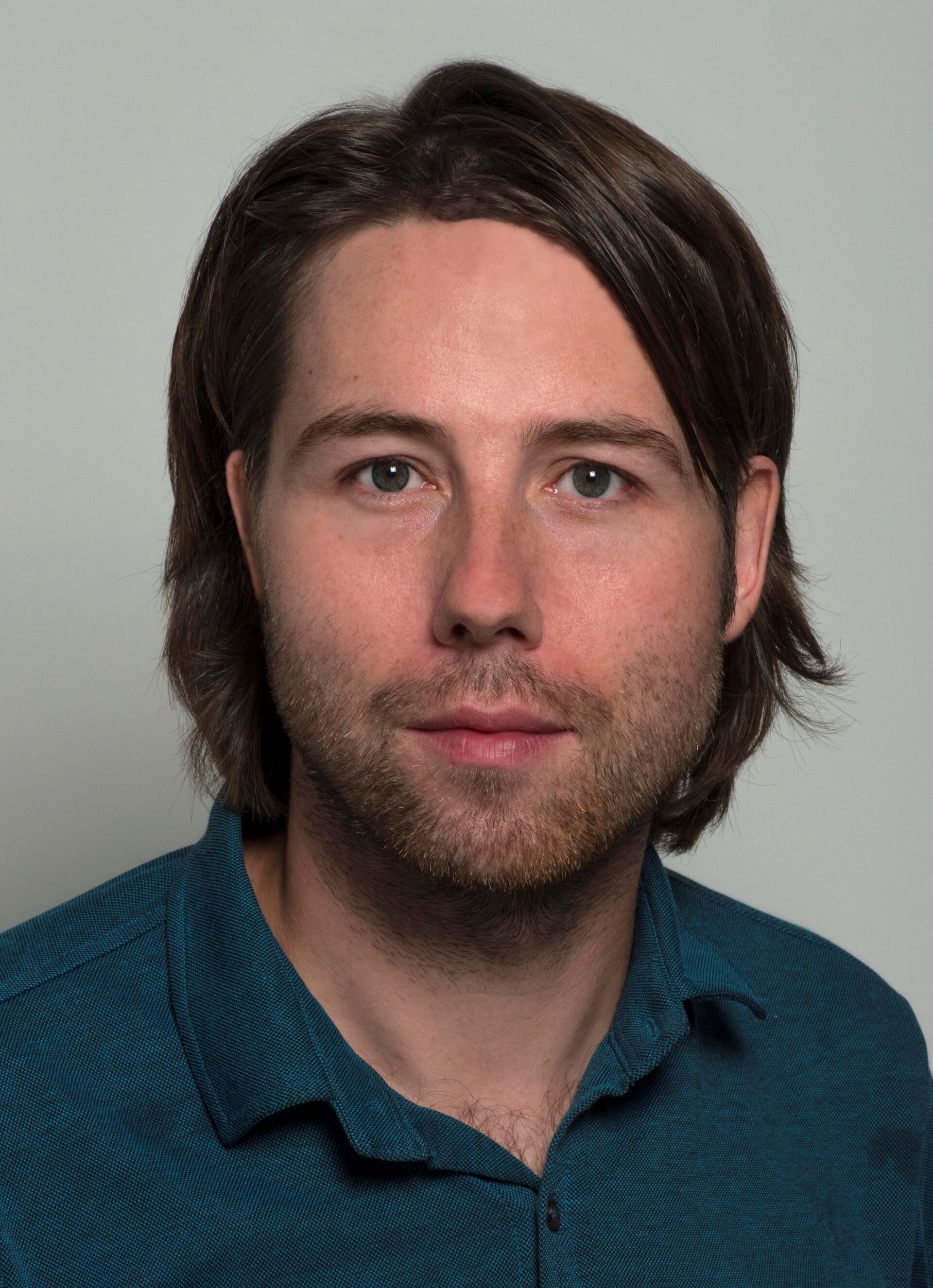
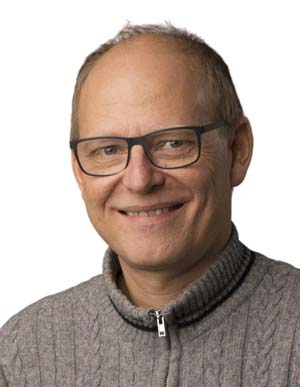
Cuong Phu Le is an Associate Professor at the Department of Electronic Systems within the Faculty of Information Technology and Electrical Engineering at NTNU – Norwegian University of Science and Technology. His research focuses on microsystem design, MEMS energy harvesting, and power management circuits. Education: B.S. in Telecommunications Engineering, Ho Chi Minh City University of Technology (2005) M.Sc. in Microsystems Technology, Vestfold University College (2009) Ph.D. in Microsystems Technology, University of Oslo (2013) Research Interests: Dr. Le’s work emphasizes innovative solutions in microsystem technologies, particularly in energy harvesting systems and circuit design for efficient power management. His contributions bridge theoretical advancements with practical applications in electronics and energy systems. No scientific awards, articles, or grant information are explicitly listed in the provided text. He advises students but no specific names are provided. No lab or team affiliations are mentioned.
Jan Arvid Haugan is a Professor in the Department of Teacher Education at the Faculty of Social and Educational Sciences, Norwegian University of Science and Technology (NTNU). His office is located at Gunnerushuset, G513, Kalvskinnet, and he can be reached at jan.haugan@ntnu.no or by phone at 92417372. Haugan serves as co-leader of the ALDES research group, which focuses on issues related to diversity, inclusion, and exclusion in educational contexts. Haugan's research interests center on the interaction between individual and contextual factors in multiple microsystems within the life ecology of young people, particularly those related to education and sport. He investigates how factors at individual, group, and system levels connect to young people's development of motivation, relationships, coping, and learning. His work examines how structures, form, and content in classrooms/teams, schools/clubs, and home/family environments influence these developmental factors. Haugan employs systematic literature reviews, qualitative surveys, and quantitative methods in his research. His current research portfolio includes several significant projects: "The relational life in Trondheimsskolen" (2022-2028), a longitudinal study of approximately 2000 students examining connections between well-being, belonging, and various factors across grade levels; "DROPOUT: Transgenerational, Social, and Individual Predictors of High-School Dropout" (2021-2025), an NFR-funded project analyzing risk and protective factors for school dropout using data from multiple sources including HUNT surveys; "YourMove!" (2022-2026), an NRF-funded project developing an app-delivered motivation program for physical education; and "The Coaches' Lift" (2019-2024), a project focused on improving competence for young talented coaches. Haugan's publications over the past five years reveal a strong focus on adolescent mental health, school transitions, coach-athlete relationships, and socio-emotional learning. His work spans educational psychology, sports psychology, and adolescent development, with particular attention to how contextual factors influence individual outcomes. Recent publications show increasing collaboration with international researchers and interdisciplinary approaches that combine educational theory with practical interventions. Haugan teaches several courses including MGLU5242 (Scientific theory and method), MGLU5229 (Theories of Science and Research Methods), MGLU2512 (Pedagogy and Pupil-related Skills), and LOS8035 (Literature Review in Educational Sciences). His research is supported by substantial grants from organizations including NFR (over 24 million NOK across projects) and Sparebankstiftelsen DNB (24.5 million NOK). As co-leader of the ALDES research group, Haugan oversees a team of researchers working on multiple projects related to educational psychology, adolescent development, and sports coaching. The group collaborates with various municipal and county-level organizations, as well as international institutions, to address pressing issues in education and youth development.
Mathias Busek is a Researcher at the Hybrid Technology Hub within the University of Oslo's Faculty of Medicine. His work focuses on developing advanced microfluidic systems including organ-on-chip technologies, hypoxia modeling platforms, and 3D bioprinting applications. Dr. Busek designs pneumatically actuated microsystems and develops computational models for microfluidic network optimization. His research enables precise control of cellular microenvironments for applications in drug testing and disease modeling. Current projects investigate metabolic crosstalk between organs using pump-less recirculating platforms and develop analytical systems for organoid medium analysis compliant with FDA standards. Busek's publications demonstrate consistent innovation in microengineering approaches for biological applications, with recent advances in 3D-printed tooling for microfluidics and stem cell-derived tissue models. His work bridges engineering precision with biological complexity to create physiologically relevant in vitro systems. Major Scientific Awards: Fraunhofer Institute Award for Innovative Product Development (2017) European EARTO Innovation Award, 3rd Place (2018) Scientia II Fellowship - Marie Curie Co-fund Project (2019) Teaching & Supervision: Conducts practical training in microfluidics and lectures on organ-on-chip technology. No specific student advisees are named in source materials.
Mariusz Nowostawski is a Professor at the Norwegian University of Science and Technology (NTNU), leading the Bachelor in Programming study program and directing the Decentralised Systems Engineering Lab. His research focuses on self-organising systems, adaptive/autonomous computation, peer-to-peer systems, and decentralisation technology, including blockchain systems like Bitcoin, Ethereum, and Lightning Network. Expertise in blockchain governance and cross-chain decentralised autonomous organisations (DAOs) Specialises in self-sovereign identity systems and privacy-preserving infrastructure Collaborates with Europol on cryptocurrency anonymity and privacy research Industry experience with Sun Microsystems and Oracle His recent publications address blockchain consensus evolution, decentralised identity management, and privacy-preserving techniques. Key themes include decentralization, peer-to-peer networks, and applications in healthcare and pandemic management. Research trends highlight a focus on cross-chain interoperability, self-sovereign identity challenges, and blockchain-based solutions for healthcare and cybersecurity. He explores technical aspects like Lightning Network optimization and governance dynamics in Bitcoin and DAOs. As an educator, he teaches programming, peer-to-peer systems, distributed/decentralisation technologies, and blockchain. Personal interests include rock climbing, paragliding, and long-distance running.
Dag Werner Breiby is a Professor in the Department of Physics at the Norwegian University of Science and Technology (NTNU). His research focuses on computational imaging, functional materials, geo materials, and advanced microscopy techniques. Research Interests: Breiby's work spans porous media tomography, X-ray diffraction, polymer and composite material analysis, and biomedical imaging. He utilizes neutron and X-ray computed tomography to study fluid dynamics in geomaterials, molecular ordering in thin films, and strain localization in shale. Recent Article Trends: His publications from 2014–2025 emphasize 4D imaging of dynamic processes (e.g., frost heave, drainage in porous media) multiscale X-ray and neutron tomography applications computational imaging in polymers, semiconductors, and biomedical contexts. Key Collaborations: Breiby collaborates with researchers like Kim Robert Bjørk Tekseth, Fazel Mirzaei, and Basab Chattopadhyay, contributing to fields such as CO2 methanation catalysts, perovskite semiconductors, and growth cartilage imaging.
Oddvar Søråsen is a Professor Emeritus at the Department of Informatics, University of Oslo. He specializes in MEMS (Microelectromechanical systems), RF MEMS, CMOS-MEMS integration, and nanoelectronics. His research focuses on energy harvesting, resonator design, and microsystem technologies. Søråsen has held leadership roles, including Head of the Department of Informatics (UiO) and has contributed to academic governance committees. He received the First Prize in the DEC TRI/ADD program (1991) for innovative design work. Education: Cand. real in Physics (Electronics) from the University of Oslo (1973), Diploma in Pedagogics (1974), and additional pedagogical training. His career includes senior roles at the Norwegian Defence Research Establishment (FFI) and sabbaticals at SINTEF and industry partners. Research interests span MEMS design, CMOS integration, nanoelectronics, and applications in wireless sensor networks. His work emphasizes interdisciplinary collaboration, including projects with SINTEF, Carnegie Mellon University, and the Large Hadron Collider (readout systems). Notable contributions include advancements in MEMS resonators, energy harvesting systems, and RF MEMS packaging. His publications address nonlinear dynamics in energy harvesters, nano-gap fabrication, and CMOS-MEMS co-design.
Snorre Aunet is a Professor II in the Department of Informatics at the University of Oslo, affiliated with the Faculty of Mathematics and Natural Sciences. He is a key member of the Nanoelectronics Systems Research Group and contributes to the 4DSpace project. His academic background includes a Dr. ing. from NTNU (2002) and a cand. scient. from the University of Oslo (1993). His research focuses on ultra-low-voltage and low-power mixed-signal circuits , particularly in subthreshold operation, with applications in IoT, space systems, and energy harvesting. He specializes in radiation-hardened (radhard) and defect-tolerant architectures, leveraging advanced semiconductor technologies like 22nm and 28nm FDSOI. His work integrates circuit design, microarchitecture, and reliability under extreme conditions such as radiation exposure and process variation. The recent trend in his publications shows a strong emphasis on energy-efficient VLSI design , including SRAM cells, adders, level shifters, and flip-flops operating in subthreshold regimes. He has also expanded into MEMS-based energy harvesting and hardware security, demonstrating a broad and evolving research portfolio. His collaborations span institutions and involve both theoretical modeling and practical implementation. Scientific Awards: No specific awards mentioned in the provided text. Advising and Grants: Snorre Aunet has supervised multiple students, including Somayeh Hossein Zadeh, Even Låte, and Ali Asghar Vatanjou, whose names appear as co-authors on several publications. He is involved in the 4DSpace research project, indicating active grant funding and leadership in space-related electronics research. His advising style appears collaborative, with students contributing to high-impact journals and conferences. Labs and Teams: He is a core member of the Nanoelectronics (NANO) research group at the Department of Informatics, which focuses on next-generation electronic systems. This group is engaged in cutting-edge research in nanoscale circuits, low-power design, and robust computing architectures.
Astrid Aksnes is Professor at NTNU's Department of Electronic Systems, developing miniaturized diagnostic technologies. Research focus: Lab-on-a-chip biosensors Nanophotonic detection systems Point-of-care diagnostics Publications address microfluidic integration and disease marker detection. Awards: Not documented Leads research in biomedical microsystems. Collaborates on rapid diagnostic platforms.
Frank Karlsen is a full Professor in the Department of Microsystems at the Faculty of Technology, Natural Sciences and Maritime Sciences, University of South-Eastern Norway (USN), Campus Vestfold. Appointed full Professor in 2010 after serving as Professor II since 2006, he has over 35 years of expertise in molecular methods development spanning clinical microbiology, virology, and biotechnology applications. His educational foundation includes a PhD from Oslo University Hospital (1998) with thesis "Analysis of Human Papillomavirus in Intraepithelial neoplasia and carcinoma of the cervix uteri". Career milestones encompass founding NorChip/PreTect AS (1999-2010), initiating USN's involvement in SFI CtrlAQUA (2014), and pioneering closed-containment aquaculture filtration systems since 1987. Research focuses on molecular diagnostics innovation, highlighted by mRNA-based cervical pre-cancer detection (earning the 2003 Reodor prize) and point-of-care lab-on-a-chip systems for RNA diagnostics. His aquaculture technology contributions include biofilm filter development and a 2009 co-invented refining technology currently in production. Current projects involve commercializing POCNAD cartridges with Horten-based manufacturers for aquaculture and healthcare applications. Scientific awards: Innovation Norway gold prize Reodor (2003) for mRNA method enabling direct cervical pre-cancer detection Advising and grants: Supervised numerous PhD/Master's students including Nhut Tran-Minth (recent thesis defense) and Cosmas Muyabwa (Kenya cervical screening project). Led 14+ international projects funded by Norwegian Research Council, European Commission, Statoil, and Innovation Norway, with significant involvement in DR Congo research (2003-2005) published in British Journal of Cancer (2010). Labs and teams: Core contributor to SFI CtrlAQUA research center; collaborates with Oslofjord Ressurspark (co-founded), Horten production facilities for diagnostic cartridges, and Sande-based company manufacturing his refining technology. Maintains active industry partnerships across aquaculture and medical diagnostics sectors.
Lars Hoff is a Professor at the University of Southeast Norway within the Department of Microsystems , Faculty of Technology, Natural Sciences and Maritime Studies . He leads research in ultrasound technology , focusing on transducer and electronics as part of the Centre for Innovative Ultrasound Solutions (CIUS) . Research : Develops advanced ultrasound transducers for medical imaging, underwater sonar, and NDT. Collaborates with NTNU, University of Oslo, and industry partners. Teaching : Coordinates courses in Measurement Engineering , Acoustics and Ultrasound Technology , and Elastic Waves in Solids at PhD level. Software : Developed Bubblesim , a MATLAB-based tool for simulating contrast agent bubbles for medical ultrasound. Industry Impact : Co-founded Cardiaccs AS to commercialize microsensors for cardiac monitoring developed in collaboration with Rikshospitalet. Publications : Authored a foundational book on contrast agent acoustics and key papers on microbubble dynamics. His work underpins widely used clinical agents like Optison and Sonazoid .
Ulrik Hanke is a full Professor at the University of South-Eastern Norway's Department of Microsystems (Faculty of Technology, Natural Sciences, and Maritime Sciences), where he has worked since 2006. He chairs the PhD programme in Technology and leads the Micro- and Nanoelectromechanical Systems (MNEMS) research group. His research expertise spans: RF acoustics and piezoelectric microdevices MEMS/RF-MEMS design and semiconductor physics Microwave engineering and wave propagation theory Professor Hanke teaches core courses including Micro Sensors & Actuators, Vector Calculus, and Electronic Measurement Systems. Before joining USN, he spent a decade as a Research Scientist at SINTEF and completed postdoctoral work at NTNU. He leads the MNEMS lab ( research group link ) focused on micro/nanosystem innovations. Contact: ulrik.hanke@usn.no
Lars Eric Roseng is an Associate Professor at the Department of Microsystems within the Faculty of Technology, Natural Sciences and Maritime Sciences at the University of South-Eastern Norway. He operates from the university's Vestfold campus, where he contributes to academic and research activities in technology-focused disciplines. His research aligns with the department's focus on microsystems technology and its applications across natural sciences and maritime domains. Specific interests likely include micro-scale device development, sensor technology integration, and maritime systems innovation. For communication, he can be contacted directly via email at lars.roseng@usn.no or by telephone at +47 31 00 90 44.
Erik Andrew Johannessen serves as Professor in the Department of Microsystems within the Faculty of Technology, Natural Sciences and Maritime Sciences at the University of South-Eastern Norway (USN), based at Campus Vestfold. His responsibilities include teaching foundational courses in BioMEMS and engineering professional practice while leading research at the convergence of microsystems engineering and biological applications. His research program centers on exploiting nanostructured materials and microsystem technology to decode fundamental biological processes and engineer advanced bioanalytical devices. Key focus areas include developing BioMEMS platforms that integrate organic materials with solid-state electronics through nature-inspired design principles, enabling breakthroughs in cell manipulation, targeted therapeutic delivery, and precision diagnostics through strategic miniaturization. Technical mastery spans photolithographic/e-beam microfabrication, primary cell culture techniques, electrochemical sensor development, multi-language programming (Python/Pascal), analogue circuit design, and autonomous physiological monitoring instrumentation. This interdisciplinary skillset facilitates the creation of integrated microsystems that translate molecular recognition mechanisms into functional biomedical devices for real-world healthcare applications.
Abhijit Kakati serves as a Postdoctoral Fellow within the Department of Microsystems at the Faculty of Technology, Natural Sciences and Maritime Sciences, University of South-Eastern Norway. His academic appointment is based at the university's Campus Vestfold, where he contributes to advanced research in micro and nanoscale systems engineering. His research spans critical domains in microtechnology development: Microsystems design and fabrication methodologies Microelectronics and semiconductor device physics MEMS sensor and actuator systems Nanoscale material applications Advanced transducer development Integrated circuit design for microsystems For academic collaboration or research inquiries, contact is available via email at abhijit.kakati@usn.no or telephone at +47 35 95 25 83. The Department of Microsystems operates within USN's strategic research framework focusing on technological innovation and practical applications in microengineering domains.