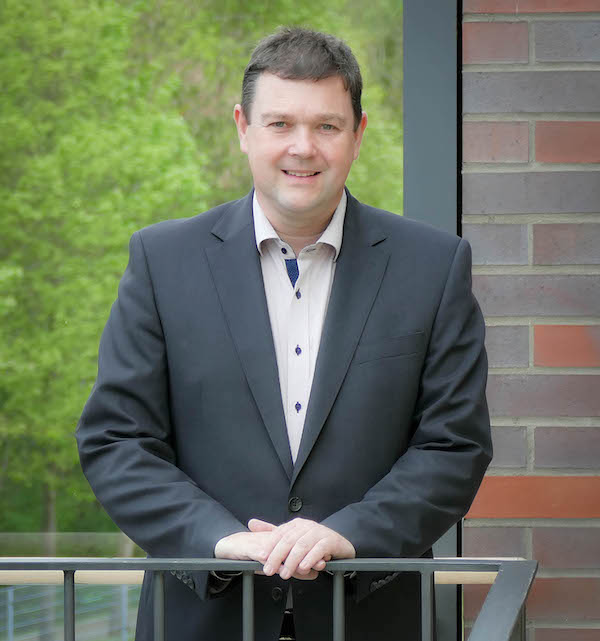
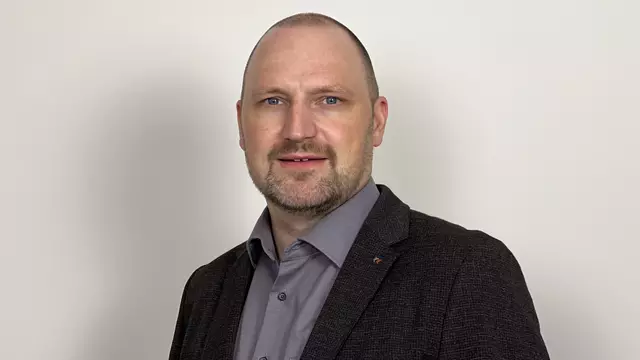
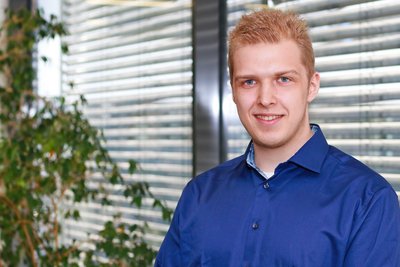
Philipp Gawron is a researcher at the University of Applied Sciences Offenburg, affiliated with the Faculty of Engineering and the Institute of Microsystem Technology (IMTEK). He holds an M.Eng. in Industrial Engineering from Offenburg (2017) and has been academic staff since March 2018. Education: B.Eng., Industrial Engineering, University of Applied Sciences Offenburg (2015) M.Eng., Industrial Engineering, University of Applied Sciences Offenburg (2017) His research focuses on Energy Harvesting and Micro Energy Harvesting , with technical expertise in Embedded Microsystems , Electrical Measurement Technology , and Sustainable Technical Systems . His work aligns with research clusters like PlanOS and Southwest FAIM workshops. He is reachable at philipp.gawron@hs-offenburg.de and contributes to institutional projects such as Micro Energy Harvesting and Embedded Microsystems .
Prof. Jan G. Korvink is a Professor of Microsystems Engineering at the University of Freiburg and Director of the Freiburg Institute for Advanced Studies (FRIAS), leading the School of Soft Matter Research. He holds a M.Sc. in Computational Mechanics from the University of Cape Town (1987) and a Ph.D. in Applied Computer Science from ETH Zurich (1993). His research focuses on ultra-low-cost micromanufacturing methods, microsystem applications in magnetic resonance imaging, and simulation of micro/nanosystems. He is affiliated with Fraunhofer IPM as a curatory board member and chairs the International Research Group NAMIS. Prof. Korvink has authored over 200 publications, including a textbook and edited volumes. He is a founding editor of Advanced Micro and Nano Systems and serves on technical committees for ASME and the Design Society. He has held visiting roles at ETH Zurich, Ritsumeikan University, and Kyoto University. His FRIAS project emphasizes low-cost manufacturing (e.g., inkjet printing, DNA self-assembly) and MRI-based microsystems. He directs the Laboratory for Microsystem Simulation and collaborates internationally across academia and industry. Notable contributions include advancements in MRI-compatible medical devices, contactless NMR spectroscopy, and microfluidic systems. His work bridges theoretical modeling with practical applications in healthcare and nanotechnology. Awards and honors are not explicitly listed, but his extensive editorial roles and advisory positions reflect his influence in the field.
Stephan Westerdick is a Researcher at the Department of Electronic Circuits, Faculty of Electrical Engineering and Information Technology at Ruhr-University Bochum. His work focuses on advanced analytical instrumentation, plasma-based sensor systems, and microsystem technologies. Key research areas include microplasma dynamics, miniaturized mass spectrometry, and AI-driven spectral analysis. He has contributed to the development of lab-on-a-chip systems and ultrasonic process monitoring solutions. His interdisciplinary approach integrates plasma physics, MEMS fabrication, and machine learning for applications in chemical analysis and industrial process control. Recent publications highlight innovations in time-of-flight micro mass spectrometers, fouling detection via ultrasound, and AI-enhanced NMR/Mass Spectrometry. His work bridges fundamental plasma research with practical engineering challenges in sensor design and process optimization. Westerdick collaborates with institutions like FHR (Forschungszentrum Jülich) on projects involving plasma edge layers and terahertz technology. His team's research is applied in energy-efficient systems, medical engineering, and next-generation analytical tools.
Dr. Patrick Ruther is a senior scientist and group leader at the Microsystem Materials Laboratory under Prof. Dr. O. Paul at the Department of Microsystems Engineering (IMTEK), University of Freiburg. Since October 1998, he has led research initiatives focusing on MEMS devices for life sciences and industrial applications. Education: PhD in Mechanical Engineering (University of Karlsruhe, Germany) Physics studies (University of Konstanz, Germany) Research Focus: Development of post-CMOS compatible MEMS devices Neural implants combining electrophysiological recordings and optogenetic stimulation Thin-film LED arrays for biomedical applications Micro-optical tools for neural tissue and muscle interfacing Key Projects (Principle Investigator/Coordinator): NeuraViPeR (EU Horizon 2020): Visual prosthetics via flexible neural probes + ASIC integration DEEPER (EU Horizon 2020): LED-based implants for neural disease targeting BrainLinks-BrainTools (DFG Cluster): Silicon-based neural probes with CMOS/electro-optical integration SPP1926 Next Generation Optogenetics (DFG): Multifunctional neural implants Teaching: Advanced Silicon Technology Silicon-based Neural Technology Labs/Teams: Leads Microsystem Materials Laboratory within IMTEK, collaborating with EU/DFG consortia on neural interface technologies.
Ayse Pazar is a Professor at the Ruhr-University Bochum , affiliated with the Faculty of Electrical Engineering and Information Technology and the Photonics and Terahertz Technology department. Her work focuses on advanced photonic and terahertz systems.
Melika Dedovic is a Scientific Associate in the Integrated Systems department at Ruhr University Bochum's Faculty of Electrical Engineering and Information Technology. Her work focuses on advanced semiconductor technologies and high-frequency circuit design. Expertise in SiGe:C BiCMOS technologies Specializes in GHz-range integrated circuits Active in semiconductor device development Her 2023 publication demonstrates cutting-edge work in 61-187.2-GHz frequency doubler circuits with exceptional bandwidth performance, reflecting her contributions to high-frequency electronics and integrated circuit design. The Integrated Systems team at Ruhr University Bochum, where she works, engages in interdisciplinary research spanning semiconductor technologies, medical engineering, and microsystems.
Hauke Kuhlmann is affiliated with the Faculty of Electrical Engineering and Information Technology at Ruhr University Bochum as part of the Photonics and Terahertz Technology department. His research focuses on photonics, terahertz technology, integrated high-frequency sensors, and microsystems. Contact: hauke.kuhlmann@rub.de
Lisa C. Kreuzer is a research assistant at the Photonics and Terahertz Technology group within the Faculty of Electrical Engineering and Information Technology at Ruhr University Bochum . Her work focuses on photonic solutions for terahertz (THz) systems, including phase control, sensor design, and environmental monitoring applications. Research Interests : Terahertz technology, photonic sensors, optical components for THz systems, heavy metal detection in plants, mode-locked lasers, and microsystem integration. Publications : Kreuzer has contributed to 15 recent studies (2023–2025) on THz homodyne systems, compact photonic sources, and environmental sensing, with a focus on interdisciplinary applications in material science and plant diagnostics. Contact : Lisa.Kreuzer@ruhr-uni-bochum.de | ORCID: 0000-0002-7142-6039
Prof. Dr.-Ing. Frank Eiden is a faculty member at the Westphalian University of Applied Sciences , affiliated with the Westphalian Institute of Health and the Department of Engineering and Natural Sciences (FB 8) . His teaching and research focus on advanced industrial biotechnology, chemical analysis, and practical applications in medicine, microsystem technology, and renewable resources. Research Interests: Frank Eiden specializes in Bioprocess Technology and White Biotechnology , with emphasis on process optimization, control strategies, simulation, and sustainability assessment using eco-efficiency tools. His work includes developing functional prototypes for media and process optimization and bridging theoretical knowledge with industry practices through project-based tasks. Teaching Activities: He leads modules covering industrial biotechnology fundamentals, application-oriented examples in biotechnology, renewable raw materials, enzyme/reaction technology, and synthetic/systems biotechnology. His teaching integrates project-based group work, such as designing industrial plants, and fosters industry connections via company presentations.
Prof. Dr. Michael Layh is a Professor in the Faculty of Mechanical Engineering at Kempten University of Applied Sciences . He serves as the Institute Director for the Institute for Computer Vision and heads the Optical 3D Metrology and Computer Vision Laboratory (3Dvisionlab) . His expertise lies in Machine Vision, Optical Design , and Simulation and Modeling . Teaching Areas: Physics, Engineering Mathematics, Optical Measurement Technology, Technical Optics Research Focus: Development of advanced optical measurement systems, including spectrometer-free chromatic confocal metrology and synthetic image-based neural networks for industrial applications Current Projects: ReGAIN (2023-2024) and opTWINspect (2024-2026) with funding from the German Federal Ministry for Economic Affairs and Climate Action and Bavarian Research Foundation His recent work includes innovations in 3D imaging and high-speed optical scanners , with patents covering EUV projection lithography and micro mirror arrays. Collaborations span Carl Zeiss SMT GmbH and iron foundry industries .
Prof. Dr. Ina Schiering is a Professor of Computer Science at the Institute of Information Engineering, Ostfalia University of Applied Sciences, where she has served since 2008. She holds leadership roles as project leader for "Cultural Participation in the Museum I & II" and Deputy Spokesperson of the Leibniz ScienceCampus, while also leading the Smart Forestry sub-project in the BMDV-funded 5G Smart Country real laboratory and the BMBF project KI4All on AI data protection. Educational background: Diploma in Computer Science, Christian-Albrechts Universität zu Kiel Ph.D. in Computer Science, Christian-Albrechts Universität zu Kiel Her research spans critical technology domains with emphasis on: IT Security and privacy frameworks Data protection impact assessments Interdisciplinary applications in mHealth and IoT Smart device governance Digital inclusion initiatives AI-related data protection challenges Prior industry experience includes 10 years as project manager and consultant at Sun Microsystems (1998-2008) specializing in IT service management, security, and virtualization. Current research initiatives include: Smart Forestry data governance in BMDV's 5G Smart Country real laboratory KI4All project addressing AI data protection (BMBF-funded) "Cultural Participation in the Museum" series as primary investigator
Prof. Dr.-Ing. Roy Knechtel is a Professor at the Faculty of Electrical Engineering, Schmalkalden University of Applied Sciences. His research focuses on MEMS technologies, semiconductor wafer bonding, and sensor systems, with extensive applications in industrial microsystems. He leads investigations in wafer-level encapsulation, CMOS-MEMS integration, and reliability testing for microsensors. Research Interests: Knechtel specializes in intelligent autonomous sensors, micro-electro-mechanical systems (MEMS), and semiconductor processing techniques. His work emphasizes wafer bonding methodologies (glass frit, anodic, direct bonding), MEMS packaging, and sensor integration for automotive, biomedical, and industrial applications. Key areas include hermetic sealing, process optimization, and 3D heterogeneous integration. Publication Trends: Over 50 publications (2000–2020) demonstrate sustained focus on wafer bonding physics, MEMS fabrication robustness, and microsystem encapsulation. Recent works explore edge effects in bonding, adhesive techniques for lab-on-chip devices, and acoustic MEMS. His articles consistently address industrial scalability and reliability challenges in semiconductor microsystems. Patents & Innovations: Holds patents including: Method for hermetic sealing of MEMS structures (DE112007001698A5) Wafer-level chip separation with micromechanical structures (EP1599412A1) Electrical connection methods for bonded wafers (DE10350460A1) Laboratory Leadership: Directs research in wafer bonding characterization and MEMS process development, collaborating with industry partners like X-FAB and Fraunhofer on production-scale microsystem technologies.
Christoph Höller is a Professor for Applied Physics and Building Physics at OTH Regensburg, where he serves as Vice Dean of the Faculty of Applied Natural and Cultural Sciences (since 2021) and Chairman of the Examination Committee for Microsystems Technology/Sensor Technology and Analytics/Environmental and Industrial Sensor Technology (since 2019). He is also Head of the Building Physics Laboratory, which he leads together with Prof. Dr. Oliver Steffens. His research focuses on building acoustics, room acoustics, noise protection, and signal processing, with particular expertise in structure-borne sound, sound insulation, and vibration analysis. Höller's work bridges theoretical acoustics with practical building applications, contributing significantly to standards development through his involvement with NA 001-02-31 AA, NA 001-02-32 AA, NABau NA 005-55-75-04 AK, CEN/TC 126/WG 7, and ISO/TC 43/SC 2/WG 18. Höller's recent publications demonstrate his continued leadership in building acoustics, with focus areas including timber construction acoustics, reception plate methodology, transient noise assessment, and practical teaching methods. His work shows a consistent pattern of addressing both theoretical challenges and practical implementation issues in building physics. University Teaching Bavaria certificate from the BayZiel Didactics Center OTH Regensburg Award for Quality and Innovation in Teaching (2024) Teaching Innovation Funding at OTH Regensburg (2025-2027) Höller actively supervises student work, regularly offering topics for projects, bachelor's theses, and master's theses primarily in building physics. His Building Physics Laboratory is available for consultations, measurements, and contract research projects. Current research projects include SPlanRoB and AkuPap, focusing on practical applications of building acoustics principles.
Pascal Stadler is a researcher at the Faculty of Electrical Engineering and Information Technology of Ruhr University Bochum , Germany. He is affiliated with the Integrated Systems department, focusing on high-frequency electronics and microwave systems. 2025: E-Band quadrupler design with harmonic rejection 2024: D-Band CMOS power amplifier and 77GHz dielectric characterization 2023: High-frequency multiplier chains and radar component analysis His research spans Microwave Engineering , Integrated High-Frequency Sensors , and Learning Technical Systems . Publications cover topics from 6G communication components to advanced packaging techniques. His work connects Medical Engineering , Photonics , and Microsystems Technology through interdisciplinary applications. Contact: pascal.stadler@rub.de
Prof. Dr. Claas Müller is a Professor and Head of the Mechanical Workshop at the Department of Microsystems Engineering (IMTEK) at the Albert-Ludwigs-University Freiburg. His expertise spans microstructuring techniques (e.g., E-Beam Lithography), replication methods (Injection Molding, Nanoimprint Lithography), and advanced printing technologies. He holds a PhD in Physics from the Karlsruhe Research Center (1994) and has led key projects in micromanufacturing since 1996. Research focuses on precision manufacturing, biomimetic actuators, and material characterization. Notable contributions include the development of microspectrometers and biomimetic systems inspired by plant structures. His work is funded by the DFG under Germany’s Excellence Strategy. As a senior academic advisor and deputy chair at IMTEK, Müller oversees the Mechanical Micromanufacturing Service Center (MSC), providing advanced fabrication services. His publications emphasize interdisciplinary approaches in materials science and engineering.