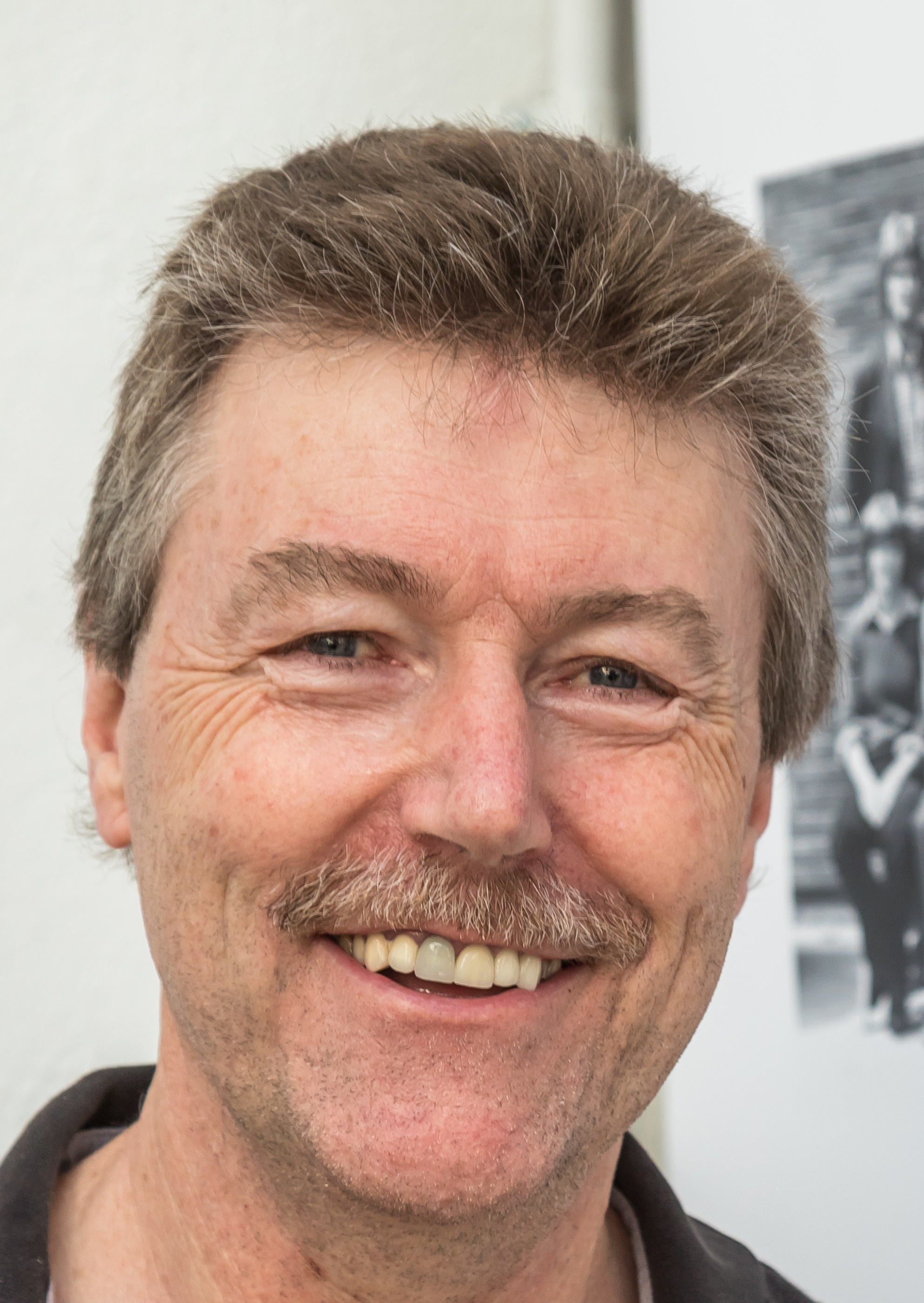
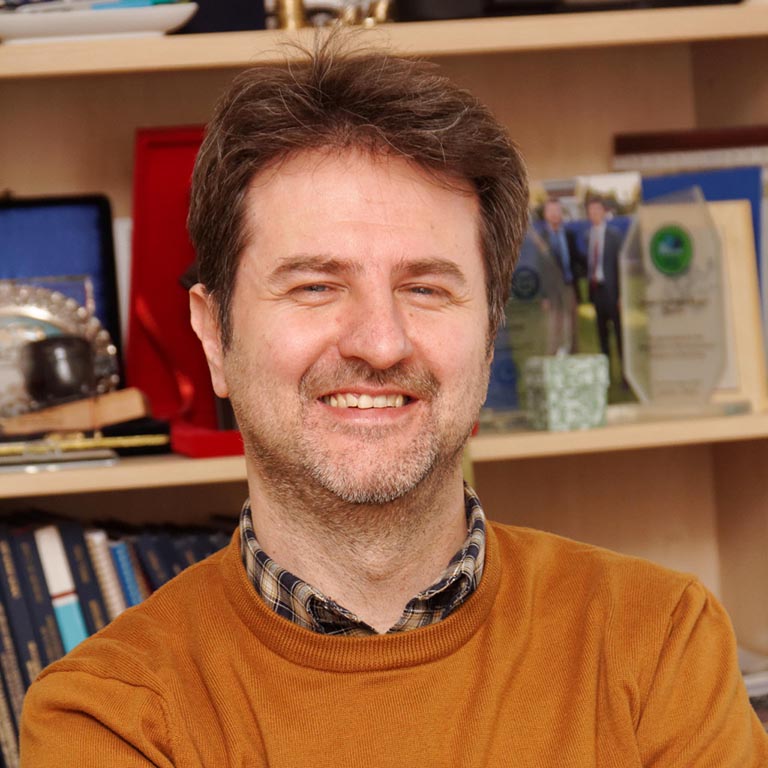
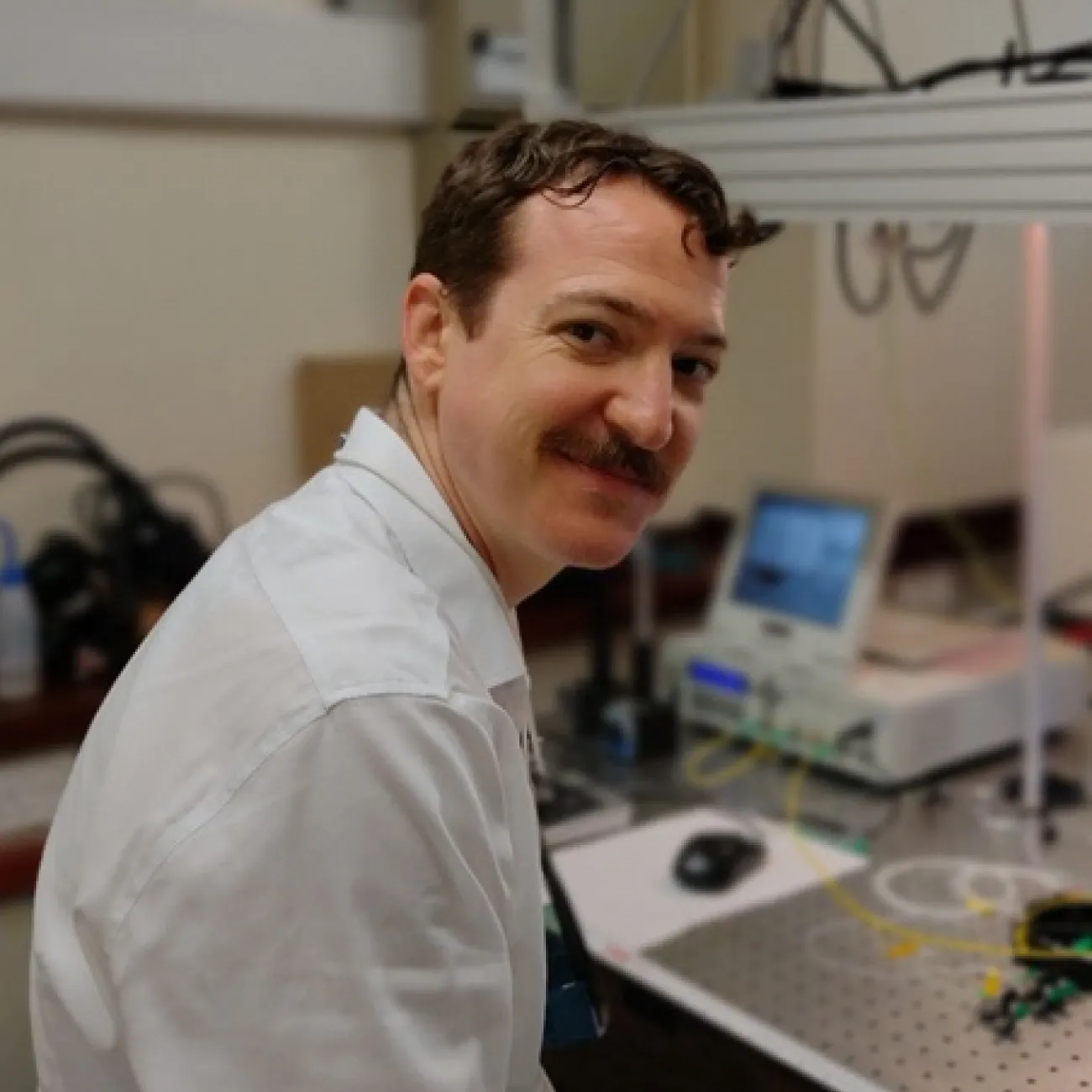
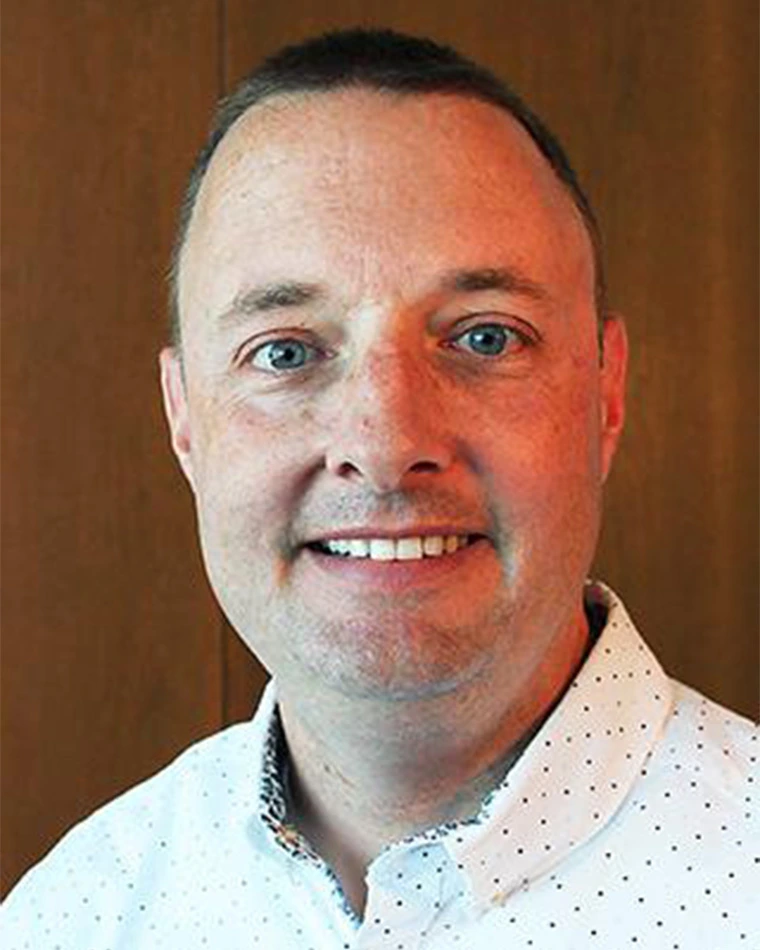
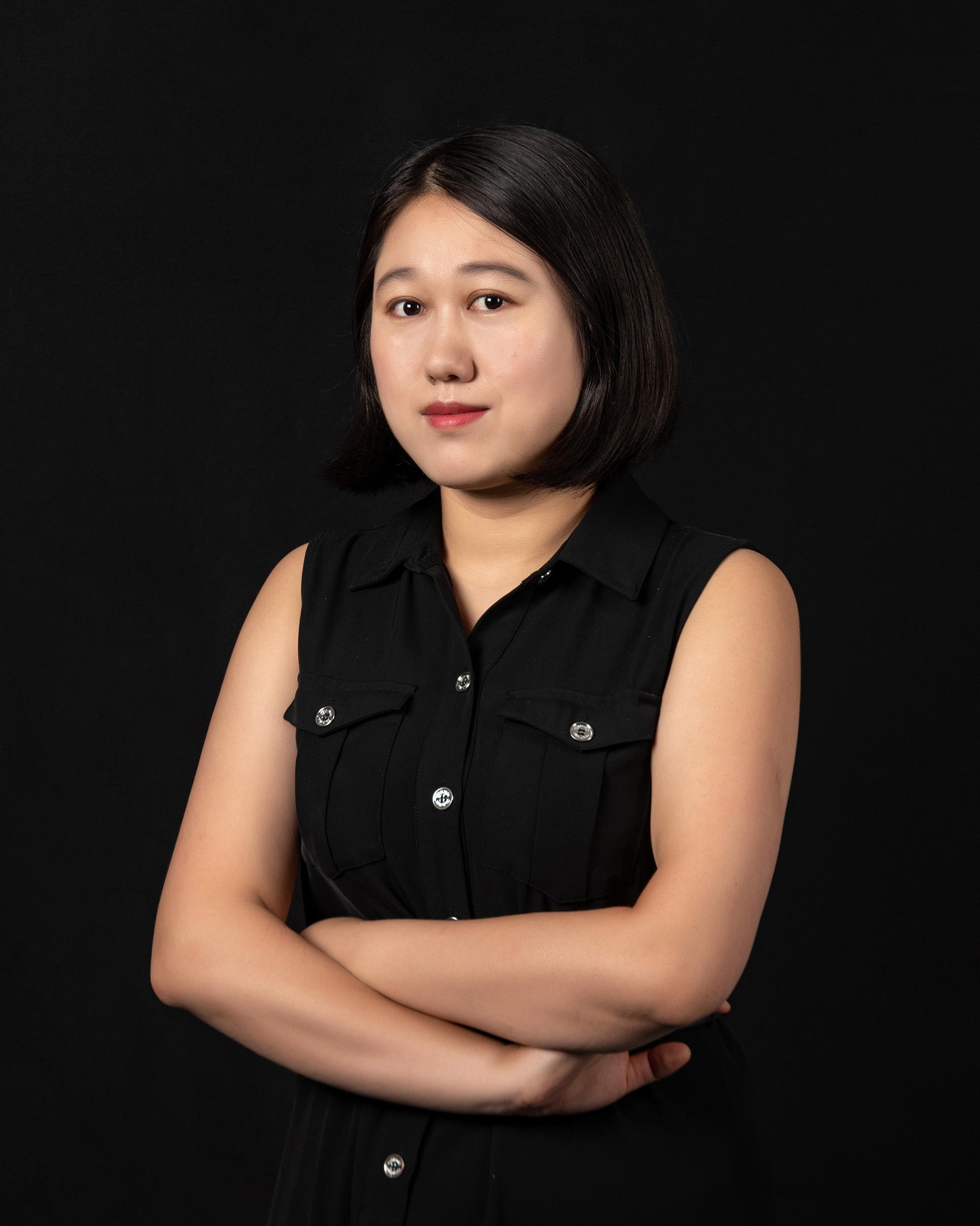
Marie Johansson is a Professor in Timber Engineering at the Department of Building Technology, Faculty of Technology, Linnaeus University. Her career spans teaching structural engineering in bachelor’s and master’s programs and leading research projects on wood quality, strength grading, and timber mechanics. Acting supervisor in two PhD projects Expert Team Leader for "Construction & Design" in BioInnovation SIO-programme Research Interests : Wood material properties (shape stability, stiffness, strength) Connection technology in timber structures Climate change adaptation in agriculture (Öland, Sweden) Modular multi-storey timber buildings Fiber orientation modeling for strength prediction Publication Trends : Recent work focuses on wind-induced vibrations in tall timber structures, 3D fiber orientation models, genetic selection for timber traits, and non-destructive evaluation of wood properties. Collaborations with international conferences (WCTE, ICEM) and institutions highlight her contributions to wood science and sustainable construction. Research Groups : Leads the Wood Building Technology group, emphasizing applied mechanics and industrialized timber construction.
Derek Elsworth is the G. Albert Shoemaker Chair and Professor of Energy and Mineral Engineering and Geosciences at Pennsylvania State University. He is a co-founder of the Center for Geomechanics, Geofluids, and Geohazards, where he leads research in computational mechanics, rock mechanics, and fluid flow in fractured systems. His work spans multiple energy-related applications including geothermal energy, CO 2 sequestration, and unconventional hydrocarbon extraction. Professor Elsworth's research focuses on the mechanical and transport characteristics of fractured rocks, with applications spanning multiple domains. His work in computational geomechanics addresses challenges in geothermal energy development , CO 2 geological sequestration , and unconventional hydrocarbon extraction . He investigates fundamental processes including fracture mechanics, permeability evolution, and fault reactivation under various stress and fluid pressure conditions. His laboratory and field studies often integrate advanced computational modeling with experimental approaches to understand complex coupled thermo-hydro-mechanical-chemical (THMC) processes in subsurface systems. Analysis of Professor Elsworth's recent publications reveals a strong focus on cutting-edge challenges in subsurface energy systems. His work increasingly incorporates machine learning and advanced imaging techniques to address complex problems in rock mechanics and fluid flow. Key themes include fracture behavior in shale systems, fault stability during fluid injection operations, and the development of novel characterization methods for subsurface reservoirs. His research bridges fundamental science with practical applications for sustainable energy development. Professor Elsworth has developed and taught numerous courses including Fluid Mechanics (EME 303), Geothermal Energy Engineering, and Computational Geomechanics. He has also led short courses internationally on reservoir geomechanics. His research is supported through multiple projects including studies on volcano dynamics, enhanced geothermal systems, and in situ testing methodologies. As co-founder of the Center for Geomechanics, Geofluids, and Geohazards, he oversees a collaborative research environment focused on subsurface processes relevant to energy and environmental challenges.
Prof. Dr. Yiğit Karpat is a faculty member at Bilkent University with a joint appointment in the Department of Industrial Engineering and Mechanical Engineering. He leads research at the Micro System Design and Manufacturing Center and collaborates with UNAM (National Nanotechnology Center). Ph.D., Industrial Engineering, Rutgers University (2007) M.S., Mechanical Engineering, Middle East Technical University (2000) B.S., Mechanical Engineering, Dokuz Eylul University (1996) His research focuses on precision manufacturing, micro machining, and composite material processing, particularly for CFRP and titanium alloys. Key interests include: Digital twin modeling for machining processes Surface integrity analysis Friction and wear in micro cutting Tool design optimization Additive manufacturing integration Recent publications analyze micro-scale process mechanics and surface integrity in silicon and titanium machining. Current projects funded by TÜBİTAK and TAI include: Development of digital process twin for micro milling (TÜBİTAK 1001, 2024-2026) Ductile mode machining of silicon (TÜBİTAK 1001, 2019-2021) Brittle material machining with nanostructured tools (TÜBİTAK 1001, 2015-2017) He supervises both M.Sc and Ph.D students while serving on multiple TÜBİTAK and defense industry projects.
Vitali Goussev is a Distinguished Professor at Le Mans Université, France, working at the Laboratory of Acoustics of the University of Maine (LAUM), a joint research unit with CNRS. He has been a professor at the École Nationale Supérieure d'Ingénieurs du Mans (ENSIM) since 1998, contributing significantly to the fields of acoustics, laser ultrasonics, and photoacoustics. Professor Goussev earned his PhD in physics and mathematics (laser physics) in 1982 from Moscow State University, Russia, followed by habilitations in mathematics and physics (acoustics) at Moscow University in 1992 and at Le Mans University in 1997. His academic journey spans institutions in Russia, France, Japan, Germany, and Canada through various prestigious fellowships. His research focuses on nonlinear acoustics, thermo-acoustics, laser ultrasonics, photoacoustics, interaction of laser radiation with matter, laser-induced ultrafast phenomena, physics of semiconductors and nanomaterials, and acoustic metamaterials . His work has significantly advanced our understanding of acoustic wave propagation in complex media, particularly granular materials and nanostructures. His recent research emphasizes time-domain Brillouin scattering applications for imaging, nonlinear laser ultrasound, acoustics of granular media, and non-destructive testing and evaluation of nanomaterials. Analysis of his 15 most recent publications reveals a strong trend toward advanced imaging techniques, particularly using time-domain Brillouin scattering for nanoscale characterization. His work bridges fundamental physics with practical applications in materials science, semiconductor technology, and non-destructive testing. A significant portion of his recent research focuses on understanding acoustic phenomena in complex materials like granular media, ice phases, and ferroelectric nanostructures. 2024: Gerald J. Diebold Prize in Theoretical Photoacoustics and Photothermics 2023: VEBLEO Fellow 2016: Fellow of the American Physical Society 2013: Fellow of the Acoustical Society of America 2010: Gay Lussac – Humboldt Research Award 2009: Knight in the Order of Academic Palms 2007: French Medal of the French Acoustical Society 2006: Senior Member of the Institute of French Universities (IUF) 2004: Senior Prize of International Photoacoustic and Photothermal Association Professor Goussev has served on numerous scientific committees including the International Advisory Board of the International Congress on Ultrasonics and the Advisory Committee of the International Conferences on Photoacoustic and Photothermal Phenomena. He is also a member of editorial boards for international journals including "Applied Sciences," "Scientific Reports," and "Photoacoustics." His laboratory, part of the Laboratoire d'Acoustique de l'Université du Mans (LAUM), conducts cutting-edge research in materials acoustics, opto-acoustics, ultrasonics, and related fields, with a strong focus on both theoretical and experimental approaches.
Jeroen Derwall is an Associate Professor of Finance at Utrecht University School of Economics and holds a part-time position at Maastricht University. He is co-founder of the European Center for Sustainable Finance (ECCE) and has held previous faculty positions at Open University of The Netherlands, Tilburg University, and RSM Erasmus University. His academic journey includes a PhD in Financial Management from RSM Erasmus University. Derwall's research expertise spans sustainable finance and investments, with particular focus on how sustainability (ESG) issues affect financial markets, investment portfolio management, active ownership, corporate behavior, and firm valuation. His work demonstrates significant evolution from early studies on eco-efficiency to contemporary research on biodiversity risk, climate change impacts, and regulatory effects of sustainable finance disclosure. He has established himself as a leading scholar in the field through consistent publication in top-tier journals including Management Science, Journal of Banking and Finance, and Financial Analysts Journal. His recent publications reveal a strong trend toward examining the materiality of ESG factors, with increasing sophistication in measuring environmental risks and their financial implications. The research shows progression from broad ESG analysis to more granular examinations of specific environmental risks like biodiversity and climate change impacts on firm performance. Moskowitz Prize from the Center of Responsible Business at UC Berkeley (2005) Finance & Sustainability Research Award of the French Social Investment Forum (2005, 2007) PRI/Sustainalytics Best Paper Award (2012) Excellent Graduate Educator at Maastricht and Tilburg Universities (2015) Winner of the 2024 GRASFI Conference Best Paper award Derwall actively supervises PhD candidates in sustainable finance and has co-developed Master's programs in Sustainable Finance at both Maastricht University (2014) and Utrecht University (2022). His research agenda has received external funding from MISTRA (2006-2011) and various institutional investors. He serves on the Academic Review Board of PGGM Systematic Equity Strategies (2022-2025) and the Netspar Program Research Council (2024-present), while also co-organizing major conferences including the inaugural Global Research Alliance for Sustainable Finance & Investments (GRASFI).
Austin Taranta serves as a Professor at the University of Southampton's Optoelectronics Research Centre (ORC), where he leads research and enterprise initiatives within the Hollow Core Fibres Group. Since joining the ORC in 2016, he has driven advancements in hollow core fibre technology for defence and space applications, authored over 50 peer-reviewed publications, secured significant research funding, and manages key industrial partnerships including a Microsoft research contract. His work bridges fundamental fibre physics with practical sensor development. His academic background includes a BSc in Chemical Engineering from the Massachusetts Institute of Technology (2006) and a PhD in Optoelectronics from the University of Southampton (2024). Prior to academia, he gained industry experience as Senior Optical Engineer at Honeywell Aerospace's Strategic Sensors Group developing fibre-optic gyroscopes. Taranta's research focuses on exploiting the unique properties of hollow core fibres for next-generation sensing systems. Key areas include: Hollow core antiresonant fibre guidance physics Gas pressure and temperature dynamics in hollow fibres Polarization behavior in nodeless antiresonant structures Novel sensor architectures for defence applications Bend-insensitive fibre designs for telecom integration Non-destructive characterization methodologies Analysis of his 2023-2024 publications reveals concentrated efforts on solving manufacturing challenges, environmental stability issues, and sensor integration barriers in hollow core fibre technology. His work demonstrates strong industry alignment through Microsoft collaborations and defence-focused applications, particularly in distributed sensing systems and next-generation gyroscopes. No specific scientific awards or medals are listed in the provided text, though his profile notes responsibility for multiple research awards and patent holdings including optical time domain reflectometry innovations. Taranta actively supervises PhD candidates Amalie Gjelsvik and Chiang Ping Saw (part-time), while managing industrial research contracts and academic partnerships. His funding portfolio includes strategic defence projects through Honeywell Aerospace and Microsoft collaborations, supporting the Hollow Core Fibres Group's translational research pipeline. He leads the Hollow Core Fibres Group within the ORC, focusing on commercializing hollow core antiresonant fibre technology through the Hollow Core Fibres Group. Current work targets polarization control, environmental resilience, and sensor integration with industry partners to develop deployable systems for aerospace and defence sectors.
Raag Airan is an Assistant Professor of Radiology (Neuroimaging and Neurointervention) and by courtesy, Materials Science and Engineering at Stanford University. His work bridges Noninvasive nervous system manipulation Ultrasound and nanoparticle engineering Theranostic applications Behavioral neuroscience His research focuses on Ultrasound-mediated drug delivery systems Neuroimaging of functional connectivity Neuromodulation for chronic pain and psychiatric disorders Glymphatic system modulation Recent publications highlight advancements in Acoustically activatable liposomes Sex-based pharmacological responses Algorithmic psychiatry frameworks Stem cell therapy imaging Deep learning-enhanced ultrasound
Anna C. Balazs is the John A. Swanson Chair of Engineering and Distinguished Professor of Chemical Engineering at the University of Pittsburgh Swanson School of Engineering, with an adjunct appointment in the Department of Chemistry. She has held visiting professorships at the Scripps Research Institute, University of Texas at Austin, and Oxford University. Dr. Balazs serves on the Advisory Board of the Materials Council for Materials Sciences and Engineering Division of the Department of Energy, Basic Energy Sciences, and is a member of the Editorial Advisory Boards of Langmuir, Soft Matter, and Polymer Reviews. Education: A.B. in Physics from Bryn Mawr College (1975) Ph.D. in Materials Science from MIT (1981) Postdoctoral research at Brandeis University, MIT, and University of Massachusetts Dr. Balazs specializes in the statistical, mechanical, and computer modeling of complex chemical systems, with particular expertise in polymer blends and the behavior of polymers at surfaces and interfaces. Her research focuses on developing theoretical frameworks for understanding responsive materials, particularly self-oscillating polymer gels, active matter systems, and nanocomposites. She investigates how chemical reactions can drive mechanical motion and pattern formation in soft materials, creating biomimetic systems with lifelike functionality. Her work bridges fundamental theoretical modeling with practical applications in microfluidics, drug delivery, and smart materials design. Analysis of Dr. Balazs' recent publications reveals a strong focus on the integration of chemistry, fluid dynamics, and mechanics to create responsive materials systems. Her research demonstrates how chemical reactions can drive complex mechanical behaviors in polymer gels and microstructures, enabling the spontaneous formation of 3D patterns, self-propulsion, and lifelike functionality. The work spans from fundamental theoretical modeling to practical applications in microfluidics and soft robotics, with a particular emphasis on enzyme-powered systems, chemically responsive materials, and the autonomous assembly of hierarchical structures. Dr. Balazs has made significant contributions to the field through her extensive publication record in top journals including Proceedings of the National Academy of Sciences, Nature Nanotechnology, and Advanced Functional Materials. Her work has been widely cited and has influenced multiple disciplines including materials science, chemical engineering, and soft matter physics. As a leading researcher in computational materials science, Dr. Balazs has mentored numerous students and postdoctoral researchers throughout her career. Her research has been supported by various funding agencies including the National Science Foundation and Department of Energy. She has established herself as a leading authority in the theoretical modeling of complex soft matter systems. Dr. Balazs' research group at the University of Pittsburgh focuses on developing computational models to understand and predict the behavior of responsive materials. Her team employs a range of simulation techniques to study phenomena ranging from molecular-scale interactions to macroscale material behaviors, with particular emphasis on the coupling between chemical reactions and mechanical responses in polymer systems.
Cristina L. M. Silva is an Associate Professor at the Escola Superior de Biotechnology within Universidade Católica Portuguesa . She specializes in Food Science and Engineering with a focus on modeling and optimization of food processes , sustainable food systems , and preservation technologies like ultrasound, ozone, and UV-C radiation. Her work extends to by-product valorization , particularly in fruit and vegetable processing. She was elected a Fellow of the International Academy of Food Science and Technology (IAFoST) in 2022, reflecting her global leadership in food engineering education. She chairs the IUFoST Education Working Group 1.2 and serves on the advisory board of the ISEKI-Food International Association . Additionally, she is editor-in-chief of the International Journal of Food Studies and associate editor for multiple journals. Research Interests: Food process modeling, sustainable technologies, microbial safety, by-product valorization, and educational innovation in food science. Leadership: Deputy Director for Internationalization at ESB; led the CBQF Food Processing Engineering lab . Scientific Awards: IAFoST Fellow (2022).
Bairav Sabarish Vishnugopi is a Researcher at Purdue University's College of Engineering, Department of Mechanical Engineering. He holds a PhD from Purdue University and previously served as a Research Scientist at the same institution. His research focuses on energy storage systems, particularly solid-state and lithium-ion batteries, with emphasis on interfacial stability, thermal management, and electrochemical safety analytics. PhD, Purdue University Previous Role: Research Scientist, Purdue University His research spans mechanistic analysis of electrode/electrolyte interactions, data-driven battery safety, and multiscale degradation modeling. Recent work examines thermal gradients, chemo-mechanical coupling, and dynamic discharge behaviors for applications in electric vertical take-off aircraft (eVTOL). Articles highlight alloy anode stability, SEI engineering, and hydrogen's role in steel electrification. Key scientific contributions include: Thermo-electrochemical instability fingerprinting Microstructural evolution in conversion cathodes Pressure-driven stability optimization He received the H. H. Dow Memorial Student Achievement Award (2023) for his work on interface stability analysis. Current collaborations involve PEM electrolyzer integration and energy-climate analytics frameworks.
Prof. Radomír Kužel is a distinguished physicist at the Department of Condensed Matter Physics within the Faculty of Mathematics and Physics at Charles University . With a career spanning over three decades, he has made significant contributions to X-ray diffraction analysis and materials science. 1975: Secondary Education at Gymnasium Čakovice 1980: RNDr. in Solid State Physics, Charles University 1989: Ph.D. (CSc.) in X-ray Diffraction Analysis 2001: Docent Title 2015: Professor Appointment by the Czech Republic President His research focuses on X-ray diffraction studies of polycrystalline materials, thin films, and nanomaterials. Key areas include dislocation dynamics, residual stress analysis, texture development, and microstructural characterization using advanced diffraction techniques. He pioneered methods for dislocation type determination from line broadening and developed analytical approaches for microstructural parameters in nitrides and oxides. Recent publications highlight his work on TiO₂ thin films , hexaferrite synthesis , and ECAP-processed metals , demonstrating expertise in structure-property relationships and thermal stability of nanomaterials. His 2021 study on W-type hexaferrite thin films exemplifies his ongoing innovation in magnetic materials. Prague Convention Bureau Hybrid Congress Award (2022) Prof. Kužel has organized major international conferences, including the 25th IUCr Congress (2021) and multiple European Powder Diffraction Conferences . He serves on editorial boards (e.g., Materials Structure ) and leads the Czech Crystallographic Society.
Andrew Wessman is an Assistant Professor in the Department of Materials Science and Engineering at the University of Arizona, where he has served since August 2019. His expertise bridges industrial and academic domains, with a prior 14-year tenure at GE Aviation/GE Additive focused on high-temperature alloys and additive manufacturing (AM) processes. Education: PhD in Materials Science and Engineering, University of Cincinnati MS in Metallurgical Engineering, University of Utah BS in Metallurgical Engineering, University of Utah Wessman’s research centers on physical metallurgy, mechanical behavior of materials, and AM alloy/process design. His work emphasizes high-temperature alloys for aviation, computational modeling, and process optimization in additive manufacturing. Recent publications highlight his focus on AM technologies, including Ti-6Al-4V and Ni-based superalloys, with advancements in microstructural stability, defect mitigation, and machine learning-based process monitoring. His 2023–2025 studies explore fatigue mechanisms, interfacial stability, and thermal treatments. Scientific Awards: Recognized as “Most Supportive Junior Faculty” for MSE Faculty Core Faculty (2019–2020) Wessman’s scholarship includes 1 book chapter, 18 refereed publications, and 8 issued patents. His teaching interests span metal additive manufacturing, solid-state chemistry, and alloy design.
Grzegorz Greczynski is a Professor and Head of the Unit of Fundamental Science of Thin Films at the Department of Physics, Chemistry and Biology (IFM) at Linköping University. A pioneer in high power impulse magnetron sputtering (HiPIMS) and X-ray Photoelectron Spectroscopy (XPS), he focuses on low-energy ion/surface interactions for nanostructure control during thin film growth, particularly for transition-metal-based nitrides, borides, and carbides. His work bridges industrial applications and academic innovation, with collaborations spanning the University of Illinois (USA) and Aachen University (Germany). PhD in Materials Physics (2001) from Linköping University MSc in Materials Physics (1997) from University of Science and Technology, Krakow, and Linköping University Research interests include: Development of non-destructive XPS analysis methods High-power impulse magnetron sputtering (HiPIMS) for thin film deposition Surface charging mitigation in insulating thin films Phase evolution in nitride and diboride thin films Mechanical properties of multilayer coatings Binding energy referencing in spectroscopy Scientific contributions highlight trends in: Advancements in XPS reliability and calibration Energy-efficient magnetron sputtering techniques High-entropy alloy thin films for extreme environments Space mission plasma probe technology Nanostructured coatings for oxidation resistance Surface analysis of catalytic materials Awards: Fellow of the American Vacuum Society (2018) Collaborations include researchers like Prof. Lars Hultman (LiU), Prof. Joe Greene (University of Illinois), and Prof. Jochen Schneider (Aachen University). His work impacts industries ranging from space exploration to biomedical coatings.
Liu Jing is an Associate Professor at the School of New Materials and New Energy, Shenzhen University of Technology, recognized as a Shenzhen Overseas High-Level 'Peacock Plan' Talent (Category C). His research focuses on thermal management solutions for next-generation electronics and energy storage systems. His academic credentials include: PhD in Engineering Thermophysics from Iowa State University (2013-2017), supervised by Professor Xinwei Wang Bachelor's degree in Thermal Energy and Power Engineering from Southeast University (2008-2012) Dr. Liu's research program centers on Raman spectroscopy-based chip thermal management , thermal management material design for high-power semiconductor devices , and lithium-ion battery thermal management technology . His work bridges fundamental heat transfer phenomena with practical applications in third-generation semiconductor HEMTs and energy storage systems, emphasizing nanoscale thermal characterization and material engineering. Analysis of his 15 most recent publications reveals dominant themes in graphene thermal transport, Raman-based thermometry, and sustainable carbon materials. Key journals include Nanomaterials, ACS Applied Materials & Interfaces, and Carbon, with consistent focus on defect engineering, temperature-dependent properties, and advanced characterization techniques for nanomaterials. Major recognitions include: Shenzhen Overseas High-Level 'Peacock Plan' Talent (Category C), 2019 Iowa State University Research Excellence Award (top 10%), 2016 As Principal Investigator, Dr. Liu leads multiple funded projects including a Guangdong Provincial Basic Research Fund project (100,000 RMB) and a Shenzhen University High-Level Talent project (2.7 million RMB). His portfolio spans semiconductor thermal management, battery safety, and sustainable materials, with total secured funding exceeding 3 million RMB through national, provincial, and municipal grants.
Nick Virgilio is a Full Professor in the Department of Chemical Engineering at Polytechnique Montréal . His research focuses on soft matter interfaces, polymer blends, and advanced hydrogel systems for biomedical and catalytic applications. Director, Research Laboratory on Surfaces, Interfaces and Soft Matter Member, Research Center for High-Performance Polymer and Composite Systems (CREPEC) Research interests include interfacial phenomena in multiphase systems, self-assembly of soft materials, nanoparticle-hydrogel composites, Pickering emulsions, and polymer microstructure engineering. Scientific awards include the 2010 Canadian Macromolecular Science Thesis Prize and the 2004 Polytechnique Montréal Master's Thesis Award. Recent publications highlight his work in macroporous hydrogels for cancer cell capture, nanoparticle synthesis in soft matrices, and interfacial control of polymer blends. His studies frequently appear in high-impact journals like ACS Applied Materials & Interfaces , Green Chemistry , and Macromolecules . Students under his supervision have explored topics from biofilm mechanics to lunar environment polymer systems across 4 PhD and 6 Master’s theses completed or ongoing.