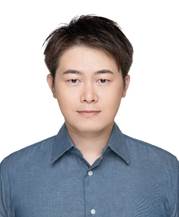
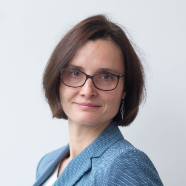
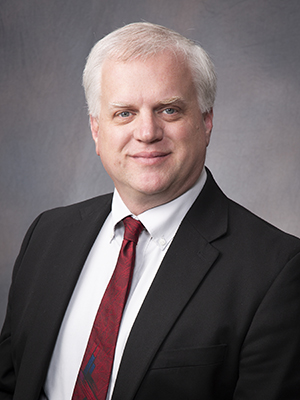
Bartolomé Pascual Fuster is a professor in the Department of Business Economics at the University of the Balearic Islands (UIB), where he has held leadership roles including department director (2016-2024) and co-director of the Master's in Financial Consulting and Wealth Management. His academic career spans over two decades with research contributions in financial economics and corporate governance . PhD in Economics (2000) and Degree in Economics and Business (1995) from UIB, both with extraordinary awards Specializing in financial economics , his research intersects with corporate governance, family businesses, and price discovery mechanisms. Recent publications analyze global business group governance, gender dynamics in corporate boards, and ownership structures' impact on productivity. He serves as Associate Editor of the Spanish Journal of Finance and Accounting since 2020. Scientific recognition includes: Best Equity Work Award - Finance Forum 2009 (AEFIN) Best Regulatory Work Award - Finance Forum 2013 (AEFIN) As principal investigator in competitive research projects since 2017 and member of research groups CODITES and GOFICO, he contributes to financial policy analysis and transparency studies. His teaching portfolio includes Investment & Business Financing, Quantitative Finance, and Corporate Finance across multiple campuses.
Zhigang Zak Fang is a Professor in the Department of Metallurgical Engineering at the University of Utah, specializing in advanced metallurgical processing technologies. His work focuses on sustainable metal production, titanium powder metallurgy, additive manufacturing, and hydrogen storage materials. With over 360 publications and 60 US patents, Fang has commercialized novel titanium production methods that could significantly reduce costs and greenhouse gas emissions. PhD in Materials Science and Engineering (University of Alabama at Birmingham, 1991) MS and BS in Materials Science and Engineering (University of Science and Technology Beijing, 1984) Research Interests: Fang's research bridges materials engineering with environmental sustainability, particularly through hydrogen-assisted metallurgy and powder-based manufacturing. His work on TiFe alloys for hydrogen storage and WC-Co composites demonstrates innovation in both fundamental science and industrial applications. Notable Awards: R&D100 Awards (2009, 2023) Humboldt Research Award (2023) Fellow, National Academy of Inventors (2017) Editor-in-Chief of the International Journal of Refractory Metals and Hard Materials Grants: Fang has secured ~$30M in external funding, including DOE projects for clean steel production (2024-2027) and ARPA-E energy storage initiatives.
Zhao Jianwei is an Assistant Professor at the School of New Materials and New Energy, Shenzhen University of Technology. He received his Ph.D. in Materials Science and Engineering from North Carolina State University in 2020. Prior to his current position, he worked as a Postdoctoral Fellow and Assistant Research Fellow at the Shenzhen Institutes of Advanced Technology, Chinese Academy of Sciences, and the Shenzhen International Innovation Institute of Advanced Electronic Materials from 2021 to 2024. His academic journey includes a Master's degree from the University of Michigan-Dearborn and a Bachelor's degree from Wuhan University of Technology. Ph.D., Materials Science and Engineering, North Carolina State University (2016-2020) M.S., Mechanical Engineering, University of Michigan-Dearborn (2013-2015) B.S., Materials Science and Engineering, Wuhan University of Technology (2009-2013) Zhao's research focuses on developing advanced ceramic materials with emphasis on lead-free piezoelectrics, ferroelectrics, and transparent ceramics. His work incorporates cutting-edge in-situ analysis techniques using synchrotron radiation high-energy X-ray diffraction to understand material behavior under various conditions. His research program addresses critical challenges in the field of electronic ceramics, particularly in developing environmentally friendly alternatives to lead-based materials while maintaining high performance characteristics. His approach combines materials design, processing optimization, and advanced characterization to develop next-generation functional ceramics. Analysis of Zhao's recent publications reveals a strong focus on lead-free piezoelectric and energy storage ceramics, with particular emphasis on BiFeO 3 -BaTiO 3 based systems. His work demonstrates expertise in composition design, phase structure control, and property optimization. The research spans fundamental investigations of domain structures and phase transitions to applied research on energy storage performance and reliability. The publications appear in high-impact journals including Acta Materialia, Journal of the European Ceramic Society, and Journal of Materials Chemistry A, indicating strong recognition in the ceramics research community. Zhao has secured research funding as Principal Investigator for projects including the Guangdong Provincial Regional Joint Fund and the Shenzhen Excellent Science and Technology Innovation Talent Training Project. These projects support his research in lead-free piezoelectric ceramics and related materials. His research group works on several key areas: component design of lead-free piezoelectric and ferroelectric ceramics, application of synchrotron radiation XRD for in-situ analysis, and development of transparent ceramics. The team collaborates with multiple institutions including the Shenzhen Institutes of Advanced Technology and utilizes advanced characterization facilities for materials research.
Anji Munnangi is a Senior Lecturer in Energy Storage at Swansea University's School of Engineering and Applied Sciences , specializing in Materials Science and Engineering . They are actively involved in postgraduate supervision and contribute to industrial R&D through the EG-M39 MSc Industrial Experience module, alongside teaching EGA110 Instrumental and Analytical Chemistry . Research Focus : Solid-state batteries, fluoride ion chemistry, lithium/sodium intercalation, carbon-metal nanocomposites, and energy storage materials. Key Contributions : Development of novel aqueous binders for sodium batteries, investigation of hard carbon anodes, and optimization of ultramicroporous sulfur hosts for lithium-sulfur batteries. Recent publications highlight advancements in alkali metal electrode design , dual-halogen solid-state electrolytes , and fluoride ion battery degradation mechanisms . Their work spans fundamental studies of ionic conductivity and applied battery engineering, with a strong emphasis on sustainability and industrial collaboration. Dr. Munnangi's research group explores micron-scale single-crystal cathodes , garnet-type lithium electrolytes , and in situ TEM analysis of battery materials , aiming to improve energy density, cycling stability, and safety in emerging battery technologies.
Paul Hazell is a Professor of Impact Dynamics at the School of Engineering and Technology, UNSW Canberra (University of New South Wales). He serves as Director of the Impact Dynamics Research Group (IDRG) and Lab, focusing on the mechanics of collisions. His editorial roles include the International Journal of Impact Engineering, Biomimetics, and Shock Waves. Education includes BEng (Hons) and EngD degrees. Research interests center on the dynamic behavior of materials under impact/shock loading, including ballistic mechanics, biomimetic structures, additive manufacturing applications, and composite material performance. His work bridges fundamental shock wave theory with practical applications in armor design and protective systems. Publications emphasize bio-inspired structures, additive manufacturing, shock mitigation, and composite behavior under extreme conditions. Recent trends include fractal geometry applications, auxetic materials, and 3D-printed biomimetic solutions for impact resistance. Awards: UNSW Students' Choice Teaching Award (2023) for inspirational mentoring of HDR students Multiple awards for innovative lecturing in computational modeling and shock wave theory As Director of IDRG, he leads research on impact dynamics and advises graduate students. His lab conducts ballistic testing, shock wave experiments, and material characterization under dynamic loads.
Tolga Tavşanoğlu serves as a faculty member in the Nanotechnology Science Division of the Department of Metallurgical and Materials Engineering at Mugla Sitki Kocman University's Faculty of Engineering. With a PhD in Materials Science from Istanbul Technical University completed in 2009, he has established himself as a specialist in thin film technology and nanomaterials research. Education: Bachelor's Degree: Istanbul Technical University - Faculty of Chemistry-Metallurgy - Department of Metallurgical and Materials Engineering (1993-1998) Master's Degree: Istanbul Technical University - Institute of Science - Materials Science (Thesis) (1998-2001) Doctorate: Istanbul Technical University - Institute of Science - Materials Science (2005-2009) Dr. Tavşanoğlu's research focuses on advanced thin film deposition techniques including magnetron sputtering, sol-gel processing, and physical vapor deposition methods. His work spans the development and characterization of ceramic coatings, particularly boron-based compounds, silicon carbide, aluminum nitride, and tungsten-containing films. His research has significant applications in wear-resistant coatings, optical devices, radiation shielding, and functional nanomaterials. He has published extensively in high-impact journals such as Thin Solid Films, Surface and Coatings Technology, and Journal of Water Process Engineering. His publication record shows consistent research output over the past decade with particular emphasis on ceramic thin films and nanotechnology applications. The research trends demonstrate progression from fundamental thin film deposition techniques to increasingly sophisticated functional coatings with specific applications in tribology, optics, and radiation protection. As an academic supervisor, Dr. Tavşanoğlu has guided graduate research, including the 2022 thesis on vanadium oxide-silicon oxide composite coatings. He has secured research funding through university-supported projects, including a completed project (2017-2020) on ordered nanoporous TiO2 coatings and an ongoing project since 2014 on silicon dioxide thin films. His editorial service includes reviewing for Surface and Coatings Technology and Journal of Inorganic and Organometallic Polymers and Materials. Dr. Tavşanoğlu teaches multiple courses across the materials engineering curriculum including Materials in Practice, Materials Research, Coating Processes, Iron and Steel Production, and Surface Modification Techniques, demonstrating his broad expertise across the materials science discipline.
Dr. Goran Branković is a Scientific Advisor at the Institute for Multidisciplinary Research, University of Belgrade , with over two decades of experience in materials science and electroceramics. His work focuses on functional ceramics for energy, sensing, and environmental applications. PhD in Technical Sciences (Chemical Technology) from University of São Paulo (2002) MSc in Materials Science from University of Belgrade (1999) BSc in Physics from University of Belgrade (1993) Research interests span multiple areas: Advanced Electroceramics : Sensors, varistors, ferroelectrics, and multiferroics Renewable Energy Materials : SOFC, photovoltaics, thermoelectrics Photocatalysis : Environmental remediation using TiO2, ZnO, and their composites Nanostructured Materials : Synthesis, characterization, and application in biotechnology Recent publications highlight his work on bioactive biopolymer matrices for pest control, mesoporous oxides for humidity sensing, and doped ceramics for energy applications. His research integrates computational modeling and advanced characterization techniques (SEM, TEM, XRD). Scientific honors include: Award from the Ministry of Science and Environmental Protection of Serbia (2003) He leads collaborative projects between Serbia and international institutions, with expertise in spark plasma sintering , sol-gel methods , and electrochemical synthesis . Current projects focus on concept-proof technologies for gas sensors and photovoltaic materials.
Natasa Džunuzović is a Senior Research Associate at the Department of Materials Science, Institute for Multidisciplinary Research, University of Belgrade. She holds a PhD in Chemistry and Chemical Technology from the Faculty of Technology and Metallurgy, University of Belgrade (2015), and an MSc in Industrial Minerals from the Faculty of Mining and Geology, University of Belgrade. Research Focus: Development of alkali-activated binders using industrial by-products (fly ash, blast furnace slag) Characterization of materials via XRD, SEM-EDS, and mechanical testing Environmental applications: Immobilization of toxic/hazardous elements (cesium, lead, chromium) Sustainable construction materials and geopolymer technology Scientific Contributions: Her recent publications (2017-2020) examine: (1) cesium immobilization using alkali-activated slag; (2) heavy metal resistance in fly ash-based geopolymers; (3) sulfate attack on composite binders; and (4) chromium stabilization mechanisms. These works emphasize environmental safety, structural analysis, and industrial waste valorization. Awards: Best Presentation Award (2007), 3rd Serbian Congress for Microscopy Professional Activities: Reviewer for international journals: Construction and Building Materials , Science and Engineering of Composite Materials Member of professional societies: Serbian Microscopy Society, Serbian Ceramic Society, Zeolite Society of Serbia
Mustafa Hulusi ÖZKUL is a Professor at the Department of Civil Engineering , Faculty of Engineering and Architecture , Beykent University . His research focuses on advanced materials for civil engineering applications, including polymer-modified concrete, nanosilica integration, and sustainable construction practices. Academic Rank: Professor University: Beykent University School: Faculty of Engineering and Architecture Department: Civil Engineering His work addresses critical areas such as concrete durability , waste water recycling in construction , and environmental remediation using composite materials . He has contributed to studies on polymer-cement interactions, nanotechnology applications, and eco-friendly material optimization. Recent publications highlight advancements in self-leveling heavy-weight mortars , bitumen modification techniques , and solar energy utilization in polymer-cement composites . While no scientific awards are explicitly mentioned, his international conference contributions underscore his active role in materials science research.
Prof. Simas Sakirzanovas is affiliated with Vilnius University's Faculty of Chemistry and Geosciences , where he works within the Institute of Chemistry . His research focuses on advanced materials development, particularly in Materials Science with emphasis on functional materials, luminescence spectroscopy, and high-pressure synthesis techniques. Research Interests span biomedical applications of materials in dentistry, ceramic microstructure fabrication, and nanomaterials optimization. Recent work includes calcium silicate-based dental biomaterials, 3D printed ceramic structures, and quantum dot surface treatments for enhanced optical properties. Publications (18 total) demonstrate expertise in biomaterials, ceramics, and optical nanomaterials. Collaborative efforts include co-authorships with 56 researchers across institutions like Friedrich-Alexander University Erlangen-Nürnberg. Key journals include: Journal of Functional Biomaterials (2024) Materials (2024) Advanced Engineering Materials (2023) RSC Advances (2023)
Dr hab. inż. Beata Bochentyn is an Associate Professor at the Institute of Nanotechnology and Materials Engineering , Faculty of Applied Physics and Mathematics , Gdańsk University of Technology . She serves as Vice-Dean for Education and leads research in oxide-based energy materials. Research Interests include: Stabilization of perovskite phases for SOFC applications Development of catalytic materials for biogas reforming Thermoelectric properties of doped semiconductors Nanocrystalline oxide synthesis via microemulsion methods High-temperature transport in pyrochlore oxides Recent Publications (2022-2025) demonstrate expertise in: Topotactic alloy formation on ceramic anodes Microplastics isolation from food matrices Bimetallic catalysts for CO2/H2O co-electrolysis Phase transition control in doped oxides Organizational Involvement : Member of Gdańskie Towarzystwo Naukowe Active in Polskie Stowarzyszenie Wodoru i Ogniw Paliwowych Contributes to Zespół Fizyki Ciała Stałego (Solid State Physics Team) Methodological Expertise spans Pechini synthesis, FTIR gas analysis, and oxide reduction techniques for material fabrication.
Sean M. McDeavitt is a Professor in Nuclear Engineering at Texas A&M University and serves as Director of Strategic Initiatives for the Texas A&M University System. His research focuses on nuclear materials science, including nuclear fuel behavior, high-temperature materials processing, and nuclear fuel cycle materials. Ph.D., M.S., and B.S. in Nuclear Engineering from Purdue University His work spans experimental and computational studies of nuclear fuel properties, reactor materials, and radiation effects. Recent publications emphasize thermal conductivity modeling, test reactor systems, and fuel behavior under irradiation. Key research areas include: Thermal conductivity of metallic and composite fuels Neutronics and radiation shielding Materials processing for advanced reactors Multiphysics modeling of nuclear systems Uranium-zirconium alloy characterization Test reactor experimental design
Dr. Martin Lenz is a researcher at the Institut für Numerische Simulation at the University of Bonn , specializing in numerical methods for materials science and mechanics. His work bridges computational mathematics with applications in magnetic-shape-memory materials, microstructure optimization, and multiscale modeling. Teaching: Lecturer for Ingenieurmathematik III (module M43), Ingenieurmathematik II (module B42), and Ingenieurmathematik (Master module M22). Current Research: Leads Numerical optimization of shape microstructures (Project C06, DFG SFB 1060) focusing on two-scale optimization of elastic materials. Past Research: Developed continuum models for magnetic-shape-memory materials (Project A6, DFG priority program 1239) and studied multiscale phase separation with elastic misfit. His recent publications (2023-2012) emphasize shape-memory alloys , microstructure dynamics , and adaptive numerical schemes . Key methodologies include finite volume methods, homogenization, and phase field modeling. Education: PhD (2007) and Diploma in Mathematics (2002) from the University of Bonn.
AJ Boydston is a Professor of Chemistry at the University of Wisconsin–Madison, with affiliate appointments in Materials Science & Engineering (MSE) and Chemical & Biological Engineering (CBE). His research focuses on stimuli-responsive materials at the intersection of synthetic polymer chemistry, photoredox catalysis, and additive manufacturing (3D printing). Education : B.S. & M.S., University of Oregon (Advisor: Michael M. Haley) Ph.D., University of Texas at Austin (Advisors: Christopher W. Bielawski, C. Grant Willson) NIH Postdoctoral Fellow, Caltech (Advisor: Robert H. Grubbs) Research interests include metal-free ring-opening metathesis polymerization (MF-ROMP) , additive manufacturing of high-performance polymers, and functional responsive materials for applications in personalized medical devices, lightweight vehicles, and drug delivery systems. His work bridges molecular-scale synthesis to macroscopic device fabrication through interdisciplinary collaboration. Recent publications highlight advancements in multi-material 3D printing , mechanochemical activation , and sustainable polymer synthesis . Key trends involve photoredox catalysis , flex-activated mechanophores , and bio-derived resins for thermoplastic parts. Scientific Awards : NIH Postdoctoral Fellowship NSF CAREER Award His lab trains a diverse team in entry-level and advanced 3D printing technologies, with outreach initiatives for first-year students and collaborative social events with the Cooper Group. The Boydston Group emphasizes open innovation through open-source hardware development and cross-disciplinary education.
Federica Bondioli is a Full Professor of Materials Science and Technology at the Department of Applied Science and Technology (DISAT) of the Polytechnic University of Turin. She serves as a member of the Interdepartmental Center IAM@PoliTo - Integrated Additive Manufacturing, the University Quality Assurance Committee, and is the Scientific Contact of the High-level group Technology Council for Advanced Materials. She was President of the National Consortium for Materials Science and Technology (INSTM) from 2020-2023 and is a member of the Board of Directors of the Italian Association for Materials Science and Technology (AIMAT). Education: Graduated in Chemistry from the University of Modena in 1995 PhD in Chemical Sciences from the University of Modena in 1999 Federica Bondioli's research focuses on additive manufacturing and advanced materials. Her work spans functional and structural ceramic materials (primarily for construction), functional coatings, nanomaterials, and innovative materials for additive manufacturing technologies. She has authored or co-authored over 160 scientific papers in international journals. Her research has evolved from traditional ceramic materials to cutting-edge additive manufacturing applications, reflecting her adaptability and forward-thinking approach to materials science. Her recent publications demonstrate expertise across metal additive manufacturing processes, bio-based photopolymers, lignin-based composites, and refractory metals processing. The research shows particular strength in laser powder bed fusion, directed energy deposition, and vat photopolymerization techniques, with emphasis on process optimization, material characterization, and sustainable material development. Scientific Awards and Recognitions: President of the National Consortium for Materials Science and Technology (INSTM) (2020-2024) Member of the Board of Directors of the Italian Association for Materials Science and Technology (AIMAT) (2017-2021) Member of the Board of Directors of the Italian Ceramic Society (multiple terms) Editorial Board Member for MATERIALS journal (2019-present) Editorial Board Member for INDIAN JOURNAL OF MATERIALS SCIENCE (2015-2018) Chairman of the organizing committee for XIII INSTM Conference (2022) Recipient of the Learning to Teach (L2T) Open badge (2023) Federica Bondioli has supervised numerous PhD students across multiple cycles. She has been Principal Investigator of many national and international research projects, including PISCO and IMPACT regional projects. In technology transfer, she has led research with partners like Marazzi Group, Ceramiche Polis, Prima Industrie, and 3DNT. She is a founding member of the spin-off MAT3D, which develops innovative photocurable resins for DLP and SLA additive manufacturing technologies. Her current research projects include BIG - Blue Is Green (2024-2026), LUX-CER-3DPRINTING (2023-2026), ECOBAM (2023-2025), and 3A-ITALY-Spoke 6 (2022-2025), all funded through the PNRR. She leads research teams focused on Additive Manufacturing within DISAT and oversees laboratories including the Material Engineering Didactic Laboratory and the Metallographic Preparation Laboratory.