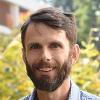
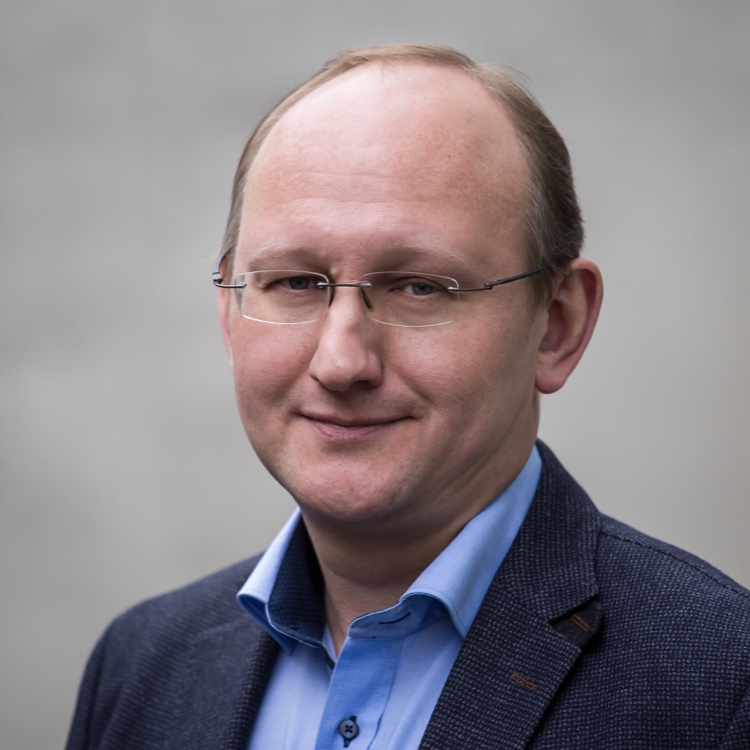
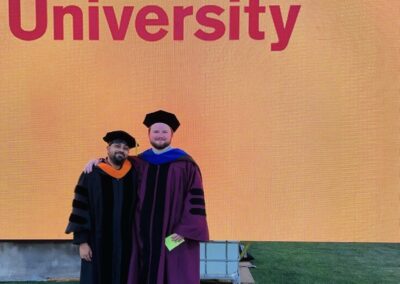
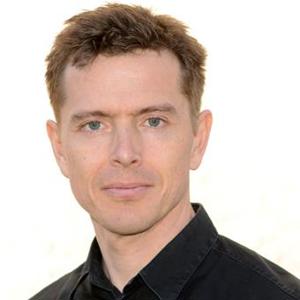
Sean R. Agnew is the William G. Reynolds Professor of Materials Science and Engineering at the University of Virginia, with a courtesy appointment in Mechanical and Aerospace Engineering. His research focuses on metals analysis, including magnesium alloy formability, intermetallic behaviors, and aluminum alloy fatigue, employing advanced techniques such as SEM, TEM, XRD, and neutron diffraction. He earned a Ph.D. from Northwestern University (1998) and a B.S. from Cornell University (1994). Research interests span surface/interface science, metallurgy, nanomaterials, and advanced transportation materials. His team addresses challenges in corrosion resistance, microstructural control, and high-temperature alloy performance. Notably, his work on coating removal techniques for bridge infrastructure has received ARPA-E funding to develop heat-resistant turbine engine coatings. Publications emphasize magnesium alloy deformation mechanisms, neutron diffraction analysis, and multiphase alloy design. Collaborations integrate computational modeling and in-situ experimentation to advance material understanding. The Agnew Research Group actively explores applications in aerospace, energy systems, and structural materials.
Prof. Dr. Igor Potemkin is an Associated Researcher at Moscow State University, leading a group focused on theoretical studies and computer simulations of polymer self-organization, particularly in complex architectures like arborescent, comb, and gel-like polymers. His work intersects polymer physics, soft matter, and materials science, with collaborations at the DWI and other institutions. Research emphasizes micelle/gel formation, polyelectrolyte interactions, and applications in drug delivery and biomimetic systems. Education details are not explicitly stated in the text, but his academic trajectory is evident through his extensive publication record and project leadership. Key research interests include microgel behavior, interfacial phenomena, and nanoscale structure-property relationships. Notable projects include studies on amphiphilic microgels, ionic liquids, and gradient copolymers. His research group has explored over 100 publications, focusing on topics like microgel self-assembly, polyelectrolyte complexes, and molecular motor design. Collaborations span institutions worldwide, with a strong emphasis on computational modeling and experimental validation. The team includes postgraduates and students involved in projects such as 'Functional Microgels and Microgel Systems' (SFB-985) and Helmholtz-RSCF initiatives. Scientific contributions include advancements in polymer thin films, nanoparticle-stabilized colloids, and the development of novel biomaterials. His work bridges theoretical predictions with practical applications in nanotechnology and biomedical engineering.
Irene Rocchi is an Associate Professor in the Department of Environmental and Resource Engineering, specializing in Geotechnics & Geology at the Technical University of Denmark (DTU). Her research integrates experimental soil mechanics with innovative engineering solutions, focusing on ground characterization, soil behavior across scales, and sustainable geotechnical practices. She leads key projects such as SoIA (Soil is alive) and B-test, contributing to advancements in geotechnical instrumentation and interdisciplinary soil science. PhD, City University of Hong Kong (2010–2014) MSc in Civil Engineering, Politecnical School of Turin (2007–2009) Bachelor in Civil Engineering, University of Bologna (2004–2007) Her research interests center on experimental soil mechanics, with a strong focus on laboratory and field characterization, unsaturated soils, micro-scale analysis, and the influence of biological factors on soil behavior. She emphasizes innovation and the translation of research into practical engineering applications, particularly in flood protection, ground improvement, and sustainable infrastructure. The recent publications reflect a consistent trend in advanced geotechnical testing, probabilistic modeling, and interdisciplinary biogeotechnics. Her work spans from fundamental soil behavior studies to applied technologies like digital twins and energy storage in geomaterials, demonstrating a strong integration of mechanics, sustainability, and innovation. Semper Ardens Excellence Grant (Carlsberg Foundation) InnoExplorer Grant (B-test project) Irene Rocchi actively supervises PhD students and contributes to major research projects at DTU. She has been involved in industrial collaborations and has led funded projects focusing on sustainable underground construction, soil swelling, and infrastructure performance. Her work bridges academic research and real-world engineering challenges. She is involved in the SoIA research group and contributes to DTU’s Sustainable Geotechnics initiative, where she develops new sensing technologies and promotes interdisciplinary approaches to soil science. Her lab focuses on advanced soil testing, NMR-based homogeneity assessment, and biologically influenced soil mechanics.
Anna Neus Igual Muñoz is a Senior Scientist and Lecturer at École Polytechnique Fédérale de Lausanne (EPFL), affiliated with the School of Engineering (STI) and Institute of Materials (IMX). She has held academic roles since 2001, including Professor at the Technical University of Valencia (UPV) and Invited Professor at EPFL (2012-2016). Her work focuses on materials-environment interactions involving corrosion, tribology, and electrochemistry. Education: MSc in Industrial Engineering (Chemical Engineering specialization), PhD in Electrochemical Corrosion (2001) from UPV Postdoc: University of Virginia (2002) in electrochemical impedance spectroscopy Research interests include: Tribocorrosion mechanisms in metallic materials Surface analysis techniques for thin films Development of functional coatings for corrosion resistance Electrochemical behavior of alloys in dynamic environments Recent publications highlight her expertise in: Electrochemical deposition of nanomaterials Tribocorrosion in biomedical implants Stability of cathodes in electrolyzers Passivation of titanium alloys She teaches courses on corrosion, surface analysis, and tribology at EPFL, with a maximum of 18 students per lab session. Her PhD advisees include Lumongsod-Thompson Marian and Nida Sagarino, and she leads the SCI-STI-SM research group.
Prof. Dr. Gisela Grupe is a faculty member at LMU Munich, specializing in anthropology, environmental history, archaeometry, and biological trace science. Her research integrates isotopic analysis with bioarchaeology to study human and animal mobility, diet, and provenance in historical contexts. Key projects include leadership in the DFG Research Group FOR 1670 on Transalpine mobility and culture transfer. Collaborations span institutions in Germany, Lithuania, France, USA, and Italy, focusing on Bronze/Iron Age Mongolia, Roman archaeology, and medieval mining regions. Her recent publications emphasize multi-isotope methodologies (strontium, oxygen, lead) for provenance analysis, cremation studies, and paleoenvironmental reconstruction. Collaborative work with the Bavarian Academy of Sciences and international universities underscores her interdisciplinary approach. Her research extends to ethical considerations in the treatment of archaeological human remains, reflecting broader societal and historical contexts.
Marco Rossi is an Associate Professor at Marche Polytechnic University in the College of Engineering , affiliated with the Department of Industrial Engineering and Mathematical Sciences . His research focuses on Mechanical Engineering and Materials Science , particularly the plasticity and fracture mechanics of sheet metals and additive manufacturing materials , utilizing advanced techniques like digital image correlation and inverse problems in computational mechanics . Scientific Sector: IIND-03/A - Mechanical Design and Machine Construction Contact: m.rossi@staff.univpm.it , via Brecce Bianche, Ancona, Italy His work emphasizes 3D anisotropic plasticity models , material calibration for sheet metal forming , and thermomechanical characterization of metals. Recent publications highlight applications of virtual fields method (VFM) and finite element model updating (FEMU) in optimizing experimental setups for additive manufacturing and high-strain testing . Key Research Areas: Mechanical Design Plasticity Modeling Digital Image Correlation Inverse Identification 3D Printing Material Behavior Tensegrity Structural Systems
Benjamin Bevans is a Research Assistant Professor in the Department of Industrial & Systems Engineering at the University of Oklahoma. His work focuses on advanced manufacturing through data analytics, machine learning, and in-situ process monitoring in Additive Manufacturing (AM) systems. Ph.D., Industrial & Systems Engineering, Virginia Tech B.S., Mechanical & Materials Engineering, University of Nebraska-Lincoln Research domains include Physics-Based Machine Learning for thermal history control in Laser Powder Bed Fusion (LPBF), Computer Vision for defect detection, and Quality Assurance through heterogeneous sensor integration. He specializes in Wire Arc Additive Manufacturing (WAAM) and Directed Energy Deposition (DED) processes. Recent publications highlight trends in autonomous control systems for AM, Bayesian transfer learning for in-situ qualification, and multi-sensor fusion for flaw detection. His work bridges materials science and process optimization in metal AM. He is based at the Sooner Advanced Manufacturing Laboratory in Norman, Oklahoma, and his research has been published in top journals such as Additive Manufacturing and Journal of Materials Processing Technology .
Prof. Indradev Samajdar is a full Professor in the Department of Metallurgical Engineering and Materials Science at the Indian Institute of Technology Bombay (IIT Bombay), where he has served since 1998, progressing from Assistant Professor to Associate Professor and full Professor in 2007. He is actively engaged in advanced research in materials science and metallurgy. Academic Background: B.E., Jadavpur University (1987) M.S., University of Texas at El Paso (1991) Ph.D., Drexel University (1994) His research focuses on crystallographic texture , microstructural engineering , and thermomechanical processing of metallic materials. His work bridges experimental characterization with modeling to understand and control microstructure evolution during industrial processing of steels and alloys. He has led major research projects with Tata Steel, JSW, DRDO, SERB, and international partners such as Sandvik Materials Technology, Sweden. The recent publications highlight a strong emphasis on the influence of crystallographic texture on material behavior, including oxidation resistance, deformation heterogeneity, and phase transformation kinetics. His work integrates advanced microstructural analysis with mechanical performance, particularly in zirconium alloys, stainless steels, and dual-phase steels. No scientific awards were explicitly mentioned in the text. Prof. Samajdar has secured significant sponsored research funding as Principal Investigator (PI) from Tata Steel, SERB, DRDO, and AUSC-IGCAR/DHI, with individual projects valued up to 5 crore INR. He also serves as Co-PI on DRDO projects. His research group has contributed to patents in grain boundary engineering of stainless steels, demonstrating translational impact. While specific students are not listed, his active PhD admission page and research group indicate ongoing student supervision. His laboratory conducts advanced research in texture analysis, residual stress measurement, and microstructure-property correlation, supported by collaborations with national laboratories (IGCAR) and global industrial partners (Sandvik, Tata Steel, JSW).
Joachim Mathiesen is a Professor at the NJORD Center for the Study of Earth Physics within the Department of Physics, University of Oslo. His research spans geophysics, porous media dynamics, and nonlinear fluid systems. Key collaborations include Gaute Linga, Francois Renard, and Tanguy Le Borgne. His work focuses on fracture network analysis , turbulent flow in rough channels , and electrohydrodynamic phenomena . He investigates fluid-rock interactions, solute dispersion in multiphase systems, and stress-driven phase transformations. 2024-2023 : Deep-learning analysis of rock fractures, 4D neutron imaging of sandstone transport, chaotic signatures in porous media flows 2018-2020 : Wetting control with electrolytes, electrohydrodynamic channeling effects, dynamic fluid connectivity in porous media Mathiesen applies computational modeling to geological systems, including Martian araneiform formation, rock compaction, and communication networks. His numerical schemes address energy-stable simulations of complex fluid properties.
Albert To is a Professor at the Swanson School of Engineering, University of Pittsburgh, where he holds the William Kepler Whiteford Professorship. He serves as Director of both the MOST-AM Consortium and the ANSYS Additive Manufacturing Research Laboratory. Since joining Pitt in 2008, he has advanced from assistant to associate (2014) and full professor (2019). Education: BS, MS, and PhD from UC Berkeley; MS from MIT Postdoctoral Research: Northwestern University with Wing Kam Liu Dr. To's primary research interests center around design optimization for additive manufacturing, multiscale methods, and computational mechanics. His work focuses on fast process modeling and topology optimization for metal additive manufacturing. He directs the ANSYS Additive Manufacturing Research Laboratory, which houses advanced metal 3D printers including EOS DMLS, Optomec LENS, and ExOne binder jetting systems. In 2016, he founded the MOST-AM Consortium, which now includes over 30 member companies and research labs collaborating on additive manufacturing research. His research has been consistently supported by major funding agencies including NASA, DOD, DOE, NSF, America Makes, and industry partners like ANSYS. The recent publications demonstrate a strong focus on addressing key challenges in metal additive manufacturing processes, particularly laser powder bed fusion and wire-arc directed energy deposition technologies. His work spans from fundamental process modeling to practical applications in materials science and mechanical engineering. NSF BRIGE Award (2009) Air Force Summer Faculty Fellowship (2009) Board of Visitors Faculty Award (2016) Carnegie Science Award (2018) Best Student Paper Award, 46th Acoustic Emission Working Group Meeting (2003) Dr. To has secured substantial research funding from government agencies and industry partners to advance additive manufacturing technologies. His MOST-AM Consortium facilitates collaboration between academia and industry, accelerating the translation of research findings into practical applications. He has advised numerous graduate students who have contributed to his extensive publication record in top journals. His laboratory at the University of Pittsburgh is equipped with state-of-the-art metal 3D printing systems, enabling both fundamental research and applied development in additive manufacturing. The MOST-AM Consortium provides a framework for industry collaboration, ensuring research addresses real-world challenges in the field.
Kumar Ankit is an Associate Professor of Materials Science and Engineering (MSE) and Graduate Program Chair in the School for Engineering of Matter, Transport and Energy at Arizona State University. His research focuses on computational materials science with emphasis on phase-field modeling of microstructural evolution in materials. He leads the 4D ICE (Laboratory for 4D Interface Control & Engineering) research group, which develops computational tools for discovering efficient processing routes for advanced materials synthesis. Education: Ph.D. (Dr.-Ing.) Summa Cum Laude, Mechanical Engineering, Karlsruhe Institute of Technology, Germany (2015) Integrated Dual Degree (B.Tech/M.Tech) Metallurgical Engineering, Indian Institute of Technology-BHU (2010) Dr. Ankit's research spans multiple domains of computational materials science, with particular expertise in quantitative phase-field modeling. His work integrates computational approaches with machine learning to address fundamental challenges in microstructure science and engineering. His group investigates phenomena including solidification, solid-state transformations, grain coarsening in multicomponent alloys, electromigration-induced damage, and self-organization in polymers and vapor-deposited films. A growing emphasis in his recent work involves developing data-driven emulators that can predict complex microstructural evolution more efficiently than traditional simulation methods. Analysis of Dr. Ankit's recent publications reveals a strong trend toward integrating machine learning with traditional computational materials science methods. His work increasingly focuses on developing data-driven approaches to model complex microstructural evolution, particularly in electromigration and phase separation phenomena. The research spans multiple disciplines including materials science, computational physics, and machine learning, with applications in semiconductor manufacturing, microelectronics reliability, and advanced materials processing. Scientific Awards: 2024 Wenner-Gren Fellow (Sweden) 2022 NSF Early Career Award (CAREER) 2022 Editors' choice award, Journal of Phase Equilibria and Diffusion 2018 Robert W. Cahn prize of Springer Nature and the Journal of Materials Science 2016 Early Career Investigator Award of the German Research Foundation (DFG) Dr. Ankit has successfully secured significant research funding including a $560,000 NSF CAREER award for studying pearlite discontinuities in eutectoid microstructures, a $5 million DOE Earthshots grant as co-PI for carbon-free steelmaking technology, and multiple NSF grants focused on electromigration and materials characterization. He mentors several PhD students who work on diverse research projects spanning computational modeling of electromigration, nanostructural self-assembly, and capillary-mediated interface phenomena. Dr. Ankit co-founded the MateriAlZ Seminar series with collaborators at ASU and the University of Arizona to promote student engagement and increase the visibility of Arizona universities in Materials Science and Engineering. Dr. Ankit directs the 4D ICE research laboratory, which focuses on developing computational tools for rapid discovery of time-, energy-, and cost-efficient processing routes for materials with tailored functionality. The lab's work lies at the intersection of phase-field modeling, machine learning, and high-performance computing. Current projects include investigating capillary-mediated solid-liquid interface energy fields (funded by NASA), electromigration-induced defects in electronic materials (funded by NSF), and nanostructural self-assembly in vapor-deposited films (funded by ASU College of Engineering). The lab maintains strong collaborations with researchers at national laboratories and in industry.
Jens Norrman is a Senior Engineer at the Ugelstad Laboratory, Department of Chemical Engineering, Norwegian University of Science and Technology (NTNU). He holds a Master's and PhD in Physical Chemistry from the University of Lund, Sweden, with dissertation work on polymer-surfactant interactions and water swelling of polymer-surfactant coaservates. Currently, he serves as group manager for the Ugelstad Laboratory, responsible for laboratory administration and instrumentation operations (DSC, rheometer, QCM-D). PhD in Physical Chemistry from Lund University Master in Physical Chemistry from Lund University His research focuses on colloid and physical chemistry applications in petroleum systems, including wax inhibition mechanisms, nanoparticle adsorption, and CO2 absorption in liquid crystals. His work integrates experimental and modeling approaches to address flow assurance challenges in oil production through polymer and nanoparticle additives. Recent publications highlight multidisciplinary contributions spanning wax inhibitor molecular weight effects (2021), surfactant flooding modeling (2020), CO2-liquid crystal phase behavior (2019), and biopolymer viability in enhanced oil recovery (2016). Key themes include polymer-surfactant interactions, colloidal system stability, and rheological behavior of wax-oil systems. As laboratory contact for external users, he bridges academic research with industry applications through his work on wax problems in petroleum under Equinor's VISTA research program. His technical responsibilities include maintaining advanced analytical instruments crucial for chemical engineering research.
Nava Setter is a Professor at École polytechnique fédérale de Lausanne (EPFL), affiliated with the School of Engineering and the Institute of Materials (PH-STI unit). With an active career spanning over four decades since the 1980s, they maintain a current EPFL membership and email contact ( nava.setter@epfl.ch ). Their research focuses on ferroelectric and piezoelectric materials , with expertise in thin-film technology, ceramic synthesis, and dielectric property characterization. Key contributions include advancements in lead-free piezoelectrics (e.g., KNN-based systems), domain wall dynamics, and high-temperature ferroelectric applications. Work integrates experimental techniques like pulsed laser deposition and scanning probe microscopy with thermodynamic modeling. Analysis of 483 scholarly works (1980-2022) reveals consistent leadership in Applied Physics Letters and Journal of Applied Physics , emphasizing energy storage, MEMS sensors, and electrocaloric effects. Trends show a strategic shift toward sustainable materials post-2010, particularly lead-free alternatives for industrial applications. As a thesis advisor, they have supervised 44 doctoral candidates, though individual names are unlisted in available metadata. Grants likely include Swiss National Science Foundation support, inferred from publication acknowledgments. Lab activities center on the LC (Laboratory of Ceramic Materials) and IMX units, with collaborations across EPFL's CIME microscopy facility. Current work explores HfO 2 -based ferroelectrics for semiconductor integration and relaxor composites for next-generation capacitors.
Per Persson is a Professor and Head of Unit at Linköping University's Department of Physics, Chemistry and Biology (IFM), specializing in advanced electron microscopy and materials science. He leads the Electron Microscopy of Materials unit and has been instrumental in developing Ångströmhuset, one of the world's most advanced microscopy facilities. PhD in Materials Science, Linköping University (2001) Postdoctoral research at University of Illinois (2002-2003) Extensive international experience in electron microscopy and materials characterization His research focuses on atomic-scale characterization of materials, particularly MXenes. Key areas include: Defect engineering in 2D materials Surface chemistry and stability of MXenes Development of advanced electron microscopy techniques Energy storage applications in nanomaterials Structure-property relationships in low-dimensional systems Materials tailoring at atomic resolution Recent research trends show strong emphasis on: Atomic-scale defect manipulation via chemical etching Topological insulator characterization using polarized spectroscopy Epitaxial growth engineering with oxide seed layers Electronic structure analysis of alloyed nitrides Radiation effects on nuclear materials Scientific achievements include: VR Special Researcher (2008-2014) SSF Infrastructure Fellow (2015-2020) Principal Investigator at Advanced Functional Materials His grants and infrastructure leadership have resulted in: Procurement of northern Europe's most advanced electron microscope SEK 44 million WISE grant for materials research equipment Over SEK 100 million investment in microscopy infrastructure Leadership in multiple Swedish Research Council projects As a founding figure in Ångströmhuset, Persson oversees a research environment serving >100 users, blending experimental and theoretical approaches to materials design.
Ying Fu is a Professor at Halmstad University's School of Information Technology, where he leads research in applied electromagnetics and photophysics. He belongs to the 'Photonics, Electronics, and Nanotechnology' research group and teaches undergraduate physics courses (FY4006 - Physics 1: Mechanics and Waves, FY4007 - Physics 2: Thermodynamics and Modern Physics) and graduate courses (EL8003 - Semiconductor Devices, EL8010 - Applied Electromagnetics). His research focuses on developing novel metamaterials and nanobiophotonic systems for applications spanning photodetection, solar energy conversion, biomedical sensing, and communications across visible to microwave spectra. Methodologies combine multi-scale theoretical modeling (quantum chemistry, solid-state physics, FDTD, machine learning) with experimental synthesis and characterization of quantum dots (CdSe-CdS/ZnS, ZnO, 3C-SiC), graphene, and metallic microstructures. Publication analysis reveals consistent focus on quantum nanostructures, with recent work (2021-2025) emphasizing infrared photodetector design, graphene metasurfaces, and memristive devices. Earlier contributions (2010-2018) established foundational work in quantum dot solar cells, nanocrystal photophysics, and semiconductor device engineering. His 230+ publications demonstrate interdisciplinary integration of materials science, photonics, and electronic engineering. He leads the 'Photonics, Electronics, and Nanotechnology' research team at Halmstad University, where experimental and computational facilities support investigations in nanomaterial synthesis, optical characterization, and device prototyping.