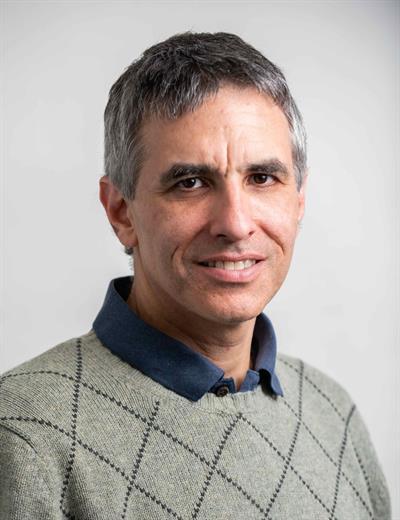
Prof. Dr. Martin Kronbichler is a faculty member at the Faculty of Mathematics , Ruhr University Bochum , leading the Numerics group. His research focuses on higher-order finite element methods, multigrid techniques, and high-performance computing for complex fluid and solid mechanics problems. Key Research Areas: Higher-order finite element methods, iterative solvers, multigrid algorithms, exascale mathematical software, and computational fluid dynamics. Notable Projects: EU-funded dealii-X (exascale digital twins), BMBF PDExa (optimized PDE solvers for exascale), and DFG grants for cut-discontinuous Galerkin methods and geometric multigrid. Publications Trends: Recent works emphasize matrix-free operators for hyperelasticity, diffuse-interface models for additive manufacturing, and multigrid smoothers for higher-order elements. Scientific Awards: Recipient of the Humboldt Research Award for his contributions to numerical methods and HPC. Team: Collaborates with researchers like Dr. Shubham Kumar Goswami, Dr. Richard Schussnig, and Natalia Nebulishvili.
Gunnar Kusch is a Senior Research Associate at the Department of Materials Science & Metallurgy, University of Cambridge. His research focuses on defects in semiconductors, porous AlGaN materials, and advanced characterization techniques like cathodoluminescence (CL) and atom probe tomography (APT). He holds a PhD from the University of Strathclyde and leads projects on UV-B LED optimization, nanoscale defect behavior analysis, and semiconductor device design. His work bridges materials synthesis, characterization, and device performance, with applications in energy-efficient lighting and solar cell technology. Key research areas include: Defect engineering in III-nitride semiconductors Porous AlGaN templates for high-efficiency UV emitters Correlative microscopy techniques (CL, EBSD, APT) Composition-structure-property relationships in photovoltaic materials Notable contributions include developing CL-based methods for nanoscale defect analysis and demonstrating improved Cu(In,Ga)S₂ solar cell efficiencies through compositional engineering. His laboratory focuses on translating microscopic insights into macroscopic device improvements.
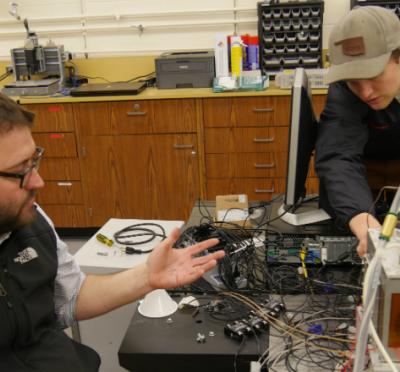
Joshua Gess is an Associate Professor in the Mechanical, Industrial, and Manufacturing Engineering department at Oregon State University's College of Engineering. He joined Oregon State in 2015 and serves as a co-principal investigator at the Enhanced Heat Transfer Laboratory, where he leads research in thermal management solutions for high-performance microelectronics. His educational background includes: PhD, Mechanical Engineering, Auburn University, 2015 MS, Mechanical Engineering, Auburn University, 2012 B.E., Mechanical Engineering, Vanderbilt University, 2005 Before academia, he worked as a mechanical engineer at SSOE Group (including consulting for Johns Manville) and Northrop Grumman where he focused on military communication equipment. Professor Gess specializes in advancing thermal management solutions for high-performance microelectronic equipment. His research spans multiple scales, examining single and two-phase heat transfer on the macro-scale with passive and active liquid immersion techniques, as well as on the micro and nano scale for complex embedded thermal management solutions. He combines fundamental heat transfer knowledge with novel experimental methods such as two-phase PIV and high-speed image capture to develop reliable and energy-efficient cooling solutions for demanding electronics systems. His publication record demonstrates a clear trajectory toward increasingly sophisticated thermal management solutions, with recent work focusing on additive manufacturing applications for cooling systems, semiconductor thermal management, and nuclear reactor cooling systems. His research has significant implications for data center energy efficiency, where even small improvements in cooling efficiency could save enormous amounts of energy that could be returned to the grid. Gess is deeply committed to mentoring graduate students, emphasizing the practical applications of engineering principles. He attributes his interest in engineering to childhood influences like the movie RoboCop and the TV series MacGyver, and finds the reality of engineering work just as gratifying as he'd imagined. He particularly values the moments when his graduate students "get it" and watching them grow with each new accomplishment. As a person with a disability himself, Gess is passionate about establishing more robust support systems for people with disabilities at Oregon State. He is working with the School of Public Health to start an adaptive sports program, with the goal of building infrastructure that allows anyone to feel welcome and pursue advanced degrees at the university.
Jun Liu is an Assistant Professor in the Department of Mechanical and Aerospace Engineering at the School of Engineering and Applied Sciences, University at Buffalo. His research focuses on advanced energy materials, nano/micro-mechanics, and self-powered systems, with applications in triboelectric energy harvesting and scanning probe microscopy. Education: PhD, Materials Engineering, University of Alberta (2018) MS, Materials Science, Shanghai University (2015) BE, Materials Science and Engineering, Nanchang University (2012) Research Interests: Development of tribovoltaic and triboelectric systems for self-powered electronics Mechanical energy harvesting via dynamic heterojunctions and Schottky contacts 3D-printed hydrogel structures for energy absorption and flexible electronics Nanoscale characterization using atomic force microscopy Design of nanocomposite sensors and catalytic materials Publication Trends: His work emphasizes triboelectricity, nanoscale energy conversion, and sustainable materials. Recent articles explore bionic tactile sensing, tunable hydrogels, and quantum dynamics in sliding interfaces. Awards: SONY Faculty Innovation Award (2021) Nature Springer MINE Young Scientist Award (2020) International Contest of Applications in Nano/Micro Technology Prize (2013) Laboratory: Advanced Energy Materials and Nanomechanics Lab at University at Buffalo.
Dr. Qian Shunzhi is an Associate Professor and Program Director for the Bachelor of Engineering (Civil) at NTU's School of Civil and Environmental Engineering. He holds a PhD from the University of Michigan (2007), with prior faculty experience at Southeast University (2009-2013) and postdoctoral research at TU Delft (2007-2009). His research focuses on advanced construction materials like Engineered Cementitious Composites (ECC), self-healing concrete, and 3D-printable concrete, alongside life cycle assessment of infrastructure. Key interests include sustainable materials, CO2 sequestration, and material durability. Education: Bachelor's: Southeast University (Nanjing, 1998) Master's: Chinese Ministry of Transport Highway Research Institute (Beijing, 2001) PhD: University of Michigan (Ann Arbor, 2007) Research Interests: Novel cementitious composites for infrastructure resilience Recycled materials in construction 3D printing applications in concrete Material lifecycle analysis Notable contributions include bacterial encapsulation for self-healing, graphene-enhanced antibacterial surfaces, and CO2 sequestration via reactive materials. His work bridges material science, sustainability, and advanced manufacturing techniques.
Chuck Fang is an Assistant Professor of Finance at Drexel University's LeBow College of Business. He holds a PhD in Finance from UPenn Wharton (2023) and BAs in Economics, Mathematics, and Statistics from UC Berkeley (2015). His research is centered on credit markets, monetary policy, financial innovations, and financial data infrastructure. PhD in Finance, UPenn Wharton, 2023 BAs in Economics, Mathematics, and Statistics, UC Berkeley, 2015 His research interests span credit markets , monetary policy transmission , financial innovations (including DeFi and automated market makers), and financial data linkage (e.g., Bond-Compustat-CRSP and DealScan-Compustat links). His work explores how monetary policy affects bond fund flows, debt structure changes, and sovereign restructuring. He emphasizes data quality and transparency, contributing open-source tools for empirical finance. The most recent articles reveal a strong focus on monetary policy amplification , debt market structure , and data infrastructure for empirical research. Keywords across publications include finance, monetary policy, asset pricing, fintech, and data linkage. Subfields consistently involve bond fund flows, syndicated loans, sovereign debt restructuring, DeFi mechanisms, and financial data validation. His research bridges macroeconomic policy with micro-level financial data, often using large-scale institutional holdings and transaction data. Scientific awards include: WFA Brattle Group PhD Candidate Award for Outstanding Research Chuck Fang has advised no students listed in the materials. He has secured research recognition through conference presentations and working paper awards. His work is supported by access to major financial databases and collaboration with leading scholars such as Kairong Xiao and Greg Nini. He actively disseminates findings through SSRN, Google Scholar, and academic conferences. He leads or contributes to several data infrastructure projects, including the Bond-Compustat-CRSP Link and DealScan-Compustat Link. These tools enhance empirical research in corporate finance and asset pricing by improving issuer identification and data accuracy. He also maintains a personal website and is active on professional platforms like LinkedIn and Twitter, promoting open science and financial research transparency.
Robert O. Ritchie is the H. T. & Jessie Chua Distinguished Professor of Engineering at the University of California, Berkeley, where he holds dual appointments as Professor of Materials Science & Engineering and Professor of Mechanical Engineering. He is also a Faculty Senior Scientist at Lawrence Berkeley National Laboratory. His distinguished career spans over four decades with significant contributions to the field of materials science and engineering. Professor Ritchie received his B.A. in Physics & Metallurgy (1969), M.A. in Materials Science (1973), Ph.D. in Materials Science (1973), and Sc.D. in Materials Science (1990), all from Cambridge University, UK. His research focuses on the mechanical behavior of advanced materials, with particular emphasis on fracture mechanics, fatigue properties, and damage tolerance. Professor Ritchie's work spans multiple domains including metallic glasses, high-entropy alloys, biomaterials, and nature-inspired structural materials. His laboratory employs cutting-edge techniques such as in situ high-temperature computed tomography to study failure mechanisms in ceramic-matrix composites and nuclear graphite. His research has significant implications for aerospace, biomedical, and energy applications. Analysis of Professor Ritchie's recent publications reveals a strong focus on advanced structural materials, particularly metallic glasses and high-entropy alloys. His work combines experimental approaches with computational modeling to understand deformation mechanisms at multiple length scales. There is a clear trend toward bioinspired materials design, with several papers examining natural structures like fish scales, horn sheaths, and bone to develop new engineering materials with exceptional mechanical properties. Member, National Academy of Sciences (2025) Foreign Fellow, Academy of Athens, Greece (2024) Robert Henry Thurston Award (ASME) (2022) ASM Gold Medal (ASM Intl.) (2021) William D. Nix Medal, inaugural winner (TMS) (2020) Fellow (Foreign Member) of the Royal Society (FRS), London, UK (2017) Morris Cohen Award (TMS) (2017) Acta Materialia Gold Medal (2014) David Turnbull Award (MRS) (2013) A. Cemel Eringen Medal (Society of Engineering Science) (2010) Professor Ritchie has advised numerous graduate students and postdoctoral researchers throughout his career. His research has been supported by various funding agencies including the Department of Energy, National Science Foundation, and industry partners such as Rolls-Royce. He has served on numerous advisory boards including the Rolls-Royce Materials & Structures Advisory Board (2011-2019) and the Scientific Advisory Board of the Advanced Light Source at LBNL (2013 to date). Professor Ritchie leads the Ritchie Group at UC Berkeley, which maintains strong collaborations with Lawrence Berkeley National Laboratory. The laboratory employs state-of-the-art techniques including electron microscopy, x-ray tomography, and mechanical testing across multiple length and time scales. His team has developed innovative in situ characterization methods that have significantly advanced the understanding of material failure mechanisms under extreme conditions.
Preet Singh is a Professor and Associate Chair for Graduate Studies in the School of Materials Science and Engineering at Georgia Tech, with affiliations to the College of Engineering. His research focuses on corrosion science, electrochemistry, and environmental degradation of materials, particularly metals and alloys. Prior to joining Georgia Tech in 2003, he was a faculty member at the Institute of Paper Science and Technology (IPST), where he investigated corrosion issues in the pulp and paper industry. Professor Singh's work explores fundamental mechanisms of material degradation in industrial environments, aiming to develop mitigation strategies against environment-induced failures. Key research areas include corrosion fatigue, hydrogen embrittlement, stress corrosion cracking, and oxidation behavior. His group employs experimental approaches to study material reliability under varying chemical and mechanical conditions. Recent publications demonstrate interdisciplinary collaboration across oncology, agriculture, and energy systems, reflecting broad applications of materials science principles. Research trends show increased focus on biomedical materials and sustainable technologies alongside core corrosion studies. Professor Singh advises graduate students including Abdullah Alzubail, Yousif Al Rabie, Sai Shreeya, Yara, and Sean Li. He directs the Corrosion and Materials Reliability Laboratory (CMCRL), which partners with industry to solve practical engineering challenges related to material performance.
Professor Behzad Fatahi is a distinguished academic in Civil and Environmental Engineering at the University of Technology Sydney (UTS), specializing in geotechnical engineering, railway infrastructure, and sustainable construction technologies. With a career spanning over 16 years at UTS, he has served as Deputy Head of School - Teaching and Learning (2024-present), Head of Discipline (2020-2024), and School Research Coordinator (2012-2017). His research focuses on unsaturated soil mechanics , dynamic soil-structure interaction , and green infrastructure solutions . Academic Appointments : Professor (2024-present), Associate Professor (2017-2024), Senior Lecturer (2011-2017), Lecturer (2008-2011) Research Leadership : Supervised 21 PhD students to completion, developed groundbreaking techniques for landfill waste reuse and tyre-derived aggregates in railway construction His work on seismic resilience of LNG tanks and bioengineered soil stabilization has received international recognition, including the 2023 Best Research Paper Award at the Australasian Association for Engineering Education conference. Professor Fatahi's industry experience includes geotechnical engineering roles at Coffey International and SES Engineering prior to academia. Key Research Contributions : Developed green corridor models for railway lines using coupled flow-deformation equations Pioneered AI-integrated teaching frameworks for civil engineering education Advanced machine learning techniques for intelligent compaction and structural buckling analysis As a Category 1 supervisor , he mentors graduate researchers in Civil Engineering , Geomechanics , and Earthquake Engineering . His peer-reviewed work (>240 publications) demonstrates technical excellence and innovation across multiple geotechnical domains.
Dr. Arghya Das is an Associate Professor in the Department of Civil Engineering at the Indian Institute of Technology Kanpur (IIT Kanpur), where he has been serving since 2014. He previously held the position of Assistant Professor at IIT Kanpur from July 2014 to November 2020 before being promoted to Associate Professor in December 2020. Prior to joining IIT Kanpur, he completed his Post-Doctoral Research Fellowship at Northwestern University, USA, and served as a Research Associate at the University of Sydney, Australia. Dr. Das earned his educational qualifications from prestigious institutions: PhD in Geotechnical Engineering from the University of Sydney, Australia (2013), M.Tech from IIT Bombay, India (2009), and B.E. from Jadavpur University, India (2006). His research focuses on advanced aspects of soil mechanics and geotechnical engineering, with particular emphasis on constitutive modeling of geomaterials, micromechanics of granular materials, and flow through porous media. His work integrates numerical and physical modeling approaches to address complex geotechnical challenges including bifurcation and instability analysis in geomaterials. Dr. Das teaches several advanced courses including Constitutive Modeling of Frictional Materials, Advanced Geotechnical Engineering, Rock Mechanics, Computational Methods in Engineering, and Soil Mechanics. Dr. Das's publication record demonstrates a consistent focus on discrete element modeling (DEM) applications in geomechanics, particle crushing behavior, and constitutive modeling of soils. His recent work (2020-2022) has particularly emphasized unsaturated soil mechanics, chemomechanical effects on granular materials, and advanced computational approaches to soil behavior. These publications appear in high-impact journals such as Acta Geotechnica, Geomechanics for Energy and the Environment, and International Journal of Geomechanics. PK Kelkar Fellowship - IIT Kanpur (2022-2025) FEIT University of Melbourne Visiting Researcher Fellowship (2022-2023) YGE Award for Best Paper on Computational Geomechanics, Indian Geotechnical Society (2018) SERB - Early Career Research Award (2016-2019) Dr. Das has successfully secured multiple research grants including projects funded by ONGC, CSIR, and SERB focusing on micro-poro-mechanical modeling, experimental assessment of Indian crushable sands, and permeability evolution in deep-reservoir rocks. He serves as a corresponding member of the International Technical Committee TC-105 on 'Geo-Mechanics from Micro to Macro' of the International Society for Soil Mechanics and Geotechnical Engineering (ISSMGE) and is a member of the Indian Geotechnical Society.
Gajanan S. Bhat is a Professor and Department Head at the University of Georgia within the College of Family and Consumer Sciences . He earned his PhD in Textile and Polymer Engineering from Georgia Tech in 1990. Education : PhD (Georgia Tech, 1990) Professional Journey : Joining the University of Tennessee, Knoxville (UTK) in 1990, became Director of UTNRL , researching nanofibers, sustainable materials, and high-performance fibers. Recently transitioned to UGA as department head. Dr. Bhat's research focuses on nonwovens (meltblown, spunmelt), sustainable materials (cotton-based composites, biodegradable polymers), and high-performance fibers (carbon fibers, ballistic materials). His work bridges nanotechnology and industrial applications , addressing challenges in filtration , protective fabrics , and recycling . Recent publications highlight advancements in thermal conductivity modeling , flexible sensors , and ecological composites . His research has expanded into flushable nonwovens , PLA-based filters , and stretchable cotton textiles . Scientific Recognition : Outstanding Young Engineering Alumni, Georgia Tech (1996) Distinguished Achievement Award, The Fiber Society (1999) Technical Achievement Award, TAPPI (2014) He serves on editorial boards of journals like International Journal of Textile Engineering and Processes and Journal of Nanomaterials and Molecular Nanotechnology . Active in professional societies including The Fiber Society , INDA , and Textile Institute .
Christiana Mavroyiakoumou is a Courant Instructor/Assistant Professor at the Courant Institute of Mathematical Sciences, New York University. She specializes in fluid dynamics and fluid-structure interactions, with a focus on vortex dynamics, membrane flutter, and bio-inspired systems. Her research integrates modeling, numerical simulations, and experimental insights to study phenomena such as bird flock formations and fish swimming hydrodynamics. Mavroyiakoumou holds a Ph.D. from the University of Michigan (2022), an M.Sc. from the University of Oxford (2017), and a B.Sc. from Imperial College London (2016). Education: PhD in Applied & Interdisciplinary Mathematics, University of Michigan (2017–2022) MSc in Mathematical Modeling and Scientific Computing, University of Oxford (2016–2017) BSc in Mathematics, Imperial College London (2013–2016) Her research interests span fluid-structure interactions, vortex dynamics, and collective locomotion. She investigates how fluid flows mediate interactions between bodies, such as the aerodynamics of bird formations and the hydrodynamics of flapping foils. Her work bridges theoretical models with experimental observations, contributing to both fundamental science and bio-inspired engineering. Mavroyiakoumou has received prestigious awards including the Joseph B. Keller Fellowship (NYU), Peter Smereka Award (U-M), and ProQuest Distinguished Dissertation (U-M). She actively engages in academic service, organizing conferences and mentoring students. Her teaching experience includes courses on mathematical modeling, differential equations, and algebra at NYU and the University of Michigan. Key Research Themes: Flow-mediated collective behavior and instability mechanisms Vortex wake interactions and their role in locomotion Membrane dynamics in inviscid and viscous flows She collaborates with experimentalists like Leif Ristroph and Jun Zhang at NYU's Applied Math Lab, focusing on experimental validation of theoretical models. Her recent work explores self-amplifying waves in bird formations and the aerodynamic origins of flight coordination.
Jerelle A. Joseph is an Assistant Professor at Princeton University , affiliated with the Department of Chemical and Biological Engineering and the Omenn-Darling Bioengineering Institute . They also hold associated faculty roles in the Department of Chemistry , Andlinger Center for Energy and the Environment , Princeton Institute for Computational Science and Engineering , and the Biophysics Graduate Program . Research Interests : The Joseph Group investigates the physicochemical principles governing biomolecular condensate formation, dissolution, and misregulation . Their work focuses on phase separation mechanisms , computational modeling of protein-RNA interactions , and engineering condensates for biomedical and sustainability applications , including therapeutic targeting of neurodegenerative diseases and design of synthetic microreactors . Scientific Awards : NIGMS MIRA (R35) Award (2024) Biophysical Society Award Lecture (2024) Chan Zuckerberg Initiative Investigator (2023) Postdoctoral Award, Biophysical Society IDP Subgroup (2022) Rising Star in Soft and Biological Matter (University of Chicago, 2020) Advising : Dr. Joseph advises graduate students including Ananya Chakravarti , Dominic Curtis , and Pablo Garcia . The group develops chemically-specific coarse-grained models using molecular dynamics , Monte Carlo sampling , and machine learning to study condensate microstructure , aging dynamics , and surface electrostatics .
Professor John L Provis is a leading expert in cement materials science at the University of Sheffield 's School of Chemical, Materials and Biological Engineering. He also holds a Visiting Professor position at Luleå University of Technology's Building Materials division. PhD in Chemical Engineering (University of Melbourne) 2013 RILEM Robert L'Hermite Medal 2015 Honorary Doctorate from Hasselt University Editor-in-Chief of Materials and Structures His research focuses on alkali-activated materials and geopolymer binders for sustainable construction, with key themes in chemical speciation , waste immobilization , and novel cement systems for nuclear applications. Recent publications highlight 15 representative articles spanning topics: Radiation-resistant cementitious matrices Geopolymer synthesis for heavy metal containment Thermodynamic modeling of binder systems Corrosion mechanisms in alkali-activated concretes Low-carbon cement alternatives Microstructural analysis via advanced spectroscopy Scientific Recognition : RILEM Robert L'Hermite Medal recipient Hasselt University Honorary Doctorate Editorial leadership roles in major journals Contact: j.provis@sheffield.ac.uk | Sir Robert Hadfield Building, University of Sheffield
Marc Hodes is Professor in Mechanical Engineering and Mathematics at Tufts University. With a PhD from MIT, his research focuses on heat transfer phenomena with applications in electronics cooling, supercritical fluids, and thermoelectric systems. He directs the graduate program in Mechanical Engineering. Education: BS, University of Pittsburgh (1990) MS, University of Minnesota (1994) PhD, Massachusetts Institute of Technology (1998) Research Areas: Thermal management of electronics through microchannel cooling and liquid metal technologies; Apparent slip phenomena in microstructured surfaces; Mass transfer in supercritical CO 2 systems for aerogel processing; Thermoelectric module optimization for precision temperature control. Awards & Honors: NSF REU Fellowship (1989) E.T.S. Walton Visitorship Award Best Associate Editor, ASME Journal of Heat Transfer (2023) Research Leadership: Principal investigator on multiple NSF grants including projects on aerogel manufacturing, dropwise condensation, and analysis of convection in slip flows. Industry collaborations include Google, DARPA, and Bell Labs.