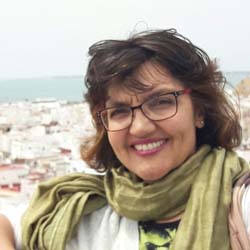
Prof. Matthias Militzer holds the Dofasco Chair in Advanced Steel Processing at the Department of Materials Engineering, Faculty of Applied Science, The University of British Columbia. He specializes in multi-scale modeling of microstructure evolution and physical metallurgy of advanced low-carbon steels, with interdisciplinary research in Cu interconnects for microelectronics. Research Interests: Multi-scale modeling of microstructure evolution during phase transformations Physical metallurgy of advanced high-strength steels (e.g., dual-phase steels, linepipe steels) Recrystallization and grain growth in electrodeposited Cu thin films Collaborations: McMaster University, ArcelorMittal Dofasco, Evraz, Dan Bizzotto (UBC), Ilya Elfimov (UBC) Recent Publications: Focus on phase transformations in Fe-Mn alloys, intercritical annealing, solute-interface interactions, and multi-scale models linking atomistic simulations to macroscopic process optimization in steels. Scientific Awards: Runner’s-up certificate as 'highly commended' in the James Clerk Maxwell Young Writers Prize (2013)
Olga Obizhaeva is an Assistant Professor of Finance at the Stockholm School of Economics (SSE) and a Researcher at the Swedish House of Finance (SHoF). She holds a PhD from the London School of Economics. Her research focuses on empirical asset pricing, institutional asset management, market microstructure, fintech, and big data applications in finance. Education PhD in Finance, London School of Economics Research Interests Her work examines how institutions and market structures influence financial outcomes, including: Impact of search engine marketing on ETF performance Hedge fund fundraising dynamics and broker intermediation Market microstructure invariance theory and its implications for stock returns Corporate share repurchase strategies and their economic consequences Application of web analytics and big data to financial markets Notable Contributions Her 2022 co-authored book Stock Buyback Motivations and Consequences provides a comprehensive review of corporate repurchase strategies. Recent work explores digital visibility's role in attracting investment flows and the structural determinants of stock return dynamics through the lens of invariance theory. Affiliations Resident Researcher, Swedish House of Finance Member of the SHoF Data Center Academic Advisory Group
Dr. Dikai Guan is an Associate Professor in Lightweight Materials at the University of Southampton, leading research on high-performance light alloys and additive manufacturing. He holds a PhD from the University of Sheffield (2015) and a prestigious UKRI Future Leaders Fellowship (2020). His work focuses on developing low-cost, high-performance alloys, with emphasis on magnesium alloys and sustainable materials processing. He has organized major conferences like the Royal Microscopical Society's EBSD 2021 and serves on editorial boards of journals like Carbon Neutrality Frontiers . Education: BEng and MEng in Materials Science from Central South University (2008–2011), PhD from University of Sheffield (2015). Joined University of Southampton in 2022. Active in international collaborations, including projects with industrial partners to recycle alloy waste into bespoke products. Key achievements include pioneering in-situ casting for nanostructured Mg alloys and publishing in top-tier journals like Nature and Acta Materialia . Research interests include additive manufacturing of light alloys, microstructure characterization, and sustainable materials development. Awards include the 2024 International Magnesium Award and Fellowships from the Higher Education Academy and IOM3. He advises five PhD students and oversees projects funded by the Royal Society and UKRI.
Gregory B. Olson is a Professor at the Massachusetts Institute of Technology (MIT) in the Department of Materials Science and Engineering, holding the Thermo-Calc Professor of the Practice title since 2020. He specializes in computational materials design, particularly in Integrated Computational Materials Engineering (ICME), which revolutionized industrial materials design. His research focuses on fracture resistance, high-performance alloys, and computational modeling of materials like steels, ceramics, and composites. Education: Bachelor of Science (1970) from MIT Doctor of Philosophy (1974) from MIT, advised by Morris Cohen Research Interests: Olson’s work bridges computational modeling and material innovation. He develops design methodologies for alloys, including transformation-toughened titanium alloys and ICME-driven steel designs. His contributions to materials genomics and additive manufacturing have advanced aerospace and defense applications. He pioneered Questek Innovations, applying ICME to industrial challenges like computational steel design. Awards & Honors: 2013: Foreign Member, Royal Swedish Academy of Engineering Science 2012: Member, American Academy of Arts and Sciences 2010: Member, National Academy of Engineering 2010: Gold Medal, ASM International 2001: Fellow, The Minerals, Metals & Materials Society Lab & Collaborations: He leads the Olson Research Group at MIT, focusing on computational materials design. His work integrates atom probe tomography, finite element modeling, and multiscale simulations to predict material behavior under extreme conditions.
Michael W. Jenkins is a Professor of Biomedical Engineering at the Case Western Reserve University School of Medicine and a member of the Cancer Imaging Program at the Case Comprehensive Cancer Center. His research focuses on developing biomedical optics tools for studying congenital heart disease and peripheral nervous system disorders. Key techniques include optical coherence tomography (OCT), light-sheet microscopy, and infrared neuromodulation. The Jenkins Lab specializes in advancing 3D imaging modalities for real-time tissue analysis, aiming to reduce surgical delays and improve diagnostic accuracy. Research interests include rapid 3D tissue visualization to replace traditional frozen-section pathology, optical pacing of cardiac tissues, and corneal nerve imaging. His work bridges engineering and medicine, with applications in ophthalmology, cardiology, and neurology. Recent innovations include label-free microscopy techniques (e.g., MUSE imaging) and AI-driven segmentation tools for neural anatomy analysis. Publications highlight advancements in corneal crosslinking assessment, vagus nerve microanatomy characterization, and cardiac tissue imaging. The lab collaborates with industry to translate optical tools into clinical settings, emphasizing precision and real-time diagnostics. Teaching and mentorship are integral to his role, fostering interdisciplinary training in biomedical optics. Ongoing projects address unmet clinical needs in neural modulation therapies and regenerative medicine through optical platforms.
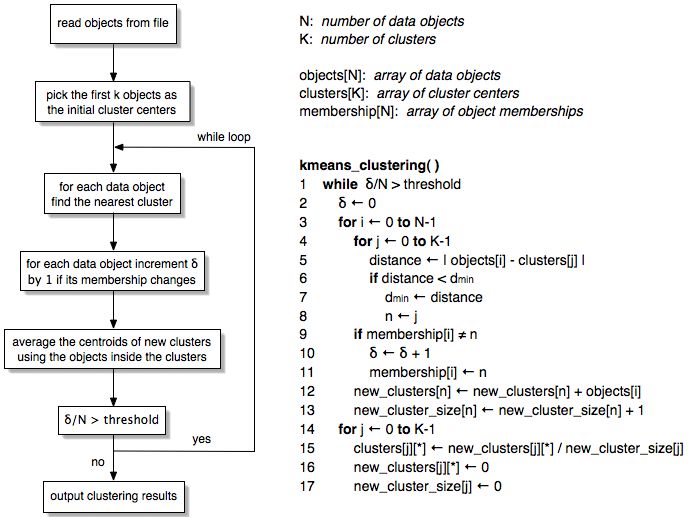
Wei-keng Liao is a Research Professor in the Department of Electrical Engineering and Computer Science at Northwestern University's McCormick School of Engineering. His research spans high-performance computing with a focus on parallel and distributed systems. Dr. Liao's research interests include parallel and distributed file I/O and storage system design, data mining algorithm design and their parallelization, data management for large-scale scientific applications, and computational model design for large-scale applications on parallel and distributed environments. He is a key contributor to the Parallel netCDF project, which provides parallel I/O capabilities for scientific applications. His recent work shows strong trends in high-performance computing infrastructure, particularly in optimizing I/O systems for scientific applications, parallel data clustering algorithms, and machine learning acceleration in distributed environments. His publications span computational science, parallel computing, and data-intensive applications across various scientific domains including materials science, astrophysics, and healthcare. Best Paper Award at IEEE International Conference on Cluster Computing (2016) for Parallel DTFE Surface Density Field Reconstruction Dr. Liao has supervised numerous research projects funded by DOE, NSF, NASA, and Argonne National Laboratory, with recent work focusing on data libraries for exascale science, machine learning-driven resilience for extreme-scale systems, and scalable data clustering for scientific computing. He leads research on the Parallel K-means Data Clustering software package and is a principal developer of Parallel netCDF. His work connects multiple research groups through the Center for Ultra-scale Computing and Information Security (CUCIS) at Northwestern University, where he collaborates with scientists across disciplines to develop scalable computing solutions for complex scientific problems.
Torsten Brezesinski is a Group Leader and Laboratory Manager at the KIT/BASF Joint Laboratory for Batteries and Electrochemistry (BELLA), part of the Institute of Nanotechnology at Karlsruhe Institute of Technology (KIT). He leads research on next-generation battery materials and mesostructured metal oxide thin films, with a strong focus on structure-property relationships and energy storage applications. Education: Ph.D. (Dr. rer. nat.), Max Planck Institute of Colloids and Interfaces / University of Potsdam, 2005 (with Prof. Markus Antonietti) His research interests center on advanced materials for electrochemical energy storage, including nanostructured electrodes, thin films, and mesoporous metal oxides. His work combines synthesis, characterization, and performance evaluation to develop high-efficiency battery components. A major focus is on polymer-templated mesostructured materials with optimized ion transport and interfacial properties. The selected publications highlight a consistent trajectory in materials for energy storage, particularly in lithium-ion and solid-state batteries, thin films, and nanostructured electrodes. The research spans fundamental synthesis, electrochemical behavior, and advanced characterization, with increasing emphasis on interfacial phenomena and degradation mechanisms in recent years. Scientific Awards: Dieter Rampacher Prize (Max Planck Society), 2006 Sonderpreis für Nachwuchswissenschaftler/innen in Brandenburg und Berlin, 2006 Dr.-Herbert-Stolzenberg-Award, 2009 ADUC Jahrespreis (German Chemical Society), 2010 Reviewer Excellence Award (Chemistry of Materials), 2018 Outstanding Reviewer for Chemical Communications, 2019 and 2020 Editor of Distinction Award (Springer Nature), 2025 Brezesinski has advised numerous researchers and students through his leadership roles at KIT and previous institutions. His group has secured significant research output, including over 240 peer-reviewed papers and more than 30 patents. He has also served on editorial boards of major journals such as Materials Futures , Scientific Reports , and Batteries , reflecting his influence in the materials science community. He leads the BELLA laboratory, a collaborative research unit between KIT and BASF, focused on advancing battery technologies. His team works on innovative materials synthesis, thin film fabrication, and electrochemical testing, contributing to next-generation energy storage solutions.
G. Wilson Miller is an Associate Professor of Radiology and Medical Imaging and Biomedical Engineering at the University of Virginia. He holds a PhD in Nuclear Physics from Princeton University (2000) and a BS in Mathematics from the University of Maryland (1993). His research focuses on MRI technique development, hyperpolarized gas imaging, and MR-guided focused ultrasound surgery. Key research areas include: Hyperpolarized noble gas MRI to map lung oxygen levels (PAO2) and microstructure Development of fast spiral pulse sequences for 3D PAO2 imaging RF coil design for hyperpolarized gas imaging MRI-guided focused ultrasound for non-invasive surgical interventions Notable projects include collaborations with the physics department to build a helium-3 hyperpolarizer and studies on focused ultrasound for blood-brain barrier opening. His work has advanced applications in lung cancer treatment planning, COPD phenotyping, and neurological disorders.
Haydn N. Wadley is a University Professor and Edgar A. Starke Professor of Materials Science and Engineering at the University of Virginia’s School of Engineering and Applied Science. His academic roles include Courtesy Professorships in Mechanical and Aerospace Engineering. He holds a B.S. in Chemical Physics and a Ph.D. in Physics from the University of Reading, UK. Research focuses on high-temperature materials, thermal/environmental barrier coatings, microarchitectured materials (lattice and opal structures), and impact/shock mitigation. Key areas include ceramic thermal management for gas turbines, hypersonic vehicle materials, and nanoscopic material assembly. His work addresses atomic-scale material assembly, cellular material topology, and high-temperature coating processing. Notable awards include election to the Virginia Academy of Science, Engineering and Medicine (VASEM). Recent research trends emphasize coating durability under thermal cycling, granular material dynamics, and additive manufacturing of lattice structures. Collaborative projects include heat-pipe thermal management and composite blast protection systems. His lab develops multifunctional materials via combinatorial synthesis and high-throughput screening. Key facilities include a high-temperature engine materials test facility and systems for plasma spray deposition optimization.
Prof. Wenyi Yan is a Professor in the Department of Mechanical & Aerospace Engineering at Monash University. His career includes research fellowships in Europe, roles at multiple Australian universities, and leadership in over 14 Australian Research Council (ARC) grants since 2006. He has supervised 19 PhD and 5 MSc graduates, currently mentoring 12 PhD students. Education: B.Eng. (Hons) from Beijing University of Aeronautics and Astronautics (1989), M.Sc. (1992), and Ph.D. (1995) from Tsinghua University. Research focuses on material behavior under cyclic loading, railway infrastructure optimization, laser cladding repair, and additive manufacturing. Key areas include fracture mechanics, tribology, and computational modeling for rail systems. Notable projects: Development of machine learning tools for structural analysis (2025–2028), ARC Hub for Smart Process Design (2024–2029), and rail component repair using laser cladding. His work addresses UN SDGs related to sustainable infrastructure and innovation. Awards: While no specific prizes are listed, his extensive grants and publications (3 book chapters, 176 journals, 68 conferences; h-index 42) reflect his impact. Current grants total over 10 projects, emphasizing industry collaboration with Rio Tinto, ANSTO, and others.
Philip Nakashima is an Associate Professor in the Department of Materials Science & Engineering within the Faculty of Engineering at Monash University. He is an active researcher with a PhD in Physics from the University of Western Australia (2002) and has over 25 years of experience in advanced transmission electron microscopy (TEM) and quantitative convergent-beam electron diffraction (QCBED). He is currently accepting PhD students and is involved in cutting-edge research in materials characterization and quantum information technology. His research focuses on the development and application of advanced electron microscopy techniques to study the structure, bonding, and properties of materials such as metals, alloys, ceramics, and nanostructures. Key areas include quantitative CBED, electron crystallography, digital image restoration, noise quantification, and multi-parameter optimization. He has made seminal contributions to understanding chemical bonding in aluminum and has extensive experience in high-performance computing for materials analysis. His most recent publications demonstrate a strong trend toward integrating machine learning with materials design, particularly for magnesium alloys, while maintaining core expertise in electron diffraction and microscopy. He continues to publish in high-impact journals such as Science , Physical Review Letters , and Acta Materialia . Philip Nakashima has received several prestigious awards for his research excellence: John Sanders Medal (2012) : Awarded by the Australian Microscopy and Microanalysis Society for excellence in electron microscopy techniques. Barry Inglis Medal (2011) : Awarded by Australia’s National Measurement Institute for outstanding achievement in measurement research. The Cowley-Moodie Award (2006) : Recognizing research excellence in electron microscopy in the physical sciences. He has been a visiting researcher at the ARC Future Fellowship (2012–2016) and is currently an Associate Investigator in the Quantum Information Technology project (2023–2027). He teaches advanced crystallography to undergraduate and postgraduate students and has been invited to lecture at international schools on electron and quantum crystallography. His research involves collaboration with leading scientists in Australia and internationally, and he leads work on advanced microscopy for materials engineering applications.
Seyhan Onbaşıoğlu is a Professor in the Department of Mechanical Engineering at Istanbul Technical University (ITU), actively engaged in thermal engineering research with current projects extending to 2025. Affiliated with ITU's Ayazağa Campus in Istanbul, Turkey, the profile shows ongoing research leadership including principal investigator roles in multiple national projects. Research interests center on heat transfer enhancement, two-phase flow phenomena, and thermal system optimization, with fingerprint analysis indicating strong expertise in heat transfer (100%), flow distribution (94%), and experimental investigation (83%). Key focus areas include nucleate boiling, ice sublimation dynamics, and energy-efficient appliance design. Publication trends since 2016 emphasize experimental validation of thermal systems, with significant contributions to refrigeration technology, domestic appliance efficiency, and microchannel heat transfer. Recent works (2023-2025) increasingly integrate numerical modeling with experimental verification, particularly in suction muffler design and ice sublimation under humidity effects. h-index: 12 Total Citations: 129 (Scopus) Research Outputs: 27 publications Active Projects: 1 (2025) Completed Projects: 6 (2012-2022) As principal investigator, leads projects funded by TUBITAK, SRP, and TTO including refrigerator system development, steam generation technology, and ship diesel engine turbocharger design. Supervised 53 research works to date across thermal engineering applications. Current projects focus on refrigerator cooling system enhancement (2025) and ejector-integrated refrigeration design (2022).
Sabina Luisa Campanelli serves as an Associate Professor in the Department of Mechanics, Mathematics and Management at the Polytechnic University of Bari, Italy, where she conducts cutting-edge research in advanced manufacturing technologies with emphasis on laser-based additive processes. Her research specializes in Additive Manufacturing , particularly Powder Bed Fusion and Directed Energy Deposition techniques, focusing on multi-material fabrication , functionally graded materials , and in-process monitoring . She develops innovative methodologies for layer-level control of material composition and thermal management, addressing critical challenges in geometric accuracy, residual stress, and defect formation in aerospace and biomedical components. Analysis of her recent publications reveals a dominant trend toward real-time process monitoring using thermal and optical systems, with increasing focus on sustainable material utilization through recycled feedstocks. Her work bridges Materials Science , Mechanical Engineering , and Industrial Manufacturing , demonstrating strong industry applicability in high-value sectors requiring precision metal components.
Assoc. Prof. Dr. Süleyman KILIÇ is a faculty member at Ahi Evran University , where he serves in the Faculty of Engineering and Architecture , Department of Mechanical Engineering . He holds a PhD in Mechanical Engineering (2016) and an MSc (2009) from Niğde University, and a BSc (2006) from Kırıkkale University. Research Interests: Manufacturing Technologies Material Design and Behavior Finite Element Analysis Friction Stir Welding Advanced High-Strength Steels Springback Behavior Article Trends: Recent publications focus on friction stir welding of aluminum alloys, springback analysis in sheet metal forming, yield criteria modeling (Barlat89, Hill48), and temperature/strain rate effects on material properties. His work combines experimental testing with numerical simulations for automotive and aerospace applications. Scientific Awards: Best Presentation Award at 2nd International Mediterranean Science and Engineering Congress (2017) Advising: Supervised 4 Master's theses (2023-2024) on topics like agricultural tire technologies, friction stir welding, and springback optimization. Collaborated extensively with researchers on material testing and forming limit diagrams.
Pagona Maravelaki is a Full Professor at the Technical University of Crete's School of Architecture, specializing in cultural heritage conservation materials. She founded the Laboratory of Materials for Cultural Heritage and Modern Building (MaCHMoB), leading research on stone preservation, lime-based mortars, and nanotechnology applications. Education: Chemist (NKUA 1983), PhD in Chemical Science for Conservation (Ca Foscari University of Venice 1992) Projects: H2020 InnovaConcrete, Erasmus+ Eureca-Pro, COST Actions Leadership: RILEM Technical Committee WP Coordinator, European Committee for Standardization expert Her research focuses on: Lime-based mortars with nano-additives Laser diagnostics/conservation Eco-friendly coatings for thermal insulation Historical mortar characterization Self-cleaning nanomaterials Recent publications emphasize lime mortars, nanocomposites, and sustainable construction. She has over 180 publications and 1 patent, with citations exceeding 2900 (Google Scholar). Awards include the Oslo Opera House Carrara Marble Competition and Top 2% Scientists ranking (2021). She has directed 25 national/European projects as Principal Investigator and coordinated international initiatives like RILEM TC 277-LHS.