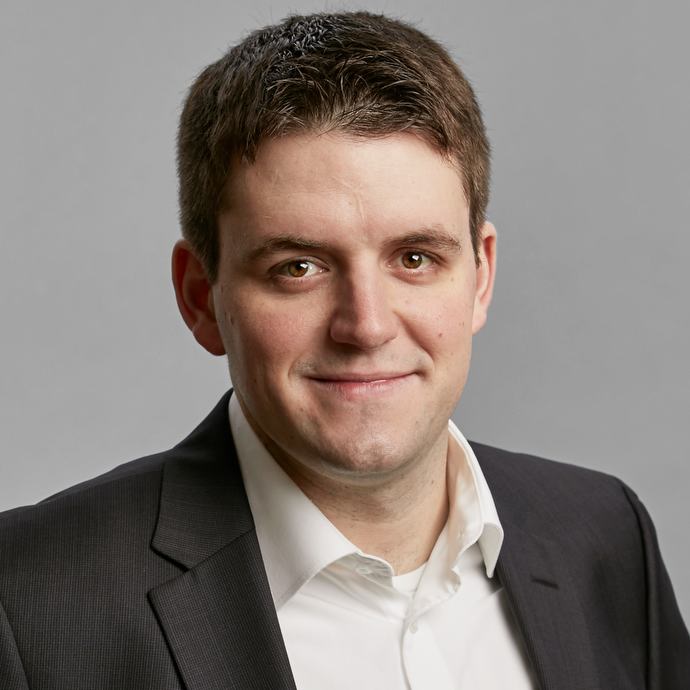
Professor David C. Dunand is a faculty member in the Department of Materials Science and Engineering at Northwestern University , where he leads the Dunand Research Group . His work focuses on mechanical metallurgy of advanced metallic materials, including alloys, composites, and foams, with applications in energy-efficient transportation and biomaterials. He also investigates additive manufacturing techniques like laser powder-bed fusion and 3D ink extrusion. Research Interests: Physical and mechanical metallurgy of multiphase metals Additive manufacturing (ink extrusion, selective laser melting) Green/sustainable metal production In situ X-ray tomography for microstructure analysis Metallic foams and scaffolds Thermoelectric materials Recent Publications show expertise in redox cycling stability, precipitation strengthening, and hierarchical microstructures, with applications in batteries, shape-memory alloys, and high-entropy systems. Awards: TMS Fellow (2012) Structural Materials Division Distinguished Scientist/Engineering Award (2008) Fellow, ASM International (2007) Department Teacher of the Year (1998) He has held leadership roles including Co-Director of the Initiative for Sustainability and Energy at Northwestern (2008-2015) and Visiting Professor at École Polytechnique Fédérale de Lausanne (2000). The group operates a SISMA MYSINT 100 laser powder bed fusion machine and collaborates extensively.
Dr. KN Sasidhar is a Researcher in the Department of Microstructure Physics and Alloy Design at Heinrich Heine University Düsseldorf. His work focuses on advanced materials science, particularly corrosion mechanisms, alloy design, and nanoscale structural analysis. He employs cutting-edge techniques like in situ synchrotron investigations and deep learning frameworks to study material behavior under extreme conditions. Current research emphasizes corrosion resistance in stainless steels, phase transformations during nitriding, and radiation effects on coatings. Key achievements include pioneering studies on nanoscale amorphization in metallic systems, data-centric approaches for materials discovery, and the development of predictive models for alloy performance. His work bridges experimental materials characterization with computational methods, addressing challenges in energy and aerospace applications. Publications span corrosion analysis, microstructural evolution under irradiation, and phase separation phenomena. Collaborative projects involve synchrotron facilities and interdisciplinary teams focusing on materials informatics. No formal awards or grants are explicitly listed in the provided texts, though his prolific publication record indicates active academic engagement.
Prof. Dr. Peter Gomber is Chair of e-Finance at the Faculty of Economics and Business, Goethe University of Frankfurt, Germany. He serves as Co-Chairman and member of the Board of the 'efl – the Data Science Institute', an industry-academic partnership between Frankfurt and Darmstadt Universities and leading industry partners. Additionally, he is a member of the Exchange Council of the Frankfurt Stock Exchange, Supervisory Board of Clearstream Banking AG, and Research Fellow at the Leibniz Institute for Financial Research SAFE in Frankfurt. Prof. Gomber received his Ph.D. at the Institute of Information Systems at the University of Giessen in 1999 after graduating in Business Administration. Before joining Goethe University in 2004, he worked for five years as Director, Head of Market Development Cash Markets and Xetra Research at Deutsche Börse AG, where he developed new market models and products for cash market trading on Xetra. His research focuses on market microstructure theory, digital finance and fintech, regulatory impact on financial markets, and electronic trading systems. With over 150 publications in leading international journals, his work has significantly influenced the field, particularly his highly cited papers on the Fintech Revolution. His recent research examines market fragmentation, circuit breakers, research unbundling under MiFID II, and the application of AI in financial markets. Prof. Gomber's extensive publication record shows a clear evolution from traditional market microstructure and electronic trading systems toward digital finance, fintech innovations, and regulatory impact analysis. His work bridges technical aspects of financial markets with regulatory considerations, demonstrating how technological innovations interact with market structure and regulation. His scientific recognition includes: IBM Shared University Research Grant (2007) Reuters Innovation Award (2000) Best Paper Award of the Journal of the Association for Information Systems (2020) Best Information Systems Publications Award (2020) Top 1 and Top 3 most cited articles in Fintech research (2025 bibliometric analysis) Prof. Gomber has successfully supervised numerous PhD students, including Tino Cestonaro who won the Best PhD Paper Award 2025. He has acquired significant research funds from both public institutions and the private sector. Notably, a market model invention by Prof. Gomber was granted a patent by the United States Patent and Trademark Office, with two additional market model inventions filed for patent in Europe and the US. He leads an active research team at the Chair of e-Finance, including researchers like Benjamin Clapham, Micha Bender, and Tino Cestonaro. The team collaborates closely with the efl – the Data Science Institute and the Leibniz Institute for Financial Research SAFE, bridging academic research with practical applications in financial markets.
Prof. Dr. Peter Gomber is a Professor of e-Finance at the Faculty of Economics and Business Administration , Goethe University Frankfurt, since 2004. He co-chairs the Data Science Institute (efl) and holds adjunct professorships at the University of Bamberg (2004), Mannheim (2009), and Luxembourg (2018). His roles include board memberships at the Frankfurt Stock Exchange, Clearstream Banking AG, and advisory positions for European regulatory bodies. Education : Diplom-Kaufmann in Economics, University of Gießen (1999), PhD in Business Informatics. Research Interests focus on market microstructure , FinTech , electronic trading , and regulatory impacts on financial markets. His work explores algorithmic trading , liquidity dynamics , and AI-driven compliance . Publication Trends (15 most recent) emphasize digital finance , market fragmentation , regulatory analysis , and AI applications in trading and compliance. Key subfields include blockchain , high-frequency trading , and news-driven liquidity shocks . Scientific Awards : Reuters Innovation Award (2000) Hochschulpreis des Deutschen Aktieninstituts (1999) IBM SUR Grant (2007) Best Paper Awards (multiple conferences) Best Information Systems Publications Award (2020) Advising & Grants : Teaches in executive programs (Goethe Business School, Amsterdam Institute of Finance). Secured grants from public/private institutions, including a U.S. patent for market model innovation. Labs & Teams : Leads the e-Finance professorship and contributes to the Data Science Institute (efl) , fostering industry-academia collaborations with Deutsche Börse, Capveriant, and others.
Dr. Anke Kirchner is a Researcher at the Leibniz Institute for Solid State and Materials Research Dresden (IFW Dresden) in the Department of Functional Oxide Layers and Superconductors. Her work focuses on superconducting materials, magnetic systems, and advanced thin-film deposition techniques for applications in levitation and energy-efficient transportation. Her research spans high-temperature superconductivity, nanocrystalline magnetic materials, and REBCO coated conductor development. Key contributions include optimizing artificial pinning centers in superconducting films, analyzing grain boundary structures in permanent magnets, and pioneering microacoustic sol atomization (MASA) for thin-film deposition. Her interdisciplinary approach bridges fundamental materials science with practical engineering applications in transportation and energy. Analysis of her 15 most recent publications (2000-2024) reveals consistent focus on superconducting levitation technologies and REBCO conductor performance enhancement. Her work demonstrates evolution from foundational studies of NdFeB magnet microstructures to cutting-edge innovations in coated conductor joints and tape-stack levitation systems, with strong emphasis on nanoscale characterization and process optimization. No scientific awards are mentioned in the provided text. Information regarding student advising, doctoral supervision, or research grants is not specified in the source material. The department specializes in oxide layer engineering and superconductor development, with Dr. Kirchner contributing to IFW Dresden's internationally recognized research on quantum levitation and magnet-superconductor interactions, frequently collaborating with Prof. L. Schultz on applied superconductivity projects.
Prof. Dirk Ziegenbalg is a Professor of Chemical Engineering and Deputy Director at the Institute of Chemical Engineering at Ulm University. He holds a doctorate from Friedrich-Schiller-University Jena (2013) and previously served as Group Leader at the Institute of Chemical Technology, University Stuttgart (2012-2018). His research focuses on photochemical engineering, reactor design, and photocatalytic processes for applications in energy and environmental technology. Key contributions include advancements in photoreactor engineering, light-driven catalysis, and scalable water purification systems. He has been recognized with the Hanns Hofmann Award (2017) for innovations in microstructured reactor design. Teaching responsibilities include courses such as Strömungsmechanik , Chemische Prozesstechnik , and Industrial Catalysis . His research group, Photochemical Engineering, develops modular and industrially scalable photoreactor systems, emphasizing process intensification and dynamic irradiation control. Recent work addresses challenges in CO₂ conversion, selective Grignard reagent formation, and real-time process analytics using spectroscopy. Publications highlight interdisciplinary approaches, integrating chemical engineering with materials science and environmental applications. Ongoing projects involve 3D-printed catalytic materials, radiation field tomography for photoreactor characterization, and cross-disciplinary collaborations for sustainable water treatment technologies.
Prof. Markus Axer is a Professor and Deputy Head of the Structural and Functional Organisation of the Brain (INM-1) at the Institute of Neuroscience and Medicine (INM) within Forschungszentrum Jülich. His research focuses on connectomics, neuroimaging technologies (e.g., 3D-Polarized Light Imaging), and high-performance computing applications in brain architecture analysis. He leads the 'Fiber Architecture' working group, advancing microscopy techniques like scattered light imaging and MRI-histology correlation for studying brain microstructure. His work bridges experimental neuroscience with computational methods, aiming to decode brain organization at meso- and macroscales. Key achievements include developing the HippoMaps atlas of the human hippocampus and improving fiber orientation mapping in brain tissue. Awards include Fellowship in the Royal Netherlands Academy of Arts and Sciences (2024). Research emphasizes cross-modal data integration, with applications in Alzheimer’s disease biomarker validation and primate brain evolution studies. He collaborates with academic institutions like the University of Wuppertal and contributes to international initiatives like the BigBrain Analytics Learning Laboratory.
Prof. Christian Liebscher is a Professor of Advanced Transmission Electron Microscopy at the Ruhr University Bochum , affiliated with the Faculty of Physics and Astronomy and the Research Center Future Energy Materials and Systems (RC FEMS). His work focuses on developing cutting-edge TEM techniques to understand energy-related materials' atomic-scale structure-functionality relationships. He combines aberration-corrected scanning TEM (STEM), 4D-STEM, and in-situ microscopy with machine learning to analyze complex material datasets. Education and Career: 2000–2006: Study of Materials Science at the University of Bayreuth. 2006–2010: PhD at the University of Bayreuth (summa cum laude) with a thesis on phase and dislocation analysis in superalloys. 2011–2014: Postdoc at the University of California, Berkeley, and the National Center for Electron Microscopy (Lawrence Berkeley National Laboratory). 2014–2015: Staff scientist at the University of Duisburg-Essen. 2015–2024: Group leader at the Max Planck Institute for Sustainable Materials in Düsseldorf. Research Interests: Prof. Liebscher’s research bridges microscopy innovation and materials understanding. He emphasizes atomic-scale characterization of interfaces, defects, and grain boundaries in metals and alloys using advanced STEM and 4D-STEM. His work addresses how structural features—like segregation, strain, and phase transitions—impact material properties. He also pioneers machine learning tools to automate data analysis from microscopy and tomography, advancing materials dataspaces. Key topics include energy materials (e.g., PEM fuel cells), high-entropy alloys, and nanomaterials for applications like semiconductors and electromagnetic absorption. Scientific Contributions: His publications highlight trends in grain boundary phase transitions, microstructure-property correlations, and integration of AI into microscopy. For example, recent work explores how grain boundary complexions affect mechanical strength in alloys and how in-situ TEM reveals deformation mechanisms under realistic conditions. He has contributed significantly to methodologies like scanning precession electron diffraction tomography and unsupervised machine learning for atomic-resolution datasets. Labs and Collaborations: Prof. Liebscher leads the Advanced Transmission Electron Microscopy group at RUB, building on his previous leadership at the Max Planck Institute. His lab collaborates with institutions like the Lawrence Berkeley National Laboratory and integrates interdisciplinary approaches combining experimental microscopy with computational modeling.
Dr. Rico Friedrich is a computational materials scientist leading the "Autonomous Materials Thermodynamics - AutoMaT" research group, jointly operated by the Chair of Theoretical Chemistry at Technische Universität Dresden and the Helmholtz-Zentrum Dresden-Rossendorf (HZDR). His work focuses on data-driven computational design of advanced materials for information technology and energy applications through the DRESDEN-concept research alliance. His research spans several cutting-edge areas: Discovery and design of 2D non-van der Waals materials with novel electronic and magnetic properties Data-driven modeling of high-entropy ceramics based on entropy maximization principles Development of computational methods for accurate thermodynamic stability prediction, particularly the coordination corrected enthalpies (CCE) method Applications of artificial intelligence in materials design Dr. Friedrich's publication record shows a strong trend toward computational materials discovery, with significant contributions to understanding non-van der Waals 2D materials and high-entropy ceramics. His work bridges theoretical developments with practical applications, resulting in publications in high-impact journals including Nature, Nano Letters, and Advanced Electronic Materials. His key scientific contributions include: Development of the coordination corrected enthalpies (CCE) method for accurate formation enthalpy calculations Creation of the AFLOW-CCE module implemented in the AFLOW software ecosystem Discovery of novel 2D non-van der Waals materials with ultra-low exfoliation energies Formulation of the disordered enthalpy-entropy descriptor (DEED) for high-entropy ceramics Dr. Friedrich actively mentors the next generation of materials scientists, currently supervising PhD students and postdoctoral researchers in his AutoMaT lab. His research group collaborates extensively within the DRESDEN-concept research alliance, leveraging computational resources and expertise across multiple institutions to advance materials science and engineering.
Florian Hausen is a Professor for Applied Interface Electrochemistry at RWTH Aachen University and leads the scanning probe microscopy focused group at the Fundamentals of Electrochemistry (IET-1) department within Forschungszentrum Jülich . His work bridges electrochemistry, nanotechnology, and materials science, with a focus on energy storage systems. Education : Studied Chemistry at the University of Bonn PhD in Physics from Saarland University Hausen's research interests center on in-situ/operando scanning probe techniques to study interfaces in energy materials, including solid-state batteries , proton exchange membrane water electrolyzers , and ionic liquids . His group explores: Correlative microscopy (AFM, SEM, EPR) for multi-scale analysis Mechanical properties under electrochemical load Tribology of materials in battery systems Interphases in lithium, zinc, and silicon-based energy technologies The article trends reflect his expertise in: Nanoscale electrochemical characterization of battery and electrolyzer components Material degradation under dynamic cycling and electrochemical stress Correlation of electrical, mechanical, and chemical properties in energy systems Technique development for operando studies and data reproducibility His work contributes to understanding and improving: Lithium plating and SEI formation Nanomechanical stability of electrolyzer anodes and cathodes Carbon nanofiber properties for battery electrodes Doping effects in ceramic solid electrolytes
Boris Kaus is a Full Professor and Chair of Geophysics and Geodynamics at the Institute of Geosciences, Johannes Gutenberg University Mainz, Germany. His research focuses on understanding geological processes from grain scale to planetary scale using mathematical and numerical models. Funded by the German Research Foundation, European Research Council, and BMBF, his work spans lithospheric deformation, melt migration, fold-and-thrust belts, and high-performance computing applications in geosciences. His research interests center on geodynamic modeling of lithospheric processes, including subduction zones, mantle convection, and crustal deformation. Kaus develops novel numerical approaches to simulate complex geological phenomena, with emphasis on coupling between erosion, lithosphere dynamics, and mantle flow. His group creates specialized software for high-performance computing systems to tackle multi-scale geophysical problems. His scientific awards include the Paul Niggli Medal, EGU Arne Richter Award, multiple ERC grants (Starting, Proof-of-Concept, Consolidator), and the Carl Friedrich Gauss Lecturer honor. He has received recognition for editorial contributions including G-Cubed's Excellence in Refereeing award. ERC Consolidator Grant MAGMA (2018-2023) ERC Proof of Concept Grant SALTED (2016-2017) ERC Starting Grant MODEL (2010-2015) John von Neumann Excellence Project for HPC ETH Medal for Ph.D. thesis Kaus actively supervises graduate students and leads research projects funded by major European and German agencies. His group develops open-source software like GeophysicalModelGenerator.jl and maintains strong collaborations with international institutions including ETH Zürich and USC. Current projects focus on magma dynamics, lithospheric shear localization, and the development of advanced numerical methods for geodynamic simulations. The research group operates within the Geodynamics & Geophysics team at JGU Mainz, utilizing high-performance computing resources and collaborating with multiple European research initiatives including IMPRS and FORTHEM networks. Their laboratory specializes in numerical modeling of Earth systems with applications to tectonics, volcanology, and crustal evolution.
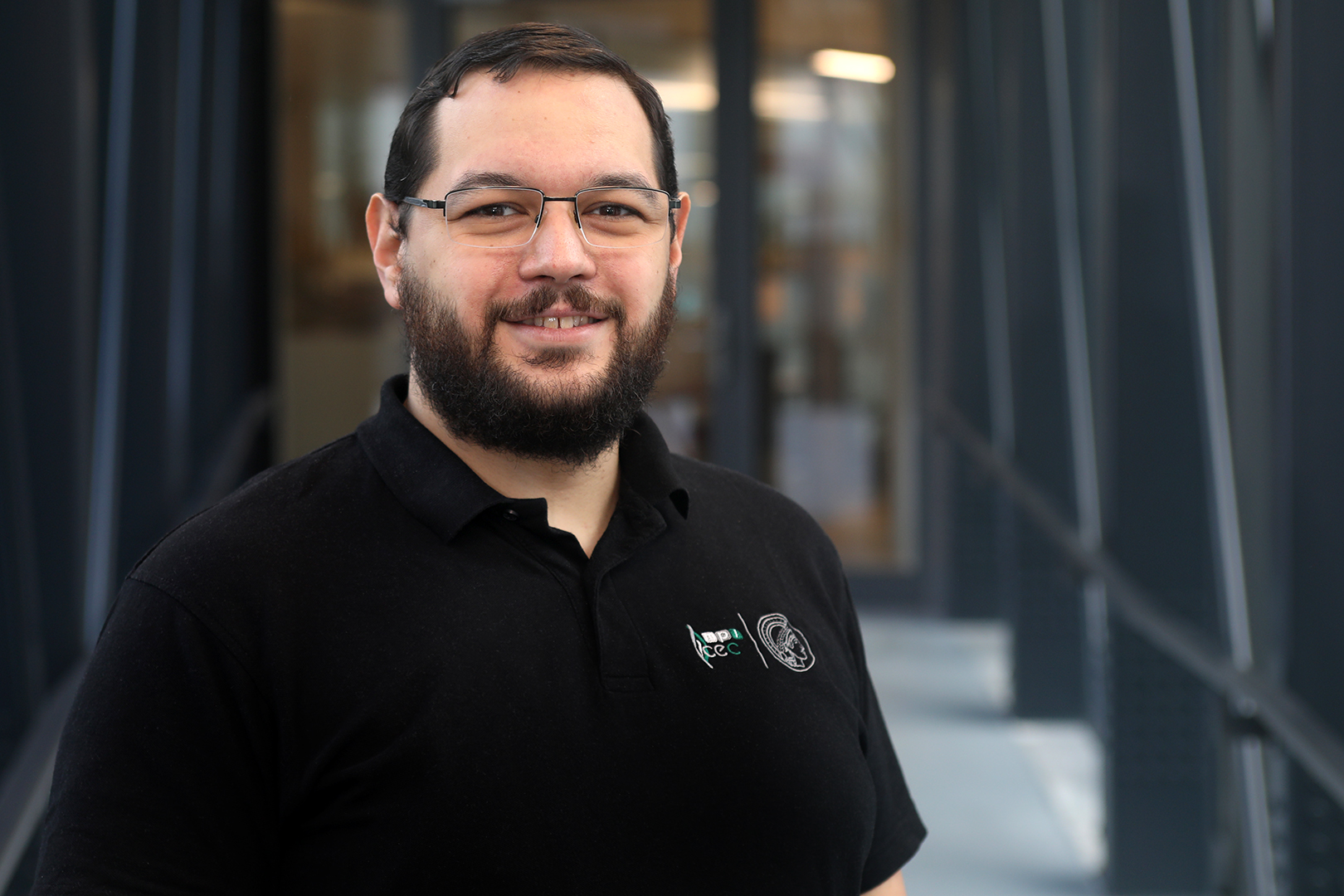
Dr. Walid Hetaba is a Group Leader in the Scientific Infrastructure department at the Max Planck Institute for Chemical Energy Conversion (MPI CEC), specializing in Electron Microscopy and X-ray Photoelectron Spectroscopy (XPS). He leads a research group focused on advanced materials characterization, particularly for catalytic systems. His academic background includes a Diplom in Technical Physics (Dipl.-Ing.) and a Dr.techn. from TU Wien (2011–2015). Prior to his current role, he held postdoctoral positions at TU Wien, Universität Bielefeld, and the Fritz Haber Institute of the Max Planck Society (2016–2020). Dr. Hetaba's research emphasizes the structural and electronic characterization of materials at micro- and nanoscales, linking material properties to catalytic function. His group develops methodologies for TEM/XPS analysis, including ChemiTEM—a TEM optimized for chemistry and materials science. Key research areas include catalyst design, nanomaterial synthesis, and surface science, with applications in energy storage and conversion. His group operates state-of-the-art equipment such as the Thermo Scientific Talos F200X TEM, Phenom Pharos SEM, and NAP-XPS systems. They collaborate extensively with other research groups to advance catalysis and materials science. Current projects include the UniSysCat cluster on bimetallic nanocatalysts and FAIRmat data standardization initiatives. Dr. Hetaba has published extensively in journals like Advanced Energy Materials , ACS Catalysis , and Chemistry-Methods , focusing on topics such as magnetic catalysts, nanomaterial functionalization, and surface reactivity. His work bridges fundamental material science with applied catalysis, driving innovations in energy technologies.
Felix Otto is a Director at the Max Planck Institute for Mathematics in the Sciences and an Honorary Professor for Analysis and Mathematical Modeling at the University of Leipzig. His research focuses on pattern formation, energy landscapes, and scaling laws, with contributions to stochastic homogenization, PDEs, and optimal transport. He has held academic positions at the University of California and the Hausdorff Center for Mathematics. Notable grants include projects on microstructure formation in thin coatings and stochastic homogenization. He has organized conferences such as the ICM satellite conference on Probability and Mathematical Physics. His work bridges pure and applied mathematics, with implications for materials science and fluid dynamics. Education: Diplom (1990), PhD (1993) from Bonn University. Postdoctoral roles at Bonn, Courant Institute, and CMU. Tenured faculty roles at UCSB (1998–2010) and Bonn (1999–2010). Research interests span stochastic PDEs, calculus of variations, and the mathematical theory of materials. Grants include BMBF and DFG projects on microstructure modeling and homogenization.
Benjamin Klusemann is Professor of Materials Mechanics at the Institute for Production Engineering and Systems, Leuphana University of Lüneburg. He holds leadership positions including Chairman of the School of Management and Technology (2024), Chairman of the Masterprogramme, and Chairman of the Graduate School (since 2017), demonstrating his significant academic standing and administrative responsibilities within the university. His research spans multiple engineering disciplines with a strong focus on mechanics, process simulation, and material modeling. Professor Klusemann specializes in continuum mechanics and the finite element method, applying computational approaches to solve complex problems in materials science and manufacturing engineering. His work bridges theoretical modeling with practical applications in advanced manufacturing processes, particularly in friction-based joining techniques and material behavior analysis. Professor Klusemann's extensive publication record (224 publications) reveals a consistent research trajectory focused on advanced manufacturing techniques, particularly friction-based joining processes, material modeling, and simulation. His recent work emphasizes laser shock peening applications, intermetallic compound evolution in solid-state joining, and the mechanical behavior of nanocrystalline materials. His research demonstrates a strong interdisciplinary approach combining materials science, mechanical engineering, and computational modeling to address industrial challenges in lightweight materials processing. His notable scientific achievements include: Professor O.C.Zienkiewicz Award NUMIFORM 2023 Auszeichnung für herausragende Leistungen in der Forschung (Recognition for outstanding research achievements) ESAFORM Scientific Prize Professor Klusemann actively contributes to academic governance and the international research community. He has organized and participated in numerous conferences including ESAFORM, GAMM meetings, and specialized workshops on computational mechanics. His leadership extends to research projects focused on aluminum processing, material flow analysis, and data-driven design of recycled materials, demonstrating his commitment to both fundamental research and practical applications in manufacturing technology.
Dr. Barak Ratzker is a researcher at the Max Planck Institute for Sustainable Materials , affiliated with the Microstructure Physics and Alloy Design department. His work focuses on the sustainable synthesis of materials, particularly through hydrogen-based reduction pathways and advanced sintering techniques like spark plasma sintering (SPS) and hot isostatic pressing (HIP). His research spans transparent ceramics, MAX/MXene phases, and alloy design. Key research areas include: Hydrogen reduction of oxides for sustainable metallurgy Pressure-assisted sintering (SPS/HIP) of transparent ceramics Microstructure engineering in refractory materials Development of MXene-based composites for electronics Thermodynamic and kinetic analysis of solid-state reactions His recent publications highlight trends in: Environmentally conscious processing of ferromanganese oxides High-pressure synthesis of MAX phases and MXenes Optimization of optical and mechanical properties in ceramics Dynamic deformation behavior under extreme conditions Biological material interactions (e.g., crusticul-chitin systems)