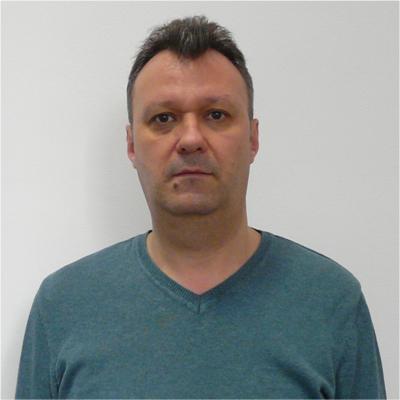
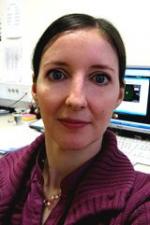
Dr. Florin Tudorache is affiliated with the Department of Exact and Natural Sciences at Alexandru Ioan Cuza University of Iași , focusing on ceramic materials and sensor technologies. His research spans: Ceramic material synthesis Electrical and magnetic property characterization Humidity and gas sensor development Nanostructured thin films and composites Doping techniques for material optimization Multiferroic and perovskite oxides Recent articles highlight his work in: Humidity sensor materials with doped tin sulfides and zinc oxides Multifunctional polymer-carbon composites Thermal and microstructural effects on sensor performance Magnetic textile engineering Spinel ferrite applications His team explores mixed ionic-electronic conductors and cost-effective fabrication methods, with expertise in spray coating, electrospinning, and X-ray diffraction.
Austin M. Garner is an Assistant Professor of Biology at Syracuse University’s College of Arts and Sciences , jointly affiliated with the Department of Biology and the Biochemistry Program . A functional morphologist and biomechanist, he explores how animals attach to and interact with complex surfaces, integrating life-science and physical-science approaches. Education Ph.D. Integrated Bioscience, University of Akron (2021) Dissertation: Examining the relationships between form, function, environment, and behavior in adhesive pad-bearing lizards B.S. Biology (magna cum laude), University of Akron (2016) Research Interests Garner’s interdisciplinary program centers on functional morphology, biomechanics, and bio-inspired design . Current focal systems include: Lizard adhesion : quantifying microscopic setal morphology, claw–substrate interactions, and performance trade-offs in geckos and anoles. Sea-urchin adhesion : elucidating tube-foot biomechanics under environmental stressors such as hyposalinity and temperature change. Bio-inspired engineering : translating organismal attachment mechanisms into design principles for synthetic adhesives and biologging tag attachment. His work combines high-resolution imaging, mechanical testing, field experiments, and computational analyses to reveal how form, function, and environment interact. Publication Trends Across 15 recent papers (2020-2025), Garner has advanced three major themes: (1) comparative adhesive morphology of lizards and its ecological correlates; (2) environmental modulation of sea-urchin adhesion and locomotion; and (3) cross-disciplinary biomechanical studies spanning fish fins, polar-bear paws, and bio-inspired devices. These contributions appear in leading journals such as Journal of Experimental Biology , Integrative and Comparative Biology , and Royal Society Open Science . Funding & Grants Co-PI, “Advancement of Attachment of Biologging Tags,” Office of Naval Research via University of Michigan (2023-2026) PI, “Habitat-level Variation in the Functional Morphology of the Purple Sea Urchin Adhesive System,” Syracuse University (2024) Service & Outreach Garner serves as seminar-series organizer and recruitment-committee member in the Department of Biology, co-leads the Form & Function Focus Group within the BioInspired Institute, and regularly reviews for NSF, DoD, and >10 international journals. He has delivered >30 invited talks, including Café Scientifique and K-12 outreach events, and has been featured in Newsweek , The Boston Globe , and phys.org for his expertise on animal behavior during solar eclipses. Laboratory & Team Garner directs an active research group at Syracuse University equipped for high-speed videography, force measurement, microscopy, and 3-D surface analysis. Graduate and undergraduate students collaborate on projects examining lizard and echinoderm biomechanics, with opportunities for fieldwork in Jamaica and coastal marine sites.
Dr. HE Binbin is an Associate Professor and doctoral supervisor at the Department of Mechanical and Energy Engineering, Southern University of Science and Technology (SUSTech). He earned his BEng in Theoretical and Applied Mechanics from Lanzhou University (2008), MSc in Solid Mechanics from Shanghai Jiao Tong University (2011), and PhD in Mechanical Engineering from the University of Hong Kong (2015). After completing post-doctoral training at HKU (2015–2019), he joined SUSTech in May 2019. Education & Training: PhD, Mechanical Engineering, University of Hong Kong (2011–2015) MSc, Solid Mechanics, Shanghai Jiao Tong University (2008–2011) BEng, Theoretical and Applied Mechanics, Lanzhou University (2004–2008) Post-doctoral Fellow, Mechanical Engineering, University of Hong Kong (2015–2019) Research Interests: Dr. He’s research spans physical metallurgy, alloy design, deformation mechanisms, and solid-state phase transformations. A current thrust is 3-D printable high-strength steels, bridging advanced processing with property optimization. Awards & Honors: TechConnect Global Innovation Award (2018) University of Hong Kong Research Output Prize (2018) Outstanding Doctoral Dissertation Award, HKU Mechanical Engineering (2015) Laboratory & Team: Dr. He leads a research group at SUSTech focused on next-generation metallic materials, exploiting nanoindentation, dislocation engineering, and additive manufacturing techniques to design superior steels.
Thiviya Selvanathan is an Assistant Professor at the Faculty of Medicine , University of British Columbia , and an Investigator at BC Children's Hospital Research Institute . As a Pediatric Neurologist at BC Children's Hospital , she specializes in neurodevelopmental outcomes in high-risk infants, particularly those with congenital heart disease and neonatal hypoxic-ischemic encephalopathy . Academic Affiliation: Department of Pediatrics, Division of Neurology Research Centres: BC Children's Hospital Research Institute, Centre for Brain Health Supervision: Mentors clinical residents, medical students, and graduate trainees Her research integrates advanced neuroimaging (MRI, MEG, PET) with clinical data to study how early-life brain injury , social determinants , and perinatal interventions affect long-term brain health. Key projects include the HIE Connectome Study , Adolescent HIE Study , and Heart-Brain Connection research. Recent publications focus on white matter injury in preterms, hemodynamic risk factors for cerebellar hemorrhage, and socioeconomic status modifiers in neurodevelopment. She leads studies funded by CIHR Project Grant (2025-2030) and BB&D Catalyst Grant (2025), with notable awards including CIHR Canada Graduate Scholarships (2020-2021, 2022-2023) and NBS Early Career Award (2025). Her team includes clinical trainees and research personnel working on neurodevelopmental disorders and visualizing brain health . She advocates for equitable pediatric care through research on social disparity impacts and neonatal pain management.
Dimitrios Chronopoulos is an Associate Professor in the Department of Mechanical Engineering at KU Leuven , Faculty of Engineering Technology. His research focuses on structural health monitoring, design optimization of composite and metamaterial structures, and wave propagation analysis for damage prognosis. Unit: Mecha(tro)nic System Dynamics (LMSD), Ghent and Aalst Campuses Research Affiliations: Leuven Centre for Affordable Sustainable Technology, LIM - KU Leuven Institute for Mobility His work integrates physics-informed machine learning and computational modeling to address challenges in predictive maintenance of smart composite systems, including aircraft and wind turbine components. Recent projects emphasize digital twins, Bayesian frameworks, and ultrasonic sensor networks for real-time damage assessment. Publications highlight trends in deep learning for SHM , topological phononic crystals , and multi-scale damage detection using hybrid models. He actively supervises students in advanced ultrasonic monitoring and predictive analytics.
Micky Lee is a Professor in the Department of Communication, Journalism & Media at the Chinese University of Hong Kong , and serves as the Associate Dean of Core Experience in the College of Arts and Sciences. They are also the Director of First-Year Writing and First-Year Seminar, and Program Director of Asian Studies. PhD from University of Oregon MPhil from City University of Hong Kong BSSC from Hong Kong Baptist University Their research focuses at the intersection of international communication , telecommunications and information studies , and feminist political economy . Current projects examine gendered/racialized media representations, finance-information-media dynamics, and critical media technologies in East Asia. Key article trends include feminist critiques of digital capitalism, media regulation in authoritarian contexts, financial crisis narratives, and gendered labor dynamics in media ecosystems. Publications span critical media studies, economic sociology, and communication theory. Lee teaches courses in Asian popular culture, visual aesthetics, and media economics. Their work emphasizes interdisciplinary approaches to understanding media's role in global capitalism and social justice.
Professor Santanu Misra is an Associate Professor in the Department of Earth Sciences at the Indian Institute of Technology Kanpur (IITK), where he has been serving since February 2019, having previously held positions as Assistant Professor (2015-2019). His academic journey includes significant international experience as Senior Scientist at GNS Science and Guest Lecturer at Victoria University of Wellington in New Zealand (2013-2015), and as Lecturer and Postdoctoral Research Scientist at ETH Zurich, Switzerland (2009-2012). Dr. Misra's research primarily focuses on understanding the mechanical response (rheology) of composite rock systems across brittle to ductile deformation regimes. His work bridges deformation and metamorphic processes to explain deep-crustal phenomena such as partial melting and melt migration. His research spans structural geology, tectonics, petrology, and geodynamics, with particular emphasis on strain localization mechanisms and deformation processes during lithospheric plate movements. He employs experimental rock deformation under elevated pressure-temperature conditions, field investigations, and analytical and numerical modeling as his primary research methodologies. Analysis of his recent publications reveals a consistent focus on rock deformation mechanisms, particularly examining how partial melting interacts with deformation in crustal rocks. His work spans multiple scales, from microstructural analysis of deformed rocks to large-scale tectonic implications. Key themes include the rheology of melting/crystallizing systems, fault zone processes, and the mechanics of layered rock deformation. His most recent work (2015) has increasingly focused on melt production and migration in metamorphic systems and carbonate deformation in thrust settings. Young Scientist Medal, Indian National Science Academy (INSA), India (2010) Professor N. N. Chatterjee Memorial Medal for important contribution in Geology (2007) Multiple Swiss National Fond Research Fellowships (2007-2012) CSIR Senior Research Fellowship (2005) West Bengal Government State Research Fellowships (2002-2004) Dr. Misra's research program demonstrates strong international collaboration, particularly with Swiss and New Zealand institutions. His work combines laboratory experimentation with field observations and theoretical modeling to address fundamental questions in crustal deformation. His teaching focuses on Structural Geology, Microstructure, Experimental Rock Deformation, Rock Physics, Rheology and Deformation Mechanisms, and Earth System Processes. His laboratory facilities at IIT Kanpur support high-pressure, high-temperature rock deformation experiments that complement his field-based research in the Himalayas and other tectonically active regions.
Christian Westheide is a Senior Lecturer in Finance at the University of Edinburgh, specializing in Accounting and Finance. His research focuses on market microstructure, corporate finance, and asset pricing, with a particular emphasis on fragmented equity markets, liquidity dynamics, and insider trading behaviors. University: University of Edinburgh Department: Accounting and Finance Research Interests : Westheide explores the mechanics of financial markets, including liquidity provision, competition between trading venues, and regulatory impacts on market structure. His work also examines insider trading patterns and their relationship with stock return skewness and volatility. Publications : Recent work analyzes market fragmentation effects (2023, 2024), designated market maker roles in call auctions (2020), and insider trading dynamics (2020). His studies bridge empirical finance and market design.
Jinbo Bai leads a research laboratory at Paris-Saclay Mechanics Laboratory, where he conducts cutting-edge research in nanotechnology and advanced materials. His laboratory focuses on nanomaterials synthesis, composite materials development, and energy-related applications, particularly involving carbon nanotubes and catalytic systems. Research interests include: Nanomaterials Synthesis : Controlled fabrication of nanostructures including carbon nanotubes, metal oxides, and hybrid materials Energy Materials : Hydrogen production catalysts, energy storage composites, and dielectric materials Composite Engineering : Polymer nanocomposites with enhanced electrical, mechanical and functional properties Surface & Interface Science : Modification of nanomaterial surfaces and interface engineering in composites Recent publications demonstrate a strong focus on catalytic systems for simultaneous hydrogen production and carbon nanotube synthesis, dielectric properties of polymer nanocomposites, and advanced characterization of nanomaterial interfaces. Computational modeling complements experimental work in materials design.
John Balk is a Professor in the Department of Chemical and Materials Engineering at the University of Kentucky , where he has served as Associate Dean for Research and Graduate Studies since 2018. His research focuses on the mechanical behavior of nanoporous metals , scandate cathodes , and high entropy alloys , using advanced techniques like transmission electron microscopy and Kelvin probe systems. Education: B.S. in Materials Science & Engineering, University of California, Berkeley (1995) B.S. in Mechanical Engineering, University of California, Berkeley (1995) M.S. and Ph.D. in Materials Science & Engineering, Johns Hopkins University (1997, 2000) Postdoctoral work on Thin Film Plasticity at Max Planck Institute for Metals Research (2000–2002) His research group investigates structure-property relationships in materials, particularly through projects involving dealloying , thermionic emission , and mechanical testing of nanoscale structures. Recent work includes collaborations with LBNL on high entropy alloy development and studies on radiation effects in nanoporous metals. Scientific Facilities: The group utilizes advanced equipment such as the iNano Nanoindenter , ORION magnetron sputtering system , and Kelvin probe systems for material synthesis and characterization. Students: Balk currently supervises seven Ph.D. students, including Alex Allamon, Huanhuan Bai, and Tibra Das Gupta, while former students like Dr. Azin Akbari and Dr. Julius Schoop have transitioned to academic and research roles.
Gérard Bernhart is a Professor at IMT Mines Albi (National School of Mines of Albi-Carmaux), where he is a member of the Composite Materials and Structures group (MSC). He serves as Director of Corporate and Alumni Relations at the institution and maintains active research and teaching responsibilities in the field of composite materials and superplastic forming. His research interests focus on composite process engineering, including thermo-compression and inflation forming using specialized equipment like the EDyCO pilot and lamp forming systems. He investigates multifunctional composite materials with mechanical, shielding, thermal, and electromagnetic properties, working with innovative fibers like basalt and carbon nanotube mats. His work extends to polymerization kinetics of thermosetting composites, recycling of composite materials, welding of thermoplastic composites, and superplastic forming of metal sheets. Professor Bernhart teaches courses in continuous media mechanics, elasticity, RdM, and behavior and modeling of composite materials across various training programs. His research output includes 174 scientific contributions spanning two decades, with recent publications demonstrating continued activity in composite materials science and engineering. His work shows strong connections between theoretical modeling, experimental validation, and industrial applications, particularly in aerospace and advanced manufacturing sectors. He contributes significantly to the academic community as a member of the International Advisory Board of the ICSAM conference series (International Conference on Superplasticity of Advanced Materials) and the International Board of the EuroSPF conference series (European Conference on Superplasticity).
Dr. Ablikim Bake is a Research Fellow at the Institute for Biomedicine and Glycomics, Griffith University (appointed 2024-present). His research focuses on biological physics, biomedical sciences, materials science, and nanotechnology, with specific expertise in topological materials, magnetic nanocomposites, and nanofabrication techniques. Research interests span condensed matter physics, thermoelectric materials, and quantum transport phenomena. Key themes include: Topological insulator design and characterization Magnetic property engineering in thin films and nanocomposites Nanoscale material fabrication for energy and sensing applications Surface and interface phenomena in quantum materials Recent publications demonstrate consistent focus on quantum materials engineering (2022-2025), with evolving applications in biomedicine. Current work includes glyco-nano-tool interactions with pathogens. Currently serves as Associate Supervisor for doctoral project: CRISPR-Dx and novel vaccination strategy as practical solutions for HIV pandemics in LMICs (Griffith University). Grant recipient: ANSTO Travel Support (2025) for Small Angle Neutron Scattering Study of glyco-nano-tools interaction with pathogens ($476) Member of Griffith University's Institute for Biomedicine and Glycomics Research Group, contributing to Sustainable Development Goals (SDG 7: Affordable Energy, SDG 3: Health/Well-being).
Prof. Markus Strobl is a Professor at the Paul Scherrer Institute (PSI) within the Laboratory for Neutron Scattering and Imaging , part of the Center for Neutron and Muon Sciences . His research focuses on advanced neutron-based characterization techniques, including neutron imaging, diffraction, and tomography, applied to materials science challenges in additive manufacturing, battery technology, and corrosion analysis. He leads efforts in developing novel experimental setups for in-situ studies of material behavior under extreme conditions. Key research areas include: Neutron dark-field imaging for nanostructure analysis Crystallographic texture manipulation in metals via additive manufacturing Operando studies of electrochemical systems (batteries, fuel cells) Characterization of microstructural evolution in laser powder bed fusion materials Recent work highlights the application of neutron techniques to study phase evolution in graphite electrodes, hydrogen transport in Ni-MH batteries, and corrosion mechanisms in concrete-reinforced steel. His group has pioneered advancements in neutron imaging instrumentation, including the FALCON diffractometer add-on and event-mode data acquisition systems. Scientific recognition includes the Energy Technology Division Graduate Student Award (2024). His lab actively collaborates on international projects like the HighNESS neutron source development at the European Spallation Source (ESS).
Dr. Darja Feizpour is a Researcher at the Institute of Metallic Materials and Technologies (IMT) in Slovenia, where she has ensured the smooth operation of the TEM Laboratory since September 2008. Her expertise spans electron microscopy techniques for characterizing metallic, polymeric, ceramic, and biological materials, with specialization in TEM, SEM, HRTEM, STEM, and analytical electron microscopy. Her educational background includes: 2006: Doctorate of Science in Materials from the University of Ljubljana, Faculty of Natural Sciences and Engineering (Dissertation: 'Synthesis of ceramics based on (K,Na)NbO3') 2000: University Graduate Engineer in Metallurgy and Materials from the same institution (Diploma thesis: 'Low-temperature sintering of PLZT thick layers') Dr. Feizpour's research encompasses electron microscopy applications across diverse materials including silicon, nanoparticles, steels, aluminum alloys, metal foams, polymers, and ceramics. Her work integrates synthesis of ferroelectric/piezoelectric materials (PLZT and KNN ceramics), phase equilibria studies using diffusion pairs, and comprehensive material characterization through thermal analysis, XRD, laser granulometry, and electron microscopy techniques. She has investigated properties such as sintering behavior, electrical characteristics, and microstructural evolution. Her publication record (2005-2009) demonstrates consistent focus on potassium sodium niobate (KNN) systems, covering crystal structure analysis, synthesis optimization via diffusion couples, doping effects, and advanced electron microscopy characterization. These works establish her as a specialist in lead-free piezoelectric ceramics research. Dr. Feizpour actively contributes to the microscopy community as a member of the Slovenian Society for Microscopy (since 2010) and serves as a reviewer for Materials and Technologies journal (since 2009). She maintains professional connections through TEM Laboratory operations, TEM Image Gallery curation, and platforms including LinkedIn and ResearchGate. No scientific awards or student advising information was documented in the source material.
Dr. Liuliu Han is a Researcher and Project Group Leader at the Max Planck Institute for Sustainable Materials, leading the Department of Microstructure Physics and Alloy Design. His work focuses on designing multifunctional high-entropy materials, advancing sustainable material design through artificial intelligence, and studying microstructure-mechanical property relationships in advanced alloys. He spearheads the 'De magnete - Designing Magnetism on the atomic scale' initiative, exploring novel magnetic materials with exceptional mechanical performance. His research integrates experimental techniques like atom probe tomography with computational methods for predictive material design. Key research areas include high-entropy alloy development, magnetism optimization, and thermodynamics-guided alloy discovery. Dr. Han’s team employs machine learning to enhance material sustainability, optimize microstructural features, and balance mechanical properties such as strength and ductility. His group also investigates nanostructured magnets, Widmanstätten precipitates, and thermal stability in high-performance materials. Dr. Han’s address is at the Max Planck Institute for Sustainable Materials in Düsseldorf, Germany. He actively publishes in top-tier journals and collaborates internationally. Contact details include liuliu.han@... and professional links to Google Scholar and LinkedIn.