
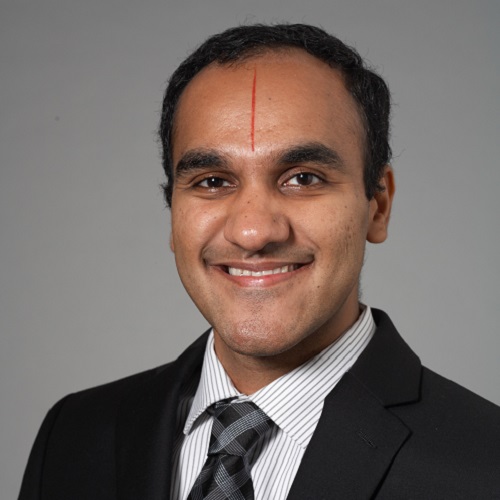
Welcome to the Energy Materials, Characterization, and Device Engineering Group page led by Assistant Professor Sudarshan Narayanan at the Indian Institute of Technology Kanpur. His research focuses on synergizing renewable energy generation and storage solutions through advanced materials engineering. Education: M.S. & Ph.D. in Materials Science, Carnegie Mellon University (2009-2014) B.Tech. in Engineering Physics, Indian Institute of Technology Madras (2005-2009) Research Areas: Engineering materials and interfaces for Energy Storage (solid-state batteries) Multi-layer spectrally-selective thin film coatings Building-integrated photovoltaics Advanced ex-situ, in-situ, and operando characterization techniques Microstructural, chemical, and electrochemical evolution analysis Applications in architectural glazings, automotive windshields, and optoelectronic devices Career Summary: A materials scientist with 10+ years of combined academic and industry research experience in thin film coatings, transparent conductors, and battery materials. He aims to create sustainable energy solutions by integrating advances in energy generation and storage technologies.
جستوجوی استاد و پژوهشگر
استاد راهنما، استاد دانشگاه یا پژوهشگر مناسب برای مسیر پژوهشیتان را پیدا کنید و با او ارتباط بگیرید.
نمایش ۱۶-۲۴ از ۲۴ استاد راهنما
اطلاعات این پروفایلها از صفحات عمومی دانشگاهها جمعآوری شده و ممکن است بهروز نباشد.

Deepoo Kumarمشاهده پروفایل
استادیار
Deepoo Kumar is an Assistant Professor in the Department of Metallurgical Engineering and Materials Science at the Indian Institute of Technology Bombay. His work bridges fundamental thermodynamics and industrial metallurgical processes, with strong affiliations to pyrometallurgy and materials processing. Education: B.Tech & M.Tech, Metallurgical Engineering and Materials Science, IIT Bombay (2013) M.S., Materials Science and Engineering, Carnegie Mellon University (2016) Ph.D., Materials Science and Engineering, Carnegie Mellon University (2018) His research interests include steelmaking and casting, refractory interactions with steel and slag, additive manufacturing, metal recycling, thermodynamics and kinetics of metallurgical processes, mass transport in pyrometallurgical systems, and inclusion characterization. His work emphasizes both experimental and modeling approaches to improve steel quality and process efficiency. The recent publications reflect a strong focus on kinetic modeling of ladle refining, MgO inclusion behavior, advanced microstructural analysis using plasma FIB, and innovative use of slags in nanostructure synthesis via the VLS mechanism. These works span journals such as Metallurgical and Materials Transactions B and Ceramics International , indicating expertise in both ferrous metallurgy and ceramic materials. Scientific Awards: No awards listed in the provided text. Regarding advising and grants, there is no explicit mention of students supervised or external funding secured in the available information. However, his active publication record since 2013 suggests ongoing research engagement and potential supervision of graduate students at IIT Bombay. There is no specific mention of laboratories or research teams led by Dr. Kumar in the provided text, though his research areas suggest involvement in high-temperature processing, inclusion analysis, and kinetic modeling facilities within the MEMS department.
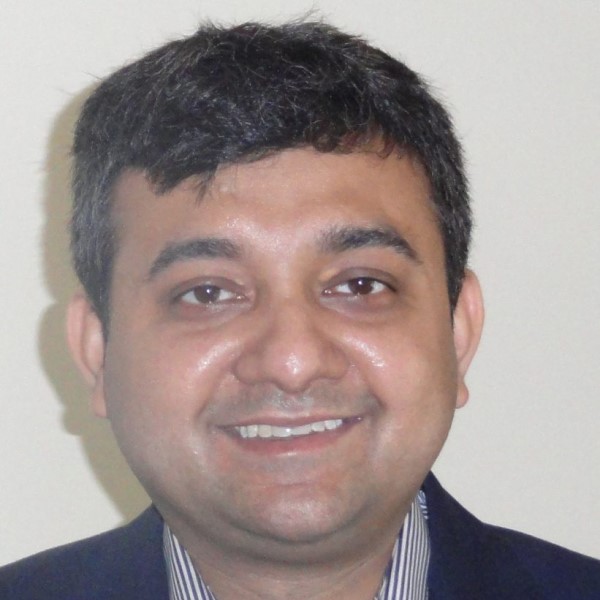
Saswata Bhattacharya is the Head (MS) & Professor in the Department of Materials Science and Metallurgical Engineering at the Indian Institute of Technology Hyderabad. He earned his Ph.D. from the Indian Institute of Science in Bengaluru and focuses on computational materials science and data-driven modeling. Education: Ph.D., Indian Institute of Science, Bengaluru Research Interests Phase-field modeling of microstructural evolution in alloys and oxides Phase transformations Micromechanical modeling Multiscale modeling AI/ML integration in materials science High Performance Computing (HPC) applications Materials Processing Office Address: Room MSME-402, MSME Block, Indian Institute of Technology Hyderabad, Kandi-502284, Sangareddy, Telangana, India.

- Solid Mechanics
- Non-linear deformation
- Plasticity
- +۸ مورد دیگر
Pritam Chakraborty is an Associate Professor in the Department of Aerospace Engineering at the Indian Institute of Technology Kanpur. His research focuses on solid mechanics, non-linear deformation, plasticity, crystal plasticity, fracture, fatigue, and creep, with applications in multi-scale modeling of material behavior. His research interests include: Meso-scale modeling of short fatigue crack growth, plasticity, damage and creep in metals Multi-scale method development to bridge between polycrystalline and engineering scales (connecting microstructure to property) Coupled deformation and phase transformation Dr. Chakraborty's work primarily applies computational mechanics approaches to understand material behavior across multiple scales. His research integrates crystal plasticity, finite element methods, and multi-scale techniques to address challenges in material failure and deformation. His educational background includes a Ph.D. in Mechanical Engineering from The Ohio State University (2011), an M.Tech. in Mechanical Engineering from IIT Kanpur (2004), and a B.E. in Mechanical Engineering from Jadavpur University (2002). Before joining IIT Kanpur, Dr. Chakraborty held positions at Idaho National Laboratory, Johns Hopkins University, The Ohio State University, and GE Global Research Center.

Sarang Ingoleمشاهده پروفایل
دانشیار
Dr. Sarang Ingole serves as an Associate Professor in the Department of Materials Science and Engineering at the Indian Institute of Technology Kanpur (IIT Kanpur), where he has held faculty positions since February 2010. He leads the Photovoltaic and Energy Storage Materials Research Group, focusing on sustainable energy solutions through advanced materials development. His academic credentials include a PhD from Arizona State University (2007) and a dual B.Tech/M.Tech degree from IIT Bombay (2002). Prior professional experience encompasses postdoctoral research at Purdue University and Los Alamos National Laboratory. Research interests center on photovoltaic materials (particularly CZTS and iron pyrite thin films), energy storage systems , nanomaterials assembly , and electrochemical synthesis techniques . His group investigates solution-based and vapor-phase processing methods to optimize material properties for solar energy conversion, with emphasis on defect control, interface engineering, and scalable manufacturing processes. Analysis of his publication record reveals consistent advancements in chalcogenide semiconductor technology, demonstrating expertise in sulfurization dynamics, band gap engineering, and nanostructure fabrication. His work bridges fundamental materials science with practical photovoltaic device implementation. Scientific recognition includes: Best Poster Award at the 4th International Conference on Emerging Electronics (2018) Mentorship encompasses current PhD candidate Neha Kumari and alumni PhDs Ravi P. Srivastava, Aditya Saxena, and Jitendra Kumar, alongside multiple M.Tech students. Research initiatives are funded by the Department of Science and Technology (DST) for iron chalcogenide thin films and Indo-German collaborative projects on earth-abundant solar cells. The Photovoltaic and Energy Storage Materials laboratory provides comprehensive capabilities for thin-film deposition, materials characterization, and device prototyping, supporting innovation in renewable energy technologies through interdisciplinary collaboration.

- Mechanical behaviour of materials
- Indentation
- Fatigue
- +۱۳ مورد دیگر
M.J.N.V. Prasad is a Professor in the Department of Metallurgical Engineering and Materials Science at the Indian Institute of Technology Bombay (IIT Bombay), where he has been serving since October 2012. He currently holds the Jindal Stainless Chair Professor position (May 2024–present) and has progressed from Assistant Professor (2012–2018) to Associate Professor (2018–2023) before attaining full Professorship in August 2023. Education: Ph.D. in Materials Engineering, Indian Institute of Science, Bangalore (2010) M.E. in Metallurgy, Indian Institute of Science, Bangalore (2004) B.Tech. in Metallurgical Engineering, National Institute of Technology, Warangal (2002) Diploma in Metallurgical Engineering, MRAGR Govt. Polytechnic, Vizianagaram (1997) His research focuses on the mechanical behaviour of materials , including indentation, fatigue, creep, and superplasticity. He also investigates thermo-mechanical processing of ferrous and non-ferrous alloys, electrodeposition and alloy development , material joining via diffusion bonding, severe plastic deformation techniques like HPT and FSP, and protective coatings with emphasis on oxidation behaviour. His work bridges fundamental material science with industrial applications, particularly in aerospace and high-temperature environments. The analysis of his recent publications reveals a strong emphasis on surface engineering, alloy development, and advanced joining techniques. His research integrates microstructural characterization with mechanical performance evaluation, particularly in high-performance alloys and steels. Key themes include the development of wear-resistant coatings, optimization of low-density steels, and understanding interfacial phenomena in dissimilar material joints. Scientific Awards: Excellence in Teaching (2023), IIT Bombay JSPS Invitational Fellowship (FY2022), Japan Society for the Promotion of Science Excellence in Teaching (2017), IIT Bombay Excellence in Teaching (2015), IIT Bombay INAE-Young Engineer Award (2013), Indian National Academy of Engineering Prof. Prasad has been actively involved in research funding and project leadership. He has secured grants from SERB-GE under IMPRINT-2c, Tata Steel, and DMRL, supporting projects on high-temperature Ni-based alloys, Zn-Mn nanocomposite coatings, and powder metallurgy superalloys for aero engines. While no students are listed, his projects suggest mentorship of researchers. His post-doctoral experience was at Brown University, USA (2011–2012). He is associated with advanced research facilities at IIT Bombay, though specific lab names are not mentioned. His collaborations span industrial partners and international institutions, including Nagoya University in Japan under the JSPS fellowship.

A. Durgaمشاهده پروفایل
استادیار
Dr. A. Durga is an Assistant Professor in the Department of Metallurgical Engineering and Materials Science at the Indian Institute of Technology Bombay (IIT Bombay), where she has been serving since December 2021. She holds a Ph.D. in Materials Engineering from KU Leuven, Belgium, and a B.Tech. from IIT Madras in Metallurgical and Materials Engineering. Education: Ph.D. in Materials Engineering, KU Leuven, Belgium (2015) B.Tech. in Metallurgical and Materials Engineering, IIT Madras, India (2009) Her research lies at the intersection of computational materials science and advanced manufacturing. She specializes in computational thermodynamics , additive manufacturing , microstructure evolution , and phase transformations . Her work employs phase-field modeling and thermodynamic optimization to understand and predict material behavior during processing. The recent publications reflect a strong focus on predictive modeling in alloy systems, particularly in additively manufactured steels , solder joints , and superalloys . Her research integrates digital tools to accelerate alloy design and microstructure control, contributing to next-generation materials development. Scientific Contributions: Published in high-impact journals such as Scripta Materialia , Acta Materialia , and JOM Invited speaker at international seminars including the MateriAlZ Seminar Series (USA) Active Google Scholar profile with significant citations Dr. Durga has prior industrial and academic research experience at GE Research, Bangalore, and KTH Royal Institute of Technology, Sweden. She advises students in computational and experimental materials science, though specific advisees are not listed. Her work is supported by institutional and potentially external research funding, though specific grants are not detailed. She is part of the active research group within the MEMS department at IIT Bombay, contributing to the department’s vision in advanced materials development and industrial collaboration.
Dr Pinaki Prasad Bhattacharjee is a full-time Professor in the Department of Materials Science and Engineering at Indian Institute of Technology Hyderabad (IIT-H), India. He has been on the faculty since 2010 and previously served as Scientist at CSIR-National Metallurgical Laboratory, Jamshedpur, and as JSPS Post-doctoral Fellow at Osaka & Kyoto Universities, Japan. Education: Ph.D. – Materials and Metallurgical Engineering, IIT Kanpur, India M.Tech. – Materials and Metallurgical Engineering, IIT Kanpur, India B.Tech. – Metallurgical Engineering, National Institute of Technology, Durgapur, India Research Interests: His research centres on crystallographic texture evolution , thermo-mechanical processing , and structure–property relationships in advanced metallic materials. He investigates high-entropy alloys , severe plastic deformation routes to bulk ultrafine/nanostructured materials, additive manufacturing , catalysis & energy materials , and employs high-resolution EBSD and TEM for detailed microstructural characterisation. Publication Trends: Bhattacharjee’s recent publications (2015-2019) demonstrate a strong focus on high-entropy alloys —especially AlCoCrFeNi₂.₁ eutectic and CoCrFeMnNi FCC systems—processed via cryo-rolling , warm deformation , and strain-path controlled routes . Studies on nickel-base superalloys , porous copper , and duplex steels complement his alloy portfolio, consistently addressing microstructure–texture–mechanical property correlations. Scientific Awards & Recognition: Young Scientist Award, Materials Research Society of India (MRSI) Kolkata Chapter, 2009 JSPS Post-doctoral Fellowship, Japan Society for the Promotion of Science, 2007-2009 Top-25 Most Downloaded Article, Journal of Alloys and Compounds , 2015 Regular reviewer for Metallurgical and Materials Transactions A , Journal of Materials Science , Materials Science and Engineering A , and others. Research Supervision & Funding: Dr Bhattacharjee currently mentors two PhD scholars (Jagga Rao Gatti, Mohammed Zaid Ahmed) and five M.Tech students . He has secured ₹24 lakh from the Department of Science & Technology (DST) for a three-year project on continuous recrystallisation in ultrafine-grained aluminium alloys and an additional ₹3.87 lakh DST-JSPS Indo-Japan project on nanostructured Al-Mg-Sc/Zr alloys. Laboratory & Facilities: He heads research activities within the Materials Science and Metallurgical Engineering block at IIT Hyderabad, leveraging facilities for high-resolution EBSD , TEM , severe plastic deformation (ARB, HPT), and thermo-mechanical processing to advance next-generation structural and functional materials.

Nilesh Prakash Gurao is a Professor in the Department of Materials Science and Engineering at the Indian Institute of Technology Kanpur. He is based in office FB-408 and his laboratory work is conducted at the Electroceramics Laboratory in 109 Western Labs. His academic journey includes a PhD from the Indian Institute of Science, Bangalore (2010) and a BE from Visvesvaraya National Institute of Technology, Nagpur (2005). Dr. Gurao's research focuses on crystallographic texture, thermo-mechanical processing, and mechanical behavior of materials. His specific interests span length and time scale effects in plasticity, in-situ deformation studies, micro-Laue diffraction using synchrotron radiation, and crystal plasticity simulations. His work bridges experimental characterization with computational modeling to understand fundamental deformation mechanisms in metallic materials. His publication record shows a consistent research trajectory focused on texture-property relationships in various metallic systems including stainless steels, titanium, aluminum alloys, and high entropy alloys. His recent work demonstrates expertise in advanced characterization techniques and statistical analysis of microstructural features. INSA Medal for Young Scientist 2015 Young Metallurgist of the Year 2015 from Ministry of Steels, GOI INSA-DFG Bi-lateral exchange fellowship 2015 Teaching Excellence Certificate from Director IIT Kanpur Dr. Gurao teaches courses on Mechanical Behaviour of Materials and Crystallographic Texture and Microstructural Engineering, for which he has received special recognition from the Director of IIT Kanpur. His laboratory work at the Electroceramics Laboratory supports both his research and teaching activities.