Shourya Dutta Gupta is an Associate Professor in the Department of Materials Science and Metallurgical Engineering at Indian Institute of Technology Hyderabad. His research focuses on plasmonics, nanophotonics, biosensing, and biomedical devices , leveraging nanofabrication and multiscale modeling. He leads the Nano-Optics & Devices Lab, which explores nano-scale optical phenomena for applications in disease diagnostics and environmental remediation. Education: Ph.D. from Swiss Federal Institute of Technology Lausanne (EPFL), Switzerland. Research Highlights: He investigates alloy plasmonics, SERS-based biosensors, and 2D material integrated metasurfaces, with recent work on phase separation in Ag-Cu thin films and spin angular momentum enhancement. Current projects include developing in-situ optical spectroscopic techniques and low-cost SERS substrates. Grants: Funded by IIT Hyderabad, SERB, DST-Nanomission, and JICA. Collaborations include Dr. Subhradeep Chatterjee (MSME, IITH) and Dr. Sairam Malladi (MSME, IITH). Lab Facilities: MSME-111 (Optical spectroscopy), MSME-410 (Chemical synthesis), MSME-111 and MSME 412 (Thin film deposition).
Virkeshwar Kumar is an Assistant Professor in the Department of Mechanical Engineering at the Indian Institute of Technology Kanpur. His research focuses on experimental fluid dynamics, heat transfer, and phase change phenomena in manufacturing processes. His educational background includes: PhD in Mechanical Engineering from Indian Institute of Technology Bombay (2020) B.Tech in Manufacturing Engineering from National Institute of Foundry and Forge Technology, Ranchi (2014) Dr. Kumar's research interests span a wide range of topics in thermal-fluid sciences and manufacturing. His work primarily investigates solidification, melting, casting, welding, and other phase change processes with emphasis on transport phenomena, interfacial interactions, and fluid dynamics. He has made significant contributions to understanding evaporative crystallization, boiling phenomena, and natural convection during solidification processes. His experimental approach combines advanced visualization techniques with quantitative measurements to unravel complex thermal-fluid phenomena in manufacturing contexts. His publication record demonstrates a strong focus on phase change phenomena, particularly in the areas of solidification, evaporation, and crystallization. His recent work has explored evaporative crystallization of saline droplets, convection-induced bridging during alloy solidification, and evaporation-based detection methods for milk adulteration. His research bridges fundamental thermal-fluid sciences with practical applications in manufacturing and materials processing. Dr. Kumar has received several prestigious awards and fellowships: Excellence in Ph.D. Research Award for 2018-2020 from IIT Bombay C V Raman Post-Doc Fellowship from IISc Bangalore (2020) 2nd Prize in image contest at Mechanical Department Annual Research Student Symposium, IISc Bangalore (2021) Ph.D. Annual Progress Seminar Award from Department of Mechanical Engineering, IIT Bombay (2017-18) International Travel Support grant to attend ICASP-5 & CSSCR-5 conference at Salzburg, Austria (2019) Dr. Kumar has supervised multiple research students and has been involved in several collaborative research projects. His work on evaporation-based detection of milk adulterants received significant media coverage from major outlets including The Hindu, Indian Express, and Times of India. His research on double-diffusive layers during solidification was featured as a journal article with AIP media coverage. He maintains active research in the Manufacturing Science Lab at IIT Kanpur, where he conducts experimental investigations of thermal-fluid phenomena using advanced visualization and measurement techniques.
Pritam Chakraborty is an Associate Professor in the Department of Aerospace Engineering at the Indian Institute of Technology Kanpur. His research focuses on solid mechanics, non-linear deformation, plasticity, crystal plasticity, fracture, fatigue, and creep, with applications in multi-scale modeling of material behavior. His research interests include: Meso-scale modeling of short fatigue crack growth, plasticity, damage and creep in metals Multi-scale method development to bridge between polycrystalline and engineering scales (connecting microstructure to property) Coupled deformation and phase transformation Dr. Chakraborty's work primarily applies computational mechanics approaches to understand material behavior across multiple scales. His research integrates crystal plasticity, finite element methods, and multi-scale techniques to address challenges in material failure and deformation. His educational background includes a Ph.D. in Mechanical Engineering from The Ohio State University (2011), an M.Tech. in Mechanical Engineering from IIT Kanpur (2004), and a B.E. in Mechanical Engineering from Jadavpur University (2002). Before joining IIT Kanpur, Dr. Chakraborty held positions at Idaho National Laboratory, Johns Hopkins University, The Ohio State University, and GE Global Research Center.
Professor Krishanu Biswas is a faculty member in the Department of Materials Science & Engineering at the Indian Institute of Technology Kanpur. His research focuses on understanding phase transformations in nanoscale materials and developing advanced energy materials for practical applications. His educational background includes: PhD in Metallurgy from Indian Institute of Science, Bangalore ME in Metallurgy from Indian Institute of Science, Bangalore BE in Metallurgy from National Institute of Technology, Durgapur Professor Biswas's research interests center on the phase transformation of nanoscale materials prepared through various routes including solidification, mechanical alloying, chemical synthesis, and severe plastic deformation. His work also explores energy materials such as catalysts and graphene to develop advanced materials with potential industrial applications. His research spans multiple disciplines including materials science, nanotechnology, and energy systems, with a strong emphasis on understanding fundamental material properties at the nanoscale. His recent publications demonstrate a strong focus on advanced materials processing techniques and characterization. The research spans ceramic composites, metallic alloys, and semiconductor materials, with applications in biomedical engineering, energy systems, and electronic devices. His work shows consistent innovation in materials synthesis and processing methods across multiple sub-disciplines of materials science. His notable awards and recognitions include: Young Scientist Medal by Indian National Science Academy (INSA), 2010 Young Engineer Award by Institution of Engineers India (IEI), 2011 BOYSCAST fellowship by Department of Science and Technology, Government of India, 2011 Young Metallurgist of the Year, Ministry of Steel, Government of India, 2008 Recipient of The Shri Ram Arora Award for Materials Science and Engineering by The Minerals, Metals and Materials Society (TMS), USA, 2006 Professor Biswas leads an active research group focused on materials science and engineering. His laboratory work involves advanced characterization techniques and novel processing methods for developing next-generation materials. Through his research, he has secured multiple grants from national funding agencies to support his work in nanomaterials and energy applications, contributing significantly to India's materials research infrastructure. His research group utilizes state-of-the-art facilities at IIT Kanpur for materials synthesis, characterization, and testing, with particular expertise in electron microscopy and advanced thermal processing techniques for developing novel materials with tailored properties.
Professor Arvind Kumar is a distinguished faculty member in the Department of Mechanical Engineering at the Indian Institute of Technology Kanpur. His research focuses on additive manufacturing technologies, heat transfer and CFD modeling, manufacturing process modeling, solidification, thermal storage technologies, and laser/plasma surface coating technologies. Professor Kumar earned his PhD and M.Sc (Engg) from the Indian Institute of Science Bangalore in 2008 and 2003 respectively, and completed his B.Tech from NIFFT, Ranchi in 2001. His academic journey has established him as a leading researcher in advanced manufacturing processes. His research interests span metal additive manufacturing (including DfAM and AM process development), heat transfer and computational fluid dynamics, multiphysics and multiscale modeling of manufacturing processes, machine learning applications in manufacturing, droplet-surface interactions, and thermal energy storage systems. His work bridges the gap between theoretical modeling and practical industrial applications. Professor Kumar's publication record shows a strong focus on laser-based additive manufacturing, particularly with titanium and aluminum alloys. His research examines thermal modeling, solidification phenomena, defect formation, and process optimization. Recent work (2023-2024) has concentrated on high-fidelity modeling of laser-material interactions, lattice structure performance, and thermal management in additive manufacturing processes. H.A.L. Chair Professor Position, IIT Kanpur (2024-2027) Best Poster Award, 7th International Conference on Solidification Science and Processing (2018) Best Research Paper Award, 12th IIR Conference on Phase Change Material (2018) PK Kelkar Young Faculty Research Fellowship (2018-2021) Marie Curie Fellowship, University of Southampton, UK (2011-12) Professor Kumar leads multiple research projects funded by CSIR, SERB, ISRO, and EU-Indo collaborations. His research group operates the Manufacturing Science Lab in the Northern Laboratories at IIT Kanpur, focusing on experimental and computational analysis of advanced manufacturing processes. Current projects include additive manufacturing of aerospace components, development of thermal models for laser powder bed fusion, and innovative thermal energy storage systems.
Dr. Sarang Ingole serves as an Associate Professor in the Department of Materials Science and Engineering at the Indian Institute of Technology Kanpur (IIT Kanpur), where he has held faculty positions since February 2010. He leads the Photovoltaic and Energy Storage Materials Research Group, focusing on sustainable energy solutions through advanced materials development. His academic credentials include a PhD from Arizona State University (2007) and a dual B.Tech/M.Tech degree from IIT Bombay (2002). Prior professional experience encompasses postdoctoral research at Purdue University and Los Alamos National Laboratory. Research interests center on photovoltaic materials (particularly CZTS and iron pyrite thin films), energy storage systems , nanomaterials assembly , and electrochemical synthesis techniques . His group investigates solution-based and vapor-phase processing methods to optimize material properties for solar energy conversion, with emphasis on defect control, interface engineering, and scalable manufacturing processes. Analysis of his publication record reveals consistent advancements in chalcogenide semiconductor technology, demonstrating expertise in sulfurization dynamics, band gap engineering, and nanostructure fabrication. His work bridges fundamental materials science with practical photovoltaic device implementation. Scientific recognition includes: Best Poster Award at the 4th International Conference on Emerging Electronics (2018) Mentorship encompasses current PhD candidate Neha Kumari and alumni PhDs Ravi P. Srivastava, Aditya Saxena, and Jitendra Kumar, alongside multiple M.Tech students. Research initiatives are funded by the Department of Science and Technology (DST) for iron chalcogenide thin films and Indo-German collaborative projects on earth-abundant solar cells. The Photovoltaic and Energy Storage Materials laboratory provides comprehensive capabilities for thin-film deposition, materials characterization, and device prototyping, supporting innovation in renewable energy technologies through interdisciplinary collaboration.
M.J.N.V. Prasad is a Professor in the Department of Metallurgical Engineering and Materials Science at the Indian Institute of Technology Bombay (IIT Bombay), where he has been serving since October 2012. He currently holds the Jindal Stainless Chair Professor position (May 2024–present) and has progressed from Assistant Professor (2012–2018) to Associate Professor (2018–2023) before attaining full Professorship in August 2023. Education: Ph.D. in Materials Engineering, Indian Institute of Science, Bangalore (2010) M.E. in Metallurgy, Indian Institute of Science, Bangalore (2004) B.Tech. in Metallurgical Engineering, National Institute of Technology, Warangal (2002) Diploma in Metallurgical Engineering, MRAGR Govt. Polytechnic, Vizianagaram (1997) His research focuses on the mechanical behaviour of materials , including indentation, fatigue, creep, and superplasticity. He also investigates thermo-mechanical processing of ferrous and non-ferrous alloys, electrodeposition and alloy development , material joining via diffusion bonding, severe plastic deformation techniques like HPT and FSP, and protective coatings with emphasis on oxidation behaviour. His work bridges fundamental material science with industrial applications, particularly in aerospace and high-temperature environments. The analysis of his recent publications reveals a strong emphasis on surface engineering, alloy development, and advanced joining techniques. His research integrates microstructural characterization with mechanical performance evaluation, particularly in high-performance alloys and steels. Key themes include the development of wear-resistant coatings, optimization of low-density steels, and understanding interfacial phenomena in dissimilar material joints. Scientific Awards: Excellence in Teaching (2023), IIT Bombay JSPS Invitational Fellowship (FY2022), Japan Society for the Promotion of Science Excellence in Teaching (2017), IIT Bombay Excellence in Teaching (2015), IIT Bombay INAE-Young Engineer Award (2013), Indian National Academy of Engineering Prof. Prasad has been actively involved in research funding and project leadership. He has secured grants from SERB-GE under IMPRINT-2c, Tata Steel, and DMRL, supporting projects on high-temperature Ni-based alloys, Zn-Mn nanocomposite coatings, and powder metallurgy superalloys for aero engines. While no students are listed, his projects suggest mentorship of researchers. His post-doctoral experience was at Brown University, USA (2011–2012). He is associated with advanced research facilities at IIT Bombay, though specific lab names are not mentioned. His collaborations span industrial partners and international institutions, including Nagoya University in Japan under the JSPS fellowship.
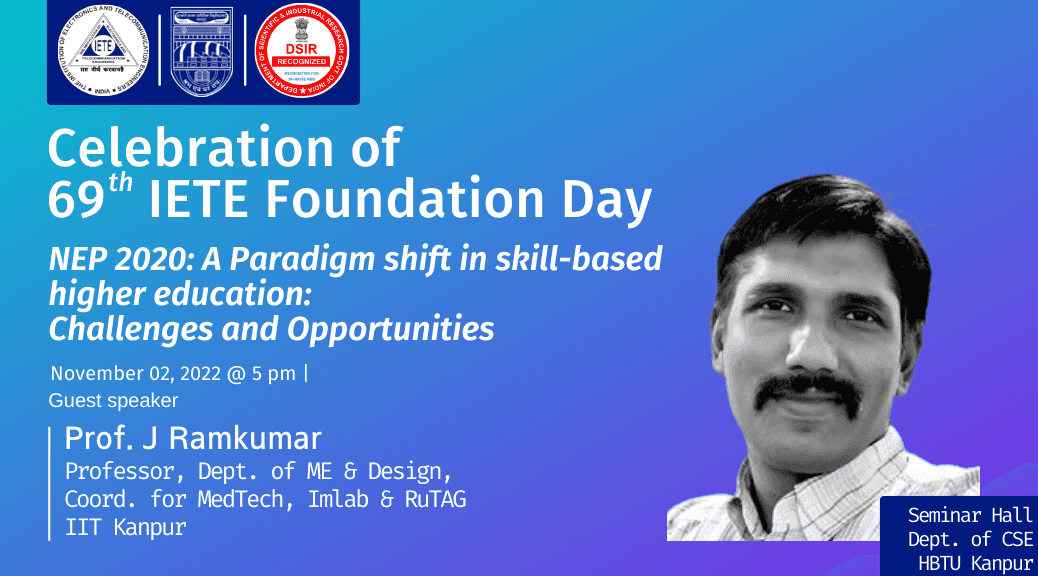
Prof. Janakarajan Ramkumar holds the prestigious Satish Chandra Agarwal Chair Professor position at the Indian Institute of Technology Kanpur, where he has been actively contributing since 2003. He serves as Chairman of the Senate Post-Graduate Committee (SPGC) and Security Advisory & Executive Committee (SAEC), while also coordinating several key initiatives including MedTech Lab, Imagineering Lab, and RuTAG at IIT Kanpur. His leadership extends to chairing the AICTE and IITK Sponsored Winter Internship Program for J&K students. With expertise spanning micro/nano machining, manufacturing engineering, and assistive technologies, Prof. Ramkumar's research focuses on precision machining processes for defense systems including components for Man Portable Anti-Tank Guided Missiles (MPATGM), UAV development, and aerospace applications. His work in frugal innovation has led to impactful solutions for locomotive disabilities, Agritech, and medical devices. During the pandemic, he developed widely adopted innovations including SWASA masks and Sanjeevani (Oxygen Concentrator). Prof. Ramkumar's publications demonstrate a strong focus on advanced manufacturing techniques, with recent work exploring incremental sheet forming, wire-electrochemical machining, composite materials, surface engineering, and the application of AI in manufacturing processes. His research bridges traditional manufacturing with cutting-edge technologies like additive manufacturing, machine learning, and metamaterials. His numerous awards reflect exceptional contributions to the field, including the Late GK Dubey Memorial Lifetime Achievement Award, Fellow of INAE, Satish Chandra Agarwal Chair Professorship, and multiple national awards recognizing his teaching excellence and research impact. His work has been recognized by prestigious institutions including IEEE, IETE, INAE, and various engineering academies. As an educator, Prof. Ramkumar has created eight highly successful MOOCs courses with over 48 lakhs views, and has conducted more than 100 workshops in Design Thinking to promote innovation among students, scholars, and industry professionals. He has established several key facilities at IIT Kanpur including the Imagineering Laboratory, Tinkering Lab Maker's space, MedTech IIT Kanpur, and RuTAG IIT Kanpur, creating an ecosystem that supports innovation across multiple disciplines.
Dr. A. Durga is an Assistant Professor in the Department of Metallurgical Engineering and Materials Science at the Indian Institute of Technology Bombay (IIT Bombay), where she has been serving since December 2021. She holds a Ph.D. in Materials Engineering from KU Leuven, Belgium, and a B.Tech. from IIT Madras in Metallurgical and Materials Engineering. Education: Ph.D. in Materials Engineering, KU Leuven, Belgium (2015) B.Tech. in Metallurgical and Materials Engineering, IIT Madras, India (2009) Her research lies at the intersection of computational materials science and advanced manufacturing. She specializes in computational thermodynamics , additive manufacturing , microstructure evolution , and phase transformations . Her work employs phase-field modeling and thermodynamic optimization to understand and predict material behavior during processing. The recent publications reflect a strong focus on predictive modeling in alloy systems, particularly in additively manufactured steels , solder joints , and superalloys . Her research integrates digital tools to accelerate alloy design and microstructure control, contributing to next-generation materials development. Scientific Contributions: Published in high-impact journals such as Scripta Materialia , Acta Materialia , and JOM Invited speaker at international seminars including the MateriAlZ Seminar Series (USA) Active Google Scholar profile with significant citations Dr. Durga has prior industrial and academic research experience at GE Research, Bangalore, and KTH Royal Institute of Technology, Sweden. She advises students in computational and experimental materials science, though specific advisees are not listed. Her work is supported by institutional and potentially external research funding, though specific grants are not detailed. She is part of the active research group within the MEMS department at IIT Bombay, contributing to the department’s vision in advanced materials development and industrial collaboration.
Dr Pinaki Prasad Bhattacharjee is a full-time Professor in the Department of Materials Science and Engineering at Indian Institute of Technology Hyderabad (IIT-H), India. He has been on the faculty since 2010 and previously served as Scientist at CSIR-National Metallurgical Laboratory, Jamshedpur, and as JSPS Post-doctoral Fellow at Osaka & Kyoto Universities, Japan. Education: Ph.D. – Materials and Metallurgical Engineering, IIT Kanpur, India M.Tech. – Materials and Metallurgical Engineering, IIT Kanpur, India B.Tech. – Metallurgical Engineering, National Institute of Technology, Durgapur, India Research Interests: His research centres on crystallographic texture evolution , thermo-mechanical processing , and structure–property relationships in advanced metallic materials. He investigates high-entropy alloys , severe plastic deformation routes to bulk ultrafine/nanostructured materials, additive manufacturing , catalysis & energy materials , and employs high-resolution EBSD and TEM for detailed microstructural characterisation. Publication Trends: Bhattacharjee’s recent publications (2015-2019) demonstrate a strong focus on high-entropy alloys —especially AlCoCrFeNi₂.₁ eutectic and CoCrFeMnNi FCC systems—processed via cryo-rolling , warm deformation , and strain-path controlled routes . Studies on nickel-base superalloys , porous copper , and duplex steels complement his alloy portfolio, consistently addressing microstructure–texture–mechanical property correlations. Scientific Awards & Recognition: Young Scientist Award, Materials Research Society of India (MRSI) Kolkata Chapter, 2009 JSPS Post-doctoral Fellowship, Japan Society for the Promotion of Science, 2007-2009 Top-25 Most Downloaded Article, Journal of Alloys and Compounds , 2015 Regular reviewer for Metallurgical and Materials Transactions A , Journal of Materials Science , Materials Science and Engineering A , and others. Research Supervision & Funding: Dr Bhattacharjee currently mentors two PhD scholars (Jagga Rao Gatti, Mohammed Zaid Ahmed) and five M.Tech students . He has secured ₹24 lakh from the Department of Science & Technology (DST) for a three-year project on continuous recrystallisation in ultrafine-grained aluminium alloys and an additional ₹3.87 lakh DST-JSPS Indo-Japan project on nanostructured Al-Mg-Sc/Zr alloys. Laboratory & Facilities: He heads research activities within the Materials Science and Metallurgical Engineering block at IIT Hyderabad, leveraging facilities for high-resolution EBSD , TEM , severe plastic deformation (ARB, HPT), and thermo-mechanical processing to advance next-generation structural and functional materials.
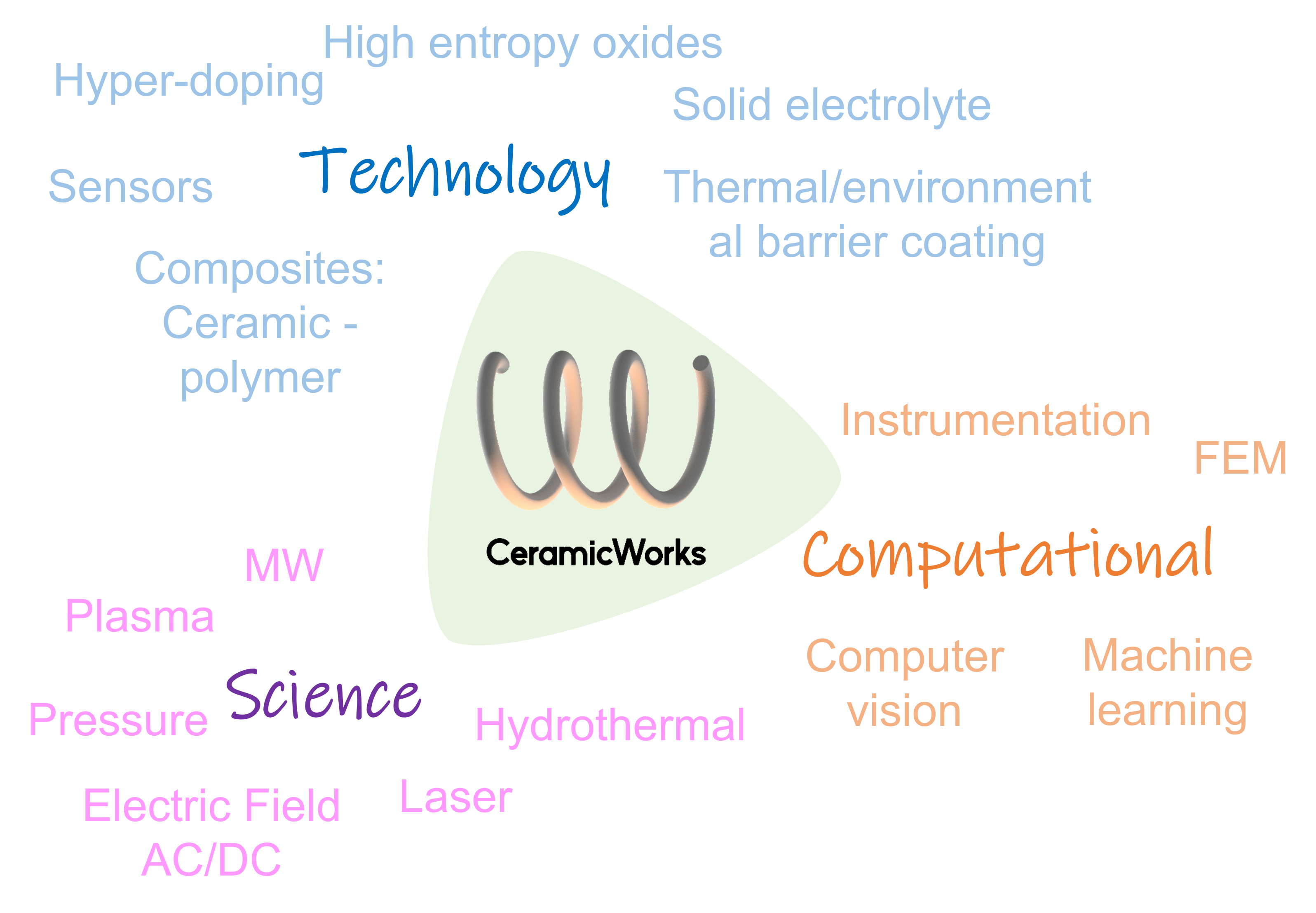
Shikhar Krishn Jha is a faculty member at the Department of Materials Science & Engineering, Indian Institute of Technology Kanpur (IITK) . He leads the CeramicWorks Lab, focusing on interdisciplinary research at the intersection of ceramics, composites, field-assisted processing, and machine learning. His educational qualifications include: Ph.D. from CU Boulder (2015) M.Tech. from IISc Bangalore (2011) B.Tech. from IIEST Shibpur (2009) Jha's research spans advanced materials processing , composite design , and machine learning applications in material science . His lab explores technologies like oxygen concentrators , thermal barrier coatings , and bio-inspired armor systems , leveraging scientific foundations in ceramics and composites to address societal challenges. Key research trends include: Integration of field-assisted sintering techniques (e.g., flash sintering) to reduce energy consumption and enhance material properties. Application of machine learning for microstructure analysis, grain boundary detection, and phase identification. Development of energy storage devices , gas sensors , and bio-ceramics through interdisciplinary collaboration. The lab collaborates with researchers like Prof. Amitabha Bandyopadhyay (BSBE, IITK) and Prof. Suman Saurabh (IME, IITK) , and has produced notable alumni such as Pulkin Gupta (PMRF fellowship recipient) and Mukesh Kumbhakar (DAAD'21 fellowship). Projects involve IITK technical staff and alumni networks for real-world technology implementation.
Anish Upadhyaya is a Professor in the Department of Materials Science and Engineering at the Indian Institute of Technology Kanpur. He holds a PhD from Penn State University (1998), an M.S. from Penn State (1996), and a B.Tech. from IT BHU (1994). His primary research focuses on powder metallurgical processing of materials with emphasis on sintering . His work spans various aspects of materials science including metal-matrix composites, alloy development, and surface engineering applications. Dr. Upadhyaya's research publications demonstrate consistent contributions to the field of metallurgy and materials science, with articles appearing in high-impact journals such as Journal of Alloys and Compounds, Science of Sintering, Metallurgical and Materials Transactions A, Wear, and IEEE Transactions. His work shows particular expertise in sintering techniques, metal matrix composites, and wear-resistant coatings. Major scientific awards: Metallurgist of the Year Award (2009) P.K. Kelkar Research Fellow (2009-2012) INSA Young Scientist of the Year (2004) Young Metallurgist of the Year (2003) INAE Young Engineer Award (2002) Dr. Upadhyaya has made significant contributions to both academic research and practical applications in metallurgy, with his work bridging fundamental materials science principles with industrial applications in areas such as electronic packaging, wear-resistant coatings, and advanced metal composites.
Deepak Gupta is a Professor in the Department of Materials Science and Engineering at the Indian Institute of Technology Kanpur. He holds a PhD in Materials Science and Mineral Engineering from the University of California, Berkeley (1993), an M.S. in Materials Science and Engineering from the University of Florida, Gainesville (1989), and a B.Tech. in Metallurgical Engineering from IIT Kanpur (1987). His research focuses on: Organic electronics including OLED/PLED displays and TFTs Oxide and transparent semiconductor development Electronic/optical materials engineering Defect analysis in semiconductors Computational modeling of materials and processes His recent publications (2012-2013) demonstrate strong focus on: Advanced display technologies and light management systems Thin-film device fabrication methods Polymer-based memory devices Solution-processed semiconductor materials Microstructural optimization for electronic applications
Nilesh Prakash Gurao is a Professor in the Department of Materials Science and Engineering at the Indian Institute of Technology Kanpur. He is based in office FB-408 and his laboratory work is conducted at the Electroceramics Laboratory in 109 Western Labs. His academic journey includes a PhD from the Indian Institute of Science, Bangalore (2010) and a BE from Visvesvaraya National Institute of Technology, Nagpur (2005). Dr. Gurao's research focuses on crystallographic texture, thermo-mechanical processing, and mechanical behavior of materials. His specific interests span length and time scale effects in plasticity, in-situ deformation studies, micro-Laue diffraction using synchrotron radiation, and crystal plasticity simulations. His work bridges experimental characterization with computational modeling to understand fundamental deformation mechanisms in metallic materials. His publication record shows a consistent research trajectory focused on texture-property relationships in various metallic systems including stainless steels, titanium, aluminum alloys, and high entropy alloys. His recent work demonstrates expertise in advanced characterization techniques and statistical analysis of microstructural features. INSA Medal for Young Scientist 2015 Young Metallurgist of the Year 2015 from Ministry of Steels, GOI INSA-DFG Bi-lateral exchange fellowship 2015 Teaching Excellence Certificate from Director IIT Kanpur Dr. Gurao teaches courses on Mechanical Behaviour of Materials and Crystallographic Texture and Microstructural Engineering, for which he has received special recognition from the Director of IIT Kanpur. His laboratory work at the Electroceramics Laboratory supports both his research and teaching activities.