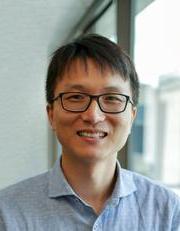
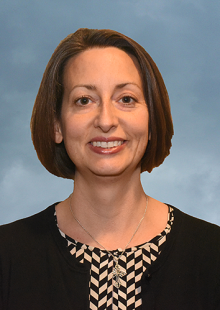
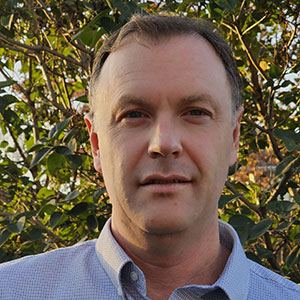
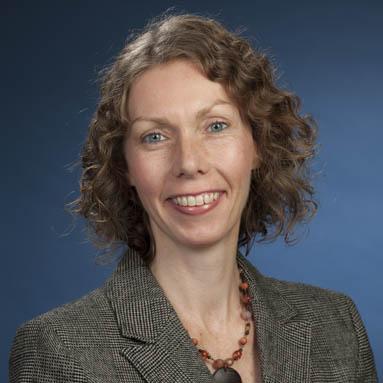
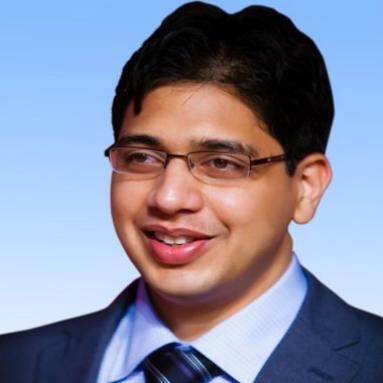
Yeongin Kim is Assistant Professor in Electrical and Computer Engineering at University of Cincinnati, with secondary appointment in Materials Science and Engineering. His research develops novel electronic materials and devices for flexible/stretchable applications. Research focuses on remote epitaxy, van der Waals epitaxy, and solution-based processing to create soft electronic systems including neuromorphic devices, health monitors, and bio-inspired sensors. Prior to UC, he was Postdoctoral Associate at MIT and Research Assistant at Stanford University.
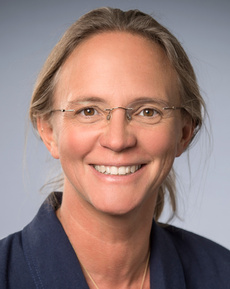
Sophia Haussener is an Associate Professor at the Laboratory of Renewable Energy Science and Engineering (LRESE) within the School of Engineering at École polytechnique fédérale de Lausanne (EPFL). She contributes to research in Renewable Energy , Electrochemistry , and Materials Science , with a focus on solar energy conversion and CO2 reduction technologies. Her leadership extends to academic committees such as the Commission des prix de la recherche and Academic Strategy Committee . Her research group explores Multiphysics Modeling , CO2 Electrolysis , and Photoelectrochemical Systems , emphasizing scalability and industrial integration. Recent publications highlight advancements in Gas Diffusion Electrodes , Photostability , and Membrane Engineering , reflecting her interdisciplinary approach to renewable energy solutions. Scientific Awards Yellott Award (2024): ASME Solar Energy Division Cell Press’s 50 Scientists that Inspire (2024) Raymond Viskanta Award (2019): Elsevier & Journal of Quantitative Spectroscopy ABB Forschungspreis (2012) ETH Medal (2011) Dimitris N. Chorafas Prize (2011) PhD Students Agarwal Venu Gopal Delgado Díaz William Orlando Lorenzutti Francesca Mora-Monteros Jérémy Raphaël van Rooij Sarah and 21 others Article Trends Focus on CO2 Electrolysis , Photoelectrochemical Systems , and Multiphysics Modeling Key themes: Gas Diffusion , Membrane Technology , Photostability , and Industrial Integration
Professor Azharul Karim is a leading academic and researcher in the Faculty of Engineering at Queensland University of Technology (QUT), specifically within the School of Mechanical, Medical & Process Engineering . He holds the rank of **Professor** and is the Director of the Advanced Drying and Sustainable Energy Research (ADSER) Group . His research focuses on advanced drying processes, renewable energy, food engineering, and lean manufacturing, with over 230 peer-reviewed publications and an h-index of 46. He has secured A$4 million in research grants and pioneered innovations like ultrasonic washing machines and solar drying systems. Education: PhD in Engineering from the University of Melbourne. Leadership Roles: Academic Lead for International and Engagement at QUT, Course Leader for the Master of Engineering Management, and Editor of journals like Drying Technology and Nature Scientific Reports . Awards: Advance Queensland Fellow, Smart Queensland Fellow, Global Engineering Education Award (2018), and multiple international recognitions for interdisciplinary contributions. Teaching: Leads real-world project-based learning (PBL) programs and teaches units in Heating, Ventilation, Advanced Manufacturing, and Quality Management. Patents: Includes ultrasonic washing/dishwashers, solar drying systems, and microwave-convective drying technologies. Research Impact: Focuses on sustainable energy, food quality preservation, and lean healthcare systems to optimize resource use in emergency departments. Grants and Projects: 21 grants totaling A$4M, including A$555K for Microwave-Assisted Solar Dryer research. His work bridges fundamental science and industrial applications, addressing global challenges in food processing, energy efficiency, and healthcare logistics.
Professor Janos Urai is a renowned academic at RWTH Aachen University, specializing in structural geology and salt tectonics. He leads the Lehr- und Forschungsgebiet Geologie - Endogene Dynamik department, focusing on deformation mechanisms in evaporites, microstructural analysis, and the application of geological structures to energy and resource exploration. His research integrates field observations, laboratory experiments, and numerical modeling to understand salt diapir dynamics, fault mechanics, and rheological behavior of geological materials. Key areas of expertise include salt tectonics in Romania's Transylvanian Basin, microstructural analysis of glacier salt, and the influence of evaporite deformation on regional tectonics. He has contributed to understanding the geomechanics of salt caverns for radioactive waste storage and energy projects, while also exploring carbonation processes in peridotites and fracture network evolution in carbonate reservoirs. Professor Urai's work bridges fundamental geological research with applied challenges in mining, energy transition, and geohazard mitigation. His interdisciplinary approach combines structural geology, petrophysics, and geochemistry, with a strong emphasis on fieldwork in salt mines and ophiolite complexes such as the Samail Ophiolite in Oman.
Dr. Meisha L. Shofner is a Professor at the School of Materials Science and Engineering, Georgia Institute of Technology, with research focusing on processing-structure-property relationships in polymers and composites. Her work emphasizes scalable processing approaches for mechanical metamaterials, natural polymers, and nanocomposites. Her research interests include biomolecular-solids composites, nanostructures, polymers, and addressing challenges in energy, environment, infrastructure, and transportation. Current projects involve auxetic structures, tensegrity-inspired nanocomposites, polymer composites containing cellulosic nanomaterials, nanocomposites for space applications, polymeric materials for additive manufacturing, and membranes for separating black liquor. Dr. Shofner advises graduate students including Malik Blackman, Fariha Rubaiya, Emily Ryan, and Ide Onal. She directs the Shofner Lab which focuses on engineering polymer structure and function through processing-structure-property investigations.
Anna Dominika Rogowitz is an Assistant Professor in the Department of Geology at the University of Innsbruck (since 2024). Her research focuses on structural geology, tectonics, and fluid-rock interaction, particularly in high-pressure metamorphic environments. She holds a PhD from the University of Vienna (2015) and MSc/BSc degrees from Ruhr-University Bochum (2009–2011). Her work investigates deformation mechanisms in eclogites, element mobility in minerals, and the interplay of chemical/physical processes in metamorphic rocks. Education: PhD: Department for Geodynamics and Sedimentology, University of Vienna, Austria (2012–2015) MSc/BSc: Institute of Geology, Ruhr-University Bochum, Germany (2005–2011) Research Interests: Rheological behavior of the lithosphere and strain localization Tectono-metamorphic evolution of the Eastern Alps Crystal plasticity effects on element mobility Fluid-rock interaction in eclogites and granulites Publications: Her recent work emphasizes high-pressure metamorphic processes, deformation mechanisms in pyrite/garnet, and fluid dynamics. Key themes include eclogite deformation, mineral dendrite formation, and atom probe tomography applications. Awards: 2022: Standalone Project FWF Grant 2018: Otto-Ampferer Award (Austrian Geological Society) Multiple Woman in Science Awards (2017, 2019, 2022) Teaching: She instructs structural geology courses, field mapping, and advanced microstructure analysis at the University of Innsbruck. Labs/Teams: A key member of the Innsbruck Tectonics Research Group, focusing on tectonic processes and metamorphic rock deformation.
Dr. Michael Nickerson is a Professor and Ministry of Agriculture Strategic Research Program (SRP) Chair in Protein Quality and Utilization at the University of Saskatchewan's College of Agriculture and Bioresources, Department of Food and Bioproduct Sciences. His research focuses on optimizing plant protein utilization in food systems, with expertise in protein fractionation, functionality, and ingredient modification using pulses, oilseeds, and grains. Education: B.Sc. (Hon.) Marine Biology, Dalhousie University (1994–1998) M.Sc. Food Chemistry, Dalhousie University (1998–2001) Ph.D. Food Chemistry, Dalhousie University (2001–2004) Post-Doctorate Fellow in Food Chemistry, Dalhousie University (2004–2006) His research interests include enhancing protein quality through processes like fermentation, enzymatic hydrolysis, and thermal treatments, with applications in plant-based food innovations. He has contributed to over 50 peer-reviewed articles and holds prestigious awards such as the W.J. Eva Award (2018) and Dean’s Award for Research Excellence (2018). Current funding partners include NSERC, Saskatchewan Agriculture Development Fund, and industry collaborators. Dr. Nickerson teaches courses in food science, protein technology, and food product development at both undergraduate and graduate levels. Key Research Themes: Protein functionality and modification Plant-based ingredient optimization Pulse and oilseed valorization Food innovation for sustainability His work bridges fundamental science and industry applications, addressing challenges in sustainable food systems and protein utilization.
Wolfgang Pantleon is a Professor in the Department of Civil and Mechanical Engineering at the Technical University of Denmark (DTU), specializing in Materials and Surface Engineering. His research is centered on microstructure evolution, plastic deformation, and advanced characterization techniques in metallic materials, particularly tungsten and nickel-based superalloys. He is actively involved in projects related to fusion materials, additive manufacturing, and high-temperature stability. His research interests include plastic deformation , dislocation structures , annealing , grain growth , recrystallization , and composite materials , with a strong focus on tungsten fiber-reinforced composites for plasma-facing applications. He employs advanced techniques such as electron backscatter diffraction (EBSD) and high-resolution reciprocal space mapping for in-depth microstructural analysis. His recent publications (2024–2025) reflect a strong trend in materials for nuclear fusion , additive manufacturing of superalloys , and in-situ characterization of phase transformations . These works span journals like Scripta Materialia , Materials Characterization , and Fusion Engineering and Design , emphasizing mechanical performance, microstructural stability, and restoration mechanisms under extreme conditions. He has received notable scientific recognition, including: SOFT2024 PhD Poster Prize Winner (2024) Best Poster Award (2019) Wolfgang Pantleon actively supervises PhD students and leads significant research projects, such as Thermal Stability of Tungsten Fiber-reinforced Tungsten Composites and Stability of Tungsten Plates during High Temperatures . He has secured funding from EU and national sources, demonstrating strong grant acquisition capabilities. His collaborative network includes institutions in Germany and international partners in fusion research. He is affiliated with the Materials and Surface Engineering section at DTU, where he contributes to both fundamental and applied research in advanced materials, particularly for energy and industrial applications.
Fiona Zoutendyk is an Associate Professor of Teaching in the Mechanical & Materials Engineering department at Worcester Polytechnic Institute (WPI), with an affiliation to the Biomedical Engineering department. She holds a PhD (2001) and BS (1992) in Metallurgical Engineering and Materials Science from the University of the Witwatersrand. Her research focuses on the Scholarship of Teaching and Learning (SOTL), emphasizing active learning innovations in materials science, thermal fluids, and engineering education. She has contributed to national and regional conferences, including a 2020 ASEE NE Best Professional Paper Award for work on math skill gaps in engineering curricula. Her academic service includes chairing the Undergraduate Committee in Mechanical & Materials Engineering and leading initiatives to promote STEM education for women and underrepresented groups. She co-founded the New England Materials Experience program (2000–2019) and secured grants for undergraduate women’s conference participation (2022). Prior to academia, she worked in metallurgical R&D, focusing on gold alloys and patented ferro-alloy casting processes. Zoutendyk is affiliated with the Center for Advanced Research in Drying (CARD) and the Electric Guitar Innovation Lab. Her teaching philosophy emphasizes collaborative project-based learning (PBL), as reflected in her 2023 faculty fellowship developing modular PBL toolkits. She advises numerous capstone projects, blending engineering rigor with real-world applications. Key awards include the Russell M. Searle Instructorship Award (2020) and WPI’s Educational Development Grant (2015).
Nikhil Karanjgaokar is an Associate Professor of Aerospace Engineering at Worcester Polytechnic Institute (WPI), where he has been since August 2015. His research focuses on experimental and computational mechanics of novel materials and structures, particularly in granular media dynamics, nanostructured materials, and optical measurement techniques. He leads the Structures and Materials Laboratory (HL 028) , equipped with advanced tools such as Digital Image Correlation (DIC), high-speed imaging systems, and laser Doppler vibrometers. Education: B.Tech. in Mechanical Engineering, National Institute of Technology Calicut, India (2006) M.S. in Mechanical Engineering, Carnegie Mellon University (2007) Ph.D. in Mechanical Engineering, University of Illinois at Urbana-Champaign (2013) Research Interests: Micro/nano-scale experimental mechanics Temperature and strain rate effects on nanostructured materials Dynamic response of granular media and inhomogeneous materials Optical measurement techniques for material characterization His lab investigates granular systems under impact, adaptive metamaterials, and thin-film mechanics. Notable projects include developing bulletproof vests with self-optimizing materials and exploring interfacial adhesion in polymer-based composites. His work has been featured in media such as WBUR and the Worcester Business Journal .
Dragan D. Mancic is a full professor at the Faculty of Electronics, University of Niš, Serbia, where he has been actively contributing since earning his PhD in 2002. He holds a permanent academic position in the Department of Electronics and continues to engage in national research projects and scientific publications. Research Interests: His work spans electronics, power electronics, ultrasonic transducers, piezoceramics, impedance spectroscopy, and thermal modeling. He applies these to areas such as renewable energy systems, friction stir welding, and ceramic material characterization. His interdisciplinary focus bridges electrical engineering, materials science, and applied physics. The recent publications highlight consistent research in transducer design, thermal analysis in manufacturing, and electrical characterization of doped ceramics. These works reflect a strong trend toward modeling, simulation, and experimental validation in both biomedical and industrial applications. Scientific Projects: EE-273023B: Development of solar radiation receivers TR-33035: Grid-connected rotating photovoltaic system III-43014: Remote sensing and environmental monitoring Dr. Mancic has co-authored three monographs and has 15 publications in journals with impact factors. He advises students and researchers through collaborative projects and academic supervision, though specific advisees are not listed. He is actively involved in scientific research management under the Ministry of Science. Labs and Research Teams: He collaborates within research groups focused on power electronics, ultrasonic systems, and advanced materials at the Faculty of Electronics in Niš, contributing to both theoretical and applied engineering solutions.
Zhuo Chen is an Adjunct Lecturer in the Department of Civil & Environmental Engineering at Monash University. His research focuses on sustainable urban planning, transportation engineering, and materials science, particularly in additive manufacturing and microstructural analysis. He has collaborated on projects addressing bike-friendly infrastructure, urban heat island effects, EV charging etiquette, and the development of advanced materials through novel processing techniques. Key research interests include integrating deep learning for urban infrastructure analysis, leveraging social media data for mobility studies, and optimizing additive manufacturing processes to enhance material properties. His work contributes to the UN Sustainable Development Goals, particularly in sustainable cities and communities (SDG 11) and climate action (SDG 13). Recent studies highlight trends in both transportation innovation (e.g., protected cycle lanes, EV infrastructure) and materials science (e.g., laser powder bed fusion, alloy development). His interdisciplinary approach bridges urban policy and advanced manufacturing, with applications in smart cities and nuclear materials. Zhuo Chen has been actively engaged with the Monash Suzhou Research Institute through patent collaborations, focusing on innovative manufacturing solutions. His work emphasizes empirical validation and data-driven methodologies to address real-world challenges in urban and materials engineering.
Prof. Dr. Britta Nestler serves as a Research Unit Chair at the Institute of Nanotechnology (INT) within the Karlsruhe Institute of Technology (KIT), Germany. Leading the Microstructure Simulations research group (INT-MSS), she focuses on computational modeling of mechanical and microstructural properties in materials, with significant contributions to phase-field methodologies for microstructure evolution and materials design. Her research spans computational materials science, phase-field modeling, and multiphysics simulations for energy storage systems. Key interests include chemo-mechanical coupling in multiphase systems, solid-state dewetting phenomena, battery electrode optimization, and microstructure-property relationships in polycrystalline materials. She integrates machine learning and data management frameworks to advance virtual materials design, particularly for post-lithium battery technologies. Recent publications reveal a strong emphasis on phase-field applications for energy materials, with 15+ 2025 articles addressing battery electrode design, structural optimization of porous materials, and multiphysics coupling in electro-chemo-mechanical systems. Her work bridges fundamental thermodynamics with industrial applications, notably in the POLiS Cluster of Excellence for post-lithium storage. Prof. Nestler actively shapes the field through leadership in the GAMM Workshop on phase-field modeling and the Materials/Microstructure Modeling conference. As part of KIT's Institute of Nanotechnology, her INT-MSS group collaborates on virtual materials design initiatives within the MaTeLiS Focus Field and NFDI4Ing research data infrastructure, driving digitalization in engineering sciences.
Prof. Alberto Salvadori is an Associate Professor at the University of Brescia (Italy) and Research Assistant Professor at the University of Notre Dame (USA). He founded and leads the Multiscale Mechanics and Multiphysics of Materials Lab, focusing on computational modeling of complex physical phenomena across multiple scales. He holds a Ph.D. in Structural Engineering from Politecnico di Milano (2000). His research spans: Fracture mechanics and crack propagation in embrittled materials Multiphysics modeling of Li-ion batteries and energy storage systems Mechanobiology of cell motility and protein relocation Machine learning applications in materials science Granular material behavior and powder compaction His publications show strong focus on: Advanced battery technologies and solid-state electrolytes Multiscale computational methods for materials design Biomechanics of cellular processes Innovative fracture propagation algorithms Awards include: Marie Curie Fellowship (2013) from European Union Research funding from: EU Marie-Curie Sklodowska actions University of Notre Dame Italian Ministry of Education Private industry partners He leads the Multiscale Mechanics and Multiphysics of Materials Lab at University of Brescia, collaborating with Cornell Fracture Group and Patient-based Medicine Lab.
Martina Scapin is an Associate Professor at the Department of Mechanical and Aerospace Engineering (DIMEAS) , Politecnico di Torino. She specializes in experimental mechanics, high strain rate testing, and finite element analysis of materials under extreme conditions. Research areas: Energy deposition in matter, Material science, Plasticity Member of DYMAT, INFN, and AIAS associations Research Focus : Her work examines dynamic material behavior across multiple domains: high strain rate testing , high-temperature mechanics , and 3D printed composites . She develops advanced methodologies for post-necking analysis in metals and investigates thermomechanical properties of alloys like Inconel 718 and tungsten. Scientific Contributions : Recent publications highlight 3D printed carbon-epoxy crash boxes, laser-driven shock testing for particle accelerators, and novel strain hardening identification techniques. Her work spans composite materials, computational mechanics, and radiation-resistant structures. Awards & Memberships : DYMAT (2017-) INFN (2017-) AIAS (2010-) Guest Editor, Shock and Vibration (2020-) Advising : Supervises PhD candidates Francesco Bandinelli and Marta Beltramo in Mechanical Engineering. Teaching : Leads courses on Structural Simulation Techniques and Mechanics of Materials.