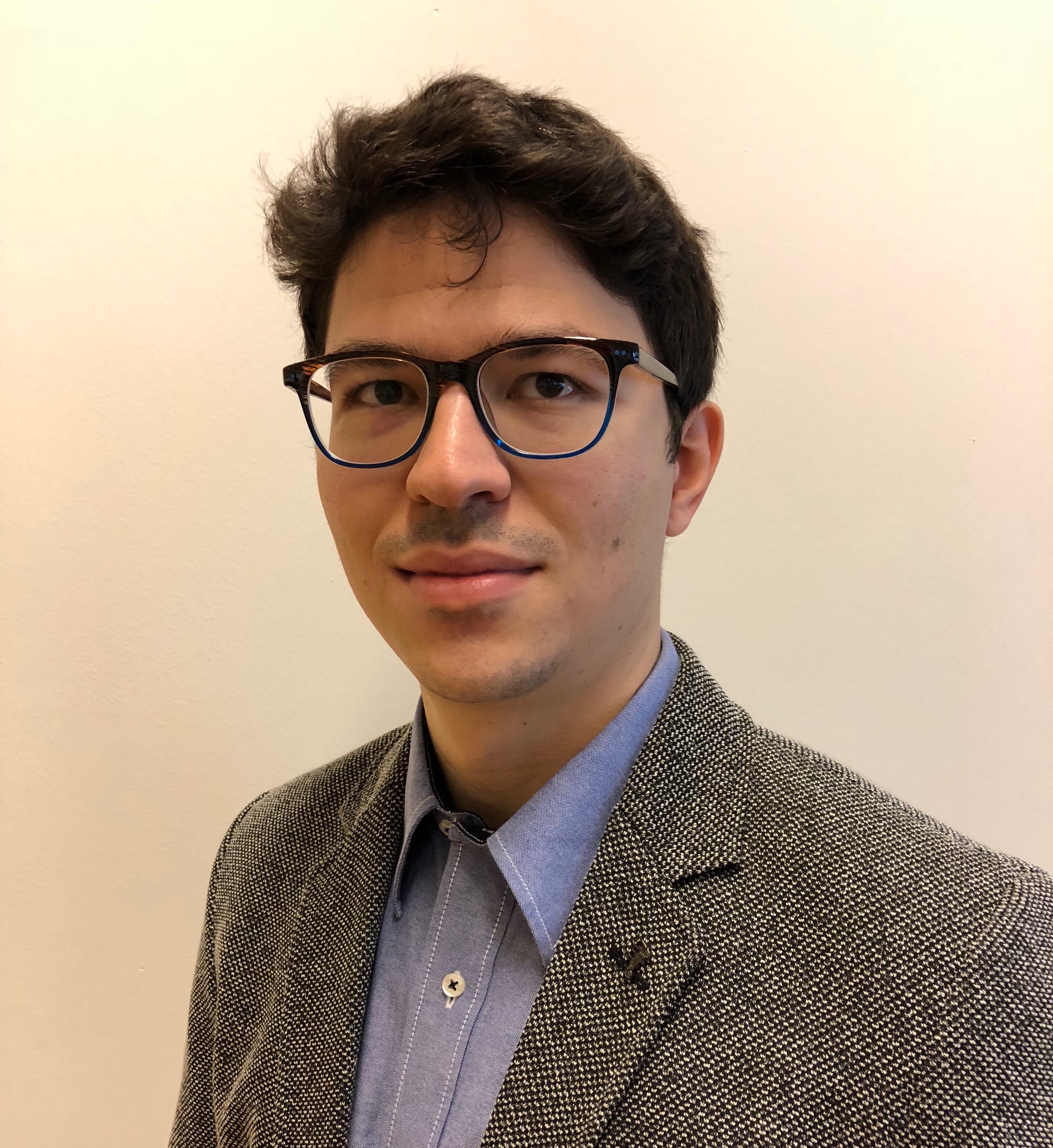
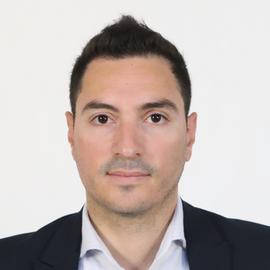
Dr. Frank Loh is a researcher at the Department of Computer Science III, University of Würzburg, specializing in energy efficiency, network performance, and Quality of Experience (QoE) in communication networks. His work focuses on optimizing LoRaWAN deployments, serverless computing, and edge-cloud environments, with an emphasis on reducing message collisions and improving resource utilization. He actively contributes to methodologies for gateway placement, traffic modeling, and energy consumption metrics. Research Areas Energy Efficiency in Communication Networks Quality of Service (QoS) and Quality of Experience (QoE) LoRaWAN Network Planning Edge and Serverless Computing Network Resource Analysis Recent Publications 2025: Energy modeling for 6G base stations 2025: Server cluster resilience via Markov models 2024: Serverless computing in edge-cloud environments 2024: LoRaWAN channel access optimization
Dr. Andrea Bastoni is a Postdoctoral Researcher and Research Fellow at the Chair of Cyber-Physical Systems in Production Engineering at Technical University of Munich (TUM), Faculty of Mechanical Engineering. He is also the CTO and co-founder of Minerva Systems , developing operating system solutions for AI-ready embedded applications. His expertise spans real-time operating systems, cyber-physical systems, and predictable system design for heterogeneous platforms. His research focuses on enhancing predictability of memory hierarchies in complex SoCs through techniques like memory bandwidth regulation and cache partitioning. This work has industrial applications in safety-critical domains such as avionics and railways, where he contributes to certifiable hypervisors and operating systems. As former Software Architect of the PikeOS hypervisor at SYSGO GmbH (2012-2020), he specialized in DO-178C, IEC 61508, and EN 50128 standards. His academic background includes a Ph.D. in Computer Engineering from the University of Rome Tor Vergata (2007-2011), where he developed LITMUS^RT as part of UNC's Real-Time Systems Group during a visiting researcher period (2009-2010). His publications reflect ongoing work on Multicore Real-Time Scheduling , Mixed-Criticality Task Isolation, and Arm DynamIQ shared unit analysis. He actively participates in program committees for conferences like RTSS, DSN, and DATE.
Yuning Jiang is a Visiting Professor at the École Polytechnique Fédérale de Lausanne (EPFL), affiliated with the Automatic Control Laboratory (LA3) within the School of Engineering (STI). He teaches the doctoral course Optimal Control for Dynamic Systems and contributes to research in distributed optimization, model predictive control (MPC), and smart grid technologies. His work bridges theoretical advancements in control systems with practical applications in power networks and autonomous systems. Current research emphasizes scalable solutions for AC optimal power flow, real-time MPC for embedded systems, and robust optimization under uncertainty. His research interests span Optimal Control , Power Systems , Smart Grids , and Federated Learning . Notable contributions include distributed algorithms for large-scale power systems and privacy-preserving co-simulation frameworks. Recent publications focus on microservice deployment in satellite-terrestrial networks and real-time pricing mechanisms for vehicle-to-grid (V2G) integration. Yuning holds a position in the EDEE-ENS unit under EPFL’s Academic Affairs division (VPA-AVP-DLE), reflecting his role in academic administration and teaching infrastructure. His lab, the Automatic Control Laboratory, focuses on cutting-edge research in control theory and its interdisciplinary applications.
Alexandros Daglis is an Associate Professor of Computer Science at the Georgia Institute of Technology, with an adjunct appointment in the School of Electrical and Computer Engineering. His research focuses on blurring boundaries between network and compute for high-performance, scalable microsecond-scale services in datacenters, particularly through network endpoints and memory-centric computing. Primary Affiliation: Georgia Tech College of Computing, School of Computer Science Adjunct Affiliation: School of Electrical and Computer Engineering Key research areas include: Rack-scale computing and network-compute co-design CXL-based memory systems Low-latency datacenter architectures Transactional memory and concurrency control Edge-cloud continuum and geo-distributed infrastructures He has received prestigious awards including the NSF CAREER Award, Google Faculty Research Award, and Georgia Tech's Outstanding Junior Faculty Teaching Award. His students include Marina Vemmou (network-compute co-design), Albert Cho (memory system design), and Peidi Song (microsecond-scale scheduling). Grants: NSF, IARPA, Intel, Samsung Teaching: High Performance Computer Architecture, Systems and Networks, Datacenter Design
George Kesidis is a Professor in Computer Science and Engineering and Electrical Engineering at Penn State University. His research spans deep learning security, virtual reality optimization, and cloud computing. College of Engineering (Penn State University) Research Focus: Backdoor Attacks, DNN Robustness, Edge Caching Active in NSF and U.S. Navy-funded projects (2022-2026) His work addresses backdoor data poisoning , test-time evasion attacks , and DNN overfitting mitigation . He develops techniques like activation clipping, perturbation analysis, and statistical defense models. Recent projects include edge caching systems for VR and security-driven AI frameworks. Key article trends reveal expertise in adversarial deep learning, immersive media delivery, and cloud resource optimization. Current grants focus on multi-user VR, GPU scheduling, and serverless-cloud hybrid architectures. He collaborates extensively with researchers like David J. Miller and Xinyu Li, particularly on cloud-based adversarial defense mechanisms and VR streaming benchmarks.
Chang Xu is a Professor and Ph.D. supervisor at Nanjing University, affiliated with the State Key Laboratory for Novel Software Technology, School of Computer Science, and Institute of Computer Software (ICS). He has been a full-time faculty member since 2010, when he joined as an associate professor and was later promoted to full professor in 2015. Education: Ph.D. from The Hong Kong University of Science and Technology (HKUST) in 2008 (advisor: Prof. S.C. Cheung) M.Eng. from Institute of Software, Chinese Academy of Sciences (ISCAS) in 2003 B.Eng. from University of Science and Technology of China (USTC) in 2000 Research Interests: Professor Xu's research focuses on big data software engineering, intelligent software testing and analysis, and adaptive and autonomous software systems. His recent work centers on constructing and providing runtime support for intelligent software in open environments, with emphasis on inconsistency detection and resolution for environments, and quality assurance for adaptive, concurrent, learning-based, smartphone-based, and spreadsheet-based applications. His work bridges theoretical foundations with practical applications in software engineering, particularly in program analysis, software testing, and self-adaptive systems. Scientific Awards: ACM SIGSOFT Distinguished Paper Award from ICSE 2025 Best Student Paper Award from EUROSYS 2025 ACM Distinguished Member in 2024 Best Paper Award from SOSP 2023 Best Paper Candidate from ISSRE 2022 Yangtze River Scholar by the Ministry of Education in 2021 Multiple ACM SIGSOFT Distinguished Paper Awards from conferences including ASE, ICSE National Science and Technology Progress Award (Second Class) in 2011 Academic Service and Advising: Professor Xu has served on numerous program committees for top software engineering conferences including ICSE, ASE, ESEC/FSE, and ISSTA. He is an editorial board member for several journals including Journal of Computer Science and Technology and Frontiers of Computer Science. He has supervised numerous Ph.D. and MSc students, with research topics spanning program analysis, software testing, self-adaptive systems, and more. His students have gone on to successful careers in both academia and industry. Research Groups: Professor Xu is associated with the SPAR research group at Nanjing University and the CASTLE research group at HKUST, focusing on software analysis, reliability, and testing.
John Byabazaire is a Research Fellow at the School of Computer Science, University College Dublin (UCD). He holds a PhD in Computer Science from UCD (2024), following a BSc (Gulu University, 2013) and MSc (Waterford Institute of Technology, 2018). His research focuses on IoT systems for data collection, remote sensing, AI-driven end-to-end system management, and fog analytics. He has held academic roles including Assistant Lecturer at Gulu University (2018–2019) and teaching roles at UCD since 2019, including Occasional Lecturer and Senior Teaching Assistant. His research spans smart agriculture, data quality in IoT, and education technology. Notable contributions include frameworks for yield mapping in precision agriculture, trust-based data validation in IoT, and machine learning approaches for livestock health monitoring. He has secured grants like the National ICT Initiatives Support Program (Uganda Government, 2019–2020). Teaching includes courses on cloud computing, web development, and distributed systems. His articles emphasize IoT data quality, agricultural analytics, and educational technology innovation. He actively promotes technology adoption in African education and agriculture sectors through collaborative projects.
Soteris Demetriou is a Senior Lecturer of Computer Systems Security at Imperial College London's Department of Computing, within the Faculty of Engineering. He leads the Applications, Platforms, and Systems Security (APSS) Research Lab and directs the Academic Centre of Excellence in Cyber Security Research (ACE-CSR). His research focuses on securing mobile, IoT, and cyber-physical systems through techniques like explainable AI, reverse engineering, and trusted computing. Notable contributions include tools for privacy preservation in machine learning models, detection of LiDAR spoofing attacks, and securing Android's middleware. Education: PhD and MSc in Computer Science (University of Illinois at Urbana-Champaign), Diploma in Electrical and Computer Engineering (University of Patras). Research Interests: Mobile/IoT security, AI security, trusted computing, and vulnerability analysis. Key areas include privacy in generative models, adversarial attacks on autonomous systems, and large-scale distributed systems. Publications: Over 50 peer-reviewed papers in top venues like NDSS, CCS, and SOSP. Recent work addresses privacy in speech generation, LiDAR security for autonomous vehicles, and hyperscale serverless architectures at Meta. Awards: Distinguished Paper Award at NDSS 2018, Best Paper at SafeThings 2024, and multiple travel grants. Served on technical committees for PETS, CCS, and AutoSec. Grants & Collaborations: SPRITE+ grant for Bio-IoT security, collaboration with Meta on distributed systems, and leadership in ACE-CSR. Labs: APSS Lab focuses on systems and AI security, with interdisciplinary projects in healthcare and autonomous systems.
Yuqing Wang is a Postdoctoral Researcher in the Department of Computer Science at the University of Helsinki, Finland, actively contributing to software engineering research with expertise in anomaly detection for microservices and test automation maturity. Contactable via yuqing.wang@helsinki.fi and phone +358505934630/+358294151310, Wang participates in major EU and Academy of Finland projects including LUMI AI Factory (2025-2028) and MuFAno (2023-2026). Research focuses on two interconnected domains: anomaly detection in cloud-native systems using meta-learning for cross-system log analysis and trace categorization, and test automation maturity assessment frameworks. Recent work pioneers datasets like LO2 for microservice API anomalies and tools like LogLead for integrated log processing, while earlier studies establish quantitative links between test automation maturity and product quality in open-source ecosystems. Publications reveal an evolving trajectory from foundational test automation maturity models (2018-2020) toward advanced AI-driven anomaly detection (2024-2025), with 2022-2023 bridging both domains through empirical studies on agile practices and maturity impacts. Current work emphasizes cross-system generalization and multimodal fusion for microservice reliability. No scientific awards are documented in available sources. Wang contributes to two significant grants: the EU Horizon Europe LUMI AI Factory developing AI service infrastructure (2025-2028), and the Academy of Finland MuFAno project advancing multimodal anomaly detection for microservices (2023-2026). These projects drive collaboration with industry partners on real-world system reliability challenges.
David Hästbacka is an Associate Professor (tenure track) at the Department of Computing Sciences, Faculty of Information Technology and Communication Sciences at Tampere University. His research focuses on software engineering, industrial automation, and energy systems, emphasizing system architecture, interoperability frameworks, and dependable IoT solutions. He leads a research group exploring edge and cloud computing, semantic integration, and smart energy systems. Education & Professional Background : While specific educational details are not provided, his academic career includes roles such as Postdoctoral Researcher in the SEMIS project (2017-2020) and extensive involvement in EU-funded initiatives like COCOP (EU H2020) and Horizon Europe projects. Research Projects : Active in high-impact projects like Hedge-IoT (Horizon Europe, 2024-2027), TwinfFlow (Business Finland), and TRINEFLEX (Horizon Europe), with a focus on industrial automation, distributed systems, and energy grids. Past projects include FEMMa (Business Finland), DisMa (Academy of Finland), and Arrowhead (ECSEL). Teaching & Supervision : Specializes in Web/Cloud architectures, IoT systems, and dependable automation technologies. Supervises students in topics like edge computing frameworks and MLOps pipelines. Technical Contributions : Develops frameworks for industrial interoperability (e.g., OPC UA PubSub integration), edge-cloud toolchains, and MLOps methodologies. His work addresses challenges in microservices, Kubernetes distributions, and semantic data integration. Labs & Teams : Leads a research group advancing automation technologies through interdisciplinary collaboration, with partnerships in industry and academia to bridge theory and practice in smart systems.
IIham ALLOUI is a permanent Lecturer in Computer Science (CNU 27 section) at Savoie Mont Blanc University since 1998, based at Polytech Annecy-Chambéry. She leads research in intelligent software systems at the LISTIC laboratory. Her roles include managing the Competency-Based Approach (CBA) mission for Polytech and overseeing the Pix Digital Skills project for the university. Education : PhD in Computer Science from Université Grenoble II (1992-1996), DEA in Computer Science from Université Grenoble II (1989-1990). Research Themes : Focuses on evolving software systems, model-driven engineering, distributed intelligent systems, and adaptive architectures using formal methods like modal logic, process algebra, and Markov Decision Processes. Her recent work (2015–present) involves designing adaptive 'Wise Object' frameworks for autonomous learning in software systems, with applications in fraud detection and microservice optimization. She co-supervised multiple theses on software architecture refinement, remodularization, and knowledge representation. Grants & Projects : Led or contributed to projects such as OpenCloudware (FUI), EcoCitoyen (AAP), and McWO/COMDA (USMB AAPs), addressing cloud architectures, home automation modeling, and educational innovation. Teaching : Specializes in model-driven engineering, software quality, and formal programming methods. Initiated educational projects like Reflexpro and APC By Karuta to enhance student professionalization and skill-based learning.
Dr. Gowri Sankar Ramachandran is a Senior Lecturer in the School of Information Systems at Queensland University of Technology (QUT), specializing in cybersecurity and distributed systems. She holds a PhD from KU Leuven (Belgium) and a postdoctoral position at the University of Southern California (USC). Her research focuses on open-source software security, runtime threat detection, blockchain applications, and IoT vulnerabilities. Notable contributions include the FUSE tool for detecting malicious packages and the discovery of hyperlink hijacking vulnerabilities affecting millions of domains. Research interests span software supply chain security, metadata-based risk analysis, and generative AI for cyber risk modeling. Awards include Best Paper Awards at ACM CBSE (2016), Mobiquitous (2017), and BigMM (2019). Collaborations include projects with CSIRO, the City of Los Angeles, and the University of São Paulo. She teaches courses on cybersecurity, database management, and network security, and actively supervises PhD students in cybersecurity and blockchain domains. Recent publications address blockchain-based data governance, quantum-resilient IoT protocols, and decentralized identity systems. Her work bridges academic research with real-world impact, addressing critical challenges in digital systems security and privacy.
Prof. Michael Weyrich is a faculty member at the Institute of Industrial Automation and Software Engineering (IAS) within the University of Stuttgart , leading the Cluster of Excellence IntCDC . His academic rank is Professor, and he focuses on Industrial Automation , Digital Twins , and Large Language Models (LLMs) for manufacturing and automotive systems. His research explores integrating LLMs into industrial automation for adaptive control, cloud offloading of vehicle functions, and semantic interoperability via Asset Administration Shells . He investigates modular production architectures , connected vehicle systems , and synthetic data generation for autonomous machinery. Recent publications highlight LLM-driven production planning , dynamic sensor calibration , and machine learning for fault detection in electric vehicle powertrains. His work emphasizes real-time data modeling and flexible microservice orchestration .
Bhuvan Urgaonkar is a Professor in the Department of Computer Science and Engineering at Penn State University's College of Engineering. His research centers on optimizing cloud computing systems through innovative approaches to resource allocation, cost efficiency, and energy management. Current research focuses on Burstable Instance Scaling Serverless Computing Optimization Distributed Storage Systems Multi-resource Fair Allocation Cloud Economics Recent publications highlight advancements in autoscaling techniques, serverless architecture design, and trace modeling for high-load scenarios. These works emphasize practical solutions for cost-effective resource utilization in public cloud environments. Scientific Awards: CNS: Core: Small: Consistent, Geo-Distributed Data Stores on the Public Cloud (NSF, 2022-2025) CNS Core: Small: Principled Methodologies for Automated Cost-Effective Service Blending (NSF, 2021-2024) PPoSS: Cross-Layer Design for HPC in the Cloud (NSF, 2020-2022) CSR: Burstable Instances for Cost-Efficacy (NSF, 2017-2020) CSR: Student Travel Support for SIGMETRICS (NSF, 2016-2017)
Xin Peng is a Professor and Deputy Dean at the School of Computer Science, Fudan University, China. He leads the CodeWisdom research team focusing on intelligent software engineering techniques for development, maintenance, and operation of software systems. His educational background includes a PhD in Computer Science (2001-2006) and Bachelor's degree in Computer Science (1997-2001), both from Fudan University. He progressed through the academic ranks from Assistant Professor (2006-2010) to Associate Professor (2010-2015) and finally to Professor (2015-present). Professor Peng's research interests span Software Analytics, Intelligent Software Development, Microservice systems, and AIOps. His work leverages AI technologies including deep learning and knowledge graphs to develop intelligent software engineering techniques. A significant portion of his recent work focuses on applying Large Language Models to various software engineering tasks, including vulnerability detection, API usage analysis, and test automation. His publication record shows a clear trend toward increasingly sophisticated applications of AI in software engineering, with recent work heavily featuring LLMs for tasks ranging from vulnerability patch porting to resource leak detection. The research spans multiple domains including microservice systems, automotive software, and Web of Things security. Best Paper Award of ICSM 2011 ACM SIGSOFT Distinguished Paper Award of ASE 2018 and 2021 IEEE TCSE Distinguished Paper Award of ICSME 2018, 2019, and 2020 IEEE Transactions on Software Engineering Best Paper award for 2018 Professor Peng serves in numerous leadership roles including Deputy Director of CCF Technical Committee on Software Engineering, Co-Editor-in-Chief of Journal of Software: Evolution and Process, and Associate Editor for ACM Transactions on Software Engineering and Methodology. He has been actively involved in program committees for major software engineering conferences including ICSE, ASE, ESEC/FSE, and ICSME. He leads the CodeWisdom research team at Fudan University, which has developed several benchmark systems including TrainTicket for microservice research. The team's work bridges academic research with industrial applications, particularly in microservice systems analysis and intelligent software development tools.