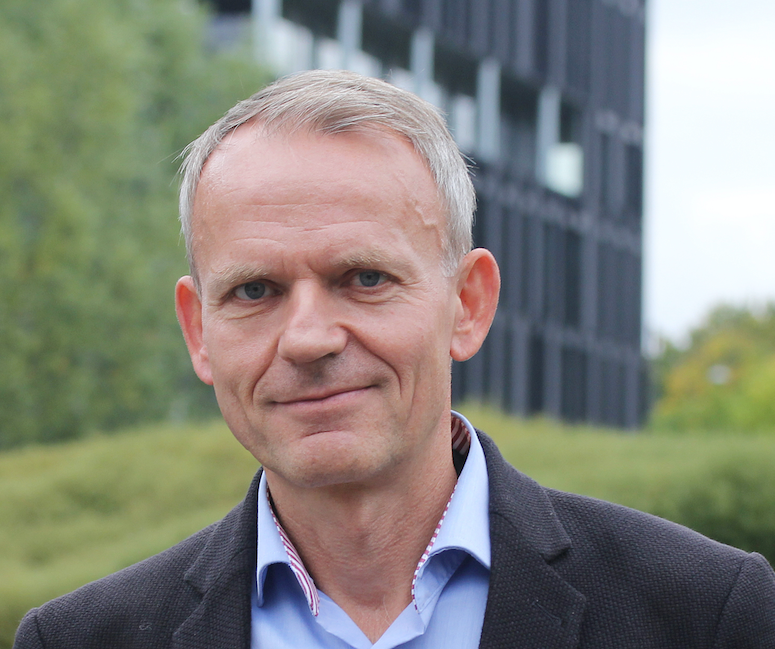
Andrea Arcuri is a Professor at the School of Economics, Innovation and Technology within Kristiania University of Applied Sciences . His research focuses on Software Testing , Software Engineering , and Cloud Computing , with a particular emphasis on automated testing techniques for web APIs. Specialized in RESTful, GraphQL, and RPC API fuzzing Developer of the open-source EvoMaster testing tool Pioneer in integrating evolutionary algorithms and symbolic execution for test generation Active in bridging academic research with industrial software testing practices His recent publications show a strong focus on Search-Based Software Testing (SBST) , Automated Test Generation , and Industrial Adoption of Testing Technologies . He has contributed extensively to improving testability through mock generation and database handling in API testing. While no formal scientific awards are listed in the public records analyzed, his work has been consistently published in top-tier software engineering venues since 2013. The articles demonstrate increasing sophistication in fuzzing techniques, with recent extensions to handle complex dependencies like MongoDB and SQL databases.
Egil Øvrelid is an Associate Professor at the Department of Informatics (IFI), University of Oslo, affiliated with the Digital Innovation (DIN) research group. His work focuses on digital infrastructures, healthcare IT systems, and sociotechnical interplay in organizational innovation. He explores topics such as digital transformation, process innovation, and platform ecosystems in healthcare and higher education contexts. His research emphasizes the alignment of digital strategies with organizational practices, particularly in large-scale infrastructures. Key areas include lightweight IT solutions for process innovation, architectural transformation in incumbent organizations, and governance mechanisms in collaborative platforms. He has contributed to frameworks like 'dual digitalization' and 'adaptive mirroring' in healthcare IT architectures. Notable projects include the TSD platform for sensitive data research and studies on national digital ecosystems like Norway’s one-citizen-one-health-record initiative. His work bridges theory and practice, often collaborating with healthcare and educational institutions to address real-world challenges in digital innovation. Research Groups: Digital Innovation (DIN) Key Themes: Sociotechnical systems, digital transformation, healthcare IT, process innovation, platform ecosystems
Jaakko Timo Henrik Järvi is a Professor in the Department of Informatics at the University of Bergen, Norway, with additional affiliations at the University of Turku, Finland. His research focuses on programming language design, generic programming, and human-computer interaction, particularly in GUI frameworks and software reuse. His research interests include generic programming, programming language design (especially the Magnolia language), high-performance computing, array programming, and GUI engineering. He emphasizes formal methods and algebraic specifications to build reusable and efficient software systems. His work bridges theoretical foundations with practical applications in software development and education. The recent publications highlight a strong trend in declarative GUI frameworks, multi-selection models, and generic programming. His work explores domain-specific languages for GUI structure manipulation, reusable selection semantics across platforms, and optimizing array computations using the Mathematics of Arrays. These efforts reflect a consistent focus on software abstraction, correctness, and reusability. Jaakko Järvi has supervised doctoral students, including Tetiana Yarygina, whose dissertation explored microservice security. While no specific grants are detailed, his work on VisAST was supported by the Research Council of Norway (Project 250683), indicating active external funding. He frequently collaborates with researchers like Magne Haveraaen, Knut Anders Stokke, and Sean Parent. He contributes to tools and frameworks such as the MultiselectJS library and the VisAST educational tool. These are outcomes of collaborative research teams focused on improving software development practices and computer science education.
Martin Wulf Gerdes is an Associate Professor at the Department of Information and Communication Technology, University of Agder, Norway. With a Ph.D. in eHealth and over two decades of experience in telecommunications and healthcare technology research, he focuses on developing user-friendly, interoperable eHealth solutions using ICT and IoT. His career spans roles at Ericsson Eurolab and academic leadership in Norway. Education: M.Sc. equivalent in General Electrical Engineering (1998) from RWTH Aachen, emphasizing ICT. Ph.D.: Information and Communication Technologies with eHealth specialization (2019) from University of Agder. Research Interests: Gerdes explores AI-driven decision support systems, distributed eHealth infrastructure, telemedicine, and assistive technologies for chronic disease management. His work bridges IoT, data privacy, and user-centered design in healthcare robotics. Teaching: Since 2014, he has taught at bachelor's and master's levels, currently leading courses in Communication & Cooperation, Technology Understanding, and seminar projects in eHealth. Scientific Publications: His 15 most recent articles (2020-2024) span AI in dental radiology, blood glucose prediction, digital twins, and ethical considerations in healthcare algorithms. Topics include IoT integration, data privacy, and pandemic analytics.
Dag Johansen is a Professor in the Department of Informatics at UiT The Arctic University of Norway, Tromso campus. His work spans multiple research areas at the intersection of computer science, sports science, medicine, health technology, and nutrition science. He leads the interdisciplinary "Corpore Sano" research center and is actively involved in several research groups including the Cyber Security Group (CSG) and Crime Control and Security Law. Professor Johansen's research focuses on developing fundamental software solutions for secure and error-free data processing in heterogeneous distributed systems, ranging from lightweight "Internet of Things" devices and mobile phones to large-scale cloud solutions. His work particularly emphasizes applications in sports technology, edge computing, and compliance technology. His research interests include distributed systems, cybersecurity, sports technology, edge computing, data privacy, AI for sports analytics, multimedia forensics, and compliance technology. His recent publication trends show a strong focus on AI applications for sports video analysis, particularly in soccer and ice hockey, where his team has developed AI-based cropping systems for social media representations. He also has significant work in data privacy and GDPR compliance, especially regarding the "third country problem," as well as applications of AI in sustainable fishing practices. His 2024-2025 publications demonstrate continued work in self-healing microservices, lightweight encryption for video feeds, and virtual reality training environments. Professor Johansen is actively involved in mentoring students and research collaborators, as evidenced by his extensive publication record with numerous co-authors including doctoral students and postdoctoral researchers. His work has received funding through various research projects focused on data analytics, privacy technology, cybersecurity, and sports technology applications. He leads the interdisciplinary "Corpore Sano" center, which brings together researchers from computer science, sports science, medicine, health technology, and nutrition science. His work also involves collaboration with the "Njord" project focused on sustainable fishing through AI applications, and he's involved in developing the "Áika" distributed edge system for AI inference.
Anya Helene Bagge is an Associate Professor in the Department of Informatics at the University of Bergen, where she is a researcher at the Bergen Language Design Laboratory. Her work focuses on programming languages and software language engineering, with strong ties to education and tool development. Research Interests: Programming language design and implementation Software language engineering Semantics of programming languages Domain-specific languages and language extensions Program transformation using Rascal, MPL, and Stratego/XT Aspect-oriented programming, especially Domain-Specific Aspect Languages Her recent publications reflect a consistent focus on software language engineering, refactoring, microservice security, and programming education. Themes across her work include language design, program analysis, and the development of educational tools and methodologies. Scientific Awards: The Realist Committee's Teaching Award 2016/17 Lecturer of the Year in Computer Science (Spring 2015) Anya Bagge actively supervises students, including PhD and Master’s candidates such as Tero Hasu, Kristoffer Haugsbakk, and Nina Andersen. She has been involved in numerous academic activities, including organizing the OOPSLE workshop and serving on program committees for conferences like SLE, HILT, and WCRE. She has also taught core courses including INF101, INF225, and INF328, demonstrating a strong commitment to both research and teaching. Labs and Teams: She is affiliated with the Bergen Language Design Laboratory , collaborating with researchers such as Magne Haveraaen, Eva Burrows, and Tero Hasu.
Dag Sjøberg is a Professor at the Department of Informatics (Ifi), University of Oslo . He also holds a part-time position at SINTEF Digital . His research focuses on empirical software engineering with emphasis on development processes , agile methodologies , technical debt , and programming skill assessment . Research Interests: Empirical methods (controlled experiments, case studies) Construct validity frameworks Agile and Lean practices Microservices architecture Software quality and maintainability Scientific Achievements: Led Simula Research Laboratory's Software Engineering department ranked #1 globally (2004-2008) Developed Guidelines for Construct Validity in software engineering research Extensive publication record in top venues like IEEE Transactions and Journal of Systems and Software Academic Background: Cand.scient. in Informatics (University of Oslo, 1987) PhD in Software Engineering (University of Glasgow, 1993) Professional Involvement: Co-founder and board member of three IT companies Former research director at Simula Research Laboratory (2001-2008) Current head of the Programming and Software Engineering research section at Ifi
Professor Antonio Martini is a faculty member at the Department of Informatics, University of Oslo , specializing in Software Engineering and Technical Debt management. His research spans microservices , machine learning , visual analytics , and agile methodologies . His research interests focus on: Technical Debt classification and prioritization Machine Learning applications in software development Visual Analytics for Decision Support Scalability in open and serverless systems Notable trends in his publications (2025–2018) include leveraging transformer-based NLP for debt analysis, security debt frameworks, and visual analytics in supply chain environments. He has contributed to tools like AnaConDebt and Skuld for debt tracking and estimation.
Norwegian University of Science And TechnologyNorway
Ingebrigt Meisingset is a senior researcher at the Norwegian University of Science and Technology (NTNU), affiliated with the Department of Public Health and Nursing under the Faculty of Medicine and Health Sciences. His work centers on musculoskeletal disorders in primary care, including neck, shoulder, and lower back pain, with a focus on prognostic factors, patient subgroups, and digital clinical decision support systems powered by artificial intelligence. Additional research areas include clinical effectiveness studies and interventions for insomnia in primary care settings. Education: 2008-2010: MSc in Exercise Physiology and Sport Science, NTNU 2004-2007: BSc in Physiotherapy, HIST Current Positions: Researcher, NTNU (2020-) Postdoctoral Researcher, NTNU (2016-2020) His recent projects include: SUPPORTPRIM: Developing AI-driven clinical decision support systems for physiotherapists and general practitioners. DigiSøvn: Evaluating digital sleep apps for musculoskeletal pain patients. Non-pharmacological Sleep Interventions: Testing the "Sov godt" course for insomnia in primary care. His publications highlight trends in clinical decision support systems, musculoskeletal pain stratification, and the intersection of sleep disorders and chronic pain. Articles often employ case-based reasoning, randomized trials, and longitudinal studies to improve treatment personalization and effectiveness in primary care.
Norwegian University of Science and TechnologyNorway
Besmir Tola serves as Associate Professor in the Department of Information Security and Communication Technology at the Faculty of Information Technology and Electrical Engineering, Norwegian University of Science and Technology (NTNU). His academic trajectory progressed from Researcher (2019-2020) to Assistant Professor (2020-2022) and current Associate Professor role since 2022, following a Marie Curie Research Fellowship (2015-2019). He maintains active industry connections through visiting positions at Nokia Bell Labs (2016) and SIKT (2018). His educational background includes: Master of Science in Electronic and Telecommunication Engineering, University of Siena, Italy PhD in Information Security and Communication Technology, NTNU Dr. Tola's research program centers on critical challenges in network virtualization and security, with four pillars: dependability modeling of softwareized networks, performance analysis of virtualized services, wireless security, and orchestration of softwarized networks. His work bridges theoretical modeling and practical implementation, particularly addressing carrier-grade requirements for Network Functions Virtualization (NFV) in telecom infrastructure. Key contributions include novel approaches to software rejuvenation for NFV-MANO systems and redundancy allocation mechanisms for high-availability services. Analysis of his 15+ publications (2015-2023) reveals an evolving research trajectory: early work established foundational models for cloud service failures (2017), followed by comprehensive NFV availability frameworks (2019-2021), and recent innovations in offline communication security (2022-2023). The publications consistently address resilience engineering across journals like IEEE Transactions on Network and Service Management and conferences including IEEE INFOCOM. His primary recognition is the prestigious Marie S. Curie Research Fellowship under the CleanSky ITN project, enabling international collaboration on critical network virtualization challenges. This fellowship represents significant competitive research funding in the European research landscape. Dr. Tola actively contributes to pedagogy as instructor for core networking courses including Interconnected Networks and Network Security (DCST2001) and Data Communication and Networks (DCST1006), implementing innovative flipped classroom approaches as documented in his 2022 UNIPED Program presentation. He advises bachelor students in the Digital Infrastructure and Cyber Security program through DCST2900 thesis supervision. He leads research within NTNU's Networking Research Group and extends impact through Cisco Networking Academy accreditation for CCNA, DevNet, CyberOps, and Cloud Security training. His IEEE leadership includes Chairing the NTNU Student Branch (2018-2021) and serving on the Norway Section Executive Committee (2018-2019).
Hui Song serves as an Assistant Professor in the Department of Computer Science at Oslo Metropolitan University's Faculty of Technology, Art and Design. Based at Pilestredet 52, Oslo, their work bridges theoretical computer science and practical IoT security applications within the Innovation, Digital Transformation and Sustainability research group. Research spans Internet of Things security , Edge Computing , and Digital Twin architectures with emphasis on trust management and secure software updates. Key interests include community-driven generative AI development, cloud-to-edge continuum security, and sustainable computing frameworks for IoT ecosystems. Recent projects address identity management in constrained devices and resilience engineering for critical infrastructure. Analysis of 2023-2025 publications reveals a consistent focus on security orchestration for IoT/CPS systems through digital twin implementations and intent-based data operations. Emerging trends show increased exploration of ethical generative AI applications and migration strategies from monolithic to microservice architectures in cloud-native environments. Active in both European research collaborations and industry-facing dissemination, Dr. Song contributes to advancing secure, sustainable computing practices through 56+ scientific publications and practical implementation frameworks developed with international partners including Rustem Dautov and Nicolas Ferry.
Andreas Prinz is a Professor of Systems Engineering at the University of Agder since 2003. He previously served as Vice-Dean for Research (2016-2023) and Scientific Head of eHealth Centre (2017-2019). His academic journey includes guest professorship at Technical University of Cottbus (2000-2001), habilitation at Humboldt University (2001), and PhD in Computer Science (1990). Education: 2001: Habilitation, Humboldt University Berlin 1990: PhD in Computer Science, Humboldt University 1988: M.Sc. in Mathematics, Humboldt University Research Interests: Prinz leads the Systems Engineering and Modeling group. His work spans three major areas: Meta-Modeling and DSLs: Through the SMILE project , he develops domain-specific languages for formal system definitions, including the LanguageLab environment. Educational Technology: Focuses on pedagogical use of technology rather than invention, including the Success MOOC and Success Wiki platforms. Health Technology: Develops personalized eCoaching systems for health promotion, including the Center for eHealth initiatives and ProHealth eCoach applications. Publication Trends: His recent work (2022-2024) shows a strong focus on: Integrating machine learning and ontologies for personalized health recommendations Advancing model-driven engineering and DSL development through meta-modeling Exploring social simulation and emergency response systems with real-time data processing Developing secure microservice architectures for health applications Creating game-based learning environments for healthcare education Investigating social dynamics through computational models of marginalization Advising and Leadership: Prinz has supervised numerous PhD, Master's, and Bachelor's theses through the SMILE and LanguageLab projects. He led the ICT department (2007-2015) and served as Vice-Dean for Research (2016-2023). Labs and Teams: He is associated with: SMILE (Systems, Modeling and Language Engineering) Center for eHealth Academic e-Sports and Game Didactics Social Simulation