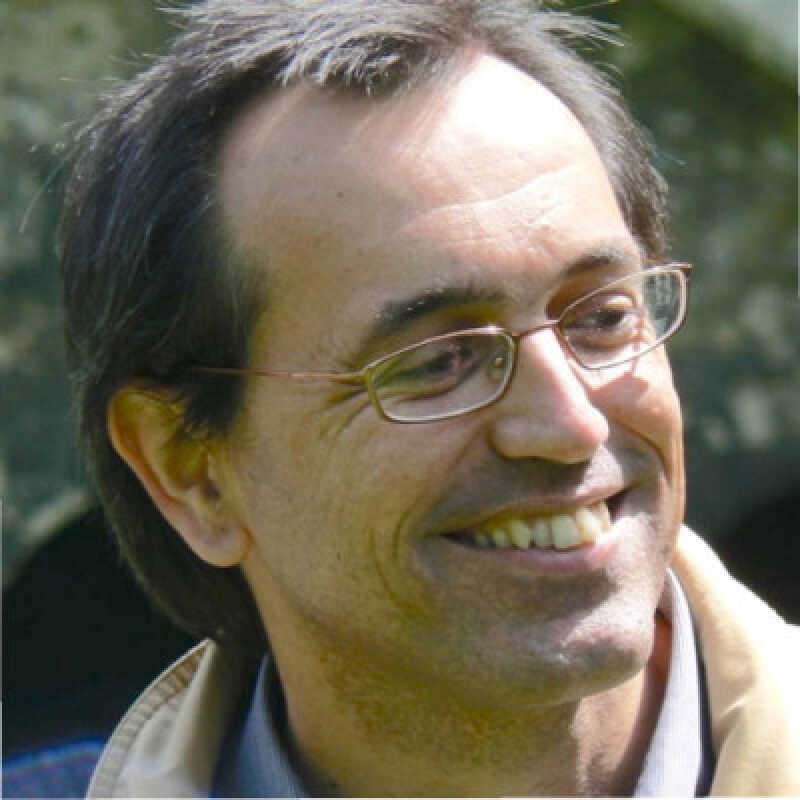
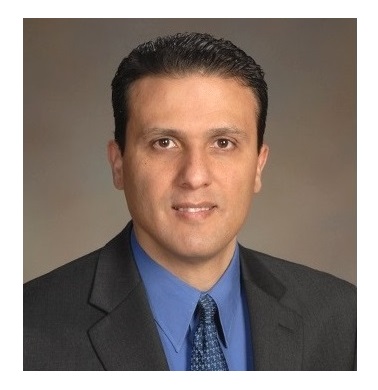
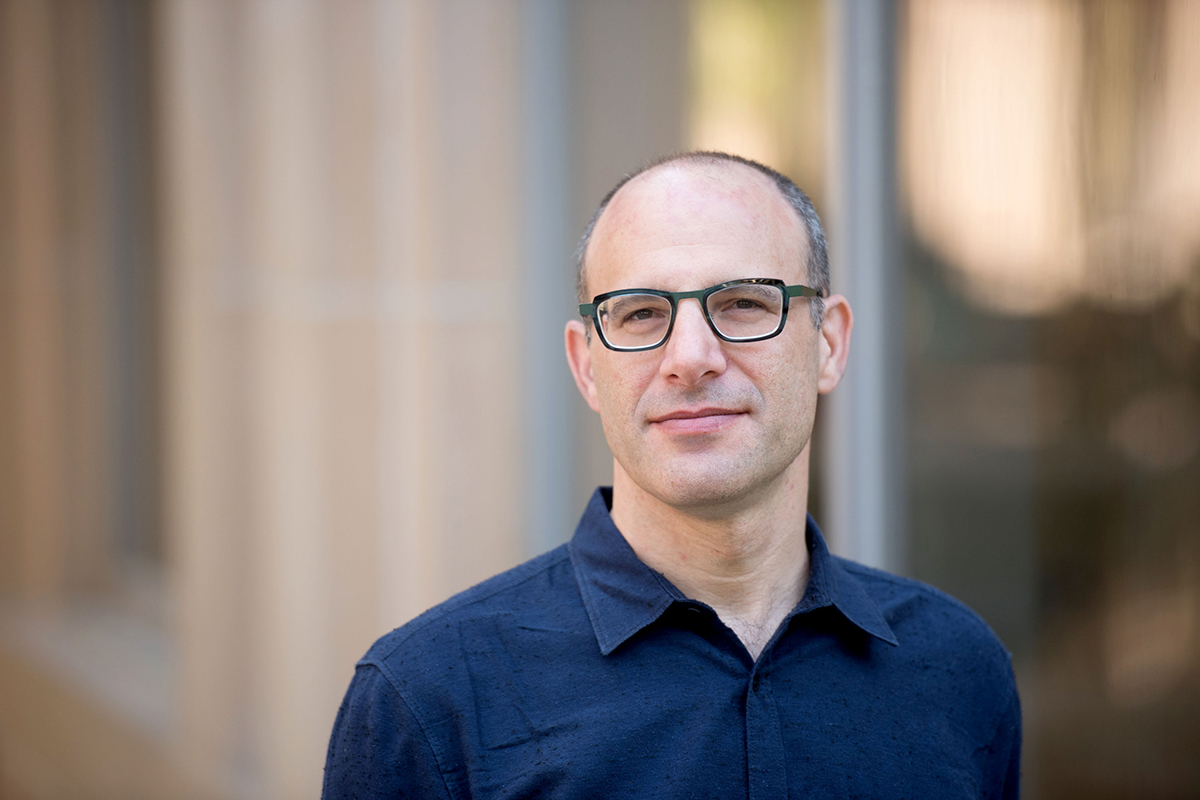
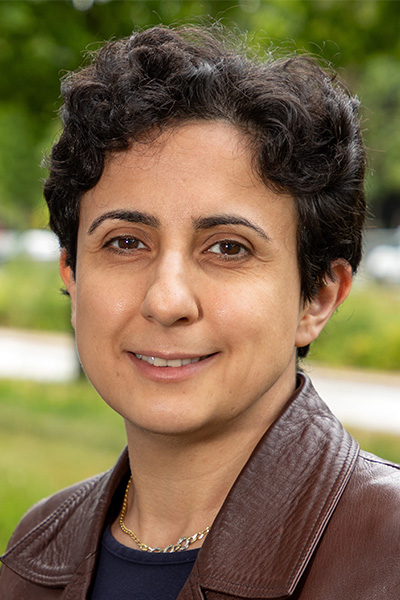
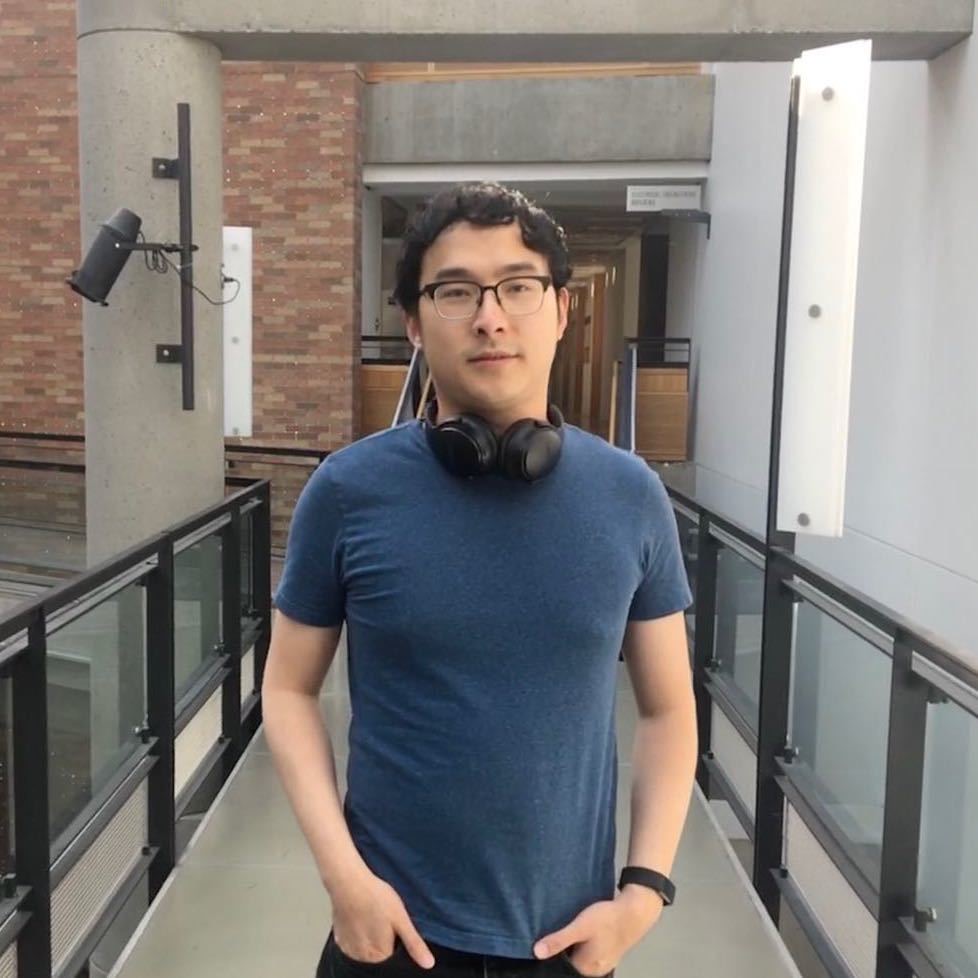
Máté Szabó is an Assistant Professor at the University of Debrecen , affiliated with the Faculty of Informatics and the Department of Information Technology . His email contact is szabo.mate@inf.unideb.hu . He works in areas such as Machine Learning , Smart Cities , and Mobile Computing . His research spans topics like microservice architecture for ensemble models, Markov modeling of traffic flows, and distributed machine learning on mobile platforms. He has explored neural models for conversational AI and gamification in programming education through Minecraft-based challenges. His work also addresses edge computing and data parallelism in mobile environments. His publications (2016–2024) reflect trends in machine learning deployment on Android platforms smart city traffic analytics gamified educational tools cognitive modeling of numerical understanding microservice-based model integration .
ONG Soh Khim is a Professor in the Department of Mechanical Engineering at the National University of Singapore (NUS) and a member of the NUS Graduate School. She is a Fellow of CIRP (International Academy for Production Engineering), the first Asian and fourth female Fellow globally. Her research focuses on augmented reality (AR) and digital twins in manufacturing, with applications in assistive technology and sustainable design. She has authored/co-edited 6 books, over 300 journal/conference papers, and holds an H-index of 66 (Google Scholar) and 52 (Scopus). She has held leadership roles, including serving as a Nominated Member of the Singapore Parliament (2005–2006) and on multiple NUS governance boards. Her honors include the Singapore Youth Award (2004), M. Eugene Merchant Award (2004), and the 2021 Long Service Medal. She advocates for gender diversity in STEM, leading initiatives like the Girls2Pioneers program. Her current roles include Senior Principal Investigator at NUS Research Institutes in Suzhou and Guangzhou, and Visiting Professorships at Chinese universities.
Rogério de Lemos is a Senior Lecturer in Computing Science and Director of Postgraduate Research (PGR) at the School of Computing, University of Kent. He previously served as an invited assistant professor at the University of Coimbra, Portugal, and as a Senior Research Associate at the Centre for Software Reliability (CSR) at the University of Newcastle upon Tyne, UK. Dr. de Lemos' research focuses on architecting resilient systems, particularly in resilient AI, self-adaptive software systems, and authorization infrastructures. He belongs to both the Programming Languages and Systems Group and the Cyber Security Group at the University of Kent. His specific research interests include: Software engineering for self-adaptive systems assurances and resilience evaluation Dynamic generation of processes Handling insider threats using self-adaptive authorization Architectural abstractions for fault tolerance Verification and validation of dependable software architectures Software development for safety-critical systems Dependability and bioinspired computing His publication trends show increasing emphasis on practical applications of self-adaptive systems in cyber security contexts, with recent work spanning network traffic analysis, cryptographic function detection, and cloud-edge security architectures. His research bridges theoretical foundations with practical implementations, particularly in cyber security and resilient systems architecture. Dr. de Lemos currently leads the "Collaborative and Confidential Information Sharing and Analysis for Cyber Protection" project funded by the European Union's Horizon 2020 Programme. His past projects include "ADAAS: Assuring Dependability in Architecture-based Adaptive Systems" and multiple collaborations with NCR on sensor fusion and fault tolerance. As Director of Postgraduate Research, he oversees the School of Computing's research degree programs and likely supervises PhD students in resilient systems and cyber security, though specific student names are not listed in the available information.
Prof. Alexander Pretschner is a Professor of Software & Systems Engineering at the Technical University of Munich (TUM) and Founding Director of the Bavarian Research Institute for Digital Transformation (bidt). He also serves as Scientific Director of fortiss, a Bavarian research institute for software-intensive systems. His research focuses on software engineering, testing, information security, and ethical software development. Pretschner holds a PhD from TUM and has held academic positions at Karlsruhe Institute of Technology (KIT) and TU Kaiserslautern. He is a co-editor of several prestigious journals, including IEEE Transactions on Reliability and the Journal of Software Testing, Verification and Reliability. Education: PhD in Computer Science, Technical University of Munich MSc in Computer Science, University of Kansas (on Fulbright Scholarship) Diplom in Computer Science, RWTH Aachen University Research Interests: His work spans testing methodologies, secure software design, and ethical considerations in agile development. Notable contributions include frameworks for metamorphic testing, distributed data usage control, and accountability mechanisms for cyber-physical systems. Awards: IBM Faculty Award (2012, 2013) Google Focused Research Award (2011, 2012) EARTO Innovation Prize (2014) 2nd Platz Supervisory Award (2020) Advising & Grants: Pretschner has supervised numerous PhD and Master’s students, contributing to over 200 publications. He leads projects like EDAP (Ethical Deliberation in Agile Processes) and collaborates with industry partners on cybersecurity and AI ethics initiatives. Labs & Teams: His work is anchored in bidt, fortiss, and TUM’s Chair of Software & Systems Engineering, focusing on societal impacts of digitalization and trustworthy AI systems.
Dr. Theophilus A. Benson is a Professor in the Department of Electrical and Computer Engineering at Carnegie Mellon University, with additional responsibilities at Carnegie Mellon University-Africa. His research group focuses on improving network performance and availability through models, algorithms, and frameworks that manage network state semantics. Key application areas include addressing the digital divide, optimizing microservices/cloud systems, software-defined networks, and CDN designs. Education: Ph.D., University of Wisconsin, Madison (2012) M.S., University of Wisconsin, Madison (2008) B.S., Tufts University (2004) Research Focus: Professor Benson's work spans three core domains: Democratizing Web Performance (measurements and optimizations for developing regions), Systems Abstractions for Programmable Infrastructures (eBPF/P4 frameworks), and Self-Managing Networks (ML-driven configurations). His African Internet Observatory initiative analyzes Africa's internet ecosystem to address digital inequity through assessment probes and statistical methods. Publication Trends: Recent works (2021-2024) demonstrate a strong focus on programmable networks (eBPF/P4 management), web performance in developing regions, and data-driven cloud/CDN optimizations. Earlier foundational work established expertise in SDN fault tolerance, network updates, and video streaming characterization. Awards & Honors: SIGCOMM Test of Time Award NSF CAREER Award NEC Faculty Award Google Faculty Award Facebook Faculty Award (2x) DARPA ISAT Study Group Member Grants & Advising: Secured funding from NSF (CAREER, NeTS), Google, Facebook, and Yahoo. Current advisees include 4 PhD/MS students working on programmable networks and web performance. Actively recruiting post-docs and students for African connectivity and eBPF projects. Leadership: Co-chairs NSDI'25 and ApNet'24 conferences. Leads the NetLab research group developing deployable systems adopted by web-scale companies and open-source communities.
Dr. Wahab Hamou-Lhadj is a Professor and Chair at the Department of Electrical and Computer Engineering , Concordia University, and an Affiliate Researcher at NASA JPL, Caltech . He leads research in Artificial Intelligence for IT Operations (AIOps) , Software Observability , and Model-Driven Engineering , focusing on improving the reliability of digital systems in AI-driven environments.
About Marin Litoiu is a Professor at York University, holding dual affiliations in the Department of Electrical Engineering and Computer Science at the Lassonde School of Engineering and the School of Information Technology in the Faculty of Liberal Arts and Professional Studies. He is a Fellow of the Canadian Academy of Engineering and a recipient of the 2020 IBM Faculty of the Year Award. His research focuses on cloud computing, self-adaptive systems, DevOps, IoT, and machine learning-driven performance engineering. Research & Awards Litoiu leads the Dependable Internet-of-Things Applications (DITA) program, funded by NSERC, and co-founded Bitnobi Inc., acquired by Myant. His notable awards include the CASCON 2019 Most Influential Paper Award and Best Paper Awards at multiple conferences. His work emphasizes practical applications of adaptive systems, cybersecurity, and smart infrastructure integration. Grants & Projects NSERC CREATE Program: $1.65M for the DITA program (2018) York Innovation, TIAP, NSERC, and OCI-funded Bitnobi incubation Leadership in multiple CASCON workshops on cloud computing and AIOps Labs & Teams Litoiu’s lab has produced impactful startups like Bitnobi and pioneered research in self-driving systems, edge computing, and AI-driven operations. His team collaborates with industry partners like IBM and explores cutting-edge topics such as LLMs in performance optimization and fault detection.
Xiaojiang Du is the Anson Wood Burchard Endowed Professor at Stevens Institute of Technology, directing research in IoT security, AI security, and wireless networks. An IEEE Fellow and ACM Distinguished Member, he leads NSF-funded projects on secure IoT systems and cross-platform security vulnerabilities. Education PhD in Electrical Engineering, University of Maryland MS in Electrical Engineering, Tsinghua University BE in Electrical Engineering, Tsinghua University Research Focus: Develops security frameworks for IoT ecosystems and adversarial machine learning, with recent breakthroughs in smart home security anomaly detection. Honors: IEEE Fellow, ACM Distinguished Member, multiple best paper awards at IEEE conferences. Graduated PhD students hold faculty positions at UNC Charlotte, UL Lafayette, and ShanXi University. Professional Service: IEEE ComSoc Distinguished Lecturer, Associate Editor for IEEE Transactions, and General Co-Chair for IEEE/ACM IWQoS 2023. Secured $9M+ in research funding from NSF, NSA, and DOD.
Umakishore Ramachandran is a Professor in the School of Computer Science within the College of Computing at Georgia Institute of Technology. His research spans edge computing, distributed systems, and real-time video analytics, with significant contributions to fog computing infrastructure, mobile systems, and sensor networks. Over a prolific 38-year career, he has authored 142 publications with major contributions in 2022-2025. His research interests focus on bridging the gap between cloud and edge computing, with pioneering work in video analytics systems like EVA and MicroEdge. He investigates resource optimization for latency-sensitive applications, developing novel approaches for load shedding, data management, and container runtime efficiency at the network edge. His work addresses fundamental challenges in distributed camera networks, autonomous vehicle systems, and real-time stream processing. Ramachandran's recent publications reveal a strong emphasis on practical edge computing solutions, with 75% of his 2021-2025 work focusing on video analytics and infrastructure optimization. His research shows increasing collaboration with industry partners while maintaining academic rigor, with publications appearing in top venues like SIGMOD, Middleware, and DEBS. The work consistently addresses real-world constraints of resource-constrained edge environments. Ramachandran has mentored numerous researchers who have become principal investigators on edge computing projects, with notable collaborators including Harshit Gupta, Enrique Saurez, and Zhuangdi Xu appearing as first authors on multiple papers. His work has received significant grant support for projects related to mobile fog computing and distributed video analytics. He leads research in the Edge Computing Laboratory at Georgia Tech, focusing on the development of practical frameworks for real-world deployment of edge infrastructure. Current projects include eCAV for connected autonomous vehicles and MicroEdge for multi-tenant camera processing systems.
Emmett Witchel is a Professor of Computer Science at the University of Texas at Austin , with research spanning computer architecture, systems, networking, security, and privacy . His work focuses on low-level systems optimization and secure concurrent execution. Research Interests: Concurrent systems, secure execution environments, GPU integration, distributed systems. Teaching: CS 380L (Advanced Operating Systems), CS 371M (Mobile Computing). Scientific Awards: Runner-up Best Paper, ASPLOS 2013 Runner-up Award for Outstanding Research, USENIX Symposium 2012 IEEE Micro Top Pick Award 2007 ACM Honorable Mention 2004 George M. Sprowls Award, MIT EECS 2004 Recent Publications demonstrate leadership in CXL pod databases ( Tigon ), stateful serverless computing ( Boki ), SmartNIC-accelerated file systems ( LineFS ), and GPU security ( Telekine ). His work bridges hardware-software co-design and practical systems implementation.
Cyrille Artho is an Associate Professor in the Division of Theoretical Computer Science at KTH Royal Institute of Technology, actively contributing to research in formal methods, software testing, and cybersecurity. His work spans model checking, smart contract security, and concurrent systems verification, with significant contributions to tools like Java Pathfinder and Modbat. PhD from ETH Zurich (2005) with dissertation on multi-threading fault detection Teaches Software Safety and Security, Software Engineering Fundamentals, and supervises degree projects His research focuses on developing formal techniques for safety-critical systems, particularly in blockchain security and distributed applications. Recent work emphasizes smart contract verification, anomaly detection in microservices, and trusted execution environments for secure cloud analytics. The 15 most recent publications reveal a strong trend toward blockchain security (6 articles), formal verification of distributed systems (5), and novel testing methodologies (4), with increasing integration of machine learning for vulnerability detection. As chair of the FTSCS workshop series and contributor to major conferences like ASE and ICST, Artho has significantly shaped the formal methods community. His leadership in organizing workshops demonstrates commitment to advancing safety-critical systems research. Principal investigator for C3.ai DTI Cyber Safety Cage for Networks project Develops Modbat framework for model-based API testing Active in Digital Futures research initiative at KTH
Shiva Nejati is a Professor at the University of Ottawa 's School of Electrical Engineering and Computer Science . He holds a PhD in Computer Science from the University of Toronto and previously worked as a Senior Scientist (2012-2019) and Scientist (2009-2012) at the SnT Centre (University of Luxembourg) and Simula Research Laboratory. Research focus: Software engineering for cyber-physical systems (autonomous vehicles, IoT), blending formal verification, machine learning, and search-based testing Key tools developed: ARIsTEO, SOCRaTEs, SimCoTest, EPIcuRus Editorial roles: Associate Editor for EMSE Journal (2025–), ASE Journal (2025–), IEEE Transactions on Software Engineering (2020–2024) His work combines formal methods , empirical software engineering , and AI/ML to address verification challenges in complex systems, particularly through evolutionary algorithms and surrogate modeling . Notable collaborations include industry partners in telecommunications, automotive, and aerospace sectors. Recent publications emphasize large language models for requirements analysis, adversarial testing of vision systems, and multi-objective optimization for test generation. His Sedna Research Lab actively trains graduate students in these cutting-edge methodologies.
Danyang Zhuo is an Assistant Professor of Computer Science at Duke University, Trinity College of Arts & Sciences, with expertise in datacenter/cloud computing and machine learning systems. He joined Duke in 2020 after postdoctoral research at UC Berkeley under Ion Stoica and a PhD at the University of Washington advised by Tom Anderson and Arvind Krishnamurthy. Education: PhD in Computer Science (University of Washington, 2019) His research focuses on improving cloud infrastructure through systems like Phoenix (application-level abstractions) and Phantora (GPU cluster simulation). Recent work explores LLM verification, tensor compression via video codecs, and fairness in LLM serving. His 15 most recent publications span operating systems, machine learning, and networked systems conferences like HOTOS, NSDI, SIGCOMM, and OSDI. Scientific honors include NSF CAREER Award (2023), USENIX Security Distinguished Paper (2023), and multiple industry research awards. He has secured major NSF grants for projects including "OS-Managed Remote Procedure Call" and "Campus-level RDMA Networking." At Duke, he advises PhD students and teaches courses such as Introduction to Operating Systems (CompSci 310) and Systems for Machine Learning (CompSci 590.05). His work appears in leading conferences and journals, with collaborations across institutions including UC Berkeley, University of Washington, and industry partners.
Mathias Lécuyer is an Assistant Professor in the Computer Science Department at the University of British Columbia (UBC) , part of the Faculty of Science . His research focuses on trustworthy AI systems, with emphasis on privacy (differential privacy), adversarial robustness, and causal machine learning. He leads the Systopia Lab and collaborates with groups such as UBC S&P, TrustML, and CAIDA. Education: PhD in Computer Science from Columbia University (2019), MSc from Columbia University (2013) and École Polytechnique (2011). Research Interests: Ensuring rigorous guarantees for AI systems via differential privacy, robustness against adversarial attacks, and causal inference. His work spans theoretical foundations and practical implementations in areas like privacy-preserving systems, federated learning, and transparent machine learning. Awards: SOSP Distinguished Artifact Honorable Mention (2024), Google Research Award (2022), Bourse Carnot Fellowship (2011), and UBC’s top teaching evaluations (2021). Advising & Service: Supervised over 20 students (PhD, MSc, undergrad) across privacy and machine learning topics. Serves on PCs for top conferences (OSDI, S&P, NeurIPS) and organizes workshops like TrustML @ UBC. Actively mentors high school students in ML research through outreach programs. Labs/Teams: Leads the Systopia Lab at UBC, focusing on AI safety and privacy. Collaborates with MSR, Google, and industry partners on practical system implementations.
Mohammad Hamdaqa is an Associate Professor in the Department of Computer Engineering and Software Engineering at Polytechnique Montréal, where he leads the Laboratory of Software and Emerging Technologies. His academic journey includes a Ph.D. in Electrical and Computer Engineering from the University of Waterloo (2016), a Master's in Electrical and Computer Engineering from Concordia University, an MBA from the New York Institute of Technology, and a Bachelor's in Computer Engineering from Jordan University of Science and Technology. His research focuses on the intersection of software engineering and emerging technologies, particularly examining how software engineering approaches can be adapted for complex new platforms like cloud computing and blockchain. His work spans model-driven software engineering, cloud application architecture, smart contract development, and infrastructure as code. He investigates both how traditional software engineering practices can evolve to address the challenges of modern distributed systems and how emerging technologies can transform software development processes themselves. Analysis of his recent publications reveals a strong emphasis on blockchain technologies (particularly smart contracts), cloud-native applications, and the application of AI to software engineering tasks. His work shows a consistent thread of empirical research combined with practical tool development, with increasing focus on sustainability aspects of software systems in recent years. Much of his research bridges theoretical foundations with practical implementation concerns. Professor Hamdaqa serves as a thesis supervisor for multiple graduate students, with recent completed Master's theses focusing on smart contract auditing, prompt engineering for OCL generation, model-driven epidemiology, and security practices in infrastructure as code. He actively recruits students for research projects in his laboratory. He is a member of both the IEEE Computer Society and the Association for Computing Machinery (ACM), has served on program committees for major software engineering conferences, and is on the editorial board of Service Transaction on Internet of Thing. His laboratory, the Laboratory of Software and Emerging Technologies, serves as the hub for his research activities in blockchain, cloud computing, and model-driven engineering.