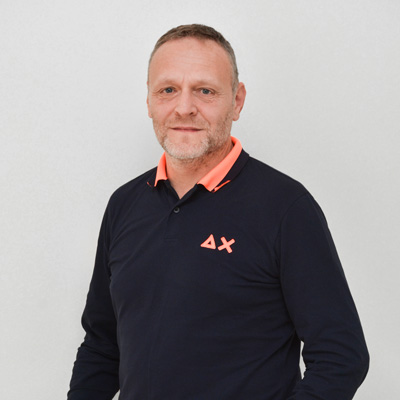
Nikolas Herbst is a Professor and Chair of Software Engineering at the Department of Computer Science, University of Würzburg. He leads research in Software Performance Engineering, High-Performance Data Processing, and Autonomic Computing. His work focuses on Cloud and Serverless Computing, Elasticity, and Time Series Analysis. He currently serves as JMU Chief Information Security Officer (CISO) and holds leadership roles in SPEC Research Groups and ICPE Steering Committees. Education: PhD in Computer Science (Karlsruhe Institute of Technology, 2018) Master of Computer Science (Karlsruhe Institute of Technology, 2012) Research Interests: His lab develops tools like CHAMELEON, TELESCOPE, and BUNGEE for cloud elasticity and performance analysis. He emphasizes benchmarking, resource demand estimation, and self-aware systems. Recent projects include real-time forest monitoring (ROOT) and serverless scientific computing (SOS). Teaching: Teaches Operating Systems, Performance Engineering & Benchmarking, and Self-Aware Computing at both undergraduate and graduate levels since 2012. Awards: 10 Year Most Impact Paper Award (ACM/SPEC ICPE 2023) SPEC Kaivalya Dixit Distinguished Dissertation Award (2019) IBM PhD Fellowship (2014) Grants & Projects: Coordinates DFG-funded projects like bidt-ROOT (2023–2026) and SOS (2025–2029). Leads development of open-source tools for cloud performance analysis, including WCF (Workload Classification & Forecasting).
Carsten Ellwein , Dr.-Ing., is a Postdoctoral Researcher at the Institute for Control Engineering of Machine Tools and Manufacturing Units (ISW) within the Cluster of Excellence IntCDC at the University of Stuttgart. His work focuses on cloud manufacturing, software-defined manufacturing, and digital twin integration, emphasizing distributed systems, data modeling, and requirements engineering. University: University of Stuttgart Role: Postdoctoral Researcher and Group Leader in 'Software and Engineering Methods' Research Interests: Ellwein investigates cloud manufacturing paradigms, self-adaptive digital twins, and integrative data processing across architecture, engineering, and construction (AEC) domains. He explores ambiguity-tolerant ontologies, reference architectures, and cross-platform device control mechanisms. Publication Trends: Recent articles address Asset Administration Shells for digital twin engineering, software-defined manufacturing frameworks, and data lakes bridging AEC silos. Earlier work includes cloud-service platforms for SMEs and microservice-oriented control for automotive factories. Teaching: Supervises bachelor's, study, and master's theses, integrating practical research into academic advising.
Amleto Di Salle is an Assistant Professor at the Gran Sasso Science Institute in Italy, specializing in Software Engineering , with a focus on Software Architecture , Model-Based Engineering , and Technical Debt . He previously served as a Research Fellow at the European University of Rome and earned a Ph.D. in Computer Science from the University of L’Aquila in 2015. Research Interests : Software Architecture Model-Driven Software Engineering Distributed Systems Composition Technical Debt and Code Smells Self-Adaptive Systems Digital Twins Recent Publications show a trend toward Deep Learning for Code Analysis , Model-Driven Architecture , and Distributed System Compliance . He has collaborated extensively on projects like CHOReVOLUTION and MATISSE . Teaching spans courses on Software Engineering , Model-Driven Development , and Java/J2EE Programming at institutions including the University of L’Aquila and European University of Rome.
Prof. Dr.-Ing. Piotr Wojciech Dabrowski is a faculty member at HTW Berlin - University of Applied Sciences , affiliated with the Department 4: Computer Science, Communication and Business . His academic rank is Professor, and he serves as a University Lecturer and Deputy Chair of the Examination Board for multiple programs. His research focuses on: Development of reproducible genome sequencing data pipelines using Nextflow Comparative algorithm analysis for evidence-based bioinformatics Machine learning applications in genome sequence identification Container/microservice architectures for federal budget systems Documentation systems for penetration tests in IT security Contact: Piotr.Dabrowski@HTW-Berlin.de . Office hours available in-person or online.
Praveen Kumar Donta is an Associate Professor (Docent) and Senior Lecturer at the Department of Computer and Systems Sciences, Stockholm University, Sweden. His research focuses on distributed computing continuum systems, learning-driven approaches for IoT and edge computing, and intelligent data protocols. He leads the Distributed Immersive Participation research group which investigates how humans and things can be more connected and exchange information in real and virtual societies. Education: Ph.D. in Computer Science & Engineering from Indian Institute of Technology (Indian School of Mines), Dhanbad (2021) Visiting Ph.D. Fellow at Mobile&Cloud Lab, University of Tartu, Estonia (2019-2020) Master in Technology from JNTUA, Ananthapur (2014) Bachelor in Technology from JNTUA, Ananthapur (2012) Dr. Donta's research centers on distributed computing continuum systems that integrate cloud, edge, and IoT devices to deliver scalable and low-latency computing resources. His work explores learning techniques in IoT, AI/ML for computing systems, cognition and causality in computing systems, and cyber-physical continuum applications. He investigates how human body analogies can inform the design of more resilient and efficient distributed systems, as well as developing frameworks for privacy enforcement, equilibrium in computing continuum systems, and energy-efficient user interactions with smart environments. His research has significant applications in smart city management, satellite services, and intelligent transportation systems. Dr. Donta's publication record demonstrates a strong focus on the intersection of distributed systems, machine learning, and privacy-preserving technologies. His recent work shows an increasing emphasis on human-inspired approaches to distributed computing, with particular attention to making these systems more interpretable, efficient, and adaptable. His research spans theoretical foundations of computing continuum systems to practical implementations in areas like satellite services, smart environments, and anomaly detection. Scientific Awards and Recognition: IEEE Senior Member ACM Professional Member Dr. Donta serves as an editorial board member for several prestigious journals including IEEE Internet of Things Journal, Computing (Springer), Transactions on Emerging Telecommunications Technologies (Wiley), Measurement, and Computer Communications (Elsevier). He actively mentors the next generation of researchers, currently supervising PhD student Alfreds Lapkovskis and co-supervising Shubham Vaishnav. His research is supported by projects such as the Heterogeneous Computing Continuum for a Sustainable Smart City Management (HCSCM), which aims to develop scalable, secure solutions for urban environments by integrating IoT, edge, and cloud computing. As part of the Distributed Immersive Participation research group, Dr. Donta collaborates with researchers across disciplines to explore how technological advances enable humans and things to be more connected. The group focuses on application areas such as culture, transport, intelligent vehicles and e-health, developing solutions that enhance participation in both real and virtual societies.
Dimitrios Dechouniotis is an Assistant Professor at the Department of Electrical and Computer Engineering within the School of Electrical and Computer Engineering at the University of Patras . His career spans roles in academia, research institutions, and public administration. 2004: Diploma in Electrical Engineering (University of Patras) 2006: MSc in Automation Systems (NTUA) 2014: PhD in Electrical and Computer Engineering (University of Patras) His research focuses on Systems & Control Theory , Cyber-Physical Systems , Robotics , Cloud Computing , and 5G Communications . Recent publications highlight work in edge computing , network slicing , and resource orchestration for IoT and robotics applications. He has participated in over 10 national and European research projects related to telecommunications and Industry 4.0. His technical contributions include frameworks for edge-cloud continuum orchestration , blockchain-based slice orchestration , and energy-aware resource allocation , with a strong emphasis on system modeling and control-theoretic approaches. Contact: dechouniotis@uop.gr | Office: Building Z, 2nd Floor
Prof. Dr. Vlado Stankovski serves as Full Professor and Vice Dean at the University of Ljubljana's Faculty of Computer and Information Science, leading major EU-funded initiatives including EBSI-VECTOR (€14.5M), TRUSTCHAIN (€12M), and ONTOCHAIN (€6M) focused on blockchain integration, decentralized systems, and next-generation internet protocols. His research spans software engineering, cloud/edge/fog computing, distributed systems, semantics, and artificial intelligence, with particular emphasis on blockchain applications for smart contracts, digital identity (eIDAS2), and knowledge management. Current projects address real-world implementations in smart construction, healthcare traceability, educational credentialing, and public administration digitalization. Analysis of his 2020-2023 publications reveals dominant trends in decentralized architectures, with 70% of works integrating blockchain with semantic web standards (W3C DID) and fog computing. Key application areas include service-level agreement management (25%), smart construction ecosystems (20%), and cross-border AI/data governance (15%), demonstrating strong industry-academia collaboration through Horizon Europe and EU digital identity frameworks. As scientific coordinator of TRUSTCHAIN and ONTOCHAIN managing over €50M in combined funding, he mentors students through thesis topics in blockchain development and decentralized systems. His laboratory work at the Data Technologies Laboratory supports courses in computer science fundamentals, communications security, and fog computing for smart services, with active involvement in EU skills initiatives like ESSA for software competency standardization.
Pascal Mérindol is an Associate Professor in Computer Science at the University of Strasbourg, affiliated with the ICube Lab (UMR CNRS 7357) and the Network Research Group. His academic career spans roles in routing, internet measurements, and network security. He obtained his HDR (Habilitation to Direct Research) in 2022 and leads the national ANR project NanoNet (2019-2022). He has served on the Editorial Board of Elsevier's Computer Communications Journal (2016-2020) and contributed to European projects like GN4 (2016-2018) and TRILOGY (2008-2011). Research interests include: Multipath and Loop-Free Routing: Developing algorithms for network reliability and fast rerouting in wired intra-domain networks. Internet Measurements: Tools like MERLIN and mrinfo for topology discovery, MPLS signatures, and fingerprinting. Energy-Efficient Wireless Networks: Distributed heuristics for MLST (Maximum Leaves Spanning Tree) to optimize battery usage. Fast IP Protection: Schemes for tunnel protection and restoration in IP networks. His work has been published in journals such as IEEE Transactions on Networking (TON), Computer Networks (COMNET), and conferences including INFOCOM and IMC. He mentors PhD students like François Clad and has contributed to teaching modules on networks, protocols, distributed systems, and performance evaluation at the University of Strasbourg.
Professor Kim Jong-hyun serves in the Department of Information Security at Sejong University, directing the Network Security Lab which develops core security technologies for cyberattack response, cloud security, and mobile communications security in evolving digital environments. The lab actively participates in international standardization efforts. His research spans critical cybersecurity domains: Network and 5G Security Drone (UAV) Security Systems AI-Driven Malware Detection Cloud Infrastructure Protection Mobile Communications Vulnerability Analysis Base Station Authentication Mechanisms 2024 publications reveal concentrated research on wireless security challenges, particularly fake base station threats in 5G networks, container security in cloud-native environments, and deep learning applications for UAV location integrity. His work bridges theoretical models with practical implementations for next-generation network security. No scientific awards are documented in the provided materials. Professor Kim actively supervises graduate research through Master's thesis and Doctoral Dissertation courses in the Graduate School of Information Security, while teaching specialized courses including Mobile Communications Security and Advanced C Programming. His advising focuses on emerging security threats in telecommunications infrastructure. The Network Security Lab (Se212C) functions as an operational hub for hands-on security research, with interview procedures requiring direct email contact for prospective students.
Sonia Fahmy is a Professor and Associate Department Head in the Department of Computer Science at Purdue University. She joined Purdue in 1999 and was recently elevated to IEEE Fellow status. Fahmy is a member of CERIAS (Center for Education and Research in Information Assurance and Security) and has made significant contributions to network architectures and protocols research. Research Interests: Design and evaluation of network architectures and protocols Network support for virtual reality applications Network measurement and management Cellular networks optimization and security Network experimentation methodologies Professor Fahmy's research has evolved to address emerging challenges in networking, with recent work focusing on virtual reality networking, 5G security, and quality-of-experience optimization. Her publications reveal a consistent trajectory from fundamental network protocol design toward addressing the specific requirements of modern applications like VR and volumetric video streaming. Scientific Awards: IEEE Fellow National Science Foundation CAREER Award (2003) Professor Fahmy has successfully mentored numerous PhD students who have gone on to careers at leading technology companies and academic institutions. Her research has been supported by substantial funding from the National Science Foundation, Department of Homeland Security, and industry partners including Cisco, Meta, Juniper Networks, and AT&T. She leads several active research projects including network support for virtual reality applications (NSF and Meta projects), network measurement and management (Juniper Networks and GENI Project), cellular networks security (NSF projects), and network experimentation (DHS and NSF projects).
Umakishore Ramachandran is a Professor in the School of Computer Science at Georgia Institute of Technology's College of Computing, where he directs the Embedded Pervasive Lab. He received his Ph.D. from the University of Wisconsin-Madison in 1986 and has led transformative initiatives including the Online MS in Computer Science (OMSCS) program. His research spans distributed systems, edge computing, and real-time sensor networks, with applications in smart surveillance and connected vehicles. His research interests include architectural design of parallel/distributed systems, large-scale situation awareness using camera networks, cloud-edge continuum optimization, and latency-sensitive applications for geo-distributed infrastructures. Recent work focuses on elevating edge computing to parity with cloud resources. His publications show strong emphasis on edge computing innovations (MicroEdge, FogStore), real-time video analytics (EVA, ClairvoyantEdge), and adaptive mobile systems (Foresight). Trends include multi-tier architectures, quality-of-experience optimization, and scalable processing for IoT workloads. Major Awards: IEEE Fellow (2014) NSF Presidential Young Investigator (1990) ACM/IFIP Middleware Best Paper (2022) 3x College of Computing Dean's Awards He has advised 40+ PhD students, with recent graduates at Google, Microsoft, and academia. Current NSF/CPS grants support his work on geo-distributed latency-sensitive applications. He co-leads the STAR Center and Samsung-funded embedded software programs. His Embedded Pervasive Lab develops systems like Stampede (stream processing) and DFuse (sensor fusion), with testbeds in the Aware Home and transportation networks. Teams collaborate with Intel, Microsoft, and Bosch on edge-AI deployments.
Konstantinos Kallas serves as Assistant Professor of Computer Science at the University of California, Los Angeles (UCLA), commencing his appointment in January 2025. Previously affiliated with the University of Pennsylvania as evidenced by his 2020 PLDI contribution, his research bridges theoretical formal methods with practical systems engineering across multiple high-impact conferences including PLDI, POPL, and SPLASH. His research program centers on enhancing computational efficiency and correctness in systems software, with three flagship projects defining his trajectory: PaSh for automatic shell script parallelization, Durable Functions for stateful serverless computing semantics, and DiffStream for differential testing of stream processing. These efforts consistently target the intersection of programming language theory and real-world systems constraints, particularly in parallelism, concurrency, and cloud-native environments where correctness guarantees are challenging to implement. Analysis of his publication history since 2020 reveals a methodological pattern: developing formal semantic models to enable practical optimizations in distributed systems. His work increasingly focuses on serverless architectures and data-intensive pipelines, with recent contributions emphasizing automated verification techniques. The evolution from shell script optimization (2020-2021) to serverless state management (2021-2022) demonstrates strategic expansion into cloud computing's hardest problems. Dr. Kallas actively contributes to the academic community through program committee service for PLDI (2022, 2025), POPL (2021, 2022, 2023), and SPLASH (2020-2023), including leadership roles as Publicity Co-Chair for PLDI 2025 and 2026. His June 2024 announcement confirms recruitment for Fall 2025 students at UCLA, targeting researchers interested in systems, compilers, and programming languages who can advance his work on correctness-preserving parallelization and serverless computing.
Matteo Camilli is an Associate Professor in the Department of Electronics, Information and Bioengineering (DEIB) at Politecnico di Milano, Italy, where he leads research in software engineering and verification. His academic journey includes positions as Assistant Professor at Free University of Bozen-Bolzano and postdoctoral research at the University of Milan and University of Bergamo. His educational background includes a PhD in Computer Science (2015), MSc in Computer Science (2012), and BSc in Computer Science (2009), all from the University of Milan. His doctoral research focused on combining advanced abstraction techniques and big data approaches to address state explosion problems in formal verification. Camilli's research primarily centers on software verification, testing, and methods to improve dependability of autonomous, cyber-physical, service-based, and ML-enabled critical systems. His work spans formal methods, model-based testing, uncertainty quantification, and design-time/runtime verification with applications to complex distributed systems. His recent publications reflect a growing focus on explainable self-adaptation, quality assurance for LLM-based systems, and managing uncertainty in adaptive systems. His publication record includes papers in top journals (TOSEM, TAAS, JSS, EMSE) and conferences (ICSE, ISSRE, ICST, ICSA). He serves on program committees for prestigious conferences including ICSE, ICSA, ICST, and ECSA, and is on the steering committee for the International Workshop on Formal Approaches for Advanced Computing Systems (FAACS). Camilli actively contributes to the academic community through conference organization, including serving as Program Committee Member for numerous conferences and as Program Co-Chair for the Software Architecture track at ACM SAC. He also serves as guest editor for special issues on automated testing and dependable AI systems. His teaching portfolio at Politecnico di Milano includes Software Engineering 2, Software Engineering for Automation, and Distributed Software Development. Previously at Free University of Bozen-Bolzano, he taught Systems Engineering and Verification and Reliability for Dependable Systems.
Zhen Dong is an Associate Professor at Fudan University, China, specializing in software engineering with a focus on software reliability and security, particularly in mobile computing. Previously, he was a PostDoc and Senior Research Fellow at the National University of Singapore under the guidance of Abhik Roychoudhury. His educational background includes: PhD in Computer Science from Heidelberg University (2017), advised by Prof. Artur Andrzejak Dr. Dong's research centers on developing techniques and tools for improving software reliability and security. His work spans mobile application testing, Android security, flaky test detection, and vulnerability localization. He has made significant contributions to the field of software testing and analysis, with a particular emphasis on practical applications for mobile systems. His research bridges theoretical foundations with real-world software engineering challenges. Analysis of Dr. Dong's recent publications reveals a strong focus on leveraging AI/ML techniques for software engineering tasks, particularly using LLMs for test automation and program analysis. His work consistently addresses critical challenges in mobile computing, especially Android application reliability and security. There's a clear trajectory toward more sophisticated analysis techniques, from traditional testing methods to AI-driven approaches. His notable scientific achievements include: ACM Distinguished Paper Award at ICSE'20 Best Paper Award at AsiaCCS'21 (1/370 submissions) ASE'22 Distinguished Reviewer Award Dr. Dong serves on the Board of Distinguished Reviewers for ACM Transactions on Software Engineering and Methodology and has been an active member of numerous program committees for top software engineering conferences including ICSE, ASE, and ISSTA. His service to the academic community extends to reviewing for prestigious journals such as IEEE Transactions on Software Engineering and Methodology and ACM Transactions on Software Engineering and Methodology. His research has been supported through various academic channels, enabling him to maintain an active lab focused on software testing and analysis, particularly for mobile platforms. The lab has produced numerous tools and techniques that have influenced both academic research and industrial practice in software reliability.
陳恭 is a Professor at the Department of Information Management, College of Business, National Chengchi University. With expertise spanning blockchain technology, information security, and software engineering, he has established himself as a leading academic in Taiwan's fintech research community. His work bridges theoretical computer science with practical business applications, particularly in digital finance and secure information systems. Dr. 陳恭 earned his PhD in Computer Science from Yale University (1989-1994), following Bachelor's and Master's degrees from National Taiwan University. His academic journey at National Chengchi University spans over two decades, progressing from Associate Professor to his current position as Professor, with significant administrative roles including Department Chair and Director of the Computer Center. Professor 陳恭's research primarily focuses on blockchain and smart contracts, Open API technology and security, social big data analysis, and programming languages. His work demonstrates a clear evolution from foundational programming language research to cutting-edge blockchain applications. He has made significant contributions to secure multi-party computation, aspect-oriented programming, and blockchain-based systems, with publications in top journals and conferences across computer science, public administration, and business innovation. An analysis of Professor 陳恭's recent publications (2016-2024) reveals a strong concentration on blockchain technology and its financial applications, particularly in smart contracts, consensus algorithms, and secure data dissemination. His research increasingly integrates with IoT systems and demonstrates practical applications in financial technology, showing a clear trajectory from theoretical foundations to real-world business solutions. His notable achievements include: Senior Excellent Teacher (20 years) from National Chengchi University Multiple Distinguished Professor appointments Special Outstanding Talent Award from the National Science Council Multiple Internationalization Excellent Research Awards Professor 陳恭 has secured numerous research grants from both governmental agencies like the Ministry of Science and Technology and private sector organizations including financial institutions and technology companies. His projects often focus on blockchain applications, fintech innovation, and information security, demonstrating strong industry-academia collaboration. He is actively involved in establishing National Chengchi University as a leading center for blockchain research in Taiwan, contributing to research centers focused on fintech innovation and digital transformation. His work has fostered significant collaborations between academia and industry in the rapidly evolving field of digital finance.