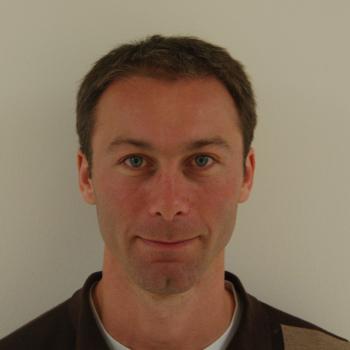
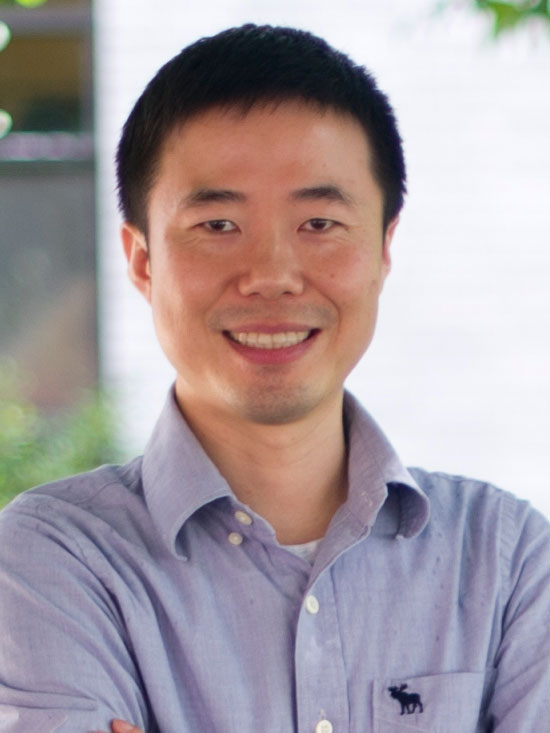
Changhuei Yang is the Thomas G. Myers Professor of Electrical Engineering, Bioengineering, and Medical Engineering at California Institute of Technology, serving as Executive Officer for Electrical Engineering and Investigator at Heritage Medical Research Institute. He holds a Ph.D. and three master's degrees from MIT, with appointments at Caltech since 2003. Research focuses on: Advanced microscopy techniques including Fourier Ptychography Wavefront shaping for biological tissue imaging Optical phase conjugation for deep-tissue applications Compact medical devices for cerebral monitoring Publications demonstrate leadership in computational imaging, with recent advances in stain-free embryo analysis, portable cerebral blood flow monitors, and high-resolution volumetric imaging techniques using neural representations. Honored as National Academy of Inventors member. Research applications span deep-tissue biochemical imaging, incisionless surgery, and optogenetic activation systems.
Prof. Vasilis Ntziachristos is a Professor and Chair of Biological Imaging at the Technical University of Munich (TUM), leading the Institute of Biological and Medical Imaging at the Helmholtz Centre Munich. His research focuses on developing novel optical and optoacoustic imaging techniques for early disease detection, diagnostics, and theranostics. He holds a PhD in Bioengineering from the University of Pennsylvania and previously served as an Assistant Professor at Harvard University and Massachusetts General Hospital. Affiliations: TUM School of Medicine and Health, Helmholtz Munich, Institute of Biological and Medical Imaging. Key Research Themes: Non-invasive imaging methods, molecular imaging, optoacoustic technology, and clinical translation. His work bridges theoretical developments with clinical applications, including advancements in glucose monitoring, cancer imaging, and drug delivery systems. Notable awards include the Leibniz Prize (2013) and the World Molecular Imaging Society Gold Medal (2015). Labs/Teams: Imaging to Sensing I2S, Optoacoustic Mesoscopy, Fluorescence Imaging, and AI in Optoacoustics. Grants/Projects: Involvement in Horizon Europe initiatives and collaborations with TranslaTUM and Helmholtz Munich. Prof. Ntziachristos actively contributes to education via courses like 'Biological Imaging' and 'Introduction to Bioengineering', fostering the next generation of imaging scientists.
Prof. Knut Drescher is an Associate Professor at the Biozentrum, University of Basel , leading a research group focused on bacterial biofilms , swarming , and microbial multicellularity . Previously, he served as a Professor of Biophysics and Max Planck Research Group Leader at Philipps-Universität Marburg (2015-2021) and conducted postdoctoral research at Princeton University. Research Interests: Physical and biological mechanisms of biofilm formation Cell-cell interactions in microbial communities Antibiotic resistance in biofilms Hydrodynamics of bacterial swarms Evolution of cooperation in multispecies biofilms Development of bioimaging software (BiofilmQ, BacStalk) Scientific Awards: 2023: SNSF Consolidator Grant 2019: Heinz Maier-Leibnitz Prize (DFG), VAAM Research Prize, IUPAP Young Scientist Prize 2016: ERC Starting Grant Advising & Grants: Advises PhD and Master's students in microbiology, biophysics, and bioinformatics Secured major grants from ERC , HFSP , and DFG
Professor Yiming Ying is a faculty member in the Faculty of Science at the University of Sydney, where he joined in December 2023. Previously, he held tenured positions at SUNY Albany (Departments of Mathematics & Statistics and Computer Science) and was a Lecturer at the University of Exeter. He completed his PhD in Mathematics at Zhejiang University (2002) and postdoctoral training at CityU Hong Kong, UCL, and University of Bristol. Research Focus His research spans statistical learning theory, optimization algorithms, trustworthy AI, and data science mathematics. Key applications include cancer informatics for early detection. His work aligns with Faculty research strengths in Data and Decisions and Decision-Making for a Sustainable Future. Recent Research Trends Analysis of recent publications shows strong focus on theoretical foundations of machine learning: differential privacy, fairness algorithms, optimization methods for AUC maximization, generalization guarantees, and robust learning techniques for adversarial settings and biological data. Awards and Honors SUNY Chancellor’s Award for Excellence (2023) University at Albany Presidential Research Award (2022) University of Exeter Merit Award (2012) Grants and Advising Significant funding includes current ARC DP250101359 (2025-2028) and multiple past NSF grants. He founded the UALBANY Machine Learning Group and currently advises PhD student Peilin LIU on operator learning.
Professor Robert McLaughlin is a faculty member in the School of Biomedicine at the University of Adelaide, affiliated with the Faculty of Health and Medical Sciences. He leads the Bioengineering Imaging Group and serves as Managing Director of the start-up Miniprobes. His research focuses on developing optical imaging technologies, including non-invasive tools for blood flow assessment and miniaturized imaging probes. He has secured over $14M in research grants and holds an h-index of 45 with 98 journal papers, 7 patents, and 2 book chapters. Prof. McLaughlin’s career includes roles at the University of Oxford and Siemens Medical Solutions, followed by academic leadership since 2007. His innovations span optical coherence tomography (OCT), fluorescence imaging, and dual-modality systems for clinical applications. Awards include the 2014 WA Innovator of the Year, 2015 Australian Innovation Challenge, and 2016 South Australian Premier’s Research Fellowship. His research emphasizes practical medical solutions, such as imaging needles for deep-tissue diagnostics and optical devices for real-time surgical monitoring. The Bioengineering Imaging Group collaborates with industry and academia to translate technologies into clinical practice.
James Van Etten is the William Allington Distinguished Professor of Plant Pathology at the University of Nebraska-Lincoln, affiliated with the School of Biological Sciences and Nebraska Center for Virology. His research focuses on chloroviruses—large dsDNA viruses infecting Chlorella-like algae—with emphasis on DNA replication, restriction systems, and membrane transport proteins. Key research themes include: Viral DNA modification systems Host-virus interactions Structural virology Evolution of organellar genomes Recent work analyzed: SMRT sequencing of viral methylation patterns Chlorovirus cryopreservation methods Potassium channel biophysics Host chemical signaling mechanisms Lab webpage: vanettenlab.unl.edu
Christoph F. Schmidt is the Hertha Sponer Distinguished Professor of Physics at Duke University with cross-appointments in the Thomas Lord Department of Mechanical Engineering and Materials Science, Biology, and Biomedical Engineering. He serves as Co-Director of the Duke Materials Initiative and leads an active research program at the intersection of physics and biology. His educational background includes a D.R. from the Technical University of Munich (Germany) in 1988. Schmidt has established himself as a leading researcher in biophysics through decades of innovative work. Professor Schmidt's research spans multiple scales of biological organization, from single molecules to whole organisms. His lab investigates cellular mechanics using advanced techniques including optical trapping, atomic force microscopy, and microrheology. A significant innovation from his group involves single-walled carbon nanotubes for high-bandwidth intracellular tracking. Current research focuses on cardiomyocyte mechanics, Drosophila tissue dynamics, and computational analysis of complex biological systems. His work on motor proteins like Eg5 and ncd has provided fundamental insights into cellular division mechanics. His recent publications (2021-2025) demonstrate increasing integration of computational approaches with experimental biophysics, particularly in analyzing cardiac tissue mechanics and Drosophila sensory systems. The work shows progression from fundamental biophysical measurements toward applications in understanding disease mechanisms and biological function. Professor Schmidt teaches several courses including PHYSICS 995 (Graduate Training Internship), PHYSICS 493 (Research Independent Study), PHYSICS 415 (Biophysics II), PHYSICS 174 (Introduction to Frontiers of Biophysics), and BIOLOGY 425 (Biophysics II). He has successfully mentored numerous graduate students to completion, including recent PhD graduates Dr. Mingru Li and Dr. Xiaoxuan Jian. The Schmidt Lab, part of Duke's Physics Department and the Duke Soft Matter Center, maintains state-of-the-art equipment for optical trapping, atomic force microscopy, and advanced light microscopy. The lab participates in the Triangle Soft Matter Workshop, fostering collaborations with researchers from Duke, UNC Chapel Hill, and NC State University. Current research directions include mechanical responses of suspended cells, tracking non-equilibrium cellular fluctuations, nuclear mechanics, and bacterial membrane mechanics under turgor pressure.
Jason Ritt is an Associate Professor of Brain Science (Research) and Scientific Director of Quantitative Neuroscience at the Robert J. and Nancy D. Carney Institute for Brain Science, Brown University. He holds affiliations with the Data Science Institute and collaborates across disciplines on quantitative research methods. Education : B.S., M.A., and Ph.D. in Neuroscience from Boston University (1997–2003). Research : Focuses on neural processing during active sensing and neuroengineering for neurostimulation. Combines electrophysiology, optogenetics, and theoretical approaches in rodent models. Develops closed-loop systems for studying sensory neural prosthetics and brain-machine interfaces. Key areas include synaptic diversity, neurocontrol algorithms, and sensory restoration. Teaching : Instructs NEUR 2100 NeuroPracticum, integrating hands-on neuroscience research training.
Prof. Waldemar Kolanus leads the Molecular Immunology and Cell Biology department at the University of Bonn's Life & Medical Sciences Institute (LIMES) . His research bridges immunoregulation , stem cell dynamics , and metabolic stress responses in immune cells. Unit 2 member at LIMES Principal investigator in SFB 704 and ImmunoSensation Cluster Leads a multidisciplinary lab with postdocs, PhD students, and technical staff His work focuses on intracellular signaling pathways connecting immune activation to tissue homeostasis, particularly through: Cytohesin proteins in integrin-mediated adhesion and migration TRIM71 in stem cell regulation and congenital hydrocephalus High-salt environments affecting macrophage function Publication trends show expertise in immune cell migration , genetic models , and chemical inhibition , with frequent use of mice and zebrafish for in vivo studies. Key articles explore: TRIM71's dual role in auditory development and germ cell maintenance Cytohesin family's Golgi regulation and insulin signaling Ruxolitinib's off-target migration inhibition of dendritic cells Contact details: Address: LIMES Institute, Carl-Troll-Straße 31, Bonn Email: kolanus.sekretariat@uni-bonn.de Phone: +49 228 73-62788
Qian Yang is an Assistant Professor in Information Science at Cornell University, with a faculty appointment in Computer Science. Her research focuses on human-AI interaction, designing AI applications for healthcare, autonomous systems, and UX design. She holds a PhD in Human-Computer Interaction from Carnegie Mellon University and has industry experience in design consultancy (2007–2014). Yang co-directs the Cornell Digital and AI Literacy Initiative and is a Senior Fellow at the Cornell Brooks Tech Policy Institute. Her work emphasizes bridging AI technologies with societal needs, supported by awards like the Schmidt Futures AI2050 Fellowship. She leads the DesignAI research group, focusing on AI-driven design methods and tools for practitioners. Education: PhD in HCI (Carnegie Mellon), M.S. in HCI (CMU), M.Des in Design, B.Eng in Industrial Design (Shanghai Jiao Tong University). Research interests include AI ethics, healthcare decision support systems, and context-aware mobile services. Notable contributions include: Developing AI systems for life-critical healthcare decisions (e.g., artificial heart implants) Innovating UX design methods for integrating AI into practice Advancing human-centered AI evaluation frameworks Awards include the SIGCHI Outstanding Dissertation Award and AI2050 Fellowship. She actively collaborates across disciplines, with work published in top HCI venues like CHI and ACM Transactions.
Amit Singer is a Professor of Mathematics at Princeton University and a member of the Program in Applied and Computational Mathematics (PACM). He joined Princeton in 2008 after serving as a Gibbs Assistant Professor at Yale University's Department of Mathematics from 2005 to 2008. His research spans theoretical and computational aspects of data science, with a focus on structural biology and methods like cryo-electron microscopy. Education : B.Sc. in Physics and Mathematics (1997), Ph.D. in Applied Mathematics (2005) from Tel Aviv University, Israel. Research Interests : Singer leads advancements in computational methods for structural biology, particularly analyzing noisy data from cryo-EM. His work integrates applied mathematics with disciplines like random graph theory, sensor networks, and diffusion processes. Recent contributions combine representation theory with network construction to extract molecular structures from 2D images. Scientific Awards : Moore Investigator in Data-Driven Discovery Award (2014) Simons Investigator Award (2012) Presidential Early Career Award for Scientists and Engineers (2010) Alfred P. Sloan Research Fellowship (2010) Haim Nessyahu Prize in Mathematics (2007) Singer collaborates extensively with interdisciplinary teams, advancing the application of mathematics to real-world scientific challenges.
Jeremy Dahl is a Professor of Radiology (Pediatric Radiology) at Stanford University School of Medicine. He directs the Ultrasound Imaging & Instrumentation Lab and serves as Director of Research Academic Affairs in the Department of Radiology since 2020. He holds multiple affiliations across Stanford including Bio-X, the Cardiovascular Institute, Wu Tsai Human Performance Alliance, Maternal & Child Health Research Institute, Stanford Cancer Institute, and Wu Tsai Neurosciences Institute. Dr. Dahl received his B.S. in Electrical Engineering from the University of Cincinnati (1999) and Ph.D. in Biomedical Engineering from Duke University (2004). His research focuses on developing ultrasonic beamforming and image reconstruction methods for diagnostic imaging applications, particularly techniques that generate high-quality images in difficult-to-image patients. His laboratory specializes in B-mode and Doppler imaging techniques that utilize additional information from ultrasonic wavefields to improve image quality and develop real-time imaging systems for clinical applications including cardiac, liver, and fetal imaging. Dr. Dahl's research has led to significant advancements in ultrasound molecular imaging platforms, sound speed estimation, aberration correction, and reverberation noise suppression. His work often bridges engineering innovation with clinical applications for cancer detection and other diseases. His recent publications demonstrate strong focus on machine learning applications in ultrasound, distributed aberration correction, and molecular imaging techniques. Fellow, American Institute of Ultrasound in Medicine (2021) Senior Member, Institute of Electrical and Electronics Engineers (2020) Distinguished Investigator Award, The Academy for Radiology & Biomedical Imaging Research (2018) Outstanding Paper Award, IEEE Ultrasonics, Ferroelectrics, and Frequency Control Society (2011) Dr. Dahl serves in editorial roles for major journals including IEEE Transactions on Medical Imaging (2017-2024) and IEEE Transactions on Ultrasonics, Ferroelectrics, and Frequency Control (2013-Present). His laboratory has successfully translated numerous innovations into clinical applications, with multiple patents including recent developments in pulsed focused ultrasound therapy and speed of sound quantification.
Sophie Sanchez is an Associate Professor at Uppsala University's Department of Organismal Biology, specializing in Evolution and Development. Her research focuses on vertebrate evolution, using advanced imaging techniques like synchrotron microtomography to study fossilized anatomy and developmental processes. She has contributed significantly to understanding sensory organ evolution in jawed vertebrates, early tetrapod development, and the structural adaptations of ancient fish. Key work includes studies on placoderms, osteostracans, and the molecular bases of evolutionary innovations. Her findings bridge paleontology with developmental biology, employing cutting-edge microscopy to reveal hidden biological details in fossils. Publications highlight her expertise in fossil musculature, bone histology, and genomic evolution, with high-impact contributions to journals like Nature and Science . Collaborative projects involve global teams analyzing Devonian and Permian vertebrates, emphasizing interdisciplinary approaches to evolutionary questions.
Damek Davis serves as an Associate Professor of Statistics and Data Science and Co-Academic Director of the Dual Master's Degree in Statistics at the Wharton School, University of Pennsylvania. His academic base is the Department of Statistics and Data Science within the Wharton School, with his office located at the Academic Research Building in Philadelphia, PA. His research expertise centers on optimization theory for data science, with deep specialization in nonsmooth and stochastic optimization problems. Key focus areas include convergence analysis of first-order methods, variance reduction techniques, and theoretical guarantees for algorithms in nonconvex settings. His work bridges mathematical rigor with practical applications in machine learning and statistical inference, particularly in developing efficient computational frameworks for large-scale data analysis. Analysis of his 2022-2024 publications reveals dominant themes in optimization for modern data challenges: nonsmooth stochastic approximation, linear convergence under sharpness conditions, and global optimality in mixture models. His research consistently appears in premier venues across optimization (Mathematical Programming, SIAM Journal), statistics (The Annals of Statistics), and machine learning (IEEE Transactions), demonstrating cross-disciplinary impact in both theoretical foundations and computational methodologies.
Yongmin Liu is a Professor in Mechanical and Industrial Engineering and Electrical & Computer Engineering at Northeastern University, and a member of the Cross-College Magnetics Center. He holds a PhD in Applied Science and Technology from UC Berkeley (2009), with earlier degrees from Nanjing University. His research focuses on nano-optics, metamaterials, plasmonics, and their applications in optical devices and systems. His interdisciplinary work bridges engineering, physics, and AI, with notable contributions to metasurface design and optical neural networks. Education: PhD, Applied Science and Technology, UC Berkeley (2009) M.S. and B.S., Physics, Nanjing University (2003, 2000) Research Interests: Nano-optics, nanoscale materials engineering, metamaterials, plasmonics, and applied physics. His group develops novel optical materials and devices for applications like super-resolution imaging, efficient light harvesting, and biomedical detection. Recent projects include AI-driven photonic materials design and meta-optical neural networks. Key Achievements: Recipient of the Søren Buus Outstanding Research Award (2024) NSF CAREER Award (2017) and ONR Young Investigator Award (2016) Elected SPIE Fellow (2023) and Optica Fellow (2023) Lab & Collaborations: Head of the Yongmin Liu Research Group, collaborating with institutions like Georgia Tech and Purdue University. Recent grants include a $1.5M NSF DMREF grant for AI-driven photonic materials and a $468K NSF grant for meta-optical neural networks.