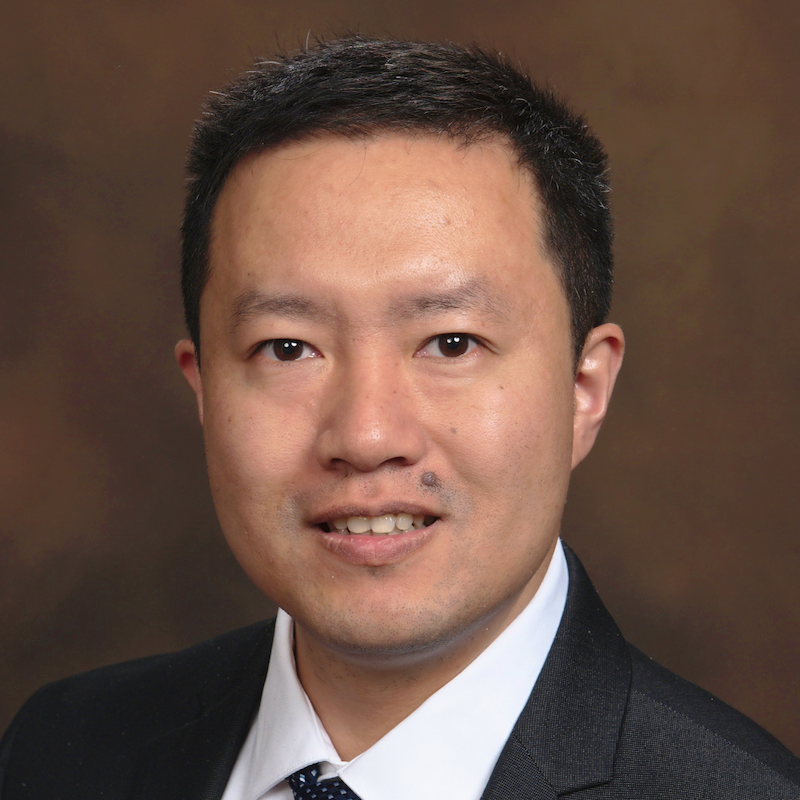
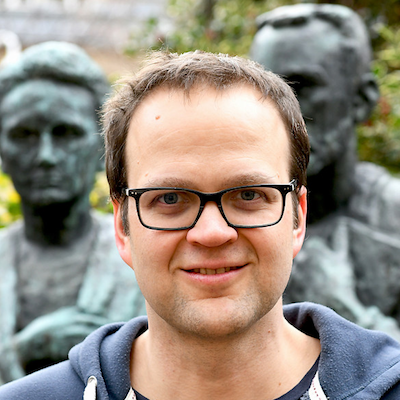
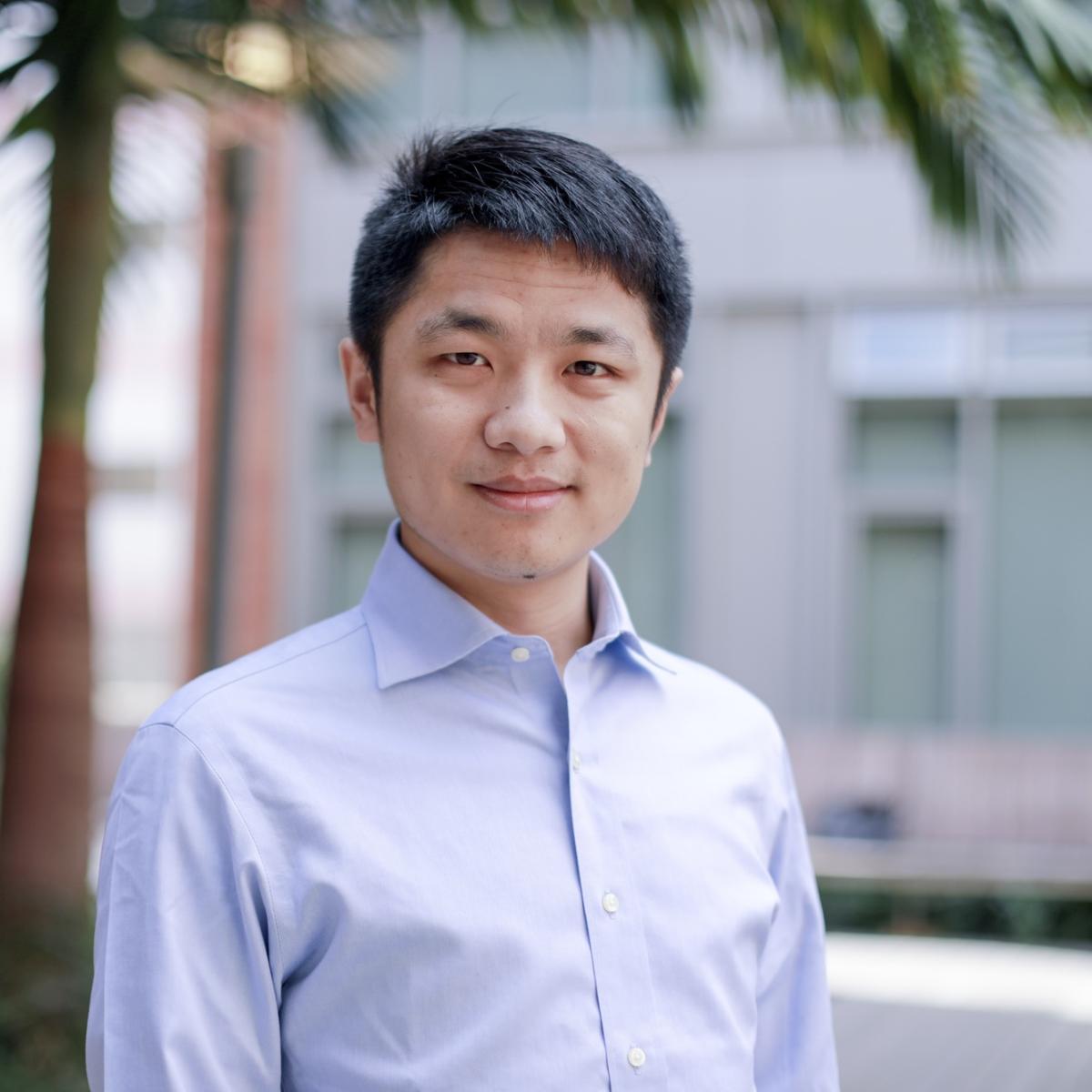
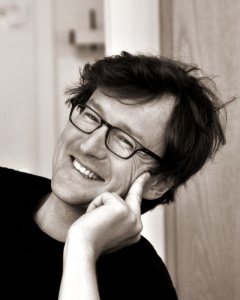
Charless Fowlkes is a Professor in the Department of Computer Science at the University of California, Irvine (UCI). His research focuses on computational vision, spanning human visual system understanding, machine vision systems, and applications in biomedical informatics and forensic science. He holds a Ph.D. from UC Berkeley (2005). His work integrates techniques from computer vision, AI, and applied mathematics to address challenges in automated biological data analysis, morphology, and spatial gene expression. Key research areas include forensic science (e.g., shoeprint matching via 3D reconstruction), biomedical applications (e.g., heart function mapping and pollen classification), and AI-driven systems for scene understanding. Recent projects include a $20M forensic science center funded by the National Institute of Justice. His publications emphasize geometric reasoning, 3D reconstruction, and adaptive learning algorithms. Notable contributions include developing algorithms for 3D human pose estimation with scene constraints, automated pollen identification via CNNs, and frameworks for cross-domain forensic analysis. His work bridges theoretical computer vision with real-world applications in forensics, healthcare, and environmental science.
Dr. Min Xu is a Courtesy Professor in the Computational Biology Department within the School of Computer Science at Carnegie Mellon University. His research focuses on advancing computer vision and machine learning for biomedical image analysis, particularly cellular cryo-electron tomography (Cryo-ET) and automated science video analysis. He leads a lab developing cutting-edge computational tools for structural biology and medical imaging. Key research directions include: High-resolution 3D Cryo-ET image analysis AI-driven medical image segmentation Few-shot learning for cryo-EM analysis Video analysis frameworks for laboratory automation Notable contributions include the AITom toolkit for Cryo-ET analysis and pioneering work in adapting foundation models for medical imaging tasks. His work has been published in top venues like CVPR, MICCAI, and Nature-associated journals. No academic awards or grants are explicitly listed in the provided text. He maintains an active lab focused on translating computational methods into impactful biomedical research tools.
Dr. Richard Gault is a Lecturer in the School of Electronics, Electrical Engineering and Computer Science at Queen's University Belfast. His research focuses on computer vision and deep learning applied to microscopy data, particularly in medicine, health, and life sciences. He leads a team developing novel methods for medical image analysis, including histopathology and digital pathology, with applications in cancer diagnosis and environmental science. He is actively involved in teaching, having received Excellence in Teaching awards from Queen's University Belfast in 2019 and 2022. His work bridges computational intelligence and healthcare, with notable contributions to AI-driven diagnostics, stain normalization in histopathology, and multimodal data fusion. Dr. Gault's research interests include ensemble learning, fuzzy systems, and generative models like diffusion networks. He supervises multiple PhD students and has mentored graduates now working in machine learning engineering and postdoctoral research. His team’s achievements include awards such as the 2023 Best Oral Presentation at the Pan Ireland Ophthalmology Day and a 2021 Best Paper Award from his school. Key contributions include the LymphoSight AI application for detecting lymphoid structures and HistoClean , open-source software for improving CNN development in histopathology. He has been recognized as a Senior Member of IEEE and a Fellow of the Higher Education Academy. His work is supported by grants such as the R5131ECI project on 3D quantifier approximation via 2D video analysis (2019–2025). He actively engages in academic activities, including conference organization and PhD external examinations across Europe.
Yanxi Liu is a Professor in the Department of Computer Science and Engineering and the Department of Electrical Engineering at Pennsylvania State University. She is affiliated with the Huck Institutes of the Life Sciences and holds multiple NSF grants focusing on computational symmetry, regularity perception, and human movement analysis. Her work bridges computer vision, cognitive science, and medical imaging. Education details not explicitly listed in provided text. Key research areas include computational symmetry, near-regular textures, human perception of patterns, and medical image analysis. Notable projects include 'RI: Medium: From Vision to Dynamics' (2023-2026) and 'INSPIRE: Symmetry Group-based Regularity Perception in Human and Computer Vision' (2012-2016). Her research emphasizes symmetry-driven approaches for urban scene analysis, medical diagnostics (e.g., brain asymmetry in Alzheimer's), and dynamic motion modeling. She has co-authored over 100 publications and pioneered methods like lattice-based tracking and symmetry-based mid-sagittal plane extraction in neuroimaging. Funding includes grants from NSF totaling over $5M, supporting interdisciplinary work in vision science and AI. Collaborations span neuroscience, biomedical engineering, and architectural pattern analysis.
Daniel Sage is a Lecturer and Scientific Advisor at École polytechnique fédérale de Lausanne (EPFL) , affiliated with the Biomedical Imaging Laboratory (LIB) under the College of Engineering (STI) and School of Life Sciences (SV) . He specializes in bioimage informatics , structured-illumination microscopy , and deep learning applications for biomedical imaging. His work spans algorithm development for single-molecule localization microscopy (SMLM) , fluorescence imaging , and 3D reconstruction . His research group has developed open-source tools like FlexSIM for light inhomogeneity correction, DeepImageJ for integrating deep learning in ImageJ, and Steer'n'Detect for orientation-accurate template detection. His publications focus on correcting multiple-blinking artifacts in PALM, optimal transport metrics for SMLM evaluation, and contextual feature analysis for xenograft cell classification. He mentors PhD students and contributes to interdisciplinary education through courses such as Bioimage Informatics and Fundamentals of Image Analysis , emphasizing practical software solutions and Java programming for bioimage processing. His collaborations include institutions like Howard Hughes Medical Institute and Centre National de la Recherche Scientifique (CNRS) .
Thomas Walter is a Professor at Mines ParisTech and Director of the Centre for Computational Biology (CBIO) , a research group affiliated with the Institut Curie and INSERM . His work focuses on applying Machine Learning and Computer Vision to biomedical image analysis, particularly in high-content screening and computational pathology . He also serves as Deputy Director of the Computational Oncology (U1331) unit and leads the Statistical Learning and Modeling of Biological Systems team. PhD in Medical Image Analysis (2003, Mines ParisTech) Postdoctoral work at EMBL (European Molecular Biology Laboratory) Director of CBIO since 2018 Holder of a PRAIRIE Chair (Paris Artificial Intelligence Research Institute) since 2019 Dr. Walter's research bridges biomedical imaging , machine learning , and cancer genomics . Key areas include: Statistical reconstruction of biological networks Prediction of tumor progression at genomic/transcriptomic levels Development of deep learning methods for cell cycle analysis Integration of multi-omics data for precision oncology Tools for spatial transcriptomics (e.g., autoFISH, RNA2seg) Recent publications highlight his work in spatial transcriptomics , immunotherapy outcome prediction , and deep learning for digital pathology . His team has developed open-source tools like FISH-quant and pyHiM for single-molecule RNA imaging analysis. Scientific Honors: PRAIRIE Chair (2019) for AI research in life sciences Dr. Walter actively contributes to teaching deep learning for image analysis in multiple graduate programs across France, including courses at Mines ParisTech , Université Paris-Saclay , and Institut Curie . His software tools (FISH-quant, pyHiM) and methodological frameworks (e.g., Cut-Detector, PointFISH) have become standard resources in bioimage informatics.
Volker J Schmid is a Professor of Bayesian Imaging and Spatial Statistics at the Department of Statistics, Ludwig Maximilian University of Munich. He leads the Bayesian Imaging and Spatial Statistics group and contributes to interdisciplinary initiatives like the Munich Center of Machine Learning. His work bridges statistical theory with applications in medical imaging and biology. PhD in Statistics (2004), LMU Munich Diploma in Statistics (2000), LMU Munich Abitur, Joseph-von-Fraunhofer-Gymnasium Cham (1993) His research focuses on Bayesian computational methods for high-dimensional data, particularly in medical imaging (MRI, DCE-MRI) and biological microscopy (e.g., 3D nuclear architecture analysis via super-resolution microscopy). Key applications include disease mapping , image segmentation , and spatio-temporal modeling . His software tools (e.g., nucim , bioimagetools , BAMP ) enable quantitative analysis in nuclear imaging and age-period-cohort modeling. His 15 most recent publications span Bayesian modeling for medical imaging , spatio-temporal epidemiology , and computational biology . Topics include co-localization metrics in fluorescence microscopy, nuclear architecture analysis, and dynamic Bayesian frameworks for MRI data. Collaborations extend to neuroimaging, oncology, and nuclear biology.
Mustafa Bilgic is a Professor and Chair of the Computer Science Department at Illinois Institute of Technology, where he also directs the Master of Artificial Intelligence program and the Machine Learning Laboratory. His research focuses on machine learning, active learning, explainable AI, and probabilistic graphical models, with applications in healthcare, social media analysis, and biomedical engineering. He has received funding from NSF, NIH, and Samsung, among others. Education: PhD in Computer Science, University of Maryland at College Park (2010) M.S. in Computer Science, University of Maryland at College Park (2006) B.S. in Computer Science, University of Texas at Austin (2004, with High Honors and Special Honors) Research Highlights: Dr. Bilgic's work emphasizes AI ethics, algorithm transparency, and interactive machine learning systems. Notable projects include analyzing political news engagement dynamics and developing frameworks for eliminating explanation noise in AI models. His lab explores tools like OrganoID for tracking organoid growth and IDGI for improving model interpretability. Awards: NSF CAREER Award (2014) ACM SIGKDD Best Student Paper Award (2008) Illinois Tech College of Computing Teaching Excellence Award (2021) Teaching and Leadership: Bilgic teaches advanced courses in AI, machine learning, and data mining. He leads initiatives to bridge AI theory and practical applications, emphasizing interdisciplinary collaboration. His administrative roles include overseeing the AI master’s program and fostering innovation in computing education.
Pietro Liò is Full Professor in the Department of Computer Science and Technology at the University of Cambridge, where he leads research in Artificial Intelligence and Computational Biology as part of the AI group and the Cambridge Centre for AI in Medicine. He holds additional affiliations as Fellow and Council member of Clare Hall College, member of Ellis (European Lab for Learning & Intelligent Systems), and member of Academia Europaea. Professor Liò earned dual PhDs in Complex Systems and Non Linear Dynamics from the University of Florence and in Theoretical Genetics from the University of Pavia, Italy. His educational background bridges theoretical computer science with biological sciences, forming the foundation for his interdisciplinary research approach. His research focuses on developing Artificial Intelligence and Computational Biology models to understand disease complexity and advance personalized medicine. Current work emphasizes Graph Neural Network modeling for integrating multi-scale, multi-omics, and multi-physics data; combining deep learning with mechanistic approaches; explainability in medical AI; and developing AI-based medical digital twins and personal decision support systems. His work spans from fundamental algorithm development to clinical applications, with particular emphasis on translating computational advances into medical solutions. Analysis of his recent publications reveals strong activity in geometric deep learning , explainable AI for healthcare , and multi-omics integration , with increasing focus on clinically applicable tools that maintain both predictive power and interpretability. Member of Academia Europaea Listed among Top Italian Scientists by VIA-Academy Professor Liò has mentored over 40 PhD students and postdoctoral researchers, including notable names such as Petar Velickovic, David Buterez, and Chaitanya Joshi. His research is supported through collaborations with the Cambridge Centre for AI in Medicine and various international partnerships. He serves on departmental committees including Student Complaints and Postdoc Mentoring, and has completed equality and diversity training essentials. He leads research within the Artificial Intelligence group at Cambridge, focusing on creating computational frameworks that bridge biological complexity with clinical applications through advanced machine learning techniques.
Brian Ingalls is a Professor in the Department of Applied Mathematics and cross-appointed to Biology at the University of Waterloo. His research applies mathematical and control-theoretic approaches to biological systems, including genetic regulatory networks, microbial communities, and cellular metabolism. Institutional Affiliation: Faculty of Mathematics, University of Waterloo Contact: bingalls@uwaterloo.ca His work focuses on systems biology and synthetic biology , particularly sensitivity analysis of biochemical networks, optimal experimental design, and mathematical modeling of cellular processes. Research funding comes from NSERC and CIHR . Notable contributions include the textbook Mathematical Modeling in Systems Biology (MIT Press, 2013) and the Ingalls Quantitative Cell Biology Lab , which investigates intracellular and intercellular network dynamics through computational and experimental methods. Key Collaborations: iGEM Waterloo, Chemical Engineering, and international synthetic biology networks Advising: Mentored 15+ graduate students and postdocs across applied math, biology, and engineering fields
David H Laidlaw is a Professor of Computer Science at Brown University, specializing in virtual reality, scientific visualization, and medical imaging. His work spans interdisciplinary applications in neuroscience, biomedical research, and educational tools. Brown University Affiliation Department of Computer Science His research focuses on: Immersive visualization for complex data analysis Diffusion MRI and neuroimaging techniques Human-computer interaction in virtual environments 3D interaction methods for scientific exploration Collaborative visualization tools for multidisciplinary teams Recent trends in his publications highlight advancements in: Graph neural networks for biomedical data Memory-efficient segmentation algorithms Perceptual studies in VR environments Annotation and analysis of placental vasculature Technological innovations in foot dynamics research He teaches courses in virtual reality design and scientific visualization, including: CSCI 1370 - Virtual Reality Design for Science CSCI 1951S - Virtual Reality Software Review CSCI 1951T - Surveying VR Data Visualization Software CSCI 2370 - Interdisciplinary Scientific Visualization
Ario Sadafi is a researcher at the Technical University of Munich (TUM) , affiliated with the Chair of Computer Science Applications in Medicine under Prof. Nassir Navab. His work spans medical image analysis , machine learning , and computational pathology , with a strong focus on developing AI-driven solutions for microscopic imaging in hematology and oncology. Research Focus: Multiple Instance Learning for weakly supervised medical image classification. Explainable AI for biomedical single-cell imaging. Continual and cross-domain learning for robust diagnostic models. Microscopic image analysis for blood cell disorders and leukemia subtyping. Teaching Contributions: Sadafi has been actively involved in teaching courses such as Computer Aided Medical Procedures , Medical Augmented Reality , and Deep Learning for Medical Applications . He also supervises practical courses and seminars in 3D Computer Vision and Machine Learning in Medical Imaging . Labs & Collaborations: He works closely with the MEDIA (Medical Image Analysis) and NARVIS labs at TUM, contributing to projects in surgical data science , generative models , and robotics & ultrasound . Publications Impact: His research output (2018–2025) emphasizes AI-driven hematology , with applications in red/white blood cell classification, leukemia subtype diagnosis, and interpretable deep learning models for clinical use.
Lin Yang is an Assistant Professor in the Electrical and Computer Engineering Department at the University of California, Los Angeles (UCLA). His research focuses on reinforcement learning theory and applications, learning for control, non-convex optimization, and streaming algorithms. Education: PhD in Computer Science and PhD in Physics & Astronomy - Johns Hopkins University (simultaneously) Bachelor's degree in Math and Physics - Tsinghua University Research Interests: His work spans reinforcement learning theory and its applications, particularly in learning for control systems. He also investigates non-convex optimization techniques and streaming algorithms for efficient data processing. Scientific Awards: Dean Robert H. Roy Fellowship - Johns Hopkins University Previous Positions: Before joining UCLA, he was a postdoc at Princeton University working with Professor Mengdi Wang.
Oskar Hallatschek is an Associate Professor and McAdams Chair in the Department of Physics and Integrative Biology at the University of California, Berkeley. His research focuses on biological physics and evolutionary dynamics, particularly how collective patterns emerge from heterogeneous microbial populations. He leads the Hallatschek Lab, which maintains collaborations with institutions like the University of Leipzig. Research Emphasis: Microbial systems, population genetics, non-equilibrium statistical physics, evolutionary adaptation, and mechanical interactions in cellular populations. Publications span journals like Nature , PNAS , and Science , with recent work on allele surfing, jamming in microbial colonies, and long-range dispersal effects. Grants: Supported by NIH and NSF, as indicated by institutional logos in the lab web presence.
Marat I. Latypov serves as Assistant Professor in the Department of Materials Science and Engineering at the University of Arizona's College of Engineering. He is also a member of the Applied Mathematics Graduate Interdisciplinary Program and leads the Materials Informatics Lab. His research spans computational materials science, sustainable alloy design, and machine learning applications for materials development. Dr. Latypov holds a PhD in Materials Science and Engineering from Pohang University of Science and Technology (POSTECH, South Korea, 2014) and a Dipl.-Ing. in Engineering Physics from Ufa State Aviation Technical University (Russia, 2011). His postdoctoral training included appointments at Georgia Tech/CNRS in France and the University of California, Santa Barbara. His research focuses on materials informatics , physics-informed machine learning , and sustainable structural alloys . Key methodologies include graph neural networks for polycrystal mechanics, vision transformers for microstructure representation, and adaptive experimental design for materials optimization. Recent work emphasizes circular economy applications through construction waste recycling and copper mine tailings valorization. Analysis of his publication record reveals strong emphasis on computational microstructure-property linkages (35% of recent work), machine learning for materials design (30%), and sustainable materials processing (25%), with growing integration of large language models for materials knowledge extraction. NSF CAREER Award (2025) : For damage control in recycled aluminum alloys ISTI Distinguished Faculty Scholar (2024) : At Los Alamos National Laboratory Novelis Hackathon First Prize (2021) : Computer vision application Acta Materialia Outstanding Reviewer (2018) Young Researcher Award (2017) : NanoSPD7 Conference Dr. Latypov advises PhD students including Herbold Fellow Zhuocheng Huang and leads projects funded by NSF and the Grantham Foundation. Current initiatives include chalcopyrite leaching optimization for copper mining and graph neural network development for fatigue prediction. His Materials Informatics Lab maintains collaborations with Los Alamos National Laboratory, MIT, and industry partners including Novelis. The lab operates at the intersection of metallurgy , machine learning , and high-performance computing , with capabilities spanning deep learning, Bayesian inference, and cloud-based computational infrastructure. Recent news highlights participation in CODAS-HEP summer school and publication of vision transformer work in Acta Materialia.