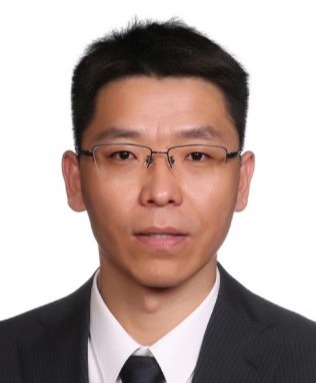
Justin A. Weibel is a Professor of Mechanical Engineering at Purdue University, affiliated with the School of Mechanical Engineering. He directs the Cooling Technologies Research Center (CTRC), a National Science Foundation Industry/University Cooperative Research Center. His research focuses on advanced electronics cooling, phase-change transport, additive manufacturing for thermal components, and machine-learning-driven design optimization. He has led projects funded by DARPA, ONR, ARPA-E, and industry partners, advancing cooling solutions for high-power electronics and energy systems. Research interests span thermal management, heat transfer, micro/nano-scale engineering, and sustainable energy. Key contributions include topology optimization for heat sinks, two-phase flow modeling, and embedded cooling systems for electric motors. His work integrates computational methods with experimental validation. Grants & Programs: DARPA TGP/ICECool, ONR NEPTUNE, ARPA-E ASCEND/COOLERCHIPS, SRC CHIRP Labs: Cooling Technologies Research Center (CTRC) Future Work: Expanding additive manufacturing applications, improving thermal efficiency in electrified transport, and advancing AI-driven thermal system design. Awards: Fellow of ASME (2023) Outstanding Faculty Mentor (2022) Multiple best paper awards from IEEE ITherm, ASME, and SEMI-THERM conferences
Dr. Cooper Harshbarger is a Lecturer at the Department of Health Sciences and Technology at ETH Zurich , Switzerland. His research bridges biomechanics and acoustofluidics, focusing on spinal surgery and microscale cell manipulation technologies. Email: cooper.harshbarger@hest.ethz.ch Research Interests : Dr. Harshbarger specializes in biomechanical analysis of spinal structures and acoustofluidic device development . His work explores: Biomechanics of the lumbar spine and osteoligamentous complexes Acoustically-driven microfluidic systems for medical diagnostics Cell focusing/trapping technologies using sharp-edge acoustofluidics Scientific Contributions : Recent publications highlight his dual expertise in spinal fusion biomechanics and microscale fluid control , with applications in cancer diagnostics and cell manipulation. Key technologies include BAW-based systems and programmable acoustofluidic chips.
Dr. Sajjad Bigham is an Associate Professor in the Department of Mechanical and Aerospace Engineering at North Carolina State University and serves as an Adjunct Associate Professor at Michigan Technological University. He holds a PhD in Mechanical Engineering from the University of Florida and directs the Energy-X Lab (Energy eXploration Laboratory), which focuses on high-impact research in energy science and technology. His research interests encompass: Advanced thermal management solutions including microscale heat transfer, boiling/condensation phenomena, and interfacial transport Energy-efficient systems for HVAC&R, desalination, and clean water production Development of micro/nano-engineered materials and devices for energy conversion/storage Sorption-based gas management and multiphase systems under extreme conditions Recent publications demonstrate strong focus on thermal management innovations (45%), sustainable energy systems (30%), and advanced materials applications (25%). Dominant themes include heat transfer enhancement techniques, energy-efficient appliance design, desalination technologies, and microscale phase-change phenomena, with increasing emphasis on additive manufacturing approaches. Dr. Bigham leads the Energy-X Lab research group, which tackles high-risk, high-reward problems across four thrust areas: Terrestrial and space life support systems Advanced thermal management Clean energy production Clean water supply The lab's mission is to improve energy efficiency, reliability, and economy across defense, environmental, and energy sectors.
Anne Staples is an Associate Professor in the Department of Mechanical Engineering at Virginia Tech, leading the Laboratory for Fluid Dynamics in Nature (FINLAB). Her research focuses on fluid mechanics in biological systems, medical fluid dynamics, and bioinspired engineering, leveraging computational modeling and microfluidic technologies to innovate in healthcare and engineering. Education: B.S. in Mechanical and Aerospace Engineering, Cornell University (2000) M.Eng. in Mechanical and Aerospace Engineering, Princeton University (2001) Ph.D. in Mechanical and Aerospace Engineering, Princeton University (2006) Postdoctoral Researcher at the Naval Research Laboratory (2006–2008) Research Interests: Her work spans bioinspired microfluidics, medical device design, and fluid dynamics in biological systems. Notable projects include developing pulse-driven micropumps for drug delivery and studying insect respiratory systems to inform engineering solutions. Publications: Over 50 peer-reviewed articles, focusing on topics like microfluidic systems, insect-inspired flow control, and hemodialyzer modeling. Recent work emphasizes wearable drug delivery and biomechanical innovations. Awards & Service: NIH Trailblazer Award (2024) Virginia Tech Dean’s Fellow (2023–present) Editorial Board Member, PLOS ONE and Scientific Reports (2021–present) Fulbright Scholar (2016) Grants & Collaborations: Leads a NIH-funded project to develop lightweight drug delivery devices. Collaborates with statisticians and biomedical engineers to simulate and optimize prototypes. Active in interdisciplinary teams at Virginia Tech and Georgia Tech. Labs & Teams: Directs the FINLAB, which integrates computational modeling, experimental microfluidics, and biological principles to address challenges in healthcare and environmental engineering.
Jens Honore Walther is a Professor in the Department of Civil and Mechanical Engineering at the Technical University of Denmark (DTU). His research focuses on fluid mechanics, coastal and maritime engineering, and computational fluid dynamics (CFD). He leads projects on wave energy converters, multiphase flow systems, and thermal energy applications. His work contributes to sustainable development goals related to clean energy and climate action. External Roles: Research associate at ETH Zurich (2003–present) Postdoctoral fellow at ETH Zurich (2000–2003) Project manager at Danish Maritime Institute (1996–1997) Research scientist at Danish Meteorological Institute (1994–1996) Research Interests: Walther’s expertise spans CFD modeling, granular flow dynamics, and nanofluidics. His recent projects include optimizing wave energy converters, analyzing gap resonances in marine structures, and developing multiphase ejector geometries for heat pumps. His work integrates high-performance computing and experimental validation to address challenges in marine engineering and energy systems. Advising & Projects: He supervises PhD students in areas such as elite sport aerodynamics, gas lubrication, and alternative fuel combustion. Notable projects include: Elite sport aerodynamics (2024–2026) Alternative fuel injection in marine engines (2023–2026) Multi-physical gas bearing modeling (2024–2027) Labs & Collaborations: Walther collaborates with institutions like ETH Zurich and engages in experimental facilities at DTU. His group focuses on advanced CFD simulations and fluid-structure interaction studies.
Elliot Hui, Ph.D., is an Associate Professor in the Department of Biomedical Engineering at the University of California, Irvine (UCI), within the Samueli School of Engineering. His research focuses on biological microtechnology, including spatial cell biology, microscale tissue engineering, global health diagnostics, and microfluidic computing. He leads the Hui Lab, which develops tools for automating biochemical reactions, controlling cellular organization, and understanding tissue development dynamics. Key achievements include pioneering microfluidic logic systems for autonomous laboratory automation and creating novel cell culture platforms to study intercellular communication in tissues. His work bridges engineering and biology, addressing challenges in diagnostics and regenerative medicine. Notable contributions include the development of a programmable finite state machine for microfluidic control and a SLAS Fellowship awarded to his student Erik. Research Interests: Microfluidic devices, cell-cell interaction modeling, tissue engineering, and lab-on-a-chip systems. Labs/Teams: Hui Lab at UCI, specializing in microscale biological systems and automation. Publications span topics such as microfluidic computing architectures, tissue dissociation devices, and Bayesian experimental design. His work emphasizes applications in global health diagnostics and mechanistic studies of cellular processes.
Dr. Je Hyeong Bahk is an Associate Professor jointly affiliated with the Departments of Mechanical and Materials Engineering and Electrical and Computer Engineering at the University of Cincinnati. His research focuses on thermoelectric materials and systems, wearable/flexible electronics, and nano-scale thermal transport phenomena. He holds a Ph.D. in Electrical Engineering from the University of California, Santa Barbara, and has authored over 100 peer-reviewed publications. Education: Ph.D., Electrical Engineering, University of California, Santa Barbara (2010) M.S., Electrical Engineering, Seoul National University (2000) B.S., Electrical Engineering, Seoul National University (1998) Research Interests: Human body-heat energy harvesting Thermoelectric materials and device fabrication Wearable/flexible electronics Nano-scale electron/thermal transport physics Thermoelectric air conditioning systems Recent Contributions: Dr. Bahk's work includes advancements in binder-jet printed ceramic composites, low-dimensional carbon-based energy harvesting, and thermoelectric cooling systems. His lab, the Thermoelectric Energy Conversion Lab, develops next-generation solid-state cooling and energy conversion technologies. Awards: 2023 URC Faculty Scholar Award 2016 UC Faculty Development Award 2010 Editor’s Choice Paper Award Lab & Team: The Thermoelectric Energy Conversion Lab collaborates on projects such as firefighter jacket cooling systems and nanocarbon-based composites. Recent student advisees include Thiraj, Nitin, Isaac, Anirudh, and Ahmad.
Shawn Litster is a Professor in the Department of Mechanical Engineering at Carnegie Mellon University, where he leads cutting-edge research in sustainable energy conversion technologies. He is affiliated with the Wilton E. Scott Institute for Energy Innovation and serves as a Scott Institute Energy Fellow, contributing to major national initiatives in hydrogen and fuel cell systems. His work is supported by significant funding from the U.S. Department of Energy (DOE), ARPA-E, and the Office of Naval Research. Education: Ph.D. in Mechanical Engineering, Stanford University (2008) Master of Applied Sciences, University of Victoria (2005) Bachelor of Engineering, University of Victoria (2004) His research focuses on micro- and nanoscale transport phenomena in electrochemical energy systems such as fuel cells, batteries, and electrolyzers. Key interests include electrochemistry, multiphase flow in porous media, microfluidics, catalytic gasification, and computational fluid dynamics . He pioneers innovations in ionomer-free electrodes, high-oxygen-permeability materials, and low-iridium anodes to improve efficiency, durability, and cost-effectiveness. His recent publications (2021–2025) reveal a strong trend toward advanced diagnostics, operando characterization, machine learning integration, and multiscale modeling of fuel cell and electrolyzer systems. These works emphasize performance optimization, degradation analysis, and material innovation for heavy-duty and transportation applications. Scientific Awards: George Tallman Ladd Research Award, Carnegie Mellon University National Science Foundation CAREER Award Lieutenant Governor’s Silver Medal, University of Victoria Best Paper/Presentation Award, The Electrochemical Society Best Paper/Presentation Award, American Society of Mechanical Engineers (ASME) Litster has secured over $50 million in research funding as a sub-awardee in DOE hydrogen projects and led a $3.2M ARPA-E OPEN 2021 project on disruptive fuel cell electrodes. He is an inventor on two U.S. patents related to fuel cell design. He advises graduate students and leads the Laboratory for Transport Phenomena in Energy Systems , where his team develops novel materials and diagnostics for next-generation energy technologies.
Cao Haishan is an Associate Professor at Tsinghua University, affiliated with the Department of Energy and Power Engineering in the School of Mechanical Engineering. His research focuses on cryogenic cooling systems, high heat flux thermal management, and the physics of amorphous ice formation and phase transitions. He leads a research group supported by the National Natural Science Foundation of China and industry partners including Huawei, Midea, and Lenovo. Ph.D., Mechanical Engineering, University of Twente, 2013 M.Sc., Chemical Engineering, Dalian Institute of Chemical Physics, Chinese Academy of Sciences, 2009 B.Sc., Chemical Engineering, Zhejiang University, 2006 Dr. Cao's research spans three major areas: cryogenic cooling (including micro cryocoolers and sorption systems), high heat flux electronic cooling (especially with non-condensable gases), and the formation and transformation of amorphous water ice. His work combines theoretical modeling, computational simulation, and experimental validation, often at micro and nano scales. He applies principles from thermodynamics, fluid dynamics, and materials science to solve engineering challenges in refrigeration and thermal control. The recent publications reflect a strong trend toward interdisciplinary research, integrating machine learning for heat transfer prediction, computational screening of MOFs for cryogenic switches, and fundamental studies of ice nucleation on various substrates. The articles span journals in physics, engineering, materials, and applied thermal sciences, indicating broad impact across multiple domains. Notable scientific awards include: Gustav and Ingrid Klipping Award (2016) Cryogenics Best Paper Award (2017) Annual Teaching Excellence Award, Tsinghua University (2023) Excellent Supervisor Award, Tsinghua University (2024) Multiple First Prize Advisor awards in national student contests on energy saving Dr. Cao has been principal investigator on several grants, including projects funded by the National Natural Science Foundation of China on amorphous ice lifetime and micro-cryocooling for semiconductor chips. He has also led industry-university collaborations with Huawei, Midea, and Lenovo. He advises graduate students and leads a research team focused on next-generation cooling technologies. He serves on editorial boards for Journal of Refrigeration , Vacuum and Cryogenics , and Energies , and has chaired sessions at major international conferences such as ICEC-ICMC and ACTS. His research group operates within the Institute of Thermophysics at Tsinghua University, leveraging facilities in the Lee Shau Kee Science and Technology Building. The team collaborates with national laboratories and international institutions, particularly maintaining ties with the University of Twente. Current efforts are directed toward ultra-low vibration cooling, efficient separation of non-condensable gases, and extending the stability of amorphous ice for cryobiological applications.
Igor Bargatin is an Assistant Professor of Mechanical Engineering and Applied Mechanics at the University of Pennsylvania's School of Engineering and Applied Science. His research focuses on micro- and nanoelectromechanical systems (MEMS/NEMS) for energy conversion, optics, and smart materials. He develops innovative devices such as thermionic energy converters and photophoretic flyers, leveraging interdisciplinary approaches across mechanical engineering, materials science, and applied physics. Research Interests: Photophoretic propulsion and near-space flight systems Ultralight robust materials (e.g., nanocardboard) Thermionic energy conversion and surface engineering MEMS/NEMS fabrication and microscale devices Key Contributions: Developed lightweight photophoretic flyers capable of carrying payloads in the mesosphere Pioneered tunable work function surfaces for high-efficiency thermionic converters Advanced mechanical metamaterials with unprecedented strength-to-weight ratios Awards & Grants: NSF CAREER Award (2019) for thermal transport research in metamaterials Labs & Affiliations: Center for Environmental Building & Design (collaborator) University of Pennsylvania Nanofabrication Facility
Kelly Sutherland is a Professor of Biology at the University of Oregon , affiliated with both the College of Arts and Sciences and the Oregon Institute of Marine Biology (OIMB) in Charleston. She holds a Ph.D. from MIT/Woods Hole Oceanographic Institution (2009), an M.S. from the University of South Alabama (2004), and a B.S. from Tufts University (1999). Her research bridges biology and physics, focusing on biomechanics and fluid-environment interactions in marine organisms, particularly gelatinous zooplankton. Education: B.S., Tufts University (1999) M.S., University of South Alabama (2004) Ph.D., MIT/Woods Hole Oceanographic Institution (2009) Sutherland’s lab investigates ecological and evolutionary roles of gelatinous plankton, which are understudied yet critical to marine food webs. Her work emphasizes predator-prey dynamics , multi-jet propulsion , and microbial-grazing interactions , employing in situ video, kinematic analysis, and flow visualization. Recent studies explore colonial salp swimming efficiency, appendicularian particle selection, and ctenophore ecological impacts in open oceanic ecosystems. Research Trends: Recent publications highlight Salp colonial architecture , multi-jet propulsion , microbial prey dynamics , particle surface properties , and hydrodynamic advantages in pelagic organisms . Collaborative themes span biomechanics , ecosystem impacts , and evolutionary adaptations . Advising & Outreach: Dr. Sutherland mentors undergraduate, MSc, and PhD students at both the Eugene campus and OIMB, with lab opportunities in lab/field studies and summer research. She encourages external funding applications and collaborates with environmental studies programs. Outreach includes partnerships with journalists, filmmakers, and artists to communicate science to broader audiences.
Dr. Xiaoguang Dong is an Assistant Professor in the Department of Mechanical Engineering at Vanderbilt University , School of Engineering. He received his Ph.D. (2019) and M.S. (2016) from Carnegie Mellon University, and B.S. (2013) from Harbin Institute of Technology. His research focuses on miniature soft robotics , swarm robotics , and intelligent soft materials for biomedical, microfluidic, and biomechanical applications. Design of shape-morphing soft robots for minimally invasive medicine Development of magnetic microrobot swarms for cooperative tasks Integration of machine learning with mechanics for smart material design Recent publications highlight advancements in wireless medical robots for drug delivery, biofluid pumping, and tissue sensing, with works in Science Advances , Nature Communications , and PNAS . He has received significant recognition including the 2025 NSF CAREER Award and 2024 Med-X Young Investigator Award . 2022 Spring: Dynamics (ME 2190) 2023 Fall: Miniature Robotics 2014-2015: Teaching assistant at Carnegie Mellon University
Shaowei Wang is a Professor in the Department of Engineering Mechanics at the School of Civil Engineering, Shandong University, China. He holds a Ph.D. in Mathematics (2007) from Shandong University and completed post-doctoral research in fluid mechanics (2009) at Peking University. His research focuses on heat and mass transfer in porous media , fluid mechanics , and mathematical methods in mechanics . His recent publications highlight advancements in electro-osmotic flows, oscillatory non-Newtonian fluid dynamics, and stability analysis of bioconvection in porous media. Key themes include modeling viscoelastic fluids (Oldroyd-B, Maxwell), fractional calculus applications, and microchannel transport phenomena. First Prize in Natural Science of the Ministry of Education (2015) Second Prize of Natural Science Award of Shandong Province (2015) Du Qinghua Young Scholar Award (2016) Wang serves as Director of Shandong Society of Mechanics and editorial board member of multiple journals. His work bridges theoretical fluid dynamics with practical applications in microfluidics and geophysical systems.
Christos Manopoulos is an Assistant Professor at the School of Mechanical Engineering, National Technical University of Athens (NTUA), Greece, within the Fluids Section. His roles include Director of the Biofluid Mechanics & Biomedical Technology Laboratory and Health and Safety Officer for the Fluid Mechanics Section. He holds a PhD in Biomedical Engineering (2009) and M.Sc.E. in Biomedical Engineering (1999) from NTUA and University of Patras, alongside a Mechanical Engineering Diploma (1995). Professional Experience: Includes senior researcher roles, postdoctoral fellowships, and teaching positions at multiple institutions since 1998. Research Focus: Biofluid mechanics, biomedical device design, and cardiovascular hemodynamics. Specializes in computational modeling of valveless pumping, arterial wall mechanics, and endovascular repair systems. His work integrates experimental, theoretical, and computational methods. Key Research Trends: Recent articles emphasize patient-specific computational studies of aortic aneurysms, novel biomedical device designs, and fluid dynamics in medical systems. Topics include finite element analysis, peristaltic pumps, and pulsatile flow modifications. Awards: Doctoral Excellence (2009), Thomaideio awards (2012, 2005–2010), and a patent for a mechanical ventilator component (2021). Labs/Teams: Leads the Biofluid Mechanics Lab at NTUA, focusing on translational biomedical engineering and computational modeling.
Christopher Cadou is a Professor and Director of Undergraduate Studies in the Department of Aerospace Engineering at the University of Maryland. He holds a B.S. in Mechanical Engineering and B.A. in History from Cornell University, and M.S. and Ph.D. in Mechanical Engineering from UCLA. His research focuses on combustion at micro and conventional scales, laser diagnostics, compact power systems, and fuel cells. He has led interdisciplinary projects in micro-gas turbine engines, microfluidics, and energy innovation. Professional affiliations include the American Society of Mechanical Engineers (ASME), American Institute of Aeronautics and Astronautics (AIAA), and The Combustion Institute. He has reviewed for journals like Combustion and Flame, and government agencies such as the National Science Foundation. His work includes pioneering infrared diagnostics for micro-combustors and developing analytical models for heat transfer in mini/microchannels. He has organized conferences including the 2009 AIAA Joint Propulsion Conference. His contributions span technical reports on microturbomachinery and scramjet inlet flows, and collaborations with industry through initiatives like the Maryland Energy Innovation Institute.