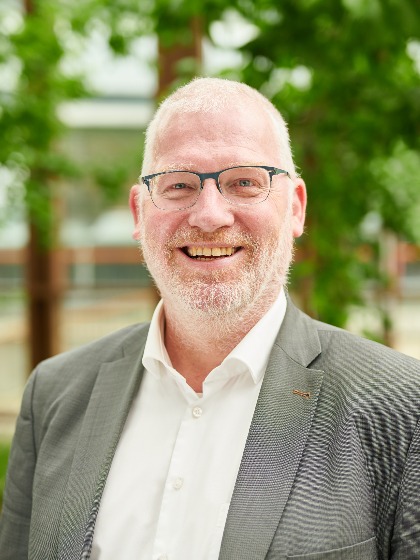
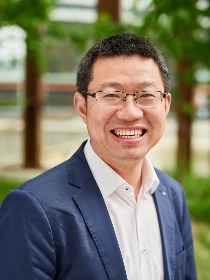
Mathieu Odijk is a Full Professor at the University of Twente's Faculty of Science and Technology, leading the Integrated Devices and Systems department. His research focuses on microfluidic systems, catalysis, and organ-on-chip platforms, with contributions to UN Sustainable Development Goals through advanced material characterization and biomedical engineering. He has authored over 120 publications and holds an h-index of 27 with 1,820 citations. Expertise: Microfluidics, catalyst particle diagnostics, SERS substrates, organ-on-chip systems, and spectroscopic techniques. Collaborations include Weckhuysen (catalysis), van den Berg (microfluidics), and Meirer (materials science). Key projects: Modular organ-on-chip platforms (STARTER), droplet-based catalyst screening, and real-time reaction monitoring via ATR-IR systems. His research combines nanotechnology and chemical engineering to develop tools for sustainable energy, environmental remediation, and biomedical applications. Recent work includes microreactors for catalyst particle analysis, light-driven urea oxidation for wearable kidney devices, and standardized platforms for organ-on-chip research.
Sirui Li is a Postdoctoral Researcher in the Department of Chemical Engineering and Chemistry at Eindhoven University of Technology, specializing in plasma-based technologies for sustainable chemical processes. Their research focuses on carbon capture and utilization, plasma catalysis, and reactor design for CO 2 conversion and nitrogen fixation. Research interests center on plasma-assisted CO 2 conversion , with key areas including: Plasma-sorbent systems for simultaneous CO 2 capture and conversion Gliding arc and DBD reactor design for NO x synthesis and methane conversion Techno-economic analysis of plasma-based sustainable processes Dielectric materials and nanoparticle synthesis for catalytic applications Recent publications demonstrate a clear trend toward integrated plasma-reactor systems for carbon management, with emphasis on process intensification, thermal effects analysis, and scalability. The work bridges fundamental plasma chemistry with industrial application feasibility, particularly in renewable energy integration and fertilizer production. Award highlights include: Baldur Eliasson Award (2022) Best oral presentation award for 'Plasma-sorbent system for CO 2 capture and conversion' (2022) IEEE NPSS Young Professional Travel Grant (2024) Li actively contributes to major research projects including PLACHEM (plasma-assisted CO 2 conversion), GICO (gasification with CO 2 capture), and LEAP-Agri (on-site fertilizer production), while serving as guest editor for Frontiers of Chemical Science and Engineering and participating in international symposia on plasma technology.
Prof. Timothy Noël serves as Professor of Flow Chemistry at the Van 't Hoff Institute for Molecular Sciences, Faculty of Science, University of Amsterdam (UvA), appointed in September 2020 after seven years as an associate professor at Eindhoven University of Technology. He earned his PhD from Ghent University in 2009 and completed a Fulbright-funded postdoc at MIT. His research pioneers flow chemistry to solve critical challenges in chemical synthesis, including scalability, hazardous substance production, and energy efficiency through microreactor technologies. Notable innovations include an artificial leaf harnessing sunlight for organic molecule synthesis—enabling off-grid pharmaceutical manufacturing—and breakthroughs in photochemistry and electrochemistry within microfluidic systems. His scientific impact is recognized by: KNCV Gold Medal (2021) IUPAC-ThalesNano Prize for Flow Chemistry (2020) Hoogewerff Youth Prize (2019) DECHEMA Prize (2017) NWO Vidi grant (2015) NWO Veni grant Fulbright fellowship Marie Curie Career Integration Grant Prof. Noël secures major funding from NWO and EU programs while collaborating with industry leaders like Eli Lilly, AbbVie, ThalesNano, and Vapourtec. As editor-in-chief of the Journal of Flow Chemistry, he shapes the field globally and develops curriculum for UvA's Science for Energy and Sustainability Master's program. His research group integrates chemistry and engineering expertise to advance sustainable chemical manufacturing, with future work focused on expanding flow chemistry applications in pharmaceutical production and renewable energy-driven synthesis.
R.G.H. Lammertink serves as a Professor at the University of Twente within the Faculty of Science and Technology, specifically in the Membrane Science & Technology department. He leads the Soft matter, Fluidics and Interfaces research group and maintains affiliations with the MESA+ Institute. His academic foundation includes a PhD in Chemical Engineering from the University of Twente (2000) followed by postdoctoral research at the California Institute of Technology. Key appointments include Assistant Professor in the Membrane Technology Group (2004) and leadership of the Soft matter, Fluidics and Interfaces group since April 2010. Research centers on interfacial phenomena governing mass/heat transport for membrane and catalytic applications. Expertise spans membrane surface engineering, surface chemistry, photocatalytic processes, porosity control, and concentration procedures. Work evolved from microstructured membrane interfaces (2004) to microfluidics/microreactors (Vidi 2007) and fundamental interfacial transport mechanisms (ERC 2012, Vici 2016). Major recognitions include: NWO Vidi grant (2007) for microreactor/microfluidics research ERC Advanced Grant (2012) for interfacial transport phenomena NWO Vici grant (2016) for fundamental interface studies These grants underpin his leadership of the Soft matter, Fluidics and Interfaces group, driving experimental and theoretical work on transport phenomena at engineered interfaces. The group operates within the Membrane Science & Technology cluster, leveraging university infrastructure for membrane and catalytic process innovation.
Prof. Bert Weckhuysen is a University Professor of 'Catalysis, Energy & Sustainability' at Utrecht University since 2018, previously serving as Faculty Professor at the Faculty of Science since 2012 and Professor of Inorganic Chemistry & Catalysis since 2000. His research is centered at the Chemistry Institute for Sustainable and Circular Chemistry within the Faculty of Science at Utrecht University, where he leads the Inorganic Chemistry and Catalysis research group. Prof. Weckhuysen's research focuses on developing structure-activity relationships in heterogeneous catalysis and materials science, with special emphasis on advanced in situ and operando characterization techniques. His work spans several critical areas including: Development and application of spatiotemporal operando spectroscopy to elucidate active sites in catalyst materials Catalytic conversion of biomass, plastic waste, and CO 2 Molecular design of materials for catalysis, adsorption, and separation Pathways to Sustainability with focus on Energy in Transition and Circular Economy His most recent publications demonstrate strong trends in operando characterization techniques, sustainable catalysis for CO 2 conversion, plastic waste valorization, and advanced materials design. The research spans fundamental understanding of catalyst behavior under working conditions to practical applications in energy transition and circular economy. Prof. Weckhuysen has received numerous prestigious awards including: Michel Boudart Award for the Advancement of Catalysis (2025) Karl Wamsler Innovation Award (2024) Chemistry Europe Award (2023) Spinoza Award (2013) - the highest scientific honor in the Netherlands Francqui Chair at the University of Antwerp (2024-2025) As a dedicated educator and mentor, Prof. Weckhuysen coordinates the Da Vinci Project and the Syllabus Catalysis Course. He has secured significant research funding including ERC Advanced Grants, Gravitation grants, and serves as Scientific Director of major research initiatives including SUNERGY, ARC-CBBC, and MCEC. His leadership extends to editorial roles for numerous high-impact journals including serving as Editor-in-Chief of Catalysis Science and Technology. Prof. Weckhuysen leads a vibrant research group focused on operando spectroscopy and sustainable catalysis, with strong connections to industry through initiatives like ARC-CBBC and SUNERGY. His group is actively working on developing the "Refinery of the Future" concept, which envisions producing fuels, chemicals, and materials from renewable resources and energy.
Michael Debije is an Associate Professor in the Department of Chemical Engineering and Chemistry at Eindhoven University of Technology (TU/e), working within the Stimuli-responsive Functional Materials and Devices research group. He is responsible for the Energy cluster within SFD and collaborates extensively across disciplines including fashion design, architecture, and agriculture. His research focuses on controlling light in the built environment through innovative technologies. Key areas include Luminescent Solar Concentrators (LSCs) for urban solar energy generation, infrared control windows that automatically adjust between heat-reflecting and heat-transmitting states, 4D-printed responsive polymeric actuators, and LSC-photomicroreactors for sunlight-driven chemical production. His work bridges traditional disciplinary boundaries, connecting chemistry, physics, engineering, and design. Debije's publications reveal a strong focus on practical solar energy applications for urban environments. His research demonstrates how light-manipulating materials can be integrated into everyday structures like windows, building facades, and even fashion accessories. The publications show consistent progress in improving efficiency and functionality of light-harvesting technologies over time. TU/e MSc Thesis Award 2018 nominee for the Department of Chemical Engineering and Chemistry Debije actively engages with students through various educational activities including Materials Science, Physics of Light and Lighting Design, and DBL Energy courses. His research has significant potential for real-world applications in sustainable energy solutions for urban environments, with particular emphasis on making solar technology aesthetically pleasing and practically integrated into everyday structures. His work has been recognized through substantial citation metrics, with several publications garnering hundreds of citations, indicating significant impact in the fields of materials science and renewable energy.
Dr. Arne Hommes is an Assistant Professor at the Faculty of Science and Engineering , University of Groningen , specializing in Green Chemical Reaction Engineering . His research focuses on catalytic processes and microreactor technology for sustainable chemical production. His work spans biomass conversion , homogeneous catalysis , and mass transfer optimization in microreactors. Recent publications highlight pressure drop analysis in packed bed systems, slug flow dynamics , and 5-hydroxymethylfurfural (HMF) oxidation . Collaborations include industrial partners like Neste and Cargill. Arne’s research employs microreactor platforms for applications in biobased chemicals , enzymatic biodiesel synthesis , and lignin depolymerization . His expertise aligns with UN Sustainable Development Goals for climate action and responsible consumption .
Koen P.L. Kuijpers is a University Researcher in the Department of Chemical Engineering and Chemistry at Eindhoven University of Technology. He holds an MSc in Chemical Engineering & Chemistry from the same institution, completing his thesis on gas-liquid photoredox catalysis scale-up under Timothy Noël. His research focuses on microreactor engineering, particularly in flow chemistry systems and solar-powered chemical processes. Education: Master's in Chemical Engineering & Chemistry (Eindhoven University of Technology). Research interests include photocatalysis, renewable energy integration in chemical processes, and sustainable process design. He contributes to UN Sustainable Development Goals related to clean energy and industrial innovation. Notable research outputs include advancements in flow reactor design, solar-powered autonomous chemical plants, and educational flow chemistry experiments. His work emphasizes process intensification, reactor optimization, and energy-efficient chemical synthesis.
Maria Fernanda Neira D'Angelo is an Associate Professor in Chemical Engineering and Chemistry at Eindhoven University of Technology (TU/e), specializing in Sustainable Process Engineering and Chemical Reactor Engineering. She is affiliated with EIRES Research and the Chemelot InSCiTe NIOK initiative, collaborating with industrial partners like SABIC. Her work focuses on developing sustainable chemical processes with a strong emphasis on biomass conversion technologies. Dr. Neira D'Angelo's academic journey includes: Chemical Engineering studies at Universidad Complutense de Madrid, Spain Master's research on biomass gasification and Fischer-Tropsch Synthesis at TU/e (2010, cum laude ) PhD in catalytic conversion of biomass via Aqueous Phase Reforming at TU/e (2014, cum laude ) Her research profile centers on reaction and catalysis engineering to develop novel sustainable process technologies, particularly for converting lignocellulosic biomass to chemicals and fuels. She integrates reactor engineering with catalysis development, focusing on multiphase reactors and novel reactor concepts like foam-based, spinning disc, and microreactors. Her work targets the efficient utilization of entire lignocellulose fractions (sugars and lignin) to realize a future bio-based economy. This research directly contributes to UN Sustainable Development Goals related to sustainability and clean energy. Analysis of her recent publications reveals strong trends in biomass valorization, particularly lignin-first approaches, hydrogen production, and CO 2 conversion technologies. Her work increasingly focuses on integrating novel reactor designs with advanced catalytic systems, with growing emphasis on electrochemical conversion processes and membrane technologies for separation. The research spans fundamental catalyst development to process-scale engineering considerations. Dr. Neira D'Angelo has received academic recognition through cum laude distinctions for both her Master's and PhD work. While specific named awards aren't detailed in the provided information, her research has generated significant scholarly impact with over 1000 citations according to Scopus metrics. Her work has been featured in multiple press and media outlets, highlighting its relevance to sustainable aviation, climate change mitigation, and the broader transition to a circular economy. With an impressive research output of 97 publications and supervision of 65 student works, Dr. Neira D'Angelo maintains an active research program. Her current projects include the GICO project (Gasification Integrated with CO 2 capture and conversion, 2020-2024), where she serves as a project member. She teaches courses in Chemical Reactor Engineering (since 2020) and Chemical Reactors (since 2013, through 2025), demonstrating her commitment to education alongside research. Dr. Neira D'Angelo's research group operates at the intersection of reactor engineering and catalysis, with particular expertise in microreactor technology, membrane reactors, and novel catalyst development. Her team's work often involves interdisciplinary collaboration, bridging chemical engineering, materials science, and sustainable chemistry to address complex challenges in biomass conversion and renewable energy technologies.
Arjan de Visser is a Professor with a personal chair at the Laboratory of Genetics, Wageningen University, where he has been employed since 2015. Previously, he served as an Associate Professor (2008-2015) and Assistant Professor with an NWO Vidi grant (2001-2008) at the same institution. His educational background includes: PhD in Genetics from Wageningen University and University of Amsterdam (1996), with advisors RF Hoekstra and H van den Ende Postdoc at Wageningen University's Lab of Microbiology (1998-2001) with advisor WM de Vos, supported by an NWO Veni grant Postdoc at Michigan State University's Center of Microbial Ecology (1996-1998) with advisor RE Lenski MSc in Biology from Utrecht University (1989) BSc in Biology from Nijmegen University (1985) Professor de Visser's research focuses on experimental evolution, particularly studying bacterial and fungal evolution to understand the causes and constraints of evolution and explore its predictability. His main experimental model is beta-lactam resistance evolution in Escherichia coli . His work spans several key areas including bacteriology, evolutionary genetics, mycology, antibiotic resistance mechanisms, population dynamics, and microbial interactions. His laboratory collaborates with theoreticians, chemists, engineers, as well as medical and veterinary researchers to develop models and tools for quantifying the predictability of evolution and its determinants. Analysis of his recent publications reveals a strong focus on understanding the mechanisms of antibiotic resistance evolution, particularly beta-lactam resistance in E. coli . His work combines experimental approaches with theoretical modeling to investigate how population dynamics, spatial structure, and microbial interactions affect evolutionary trajectories. A significant portion of his research examines collective resistance phenomena, where bacterial populations exhibit resistance through cooperative behaviors such as enzyme sharing. His lab has developed innovative experimental systems including droplet microreactors and gel microbeads for high-throughput bacterial competition studies. His scientific achievements have been recognized through prestigious research grants: NWO Veni grant (1998-2001) supporting his postdoctoral research NWO Vidi grant (2001-2008) supporting his early career as an Assistant Professor Professor de Visser leads the Microbial Experimental Evolution group at Wageningen University, where his team investigates fundamental questions in evolutionary biology using microbial systems. His laboratory employs a range of techniques including laboratory evolution experiments, population dynamics modeling, and molecular genetics to study how organisms adapt to changing environments, with particular emphasis on antibiotic resistance evolution. His research has important implications for understanding and potentially predicting the evolution of antibiotic resistance in clinical settings.
Jeroen Vollenbroek serves as a senior post-doctoral researcher at the University of Twente within the Faculty of Electrical Engineering, Mathematics and Computer Science, Department of Electrical Engineering, specifically in the Biomedical and Environmental Sensorsystems (BIOS) group. He concurrently holds an appointment at University Medical Center Utrecht's Department of Nephrology and Hypertension, with partial detachment to research institute Imec NL. His academic foundation includes BSc and MSc degrees in Electrical Engineering from the University of Twente (completed 2016), specializing in microtechnology and Lab-on-a-Chip systems, followed by a joint PhD from University of Twente (BIOS Lab on a Chip group) and Utrecht University (Inorganic Chemistry and Catalysis) in 2020. His doctoral thesis focused on "Microreactors for single catalyst particle diagnostics". Vollenbroek's research integrates microfluidics, electrocatalysis, and material science to develop microdevices for artificial kidney systems and environmental applications. His expertise spans reaction temperature control, pressure management, catalyst particle analysis, and droplet manipulation, targeting innovations in wearable artificial kidney technology and sustainable environmental solutions through cross-institutional technical collaboration. He participates in multiple research projects and grants as indicated in institutional materials, though specific titles remain undocumented here. His operational framework involves the BIOS Lab on a Chip group at University of Twente, Nephrology Department at University Medical Center Utrecht, and Imec NL research facilities, focusing on translational engineering for medical and ecological challenges.
Kechun Ma is a Researcher in the Department of Biomedical and Environmental Sensorsystems at the University of Twente, Netherlands, with continuous research contributions spanning nearly three decades from 1994 to 2023. His work focuses on the development and application of micro and nanoscale systems for sensing, fluid handling, and material processing. His primary research interests include Sensors , MEMS , Microfluidics , Plasma Etching , Catalysis , and Microreactors , reflecting his expertise in creating innovative microsystems for biomedical engineering, environmental monitoring, and chemical processing. His research integrates materials science, fluid dynamics, and microfabrication to solve complex engineering challenges. Analysis of his recent publications reveals a strong trend in advancing MEMS-based solutions, particularly in catalyst characterization (2023 microreactor for X-ray microscopy), precision fluid control (2021 electrochemical micropump), and semiconductor manufacturing (2020-2021 plasma etching techniques). These works demonstrate consistent innovation in fabrication processes and real-world applications, with significant citations and downloads indicating community impact. While no specific scientific awards are documented in available sources, Ma's collaborative work with University of Twente's MESA+ Institute researchers (including patents like the 2019 Coriolis flow sensor) highlights his integrated role within the institution's research ecosystem. His ongoing projects continue to push boundaries in microsystem technologies, particularly in catalytic process monitoring and sensor development.
Prof. Gert-Jan Euverink is a Professor in Biotechnology at the University of Groningen’s Faculty of Science and Engineering, affiliated with the Engineering and Technology Institute Groningen (ENTEG). He specializes in bioprocess engineering, focusing on sustainable resource recovery from agricultural and industrial waste streams. His work emphasizes anaerobic digestion, bioplastic production, and microbial community analysis using advanced genomic techniques. Education: PhD in Microbiology/Biochemistry (University of Groningen, 1995). Postdoctoral research at NIKO-TNO (1994-1998) led to discoveries in starch enzymology. Founded a high-throughput screening lab at Groningen (1998). Research Interests: Clean bioprocessing, low-energy fermentation systems, and microbial metabolism modeling. Key areas include Biorefinery design PHA production from xylan Microbial community dynamics in wastewater Biogas enhancement via bioaugmentation Key Activities: Deputy Scientific Director of Wetsus (2004–present), Technological Top Institute for Water Technology. Board member of Koninklijk Natuurkundig Genootschap and Groningse Chemische Kring. Lab Facilities: Uses 3D-printed microreactors, Zernike Advanced Processing (ZAP) facility, and REMO-lab for scale-up studies. Collaborates with industries and universities in pilot projects.
Jun Yue is an Associate Professor at the University of Groningen's Faculty of Science and Engineering, within the Green Chemical Reaction Engineering group. He holds roles such as Coordinator for the Chemical Engineering Traineeship and Member of the ENTEG board. His research focuses on process intensification, microreactors, and catalytic conversion of bio-based chemicals. He completed his PhD in Process Engineering at Université Savoie Mont Blanc (France) in 2008, followed by postdoctoral work at Eindhoven University of Technology (2009–2014). His research group develops novel reactor concepts (e.g., microreactors, centrifugal devices) and nanostructured catalysts for sustainable chemical synthesis. Key topics include bio-based chemical production, multiphase reactors, and energy conversion. He has supervised numerous PhD and master's students, with active collaborations on projects like bio-based chemical synthesis and methane combustion in microreactors. His work aligns with UN Sustainable Development Goals related to affordable and clean energy (#7) and responsible consumption and production (#12). Recent publications highlight advancements in microreactor hydrodynamics, catalytic processes for furan derivatives, and biomass valorization. He teaches courses on transport phenomena, advanced process technologies, and microfluidics, contributing to both academic and applied research in chemical engineering.
Han Gardeniers serves as Full Professor leading the Mesoscale Chemical Systems (MCS) research group within the Department of Chemical Engineering at the University of Twente's Faculty of Science and Technology. His work bridges microfluidics, nanotechnology, and chemical engineering through advanced fabrication of micro/nanostructures for chemical analysis, synthesis, and energy applications. His educational background includes: PhD in Experimental Solid State Physics (1990, Radboud University Nijmegen) Master of Chemistry (1985, Radboud University Nijmegen) Gardeniers' research pioneers microfluidic chips for lab-on-a-chip systems, nanostructures for solar energy conversion, and additive manufacturing of mesoscale metamaterials. His ERC-funded CREAM4 project develops 3D-printed submicrometer structures to optimize molecular pathways in catalytic processes, addressing challenges in sustainable chemistry and energy conversion. Current work explores forensic science applications, industrial process analysis, and medical diagnostics using structured microsurfaces. His major scientific recognitions include: ERC Advanced Grant (2017) for Chemical Reaction Engineering by Additive Manufacturing STW Vernieuwingsimpuls VICI grant (2004) With strong industry integration, Gardeniers co-founded Micronit Microfluidics (now 100+ employees) and contributed to PharmaFluidics' chromatography chips. He serves on boards of MinacNed (Dutch Micro- & Nanotechnology Cluster) and COAST (analytical science foundation), while advising Saxion University's Life Science program. His teaching spans bachelor's thermodynamics courses to specialized microfluidics masterclasses at international summerschools. The MCS group operates within the MESA+ Institute's nanofabrication facilities, combining microfluidics, electrospinning, and precision manufacturing to develop cellular materials with engineered mesoscale features for catalysis and energy applications.