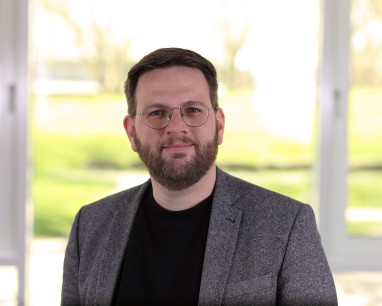
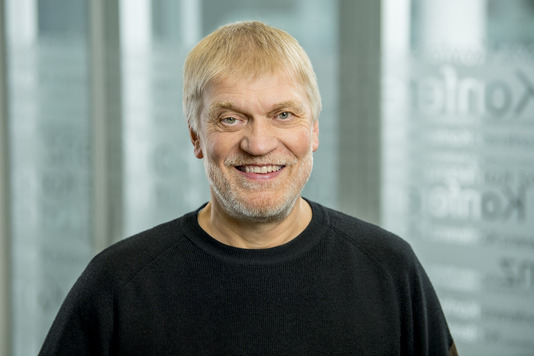
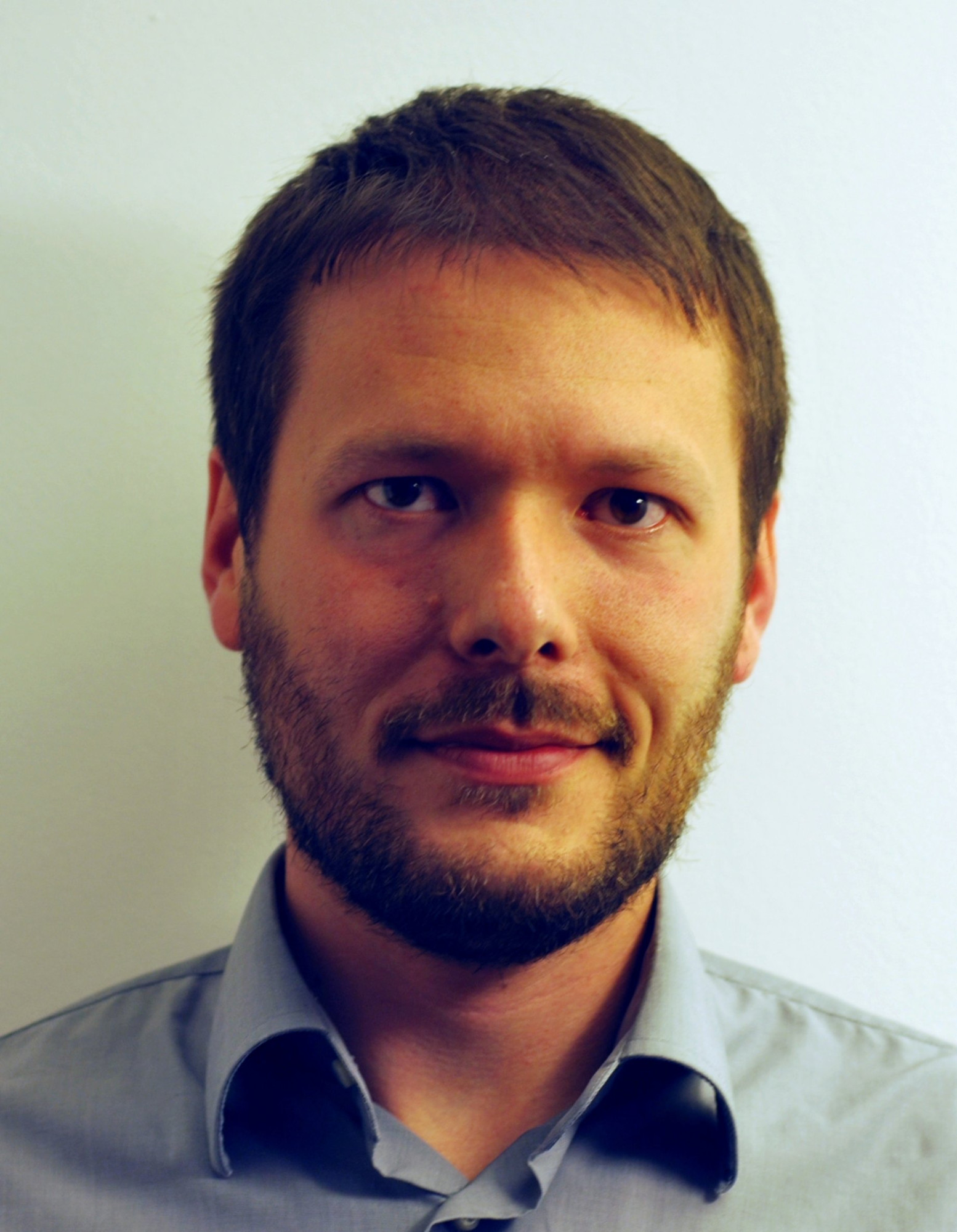
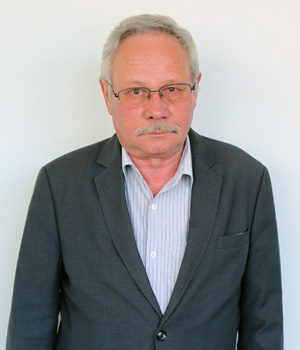
Prof. Dr. Dominik Aufderheide serves as a Professor in the Department of Electrical Power Engineering at South Westphalia University of Applied Sciences, Soest campus. He teaches undergraduate courses including Data Acquisition and Conversion I/II, Microprocessor Technology, and Image Processing/Computer Vision, alongside graduate instruction in Microprocessor Based Systems for the Advanced Engineering and Engineering Management Master's program. His research focuses on industrial sensor applications with core expertise in: Multi-Sensor Data Fusion for industrial metrology 3D Scene Reconstruction using multi-sensor inputs Adaptive Sensor Network optimization Real-time Computer Vision algorithms Embedded systems for measurement technology Signal processing in power engineering contexts Leading the Industrielle Messtechnik (iMe) research group, he integrates computer vision and sensor fusion techniques to develop robust industrial measurement solutions. His work bridges theoretical signal processing with practical power engineering applications, emphasizing accuracy enhancement through adaptive network architectures and advanced image analysis.
Hans-Joachim Bohr is a Lecturer at Saarland University of Applied Sciences, specializing in the Embedded Systems Laboratory (formerly Hardware Laboratory). He teaches courses in Mechatronics/Sensor Technology, Digital Technology, Microprocessor Technology, PLC Basics, and Practical Circuit Technology across both Winter and Summer Semesters. Contact: +49 (0)681 58 67 278 Email: hans-joachim.bohr@htwsaar.de Location: Room 5304, Goebenstraße 40, 66117 Saarbrücken His professional expertise includes microprocessor and microcontroller systems development (hardware/software), programmable logic controllers , and fieldbus systems . He contributes to university administration as a member of the staff council of academic staff. Consultation hours are available after classes and by arrangement . His work is associated with engineering disciplines and applied computer science, particularly through practical projects and internships.
Jürgen Schäfer is a Professor at Saarland University of Applied Sciences, specializing in embedded systems and mechatronics. He leads the Embedded Systems Laboratory and contributes to curriculum development in technical disciplines. Academic Affiliation: Saarland University of Applied Sciences Research Focus: Embedded systems, microcontroller applications, and energy conversion technologies. Lecture Topics: System dynamics, control systems, FPGA design, and computer architecture across winter and summer semesters. Laboratory Leadership: Head of the Embedded Systems Laboratory. Contact: Email juergen.schaefer@htwsaar.de, Room 5311, Saarbrücken campus.
Prof. Dr.-Ing. Bernhard Lang is a Professor at the Faculty of Engineering and Computer Science (IuI) at Osnabrück University of Applied Sciences. His research focuses on digital multimedia systems and microprocessor technology, with expertise in FPGA-based systems and RISC-V architectures. He leads the Laboratory for Digital and Microprocessor Technology, where he develops hardware GDB-Server solutions for embedded systems. His work includes projects such as a GDB-Server implementation for VexRiscv processors and fine-grained multithreading designs. He actively contributes to open-source projects, including hardware-software co-design frameworks for FPGAs. Prof. Lang teaches courses in digital systems and advises students on final theses in related fields. His research infrastructure includes the Basys3 FPGA board, with synthesized designs available for practical implementation.
Giovanni Beltrame is a Professor at Polytechnique Montréal's Department of Computer and Software Engineering, where he directs the MIST Laboratory. His work bridges academic research and aerospace engineering applications. Education: M.Sc. in Electrical Engineering and Computer Science, University of Illinois, Chicago (2001) Laurea in Computer Engineering, Politecnico di Milano (2002) MS in Information Technology, CEFRIEL, Milan (2002) Ph.D. in Computer Engineering, Politecnico di Milano (2006) Research Focus: His work spans four interconnected domains: Intelligent Systems (swarm robotics, distributed planning, SLAM), Embedded Systems (hardware/software modeling and verification), Aerospace (avionics, radiation-hardened systems), and Optimization (multi-objective algorithms, parallel programming). These areas converge in space-system applications and fault-tolerant computing. Leadership: As Principal Investigator, he leads multiple government and industry-funded projects. He actively recruits researchers through the MIST Laboratory's structured onboarding process, requiring candidates to demonstrate prior engagement with lab materials. Teaching: He instructs specialized courses including Swarm Intelligence (INF6593ME) and Space Systems Computing (AER8300), covering topics from microprocessor architecture to spacecraft data processing design. Lab Operations: The MIST Laboratory serves as the hub for his research activities, with documented procedures for student recruitment and project collaboration in swarm intelligence and embedded aerospace systems.
Gennady Nikolaevich Chistyakov is an Associate Professor at the Department of Electric Power Engineering, Mechanical Engineering and Automobile Transport at Khakassian Technical Institute (branch of Siberian Federal University). With over 42 years of work experience, he teaches subjects including electromagnetic compatibility, relay protection, and mathematical problems of energy. His research focuses on power systems, with emphasis on renewable energy integration, geomagnetic storm impacts, and transient analysis. Recent publications highlight solar power optimization and protection device reliability. 2021: Small solar power plant analysis for Khakassia 2019: Relay protection during geomagnetic storms 2018: Overvoltage pulse experiments Scientific Awards: 2015: KhTI Diploma 2015: Ministry of Education and Science of Khakassia Certificate 2007: Russian Federation Honorary Worker of Higher Professional Education He has led multiple RFBR and Khakassia Republic grants (2013-2016) on power quality optimization and reliability. Advanced training includes e-learning technologies, cloud systems, and inclusive education.
Dr. Marius Rosenbaum is a Lecturer at the Faculty of Mathematics and Computer Science of FernUniversität in Hagen. Located in Room H113, Building 3, he teaches courses including Application-Oriented Microprocessors, Embedded Systems, FPGA programming, and seminars on Modeling/Simulation and Aviation Digitalization. His examinations are conducted in written format. Research interests focus on aviation technology and embedded systems, with emphasis on: Flight assistance systems (glide path calculation, emergency landing field detection) AI applications in avionics (neural networks for traffic forecasting) Distributed computing (Kubernetes-based neural architecture search) Sensor-based guidance systems (Lidar, multi-modal image processing) His publications (2017-2025) demonstrate strong thematic coherence around aviation safety systems, integrating computer vision, path planning algorithms, and machine learning. Recent works explore mixed reality interfaces for pilot assistance and real-time glide path optimization. He actively supervises student theses, with 2024 projects including electric skateboard control systems, flight simulator plugins, speech recognition for air traffic, and ARM processor design. Collaborative research involves colleagues like Wolfgang Schiffmann and Alexander Klos in projects spanning emergency landing systems and neural architecture frameworks.
Professor Matthias Fertig serves as Professor of Digital Systems at the Faculty of Electrical Engineering and Information Technology, Konstanz University of Applied Sciences. His academic profile bridges theoretical research with practical engineering applications in digital systems design. His research portfolio spans several critical domains: Near-/In-Memory Computing (Universal Memory Automata theory) Digital HDL Design methodology (RAPID VHDL package development) Massively Parallel EM-Simulation optimization Computational Optics using advanced Fourier methods (WPM/VWPM) ASIC design and implementation workflows Prior to academia, Professor Fertig gained substantial industry experience at IBM (microprocessor design), Dialog Semiconductor (Power Management ICs), and Volvo Construction Equipment (control systems for heavy machinery). This background informs his practical teaching approach that emphasizes real-world applications alongside theoretical foundations. His professional recognition includes an invitation to join the Editorial Board of the American Journal of Computer Science and Technology (AMJCST) in May 2025. Professor Fertig actively develops new course content, with a 'uProcessor Architecture' course scheduled for summer term 2026. He teaches across the curriculum from undergraduate Digital Engineering courses through specialized Master's level laboratories in Silicon Photonics and Electromagnetic Simulation, utilizing industry-standard Cadence tools to provide students with professional design experience.
Professor Stephan Hußmann is a faculty member at the West Coast University of Applied Sciences (FHW) in the Department of Microprocessor Technology and Electronics within the Faculty of Engineering. He has been a full-time Professor at FHW since December 2004, after working as a Lecturer at the University of Auckland from 2001-2003 and as a project leader for PMDTec GmbH in 2004. His research interests focus on Machine Vision applications, 3D-camera design, real-time image processing, embedded systems design, and automation in agriculture and forestry applications. Hußmann has developed innovative optical multi-sensor systems for quality control and inspection, with particular emphasis on drone-based AI sensor systems for agricultural applications in times of climate change. His work bridges theoretical research with practical industrial applications, particularly in the organic farming sector. Analysis of his recent publications reveals a strong trend toward drone-based agricultural applications, with significant focus on weed detection and control using deep learning approaches. His research spans multiple disciplines including computer vision, robotics, agricultural engineering, and real-time processing systems. The majority of his recent work focuses on practical implementations for organic farming challenges, demonstrating a consistent commitment to solving real-world agricultural problems through technological innovation. Top Twenty Faculty Teachers award (2002) Best Lecturer-Computer Systems Engineering Department award (2003) Senior member of IEEE (since 2011) Professor Hußmann has supervised numerous PhD, Master's, and Bachelor's students, with a particular focus on practical applications in machine vision and agricultural technology. His research has been supported by significant funding, including multiple projects from the Federal Ministry of Education and Research (BMBF) totaling over 8.2 million euros. Current major projects include drone-based AI sensor systems for agriculture in times of climate change, water rescue drones, and aerial photogrammetric surveys. He co-founded the Machine Vision Technology Institute (Ma.Vi.Tec) in 2009, which later became eyespec GmbH, and is the acting chairman of the registered association Initiative Bildverarbeitung e.V. Since 2018, he has led the FHW research group 'Digitalization in Agriculture and Forestry,' which resulted in the founding of naiture® GmbH & Co. KG in 2018. His teams regularly collaborate with industry partners through the Initiative Bildverarbeitung e.V., which organizes lectures where industry and university members discuss potential joint projects.
Prof. Georg Schmidt is a Professor at Esslingen University of Applied Sciences since 2011, specializing in communication systems, digital technology, and coding theory. He holds a PhD in algebraic decoding of Reed-Solomon codes and has extensive industry experience, including roles at Ubidyne GmbH and the University of Ulm's Institute of Telecommunications Technology. His research interests span digital signal processing, embedded systems security, and error-correcting codes. He lectures on advanced channel coding and serves on the DV and Foreign Affairs Committees. Education: 1994–2000: Studied Electrical Engineering at the University of Ulm, focusing on systems engineering, communications, and network technology. Doctorate: Algebraic decoding of Reed-Solomon codes over half the minimum distance (University of Ulm). Research Focus: Communication systems and digital signal processing. Coding theory (e.g., Reed-Solomon codes, expander codes). Data security and embedded systems. Motor control and delta-sigma modulation techniques. Recent Publications Trends: Recent work emphasizes practical applications like Bluetooth Low Energy systems, energy harvesting, and advanced motor control algorithms, complementing foundational research in coding theory and error correction. Awards & Grants: No specific awards or grants listed. Active in patenting (e.g., antenna arrays, calibration methods, and energy systems). Advising & Labs: No student advisees listed. Engaged in collaborative projects on coding and industrial communication at Esslingen’s engineering faculty.
Prof. Dr. Klaus Wuest is a faculty member at the Technische Hochschule Mittelhessen (University of Applied Sciences) in the School of Engineering , specifically affiliated with the Department of Mechanical Engineering . His areas of expertise include embedded systems , microprocessors , microcontrollers , and robotics . Teaches courses such as "Scientific and Technical Fundamentals," "Software Testing," and "System-Level Programming" Consultation hours available by appointment via email
Jakob Czekansky is a Lecturer for Special Tasks at the Technical University of Central Hesse (THM) , affiliated with the Department of Mathematics, Natural Sciences and Computer Science (MNI) and the Institute of Technology and Computer Science . He holds an M.Sc. in Engineering and Computer Science (2020) and a B.Sc. in Computer Science Engineering (2018), both from THM. His research focuses on embedded systems , autonomous driving , and remote laboratory technologies . He leads the MICRO project—a virtual microprocessor lab—and has collaborated on industrial projects like a ZIM-funded wood analysis system with Rinntech-Metriwerk GmbH. Key interests include: Microcontroller development Edge computing for autonomous vehicles Hybrid lab infrastructure Computer vision applications He supervises student theses in embedded systems, distributed software, and quantum computing visualization. As a member of the International Association of Online Engineering (IAOE) and Global Online Laboratory Consortium , he promotes remote-access education tools.
Prof. Dr. Michael Ćurčić is a Professor for Microelectronics/Microsystem Technology, specializing in Sensor Technology and Actuators, at Hochschule Düsseldorf (University of Applied Sciences) since 2023. His career spans academia and industry, with prior roles as a Research Scientist and MEMS System Architect at Robert Bosch GmbH, where he focused on sensor design and protection mechanisms. PhD in Physics from Max Planck Institute for Intelligent Systems Postdoctoral work at BESSY II and ALS 20+ patents in MEMS technology His research concentrates on magnetic vortex dynamics, MEMS security against infrared threats, and nonlinear dynamical system modeling. Notably, he received the Best Paper Award at Smart System Integration 2017 for MEMS gyroscope fingerprinting work. He has co-authored over 15 publications in magnetic and microsystem technologies, with a focus on spintronics, sensor design, and nanomagnetic structures. Scientific Awards: Best Paper Award Winner SSI 2017
Prof. Dr.-Ing. Winfried Gehrke is a faculty member at the Faculty of Engineering and Computer Science of Osnabrück University of Applied Sciences. He leads the Laboratory for Digital and Microprocessor Technology, focusing on applications in microcomputer systems and digital electronics. His work primarily involves technical education and applied research in computational engineering disciplines. Key affiliations include: Osnabrück University of Applied Sciences (Faculty of Engineering and Computer Science) His research centers on digital systems and microprocessor technology, with applications in industrial computing and embedded systems development.
Rainer Höckmann is a Researcher at the Laboratory for Digital and Microprocessor Technology , part of the Faculty of Engineering and Computer Science at Osnabrück University of Applied Sciences . Since 2008, he has focused on digital systems, FPGA accelerators, and wireless network concepts. Education: Diplom-Ingenieur (FH) in Computer Science (2006) Research interests include: Digital and microprocessor technology FPGA-based hardware acceleration Embedded microcomputing systems Compiler construction and sensor technology Wireless network relaying strategies Quality-of-service mechanisms in telecom networks His publication trends show expertise in: Cooperative relaying topologies Multimedia broadcasting enhancements Portable FPGA design frameworks Next-gen network concepts Teaching activities include: Bildgebende Sensortechnik Compilerbau Digitaltechnik Embedded Systems Hardware/Software Co-Design Rechnerarchitektur Professional projects : HPVis visual data project (2012-2014) C-MOBILE (mobile multicast/broadcast) C-CAST (context-dependent data transport)