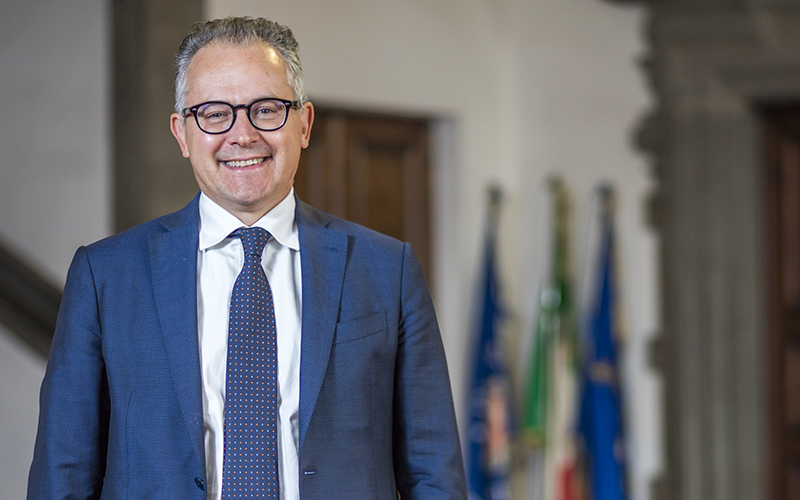
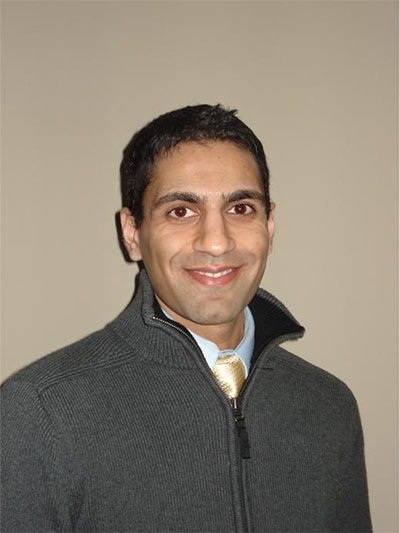
Dr. Lecturer Muhammed Nur AVCİL is affiliated with the Faculty of Engineering at an unspecified university, serving in the Department of Computer Hardware . His role involves teaching and research in computer engineering disciplines. Research Interests: Focus on computer hardware systems, microprocessor design, and embedded systems, aligning with the technical foundations of computer engineering. Academic Affiliation: Faculty of Engineering, Department of Computer Hardware.
Andrew J. Mason is a Professor in the Department of Electrical and Computer Engineering at Michigan State University's College of Engineering. His research focuses on mixed-signal integrated circuits and microfabrication for biochemical, neural, and environmental sensing applications. Key projects include low-power bioelectrochemical interrogation circuits, adaptive chemical sensor interfaces, and implantable mixed-signal integrated circuits for wireless neural recordings. Senior Member of the IEEE Associate Editor for IEEE Transactions on Biomedical Circuits and Systems (TBCAS) General Chair of the 2011 IEEE Biomedical Circuits and Systems Conference He teaches courses in VLSI design, microprocessor systems, and biomedical instrumentation, bridging microelectronics with biomedical engineering challenges.
Dr. Irina Zeleneva is an Associate Professor at the Department of Computer Systems and Networks, Faculty of Computer Science and Technologies, Zaporizhzhia Polytechnic National University. With a Ph.D. in Computers, Systems, and Networks, she has 15+ years of academic experience since joining the university in 2003. Specializes in FPGA-based digital system design Focuses on hardware acceleration and reliability optimization Teaches advanced topics in microprocessor architecture Her research includes: Development of energy-efficient FPGA systems Hardware-software co-design Neural network text classification accelerators Reliable embedded control architectures Recent publications analyze FPGA implementation of floating-point multipliers, finite state machines with elementary state chains, and AI-enhanced educational frameworks . Her work frequently appears in international conferences like IDAACS and PIC S&T, with multiple Scopus/WoS indexed articles. Dr. Zeleneva's contributions: Co-author of two monographs on FPGA acceleration PI in multiple university research projects Active participant in annual "Week of Science" conferences
Sergey Oleksandrovych Sgadov is a Senior Lecturer in the Department of Computer Systems and Networks at Zaporizhzhia Polytechnic National University. With academic activity at the university since 1998, he has established himself as a dedicated educator and researcher in computer science and microprocessor technologies. His institutional affiliation places him within the Faculty of Computer Sciences and Technologies, where he contributes to both teaching and research initiatives. Education: Graduated from Zaporizhia National University in 1993 with honors, specializing in "Solid-state electronics and microelectronics" and receiving the qualification of "specialist". Dr. Sgadov's research spans multiple domains of computer science and engineering. His primary interests include microprocessor programming, application development using Delphi and C++, web programming with .NET technologies, and computer modeling of physical processes. He has made significant contributions to graph theory, particularly in topological graph drawing algorithms and their applications in printed circuit board design. His work bridges theoretical computer science with practical engineering applications, focusing on creating efficient algorithms for complex computational problems. Analysis of his publication record reveals a strong focus on graph theory applications in electronic design automation, microprocessor systems development, and educational tools for computer engineering. His research has evolved from fundamental theoretical work on graph algorithms to practical implementations in microcontroller programming and educational technology. The consistent thread throughout his work is the application of computational methods to solve complex engineering problems, particularly in circuit design and microprocessor systems. Dr. Sgadov teaches courses in microcontroller programming and programming of microcontroller systems, bringing his research expertise directly into the classroom. His teaching methodology likely incorporates practical, hands-on experience with modern microprocessor technologies, reflecting his research interests in ARM Cortex processors and microcontroller applications.
Sofiène Tahar is a Professor and Tier I Concordia Research Chair in the Department of Electrical and Computer Engineering at Concordia University. His academic career focuses on formal methods for hardware and system verification. Education: Ph.D. from the University of Karlsruhe (1994) Research Interests: Formal methods and theorem proving Hardware verification (digital, analog, and mixed-signal systems) Cyber-physical systems analysis Reliability, probabilistic, and statistical modeling Scientific Recognition: Tier I Concordia Research Chair Teaching Activities: COEN311: Computer Organization and Software COEN6741: Computer Architecture and Design COEN6551: Formal Hardware Verification Thesis Supervision: Currently supervising PhD students in Electrical and Computer Engineering.
Assoc. Prof. Dr. Ali GÜLBAĞ is an academic at the Faculty of Computer and Information Sciences , Sakarya University , specializing in Computer Engineering . His career spans over two decades, focusing on FPGA-based hardware design, machine learning applications, and educational methodologies in computer architecture. Doctorate (2003-2006): Quantitative determination of volatile organic compounds using artificial neural network and fuzzy logic-based algorithms MSc (1998-2000): Building automation using telephone lines BSc (1994-1998): Electrical-Electronics Engineering His research interests include Artificial Neural Networks , FPGA Design , and Water Resource Management , with applications in seismic event differentiation, environmental modeling, and educational technologies. Recent work emphasizes water consumption prediction using machine learning. Key projects: BZK.SAU.FPGA microcomputer architecture , Remote FPGA laboratories Publications demonstrate expertise in combining machine learning techniques (ANNs, gradient boosting, random forests) with hardware implementations for real-world problem-solving.
Assoc. Prof. Georgi Petrov is an academic at New Bulgarian University (NBU), holding the position of Associate Professor in the Telecommunications Department. With over two decades of experience spanning academia, international organizations, and industry, he specializes in telecommunications systems, electromagnetic field analysis, and biomedical applications of technology. Professional Roles: Acting Head of the State Customs Committee (2011–2022), full-time assistant at NBU's Faculty of Economics (2009–2011), and hardware engineer at Assen Aero (2019–2020). Research & Grants: Led projects like "Improving interdisciplinary skills in telecommunications" (2013–2015) and contributed to studies on electromagnetic fields' health impacts (2013–2014). Participated in international initiatives like I3E (2010) and Balkan Case Challenge (2009). Consulting: Independent consultant for the International Telecommunication Union (ITU Geneva), Stress-RX (USA), and defense systems like Intelligent Munitions System (2008). Expertise: Courses taught include Microprocessors , Digital Signal Processing , Human-Machine Systems , and Mobile Application Development . Membership: Part of the Union of Electronics, Electrical Engineering, and Communications (Bulgaria) and the Union of Mathematicians in Bulgaria.
Berke Özenç is a full-time Lecturer in the Department of Computer Engineering at the Faculty of Engineering and Natural Sciences, Işık University. He teaches core computer science courses including Computer Networks, Android Programming, Microprocessors, Computer Organization, Data Structures and Algorithms, and Object Oriented Programming across multiple academic periods from 2023-2025. His educational qualifications include: PhD in Computer Engineering from Işık University Institute of Science (2018-2025) Master's Degree in Computer Engineering with thesis from Işık University Institute of Science (2016-2018) Bachelor's degree in Software Engineering from Işık University Faculty of Engineering (2011-2016) with 50% scholarship Dr. Özenç's research centers on computational linguistics for Turkic languages, specializing in morphological analysis of Turkish and Azerbaijani Turkish. His work integrates computer science with linguistic theory to develop tools like morphological analyzers and explore syntactic structures. Key contributions include visual modeling techniques, finite-state transducer implementations, and systematic studies of morphotactics for grammatical categories like person and tense. No scientific awards were documented in the source materials. Regarding academic mentorship and research funding, the available information does not specify any graduate students, advising relationships, or grant acquisitions.
Samuel Russ is an Associate Professor in the Department of Electrical and Computer Engineering at the College of Engineering, University of South Alabama. His research focuses on embedded systems, consumer electronics, signal integrity, and electronics manufacturing systems. He holds a Ph.D. and B.S. in Electrical Engineering from Georgia Institute of Technology. Ph.D. Electrical Engineering, Georgia Institute of Technology, 1991 B.S. Electrical Engineering, Georgia Institute of Technology, 1986 Russ specializes in signal integrity, embedded systems, and consumer electronics. His work addresses practical challenges in electronics manufacturing, smart grid integration, and hardware optimization. Recent publications highlight collaborations in smart grid applications, wear leveling algorithms for solid-state drives, and wireless motion detection systems. His publications demonstrate expertise in signal integrity, embedded systems, and consumer electronics. He has explored solid-state disk optimization, home health monitoring architectures, and immersive simulation algorithms. Collaborations span healthcare, power systems, and digital storage technologies. No scientific awards listed. He teaches courses such as EE 263 Digital Logic Design, EE 368 Microprocessor Lab, EE 457/557 Embedded System Design, and EE 469/569 Signal Integrity.
William Harbour is an Assistant Professor and Chair of the Department of Engineering Education at Houston Christian University's College of Science and Engineering. With a PhD in Engineering from the University of Arkansas and dual bachelor's/master's degrees in Electrical Engineering from the University of Oklahoma, he specializes in integrating advanced technical concepts like embedded systems and fuzzy logic control into undergraduate curricula. Education: PhD in Engineering (University of Arkansas), MS in Electrical Engineering (University of Oklahoma), BS in Electrical Engineering (University of Oklahoma) His teaching focuses on engineering problem-solving, circuits, and embedded systems development. Research interests include: Internet of Things (IoT) integration in freshman courses Robotics platform migration between course levels Microprocessor-based control system projects Recent publications examine curriculum continuity across academic levels and IoT implementation in foundational engineering courses. Key contributions include the GK12 Fellowship Program award. Professional affiliations: IEEE, ASEE. Contact: Office Phone - 281-649-3025 | Office Location - Atwood II 108
Shyama Prasad Das is a Professor in the Department of Electrical Engineering at the Indian Institute of Technology Kanpur. His expertise lies in the field of Power Electronics and Electrical Drives with over two decades of academic and research experience. Education: PhD, IIT Kharagpur (1997) M.Tech, IIT Kharagpur (1992) B.Tech (Hons), IIT Kharagpur (1990) Professor Das's research focuses on Power electronics, Electric Drives, Electrical machines, and Microprocessor Systems & instrumentation. His work addresses critical challenges in motor control systems, power quality enhancement, and advanced power conversion technologies. His research has resulted in significant contributions to direct torque control of induction motors and Unified Power Quality Conditioners (UPQC), with practical applications in industrial motor drives and energy-efficient power conversion systems. His publication record demonstrates a strong emphasis on experimental validation alongside theoretical analysis, particularly in power converter topologies and motor drive systems. His work spans from fundamental control strategies to practical implementation of power electronic circuits for industrial applications. Awards and Recognitions: INAE Young Engineers Award (2003) Senior Member IEEE (2002) Fellow, IETE (India) (2008) Professor Das maintains an active research program with collaborations across academia and industry. His work contributes significantly to advancing power electronic technologies and their applications in various industrial settings, particularly in improving energy efficiency and power quality in electrical systems.
Kamkin Alexander Sergeevich is an Associate Professor at the National Research University Higher School of Economics (HSE) and the Institute for System Programming named after V.P. Ivannikov of the Russian Academy of Sciences (ISP RAS). Affiliated with the Faculty of Computer Science and the Moscow Institute of Electronics and Mathematics, he specializes in software and computer engineering with a focus on formal methods for program and microprocessor verification. Education: Candidate of Physical and Mathematical Sciences (2009), Moscow State University (2003) in Applied Mathematics and Computer Science Research Areas: Formal methods, program verification, microprocessor verification, model-based testing, static analysis His recent publications highlight the application of formal specifications in test program generation for architectures like RISC-V and ARMv8, emphasizing simulation modeling and ISA specification maintenance. Key trends include the integration of constraint-based testing, formal modeling, and automated verification tools. Kamkin supervises students in software engineering and collaborates with colleagues such as Tatarnikov A.D., Protsenko A.S., and Chupilko M.M. At HSE, he has taught courses including Software Verification (Master's, 09.04.04 Software Engineering) and High-Level and Simulation Modeling of Digital Systems (Bachelor's, 09.03.01 Computer Science and Engineering). His work is associated with the MicroTESK framework, which automates test generation for microprocessors.
Professor Luca Fanucci is a Full Professor of Electronics at the Department of Information Engineering , University of Pisa. He serves as Rector's Delegate for Inclusion of Students with Disabilities and leads research in integrated circuits, embedded systems, and assistive technologies . Institutional roles include membership in the National University Conference of Delegates for Disability (CNUDD) and leadership in the PhD program in Information Engineering. Born: Montecatini Terme (1965) Education: Laurea in Electronic Engineering (1992), PhD in Information Engineering (1996), University of Pisa Professional Journey: ESA research (1992-1996), CNR researcher (1996-2004), University of Pisa faculty (2004-present) His research focuses on: System-level design of integrated circuits and embedded systems Hardware-software co-design for low power consumption Spacecraft and satellite communication systems Medical devices and telemonitoring platforms Assistive technologies for disabilities Recent publications highlight AI in space applications and telemedicine systems . Key projects include the Ingeniars spin-off for satellite communications and the AsTech National Laboratory for assistive technologies. Scientific Recognition : IEEE Fellow (2019) 40+ patents H-index 34 (5000+ citations) He coordinates international conferences (DATE, HiPEAC, Spacewire) and serves as Associate Editor for Technology and Disability and Microprocessors and Microsystems journals.
Naveen Verma is an Associate Professor at Princeton University's Department of Electrical Engineering, specializing in advanced sensing systems. His research bridges algorithm development with novel sensing and computing technologies. Education: B.A.Sc. from UBC (2003), M.S./Ph.D. from MIT (2005/2009) Key Focus: Large-area flexible sensors, energy-efficient architectures, machine-learning algorithms His work explores how systems for learning and inference can be enhanced through new hardware paradigms, particularly in thin-film electronics and analog computing. Recent publications highlight applications in imaging systems, biomedical sensors, and error-resilient machine learning. His research outputs include: Embedded thin-film classifiers for image sensing Compressive-sensing circuits using flexible electronics Error-adaptive boosting algorithms for hardware resilience Energy-scalable processor designs Scientific awards received: NSF CAREER Award (2013) AFOSR Young Investigator Award (2014) IEEE Best Paper Awards Teaching excellence awards Industry recognition from Intel and IEEE societies
Subhasish Mitra is a Professor in the Department of Electrical Engineering and by courtesy in Computer Science at Stanford University’s School of Engineering. His pioneering work focuses on creating robust, error-tolerant hardware systems through the Resilient Silicon paradigm, addressing critical challenges in modern microprocessors and memory design. Education Ph.D. in Electrical Engineering, Stanford University, 1999 B.Tech. in Electrical Engineering, Indian Institute of Technology Kharagpur, 1994 His research spans Computer Architecture , VLSI Design , and Hardware Security , with breakthroughs in defect-tolerant circuits and aging-induced error mitigation. Mitra’s work bridges theoretical innovation and industrial adoption, notably in Intel’s high-volume manufacturing processes. Key recognitions include: IEEE Fellow (2015) for “contributions to design and test of robust microprocessors” ACM Fellow (2015) for foundational reliability frameworks Phil Kaufman Award (2020), EDA’s highest honor He leads Stanford’s Robust Systems Group with sustained funding from NSF, DARPA, and semiconductor industry partners, driving next-generation secure hardware for AI accelerators and IoT devices.