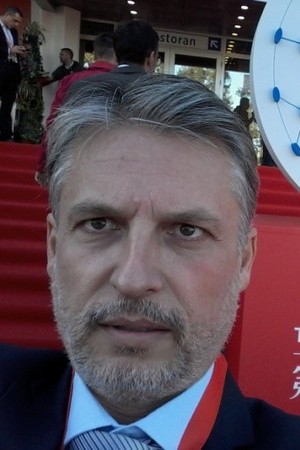
Dr. Nebojsa Stanković is an Assistant Professor at the Department of Information Technologies , Faculty of Technical Sciences Čačak , University of Kragujevac . With a career spanning over three decades in academia, he focuses on educational technology innovation , machine learning applications , and IT pedagogy . BSc: Electrical Engineering, University of Kragujevac (1991) MSc: Technical Sciences, University of Kragujevac (2009) PhD: Information Technologies, University of Kragujevac (2021) His research explores artificial intelligence in education , student success prediction , and e-learning systems . Recent work includes hybrid AI models for solar energy optimization and vibration classification in industrial settings. Publications demonstrate consistent engagement with machine learning , cybersecurity , and digital transformation in educational contexts. He actively contributes to international conferences like TIE and UNITECH, specializing in pedagogical applications of Python programming , NLTK , and MATLAB . As a certified ECDL examiner and conference organizer, he bridges academic research with practical IT training . His textbook on Multimedia Technologies (2019) exemplifies his commitment to educational resource development.
Predrag Petrović is a Full Professor at the Department of General Electrical Engineering and Electronics at the Faculty of Technical Sciences, University of Kragujevac, Serbia. He has been a faculty member since 1991, progressing from trainee assistant to full professor in 2011. His work focuses on power electronics, digital electronics, and signal processing. Dr. Petrović's educational background includes: Bachelor's degree in Electrical Engineering from Faculty of Electrical Engineering in Belgrade (1991) Master's degree with thesis "Realization of digital data encryptors" (1994) PhD with dissertation "Measurement of electrical power with slow A/D conversion" (2004) His primary research interests span power electronics, digital signal processing, cryptology, and real-time system management. Dr. Petrović has made significant contributions to the field of electrical measurement systems, particularly in developing methods for processing AC signals, power measurement techniques, and circuit design for signal processing. His work often bridges theoretical mathematics with practical electronic circuit implementation, resulting in numerous patented technologies. Analysis of his recent publications reveals a strong focus on advanced circuit design, particularly in the areas of memristor and memelement emulation, rectifier circuits, and power system analysis. His work demonstrates a consistent progression from fundamental signal processing techniques to more complex circuit implementations, with increasing emphasis on novel electronic components and their applications in power systems. Dr. Petrović has received several prestigious awards: Ministry of Science, Development and Technology award for best young scientist (2002) Ministry of Science of Republic of Srpska award for best published scientific paper (2006) IETE-S K MITRA MEMORIAL AWARD for best research oriented paper (2011) Throughout his career, Dr. Petrović has secured funding for multiple research projects, including four projects funded by the Ministry of Science of the Republic of Serbia and one EU-funded project. He has mentored numerous students in their diploma theses and has been instrumental in developing curriculum and educational materials in his field. His work is closely associated with the Laboratory for Electrical Machines, Electromotor Drives and Automation at the Faculty of Technical Sciences in Čačak, where he conducts both theoretical research and practical circuit implementation. His collaborations extend to researchers across Serbia and internationally, as evidenced by his co-authorship on numerous publications.
Момчило Крунић is an Associate Professor at the Department of Computer Communications within the Faculty of Technical Sciences of the University of Novi Sad . He holds a Master's degree (2009) and a Ph.D. (2017) from the same institution, with his doctoral thesis focusing on energy consumption estimation in multi-engineered applications. In 2018, he was appointed to his current academic rank. Research Focus: His work centers on developing software tools for resource-constrained processors and advancing application/ platform software for autonomous driving at levels 4-5. Key areas include embedded systems, energy optimization, and real-time systems. Affiliations: He is affiliated with the Computer Communications Chair and actively contributes to academic research in technical sciences.
Dr. Milan Vesković is an Assistant Professor at the Department of Computer and Software Engineering, Faculty of Technical Sciences in Čačak, University of Kragujevac, Serbia. He has been employed at the Faculty since October 2007, progressing from research associate to his current position. His academic journey includes teaching courses in mechatronics, electronics, radio systems, and electronic components and assemblies. Graduated from Faculty of Technical Sciences in Novi Sad, March 11, 2002 (Electrical Engineering and Computer Science) Master's degree from Technical Faculty in Čačak, December 2009 (Electromagnetism) PhD from Faculty of Technical Sciences in Čačak, April 2018 (Electronics) Dr. Vesković's research spans multiple domains within electrical engineering and computer science. His primary interests include the application of numerical methods in electromagnetism (particularly the method of fictitious sources) for solving electrostatic conductor problems, signal processing techniques in electronics, and the application of electronic components in education, ecology, and hardware/software development. His work demonstrates a strong interdisciplinary approach, bridging theoretical electrical engineering concepts with practical applications in computing and environmental sustainability. His recent publications reveal a growing interest in emerging technologies including nanotechnology applications, waste management systems, educational technology (particularly Micro:bit applications), and optimization algorithms for energy management. There's also a clear trend toward interdisciplinary research combining electrical engineering principles with computer science, environmental science, and educational methodologies. Dr. Vesković has served as a UNIDO Consultant for Cleaner Production (CP) Programme following his successful engagement with the "Cleaner Production 2011" project in collaboration with UNIDO and the city of Čačak. As an educator, Dr. Vesković has contributed significantly to curriculum development and teaching in electrical engineering and computer science. His research has been supported through various academic and industry collaborations, particularly in the areas of cleaner production methods and educational technology implementation. He has been actively involved in numerous international conferences and has published 59 papers in domestic and international journals and conference proceedings. His work spans multiple laboratories and research groups within the Faculty of Technical Sciences, particularly those focused on electronics, computer engineering, and interdisciplinary applications of technology in environmental and educational contexts.
Milan Tuba is a Professor of Computer Science and Mathematics at Singidunum University in Belgrade, Serbia. He holds academic roles including former Vice Rector for International Relations at Singidunum University, Head of the Department for Mathematical Sciences at State University of Novi Pazar, and Dean of the Graduate School of Computer Science at John Naisbitt University. His expertise spans multiple institutions, including Vanderbilt University and New York University in the U.S., where he led NSF projects and founded the Microprocessor Lab and VLSI Lab. Education: He earned B.S., M.S., and Ph.D. degrees in Mathematics and Computer Science from the University of Belgrade and New York University. Research Interests: Tuba focuses on nature-inspired optimization algorithms applied to image processing, neural networks, and computer networks. His work integrates metaheuristics with machine learning, addressing challenges in healthcare, energy forecasting, and cloud computing. Recent projects include developing optimized algorithms for medical image analysis, wind energy prediction, and cloud resource scheduling. Scientific Contributions: With over 300 publications (h-index 53), he has authored/co-edited books on topics like target localization and hardware design. His awards include inclusion in Stanford University's top 2% global scientists list (2020–2024). Advising & Leadership: Tuba has mentored dozens of PhD/Master's students across universities in Serbia, Bosnia, and the U.S. He leads research groups and serves on editorial boards for journals and conferences. His labs focus on VLSI design, neural networks, and optimization. Labs/Teams: Founder of Microprocessor Lab and VLSI Lab at U.S. institutions, and currently directs AI-focused research at Singidunum University.
Dr. Nebojša Stanković is an Assistant Professor at the Department of Information Technologies, Faculty of Technical Sciences, University of Kragujevac. With over 30 years of academic experience since 1992, he specializes in information technologies, programming education, and multimedia systems. His research focuses on artificial intelligence applications in education and innovative teaching methodologies. Education: BSc (1991): Technical Faculty Čačak, University of Kragujevac MSc (2009): Technical Faculty Čačak, University of Kragujevac PhD (2021): Faculty of Technical Sciences Čačak, University of Kragujevac Dr. Stanković's research spans multiple areas including artificial neural networks for predicting student success in programming, e-learning technologies, and multimedia systems. He has made significant contributions to understanding how AI can enhance educational outcomes, particularly in computer science education. His work also addresses cybersecurity in educational contexts and the impact of digital tools on teaching methodologies, with a strong focus on practical applications that improve learning experiences. His recent publications show a clear trend toward AI applications in education, with a particular emphasis on using machine learning to predict student success in programming. He has also explored cybersecurity challenges in educational environments, pollen level prediction using ML techniques, and optimizing solar energy yield through hybrid AI models. These works demonstrate his interdisciplinary approach connecting computer science with practical educational and environmental applications. Dr. Stanković has been an authorized ECDL (European Computer Driving Licence) examiner since 2005 and has co-authored three accredited teacher training programs. He has organized numerous computer training courses for employees and unemployed in cooperation with the Employment Bureau and has been actively involved in the "Technics and Informatics in Education" conference series since 2006. He has served as an organizer and technical editor for multiple academic conferences and has contributed to the development of educational materials including several textbooks on information technologies, multimedia systems, and computer applications.
Miladin Stefanović is a Professor at the Department of Production Engineering, Faculty of Engineering, University of Kragujevac. His academic role includes research and teaching in production engineering, industrial systems, and advanced manufacturing technologies. He leads initiatives in Industry 4.0/5.0 integration, quality management systems, and smart manufacturing solutions. His research focuses on applying digital technologies like machine learning, computer vision, and IoT for optimizing industrial processes. Notable projects include robotic systems for food processing, OPC UA integration in automation, and cloud-based quality management frameworks. He emphasizes the transition from Quality 4.0 to 5.0, emphasizing human-centric manufacturing advancements. Stefanović has contributed to over 50 peer-reviewed publications since 2014, with recent work addressing real-time defect detection, smart quality control applications, and organizational resilience post-pandemic. His work bridges theoretical advancements with practical implementations in SMEs and public sector organizations. He has been actively involved in educational reforms, developing didactic tools for Industry 4.0 training and prototyping microprocessor-based learning systems. His lab focuses on edge computing solutions for manufacturing efficiency and sustainable resource allocation strategies.