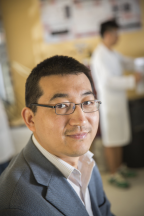
Olli Dahl is a Professor at Aalto University's Department of Forest Products Technology, specializing in Clean Technologies and Environmental Management. His work focuses on waste valorization, biorefinery processes, and sustainable resource utilization. Key areas include microplastic dynamics in composting systems, biochar applications for heavy metal decontamination, and optimization of mineral processing with recycled water. Research highlights include an international award for biorefinery innovation and groundbreaking studies on nickel recovery in flotation processes. He leads interdisciplinary projects addressing water quality impacts on ore processing and thermochemical conversion of agricultural residues into bioenergy. Dahl's recent work emphasizes closing material loops through circular bioeconomy strategies and advancing sustainable industrial practices. Awards: 2015 International Biorefinery Competition 2nd Place (Ministry of Employment & Economy, Finland) Key Themes: Waste-to-resource systems, industrial water management, bio-based materials, and metallurgical sustainability
Professor Bing-Jie (Bruce) Ni is an Adjunct Professor at the University of Technology Sydney (UTS) within the School of Civil and Environmental Engineering and a full Professor at UNSW Sydney. He is an internationally recognised leader in environmental engineering, wastewater treatment, greenhouse-gas mitigation, microplastics fate, electrocatalysis and sustainable energy systems. Education PhD in Environmental Engineering, University of Science and Technology of China, Hefei (2005–2009) Research Interests Professor Ni’s research integrates process engineering, microbial biotechnology, materials science and mathematical modelling to develop sustainable technologies for high-efficiency pollutant removal, minimal carbon footprint and maximal energy recovery from wastewater. He is a global pioneer in: Modelling and control of nitrous oxide (N₂O) and methane (CH₄) emissions from wastewater systems, Micro- and nano-plastics ecotoxicity and mitigation in anaerobic digestion, Transforming sewage sludge into high-value liquid bio-energy (medium-chain fatty acids and long-chain alcohols), Designing cost-effective electrocatalysts from natural minerals for green hydrogen production and wastewater electrolysis. Research Output & Impact Over the last decade he has published 2 research books, 30 book chapters and >400 refereed journal papers , including 35 in Environmental Science & Technology and 85 in Water Research . His work has influenced global policy: the IPCC adopted his nitrous-oxide-emission model in 2019 to revise national greenhouse-gas inventories for the first time in 13 years. Awards & Recognition ARC Future Fellowship & ARC DECRA Fellowship Clarivate Analytics Highly Cited Researcher (Web of Science) Royal Society of Chemistry Highly Cited Researcher (2020–present) Mendeley Data Top 2 % Cited Researchers worldwide Listed among “Australia’s Most Innovative Engineers” (Engineers Australia, 2018) 50+ additional awards including Scopus Young Researcher Award, South Australian Water Awards, UQ Research Excellence Awards, and Outstanding Doctoral Dissertation Awards. Research Funding & Leadership He has secured ≈ AUD $10 million in competitive funding (six major ARC grants plus >20 government, university and industry projects). He serves as: Lead Guest Editor, Water Research Editorial Advisory Board, Environmental Science & Technology Associate Editor for Journal of Cleaner Production , Environmental Chemistry Letters , Environmental Research , Journal of Environmental Management Editorial Board member for five additional high-impact journals. Teaching & Supervision At UTS he teaches Renewable Energy Technologies , Environmental and Sanitation Engineering , Process Dynamics and Control , and Water and Wastewater Treatment . He is available to supervise Masters and PhD students in environmental biotechnology, process modelling and sustainable energy systems. Laboratory & Commercial Translation He heads active research teams at both UNSW and UTS and is the inventor of >10 granted patents , some of which are currently being commercialised to deliver real-world impacts in greenhouse-gas-neutral wastewater treatment and renewable energy production.
David N. Thomas is a Professor of Arctic Ecosystem Research and Director of the International Masters Programme for Environmental Change and Global Sustainability at the University of Helsinki. He is affiliated with the Faculty of Biological and Environmental Sciences, working within the Ecosystems and Environment Research Programme and the Helsinki Institute of Sustainability Science. Dr. Thomas is a distinguished Marine-Arctic-Antarctic-Climate Biologist with extensive expertise in sea ice research, polar ecosystems, and climate change impacts. His research focuses on the biogeochemical processes within sea ice, carbon cycling in polar regions, and the ecological implications of a changing Arctic Ocean. He has made significant contributions to understanding how sea ice ecosystems function and respond to environmental change, with particular attention to microbial communities, nutrient dynamics, and carbon fluxes. His recent publications demonstrate a strong focus on the changing Arctic Ocean ecosystem, carbon and microbial dynamics in thawing permafrost landscapes, and sea ice biogeochemistry. Dr. Thomas has also contributed to important policy documents such as the PAME Synthesis Report on Ecosystem Status in the Central Arctic Ocean, bridging the gap between scientific research and environmental management. Professor Thomas has recently published the 4th Edition of "Sea Ice: Its Physics, Chemistry, Biology, Geology and Societal Importance," which represents a comprehensive update to this seminal work in polar science. His research spans both Arctic and Antarctic environments, examining how these critical polar regions are responding to global environmental change.
Xian Wu, Ph.D., serves as a Research Assistant Professor in the Department of Pharmacology & Toxicology at East Carolina University's Brody School of Medicine. Her research leverages human stem cell models to investigate developmental vulnerabilities to environmental contaminants in cardiovascular and neural systems, with emphasis on epigenetic mechanisms and disease modeling. Dr. Wu's academic credentials include: Ph.D. in Toxicology from the University of Georgia M.S. in Biomedicine from East China Normal University B.S. in Biotechnology from Anhui University Her postdoctoral training comprised a Fellowship at the National Institute of Environmental Health Sciences and an ORISE Fellowship at the U.S. Food and Drug Administration. Research focuses on creating human stem cell-derived organoid systems to model developmental toxicology, particularly examining cardiac and neural development under chemical exposure. The laboratory employs fluorescence reporter systems and RNA-seq to identify critical vulnerability windows during early development, with recent work targeting Parkinson's disease mechanisms through dopaminergic neuron models and cardiac fibrosis via advanced organoids. Methodological innovations include high-content imaging for neurogenesis quantification and epigenetic pathway analysis. Publication trends (2016-2025) demonstrate consistent advancement in stem cell-based toxicology testing, with increasing emphasis on micro/nanoplastics risk assessment, arsenic neurotoxicity mechanisms, and doxorubicin cardiotoxicity modeling. The work bridges environmental health, epigenetics, and regenerative medicine through interdisciplinary approaches. Scientific recognition includes: 2025 SPARC Award (ECU) 2024 Top Abstract Award (Developmental Origins of Health and Disease Society) 2024 NIEHS P30 Center Travel Award 2023 ECU Research and Creative Activity Award Dr. Wu actively mentors graduate researchers including Ph.D. candidate Cate Duncan and M.S. students Kamilah Muhammad and Bailey Skeen, alongside undergraduate Bryce Tilghman. Former trainees McKyrah Brown and Monica Cross completed honors theses in the laboratory. Current grants include ECU's SPARC Award funding stem cell model development for environmental contaminant testing. The BSOM 6S-11 laboratory maintains specialized capabilities in cardiac and cerebral organoid generation, fluorescence-based toxicity screening, and RNA-seq epigenetic analysis. Collaborative networks include the National Institute of Environmental Health Sciences and ECU's Center for Human Health and the Environment, supporting translational research on developmental vulnerability periods.
Andrea Carminati is a Full Professor at the Department of Environmental Systems Science, ETH Zurich. His research focuses on soil-plant hydraulics , rhizosphere dynamics , and drought adaptation mechanisms in crops and forest species. He investigates how root traits , soil texture , and biogenic substances like mucilage influence water uptake , gas exchange , and soil microbial activity . Key Research Areas: Soil-Plant Water Relations Rhizosphere Hydrology Drought Resistance in Maize and Trees Microplastics in Agricultural Soils Hydraulic Redistribution and Isohydricity Contact: Email: andrea.carminati@usys.ethz.ch Phone: +41 44 633 61 60 Recent studies highlight his work on soil texture-specific transpiration responses , rhizosheath properties under drought , and microplastic impacts on soil hydrology . He employs advanced techniques like X-ray computed tomography and neutron radiography to visualize root-soil interactions.
James Rothwell is a Professor of Physical Geography at The University of Manchester, specializing in environmental pollution and hydrology. He leads the MSc in Green Infrastructure and has held senior academic roles including Deputy Head of Geography and Co-Director of the Manchester Environmental Research Institute. His research focuses on urban challenges, microplastics, and peatland ecosystems, supported by over £15M in grants from NERC, EU, and others. He has supervised 8 PhD students and teaches courses on pollution, hydrology, and sustainable cities. Education: PhD (2006) and BSc (2002) in Geography from The University of Manchester. Professional roles include Lecturer (2008-2014), Senior Lecturer (2014-2017), Reader (2017-2019), and current Professorship since 2019. Research interests include green infrastructure for urban flooding, microplastic transport, and heavy metal dynamics in peatlands. Major projects include EU-funded GrowGreen (€11M+) and UK-based flood management initiatives. Over 50 peer-reviewed articles address environmental challenges in cities, peatlands, and global ecosystems. Grants highlight interdisciplinary work across continents, with notable projects like the Manchester Sky Garden Challenge (2024) and studies on peatland restoration. Media coverage includes high-profile reports on UK microplastic pollution in rivers. Teaching spans undergraduate to postgraduate levels, integrating research into courses like Environmental Pollution and Green Infrastructure Planning. Administrative roles include leading admissions and undergraduate programs in Geography.
Susie Dai is a Professor in the Department of Chemical and Biomedical Engineering at the University of Missouri, with a laboratory located at the Bond Life Sciences Center. Her research bridges chemistry, biology, and engineering to address critical environmental and sustainability challenges. Education: PhD in Chemistry from Duke University; Certificate in Biomedical Engineering from Duke University; Certificate in Regulatory Science from Texas A&M University; BS in Chemistry from Fudan University Dr. Dai specializes in biological and material engineering, carbon waste conversion, contaminant remediation, and synthetic biology. She is developing RAPIMER, a lignin-based fungal scaffold for PFAS removal, and pioneering electro-microbial systems to convert CO2 into bioplastics and biofuels. Her work focuses on scalable, sustainable solutions for environmental pollutants and carbon utilization. Recent research trends include creating biomimetic materials for sustainable packaging, optimizing lignocellulosic biorefineries, and designing lignin-derived photocatalysts. She leads projects funded by Tito's Handmade Vodka's philanthropic arm for PFAS remediation and collaborates with the NSF Engineering Research Center CURB at Washington University in St. Louis. At Mizzou, Dai integrates engineering and life sciences, leveraging both Mizzou Engineering and Bond Life Sciences Center's resources. Her interdisciplinary approach combines electrochemistry, microbial engineering, and social impact analysis to advance circular bioeconomy solutions.
Miriam Diamond is a Professor at the Department of Earth Sciences and School of the Environment, University of Toronto. She holds cross-appointments in Chemical Engineering, Dalla Lana School of Public Health, and Physical & Environmental Sciences. PhD in Chemical Engineering (University of Toronto, 1990) MSc in Mining Engineering (Queen’s University, 1984) MSc in Zoology (University of Alberta, 1980) Her research focuses on chemical contaminant fate, transport, and exposure in indoor and urban environments, Arctic regions, and Great Lakes systems. She develops mathematical models , passive sampling methods , and policy frameworks to address pollution from flame retardants, phthalates, PFAS, and microplastics. Recent publications highlight microplastic extraction techniques , sleeping children’s exposure , and polymeric flame retardant risks . Key awards include the Royal Society of Canada Fellowship and 2025 President’s Impact Award . She supervises PhD candidates Anna Shalin , Lin Boynton , and others. Her policy contributions include serving on the Canadian Chemical Management Plan Science Committee and co-chairing the Earth Commissioner initiative.
Susan D. Richardson is the Arthur Sease Williams Professor of Chemistry in the Department of Chemistry and Biochemistry at the University of South Carolina, affiliated with the McCausland College of Arts and Sciences. Her research focuses on improving drinking water safety through environmental analytical chemistry, particularly studying disinfection by-products (DBPs), emerging contaminants like PFAS, and advanced analytical methods such as mass spectrometry. She leads a lab equipped with six mass spectrometers and collaborates on projects involving water reuse, toxicology, and environmental policy. Education: B.S. in Chemistry & Mathematics from Georgia College & State University (1984); Ph.D. in Physical Organic Chemistry from Emory University (1989). Research Interests: Environmental analytical chemistry and drinking water safety Disinfection by-products (DBPs) formation and toxicity Emerging contaminants (PFAS, microplastics, algal toxins) Development of novel analytical methods (e.g., Total Organic Fluorine, VASE-GC-MS) Impact of wastewater reuse and hydraulic fracturing on water quality Article Trends: Recent work emphasizes high-molecular-weight DBPs, iodinated DBPs from cooking practices, and global PFAS hotspots. Innovative methods like tandem mass spectrometry and TOF analysis dominate her approaches. Awards: National Academy of Engineering (2024) Multiple Analytical Scientist Power List recognitions (2023–2019) Walter J. Weber Jr. AEESP Frontier in Research Award (2021) Fellowships from AAAS (2019) and ACS (2016) Advising & Grants: Richardson’s lab supports interdisciplinary collaborations, with funding from agencies like the National Science Foundation and industry partnerships. She mentors students in environmental chemistry and toxicology, emphasizing real-world applications of research. Labs/Teams: Her research group operates in state-of-the-art facilities (GSRC 209/237/238), focusing on cutting-edge technologies for contaminant detection and mitigation.
Wenjing Zhang is a Professor and Head of the Section for Water Technology and Processes at the Department of Environmental and Resource Engineering, Technical University of Denmark (DTU). She is also affiliated with the DTU Microbes Initiative, contributing to interdisciplinary research in sustainable water technologies and environmental nanomaterials. Professor, DTU Head of Section, Water Technology & Processes Member, DTU Microbes Initiative Her research spans nanofiber technology, electrospinning, membrane processes, and catalytic materials for environmental applications. She focuses on innovative solutions for water purification, plastic waste recycling, CO2 photoreduction, and green hydrogen production, aligning with UN Sustainable Development Goals. The recent publications highlight a strong trend in advanced materials for environmental sustainability, particularly electrospun nanofibers, heterojunction photocatalysts, and ceramic membranes. These works emphasize applications in microplastic degradation, solid oxide cells, and chemical recycling of plastics, reflecting a multidisciplinary approach combining materials science, electrochemistry, and environmental engineering. Researcher at DTU Energy becomes honorary professor in China Wenjing Zhang actively supervises PhD students and leads multiple research projects, including EU and nationally funded initiatives on decentralized wastewater treatment and biocatalytic membrane systems. She collaborates with leading researchers and institutions, securing funding for high-impact environmental technologies. Her lab focuses on nanostructured membrane design and advanced fabrication of porous ceramics for industrial and municipal applications.
Boxin Zhao is a Professor and University of Waterloo Endowed Chair in Nanotechnology in the Department of Chemical Engineering at the University of Waterloo. His research spans surface science, bionanomaterials, and biomimetic adhesion, with a focus on advanced polymers, hydrogels, and smart materials for biomedical and industrial applications. He leads the Surface Science and Bio-nanomaterials Laboratory Group, which develops innovative materials such as self-cleaning surfaces and antimicrobial coatings. Education: Doctorate in Chemical Engineering, McMaster University (2004); Master's from Chinese Academy of Sciences (1999); Bachelor's in Mineral Engineering from Central South University (1996). He has held prestigious fellowships, including the NSERC Postdoctoral Fellowship and IMMS Research Fellow at UC Santa Barbara and Los Alamos Lab. Research Interests: Biomimetic adhesion, soft robotics, polymer composites, and advanced manufacturing. Notable contributions include gecko-inspired adhesives, self-healing hydrogels, and conductive polymers for electronics. Recent work focuses on 3D-printed medical hydrogels, soft robotic devices, and microplastic degradation. His lab collaborates with industries like Proctor & Gamble and 3M, addressing real-world challenges in materials science and biomedical engineering. Awards: 1996 IET Scholarship, 2005 NSERC Postdoctoral Fellowship, 2007 IMMS Research Fellow. Teaching: CHE 313 (Heat/Mass Transfer), CHE 612 (Interfacial Phenomena). Lab Facilities: Advanced equipment for nanomaterial synthesis, surface characterization, and soft robotics prototyping.
Prof. Morten Hvitfeldt Iversen is a leading researcher in Polar Biological Oceanography at the Alfred Wegener Institute (AWI). He serves as Section Head of the Polar Biological Oceanography department and leads the bridging group 'SeaPump' collaborating with University of Bremen and MARUM. His work focuses on organic matter production, export, and transformation in oceans, linking small-scale microbial processes to large-scale biogeochemical cycles in high-latitude regions. Iversen pioneers optical techniques to study marine aggregates and their role in the biological carbon pump. Research interests include Arctic and Antarctic carbon dynamics, microbial ecology, and the impact of climate change on ocean systems. He leads projects like the 'SeaPump' initiative and contributes to the 6.3 sub-topic 'The future of the biological pump' under POF IV. His work integrates field observations, mooring data, and satellite measurements to understand carbon fluxes and their climate feedbacks. Recent articles highlight his focus on Arctic carbon sinks, microplastic impacts, and zooplankton roles in the biological pump. Iversen actively participates in expeditions aboard the Polarstern and uses advanced optical tools to study particle dynamics. His contributions bridge experimental and observational science to address global climate challenges.
Dr. Rebecca Rooney is an Associate Professor in the Faculty of Science at the University of Waterloo, specializing in wetland ecology and environmental toxicology. She contributes to graduate studies as Interim Associate Chair and leads the Rooney Lab , which focuses on wetland conservation, invasive species impacts, and contaminant dynamics in aquatic ecosystems. University of Waterloo Ecology and Evolution Research Group Her research spans several critical areas: Wetland hydrology and groundwater interactions Ecological impacts of microplastics and stormwater contaminants Invasive species management (particularly Phragmites australis ) Climate change effects on wetland biodiversity Environmental monitoring techniques The 15 most recent publications reveal consistent research themes in urban stormwater contamination, wetland connectivity, and microplastic pollution. These works employ field experiments, isotope tracing, and multi-metric monitoring frameworks to address ecological risks and inform conservation strategies. She actively investigates pesticide bioconcentration in biofilms, wetland reclamation in oil sands regions, and the ecological consequences of hydrological changes. Her lab integrates field-based methodologies with policy considerations to advance wetland science.
Professor Jes Sammut is a faculty member at the University of New South Wales (UNSW) in the School of Biological, Earth & Environmental Sciences . He serves as Deputy Dean for External Engagement and leads the UNSW Aquaculture Research Group , while also holding the position of Deputy Director (International) at the Centre for Marine Science & Innovation. Additionally, he is an Honorary Research Fellow at ANSTO , where he uses nuclear tools to study seafood provenance. His research spans biological, physical, and social sciences, focusing on aquaculture solutions across Australia, Vietnam, Papua New Guinea, Indonesia, India, Thailand, and the Philippines.
Reto Gieré is a Professor in the Department of Earth and Environmental Science at the University of Pennsylvania's School of Arts & Sciences. He holds editorial roles as Editor of the Journal of Petrology and Chief Editor of the European Journal of Mineralogy. His research focuses on environmental geochemistry, energy systems, mineralogical processes, and health impacts of pollutants. He has held academic positions at institutions including ETH Zürich, Purdue University, and the University of Basel. Education: PhD in Mineralogy and Petrology (ETH Zürich), Habilitation in Earth Sciences (University of Basel) Research Interests: Biogeochemistry, sustainable materials, atmospheric pollution, and global environmental change Key projects include investigations into tire-abrasion microplastics, charcoal sustainability in sub-Saharan Africa, and lead pollution dynamics in Philadelphia. He has received honors such as the Honorary Doctorate from Université de Haute-Alsace and Fellowships from major geological societies. Grants/Advising: Active in international projects like BIOCOMBUST (EU-funded biofuel research) Labs: Directs the Geochemistry Lab at UPenn, focusing on mineral-environment interactions