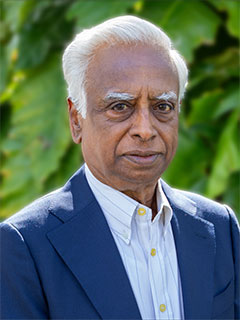
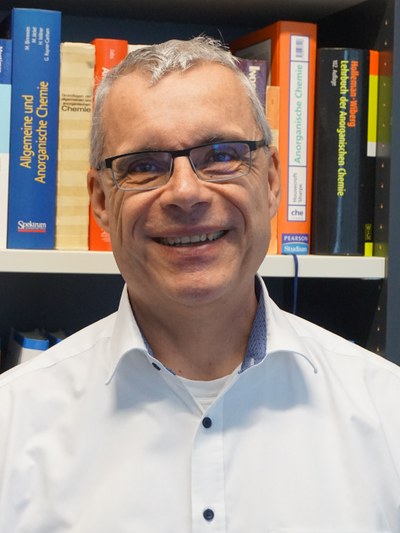
Zhenyu Yang is an Associate Professor at Aalborg University's Department of Energy within The Faculty of Engineering and Science. He specializes in control theory, AI-driven automation, and industrial process control, with a focus on offshore energy and water treatment systems. He leads the Offshore Process Control and Cybernetics Research Group and chairs the Mission for Sustainable Fuels, Chemicals, and PtX. His work aligns with UN Sustainable Development Goals related to clean energy and environmental protection. Education: B.Sc., M.Sc., and Ph.D. in Control Theory from Shandong University and Beijing University of Aeronautics and Astronautics. Postdoctoral training at Delft University of Technology and Aalborg University. Completed pedagogic education for assistant professors and interdisciplinary leadership training. Research interests include fault-tolerant control systems, hybrid dynamical systems, AI for process automation, and water treatment technologies. He has supervised 6 PhD students, including M. Kashani. Notable awards include Teacher of the Year 2012 and ABB Best Application Award Finalist 2009. Key projects involve high-temperature heat pumps, offshore produced water treatment automation, and microplastics capture using hydrocyclones. He has authored 198 publications and actively participates in academic committees and international conferences. Collaborations span institutions globally, emphasizing sustainable energy solutions and advanced control systems.
Junli Xu is an Associate Professor at the School of Biosystems and Food Engineering at University College Dublin (UCD), under the UCD Ad Astra Fellowship. She holds a Bachelor's degree from Zhejiang University (2014) and a PhD in Food Engineering from UCD (2018). Her research focuses on spectral imaging combined with advanced data analysis (machine learning/deep learning) for solving problems in environmental science, food safety, and biomedical engineering. Key projects include developing spectral imaging frameworks for detecting microplastics and assessing their health impacts. Her research interests span spectral imaging, machine learning applications, environmental monitoring, and toxicology. She has secured grants such as the ERC Starting Grant and SFI-IRC Pathway Programme. Xu leads the UCD Spectral Imaging Research Group and has supervised multiple PhD students. She has published extensively in journals like Science of the Total Environment and Environmental Pollution . Her work includes innovations like the BOX-YOLOv8 framework for hyperspectral core analysis and machine learning-driven methodologies for microplastic detection. She also contributes to professional activities, including editorial roles in Current Research in Food Science and peer review for journals like Food Control .
Dr. Anna Panasiuk serves as an Adjunct Professor at the University of Gdańsk's Faculty of Oceanography and Geography, where she is actively affiliated with the Division of Marine Biology and Ecology and the Division of Marine Plankton Research. Her research program bridges Antarctic and Baltic Sea ecosystems through rigorous investigations of marine pollution dynamics and zooplankton ecology, with particular emphasis on bioindicator species and contaminant transfer pathways. Her research interests center on mercury contamination mechanisms, microplastic pollution impacts, and pharmaceutical residue effects in marine environments. She specializes in using Antarctic krill (Euphausia superba), salps (Salpa thompsoni), and Pygoscelis penguins as bioindicators to trace pollution sources and assess ecosystem health. Her work examines trophic transfer of contaminants from primary producers through zooplankton to top predators, with significant contributions to understanding how climate change amplifies pollution impacts in polar regions. This research has established critical baselines for monitoring anthropogenic effects on vulnerable marine ecosystems. Analysis of her 2022-2025 publications reveals a consistent focus on mercury biogeochemistry in Antarctic zooplankton and krill, alongside emerging work on microplastics and pharmaceuticals in both polar and temperate waters. A defining characteristic is her comparative approach between Antarctic and Baltic ecosystems, highlighting regional differences in pollution profiles and ecosystem responses. Her studies frequently employ multi-trophic level analyses to demonstrate how contaminants move through food webs, with particular attention to how climate-driven changes in sea ice and ocean currents alter pollution pathways. This integrated methodology provides essential data for global marine conservation efforts and pollution mitigation strategies.
Hilda De Pablo is a researcher in Environmental Engineering at Universidade Lusófona , focusing on marine pollution, hydrodynamic modeling, and coastal ecosystem monitoring. She holds a PhD and Master's in Environmental Engineering, along with a Licence in Marine Science. Education : PhD in Environmental Engineering Master's in Environmental Engineering Licence in Marine Science Her research spans marine pollution dynamics, contaminant transport modeling, and environmental quality assessment using biomarkers and ecological indicators. Key methodologies involve Lagrangian and 3D-MOHID hydrodynamic models, with applications to macroplastics, nutrient fluxes, and thermal effluents. Recent publications highlight her work on plastic dispersion in the North Atlantic, HAB warning systems, and interdisciplinary coastal zone modeling. She has extensively studied the Tagus estuary and Obidos lagoon, addressing metal contamination and eutrophication. Key Research Themes : Marine pollution tracking Hydrodynamic simulation tools Biochemical responses in marine organisms Coastal ecosystem monitoring
Christian Zwiener is a Professor (W3) for Environmental Analytical Chemistry at the Center for Applied Geoscience, University of Tübingen since 2009. He holds a Habilitation and Venia Legendi in Water Chemistry (KIT, 2004) and a Ph.D. in Water Chemistry (Technical University of Munich, 1995). His research focuses on PFAS analysis , non-target screening , and environmental fate of contaminants using high-resolution mass spectrometry . Education: Habilitation in Water Chemistry, KIT (2004) Ph.D. in Water Chemistry, Technical University of Munich (1995) Diploma in Analytical and Environmental Chemistry, University of Ulm (1989) Research Trends: PFAS contamination in soils , human hair , and textiles Non-target screening workflows for novel contaminants and transformation products Environmental fate of pharmaceuticals and biocides Development of HRMS data mining tools (e.g., FindPFΔS, PFΔScreen) Scientific Awards: Level II Scientific and Technological Achievement Award (STAA) , EPA (2008) Research Award , Water Chemical Society, GDCh (2001) Professional Service: Chairman, Journal Vom Wasser (2016–present) Delegate, EUChemS Division of Chemistry & Environment (2020–present) Member of Water Research Perspectives Commission (2018–present) Advisory Board, VEGAS, University of Stuttgart (2014–present) His work bridges analytical chemistry , environmental toxicology , and public health , with key contributions to PFAS contamination and CKDu groundwater links . He has developed standardized methods for PFAS analysis and electrochemical oxidation protocols for contaminant degradation.
Claudia Barile is an Associate Professor at the Department of Mechanics, Mathematics & Management (Politecnico di Bari). Her work focuses on mechanical design, composite materials, and non-destructive testing techniques. Email: claudia.barile@poliba.it Phone: +39 080 596 3209 Research Interests : Barile's research spans acoustic emission analysis, residual stress measurement in polymers, and mechanical characterization of advanced composites, with applications in dental materials, aerospace engineering, and sustainable manufacturing. Recent Publications (2023-2025) demonstrate expertise in hybrid techniques (e.g., Gaussian Process Regression with acoustic emission) and environmental applications like biocomposites using agricultural waste.
Vaidhyanathan Ramamurthy is a Professor in the Department of Chemistry at the University of Miami's College of Arts and Sciences. His research explores supramolecular chemistry, focusing on reaction selectivity in confined spaces through host-guest systems like Octa Acid capsules. Research spans photorelease mechanisms, triplet state dynamics, and environmental degradation of microplastics Uses advanced NMR spectroscopy, time-resolved spectroscopy, and computational methods Develops strategies for visible-light activated chemical triggers in aqueous environments Recent work examines: Environmental markers from plastic degradation Structure-dynamics-reactivity relationships in confined systems Hydrogen bonding effects on intersystem crossing Room temperature phosphorescence in water-soluble hosts His group investigates how restricted molecular freedom influences reaction outcomes, with applications in materials science and environmental monitoring.
Dr. Elvis Dartey Okoffo is a Research Fellow at the Queensland Alliance for Environmental Health Sciences (QAEHS) within The University of Queensland's Faculty of Health, Medicine and Behavioural Sciences. His research focuses on developing innovative analytical methods to characterize and monitor environmental and human exposures associated with plastics pollution. His research interests center on plastic pollution analysis, with expertise in microplastics, nanoplastics, and biodegradable plastics. He has pioneered novel sampling approaches and analytical techniques for monitoring plastics in diverse environmental samples including drinking water, wastewater, biosolids, seafood, marine sediments, compost, and food systems. His work leverages advanced technologies such as pressurized liquid extraction, ultrafiltration, and pyrolysis gas chromatography coupled with mass spectrometry to provide insights into plastic distribution, abundance, and ecological impacts. Okoffo's recent publications demonstrate a strong focus on methodological development for plastic quantification, environmental monitoring across diverse matrices, and understanding pollution pathways. His work spans from fundamental analytical chemistry to applied environmental monitoring, with particular emphasis on Australian ecosystems including Moreton Bay and wastewater treatment systems. As an associate advisor, Dr. Okoffo supervises multiple PhD students working on projects related to specialized hyphenated methodologies for plastic quantification, microplastics in water systems, microplastic inputs from ships, degradation levels affecting quantification, and nanoplastics characterization. His research is supported by grants from Central Queensland University, Minderoo Foundation, and the Australian Academy of Science. His laboratory work focuses on developing and validating analytical methods for plastic detection across various environmental matrices, with particular expertise in pyrolysis-GC-MS techniques. The research team collaborates extensively with environmental scientists, marine biologists, and public health experts to address the multifaceted challenges of plastic pollution.
Ulaş YURTSEVER serves as Assistant Professor in the Department of Computer Engineering at Sakarya University's Faculty of Computer and Information Sciences. He has held academic positions since 1999, including Research Assistant roles at the Computer Research and Application Center (2005-2013) and Faculty of Engineering (1999-2013), and has been Lecturer at Adapazari Vocational School since 2013. His academic credentials include: Doctorate in Computer and Information Engineering (2007-2019): Thesis on "Colon cancer detection using deep learning method on segmented histopathological images" Master's in Electrical and Electronics Engineering (2000-2002): Thesis on "PC-based building automation" Bachelor's in Electrical and Electronics Engineering (1994-1999) Dr. YURTSEVER's research integrates Artificial Intelligence, Machine Learning, and Deep Learning to solve critical problems in medical diagnostics and environmental sustainability. His work focuses on computer vision applications for colon cancer detection in histopathological images and machine learning-driven analysis of plastic degradation across environmental matrices. He actively develops IoT systems for predictive maintenance in industrial settings. His publication trajectory (2018-2025) reveals strong thematic continuity in AI applications, with recent emphasis on plastic waste characterization (2023-2024) and medical AI (2024-2025). The TÜBİTAK 1001 projects on football agility prediction and plastic aging demonstrate his capacity for securing competitive research funding. He has secured multiple TÜBİTAK 1001 grants for interdisciplinary research bridging computer engineering with environmental science and healthcare. His collaborative work spans medical diagnostics (fundoscopy devices, cerebral angiography), environmental monitoring (plastic degradation tracking), and industrial systems (electrical panel anomaly detection).
Dr. Lars Bittrich is a Research Fellow at the Leibniz Institute of Polymer Research Dresden (IPF Dresden), working in the Department of Tailored Lightweight Composites within the Division of Polymer Materials Engineering. He collaborates closely with Prof. Dr.-Ing. A. Spickenheuer, the head of his department, and is actively involved in research on composite materials, numerical modeling, and simulation. Dr. Bittrich's primary research interests focus on: Numerical modeling and simulation of composite structures Optimization of fiber-reinforced composite materials Automated experimental data analysis Resin transfer molding and infiltration processes Variable-axial composite laminates and structural optimization His work bridges computational methods with practical applications in lightweight composite manufacturing, contributing significantly to advancements in the field of polymer materials engineering. Analysis of Dr. Bittrich's recent publications (2019-2025) reveals a strong focus on computational approaches to composite material design and characterization. His research shows increasing integration of machine learning techniques with traditional finite element analysis, particularly for understanding fiber-matrix interactions. There's also a clear progression toward more complex manufacturing processes like tailored fiber placement and additive manufacturing of multi-matrix composites. His work frequently intersects with environmental applications, particularly in microplastic analysis techniques. Dr. Bittrich has been involved in several significant research projects including: EU project "EMBROIDERY" DFG project "OptiTex" DFG project "MerVa" These projects reflect his expertise in advanced composite manufacturing techniques and computational modeling approaches. Dr. Bittrich is part of the research team working on innovative approaches to composite material design and manufacturing within the Tailored Lightweight Composites department. His work contributes to the broader mission of the Division of Polymer Materials Engineering, which focuses on the entire life cycle of polymer materials from synthesis to recycling.
Walter Dellisanti is a Postdoctoral Fellow at the University of Copenhagen's Department of Biology, Faculty of Science, where he leads the Marie Curie Postdoctoral Fellowship project 'Mediterranean Coral Performance under Warming and Iron Enrichment Conditions' in Prof. Michael Kühl's Lab. He previously held postdoctoral positions at The Hong Kong Polytechnic University and City University of Hong Kong, where he conducted research on coral physiology, biomarkers, and innovative material production for artificial reefs. Dr. Dellisanti earned his PhD in Biomedical Sciences from City University of Hong Kong (2021), focusing on 'The health status of Hong Kong coral Platygyra carnosa and the in-situ observations of its metabolic performance.' He completed his MSc in Marine Biology at the University of Bologna (2012) with research on 'Changes in the microbial community based on seawater pH variations,' and his BSc in Biological Sciences at the University of Trieste (2010) studying 'Decreasing of seawater pH: effect on production and respiration processes.' Dr. Dellisanti's research focuses on coral ecophysiology, particularly metabolic rates and performance under environmental changes. He specializes in using novel technologies like optical sensors and microsensors for biogeochemical analysis of coral microenvironments. His current work examines the health status of corals and their metabolic performance to predict future conditions and prioritize conservation efforts. He has extensive expertise in in situ and laboratory exploration of organismal ecophysiology, with a strong emphasis on international collaboration among marine scientists. His publication record demonstrates a strong focus on coral physiology under environmental stressors, with particular attention to Mediterranean and subtropical Hong Kong corals. Recent work has examined the impacts of iron enrichment, ocean warming, and marine heatwaves on coral metabolism and bleaching. His research bridges field observations with laboratory analyses, often employing novel methodologies like diver-portable respirometry systems for in situ coral health assessment. Pyroscience Sponsorship, ICYMARE Conference (2023) Best Student Presentation, The South China Sea Conference (2019) Best Student Presentation, The Marine Pollution Bulletin Award, 9th ICMPE Conference (2019) Best Student Presentation, The 1st Graduate Symposium on Marine and Environmental Research (2019) Chow Yei Ching SGS CityU Entrance Scholarship (2017) Scientific Merit, Reef Check Italia Onlus (2016) Scientific Merit, Ramon Margalef Summer Colloquia (2016) Best Poster, Associazione Italiana Oceanografia e Limnologia (AIOL) (2015) Dr. Dellisanti has successfully mentored several graduate students, including Ms. Roanna Silveira (Erasmus Mundus MSc), Mr. Qingfeng Zhang (PhD, University of Copenhagen), Mr. Ken Yuen (MPhil, Hong Kong Polytechnic University), and Ms. Haiying Ma (PhD, City University of Hong Kong). He has secured significant research funding, most notably a €214,000 Marie Curie Postdoctoral Fellowship for his current project on Mediterranean corals, along with previous grants totaling over €390,000 from Hong Kong research funds and government departments. He is actively involved in the Science Communication Incubator Network at the University of Copenhagen and serves as an IUCN Coral Red List Workshop assessor (2021-present). His fieldwork spans multiple international locations including Italy, Hong Kong, Thailand, Indonesia, and Spain, where he has conducted underwater respirometry, scientific diving, and coral monitoring. Dr. Dellisanti also contributes to scientific outreach through media appearances, educational materials, and mentorship programs for schools.
Prof. Dr. Wolfgang Imhof is a full Professor of Organic Chemistry at the Department of Chemistry, Universität Koblenz-Landau. He currently serves as Dean of Fachbereich 3: Mathematik/Naturwissenschaften and Head of the Organic Chemistry Group. His academic journey includes a diploma in Chemistry (1989) and a PhD (1992) from Ruprecht-Karls-University of Heidelberg, followed by a habilitation (2000) at Friedrich-Schiller-Universität Jena. He has held roles such as apl. Prof., Wissenschaftlicher Oberassistent, and leadership in research committees and editorial boards (e.g., Co-Editor of Acta Crystallographica Sect. E). Education: 1983–1989: Diplom in Chemistry (Ruprecht-Karls-Universität Heidelberg) 1992: PhD (Ruprecht-Karls-Universität Heidelberg) 1995: Business Administration (Fernuniversität Hagen) 2000: Habilitation (Friedrich-Schiller-Universität Jena) Research Interests: Focus areas include: - Catalytic synthesis of heterocycles via transition metal-catalyzed reactions - Quantitative NMR spectroscopy for microplastic analysis - Isotope-labeled compounds for studying plant polyesters (cutin/suberin) - Modification of diamond-like carbon (DLC) layers with photoactive ruthenium complexes His work integrates organic chemistry with environmental applications and materials science. Recent Articles: Recent studies emphasize advancements in microplastic quantification via NMR, catalytic reaction mechanisms, and surface functionalization of DLC layers. Key projects include: - Development of robust methods for environmental microplastic detection - Structural elucidation of heterocyclic compounds and transition metal complexes - Collaborations on bio-mineralization pathways of dicarboxylic acids in soil. Awards/Affiliations: His contributions are recognized through editorial roles, committee memberships (e.g., FBR 3, Energy Management Audit Committee), and leadership in academic governance. Grants/Teams: Active in securing funding for microplastic analysis and catalytic research. Leads interdisciplinary projects, including collaborations with Physics departments for DLC modification. Supervises research on applied organic chemistry and student advising in chemistry programs. Labs/Teams: Directs the Organic Chemistry Group at Universität Koblenz, involving staff like Dr. Carina Schink and Marcel Günther. Hosts international students and collaborates with institutions worldwide (e.g., Ohio State University, Université Pierre et Marie Curie).
Associate Professor Sami J. Taipale is affiliated with the Department of Biological and Environmental Science at the University of Jyväskylä. His research focuses on understanding the ecological consequences of environmental changes on aquatic ecosystems, leveraging lipidomics and traditional limnological methods. Key interests include the impact of climate change (e.g., eutrophication, browning) on fatty acid synthesis, terrestrial organic carbon dynamics in lake food webs, and plastics recycling. He holds an active role as Associate Professor and previously served as a Senior Lecturer at the same institution. His projects, funded by organizations such as the Research Council of Finland and the Finnish Environment Institute, investigate topics like microplastic degradation, mercury biomagnification, and fatty acid transfer in food webs. Notable collaborations include work on the fate of plastics in the Baltic Sea and the nutritional quality of freshwater organisms under climate change. Taipale leads the Aquatic Sciences group and contributes to the WET School of Resource Wisdom at JYU. Research activities span over 121 publications, emphasizing fatty acid analysis, microbial ecology, and environmental engineering. His work bridges laboratory experiments, field studies, and advanced analytical techniques such as compound-specific isotope analysis to address global environmental challenges.
Professor Evelyn Doyle is a prominent environmental microbiologist and current Head of the School of Biology and Environmental Science at University College Dublin (UCD). She holds a BSc from the National University of Ireland, Galway, and a PhD from UCD. Her research focuses on microbial ecology, particularly in environmental contexts such as bioremediation, soil health, and sustainable agriculture. She has held leadership roles including Head of the Department of Industrial Microbiology, Head of Teaching and Learning, and Deputy Head of School. Her work integrates molecular techniques to study microbial communities in diverse environments, including polluted soils, rumen systems, and agricultural soils. Education: BSc in Microbiology, National University of Ireland, Galway PhD in Microbiology (high maltose-producing amylases), University College Dublin Research Interests: Professor Doyle’s work spans microbial ecology and environmental microbiology, with emphasis on: Microbial contributions to nutrient cycling Bioremediation strategies for pollutants like phthalates and PAHs Rumen microbiome dynamics and methane reduction in livestock Climate change impacts on soil microbial communities Plant-microbe interactions in agricultural systems Her team uses cutting-edge molecular tools to explore microbial responses to environmental challenges, including soil contamination and climate variables. Professional Activities: She has served in leadership roles within microbiological societies, including General Secretary of the Microbiology Society (2013–2016) and Chair of the Irish Division (2006–2009). She also contributed to national and international funding bodies like IRC, SFI, and ERDF. Teaching & Leadership: Coordinates modules like Genetic Engineering, Plant Disease, and Ecological and Environmental Microbiology. Her leadership in UCD’s science governance includes roles as Associate Dean of Science and Chair of the Science Governing Board (2017–2019). Labs/Teams: Leads the Environmental Microbiology research group at UCD, focusing on microbial diversity’s role in ecosystem functioning and sustainable strategies for agriculture and pollution management.
Dr. James Cizdziel is a Professor and Chair of the Department of Chemistry and Biochemistry at the University of Mississippi. He also serves as Coordinator of Forensic Chemistry. His research focuses on developing novel analytical methods for environmental monitoring and forensic applications, particularly in microplastics, trace element analysis, and 3D-printed firearms. He holds a B.S. in Analytical Chemistry from SUNY Buffalo (1991) and a Ph.D. in Environmental Chemistry from the University of Nevada-Reno (1998). Dr. Cizdziel’s work includes pioneering studies on microplastic pollution in the Mississippi River, mercury biogeochemistry, and atmospheric sampling using drones. He has published over 90 papers, secured funding from the EPA, DOE, NSF, and DOJ, and mentored 11 Ph.D. and 2 MS students. His teaching spans analytical chemistry, instrumental analysis, and spectroscopy. Additional affiliations include the College of Liberal Arts and the Forensic Chemistry B.S. program. Research highlights include the detection of toxic tire compounds in air particulates, microplastic removal via biochar, and the biogeochemical cycling of mercury in wetlands. His lab emphasizes interdisciplinary collaboration and innovation in environmental and forensic chemistry.