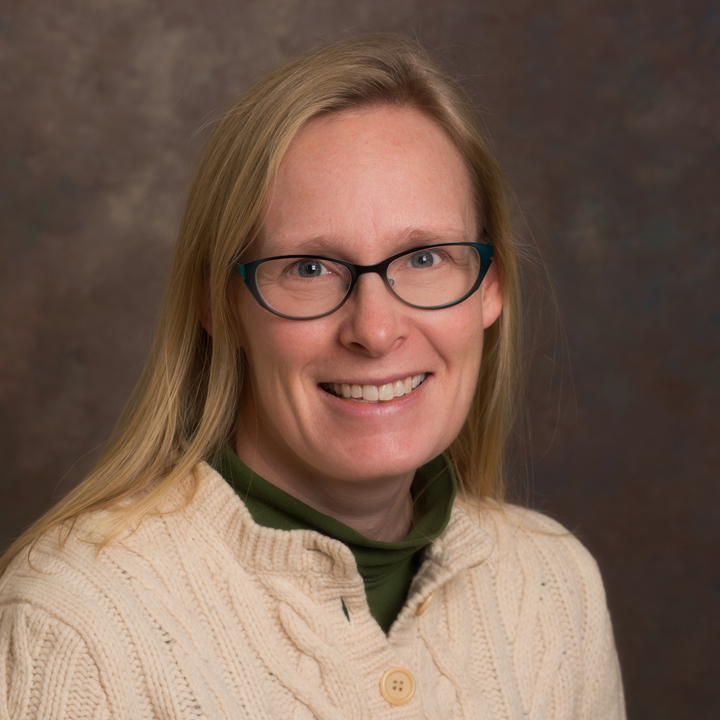
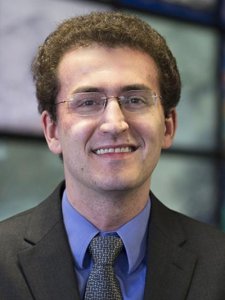
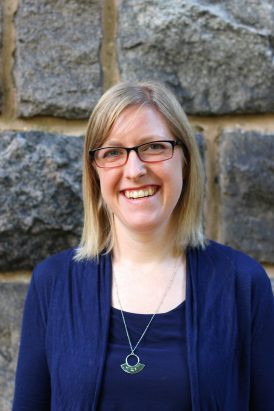
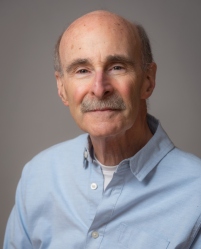
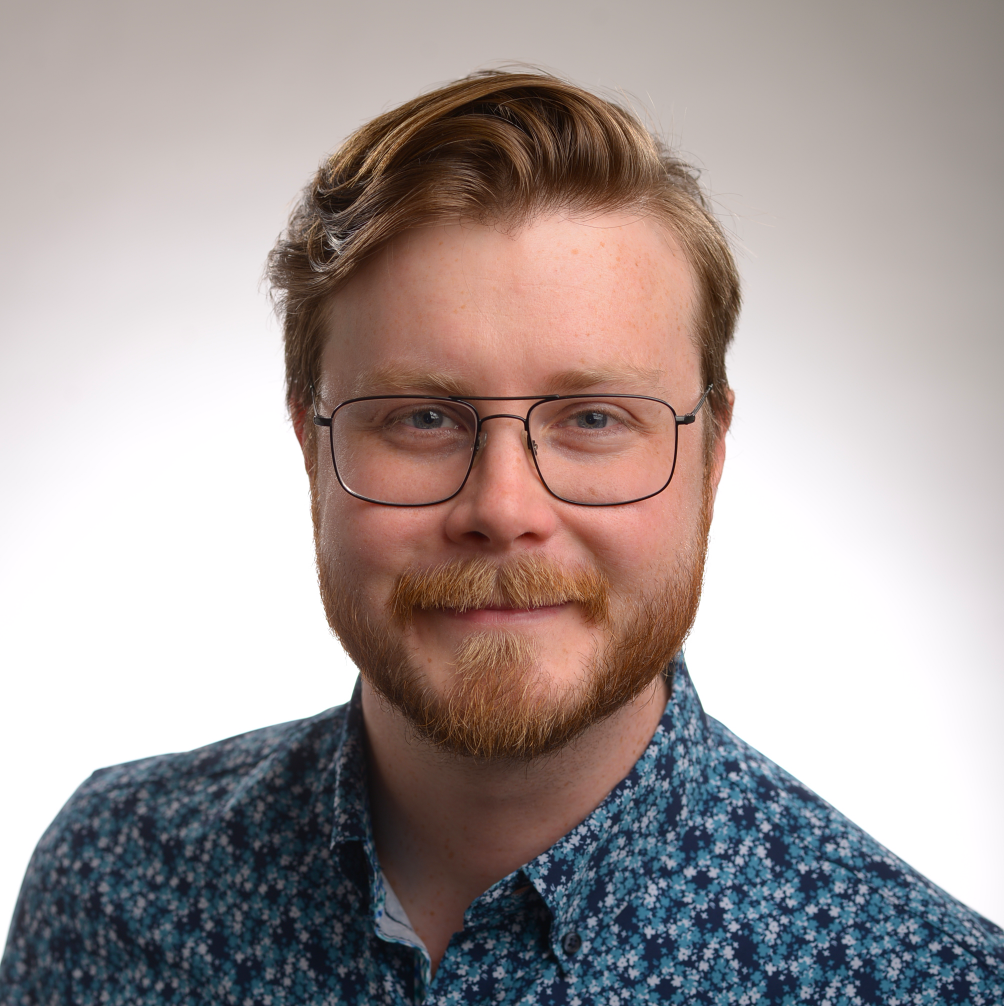
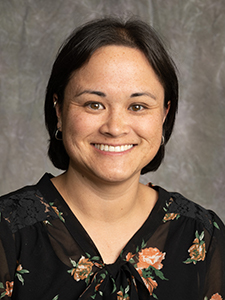
Dr. Dana E. Veron is a Professor and Co-Director of the Gerard J. Mangone Climate Change Science and Policy Hub at the University of Delaware (UD). She holds roles as Associate Chair of the Department of Geography and Spatial Sciences and Faculty Director for the Environmental Science major and Climate Scholars program. Her research focuses on climate change impacts, polar meteorology, and offshore wind energy. She earned a Ph.D. in Oceanography from Scripps Institution of Oceanography (2000) and a B.A. in Physics from SUNY Geneseo (1995). Key research areas include Arctic energy balance, Antarctic boundary layer processes, cloud-radiation interactions, and coastal wind dynamics. She leads the Veron Lab, collaborating internationally on projects like CALVA in Antarctica. Dr. Veron also advances climate education through initiatives like MADE-CLEAR, addressing curriculum gaps and teacher training. Her work bridges academia and policy, contributing to UD's Delaware Environmental Institute and Center for Research in Wind (CReW). Notable contributions include studies on sea breeze impacts on wind energy forecasting and climate change literacy in higher education. Affiliations include the Provost Faculty Fellows program and roles on the Honors Program Board. She advises multiple graduate students and teaches courses on climate dynamics, oceanography, and wind energy.
Steven Greybush is an Associate Professor in the Department of Meteorology and Atmospheric Science at Pennsylvania State University, College of Earth and Mineral Sciences. He is based in University Park, PA, and his research bridges atmospheric science, climate modeling, and interdisciplinary applications. He leads and contributes to major research initiatives involving AI-enhanced weather forecasting, planetary meteorology, and climate impacts on water and health systems. His research interests include Atmospheric Science , Climate Modeling , Data Assimilation , Planetary Meteorology (especially Mars) , Lake-Effect Snowbands , Tropical Cyclones , and Climate-Health Interactions . His work applies advanced techniques such as the Ensemble Kalman Filter (EnKF), Local Ensemble Transform Kalman Filter (LETKF), and AI-driven models to improve predictions of weather and climate phenomena. His recent publications (2021–2025) reveal a strong trend in integrating satellite and radar data into numerical models, enhancing forecasts of convection, hurricanes, and snowstorms. He also explores Martian atmospheric dynamics and the impact of climate variability on public health in Africa. His work is supported by major grants from NASA and NSF, including a $1.23 million NASA grant to improve AI satellite weather forecasting and an NSF grant for AI-powered weather pattern understanding. $1.23 million NASA grant for AI satellite weather forecasting NSF grant for AI-powered weather pattern understanding Penn State part of $6.6M consortium to improve weather forecasting Reducing Uncertainty in River System Forecasts to Maximize Nuclear and Hydro Generation Greybush collaborates with interdisciplinary teams and participates in field campaigns such as IMPACTS (Investigation of Microphysics and Precipitation for Atlantic Coast-Threatening Snowstorms). He advises or co-advises graduate students and researchers, though specific advisees are not listed. His work is published in top journals including Journal of Geophysical Research , Monthly Weather Review , JAMA Network Open , and PNAS .
Kerri A. Pratt is a Professor of Chemistry, Earth & Environmental Sciences, and Program in Applied Physics at the University of Michigan, where she is affiliated with the Department of Chemistry within the College of Literature, Science, and the Arts. Her research focuses on the chemical interactions between atmospheric trace gases, particles, clouds, and snow through field-based measurements in wintertime environments and the rapidly warming Arctic. Education: Postdoc, Chemistry, Purdue University Ph.D., Chemistry, University of California, San Diego B.S., Chemistry, Pennsylvania State University Professor Pratt's research centers on atmospheric and environmental chemistry, particularly in polar regions. Her work examines chemical mechanisms in the atmosphere and at the air-snow interface through innovative field measurements. The Pratt Lab employs custom-built, field-portable instruments including single-particle mass spectrometers and chemical ionization mass spectrometers to measure atmospheric composition in real-time. Her research has significant implications for understanding climate change and air quality in rapidly changing Arctic environments. Her publication record demonstrates a consistent focus on Arctic atmospheric chemistry, with particular attention to halogen chemistry, aerosol composition, and cryosphere-atmosphere interactions. Her work often involves interdisciplinary collaborations across atmospheric science, chemistry, and environmental science, with publications appearing in high-impact journals including Proceedings of the National Academy of Sciences and Nature Geoscience. Scientific Awards: Fulbright Scholar Award to Australia, 2025 National Brown Investigator Award, 2024 Blavatnik National Awards for Young Scientists - Chemistry Finalist, 2023 University of Michigan Faculty Recognition Award, 2022 American Geophysical Union Atmospheric Sciences Ascent Award, 2021 American Meteorological Society Henry G. Houghton Award, 2021 College of Literature, Science, and the Arts Class of 1923 Memorial Teaching Award, 2020 American Chemical Society James J. Morgan ES&T Early Career Award, 2018 Department of Energy Early Career Award, 2018 Professor Pratt has received substantial research funding from prestigious sources including the Department of Energy Early Career Award, Sloan Research Fellowship, and National Academy of Sciences Gulf Research Program Early Career Fellowship. Her laboratory actively mentors undergraduate and graduate students in atmospheric chemistry research, with a focus on developing novel instrumentation for field measurements. The Pratt Lab operates as a dynamic research group specializing in atmospheric measurements, with expertise in mass spectrometry, chromatography, and field instrumentation. The lab conducts research in challenging environments including the Arctic, where they study chemical processes in snow, clouds, and the atmosphere to understand climate change impacts.
Kristen L. Corbosiero is a Professor in the Department of Atmospheric & Environmental Sciences at the University at Albany, State University of New York. Her primary research focuses on understanding the structure, intensity changes, and environmental interactions of tropical cyclones, including processes like secondary eyewall formation and rapid intensification. She utilizes both observational data and numerical models to explore topics such as cloud microphysics, vertical wind shear effects, and the role of lightning in storm dynamics. Education: PhD, Atmospheric Science, University at Albany, SUNY, 2005 MS, Atmospheric Science, University at Albany, SUNY, 2000 BS with Distinction, Atmospheric Science, Cornell University, 1997 Research Interests: Dr. Corbosiero investigates tropical cyclone behavior, including the formation of hurricane rainbands and secondary eyewalls, the impact of environmental conditions on storm evolution, and the influence of cloud microphysical parameterizations. Her work also addresses the predictability of heavy rainfall events linked to tropical systems, such as atmospheric rivers and remnant cyclones. Articles & Research Trends: Her recent publications emphasize ventilation processes in tropical cyclones, diurnal pulsations in hurricane structure, and the climatological significance of downshear reformation. She collaborates on projects funded by NASA, NOAA, and UCAR, advancing the understanding of cyclone dynamics and forecast improvement. Advising & Students: Dr. Corbosiero has mentored numerous graduate and undergraduate students, many of whom have contributed to studies on tropical cyclone evolution, precipitation patterns, and mesoscale meteorology. Notable advisees include Nicholas Johnson (ventilation in sheared storms) and Alex Mitchell (eastern Pacific cyclone variability). Labs & Teams: Her research group actively explores topics like tropical cyclone predictability, lightning activity in storms, and the North American Monsoon System’s interaction with eastern Pacific systems. Current projects involve ensemble-based sensitivity analysis and high-resolution numerical simulations.
Dr. Éric Hébrard is a Senior Lecturer in Astrophysics at the University of Exeter since 2018, with prior academic roles including NASA Goddard Senior Research Fellow and CNRS Research Associate. His work bridges planetary atmospheres, astrochemistry, and combustion modeling with expertise in 3D chemical simulations. PhD in Physics and Chemistry of Planetary Atmospheres, Université Paris 7 (2006) Magna cum laude Magistère Interuniversitaire de Chimie, ENS Paris (2003) Research focuses on: Exoplanetary atmosphere modeling (hot Jupiters, TRAPPIST-1e) Photochemical kinetics and UV absorption Coupling of atmospheric circulation and chemistry Cross-disciplinary combustion-atmosphere analogs Chemical validation strategies for model accuracy Scientific contributions include: NASA-funded research on organic-rich habitable zones Development of KIDA kinetic database for astrochemistry STFC Consolidated Grant for multi-dimensional chemical models Quantum chemistry integration for Titan atmosphere studies Awards: Higher Education Academy Fellowship (ASPIRE program) NASA Postdoctoral Fellowship (2015-2017) CNES Postdoctoral Fellowship (2007-2009)
Yvette Richardson is a Professor in the Department of Meteorology and Atmospheric Science and Senior Associate Dean for Undergraduate Education at Penn State University's College of Earth and Mineral Sciences. Her research focuses on severe convective storms, with particular emphasis on tornadogenesis, storm rotation, and numerical modeling of supercell dynamics. Ph.D. in Meteorology from the University of Oklahoma Dr. Richardson investigates severe weather phenomena through both observational studies using mobile radars and numerical simulations. Key research areas include environmental shear effects on storm strength, cold pool dynamics, convective initiation processes, and thermodynamic observations in supercell thunderstorms. Her work has been integral to major field campaigns such as VORTEX2 and the International H20 Project (IHOP). Her recent research publications examine microphysics parameterization sensitivity in supercell models, thermodynamic observations via balloon-borne sensors, and environmental controls on storm-scale vorticity development. The studies span topics from tornadic supercell dynamics to hail scattering mechanisms and warning verification frameworks.
Ed Grant is a Professor in the Department of Chemistry at the University of British Columbia (UBC), Faculty of Science. He leads research in chemical physics, focusing on laser spectroscopy, ultracold plasmas, and Raman spectroscopy. B.A., 1969, Occidental College Ph.D., 1974, University of California, Davis Research Interests: Grant's work spans fundamental and applied domains. His team investigates ultracold plasmas using molecular beam techniques, revealing Coulombic interactions and strong correlations. In Raman spectroscopy, they develop instruments for microscale biological sample analysis and employ multivariate classification. Recent projects integrate quantum computing, machine learning, and environmental science (e.g., microplastics' atmospheric impact). Scientific Awards: R&D 100 Award (1998) Fellow of the American Physical Society (1992) Humboldt Research Award (1992, 2012) Kelly Award for Excellence in Undergraduate Teaching (1990) Fulbright Senior Scholar (1988)
Fraser King is an incoming Assistant Professor in the Department of Atmospheric and Oceanic Sciences (AOS) at the University of Wisconsin–Madison, starting in Winter 2026. He holds a PhD in Machine Learning and Remote Sensing of Precipitation from the University of Waterloo (2022) and is currently a postdoctoral research associate at NASA Goddard Space Flight Center. His research integrates machine learning with atmospheric physics to advance precipitation and snowfall retrieval, cloud microphysics, and climate modeling. He has held research positions at the University of Michigan and NASA Jet Propulsion Laboratory. His research interests include: Climate and Climate Change Radiation and Remote Sensing Synoptic Meteorology Atmospheric and Cloud Physics Large Scale Dynamics Machine Learning and Model Interpretability Arctic Snowfall Prediction His recent publications reflect a strong trend in applying deep learning (e.g., U-Net, CNNs) and unsupervised methods (PCA, t-SNE, UMAP) to radar and satellite data for precipitation and snow microphysics. Key themes include radar gap inpainting, melting layer detection, and dimensionality reduction for physical interpretation. His work bridges geoscience and AI, aiming for interpretable models that enhance physical understanding. Scientific awards and professional service include: Finalist for the 2023 Governor General's Gold Medal, University of Waterloo Associate Editor, Journal of Atmospheric and Oceanic Technology (AMS) Member, AMS Committee on Artificial Intelligence Applications to Environmental Science Executive Council Member, AGU Precipitation Technical Committee Executive Member, Eastern Snow Conference Research Board Fraser King has mentored students through research projects and led educational initiatives such as a 12-week course on machine learning for land cover classification. He has secured research experience through internships at Aquanty Inc. and multiple NASA-affiliated institutions. He founded MapsByFraser, a company combining cartography and satellite data, and has collaborated with Google's Quantum AI team. His technical skills span Python, deep learning frameworks, and high-performance computing platforms. He leads several major research projects: Towards Interpretable Physical Models : Using sparse autoencoders and nonlinear dimensionality reduction to interpret geoscience models. Microphysical Dimensionality Reduction : Applying PCA, t-SNE, and UMAP to identify physical modes in precipitation data. BlindPaint : A U-Net for radar gap inpainting in spaceborne systems. DeepPrecip : A deep learning model for surface precipitation retrieval. iPhone LiDAR : Using consumer smartphones for snow depth measurement via drones. NRCan Machine Learning Land Cover Classifier : Training ML models on Sentinel-2 data. Climate Model Calibration : Using ML to correct biases in snow-related climate variables. CloudSat Snowfall Validation : Validating high-latitude snowfall estimates. Snow Modelling : A Rust-based physical/temperature-index snow model.
Robert J. Trapp serves as Director of the School of Earth, Society, and Environment and Head of Climate, Meteorology and Atmospheric Sciences at the University of Illinois, while also holding a Professorship at the National Center for Supercomputing Applications (NCSA). His leadership spans both academic and research domains within atmospheric sciences. Trapp's research focuses on severe convective storms, tornado dynamics, and radar meteorology with significant contributions to understanding bow echoes, tornadic vortex signatures, and the impacts of climate change on severe weather. His work integrates advanced numerical modeling with observational data from field campaigns like BAMEX and VORTEX, utilizing Doppler radar systems including WSR-88D and Doppler On Wheels (DOW). His publication record demonstrates consistent research output from 1995-2007, with recent work emphasizing telescoping model approaches for evaluating severe convective storms under future climate scenarios. Key methodological contributions include objective analysis techniques for weather radar data and multi-platform observational strategies for severe thunderstorms. Trapp maintains active research collaboration through the National Center for Supercomputing Applications, leveraging computational resources for atmospheric modeling. His work bridges fundamental atmospheric dynamics with practical severe weather forecasting applications. Professional service includes leadership roles as Director and Department Head, indicating significant administrative responsibilities alongside research activities. His scholarly contributions appear primarily in conference proceedings and peer-reviewed journals focused on meteorology and atmospheric science.
Dr. Gregory V Cesana is an Associate Research Scientist at Columbia University's Center for Climate Systems Research (CCSR), affiliated with the Columbia Climate School. He holds a B.S. (2005) and M.Sc. (2007) in Atmosphere/Ocean/Soil Remote Sensing from the University of Toulon and a Ph.D. from Sorbonne Université (2013). His career includes postdoctoral work at Caltech/NASA JPL and current collaboration with NASA GISS to improve climate models using satellite data. Research focuses on cloud processes, radiative feedbacks, and model evaluation using A-train satellite observations (CALIPSO, CloudSat). Key interests include low-cloud feedbacks, cloud-phase transitions, and reducing climate uncertainty. Projects include applying satellite data to constrain climate model biases and developing observational frameworks for future missions. Education: University of Toulon (B.S./M.Sc.), Sorbonne Université (Ph.D.) Affiliations: Columbia CCSR, NASA GISS, and international collaborations Publications highlight advancements in cloud-radiation interactions, model evaluation techniques, and Arctic/Southern Ocean climate dynamics. Expertise spans remote sensing (lidar/radar), climate modeling, and satellite data integration.
Amanda Maycock is Professor in Climate Dynamics at the University of Leeds' School of Earth and Environment, where she directs the Institute for Climate and Atmospheric Science (ICAS). She holds an MPhys from Manchester (2006), MSc (2008) and PhD (2012) in Atmosphere, Oceans and Climate from Reading. Her research specializes in climate dynamics, atmospheric circulation, stratosphere-troposphere interactions, and radiative transfer, with ongoing projects including ExtAnt, TWISTA, and the Leverhulme Prize-funded climate dynamics initiative. Research interests span: Climate variability and change mechanisms Atmospheric teleconnections and jet stream dynamics Stratospheric impacts on surface climate Chemistry-climate feedbacks including ozone layer interactions Radiative transfer modelling and climate projections Her recent publications (2020-2025) demonstrate strong focus on: Arctic-midlatitude climate linkages and jet stream behavior ENSO teleconnections and hydrological extremes Polar vortex influences on European storminess Climate mitigation impacts on stratospheric temperature Renewable energy-climate interactions Scientific honors include: Philip Leverhulme Prize (2018) Arne Richter Award for Early Career Researchers (2019) STAC Outstanding Early Career Award (2022) water@leeds Water Woman Award (2023) NERC Independent Research Fellowship (2015-2020) She leads 12 PhD students including projects on atmospheric rivers, ENSO dynamics, and jet stream extremes, supported by NERC, EPSRC, and Met Office collaborations. Current grants include £5M+ from Horizon Europe, Wellcome Trust, and UKRI for projects examining Antarctic extremes (ExtAnt), stratospheric aerosols (TWISTA), and sustainable aviation (JetZero). Directs ICAS research group with 4 postdoctoral researchers and coordinates the NERC PANORAMA DTP Atmosphere Theme. Contributes to IPCC assessments and co-chairs WCRP/SPARC initiatives on atmospheric temperature changes.
Chongai Kuang is an Assistant Scientist in the Atmospheric Sciences Division at Brookhaven National Laboratory, currently serving in the Environmental Science and Technologies Department. His research focuses on atmospheric aerosol physical and chemical processes, with particular expertise in aerosol nucleation and instrumentation development for detecting sub-1 nm particles. Education: Ph.D. in Chemical Engineering (major) & Nanoparticle Science and Technology (minor) - University of Minnesota, Minneapolis B.S. in Chemical Engineering (major) & Chemistry (major) - University of California, Berkeley Research Interests: Dr. Kuang's work is broadly bounded by the study of atmospheric aerosol physical and chemical processes, with specific focus on aerosol nucleation mechanisms and the development of advanced instrumentation capable of detecting newly formed particles down to below 1 nm. His current scientific efforts concentrate on developing microphysical-based parameterizations for aerosol nucleation and initial growth processes, integrating findings from intensive field campaigns and controlled laboratory experiments into large-scale atmospheric models. Research Methodology: His approach combines extensive field campaign participation with sophisticated laboratory experiments, utilizing state-of-the-art instrumentation to characterize aerosol properties across diverse environments including marine boundary layers, Amazon rainforest, Antarctic regions, and urban atmospheres. Scientific Recognition: 2012: American Association for Aerosol Research (AAAR) Sheldon K. Friedlander Award - recognizing outstanding contributions to aerosol science and technology Professional Service: Dr. Kuang actively contributes to the scientific community through various roles including proposal review for the German Science Ministry, journal review for Atmospheric Chemistry & Physics, membership in the Young Investigators Committee for AAAR, and co-leadership of the New Particle Formation Focus Group in the ASR Aerosol Life Cycle Working Group. He holds memberships in the American Geophysical Union, American Association for Aerosol Research, and American Institute of Chemical Engineers. Laboratory and Facilities: Dr. Kuang is based at Brookhaven National Laboratory's Environmental Science and Technologies Department, located in Building 815E, Room 1-45, where he conducts his cutting-edge research in atmospheric aerosol science.
Christopher Williams is a Research Professor at the University of Colorado Boulder's Department of Aerospace Engineering Sciences, affiliated with the Colorado Center for Astrodynamics Research (CCAR). He holds a PhD in Electrical Engineering from the University of Colorado (1994), an MS from Purdue University (1986), and a BS from California Polytechnic State University (1984). His research focuses on radar remote sensing of precipitation, tropospheric microphysics, and cloud dynamics, with emphasis on satellite, airborne, and ground-based systems. He has contributed to projects like the Global Precipitation Measurement (GPM) mission and led validation efforts using disdrometers and profilers. Key awards include the NASA Goddard Robert H. Goddard Award (2015) and CIRES Outstanding Scientist (2006). Research interests include calibrating cloud radars, analyzing raindrop size distributions, and understanding precipitation processes in diverse environments. His work bridges observational techniques (e.g., Doppler radar, microwave radiometry) with theoretical modeling to improve satellite rainfall algorithms. Recent studies address attenuation effects in radar signals, vertical air motion estimation, and the impact of anthropogenic pollution on Arctic cloud properties. Educations : PhD, Electrical Engineering, University of Colorado, 1994 MS, Electrical Engineering, Purdue University, 1986 BS, Electronic Engineering, California Polytechnic State University, 1984 Key Projects : ARM Climate Research Facility NOAA Earth System Research Laboratory GPM Ground Validation campaigns Publications emphasize radar-based precipitation analysis, with recent trends in airborne W-band applications, PIA modeling, and parameterization of rain variability for large-scale models. His lab collaborations include CIRES and NASA, advancing technologies for climate monitoring and disaster response.
Kristen L. Rasmussen is an Associate Professor in the Department of Atmospheric Science at Colorado State University (CSU), affiliated with the Walter Scott, Jr. College of Engineering. She holds a Ph.D. (2014) and M.S. (2011) in Atmospheric Sciences from the University of Washington, and dual B.S. (Meteorology and Mathematics) and B.A. (Music) from the University of Miami (2007). Before joining CSU in 2016, she was an Advanced Study Program Postdoctoral Fellow at NCAR (2015–2016). Her research focuses on convective storms, cloud-climate interactions, mesoscale meteorology, and hydrometeorology. Key interests include analyzing extreme rainfall, tropical convective systems, and the impacts of climate change on storm dynamics. She leads the Rasmussen Group, which investigates topics like the NASA INCUS satellite mission, subtropical storms in South America, and climate modeling. Received awards such as the 2015 AMS Mesoscale Processes Conference Very Early Career Award and the 2011 NASA Earth System Science Graduate Fellowship. Active in field campaigns like RELAMPAGO in Argentina and PRECIP in Taiwan/Japan. Teaches courses on synoptic and mesoscale meteorology, hydrometeorology, and mountain meteorology. Her group includes researchers and students studying topics ranging from convective storm environments to stratospheric aerosol injection impacts. Ongoing projects include the INCUS mission and climate projections for extreme precipitation in the U.S. Midwest.
Anthony Illingworth is a Professor in the Department of Meteorology at the University of Reading, UK, where he leads research in atmospheric remote sensing, radar and lidar technologies, and weather forecasting. His work is central to major satellite missions such as EarthCARE and WIVERN, and he collaborates extensively with European and international meteorological agencies. Education and Background: While specific degrees are not listed in the provided text, his long-standing academic career and leadership in advanced meteorological research suggest a PhD in atmospheric physics or a related field, likely from a UK institution. His research interests span radar meteorology , cloud physics , satellite remote sensing , precipitation measurement , boundary layer dynamics , and numerical weather prediction . He focuses on improving observational techniques using ground- and space-based sensors to enhance forecast accuracy. His work integrates physics-based models with real-world data from instruments such as Doppler radars, lidars, and polarimetric sensors. The publication trends from 2015 to 2025 reveal a consistent focus on satellite-based wind and cloud observations (e.g., WIVERN and EarthCARE), calibration of remote sensing instruments, and data assimilation for weather models. His articles frequently address technical challenges in radar signal interpretation, wind profiling in extreme weather, and the use of ground networks to validate and improve forecasts. A recurring theme is the development and validation of new methodologies for extracting atmospheric parameters from remote sensing data. Scientific Awards: Advising and Grants: While no students or grants are explicitly listed, his frequent senior authorship and leadership in large collaborative projects (e.g., FRANC, EarthCARE) suggest active supervision of PhD students and postdoctoral researchers, as well as success in securing major research funding from agencies such as the UK Met Office, ESA, and NERC. Labs and Teams: Illingworth is closely associated with the atmospheric remote sensing group at the University of Reading, which operates advanced radar and lidar systems. He collaborates with the European Centre for Medium-Range Weather Forecasts (ECMWF), CNRS in France, and the CloudSat science team, indicating strong institutional partnerships and team-based research in operational and satellite meteorology.