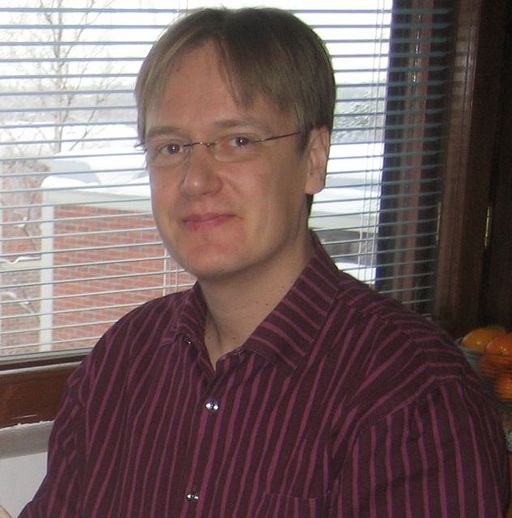
Dr. Fabian Höflinger serves as a Group Leader and Researcher at the University of Freiburg's Faculty of Engineering, specifically within the Institute of Microsystems Engineering (IMTEK) under the Electrical Measurement and Testing department. He has been a research associate at the University of Freiburg since April 2010 and has led a research group focused on indoor localization systems since 2011. Dr. Höflinger completed a dual degree program in electrical engineering at DHBW Ravensburg in 2005, followed by a master's degree at Mannheim University of Applied Sciences. He earned his doctorate in 2014 with a dissertation on 'Localization systems for determining the position of people and objects indoors.' Prior to his academic career at Freiburg, he worked as a development engineer from 2007 to 2010 and gained industry experience at Junghans Feinwerktechnik during his studies, where he developed components for telemetry systems. His research primarily focuses on indoor localization technologies, with particular expertise in acoustic signal processing, positioning systems, and embedded measurement technologies. Dr. Höflinger's work spans both theoretical development and practical implementation of localization systems, with applications ranging from industrial plant supervision to respiratory monitoring. His recent publications demonstrate a strong emphasis on direction-of-arrival estimation, sparse acoustic array geometries, and Markov modeling for system safety assessment. The research trajectory shows increasing sophistication in localization algorithms while expanding into adjacent fields such as autonomous vehicle safety and biomedical sensor applications. As a group leader, Dr. Höflinger oversees research activities in indoor localization and has built a significant body of work with over 80 publications spanning more than a decade. His research group develops innovative solutions for challenging environments including through-metal communication, respiratory monitoring via body movements, and robust positioning in mixed line-of-sight and non-line-of-sight conditions. The team maintains strong industry connections and focuses on practical implementations of theoretical concepts in real-world scenarios.