Christine Papadakis is a Professor of Experimental Physics - Soft Matter at the TUM School of Natural Sciences , Technical University of Munich. Her research focuses on polymer physics, block copolymers, responsive polymers, and thin films, with applications in medical materials. She employs advanced scattering techniques (light, X-rays, neutrons) to study self-assembly, phase behavior, and kinetics under environmental changes. Her recent work highlights include Comparative swelling dynamics of thermoresponsive thin films under water vapor exposure Pressure-dependent micellar aggregation in diblock copolymers pH and temperature-responsive micelle formation Photo-modulation of azo dye-functionalized polymers Her publications align with UN Sustainable Development Goals through innovations in polymer sustainability and medical applications. She serves as Editor-in-Chief of Colloid & Polymer Science since 2015.
Prof. Dr. Stephen Schrettl holds a professorship in the TUM School of Life Sciences at Technische Universität München , focusing on functional materials for food packaging . His research emphasizes mechanochromic materials, polymer chemistry, and supramolecular systems. Key areas include strain-sensing polymers, self-healing materials, and adaptive nanocomposites. His work spans interdisciplinary topics like mechanoresponsive polymers , smart coatings , and nanomaterial fabrication . Recent studies highlight advancements in mechanochromic inclusions, reversible crosslinking mechanisms, and microphase-separated metallosupramolecular polymers. He has contributed to applications in automotive materials, biomedical devices, and environmental sensors. Publications from 2024–2020 showcase innovations in straining-induced fluorescence , liquid crystal-driven nanoparticle assembly , and platinum nanocomposite synthesis . His research bridges fundamental polymer science with industrial applications, particularly in materials that integrate mechanical and optical functionalities.
Dr. Haiqing Lin is a Professor and Director of Graduate Studies in the Department of Chemical and Biological Engineering at the University at Buffalo's School of Engineering and Applied Sciences. His research specializes in advanced membrane technologies for gas separation (particularly CO₂ capture) and water purification. He holds a PhD in Chemical Engineering from the University of Texas at Austin and previously led gas separations research at Membrane Technology and Research, Inc. His research focuses on novel polymer systems, nanostructured materials, and scalable membrane designs for environmental applications. Key areas include polymer structure-property relationships, thin-film engineering, and carbon capture optimization. Recent work explores bottlebrush copolymers, graphene oxide membranes, and metal-coordinated networks for enhanced separation efficiency. Dr. Lin's publications demonstrate consistent innovation in membrane science with strong emphasis on CO₂ capture technologies, material durability, and industrial scalability. His 2024 review article provides comprehensive analysis of carbon capture methodologies. Scientific Awards: NSF CAREER Award (2016) Early Career Researcher of the Year, UB School of Engineering (2016) He directs research on membrane development projects with focus on transitioning lab-scale innovations to practical applications. His group maintains collaborations with industry partners for technology implementation.
Nicholas Bedford is a Research Professor in the Chemistry Department at the Colorado School of Mines. His research focuses on structure-property relationships in materials for catalysis, engineering materials, and sensors. Prior to academia, he worked at the Air Force Research Laboratory (2017-2018), serving as a contractor (2016-2017), NRC Postdoctoral Associate (2012-2014), and graduate scholar (2009-2011). He holds a Ph.D. in Materials Science from the University of Cincinnati and B.S. degrees in Chemistry and Physics from Central Michigan University. Bedford’s work spans advanced materials for energy storage, environmental remediation, and electrocatalysis. His group develops nanomaterials for CO 2 reduction, hydrogen storage, and defect-engineered catalysts. Recent studies include layered double hydroxides, MOF composites, and high-entropy alloys for energy applications. Notable contributions include understanding atomic-scale mechanisms in polymer-derived ceramics and optimizing nanoscale structures for enhanced catalytic performance. His research often integrates experimental and computational methods, such as reverse Monte Carlo simulations and operando X-ray diffraction. Bedford’s articles highlight advancements in electrocatalytic systems, including CO 2 conversion, urea oxidation, and lithium-mediated redox reactions. His lab emphasizes sustainable materials design for renewable energy and environmental sustainability. Scientific awards and grants are not explicitly mentioned, though his extensive publication record reflects sustained research excellence. He advises the Bedford Research Group, focusing on interdisciplinary materials innovation.
Kristoffer Almdal is a Professor in the Department of Chemistry, Technical University of Denmark (DTU), specializing in Physical Chemistry with a focus on Polymers and Functional Interfaces. He has held significant leadership roles including Head of Section at DTU and Head of Department at Risø National Laboratory, and has been a professor at DTU since 2008, indicating continued active status. PhD in Polymer Chemistry and Analysis, University of Copenhagen (1985–1989) MSc in Physical Organic Chemistry, University of Copenhagen (1977–1985) His research centers on polymer synthesis, particularly anionic polymerization, and the self-organization of block copolymers—linear and branched—with applications in functional materials, sensors, and biomaterials. He investigates mesophase structures, rheology, polymer degradation, and interfaces in composites using advanced analytical methods like small angle scattering and size exclusion chromatography. Recent publications (2024–2025) highlight work in eco-friendly nanogels for wound care, fatigue in epoxy resins, biomass-derived carbon aerogels for energy storage, and phase change materials in 3D-printable construction. These reflect a strong trend toward sustainable, multifunctional materials with applications in healthcare, energy, and construction. The research integrates fundamental polymer physics with practical engineering challenges, often through interdisciplinary collaboration. Kristoffer Almdal actively supervises PhD students in diverse projects, including: Synthesis of ABC-miktoarm star block copolymers Ion pairing in polyelectrolytes 3D printing with phase change materials Acoustic polymer lenses for ultrasound Block copolymer patterning of 2D materials He has delivered invited and keynote talks on polymer degradation, elongational flow, and self-organization, demonstrating recognition in the field. His work contributes to UN Sustainable Development Goals related to sustainable materials and clean energy. While no specific awards are listed, his extensive publication record (433 outputs), patents, and leadership in funded research projects underscore his impact. He is involved in multiple research groups and collaborative networks focused on polymer science, materials engineering, and sustainable technologies. His lab emphasizes cross-disciplinary innovation, bridging chemistry, physics, and engineering to develop next-generation functional materials.
Michelle Gaines, Ph.D., serves as Associate Professor in the Department of Chemistry and Biochemistry at Spelman College since 2017. Her academic foundation includes a B.S. in Chemical Engineering and Biomolecular Engineering from Michigan State University (2003) and a Ph.D. in Materials Science and Engineering from North Carolina State University (2008), where her dissertation explored nanoparticle-block copolymer interfacial chemistry. She maintains an active research program centered on soft materials and interfacial science while teaching core chemistry courses. Her educational background includes: Ph.D. in Materials Science and Engineering, North Carolina State University (2008) B.S. in Chemical Engineering and Biomolecular Engineering, Michigan State University (2003) Dr. Gaines' research focuses on interfacial properties of soft materials , with dual applications in advanced materials engineering and biological systems. Her work integrates Polymer Synthesis, Materials Science, Cell Biology, and Spectroscopy to investigate energy dissipation in thermo-responsive microgels for lithium-ion battery separators and self-actuating biosensors. A significant emerging direction examines material properties of hair through her planned “Hair Academy” initiative, aiming to develop quantitative frameworks for curly hair phenotypes while advancing Spelman College’s legacy in culturally inclusive science. Analysis of her publication record reveals a strategic evolution from foundational work on nanoparticle-block copolymer interactions (2006-2010) toward cell-material interface studies (2016-2018), with recent publications (2023-2025) demonstrating a pronounced shift into cosmetic science and quantitative hair phenotyping. This trajectory reflects her commitment to bridging fundamental materials chemistry with socially relevant applications, particularly in underrepresented communities. No scientific awards or honors were documented in the provided information. Dr. Gaines teaches General Chemistry (CHE 111/112), Physical Chemistry Lab (CHE 346L), and Inorganic Chemistry (CHE 421/421L), mentoring students through her research lab. Her “Hair Academy” initiative represents a significant educational venture to explore how phenotypic hair differences produce distinct material properties, fostering interdisciplinary collaboration between students and faculty. The Gaines Lab operates within Spelman’s Albro-Falconer-Manley Science Center, employing Atomic Force Microscopy and polymer synthesis techniques to study microgel particles, block copolymers, and cell-hydrogel interactions. Current projects focus on developing synthetic 3D culture microenvironments to control cell behavior through precise manipulation of extracellular matrix properties.
Masaki Ogawa serves as Assistant Professor at Tohoku University's Center for Co-Creating Society through Mathematical Sciences since April 2023, following a Japan Society for the Promotion of Science (JSPS) Research Fellowship (DC1) from 2020-2023. His work bridges pure mathematics and applied materials science through topological frameworks. Dr. Ogawa specializes in geometric topology , particularly 3-manifold decompositions and trisections . His research establishes foundational results on handlebody decompositions' stable equivalence and classification of 3-spheres/lens spaces. He pioneers applications to materials science , developing topological models for polycontinuous patterns in block copolymer microphase separation—demonstrating how knot theory informs physical material structures. His publication trajectory reveals increasing sophistication in connecting decomposition theory with physical applications. Early work classified handlebody decompositions of genus-1 structures, while recent research explores multibranched surfaces and four-handlebody decompositions, revealing new classes of Seifert manifolds and promising novel 3-manifold invariants. Honors include: JSPS Research Fellowship (DC1), 2020-2023 He secured JSPS Grant-in-Aid 20J20545 (3.1M yen) for "Handlebody decomposition of 3-dimensional manifolds and its applications," driving collaborative work with Ozawa, Shimokawa, and Sakata. Though no formal students are documented, his 14+ seminar presentations—including invited talks at Tohoku University Colloquium—highlight active mentorship within Japan's knot theory community. As part of Tohoku's interdisciplinary Center for Co-Creating Society, he integrates mathematical rigor with societal applications through the Knot Theory Seminar network and collaborations with materials scientists studying block copolymer self-assembly.
Wesley Burghardt serves as Associate Dean of Undergraduate Engineering and Professor of Chemical and Biological Engineering at Northwestern University's McCormick School of Engineering. Appointed in 1990, he previously chaired the Department of Chemical and Biological Engineering and oversees curriculum development, professional growth, and personal development initiatives for engineering undergraduates. His academic credentials include: Ph.D. in Chemical Engineering from Stanford University M.S. in Chemical Engineering from the University of Illinois B.S. in Chemical Engineering from the University of Illinois Burghardt's research pioneers optical and X-ray scattering methodologies to investigate complex fluid dynamics during polymer flow. Key focus areas encompass: Microstructure evolution in block copolymer gels under deformation Flow-induced crystallization mechanisms in polymers Rheological behavior of physically associating networks Nanocomposite orientation dynamics under shear In-situ structural characterization using synchrotron techniques Analysis of his 2018-2023 publications reveals dominant emphasis on Rheo-SAXS for capturing transient microstructure in deforming soft materials. His work systematically explores strain-temperature interdependencies in triblock gels, sphere-forming copolymer alignment mechanisms, and molecular origins of extensional strain hardening. Recent studies increasingly bridge polymer physics with biomedical applications through hydrogel research for 3D bioprinting and tissue engineering. No scientific awards were documented in the source materials. No student advising records or grant funding details were provided in the available content. His experimental program operates through a specialized laboratory focused on polymer rheology and advanced scattering techniques, supporting investigations into structure-property relationships in soft matter systems.
Alexei Khokhlov is a Full Professor and Head of the Chair of Polymer Physics and Crystallophysics at the Physics Department of Moscow State University. He has served as Vice-Rector of Moscow State University since 2008 and held leadership roles in international organizations such as President of the European Polymer Federation (2004—2005). His academic career at Moscow State University spans over four decades, including progressively senior roles from Assistant Professor (1979—1984) to Full Professor (1988—) and Head of Chair (1993—). Education: PhD (1979) and Doctor of Science (Habilitation, 1983) from Moscow State University. Research interests focus on polymer science and statistical physics of macromolecules, with specialized work on polyelectrolytes, ionomers, microphase separation, polymer liquid crystals, and biomimetic materials. His research integrates theoretical modeling and experimental investigations. Scientific awards include: USSR Prize in Physics for Young Scientists (1982), Humboldt Research Award (1992), Wolfgang Paul Research Award (2002—2004), Lomonosov Prize (2005), and Russian Federation National Award for Science and Technology (2007).
Ralph van Calck is a researcher at the Faculty of Science and Engineering, affiliated with the Groningen Research Institute of Pharmacy, University of Groningen. His research focuses on biomaterials, particularly polyurethane-based scaffolds for biomedical applications. He has contributed to studies on tissue engineering, phase separation techniques, and material degradation mechanisms. The trends in his publications highlight expertise in Polymer Science Biomedical Engineering Phase Separation Porous Scaffold Design with a strong emphasis on developing materials for orthopedic and ophthalmic applications. Contact: r.v.van.calck@rug.nl . Office address: A Deusinglaan 1, Gebouw 3216, ruimte 0109, 9713 AV Groningen, The Netherlands.
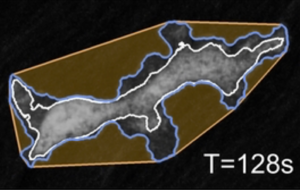
Professor Vasily Zaburdaev is a Principal Investigator leading the Department of Immunophysics at the Max Planck Center for Physics and Medicine, which is affiliated with Friedrich-Alexander University Erlangen-Nuremberg. His research group develops theoretical models to understand complex biological phenomena and their impact on disease, with expertise in theoretical biophysics, statistical physics, and numerical methods. His research spans several interconnected areas: Bacterial biofilms as complex materials, focusing on their mechanical properties and wound healing capabilities Immunophysics, studying how physical interactions govern immune cell behavior and response to pathogens Statistical physics of active systems, developing new theoretical approaches for understanding biological processes outside thermal equilibrium Zaburdaev's work combines theoretical modeling with close collaboration with experimental groups, utilizing approaches from stochastic processes and continuum theory of active hydrodynamics. His research has significant implications for understanding organizational principles that operate across various biological scales, from chromatin in the nucleus to multicellular aggregates. His recent publications demonstrate a strong focus on cellular organization, cytoplasmic dynamics, and the physical mechanisms governing biological systems. The research shows how concepts from statistical physics can reveal analogies and general behaviors in biologically diverse systems. Scientific Recognition While specific awards aren't listed in the provided information, Zaburdaev's research has been published in high-impact journals including Nature Communications, Physical Review Letters, and Nature Cell Biology, indicating significant recognition in his field. Academic Service Professor Zaburdaev is actively involved in teaching, offering courses such as "Stochastic Models for Life Sciences" and "Physics and biology of active systems" at the university level. His commitment to education complements his research activities, helping to train the next generation of scientists working at the intersection of physics and biology. Research Infrastructure His department is part of the Max Planck Center for Physics and Medicine, which includes various core facilities such as the Core Facility In-vivo Model Systems, Core Facility Microscopy, and Core Facility Lab-on-a-Chip, providing comprehensive research infrastructure for interdisciplinary work.
Kenji Miyatake is a Professor at the Faculty of Science and Engineering, Graduate School of Advanced Science and Engineering at University of Yamanashi, holding a concurrent position at Waseda University. With a Doctor of Engineering from Waseda University, he has established himself as a leading researcher in polymer materials for energy applications, particularly fuel cell membranes. Current Affiliation: University of Yamanashi (Professor since 2009.04) Additional Affiliation: Waseda University (Professor since 2020.04) Previous Positions: Associate Professor at University of Yamanashi (2001.07-2009.03), Senior Assistant Professor at Waseda University (1999.04-2001.07) Education: Doctor of Engineering from Waseda University Professor Miyatake's research focuses on polymer materials for electrochemical energy devices, with particular emphasis on proton exchange membranes (PEMs) and anion exchange membranes (AEMs) for fuel cells and water electrolyzers. His work spans fundamental polymer chemistry, membrane structure-property relationships, and practical device applications. He has pioneered the development of polyphenylene-based membranes that offer superior performance and durability compared to conventional materials. His recent research has expanded into solid-state rechargeable air batteries and advanced water electrolysis systems. Analysis of his 15 most recent publications (2024-2025) reveals a strong focus on membrane design for water electrolysis applications, with significant work on anion exchange membranes containing piperidinium and fluorene structures. His research consistently addresses critical challenges in membrane technology including chemical stability in alkaline environments, hydroxide ion conductivity, mechanical reinforcement, and dimensional stability. The publications demonstrate a sophisticated approach to polymer engineering with precise control over hydrophobic/hydrophilic domain structures. BCSJ Award Article (2022.05) for work on sulfonated aromatic terpolymers Minister of Education Commendation (2021.04) for research on innovative polymer thin films for fuel cells 25th Yamanashi Academy of Sciences Award (2020.11) for development of high-performance ion-conducting polymers German Innovation Award Gottfried Wagener Prize (2013.06) Multiple awards from professional societies including Chemical Society of Japan and Society of Polymer Science Professor Miyatake actively advises research projects and has established significant collaborations both within Japan and internationally. His work has been supported by major funding agencies including the Japan Society for the Promotion of Science. He maintains leadership roles in professional organizations including the Hydrogen Science and Technology Collaboration Research Association where he serves as Director. His laboratory employs advanced characterization techniques including neutron reflectometry, small-angle X-ray scattering, and current-sensing atomic force microscopy to investigate membrane structure-property relationships.
Dr. Kuo-Liang Chuang is a Research Associate at the School of Engineering , University of Edinburgh , affiliated with the Materials and Processes research institute. His work focuses on advanced membrane technologies for environmental and industrial applications. Research Interests Dr. Chuang's research spans Membrane Technology Gas Separation Materials Science Environmental Engineering Nanotechnology Chemical Engineering . He specializes in developing innovative membranes for CO2 capture, water purification, and sustainable material synthesis. Publication Trends Recent publications highlight his expertise in CO2/N2 separation Antifouling membrane design Hybrid matrix membranes Waste material utilization Metal-Organic Frameworks (MOFs) Biocellulose nanofiber applications . His work emphasizes experimental synthesis, performance optimization, and environmental sustainability. Collaborations & Location Based in 1.196E Fleeming Jenkin , he collaborates on projects involving membrane characterization, defect engineering, and industrial wastewater treatment.
Ramkrishna Sarkar serves as an Assistant Professor in the Department of Chemistry at the Indian Institute of Technology Kanpur. His research focuses on advanced polymer science with particular emphasis on sustainable materials development. His work bridges fundamental polymer chemistry with practical applications in reusable and recyclable polymeric materials. Education: Ph.D. (2019): Indian Institute of Science (IISc) Bangalore M.Sc. (2014): Indian Institute of Science (IISc) Bangalore Research Interests: Dr. Sarkar's research spans polymer synthesis, dynamic covalent polymeric networks, reusable polymeric materials, polymer recycling, and bio-sourced polymers. His work on sub-10 nm polymeric nanostructures represents cutting-edge research in precision polymer engineering. His recent focus on light-driven green catalysis in water demonstrates his commitment to environmentally sustainable chemical processes. Professional Experience: Following his M.Sc. and Ph.D. at IISc Bangalore, Dr. Sarkar served as a Research Associate at the same institution before completing a post-doctoral fellowship at Eindhoven University of Technology in the Netherlands. He currently leads research activities in the Department of Chemistry at IIT Kanpur. Teaching: Dr. Sarkar teaches courses in Basic Organic Chemistry and Spectroscopic Characterization of Organic Molecules, bringing his research expertise into the classroom to provide students with contemporary perspectives in polymer science. Contact: Faculty Building 435, Department of Chemistry, IIT Kanpur, Kanpur 208016, India | Phone: +91512-259-2304 | Email: ramkrishna@iitk.ac.in
PD Dr. Semjon Stepanow is a faculty member at the Martin Luther University Halle-Wittenberg , affiliated with the Faculty of Natural Sciences II - Chemistry, Physics and Mathematics and the Department of Theoretical Physics . He leads the Work Group Statistical Physics and focuses on applying quantum field theoretical methods to condensed and soft matter physics. His research spans polymer solutions, disordered systems, critical phenomena, and interface dynamics. He teaches courses including Quantum Field Methods in Condensed Matter Physics , Statistical Mechanics , and Theoretical Polymer Physics . He is the author of the textbook Relativistic Quantum Theory (Springer-Verlag, 2010). Stepanow has published over 60 peer-reviewed papers. His recent work analyzes polymers in confined geometries, domain wall dynamics in disordered media, and fluctuations in copolymer systems, with applications of renormalization group and path integral methods. His publications include studies on semiflexible polymers (2004), directed polymers (1998), and polymer crystallization (2007).