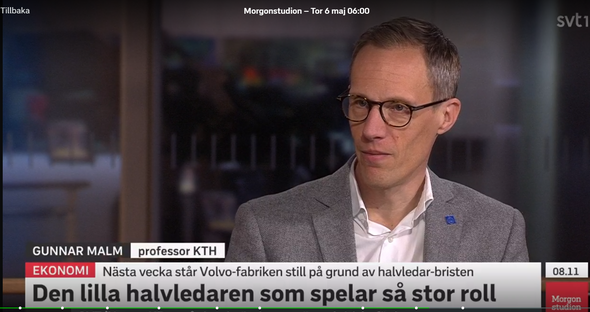
Gunnar Malm is a full-time Professor and Deputy Head of Department at the Royal Institute of Technology (KTH) in the School of Electrical and Computer Engineering. His research focuses on semiconductors and spintronics (nano-electronics), with special emphasis on variability, noise, and fluctuations in electronic components, as well as electronics for extreme environments. He combines experimental work with large-scale computer simulations via KTH's PDC, national SNIC clusters, and Vienna University of Technology's VSC resources. Editor, IEEE Electron Device Letters (2017–present) Technical Program Committee, European Solid-State Device Research Conference (ESSDERC) His pedagogical research (TALE 2022) explores citation practices in thesis writing, and he coordinates multiple semiconductor component courses including Design of Nanosemiconductor Components (IH2657) and Simulation of Semiconductor Components (IH2653) . Malm's Noise and Fluctuations Lab investigates fundamental device physics for sustainable electronics development.
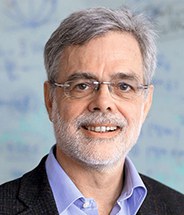
Stefan Blügel is a Professor of Theoretical Physics at RWTH Aachen University and a leading scientific staff member at the Peter Grünberg Institute (PGI-1), Forschungszentrum Jülich. His research focuses on the electronic properties of solids, quantum materials, spintronics, and advanced computational methods in condensed matter physics. He plays a central role in developing and applying density-functional theory (DFT) to complex magnetic and topological systems. His research interests lie at the intersection of theoretical physics and materials science, particularly in magnetism at surfaces and interfaces , spin-orbit coupling phenomena , topological spin textures such as skyrmions and Hopfions, and electronic structure methods . He has pioneered the understanding of the Dzyaloshinskii-Moriya interaction at interfaces, enabling the discovery of chiral domain walls and skyrmion lattices. His work underpins key advances in spintronics, including spin-orbit torque and terahertz generation. He is also active in emerging fields like orbitronics and cryo-spintronics, and continues to innovate in many-body theory and spectral DFT. The body of his recent publications reveals a strong focus on topological quantum materials , 2D magnetism , spin dynamics , and first-principles modeling of novel physical phenomena . His work consistently bridges fundamental theory with experimental relevance, especially in the context of next-generation memory and computing devices. Stefan Blügel has made foundational contributions to computational materials science, including the development of constraint DFT and key implementations in the FLEUR code. He has advised numerous researchers and led major collaborative projects in theoretical condensed matter physics. His group leverages high-performance computing for simulating complex quantum systems, and he is deeply involved in advancing electronic structure methodologies. He leads research at the Quantum Theory of Materials (PGI-1) division, which is part of the interdisciplinary Peter Grünberg Institute, known for its cutting-edge work in nanoelectronics, quantum materials, and spintronics. The institute fosters strong collaboration between Forschungszentrum Jülich and RWTH Aachen University, where Blügel holds a joint professorship.
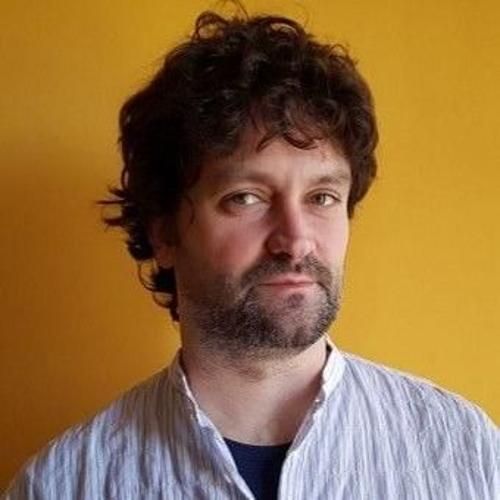
Nitin Samarth is the Verne M. Willaman Professor of Physics and Professor of Materials Science/Engineering at the Pennsylvania State University, part of the Eberly College of Science. He holds a Ph.D. from Purdue University (1986) and an M.S. from IIT Bombay (1980). His research focuses on condensed matter physics, quantum information, and spintronics, with expertise in synthesizing quantum materials like topological insulators and exploring their electronic and magnetic properties. His honors include the David Adler Lectureship Award (APS, 2024), Fellowships from the AAAS and APS, and awards for teaching excellence. He leads NSF-funded projects on quantum materials, including the Center for Nanoscale Science and the 2D Crystal Consortium. His group studies phenomena such as quantum spin dynamics, superconductivity at interfaces, and topological spintronics. Dr. Samarth has advised over 40 graduate students and postdocs, many of whom hold academic and industry positions globally. His research group emphasizes inclusivity and cutting-edge synthesis techniques like molecular beam epitaxy (MBE). Current projects explore van der Waals heterostructures, quantum anomalous Hall insulators, and spin-charge interconversion in Dirac semimetals.
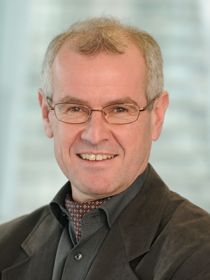
David Serantes Abalo is a Researcher at the University of Santiago de Compostela, affiliated with the Department of Applied Physics and the Materials Institute (iMATUS). He conducts research within the LABSIS Systems Laboratory and contributes to the Strategic Grouping in Materials (AEMAT), focusing on nanoscale thermomagnetic phenomena for biomedical applications. He earned his PhD from the University of Santiago de Compostela in 2011 with the thesis "Thermomagnetic properties at the nanoscale" under the supervision of Dr. Daniel Baldomir Fernandez, establishing the foundation for his current research trajectory. Dr. Serantes Abalo's research spans Nanomagnetism , Magnetic Hyperthermia , and Biomedical Nanomaterials . His work investigates how size, shape, and assembly of magnetic nanoparticles influence heating efficiency under alternating magnetic fields, with direct applications in cancer therapy. Through combined experimental and simulation approaches, he examines nanoparticle-biological system interactions, intracellular thermal dynamics, and optimization of hyperthermia protocols for clinical translation. Analysis of his 15 most recent publications (2020-2024) reveals three dominant research thrusts: (1) Development of device-independent evaluation methods for hyperthermia performance, (2) Engineering nanoparticle assemblies (chains, zig-zag structures, core-shell systems) to enhance heating efficiency, and (3) Elucidating intracellular mechanisms of magnetic nanoheating including vesicle alignment and apoptotic pathways. His work consistently bridges fundamental magnetic phenomena with therapeutic applications. As an active member of the LABSIS Systems Laboratory within iMATUS, he contributes to the university's strategic materials research through the AEMAT grouping, operating advanced characterization facilities for nanoparticle studies and collaborating with biomedical researchers on therapeutic applications.
Norbert Mauser is a full Professor in the Department of Mathematics at the University of Vienna, where he has been affiliated since 1999. His research bridges mathematical analysis, computational physics, and applied mathematics with a focus on developing and analyzing numerical methods for complex physical systems. Mauser's research interests center on mathematical physics, particularly partial differential equations arising in quantum mechanics and magnetism. His work spans Schrödinger-type equations, many-body quantum systems, micromagnetics, and more recently, the integration of machine learning techniques with physics-based modeling. He has made significant contributions to the mathematical analysis of quantum systems, numerical methods for micromagnetics, and computational approaches to Bose-Einstein condensates. His recent publications (2023-2025) reveal a growing emphasis on machine learning applications in micromagnetics, with multiple papers on physics-informed machine learning for magnetic energy minimization and spin wave dynamics. This represents an evolution from his earlier foundational work on Schrödinger equations and quantum systems toward more applied computational approaches that integrate AI with physical modeling. His research consistently demonstrates strong mathematical rigor combined with practical computational implementations. Mauser leads or participates in multiple significant research projects including 'Adaptive Splitting for Magneto-Hydrodynamics in Astrophysics' (2022-2026), 'Taming Complexity in Partial Differential Systems' (2017-2026), and 'Numerical simulation of A-type and white dwarf stars' (2021-2023). He has an extensive collaboration network across Europe, frequently working with researchers in computational physics and applied mathematics. His academic activities include organizing conferences such as 'Inverse-Design Magnonics' (2024) and presenting invited talks on absorbing boundary conditions for quantum wave equations. With over 80 publications spanning more than two decades, Mauser maintains an active research program that continues to evolve with contemporary challenges in computational mathematical physics.
Dr. Leoni Breth is a Researcher at the University for Continuing Education Krems, affiliated with the Department of Integrated Sensor Systems and the Center for Modelling and Simulation. She holds a PhD in Technical Physics from the Vienna University of Technology, specializing in Condensed Matter Physics and micromagnetic sensor research. Her work integrates theoretical modeling, experimental validation, and AI-driven approaches to advance materials science. Education: PhD in Technical Physics, Vienna University of Technology (focus: magnetoresistive sensors and thermal fluctuations) Undergraduate Studies in Technical Physics at Vienna University of Technology Research Interests: Dr. Breth's research focuses on micromagnetic simulations, magnetoresistive sensors, and the application of machine learning to analyze First-Order-Reversal Curves (FORCs) in materials science. Her work bridges fundamental physics and industrial applications, particularly in optimizing magnetic materials for advanced technologies like permanent magnets and cemented carbides. Key areas include coercivity enhancement, domain nucleation dynamics, and AI-based predictive modeling. Projects & Grants: FFG-funded project (2020-2023): AI-driven FORC analysis in carbide production FWF-funded project (2023-2026): Combinatorial synthesis and micromagnetic graph networks for magnet design Key Contributions: Her publications span topics like FORC diagram interpretation, skyrmion modeling in bulk materials, and machine learning for mechanical property prediction. She has also contributed to international conferences, including presentations at IEEE Magnetics Society events and the Joint European Magnetics Symposia.
Hubert Brückl is a Professor and Head of the Department for Integrated Sensor Systems at the University for Continuing Education Krems. He holds a PhD and habilitation in Physics from the University of Regensburg and has held key roles at institutions like the Technical University of Darmstadt, IFW Dresden, and the AIT Austrian Institute of Technology. His research focuses on thin films, magnetism, sensors, and micro/nanotechnology, with significant contributions to machine learning applications in materials science. Brückl's scientific career includes leadership in over 15 funded research projects, such as the development of AI-based corrosion monitoring systems and advanced magnetic sensors. He has authored numerous publications in high-impact journals, including Nature Scientific Reports , Physical Review Applied , and IEEE Transactions on Magnetics . His work spans interdisciplinary areas, combining physics, engineering, and data science to create innovative sensor technologies. Current projects emphasize AI-driven predictive modeling of materials properties and high-precision magnetic sensor fabrication. Brückl's lab integrates cutting-edge facilities for nanotechnology and sensor development, collaborating with industry partners like Siemens and aerospace firms. His research addresses challenges in sustainable materials, biomedical diagnostics, and industrial monitoring systems.
Dr. Claire Donnelly is a Research Professor and Lise Meitner Group Leader heading the Spin3D research group at the Max Planck Institute for Chemical Physics of Solids in Dresden, Germany, where she investigates three-dimensional magnetic systems using advanced imaging techniques. She holds a distinguished research position focused on nanoscale magnetism and spintronics. Education & Career Following her MPhys at the University of Oxford, Donnelly completed her PhD at ETH Zurich and Paul Scherrer Institute (2017). Her doctoral work on 3D magnetic systems received multiple honors. She subsequently held postdoctoral positions at ETH Zurich and the University of Cambridge as a Leverhulme Early Career Research Fellow before establishing her independent group at MPI-CPFS in 2021. Research Focus Donnelly specializes in developing cutting-edge X-ray magnetic tomography techniques to visualize 3D magnetization dynamics at the nanoscale. Her work encompasses: Three-dimensional magnetic nanostructures and topological spin textures Advanced imaging methods including X-ray vector nanotomography and soft X-ray laminography Chiral magnetic interactions and domain wall dynamics in complex geometries Her research bridges fundamental magnetism with potential applications in high-density data storage and quantum computing. Publication Trends Donnelly's recent publications demonstrate strong focus on three-dimensional characterization of magnetic systems, with recurring themes: nanoscale topological textures (skyrmions, Bloch points), advanced X-ray tomography techniques, chiral interactions in synthetic antiferromagnets, and curvature effects in magnetic nanostructures. Her work consistently integrates novel imaging methodologies with fundamental physics exploration. Honors APS Richard Greene Dissertation Award Werner Meyer-Ilse Memorial Award ETH Medal for outstanding doctoral thesis SPS Award for Computational Physics L'Oréal-UNESCO For Women in Science Fellowship European Magnetism Association Young Scientist Award Leadership As founder of the Spin3D group, Donnelly leads a research team developing next-generation magnetic imaging techniques. Her group focuses on creating novel approaches to visualize and manipulate 3D magnetic configurations in complex nanomaterials, with ongoing work in nanofabrication of magnetic architectures and time-resolved imaging of magnetization dynamics.
Dr Arabinda Haldar is Associate Professor of Physics at Indian Institute of Technology Hyderabad. His group pursues experimental and theoretical research in magnonics, microwave magnetics and nanomagnetism, with an emphasis on spintronic and post-CMOS information-processing technologies. Education Ph.D. – Indian Institute of Technology Bombay Research Interests The group operates at the intersection of condensed-matter physics , nanotechnology and microwave engineering . Core themes include: Magnonics & Spin-Wave Computing: Propagation and control of magnons in ultra-thin magnetic multilayers, magnonic waveguides and reconfigurable metamaterials for low-power logic and memory. Microwave Magnetics: Self-biased nanomagnets and ferrite-free thin-film devices for on-chip RF components, radars and wireless communication systems. Nanomagnetism & Spin Dynamics: Spin-orbit phenomena (spin Hall effect, spin pumping, spin-orbit torque), skyrmionics, and ultrafast magnetization dynamics probed by FMR, BLS and ST-FMR techniques. Scientific Awards & Recognition Research Excellence Award – IIT Hyderabad (2024) DAE Young Scientist Research Award (2021) IEEE Senior Member recognition (2022) Ramanujan Fellowship – DST, Government of India (2017) Outstanding Reviewer 2019 – IOP Publishing Early Career Research Award – SERB (2017) Advising & Funding Dr Haldar has mentored 15+ PhD students and numerous Masters and project interns. He is principal investigator on SERB-CRG grants for Brillouin light scattering microscopy and sputtering system for skyrmion research , and co-PI on additional CRG-SERB and NIMS-ICGP programs. Recent graduates include Sudeep (DRDO-MoE), Brahmaranjan, Mahathi and Bibekananda Paikaray. Laboratory & Collaborative Networks The Magnonics & Nanomagnetism Laboratory at IITH houses state-of-the-art facilities: broadband FMR (2–18 GHz), micro-focused Brillouin light scattering, spin-torque ferromagnetic resonance (ST-FMR) and nanofabrication clean-room tools. International collaborations span Durham University (Prof A O Adeyeye), NIMS Japan, IISc Bangalore, DMRL Hyderabad and IIT Bombay.
Dr Khalid Omari is a Research Fellow currently working in Dr Liu's spintronics group, where he leads the nanofabrication of spin-wave structures using topological insulators. His research focuses on designing, micromagnetic modelling, and nanofabrication of spin-wave waveguides for quantum logic operations. Previously, he was a research fellow at the University of Nottingham working on antiferromagnetic spintronics and a postdoc at the University of Manchester on graphene spintronics. His educational background includes: BEng in Electrical and Computer Engineering from the American University of Beirut (2006) MSc in Nanotechnology from the University of Sheffield (2011) PhD in Nanomagnetic Materials from the University of Sheffield (2016) Dr Omari's primary research interests lie in spintronics, with a focus on nanomagnetic materials and domain wall dynamics. He has made significant contributions in the areas of graphene spintronics, antiferromagnetic materials, and topological spintronics. His work aims at developing novel spin-based devices for low-energy and high-speed computing, including logic architectures and quantum information processing. His publication record, spanning from 2014 to 2020, demonstrates a consistent focus on domain wall phenomena and spin-wave devices. The articles reveal a progression from fundamental studies of domain wall motion in magnetic nanowires to the development of antiferromagnetic switching and topological insulator-based spin-wave structures, highlighting his expertise in both experimental and computational aspects of spintronics. His notable recognition includes: Daniel Doncaster Prize (2016) Dr Omari has served as Principal Investigator for a research project in the Department of Electronic Engineering, though the project status is currently Not started. He has collaborated with prominent researchers in the field, such as Dr. T. Hayward, on domain wall logic and chirality control. He is an active member of the Nano-Electronics and Materials Group, contributing to cutting-edge research in spintronics and nanofabrication.
Dirk Praetorius is a Professor of Numerics of Partial Differential Equations at the Vienna University of Technology (TU Wien), within the Institute for Analysis and Scientific Computing, part of the Faculty of Mathematics and Geoinformation. He leads research in numerical methods for PDEs, with a focus on Finite Element Methods (FEM), Boundary Element Methods (BEM), and computational micromagnetics. His work emphasizes adaptive algorithms, a-posteriori error estimation, and efficient numerical solvers. Praetorius has received awards such as the TU Best Teacher Award (2021) and TU Best Lecture Award (2019). He is also a Senior Editor of Computational Methods in Applied Mathematics and serves on the editorial board of Applied Numerical Mathematics . His research interests span numerical analysis, including adaptive methods for PDEs, matrix compression techniques (e.g., hierarchical matrices), and software development for computational science. Notable contributions include the development of open-source software like MooAFEM (adaptive FEM in MATLAB), Commics (micromagnetic simulations), and HILBERT (BEM library). These tools address challenges in adaptive mesh refinement, iterative solvers, and large-scale scientific computing. Praetorius has supervised numerous PhD students and postdocs, contributing to impactful publications in journals such as Numerische Mathematik , SIAM Journal on Numerical Analysis , and Computer Physics Communications . His work bridges theoretical analysis and practical applications, with a focus on achieving optimal computational efficiency and rigorous error control. In addition to research, Praetorius has led initiatives like TUForMath to foster academic engagement and has been a key contributor to collaborative projects in computational electromagnetics and materials science.
Dr. Lennart de Groot is an Associate Professor at Utrecht University's Faculty of Geosciences, Department of Earth Sciences, leading the Paleomagnetic Laboratory at Fort Hoofddijk. His academic journey includes a BSc (2007), MSc (2008), PhD (2013, Cum Laude), and postdoctoral research at Utrecht University. Specializing in geomagnetism and paleomagnetism, his work focuses on understanding rapid fluctuations in Earth's magnetic field using advanced techniques like micromagnetic tomography and multi-method paleointensity approaches. Research Interests: Geomagnetic field dynamics, paleointensity determination, rock magnetism, and micromagnetic analysis. Key Projects: Development of pymaginverse for geomagnetic modeling, study of Mid-Miocene geomagnetic reversals, and analysis of Devonian volcanic records. His articles highlight innovations in paleomagnetic measurement techniques and their applications to ancient geomagnetic field behavior. Notable awards include the ERC Starting Grant (2019), NWO-Vidi (2019), and the William Gilbert Award (2018). He advises on grants and mentors researchers in geophysics and rock magnetism, contributing to the UN Sustainable Development Goals through Earth science research. Lab affiliations include the Paleomagnetic Laboratory Fort Hoofddijk, where cutting-edge equipment enables high-resolution studies of magnetic minerals and their paleoenvironmental records.
Michael Feischl is a Professor for Computational PDEs at TU Wien (since 2022) and holds an ERC Consolidator Grant for his project "New Frontiers in Optimal Adaptivity" (2024–2029). His research focuses on partial differential equations with random coefficients, computational micromagnetism (Landau-Lifshitz-Gilbert equation), and optimal adaptive mesh refinement techniques. He leads the Computational PDEs research group within the Institute of Analysis and Scientific Computing. Education and career highlights include roles as Associate Professor at TU Wien (2019–2022), W2 Professor at University of Bonn (2017–2018), and Junior Research Group Leader at KIT (2015–2017). His work bridges numerical analysis, computational physics, and machine learning, with a strong emphasis on rigorous mathematical foundations and algorithmic efficiency. Research interests include: Adaptive finite element and boundary element methods Stochastic modeling and uncertainty quantification Computational methods for micromagnetic simulations Machine learning applications in numerical analysis His recent work explores optimal adaptivity for time-dependent PDEs, neural network-based solvers, and efficient discretization strategies for complex physical systems. Key contributions include advancements in a posteriori error estimation and hierarchical training of neural networks.
Anupam Garg is a Professor in the Department of Physics and Astronomy at Northwestern University, affiliated with the Weinberg College of Arts & Sciences. He holds a PhD from Cornell University (1983). His research focuses on coherent state path integrals, spin angular momentum, molecular magnets, and foundational quantum mechanics inquiries. Since 2020, he has collaborated with Professor Ketterson on micromagnetic simulations involving ferromagnetic resonance and nonlinear dynamics. Education: PhD in Physics, Cornell University (1983) His research interests include applying path integral formalisms to spin systems, exploring molecular magnet dynamics, and investigating quantum-classical boundaries. Notable collaborations involve simulating magnetization reversals in nanomagnets and studying Suhl instabilities in magnetic nanoparticles. His work bridges theoretical frameworks with computational models in condensed matter physics. Publications: Over 100 peer-reviewed articles, including seminal works on spin tunneling in magnetic molecules and the Weyl-Wigner-Moyal formalism for spin systems. His 2012 book Classical Electromagnetism in a Nutshell is widely used in graduate curricula. Awards: Fellow of the American Physical Society (APS) Labs/Teams: Engages in collaborative projects on nanomagnet simulations and quantum coherence studies. Active in theoretical physics communities exploring macroscopic quantum phenomena.
Daniel Stein is a Professor of Physics and Mathematics at New York University, holding an office in Warren Weaver Hall. His research focuses on theoretical condensed matter physics and statistical mechanics, particularly on disorder and randomness in systems such as magnetic materials and stochastic processes. Key interests include rare nucleation events and the dynamics of disordered systems. Dr. Stein earned his Ph.D. in Physics from Princeton University (1979), preceded by an M.S. from Princeton (1977) and a B.Sc. from Brown University (1975). His work bridges fundamental physics with interdisciplinary applications, including studies on spin glasses, phase transitions, and emergent phenomena in complex systems. Recent research trends in his publications emphasize spin glass dynamics, free energy fluctuations, and metastable states in condensed matter systems. He also explores applications of statistical physics to social sciences, such as belief dynamics and collective adaptation mechanisms. Notable contributions include co-authoring the book Spin Glasses and Complexity (Princeton University Press, 2013), which synthesizes foundational concepts in spin glass theory. His work frequently addresses questions of predictability in low-temperature Ising dynamics and the interplay between disorder and thermodynamic behavior. Dr. Stein’s research extends to nanomagnetism, including micromagnetic simulations of ferromagnetic nanorings and the study of energy barriers in spin-torque-driven systems. He has also contributed to discussions on machine translation and computational tools for multilingual studies, reflecting his interdisciplinary reach.