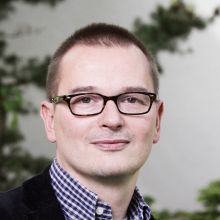
Prof. Dr. Wolfgang Heuwieser is a faculty member at the Free University of Berlin , specializing in Veterinary Medicine with a focus on Milk production, Fertility in cows, and Reproduction . He works at the Veterinary Clinic for Reproduction , where his research and clinical practice address critical aspects of dairy cattle health and reproductive efficiency. His research interests include Bovine Reproductive Health , Dairy Cow Fertility , and Animal Health Management . Heuwieser's work integrates advanced technologies such as automated activity monitoring , point-of-care diagnostics , and computer vision systems to optimize reproductive outcomes and general wellness in dairy cattle. Recent publications highlight his expertise in Hormonal Treatments , Heat Stress Impact , and Calving Management . His studies span 2017 to 2025 , reflecting ongoing contributions to veterinary science and dairy farming practices. Heuwieser can be contacted via email at w.heuwieser@fu-berlin.de for collaborations, expert consultations, or further information about his research projects.
Trina Hoefling serves as an Adjunct Professor at the University of Southern California (USC) teaching HRM 500: Human Resource Strategy and HRM 530: Learning & Development in the Online MS in Human Resource Management program. With over 30 years of experience, she founded GroupONE Solutions LLC and co-founded The Smart Workplace and Virtual Workplace University, establishing herself as a pioneer in virtual workplace transformation since developing remote management training in 1984. She earned dual Master's degrees from Southern Illinois University at Edwardsville: an MA in Industrial/Organizational Psychology and an MA in Speech Communication. Her educational background underpins her expertise in workplace dynamics and communication systems. Hoefling's research centers on the strategic integration of virtual work models, emphasizing trust-building in digital environments and HR's evolving role in the data-driven workplace. She champions systemic thinking in organizational development and identifies written communication as a critical competency for mobile workforce success. Her work bridges academic theory with practical implementation, focusing on how technology enables—but doesn't replace—human connection in professional settings. Her publications analyze trends where digital transformation reshapes workplace learning and team dynamics, highlighting how organizations must adapt leadership models for distributed teams. She documents the shift from traditional training to agile, technology-mediated learning ecosystems that respond to real-time business needs. As an educator, Hoefling prioritizes practical application, designing coursework that students immediately implement in their professional roles. She leverages her consultancy experience to create experiential learning opportunities centered on virtual team taxonomy, remote leadership frameworks, and strategic HR interventions. Her teaching philosophy emphasizes grounding students in nature-inspired perspectives to prevent burnout in high-stakes professional environments.
Prof. Marc Beutner holds the Chair of Business Education II at the University of Paderborn's Faculty of Business Administration and Economics. His research focuses on business education evaluation, vocational training systems, and the integration of digital technologies like e-learning, serious games, and VR into educational practices. He leads numerous international Erasmus+ projects such as SUSTAIN-EU (sustainability expert training), E-Stories (digital storytelling for immigrants), and VR-intense (VR in higher education). His work emphasizes STEM education innovation, accessibility, and sustainable transitions in vocational education. Prof. Beutner collaborates with global partners including institutions in Turkey, Greece, Spain, and Portugal. Recent projects include developing gamified IT security tools (GameUP) and inclusive university frameworks (Inclusive-Uni). Research Interests: Evaluation research in vocational education E-learning and m-learning design Didactic approaches to digital transformation Curriculum development for sustainability and green economy Transition challenges in vocational training systems Grants & Projects: EU-funded Erasmus+ projects (20+ active and completed) BMBF-funded GameUP (IT security chatbot development) Inclusive-Uni initiative for diversity in higher education VR-intense: VR tools for university engagement Labs/Teams: Leads the Chair of Business Education II team including researchers Dr. Jennifer Nicole Schneider, Sebastian Niklas Koppius, and others. Active in consortium-based project teams across Europe.
Steven Moore is a prolific researcher in educational data mining, AI in education, and learning analytics. He has co-authored 43 indexed works from 2011 to 2025, collaborating extensively with scholars such as John C. Stamper and Huy Anh Nguyen. His research addresses crowdsourcing in education, automated question generation, knowledge component extraction, and the application of generative AI to instructional design. Research Interests: Educational Data Mining & Learning Analytics AI-driven Assessment & Question Generation Crowdsourcing & Learnersourcing at Scale Generative AI for Curriculum and Content Design Human-Computer Interaction in Learning Systems Across his recent publications, Moore explores how large language models and automated toolkits can enhance the quality and scalability of educational content. His work increasingly integrates advanced NLP techniques—such as GPT-4-based evaluation—with rule-based systems to support both formative and summative assessment processes.
Vipin Verma is an Assistant Research Scientist at Arizona State University's Learning Engineering Institute, specializing in educational games, simulations, and affective computing. With a PhD in Human Systems Engineering from ASU and prior degrees in Information Assurance (MS) and Production & Industrial Engineering (B.Tech), he combines technical expertise with pedagogical innovation. Education : PhD (ASU), MS (Stratford University), B.Tech (IIT Roorkee) Research Focus : Educational games, gamification, adaptive assessment, and cognitive load measurement through mouse-tracking and facial emotion recognition Projects : Developed Chem-o-Crypt (Unity3D educational game), co-led $1.5M DoD-funded synthetic training environment, and contributed to SUNRISE (NSF-funded Hopi community mHealth initiative) His 15 most recent publications examine topics ranging from affect-sensitive serious games to mouse-tracking methodologies for implicit bias detection. He has received recognition as LASER Scholar and Common Mission Project awardee, with peer-review experience for over 3 dozen academic works. Scientific Awards Exceptional Team - Common Mission Project (2020) LASER Scholar - NC State University (https://fi.ncsu.edu/projects/laser-institute/) Grants Co-PI for $1.5M US Department of Defense grant Principal investigator for $3.9M NIH grant application
Robert Moore is a Professor in the Department of Electrical & Computer Engineering at the University of Florida's College of Engineering. His research focuses on electromagnetic waves, ionospheric studies, and remote-sensing applications of ELF/VLF propagation. He holds a PhD, MSE, and BSE in Electrical Engineering from Stanford University (2007, 2001, 1999). Moore has been recognized with notable awards, including the International Educator of the Year (2014), Young Scientist Award (2008), and the NSF Antarctic Service Medal (2006). His work bridges electrophysics and educational technology, reflected in his extensive Google Scholar publications addressing generative AI in education, learning analytics, and online pedagogy. His research interests in education technology include predictive modeling, microlearning, and trauma-informed teaching strategies. Recent studies highlight innovations in AI-driven feedback systems and the integration of mobile-based learning tools. Moore's contributions span interdisciplinary efforts, such as frameworks for learning analytics adoption and critical pedagogy leveraging social media platforms. His work emphasizes balancing technological advancements with ethical considerations and institutional readiness.
Morgan Diederich is a Lecturer in the Department of Data Analytics and Information Systems at Utah State University. She holds an MMIS in Management Information Systems from Utah State University (2019) and a BS in Statistics from Eastern Kentucky University (2017). Currently, she is a doctoral candidate in Instructional Technology and Learning Sciences. Her research focuses on applying machine learning and data visualization techniques to enhance educational decision-making and understand learner behavior. She develops innovative approaches to improve data literacy across diverse age groups, including co-creating elementary school curricula and teaching university-level data visualization courses. Morgan's scholarly work demonstrates a consistent focus on educational technology, data literacy, and machine learning applications in education. Her recent publications explore generative AI for data conversations, TikTok's educational potential, scalable personalization in online learning, and collaborative learning metrics.
Rebeca Peacock is a Clinical Assistant Professor and COE Instructional Designer at the University of West Georgia's Department of Educational Technology and Foundations, College of Education. She holds an Ed.D. in Instructional Design & Technology from Idaho State University (2022), an M.Ed. in Instructional Technology (2012) from Wayne State University, and an M.S. in Library and Information Science (2008) from Syracuse University. Her research focuses on instructional design, online learning, accessibility in education, and academic libraries. Key themes include barriers to online library instruction, accessibility policies, and the evolution of educational technology practices. She has presented internationally and nationally on topics like microlearning and competency-based needs assessments. Peacock has authored or co-authored over 14 publications since 2011, emphasizing instructional design methodologies, accessibility standards, and library service innovations. Her work spans journals like TechTrends, The Journal of Academic Librarianship, and Reference Services Review, with a recent focus on online education challenges and professional development in libraries. Teaching responsibilities include courses such as MEDT-7464 (Design Tech Enhanced Instruction) and MEDT-7472 (Intro to Distance Education), reflecting her commitment to advancing educational technology pedagogy.
Antonia Scholkmann is an Associate Professor at Aalborg University's Department of Culture and Learning, within the Faculty of Social Sciences and Humanities. Her research focuses on artificial intelligence (AI) in higher education, problem-based learning (PBL), and digital transformation. She holds a Ph.D. in Organizational Psychology from TU Dortmund University and a Diplom Psychologie from Eberhard Karls Universität Tübingen. Scholkmann has held visiting researcher positions at Macquarie University (Australia) and the Nordic Institute for Studies in Innovation, Research and Education (Norway). She leads projects like 2SOSU-AI (funded by Velux Foundation) addressing AI in vocational education and PERSPECT analyzing student perspectives on generative AI in PBL. Her interdisciplinary work combines practice theory, activity theory, and poststructuralist perspectives. She has published over 100 scholarly works, including contributions to Higher Education Research and Development and Die Hochschullehre . Recognized as 'Teacher of the Year 2023,' Scholkmann is also active in international networks and contributes to UN SDG 4 (Quality Education). She leads the Study Board and offers courses on AI in learning and PBL to institutions globally. Key collaborations include the Institute for Advanced Study in PBL and the Centre for Education Policy Research (CfU). Her research emphasizes societal impacts of education, particularly during crises like the pandemic, and explores how institutions adapt to disruptive changes. Recent studies highlight frontline workers in digital transformations and the role of SSH disciplines in higher education.
Kristine Bundgaard is an Associate Professor at the Department of Culture and Learning, Aalborg University, within The Faculty of Social Sciences and Humanities. She specializes in language technology, artificial intelligence in education, and translation technology. Her research bridges digital transformation in language industries, workplace studies involving translators, and educational applications of AI. She coordinates the Master in IT program and teaches on the It, Learning and Organizational Transformation (cand.it.) program. Bundgaard has led multiple research projects, including studies on AI literacy in education and back-translation practices in medical contexts. Her research interests span AI ethics in education, translation automation taxonomy development, and translator-computer interaction. Notable achievements include the CIUTI PhD Award 2018 and Forbundet Kommunikation og Sprogs Ph.d.-Pris 2018. She actively participates in international conferences and editorial work, focusing on translational studies and digital pedagogy. Her work emphasizes aligning educational curricula with emerging technologies while addressing professional challenges in the translation industry. Bundgaard’s publications explore topics like generative AI’s role in collaborative learning, psychological impacts of automation on translators, and integration of translation memory systems. She collaborates across disciplines, advocating for informed use of AI tools in both academic and professional settings. Her research also addresses transition challenges for students entering language studies and the societal implications of machine translation advancements.
Robin Sulkosky is a Lecturer in the Department of English, Writing Instructors and Lecturers at the College of Arts & Sciences, University of Washington, DC. He teaches in the First-Year Writing Program and brings extensive experience from teaching writing, research, and ESL/EFL across higher education, corporate, and military contexts internationally, particularly in Asia and Europe. MA in English – Rhetoric and Composition, Auburn University (2014) BA in English, Auburn Montgomery (2008) Graduate Certificate in C# Programming, UC San Diego (2022) Graduate Certificate in Instructional Design, University of Wisconsin-Stout (2022) Graduate Certificate in TESOL, Auburn University (2014) His research and professional interests center on the integration of instructional design and technology into writing pedagogy. He is particularly focused on developing accessible, interactive eLearning modules using tools like Articulate Rise, Adobe Captivate, and SCORM-compliant systems. His work emphasizes scenario-based simulations, labor-based grading, AI applications in humanities education, and fostering equity literacy in classrooms. The projects he has developed reflect a strong commitment to backward design, Universal Design for Learning (UDL), and Quality Matters standards. Notable works include a conversation simulator on building rapport, modules on microscope use, military veterinary careers, and AI for travel—all designed for agile, learner-centered environments. While no formal publications or peer-reviewed articles are listed, his portfolio demonstrates a robust engagement with educational innovation and digital pedagogy. Robin is also an active contributor to Rumie, creating microlearning experiences for young adult learners on technical and career topics. He collaborates in sprint-based design teams to develop storyboards and eLearning modules covering high-traffic priority subjects. He has no listed scientific awards or advisees. His role appears to be focused on teaching, curriculum design, and educational technology rather than traditional research supervision or publication. Robin leads several initiatives involving digital learning tools, including reusable learning objects (RLOs), CBT prototypes, facilitator guides, and quality assurance rubrics. He works within teams to manage full project life cycles in instructional development, applying project management frameworks such as ADDIE, WBS, and Gantt charts. His labs or design teams operate in agile, collaborative environments, often simulating real-world client projects like training solutions for a Norwegian bicycle parts company.
Dr. MARIA JESUS LERMA GARCIA is a Professor at the Department of Analytical Chemistry in the Faculty of Chemistry at the University of Valencia. She holds a Doctorate from the University of Valencia (2011) with a thesis focused on methods for characterizing and authenticating olive and vegetable oils, supervised by Guillermo Ramis Ramos and Ernesto Francisco Simó-Alfonso. Her primary research interests include development and application of advanced analytical techniques such as liquid chromatography, capillary electrophoresis, mass spectrometry, and spectroscopic methods for food analysis, quality control, and botanical authentication. She also pioneers educational innovations, including AI-driven learning tools like ChatGPT integration, TikTok-based nanolearning, and student-generated instructional videos to enhance laboratory instruction and communication skills in chemistry education. Her work bridges analytical chemistry methodology with real-world applications in food safety and environmental monitoring, while simultaneously advancing pedagogical strategies using modern digital platforms. She leads the CLECEM research group and focuses on creating novel sample preparation approaches involving molecularly imprinted polymers, aptamer-based systems, and nanomaterials. Key contributions include methods for detecting allergens in foods, analyzing cocoa and olive oil authenticity, and developing smart materials for microextraction systems. She actively engages in curriculum development for master's programs in food safety, emphasizing effective oral communication competencies through structured self-learning itineraries and flipped classroom methodologies.
Dr. Erhan Aslan is an Associate Professor of Applied Linguistics at the School of Literature and Languages, University of Reading. His research focuses on multilingualism, digital communication practices, and pedagogy in technologized contexts. Research Interests Erhan explores: Multimodal discourse in digital platforms like Instagram and internet memes L2 pragmatic development and intercultural communication Teacher cognition and emotional agency in educational settings Computer-mediated communication in language learning Deconstructing native speaker ideologies in language education Scientific Awards Fulbright Grant (prestigious international scholarship) TESOL International Organization's Research Mini-Grant Publication Trends His recent works (2021-2025) examine: Humor and creativity in pandemic-related internet memes Social media's role in informal language pedagogy Pragmatic face negotiation in academic emails Comparative analysis of teaching methodologies Identity construction in digital professional communication Teaching & Supervision Erhan teaches modules on: Intercultural Communication (Undergraduate & Postgraduate) New Technologies in Language Learning (Postgraduate) Research Design Methods He supervises PhD research on language-technology intersections.
Victor Bankler is an Assistant Professor in the Department of Information Technology at the University of Skövde’s School of Informatics. His work bridges game development and digital health promotion, focusing on cardiovascular education for adolescents in Nepal through interactive tools. Research interests include serious games, simulation technology, and sustainability integration in educational contexts. He explores how games can address anxiety, teach health practices, and enhance collaboration among emergency services via digital training scenarios. His recent publications examine mixed-method approaches to game design, digital simulations for health interventions, and pedagogical strategies for embedding sustainability into game education. Projects emphasize cross-cultural collaboration, user-centered design, and technology’s role in public health initiatives. Email: victor.bankler@his.se
Laura Melendo Rodríguez-Carmona is a Professor at Camilo José Cela University (Madrid), accredited by ANECA, specializing in Communication Sciences. She teaches across multiple programs including Creative Advertising, Audiovisual Communication, and Digital Marketing Master's. Her roles span from faculty member to ICT Coordinator and former Director of the Junior Advertising Agency and Creadictos Advertising Festival. PhD in Communication Sciences (European University of Madrid, 2010) Licensed in Information Sciences (Complutense University of Madrid, 1998) Expert in ICT-based Learning Development (Camilo José Cela University, 2012) Her research focuses on digital marketing, transmedia communication, educational technology, and the impact of ICT on youth. Recent publications analyze e-commerce usability, environmental well-being's role in CSR, and digital advertising trends. She has developed innovative teaching methods using tools like Lynda and videoblogs, contributing to educational technology frameworks. Her scientific production includes systematic literature reviews on retail e-commerce (2024), environmental literacy in media (2023), and QR code integration in transmedia strategies (2023). These works demonstrate consistent exploration of digital communication's intersection with education, business, and social responsibility.