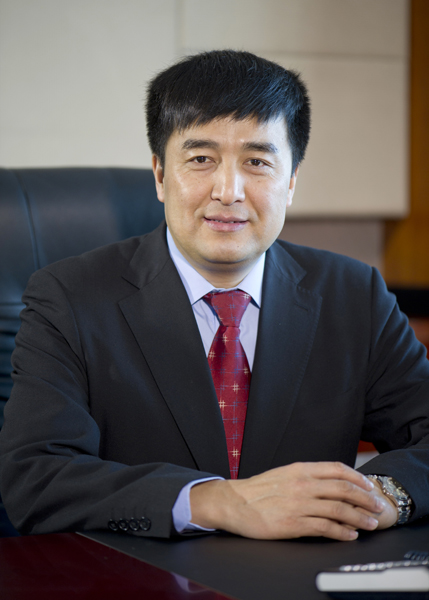
Liangzhong Yao is a Professor and Director of the Smart Grid Research Institute at Wuhan University, China. He holds dual roles as Fellow of IEEE and IET, and has served in leadership positions such as Vice President of China Electric Power Research Institute (CEPRI) and Chair of IEC TC122. His expertise spans renewable energy grid integration, HVDC systems, smart grid technologies, and energy storage. Yao has led over 25 years of R&D projects with combined funding exceeding GBP 20 million and RMB 90 million, resulting in applied technologies in wind farms and HVDC grids. He has been awarded over 10 national and international accolades, including the IEC 1906 Standard Award and China Science and Technology Innovation Awards. Research focuses include AC-DC hybrid systems, distributed energy resource integration, and high-renewable energy grid operation. He has authored/co-authored 350+ publications, 60+ patents, and 4 books. Yao currently supervises 8 PhD and 10 Master's students, and serves on editorial boards of journals like CSEE Journal of Power Energy & Systems. His leadership roles in global standards bodies like IEC and CIGRE further highlight his contributions to advancing electrical engineering standards and practices.
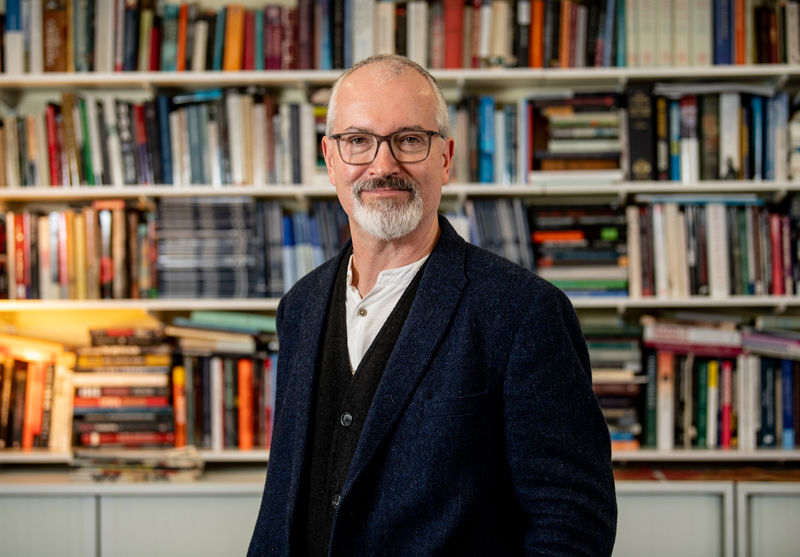
Richard English is currently Professor of Politics at Queen’s University Belfast (QUB) and serves as Director of the Senator George Mitchell Institute. He held leadership roles including Pro Vice-Chancellor for Internationalisation and Engagement (2016–2021) and Wardlaw Professor of Politics at the University of St Andrews (2011–2016). His research focuses on radicalism, political violence, nationalism, and Irish/British politics. A Fellow of the British Academy and recipient of the Royal Irish Academy Gold Medal (2019), he has authored influential works such as Armed Struggle: The History of the IRA and Irish Freedom: The History of Nationalism in Ireland . Research Trends: His recent publications (2022–2025) address energy systems, building simulations, and sustainable urban infrastructure, with keywords spanning Building Simulation , Sustainable Energy , and Smart Grids . Subfields include District Heating , Thermal Modeling , and Machine Learning in Energy Management . Honors: CBE (2018) Gold Medal, Royal Irish Academy (2019) Fellow, British Academy (2009) Ewart-Biggs Memorial Prize (2007)
Harald Kirchsteiger is a Professor at the University of Applied Sciences Wels , affiliated with the Research Center Wels and the ASiC Center of Excellence Energy . His research focuses on energy management systems, renewable energy integration, and model predictive control for energy systems. He leads and participates in multiple EU-funded projects including RESINET (resilience of energy grids), InduGrid (industrial microgrids), and HyBRID (hydrogen applications). His work addresses challenges in grid stability, battery optimization, and energy storage solutions. Recent projects involve developing predictive control models for photovoltaic systems and optimizing nonlinear energy management problems. He has authored over 40 publications with an h-index of 12, focusing on smart grid technologies and energy efficiency. Key research areas include distributed energy systems, battery inverter efficiencies, and energy resilience strategies. Collaborations span academic and industrial partners across Europe, addressing challenges in decarbonization and grid modernization.
Prof. Sandford Bessler is affiliated with the Technische Universität Wien's Faculty of Informatics, specifically within the Compilers and Languages department. His research focuses 75% on Information Systems Engineering and 25% on Logic and Computation. He teaches courses such as Bachelor Thesis for Informatics and Business Informatics . His work emphasizes smart grids, electric vehicle management, scheduling algorithms, and distributed systems. Research interests include optimizing energy networks, resilience in power grids, and integrating renewable energy systems. He has contributed to projects like ARTE (2012–2017) , exploring disruption-tolerant vehicle-infrastructure communication. Supervised theses include Electric vehicles recharge scheduling with time windows and A service overlay network for telematic applications . Key projects involve improving grid resilience through demand-side management and collaborative frameworks. He collaborates with industry and academia on smart grid technologies and electric vehicle infrastructure.
Robert Schürhuber serves as a Professor at the Institute of Electrical Systems and Networks (IEAN) at Graz University of Technology, Austria. His research focuses on power system stability, renewable integration challenges, and advanced converter technologies critical for modern grid operations. His primary research areas include Power Systems , Renewable Energy Integration , Grid Stability , and Electrical Safety . He investigates grid-forming/grid-following converter dynamics, fault ride-through capabilities, and transient stability in high-renewable penetration scenarios. His work frequently employs Power Hardware-in-the-Loop (PHIL) methodologies and field measurements to validate theoretical models under real-world conditions. Analysis of his 2024-2025 publications reveals dominant trends in grid-forming converter optimization, short-circuit fault management, and reactive power control strategies. Key thematic clusters include PHIL testing protocols, regional islanding phenomena, and earthing system safety in medium-voltage networks—particularly relevant for DC charging infrastructure and swimming pool environments. Professor Schürhuber leads the IEAN laboratory's Power Hardware-in-the-Loop facility and directs the ProSafE² project focused on periodic verification of DC electric vehicle charging stations. His applied research bridges theoretical power system analysis with practical safety standards for emerging grid technologies.
Sebastian Zwickl-Bernhard is a researcher at the Energy Economics Group (EEG) of Vienna University of Technology (TU Wien) and holds a concurrent research position at the Department of Industrial Economics and Technology Management (IØT) at Norwegian University of Science and Technology (NTNU). He earned a Master’s (2020) and Ph.D. (2023) in Electrical Engineering from TU Wien, focusing on open-source energy system modeling for decarbonization. Ph.D. in Electrical Engineering, TU Wien (2023) Master’s in Energy Engineering and Automation Technology, TU Wien (2020) His research spans energy system optimization under sustainability transitions, with expertise in open-source modeling tools , renewable integration , and flexibility solutions for power and transport systems. His work addresses decentralized energy systems , hydrogen economics , and resource constraints in decarbonization pathways. The 15 most recent articles highlight applications of optimization techniques to microgrids , EV charging infrastructure , LNG markets , and material recycling , reflecting a focus on policy analysis , techno-economic modeling , and geopolitical risk in clean energy transitions. Faculty Award for Doctoral Thesis, TU Wien (2023) Faculty Award for Master Thesis, TU Wien (2020) IIASA Young Scientists Summer Program (YSSP) Fellowship (2021) Sebastian supervises bachelor’s and master’s students at TU Wien and contributes to open-source energy modeling projects like GUSTO and openENTRANCE . His collaborative work with teams at TU Wien, NTNU, and IIASA emphasizes transdisciplinary research and scalable energy solutions .
Herwig Renner is an Associate Professor at Graz University of Technology's Institute of Electrical Power Systems. His research focuses on power system dynamics, grid restoration strategies, and renewable energy integration, with emphasis on hydropower optimization and predictive load management. Renner develops practical solutions for enhancing grid resilience through real-world testing of islanded operations and bottom-up restoration protocols. He received the TÜV Wissenschaftspreis (2022) for innovations in grid stability. His work bridges theoretical power engineering with industrial applications, contributing to Austria's energy transition initiatives.
Fernando Carreras Oliver is a researcher at the University of Applied Sciences Wels , affiliated with the ASiC Center of Excellence and Energy Center of Excellence for Smart Production . His work focuses on energy systems optimization, particularly in distributed energy networks, battery inverter efficiency, and renewable energy communities. Active in projects like Austrian DC Pilot Factory and InduGrid Industrial Microgrids Specializes in nonlinear optimization problems and energy flow analysis Recent publications highlight his contributions to domestic energy management systems and cost optimization in distributed energy systems , with applications in smart grids and CO2 reduction. Collaborations span institutions like the Climate and Energy Fund and FTI-Strukturförderung. Despite lacking explicit awards, his 19 h-index reflects significant academic impact.
Patrick Kefer is a researcher at the Upper Austria University of Applied Sciences associated with the ASiC Center of Excellence Energy . He specializes in Genetic Programming and Energy Flow Optimization for residential and industrial systems. Key Research Areas: Energy Management, Flow Controller Design, PCM Storage Systems, Symbolic Regression Projects: OpenGrid4PV, ICE4H&C, BABA Emissionen, Austrian DC pilot factory, InduGrid His work focuses on simulation-based optimization and heuristic control algorithms for energy systems. Recent projects explore direct current grids , thermochemical heat storage , and decentralized energy communities . Collaboration Network: Active with researchers like Gerald Steinmaurer, Michael Affenzeller, and Stefan Wagner. His methodologies integrate symbolic regression and white-box modeling for dynamic energy systems.
Christoph Schaffer is a Professor at the University of Applied Sciences Upper Austria's Research Center Hagenberg, specializing in Information & Communications Technology with a focus on energy systems. He leads projects addressing smart cities, energy data interoperability, and decentralized energy ecosystems. His research integrates artificial intelligence, IoT, and human-centered design to advance sustainable energy solutions. He is the Principal Investigator (PI) for major initiatives including the EU-funded CELINE project (2024–2027) for localized energy innovation and ECLIPSE (2024–2026) targeting energy consumption reduction through open-source frameworks. He also collaborates on the EDDIE project (2023–2025) developing distributed energy data infrastructure. His research interests span microgrid optimization, energy sharing platforms, and HCI strategies for energy literacy. He received the Best Paper Award in 2021 for pioneering work on microgrid energy sharing systems. Key contributions include frameworks for urban microgrid data accessibility (2025), the Common European Energy Data Space blueprint (2024), and end-to-end P2P energy ecosystems (2024). His work bridges technical innovation with community empowerment in energy transition efforts. Grants and projects include €multi-million EU Horizon and national funding, focusing on storage clusters, open-source energy tools, and cross-sectoral digital services.
Ziqian Zhang is an Associate Professor at the Institute of Electrical Power Systems, Graz University of Technology. His research focuses on power system dynamics, grid-forming converters, and renewable energy integration. He actively contributes to projects like PHIL-TEST-PV and pro.tect, investigating inverter performance and protection technologies. Research interests include: Grid-forming converter control strategies Power hardware-in-the-loop testing methodologies Stability analysis of multi-converter systems Renewable energy grid integration challenges His publications demonstrate consistent focus on converter technologies and grid stability, with recent work exploring adaptive parameterization and dynamic performance boundaries.
Natalie Dimitriadis-Schnür is a Researcher at the Institute of Marketing within the Faculty of Economics at the University of Applied Sciences Wiener Neustadt. Her work focuses on renewable energy systems and sustainable business practices, as evidenced by her involvement in the project Microgrid 100% Renewable Energy (2019–2022). Email: natalie.dimitriadis-schnuer@fhwn.ac.at Phone: +43 5 0421 2360 Location: Wieselburg Campus, Zeiselgraben 4, 3250 Wieselburg Research Interests Marketing Renewable Energy Sustainable Business Practices Energy Systems
Ivona Brandić is a University Professor for High Performance Computing Systems at TU Wien's Institute of Software Engineering and Interactive Systems. Born in Gradačac, Bosnia and Herzegovina, she moved to Austria in 1992 as a refugee during the Bosnian War. She earned a master's degree (2002) and doctorate (2007) in business computer science from TU Wien and completed her habilitation in applied computer science there in 2013. Her career includes roles as an assistant professor (University of Vienna, 2002–2007) and postdoctoral researcher (University of Melbourne, 2008). She transitioned to a tenure-track position at TU Wien in 2014 and became a full professor in 2016. Brandić’s research focuses on cloud computing, energy-efficient ultra-scale systems, and hybrid quantum-classical computing. She has been recognized with the MiA Award (2011), the Austrian Science Fund's Start-Preis (2015), and membership in the Austrian Academy of Sciences' Young Academy (2016). Her work emphasizes sustainable computing, edge systems, and optimizing resource management for distributed applications. Education: Bachelor's degree in Business Informatics (University of Vienna/TU Wien) Master's in Business Computer Science (University of Vienna, 2002) PhD in Applied Computer Science (TU Wien, 2007) Habilitation in Practical Computer Science (TU Wien, 2013) Research Interests: Brandić’s work spans cloud computing, energy efficiency in HPC systems, edge computing, and quantum-classical hybrid systems. She explores autonomic resource management, distributed system resilience, and sustainability in ultra-scale infrastructures. Her projects often address real-world applications like drug design, environmental monitoring, and smart energy grids. Publications: Her 2009 paper Cloud Computing and Emerging IT Platforms is a seminal work in the field. Recent publications focus on quantum-edge integration, energy optimization in AI models, and adaptive edge analytics frameworks. These contributions highlight trends toward sustainable, distributed, and hybrid computational paradigms. Awards: 2011: MiA Award for distinguished contributions by international backgrounds 2015: Austrian Science Fund’s Start Prize 2016: Austrian Academy of Sciences Young Academy Membership Advising & Grants: Brandić leads research groups and has secured grants for projects like NESSUS (energy-efficient cloud systems) and CHIST-ERA’s SDCDN (distributed networks). She mentors students in HPC, edge computing, and quantum systems. Advised topics include workload scheduling, fault tolerance, and energy-aware algorithms. Labs & Teams: She directs research on autonomic cloud management, edge intelligence frameworks (e.g., Sea-LEAP, FRESCO), and quantum-classical workflow systems (RIGOLETTO). Her teams collaborate internationally, integrating academia and industry for scalable, sustainable solutions.
Oliver Hödl is a Professor at FH JOANNEUM UNIVERSITY OF APPLIED SCIENCES (Research Center Hagenberg), affiliated with the Center of Excellence Energy. His work focuses on energy systems, data accessibility in smart cities, and innovative LEGO-based engineering projects. He leads research in urban microgrids and energy data infrastructure through projects like EDDIE. Education: Dipl.-Ing. (Master of Engineering), Dr. (Doctorate) Research interests include: - Developing frameworks for energy data interoperability - Integrating tactile interfaces with music technology - Designing citizen-centric energy literacy tools His 2023-2025 publications explore: - Smart city energy systems - LEGO-based prototyping for education - Pan-European energy data governance Scientific contributions: 7 peer-reviewed outputs, 2 citations Current project (2023-2026): Leading the EDDIE project ($\sim$6M EU funding) focusing on distributed energy data infrastructure. Labs/Teams: Involved in Hagenberg's Energy Research Group and LEGO Engineering Innovation Lab.
David Fellner is a Senior Lecturer and Program Director for Renewable Energy Engineering at the University of Applied Sciences Technikum Vienna. He leads the Renewable Energies degree program (Bachelors & Masters) and is involved in the COIN research project 'GridEdge', which focuses on expanding lab infrastructure incorporating PV, EVSE, and DC microgrids for contract research. His educational background includes: Doctoral program in Engineering Sciences (Computer Sciences concentration) at Vienna University of Technology (2020-2024), graduating with distinction. Dissertation: 'Data Driven Detection of Misconfigurations in Power Distribution Systems' MSc in Energy and Automation Engineering (2016-2019) BSc in Electrical Engineering and Information Technology (2012-2016) ERASMUS Semester at NTNU, Trondheim, Norway (Spring 2018) ERASMUS Semester at Politecnico di Milano, Italy (Spring 2015) Dr. Fellner's research focuses on the intersection of power systems engineering and data science, particularly applying machine learning techniques to power distribution systems. His work addresses critical challenges in modern grid management including misconfiguration detection, anomaly identification, and reliability improvement. He has developed frameworks for data-driven malfunction detection in power systems, with applications in both public and industrial grids. His expertise spans DC microgrids, renewable energy integration, and AI applications for grid monitoring and optimization. His publication record demonstrates a clear trajectory of increasingly sophisticated applications of machine learning to power system challenges. Starting with foundational work on data-driven malfunction detection, his research has evolved to include transformer profile disaggregation, deep learning applications, and the development of open-source frameworks like DeMaDs. The publications reveal a strong focus on practical implementations that address real-world grid issues, particularly as renewable energy sources become more integrated into power distribution systems. Dr. Fellner has been actively involved in research projects including DeMaDsPilot (data-driven malfunction detection), Parmenides (AI-based state estimation), and support for projects like PoSyCo, TheBuilding, and EASE. He has also provided training for OVE on 'Power Quality' and has supervised numerous Bachelor theses. His laboratory work centers around the COIN research project 'GridEdge', which expands lab infrastructure incorporating photovoltaics, electric vehicle supply equipment, and DC microgrids for contract research purposes. This facility enables practical testing and validation of his theoretical work on grid monitoring and optimization.