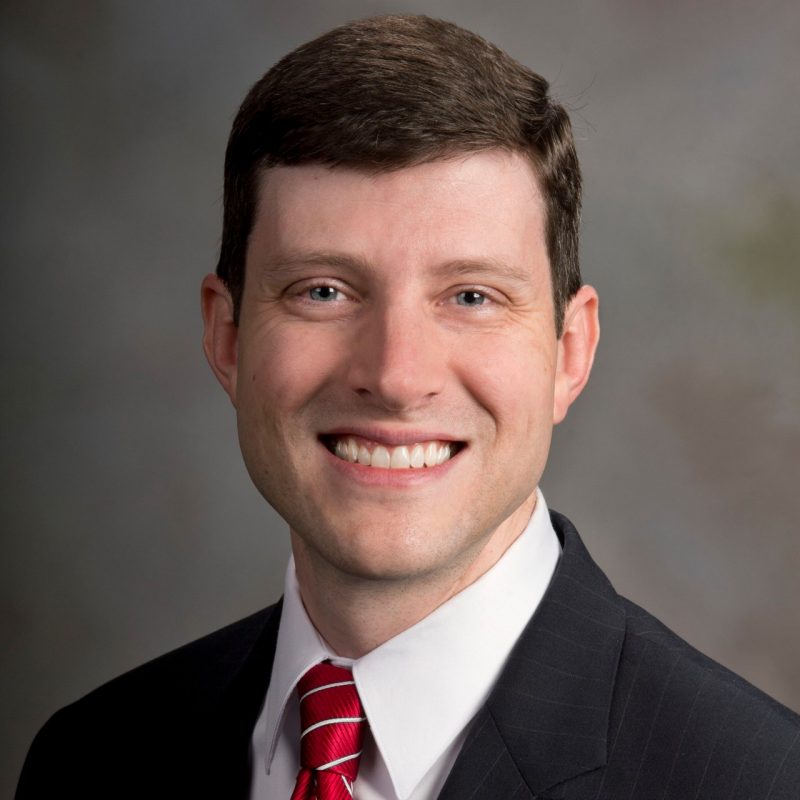
Mary L. Bowden is a Senior Lecturer and Keystone Instructor in the Department of Aerospace Engineering at the University of Maryland's A. James Clark School of Engineering. She serves as Director of the Maryland Space Grant Balloon Payload Program, overseeing over 100 high-altitude balloon launches designed for student research. Her academic roles include advising and mentoring, reflected in awards such as the AIAA Best Advisor (2017-2019) and WIA Aerospace Educator Award (2016). Bowden holds a B.A. in Mathematics from Cornell University and M.S. and Sc.D. degrees in Aeronautics and Astronautics from MIT. Her research focuses on space systems, structural dynamics, and robotic systems for deep space exploration. Notable projects include the SCOUT orbital utility transport concept and lunar/Mars rover design. Professional memberships include AIAA, ASEE, ASME, and SWE. She has led student teams to NASA RASC-AL competition wins and supported initiatives like the National Eclipse Ballooning Project. Awards highlight her dedication to student success and aerospace education.
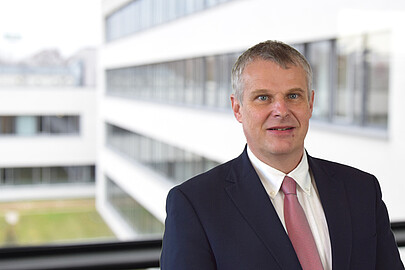
Dr. Björn Braunstein is a researcher at the German Sport University Cologne , affiliated with both the Institute of Movement and Neurosciences and the Institute of Biomechanics and Orthopaedics. He contributes to the German Research Centre of Elite Sport (momentum) and the Centre for Health and Integrative Physiology in Space (CHIPS). Research Focus: Biomechanics, spaceflight adaptation, youth sports training, and musculoskeletal responses to gravity changes Key Projects: MoLo (Movement in Low Gravity), RoboGym development, physiological adaptation processes Media Engagement: Regularly featured in discussions about space travel biomechanics and robotic training systems Scientific Awards: Basic Research Award (2005) New Investigator Award (2005) Poster Prize (2005) Travel Grant in Footwear Biomechanics (2007) Research Trends: Recent publications focus on plyometric exercise countermeasures for space missions, cervical spine adaptation post-spaceflight, and systematic reviews of partial gravity responses. His work bridges sports science and aerospace physiology, with applications for both elite athletes and astronaut health.
Scott B. Jones is Professor of Environmental Soil Physics in the Department of Plants, Soils and Climate at Utah State University's College of Agriculture and Applied Sciences. His research focuses on soil physics, water movement in porous media, and applications for agriculture, ecology, and space exploration. He maintains an active laboratory developing measurement techniques for soil properties and has been involved in multiple International Space Station experiments. Educational Background: PhD, Soil Science (Soil Physics), Utah State University, 1997 MS, Agricultural & Irrigation Engineering, Utah State University, 1992 BS, Civil Engineering, Brigham Young University, 1989 Professor Jones' research emphasizes development of cutting-edge measurement and modeling approaches for understanding porous medium properties and processes. His work spans agricultural, ecological, environmental and space-based applications, with a focus on mass and energy flow in soils. Current interests include machine learning of soil properties from dielectric measurements, microgravity effects on water supply to plant roots, porous media design for reduced gravity applications, soil water and nutrient flow, sensor development, and remote sensing of near-surface soil properties. His expertise bridges fundamental soil physics with practical applications in both terrestrial agriculture and extraterrestrial environments. Analysis of his recent publications reveals a strong focus on refining soil moisture measurement technologies, particularly electromagnetic and heat pulse methods. His work demonstrates a progression from fundamental soil physics principles toward increasingly sophisticated applications for water management challenges. A notable thread throughout his career has been the adaptation of soil physics principles for space exploration, evident in his numerous NASA-related projects and International Space Station experiments. Scientific Awards and Honors: International Professor of the Year, 2020 (College of Agriculture and Applied Sciences) Graduate Research Mentor of the Year, 2019 (College of Agriculture and Applied Sciences) Fellow, 2018 (Soil Science Society of America) Soil Physics & Hydrology Division Chair, 2016 (Soil Science Society of America) Faculty Researcher of the Year, 2012 (College of Agriculture) Undergraduate Mentor of the Year, 2008 (College of Agriculture) International Space Station Experiment, 2007 (with Russian Institute of Biomedical Problems) Professor Jones has mentored numerous graduate students through their research in soil physics and related fields. His research has been supported by various grants from NASA, USDA, and other agencies, particularly for his work on plant growth media for space applications and soil moisture measurement technologies. He has served as an Associate Editor for the Soil Science Society of America Journal and has been instrumental in organizing professional conferences in his field. His laboratory work focuses on soil physics instrumentation development, particularly sensors for measuring soil moisture, thermal properties, and other physical characteristics. Professor Jones has been a leader in designing experimental setups for studying water behavior in porous media under variable gravity conditions, including parabolic flight experiments and International Space Station investigations. His work on the ORZS (Optimization of Root Zone Substrates) project represents significant contributions to space agriculture research.
Markus Pietras serves as a Professor in the Department of Aerospace Engineering at the Faculty of Engineering, Munich University of Applied Sciences. He holds dual administrative roles as Head of the Aerospace Engineering Master's Program (LRM) and Member of the Examination Board for the same program, based in Room R 4.061 at the Lothstraße 64 campus in Munich. His research spans critical aerospace domains with emphasis on Space Systems, Satellite Technology, and Space Mechanisms and Robotics, complemented by advanced manufacturing expertise in Additive Manufacturing and In-Space Manufacturing. These interconnected fields drive innovation in spacecraft design and extraterrestrial production capabilities: Space Systems (orbital dynamics, mission architecture) Satellite Technology (payload design, subsystem integration) Space Mechanisms and Robotics (actuators, manipulators for microgravity) Additive Manufacturing (metal/polymer 3D printing for aerospace) In-Space Manufacturing (on-orbit fabrication, resource utilization) Prof. Pietras actively translates these research areas into educational contexts through dedicated laboratory facilities supporting hands-on student development. He oversees three specialized laboratories that form the practical foundation of his research and teaching: KCA Laboratory (Design and CAx - Computer-Aided Engineering) Space Lab (satellite subsystem testing) In-Space Manufacturing Lab (prototyping for extraterrestrial environments)
Dr. Xiaofeng Wu is a Senior Lecturer in Space Engineering at the University of Sydney's School of Aerospace, Mechanical and Mechatronic Engineering. His research focuses on space systems, robotics, and control engineering with applications in satellite technology, additive manufacturing, and autonomous navigation. He holds a BEng from Northwestern Polytechnical University and a PhD from Loughborough University. **Education**: BEng in Space Engineering, School of Astronautics, Northwestern Polytechnical University (China) PhD in VLSI Design for Real-Time Control, Loughborough University (UK) **Research Interests**: Dr. Wu's work spans space engineering innovations such as satellite attitude control systems, on-orbit 3D printing, and robotic manipulators. He integrates neural networks, Kalman filters, and reinforcement learning to address challenges in space robotics and autonomous navigation. Recent projects include lunar navigation systems and fault-tolerant manufacturing solutions for space environments. **Grants & Collaborations**: He leads projects funded by NSW Space Research Network (SRN) and SmartSat CRC, focusing on lunar navigation, on-orbit refueling, and satellite communication networks. Collaborates with Reach Robotics on space robotics solutions. **Teams & Labs**: Member of the Sydney Institute of Agriculture. Involved in the INSPIRE-2 CubeSat project and QB50 initiative. Teaches courses like Spacecraft Design and Instrumentation.
Abd El Rahman Shabayek is a Research Scientist at the Interdisciplinary Centre for Security, Reliability and Trust (SnT) within the University of Luxembourg, leading research in AI-driven Computer Vision for space and energy sectors. His interdisciplinary background includes contributions across prestigious universities in France, the UK, Spain, and Egypt. He holds an Erasmus Mundus MSc and a PhD in Computer Vision and Robotics from France. Current Affiliations: CVI² Research Group (SnT), University of Luxembourg. Former Roles: Assistant Professor at Suez Canal University, adjunct positions at Sinai University and the Information Technology Institute. Research focuses on optimizing deep neural networks for spatial/terrestrial applications, with over 50 publications and an h-index of 16. Notable contributions include work on 3D deformation transfer, anomaly detection in battery thermal imaging, and hybrid attention models for pedestrian detection. His work bridges academia and industry through collaborations in healthcare, 3D scanning, and space tech. He has received two best paper awards and actively reviews for IEEE/Springer journals and top conferences like IROS, AAAI, ICCV, and CVPR. Teaching includes the Computer Vision module in the International Space Master’s program and AI summer camps for adolescents. Awards: Two best paper awards (3D deformation and skeletal feedback). Grants: Successfully led proposals for Luxembourg National Research Fund (FNR) projects under PPP and CORE programs. Key projects include the Zero-G Lab for space operations emulation and development of the STARR system for stroke rehabilitation. His labs focus on AI-driven solutions for energy systems, robotics, and biomedical applications.
Dr. Carol Martinez Luna is a Research Scientist and Deputy Head of the Space Robotics group (SpaceR) at the SnT Interdisciplinary Centre, University of Luxembourg. She holds a PhD in Robotics and Automation from Universidad Politécnica de Madrid (2013) and previously served as an Assistant Professor at Pontificia Universidad Javeriana, Colombia. Her research spans Space Robotics , Computer Vision , and Machine Learning , with current focus areas including: Multi-purpose manipulation for planetary/orbital robots Perception systems for autonomous space operations Domain adaptation to bridge simulation-to-reality gaps On-ground testing of orbital technologies Recent publications (2022-2025) predominantly address space debris removal , autonomous grasping , and robotic perception , with heavy emphasis on machine learning techniques and high-fidelity simulation validation. Notable trends include generative models for manipulation and adaptive control under uncertainty. She actively advises 7 PhD students and 9 Master's candidates on topics ranging from space manipulation to vision-based safety systems. Her lab develops experimental platforms for orbital scenario emulation and collaborates on ESA-funded debris removal initiatives.
Dr. Dava Newman is the Apollo Program Professor of Astronautics at MIT and Director of the MIT Media Lab. She holds joint appointments in the Institute for Data, Systems, and Society and Harvard-MIT Health, Sciences, and Technology. Her research focuses on aerospace biomedical engineering, advanced spacesuit design, and human performance in microgravity. Newman has led over 4 spaceflight missions, including the Skinsuit project on the ISS and the BioSuit planetary EVA system. She served as NASA Deputy Administrator (2015-2017), advocating for Mars exploration and innovation. Her honors include the NASA Distinguished Service Medal and AIAA Fellow status. Education: Ph.D. in Aerospace Biomedical Engineering, MIT M.S. in Aerospace Engineering and Technology & Policy, MIT B.S. in Aerospace Engineering, University of Notre Dame Research Interests: Newman’s work spans spacesuit innovation (BioSuit, Skinsuit), human adaptation in extreme environments, and policy for sustainable space exploration. She integrates biomechanics, AI, and VR for climate science communication (e.g., Earth Mission Control platform) and planetary exploration tools (OGIVE). Awards: NASA Distinguished Service Medal (2017) AIAA Jeffries Aerospace Medicine Award (2020) Women in Aerospace Leadership Award (2019) Advising & Grants: Supervised 90 graduate theses and mentored 200+ undergraduates. Key grants include NASA’s RESOURCE Project and MIT’s Climate Modeling Initiatives. Collaborates internationally on lunar missions and radiation protection systems. Labs/Teams: Leads the Newman Aerospace & Biomechanics Lab at MIT, pioneering wearable tech for space and Earth. Active in the MIT Media Lab’s interdisciplinary projects on climate and space policy.
David Mindell is the Frances and David Dibner Professor of the History of Engineering and Manufacturing at MIT, with a joint appointment in the Department of Aeronautics and Astronautics. He holds dual roles as an academic and entrepreneur, combining historical scholarship with engineering practice. His primary affiliations include MIT’s Program in Science, Technology, and Society, and he has served in leadership roles such as Director of the STS Program and Chair of MIT’s 150th Anniversary Steering Committee. Education: B.S. Electrical Engineering, Yale University (1988) B.A. Literature, Yale University (1988) Ph.D. History of Technology, MIT (1996) Research Interests: Mindell’s work spans human-machine collaboration, deep ocean robotics, and the history of aviation/spaceflight. He emphasizes the social implications of engineering through projects like undersea archaeological expeditions and autonomous aircraft systems. His recent focus includes reimagining industrialism and the ethical integration of automation. Awards & Recognition: Associate Fellow, American Institute of Aeronautics and Astronautics Senior Member, IEEE Fellow, Explorers Club and Massachusetts Historical Society Labs & Ventures: He founded Humatics Corporation to advance transparent autonomy technologies and serves as an Operating Partner at Blackhorn Ventures. His research aligns with affiliations like the Woods Hole Oceanographic Institution and NASA Historical Advisory Committee.
Kindracki Jan is a full-time Professor at the Division of Aircraft Engines , Faculty of Power and Aeronautical Engineering , Warsaw University of Technology . His office is located in room 306b, and he can be contacted at Jan.Kindracki@pw.edu.pl . Research Leadership: Chair of Educational Team for Space Technology Projects at PAN, Editor for "Journal of Power Technologies" Teaching: Courses on Aerospace Propulsion, Celestial Mechanics, and Experimental Techniques Research activities focus on Aerospace Propulsion and Combustion Physics , particularly: Rotating Detonation Engines (RDE) Cold Gas/Resistojet Propulsion Hybrid Propellant Combustion Spacecraft Robotics Microgravity Simulation Computational Modeling of Detonation Scientific Achievements include: Multiple Rector's Awards (2007-2019) PECS ESA Project Participation NCN Sonata Grant Leadership NCBiR Project Leadership (2016-2019) Awards span team and individual recognitions, including the Professor Zygmunt Szlachta Award and Best Paper Award at ISHPMIE 2012. Academic Leadership involves organizing international conferences like the Development Trends in Space Propulsion Systems series and mentoring over 138 engineering students and 77 interim projects as of 2020.
Apoorva Kapadia serves as a Visiting Assistant Professor in the Electrical and Computer Engineering Department at Clemson University's College of Engineering. Joining the department in 2014 after previously working as a Lecturer in General Engineering at the same institution, Dr. Kapadia focuses on electrical circuits, control systems, robotics, and integrated system design while advising the Electrical & Computer Engineering Graduate Student Association. Dr. Kapadia's educational background includes a Ph.D. in Electrical Engineering from Clemson University (with a graduate certificate in Engineering and Science Education), an M.S. in Electrical Engineering from Clemson, and a B.S. in Instrumentation Engineering from the University of Mumbai. Prior to doctoral studies, they worked as a Research Engineer in Brooklyn College's Biomimetic and Cognitive Robotics Laboratory. Research interests span novel robot manipulators , nonlinear control strategies , animated architecture , and robotics pedagogy . Their publication trends reveal deep specialization in continuum robotics, with significant contributions to variable-topology manipulators, teleoperation interfaces, and space robotics applications. Keywords across recent works emphasize biomimetics, adaptive structures, and control theory. Dr. Kapadia actively contributes to the academic community as an IEEE member (Robotics & Automation and Control Systems societies), reviewer for robotics journals, and participant in Clemson's Intelligent Materials, Systems and Environments (IMSE) Institute. Their work has received funding from NASA, DARPA, and NSF. Teaching remains central to their role, with development of laboratory manuals, lecture notes, and an online class development guide. Current advising includes graduate student association leadership, though specific student names aren't documented in public sources.
Jonathan Black is a Professor in the Kevin T. Crofton Department of Aerospace and Ocean Engineering at Virginia Tech. He serves as Director of the Aerospace and Ocean Systems Laboratory within the Ted and Karyn Hume Center for National Security and Technology, and Co-Director of the Center for Space Science and Engineering Research (Space@VT). Additionally, he holds the Northrop Grumman Senior Faculty Fellowship in C4ISR. His work bridges mission platforms and payloads across multiple research centers at Virginia Tech. Black's academic background includes a PhD from the University of Illinois at Urbana-Champaign. Prior to joining Virginia Tech, he was a faculty member at the Air Force Institute of Technology (AFIT), where he founded and directed the Center for Space Research and Assurance, overseeing a $2M annual research portfolio and leading five spaceflight experiments. His research focuses on autonomous systems, sensor data processing in low-SWAP environments, mission-driven payload control, and distributed resource management in space systems. Key areas include structural dynamics of deployable space structures, micro UAV development, and taskable satellite systems for defense, commercial, and scientific applications. Black's leadership roles include directing the Aerospace and Ocean Systems Laboratory and contributing to the Hume Center’s national security initiatives. His work emphasizes cross-disciplinary collaboration and real-world application of advanced technologies in space systems engineering.
Professor David Cullen is a faculty member at Cranfield University, holding a professorial chair in Astrobiology and Space Biotechnology within the School of Aerospace, Transport and Manufacturing. His research focuses on biosensors, astrobiology, and space systems, with significant contributions to missions like the ESA ExoMars rover and CubeSat-based experiments. He obtained his biochemistry training at the University of East Anglia, followed by PhD and postdoctoral studies at the University of Cambridge. His career transitioned to Cranfield in the mid-1990s, where he advanced biotechnology applications in medical and environmental sectors before pivoting to space-related research. Key research interests include biosensor development for life detection in extraterrestrial environments, CubeSat experiments for microgravity studies, and in situ resource utilization (ISRU) on asteroids. Notable projects include the Life Marker Chip (LMC) instrument for Mars life detection and the BAMMsat CubeSat platform for bioscience experiments. His work spans collaborations with UKSA, ESA, and international agencies, addressing challenges in astrobiology, planetary protection, and space instrumentation. He has led or co-led over 100 publications, including studies on Mars analogue environments, stratospheric sampling, and immunological detection methods. Grants and funding from STFC, EPSRC, and ESA support his projects, emphasizing interdisciplinary approaches to space and Earth-based applications of biotechnology. His outreach includes public lectures and media appearances, bridging academic research with broader societal engagement.
Prof. Dr.-Ing. Ludger Overmeyer is a Professor and Executive Director of the Institute of Transport and Automation Technology at Leibniz University Hannover. He also serves as Deputy Chairperson of the Leibniz School of Optics and Photonics and holds leadership roles in multiple research initiatives including the Hannover Centre for Optical Technologies (HOT) and the PhoenixD cluster. His work spans automation technology, optical production systems, laser material processing, and space manufacturing. Overmeyer has led over 30 research projects funded by agencies like BMBF and DFG, focusing on additive manufacturing, microgravity experiments, and industrial logistics. He has pioneered innovations in conveyor systems, autonomous vehicles, and optoelectronic integration. His lab, the Einstein-Elevator, enables microgravity research for advanced manufacturing and materials science. Overmeyer has extensive industry collaboration with companies like Mühlbauer AG and LPKF, bridging academic research with industrial applications. Education highlights include a doctorate in Mechanical Engineering from Leibniz University (1996) and over 20 years of industrial R&D experience before academia. His teaching covers transport technology, laser processing, and optoelectronic systems. Current research emphasizes space manufacturing, AI-driven production, and sustainable logistics solutions. His team develops cutting-edge technologies like optical networks via flexographic printing and cold plasma experiments under microgravity conditions.
Simon X. Yang is a Professor and Head of the Advanced Robotics and Intelligent Systems Laboratory at the University of Guelph, School of Engineering. He holds a Ph.D. in Electrical and Computer Engineering from the University of Alberta and is a Fellow of the Canadian Academy of Engineering. His expertise spans robotics, intelligent systems, control systems, sensors, and bio-inspired intelligence. Dr. Yang has authored numerous publications and serves as Editor-in-Chief/Associate Editor for international journals, as well as a grant panel member for NSERC and CIHR. Prof. Yang’s research focuses on real-time sensing, robotic teleoperation, neural networks, fuzzy systems, and applications in agriculture, transportation, and environmental monitoring. He has pioneered bio-inspired algorithms for path planning, multi-robot systems, and industrial automation. His work includes innovations in underwater robotics, drone coordination, and smart agriculture technologies. Dr. Yang teaches graduate-level courses on advanced control systems, soft computing, and robotics, as well as undergraduate courses in neuro-fuzzy systems and engineering design. He actively participates in organizing international conferences and has developed the PIGRGB-Weight dataset for livestock monitoring. Professional Highlights: Editor-in-Chief roles, NSERC grant panel, and leadership in robotics research Labs: Advanced Robotics and Intelligent Systems Lab Awards: Fellow of Canadian Academy of Engineering His lab’s innovations include a biomimetic gecko-inspired robot for microgravity environments and a bionic ray robot with high motion performance. Current projects address challenges in smart farming, infrastructure health monitoring, and autonomous systems safety.