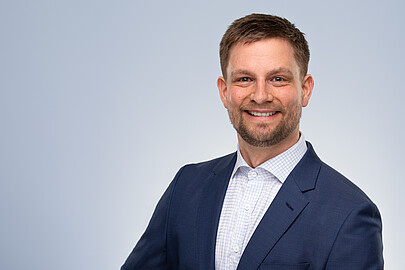
Prof. Waldemar Kolanus leads the Molecular Immunology and Cell Biology department at the University of Bonn's Life & Medical Sciences Institute (LIMES) . His research bridges immunoregulation , stem cell dynamics , and metabolic stress responses in immune cells. Unit 2 member at LIMES Principal investigator in SFB 704 and ImmunoSensation Cluster Leads a multidisciplinary lab with postdocs, PhD students, and technical staff His work focuses on intracellular signaling pathways connecting immune activation to tissue homeostasis, particularly through: Cytohesin proteins in integrin-mediated adhesion and migration TRIM71 in stem cell regulation and congenital hydrocephalus High-salt environments affecting macrophage function Publication trends show expertise in immune cell migration , genetic models , and chemical inhibition , with frequent use of mice and zebrafish for in vivo studies. Key articles explore: TRIM71's dual role in auditory development and germ cell maintenance Cytohesin family's Golgi regulation and insulin signaling Ruxolitinib's off-target migration inhibition of dendritic cells Contact details: Address: LIMES Institute, Carl-Troll-Straße 31, Bonn Email: kolanus.sekretariat@uni-bonn.de Phone: +49 228 73-62788
Prof. Dr. sc. techn. ETH Oliver Staadt is Full Professor of Computer Science and Chair of Visual Computing at the University of Rostock , Germany. Since 2023 he also serves as Director of the Institute for Visual and Analytic Computing within the Faculty of Computer Science and Electrical Engineering . Previously he was Dean (2016–2018) and Vice Dean (2010–2016) of the same faculty. Education Ph.D. in Computer Science, ETH Zürich (2001) M.Sc. in Computer Science, TU Darmstadt (1994) Research Interests Prof. Staadt’s research spans virtual and augmented reality , computer graphics , visualization , telepresence , immersive analytics , and human–computer interaction . A particular focus lies on real-time rendering and display technologies for large high-resolution display systems, depth-image enhancement for RGB-D sensors, and interaction techniques that leverage spatial cognition and eye-tracking. His work is frequently applied to collaborative settings and microgravity environments, including experiments aboard parabolic flights and the International Space Station. Recent Publication Trends Between 2019 and 2021 his output centers on foveated rendering , AR viewpoint guidance , collaborative analytics on wall-sized displays , and embodied interaction metaphors . Earlier work addressed bandwidth-efficient telepresence, depth-image filtering, and physically-based animation. The corpus reveals a steady evolution from fundamental graphics algorithms toward applied immersive systems. Scientific Awards & Honors Fellow of the Eurographics Association Associate Editor, IEEE Transactions on Visualization and Computer Graphics (past) Associate Editor, Computers & Graphics (past) Associate Editor, Computer Animation and Virtual Worlds (past) Associate Editor, Frontiers in Virtual Reality (current) Chair, Expert Group on Virtual & Augmented Reality, German Informatics Society (2013–2020) Advising & Funding He has successfully supervised more than ten PhD graduates whose dissertations range from collision detection and physically-based animation to 3D interaction in microgravity and predictive user modeling. Current PhD researchers include Bipul Mohanto, Mana Takhsha, and Sven Kluge. His projects are supported by national and EU programs such as EVOCATION, SMOOTH, ARGuide, 3DPick, DIVA, and Telepresence. Labs & Teams Prof. Staadt leads the Visual Computing Group at Rostock, operating state-of-the-art facilities including large tiled display walls, VR/AR laboratories, and motion-capture systems. The institute hosts interdisciplinary collaborations with partners in visualization, computer vision, psychology, and aerospace engineering.
Prof. Florian Zaussinger is a faculty member at the Faculty of Applied Computer and Life Sciences at Mittweida University of Applied Sciences. His research focuses on thermal convection, fluid dynamics, and numerical simulations in both geophysical and astrophysical contexts. He has contributed extensively to studies on microgravity experiments, including the GeoFlow and AtmoFlow projects conducted on the International Space Station (ISS). University: Mittweida University of Applied Sciences Faculty: Applied Computer and Life Sciences Department: Mathematics Contact: +49 3727 58-1381 | florian.zaussinger@hs-mittweida.de | Building 6, Room 6-131 His research involves advanced numerical modeling of complex fluid systems, including spherical convection, dielectric heating, and double-diffusive processes. He has developed and applied computational tools like the ANTARES code to simulate convection in DA white dwarfs, planetary atmospheres, and Earth's mantle. His work bridges theoretical fluid mechanics with experimental validation in space-based microgravity environments. Recent publications highlight his expertise in thermo-electrohydrodynamic convection, planetary fluid flow analysis, and microgravity-induced instabilities. While the scraped data does not list scientific awards or students directly, his academic profile emphasizes interdisciplinary collaboration with engineering and life sciences, particularly in applied mathematics for fluid dynamics and experimental data processing.
Dr. Olfa Lopez-D’Angelo is a researcher at the Department of Multiscale Simulation of Particulate Systems at Friedrich-Alexander-Universität Erlangen-Nürnberg. Her research focuses on granular rheology, additive manufacturing for space applications, and the behavior of materials under microgravity conditions. She leads the Rheologie granularer Materialien unter Weltraumbedingungen project (2023–2026), funded by the German Ministry for Economic Affairs and Climate Action (BMWK). Her work bridges theoretical physics, experimental engineering, and space technology. Key research interests include granular fluid dynamics, powder-based manufacturing processes in low-gravity environments, and the structural analysis of metamaterials. She has contributed to pioneering studies on acoustically propelled macroparticles and granular piston-probing in microgravity. Her interdisciplinary approach is evident in collaborations with institutions like ESA and DLR, as well as her involvement in projects such as the VIP-DROP2 module for droplet dynamics experiments. Awards: Granular Matter Gordon Research Conference Poster Prize (2022) ELGRA Research Prize (2021) Fly Your Thesis! 2019 (2018) ESA Networking/Partnering Initiative Fellowship (2017) Dr. Lopez-D’Angelo actively disseminates her work through international conferences (e.g., DPG, IAC) and public engagement initiatives, including the podcast Talk That Science . Her research emphasizes practical applications in space exploration, such as in-situ resource utilization and advanced manufacturing systems for extraterrestrial environments.
Prof. Dr. Gunnar Friege is a Professor of Physics Education at the Institute for Mathematics and Physics Education, Faculty of Mathematics and Physics at Leibniz University Hannover. He serves as the head of the Department of Physics Education and is actively involved in the Faculty Council. His office is located in Building 1109, Room 105 at Welfengarten 1A, 30167 Hanover, with office hours on Wednesdays from 9:00-10:00 during the lecture period. Prof. Friege's research spans multiple areas of physics education with a strong emphasis on innovative teaching methods. His work focuses on digital teaching and learning, inquiry-based physics education, and the integration of technology in physics instruction. He has developed numerous projects exploring productive failure approaches in physics learning, smart experiments, and the use of eyetracking technology to understand student engagement with physics concepts. His research also extends to science communication, particularly through physics competitions and outreach activities. Analysis of Prof. Friege's recent publications reveals a strong trend toward inquiry-based learning approaches, formative assessment techniques, and the integration of digital technologies in physics education. His work frequently addresses practical classroom applications of theoretical educational concepts, with many publications providing concrete teaching materials and activities for specific physics topics ranging from buoyancy and thermodynamics to quantum physics and environmental science. The interdisciplinary nature of his research is evident in publications connecting physics education with environmental issues, acoustics, and AI applications. Prof. Friege has been deeply involved in physics competitions throughout his career, participating in the International Physics Olympiad (IPhO) since 1996 in various capacities including as head of the German delegation. He has also been involved with the European Physics Olympiad (EuPhO) since 2017, the Federal Environment Competition (BUW) since 2004, and has created school-level competitions like inventor tournaments and MINT-Fights. His work with the World Federation of Physics Competitions (WFPhC) included serving as Treasurer and Vice President from 2002-2016. As a supervisor, Prof. Friege leads multiple research projects with doctoral students and collaborators including Muriel Schaber, Sophia Siegmann, Julia Hiniborch, and others. His current projects include SoMeCliCs (on social media and climate change education), Productive Failure in physics teaching, Smart Experiments, Eyetracking studies, MasterClasses in quantum physics, and the LernMINT research training group focusing on data-based teaching in STEM subjects. He also directs the Physics Didactics Working Group which investigates subject-specific media competence of prospective teachers and develops digital teaching scenarios.
Georg Herdrich is an Associate Professor and academic advisor for part-time studies at the Institute of Space Systems (IRS), part of the Faculty 6: Aerospace Engineering and Geodesy at the University of Stuttgart. His work focuses on advanced propulsion systems, plasma physics, and space technology applications. Key areas include ferrofluid-based attitude control, iodine thrusters (Project BOOST), and magnetohydrodynamic (MHD) systems for heat flux and radio blackout mitigation (Project MEESST). He leads research on spacecraft re-entry dynamics, demisable materials, and CubeSat mission validation (e.g., PETRUS thruster on SONATE-2). Research Interests: Electric Propulsion Systems (MPD, PPT) Ferrofluidic Actuators and Thermal Control Aerothermodynamics and Re-entry Phenomena Spacecraft Materials and Sustainability CubeSat Technologies and In-Orbit Experiments Recent work emphasizes experimental validation of propulsion systems and MHD shielding, with contributions to EU-funded projects like MEESST and BOOST. His team collaborates on missions like FINIX (ferrofluid tech) and SOURCE (demise studies). Awards: No scientific awards explicitly listed in texts. Labs/Teams: Active in the Institute of Space Systems, leading propulsion and materials research groups. Involved in interdisciplinary teams for CubeSat development and plasma wind tunnel experiments.
Dr. Axel Sielaff is a Researcher at the Institute for Technical Thermodynamics at Technische Universität Darmstadt since 2008. His work focuses on boiling and evaporation phenomena, particularly in microgravity environments and complex fluids. He has conducted research visits at the Indian Institute of Technology Madras and the Royal Melbourne Institute of Technology. Education: He holds a Diplom in Mechanical Engineering (Energy and Process Engineering) from Leibniz University Hannover. He also completed visiting studies at the Chinese Academy of Sciences (Beijing), Zhuhai MTU Maintenance, and Brunel University, West London. Research Interests: His group investigates two-phase heat transfer, nucleate boiling dynamics, and the effects of microgravity on evaporation. Projects include multiscale experiments on complex fluids, numerical simulations of bubble growth, and applications in spacecraft thermal management via the RUBI experiment on the International Space Station. Key areas include microlayer formation, electric field effects on bubble detachment, and residue formation of fuels/AdBlue under high-velocity airflow conditions. Technical Contributions: Develops experimental setups for sub-millimeter scale analysis and high-precision infrared thermography. Collaborates internationally on projects such as the Multiscale Boiling Investigation (ISS-based) and Deposit Formation Studies. Labs/Teams: Active in the Boiling and Evaporation research group at TU Darmstadt, contributing to both fundamental and applied thermal engineering research.
Matthias O. Franz is a Professor in the Department of Computer Science at Hochschule Konstanz University of Applied Sciences, Konstanz, Germany, since 2007. His academic work spans theoretical and applied research in Machine Learning, Computer Vision, and Computational Neuroscience. Research Interests His research focuses on interdisciplinary applications of computational methods, including: Machine Learning algorithms for image analysis and signal processing Computer Vision techniques in object recognition and 3D reconstruction Computational Neuroscience studies on echolocation and visual saliency Quantum Physics applications in space missions Notable contributions include kernel methods for image modeling, steganalysis frameworks, and biomimetic navigation systems inspired by biological processes. Publication Trends Dr. Franz’s 15 most recent publications (2022–2011) demonstrate a trajectory from foundational work in nonlinear system modeling to applications in space technology, computer vision, and acoustic signal analysis. Key trends include: 2022: Image novelty detection using mean-shift algorithms for sensor technology 2015: Dual-species atom interferometry for space-based physics and hybrid image registration 2014: Geometric primitive classification in point clouds and multi-camera stereo matching 2013–2011: Steganalysis, Gaussian process calibration, and computational models of echolocation 2008–2007: Early work on Wiener series and visual saliency prediction
Sören Heizmann is a scientific researcher and doctoral candidate at Technische Universität München (TUM) since 2022. He holds a Master of Science in Aerospace Engineering from the University of Stuttgart, Germany, and has accumulated extensive experience in space propulsion technology through roles at a Large System Integrator, a New Space company, and the European Space Agency (ESA/ESTEC). Research Focus centers on developing spaceflight-capable high-pressure electrolysers for Water Electrolysis Propulsion (WEP), with additional work on system analysis and satellite integration of WEP technologies. As Technical and Innovation Manager of the S4I2T (Solar for Ice to Thrust) project, he leads development of a cleaner, more efficient in-space propulsion system that demonstrates propellant refilling between CubeSats and end-to-end ISRU technology chains. Specializes in water-based propulsion systems Expert in electrolyser design and testing Focuses on miniaturized satellite propulsion Advances sustainable space mobility Projects include the EIC-funded S4I2T initiative and contributions to TUM's SPARK research center - the world's first university-focused space propulsion innovation hub. His work emphasizes reducing space debris through clean propulsion technologies, enabling autonomous orbital maneuvers, and developing commercial off-the-shelf (COTS) propulsion solutions.
Dr. Mustafa Gündoğan is a researcher at the Institute of Physics (Department of Physics) at Humboldt University of Berlin. He is a member of the AG IQS research group and has been awarded a prestigious “Starting Researcher Grant” from the Einstein Stiftung Berlin (2025), securing 800,000 euros over four years for his project: “Enhanced cold-atom quantum memories by dynamic density engineering.” His work focuses on quantum optics, Bose-Einstein condensates, and the development of quantum memories for applications in space-based quantum communication networks. His research interests include satellite quantum networks, entanglement dynamics under gravitational fields, and the optimization of quantum memory systems for practical deployment. Recent projects emphasize mobile and room-temperature quantum devices, as well as the integration of quantum technologies into global communication infrastructure. Dr. Gündoğan’s publications highlight advancements in quantum illumination, secure quantum key distribution, and the theoretical limits of photonic memory systems. His work on motion sensing via atomic optical memories bridges quantum mechanics with precision instrumentation. Collaborative efforts, such as the proposed distributed academic publishing system, reflect his commitment to open science practices. Awards: Starting Researcher Grant (Einstein Stiftung Berlin, 2025). Grants: 800,000 EUR over four years for cold-atom quantum memory research. Key Collaborations: AG IQS, international space quantum communities, and interdisciplinary workshops.
Prof. Andre Melzer is a faculty member at the Institute of Physics of the University of Greifswald, leading the Colloidal (Dusty) Plasmas working group. His research focuses on fundamental and applied aspects of dusty plasmas, including their structure, dynamics, and behavior under microgravity and magnetic fields. Teaching: Experimental Physics II (B.Sc. Physics, Physics Teaching Degree) Labs: COMPACT, Parabolic flight experiments, Magnetized dusty plasmas, Yukawa Cluster, Nanodust laboratory Research Interests: The group investigates phenomena such as phase boundaries in binary dusty systems, 3D imaging of dust clusters, ion focusing effects, and particle charging mechanisms. Their work bridges astrophysical plasma behavior with industrial applications like thin-film deposition and plasma etching. Publications: Highlighted by the monograph Physics of Dusty Plasmas: An Introduction (Springer, 2019), which systematizes experimental methodologies and theoretical frameworks for dusty plasma studies. Facilities: The group operates specialized laboratories including microgravity simulation platforms and magnetized discharge setups for advanced plasma diagnostics.
Dennis Schlippert is a researcher at the Institute of Quantum Optics within the Faculty of Mathematics and Physics at Leibniz University Hannover. He leads the BMBF junior research group QuIS-g focusing on Very Long Baseline Atom Interferometry (VLBAI) for quantum tests of the equivalence principle and sensor fusion research. His work is closely associated with multiple collaborative research centers including SFB 1464 TerraQ and SFB 1227 DQ-mat. Dr. Schlippert completed his doctoral studies in physics at Leibniz University Hannover from 2010-2014, earning his PhD with a dissertation on Quantum Tests of the Universality of Free Fall. Prior to that, he conducted research at the Jet Propulsion Laboratory at Caltech (2008-2009) and completed his diploma thesis on Bose-Einstein condensation in optical dipole traps. His educational background includes general physics studies at Leibniz University Hannover from 2005-2010. His primary research interests focus on quantum tests of fundamental physics principles, particularly using atom interferometry techniques. He specializes in Very Long Baseline Atom Interferometry for gravity sensing, quantum clock interferometry, and macroscopically delocalized quantum states of matter. His work bridges theoretical quantum mechanics with practical applications in precision measurement and gravitational physics. Key areas include Bose-Einstein condensates, quantum metrology, gravitational wave detection, and space-based quantum experiments. Analysis of his recent publications reveals a strong focus on advancing atom interferometry techniques for fundamental physics tests. His work spans quantum tests of the equivalence principle, gravitational time dilation measurements, quantum sensors for gravitational wave detection, and space-based quantum experiments. The research demonstrates increasing sophistication in experimental setups, moving from laboratory demonstrations toward practical applications in geodesy, navigation, and fundamental physics. HALOSTAR Fellow (2009-2012) BMBF Quantum Futur junior research group leadership Dr. Schlippert actively participates in multiple research collaborations and leadership roles. Since 2021, he has served on the board of CRC TerraQ as a representative of students and young academic staff. He is a member of the Young BWG (Braunschweig Scientific Society) since 2020 and serves on the board of Cluster of Excellence QuantumFrontiers. He represents academic staff on the QUEST Leibniz Research School Faculty Council and previously served as Student Representative on CRC geo-Q. His research is conducted within the Guided Matter Wave Interferometry working group at the Institute of Quantum Optics. This team develops advanced atom interferometry techniques for precision measurements of gravitational effects and fundamental physics tests. The group's work spans laboratory experiments, theoretical modeling, and development of instrumentation for future space-based quantum experiments.
Dr.-Ing. Karin Schwarzenberger is Group Leader for Interfacial Phenomena at Helmholtz-Zentrum Dresden-Rossendorf (HZDR) and since 2020 deputy group leader for the Chair of Transport Processes at Interfaces at TU Dresden. She has been continuously affiliated with TU Dresden’s Faculty of Mechanical Engineering since 2003, advancing from diploma studies through PhD to post-doctoral and leadership roles. Education: Doctoral studies (Dr.-Ing.), TU Dresden, Faculty of Mechanical Engineering, 2010–2015 Thesis: “Experimental Investigations on Stationary Solutal Marangoni Instability” Diploma in Process Engineering, TU Dresden, 2003–2010 Diploma Thesis: “Calculation of Interaction Energies between Fractal Aggregates” Research Interests Karin Schwarzenberger’s work centers on interfacial transport phenomena, pattern formation, and multiphase flows. Key areas include: Interfacial dynamics at liquid/liquid and liquid/gas boundaries Particle–particle and particle–interface interactions Solutal Marangoni instabilities and convective structures Coacervation and complexation of polymers and surfactants Microgravity effects on buoyancy-driven instabilities Her experimental approach combines high-resolution optical diagnostics with numerical simulations to unravel the coupling between mass transfer, surface tension gradients, and hydrodynamic instabilities. Publication Trends Between 2012 and 2025 Schwarzenberger has published more than 30 peer-reviewed articles. Recent work (2022–2025) demonstrates a clear shift toward applied interfacial engineering—surface functionalization of Ti64 alloys, foam fractionation for protein purification, and coacervation-based membrane formation—while maintaining fundamental studies on Marangoni convection and buoyancy-driven instabilities under microgravity. Scientific Awards No specific awards are mentioned in the provided materials. Advising & Funding While the text does not list individual students, her role as group leader at HZDR and deputy chair leader at TU Dresden implies supervision of doctoral researchers and technical staff. Funding is implicitly provided through Helmholtz Association programmes and collaborative projects with TU Dresden. Labs & Teams She heads the Interfacial Phenomena group at HZDR, located in building 310 at Bautzner Landstrasse 400, Dresden. The group operates state-of-the-art optical measurement techniques (PIV, LIF, high-speed imaging) and performs experiments both in the laboratory and under microgravity conditions (parabolic flights).
Dr. Achim Sack is affiliated with the Friedrich-Alexander-Universität Erlangen-Nürnberg, contributing to research in granular matter physics, fluid dynamics, and microgravity experiments. His work spans interdisciplinary fields including medical imaging, materials science, and computational physics. He has collaborated extensively with Prof. Thorsten Pöschel and others on topics such as granular dampers, robotic grippers, and pharmaceutical stability analysis using tomographic techniques. Key research themes include understanding granular dynamics under microgravity conditions, developing imaging technologies for material characterization, and exploring the behavior of fluids and particles in extreme environments. His publications highlight advancements in neural network-based image reconstruction (TSS-ConvNet) and novel experimental setups for studying crack propagation and structural defects in pharmaceuticals. Recent articles (2024) focus on acoustically propelled macroparticles and automated tomographic assessment of freeze-dried drugs, reflecting trends toward integrating machine learning with traditional experimental methods. His work bridges fundamental physics with applied engineering solutions, particularly in space-related technologies and biomedical applications. No scientific awards are explicitly mentioned in the provided texts. Dr. Sack’s lab collaborations involve designing granular grippers and investigating granular jamming phenomena. His research has been supported by experimental facilities such as X-ray tomography setups and high-resolution imaging systems, with a focus on advancing both theoretical models and practical applications in materials science and robotics.
Prof. Dr. Maik Böhmer is a Professor at the Biozentrum of Goethe University Frankfurt, leading the Dept. Böhmer within the Institute MBW. His research focuses on plant responses to gravity, environmental stress, and microbial interactions. He investigates gravitropism mechanisms using advanced platforms like drop towers and parabolic flights. Key areas include guard cell function, stomatal immunity, and microgravity effects on plant physiology. Research interests span gravitational biology, plant stress signaling, and nanobiotechnology. Collaborations include space agencies (e.g., ESA) and interdisciplinary projects like ARABIDOMICS and FUTUREFORGE. His lab explores calcium signaling, hormone regulation, and protein kinases in stress adaptation. Tim Lange, a former advisee, received a master’s thesis award in plant science (2025). Publications highlight innovations in plant nano-biostimulants, thermal management systems for microgravity experiments, and structural studies of chloroplast heat responses. Ongoing work aims to enhance plant resilience through molecular and nano-technological approaches.