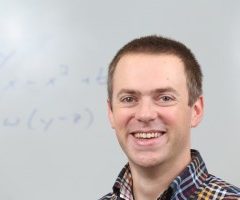
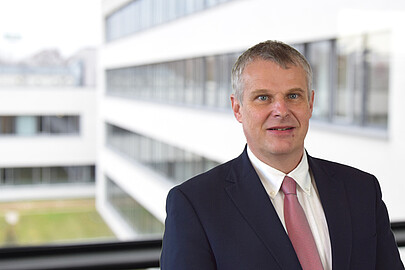
Christopher Robert Windows-Yule is Associate Professor in Chemical Engineering at the University of Birmingham and Turing Fellow. He holds a joint appointment with the School of Physics and Astronomy's Positron Imaging Centre. His research focuses on particulate, fluid, and multiphase system dynamics, developing novel experimental and numerical techniques including Positron Emission Particle Tracking (PEPT), X-Ray Tomography, and Discrete Element Method (DEM) modeling. Windows-Yule investigates fundamental and applied problems across diverse systems: vibrofluidized/gas-fluidized beds, high shear mixers, rotating tumblers, hopper flows, and microgravity environments. His work combines advanced experimental methods with computational modeling to optimize industrial processes in chemical, food, pharmaceutical, and energy sectors. As part of the Birmingham Plastics Network, he contributes to interdisciplinary research on sustainable plastics solutions. His industrial collaborations leverage particle technology expertise to address challenges in catalyst design, powder processing, and energy-efficient manufacturing.
Dr.-Ing. Karin Schwarzenberger is Group Leader for Interfacial Phenomena at Helmholtz-Zentrum Dresden-Rossendorf (HZDR) and since 2020 deputy group leader for the Chair of Transport Processes at Interfaces at TU Dresden. She has been continuously affiliated with TU Dresden’s Faculty of Mechanical Engineering since 2003, advancing from diploma studies through PhD to post-doctoral and leadership roles. Education: Doctoral studies (Dr.-Ing.), TU Dresden, Faculty of Mechanical Engineering, 2010–2015 Thesis: “Experimental Investigations on Stationary Solutal Marangoni Instability” Diploma in Process Engineering, TU Dresden, 2003–2010 Diploma Thesis: “Calculation of Interaction Energies between Fractal Aggregates” Research Interests Karin Schwarzenberger’s work centers on interfacial transport phenomena, pattern formation, and multiphase flows. Key areas include: Interfacial dynamics at liquid/liquid and liquid/gas boundaries Particle–particle and particle–interface interactions Solutal Marangoni instabilities and convective structures Coacervation and complexation of polymers and surfactants Microgravity effects on buoyancy-driven instabilities Her experimental approach combines high-resolution optical diagnostics with numerical simulations to unravel the coupling between mass transfer, surface tension gradients, and hydrodynamic instabilities. Publication Trends Between 2012 and 2025 Schwarzenberger has published more than 30 peer-reviewed articles. Recent work (2022–2025) demonstrates a clear shift toward applied interfacial engineering—surface functionalization of Ti64 alloys, foam fractionation for protein purification, and coacervation-based membrane formation—while maintaining fundamental studies on Marangoni convection and buoyancy-driven instabilities under microgravity. Scientific Awards No specific awards are mentioned in the provided materials. Advising & Funding While the text does not list individual students, her role as group leader at HZDR and deputy chair leader at TU Dresden implies supervision of doctoral researchers and technical staff. Funding is implicitly provided through Helmholtz Association programmes and collaborative projects with TU Dresden. Labs & Teams She heads the Interfacial Phenomena group at HZDR, located in building 310 at Bautzner Landstrasse 400, Dresden. The group operates state-of-the-art optical measurement techniques (PIV, LIF, high-speed imaging) and performs experiments both in the laboratory and under microgravity conditions (parabolic flights).
Dr. Achim Sack is affiliated with the Friedrich-Alexander-Universität Erlangen-Nürnberg, contributing to research in granular matter physics, fluid dynamics, and microgravity experiments. His work spans interdisciplinary fields including medical imaging, materials science, and computational physics. He has collaborated extensively with Prof. Thorsten Pöschel and others on topics such as granular dampers, robotic grippers, and pharmaceutical stability analysis using tomographic techniques. Key research themes include understanding granular dynamics under microgravity conditions, developing imaging technologies for material characterization, and exploring the behavior of fluids and particles in extreme environments. His publications highlight advancements in neural network-based image reconstruction (TSS-ConvNet) and novel experimental setups for studying crack propagation and structural defects in pharmaceuticals. Recent articles (2024) focus on acoustically propelled macroparticles and automated tomographic assessment of freeze-dried drugs, reflecting trends toward integrating machine learning with traditional experimental methods. His work bridges fundamental physics with applied engineering solutions, particularly in space-related technologies and biomedical applications. No scientific awards are explicitly mentioned in the provided texts. Dr. Sack’s lab collaborations involve designing granular grippers and investigating granular jamming phenomena. His research has been supported by experimental facilities such as X-ray tomography setups and high-resolution imaging systems, with a focus on advancing both theoretical models and practical applications in materials science and robotics.
Prof. Dr. Maik Böhmer is a Professor at the Biozentrum of Goethe University Frankfurt, leading the Dept. Böhmer within the Institute MBW. His research focuses on plant responses to gravity, environmental stress, and microbial interactions. He investigates gravitropism mechanisms using advanced platforms like drop towers and parabolic flights. Key areas include guard cell function, stomatal immunity, and microgravity effects on plant physiology. Research interests span gravitational biology, plant stress signaling, and nanobiotechnology. Collaborations include space agencies (e.g., ESA) and interdisciplinary projects like ARABIDOMICS and FUTUREFORGE. His lab explores calcium signaling, hormone regulation, and protein kinases in stress adaptation. Tim Lange, a former advisee, received a master’s thesis award in plant science (2025). Publications highlight innovations in plant nano-biostimulants, thermal management systems for microgravity experiments, and structural studies of chloroplast heat responses. Ongoing work aims to enhance plant resilience through molecular and nano-technological approaches.
Heinz Pitsch is a Professor at the Institute for Technical Combustion at RWTH Aachen University. His research focuses on combustion science, particularly in hydrogen flames, NOx formation, and the application of artificial intelligence in fuel design. He is actively involved in computational fluid dynamics (CFD) and reaction kinetics, addressing challenges in renewable fuels and turbulent combustion. Research Trends : His recent publications highlight advancements in modeling turbulent premixed flames, hydrogen combustion under microgravity, and AI-driven fuel optimization. Key themes include thermodiffusive instabilities, soot formation mechanisms, and radiation effects in laminar flames.
Markus Pietras serves as a Professor in the Department of Aerospace Engineering at the Faculty of Engineering, Munich University of Applied Sciences. He holds dual administrative roles as Head of the Aerospace Engineering Master's Program (LRM) and Member of the Examination Board for the same program, based in Room R 4.061 at the Lothstraße 64 campus in Munich. His research spans critical aerospace domains with emphasis on Space Systems, Satellite Technology, and Space Mechanisms and Robotics, complemented by advanced manufacturing expertise in Additive Manufacturing and In-Space Manufacturing. These interconnected fields drive innovation in spacecraft design and extraterrestrial production capabilities: Space Systems (orbital dynamics, mission architecture) Satellite Technology (payload design, subsystem integration) Space Mechanisms and Robotics (actuators, manipulators for microgravity) Additive Manufacturing (metal/polymer 3D printing for aerospace) In-Space Manufacturing (on-orbit fabrication, resource utilization) Prof. Pietras actively translates these research areas into educational contexts through dedicated laboratory facilities supporting hands-on student development. He oversees three specialized laboratories that form the practical foundation of his research and teaching: KCA Laboratory (Design and CAx - Computer-Aided Engineering) Space Lab (satellite subsystem testing) In-Space Manufacturing Lab (prototyping for extraterrestrial environments)
Enno Giese is a Professor at the Institute for Applied Physics, focusing on theoretical quantum optics and cutting-edge applications in atom interferometry. His research explores gravitational physics, quantum sensing, and nonlinear optics, with a particular emphasis on precision measurements and quantum technologies. Key projects include the development of entanglement-enhanced atomic sensors for microgravity environments and the study of relativistic effects in atom interferometry. His work spans topics such as gravitational wave detection, quantum imaging beyond the standard quantum limit, and the quantum regime of free-electron lasers. Recent studies include the application of synthetic quantum holography and the optimization of higher-order atomic diffraction techniques. Giese collaborates on space-based experiments, such as the Cold Atom Lab on the International Space Station, to advance gravitational physics and quantum metrology in microgravity. His publications reflect a deep engagement with foundational questions in quantum mechanics, including angular momentum conservation at the single-photon level and the interface between gravity and quantum systems. While no awards are explicitly listed, his contributions to theoretical quantum optics have likely impacted the field significantly.
Dr. Anne Krause is a researcher at the Institute for Training Science and Sports Informatics at the German Sport University Cologne. She is actively involved in research related to neuromuscular control, motor rehabilitation, and the physiological effects of altered gravity, with a focus on sensorimotor adaptation and whole-body vibration therapy. Her work bridges sports science, clinical rehabilitation, and space medicine. Her research interests center on neuromuscular control , postural stability , and rehabilitation interventions , particularly in conditions such as cerebral palsy and in extreme environments like microgravity. She employs biomechanical and neurophysiological methods to investigate how the human motor system adapts to perturbations, loading conditions, and therapeutic stimuli such as vibration. Her work has implications for both athletic performance and clinical populations. The trend in her publications from 2013 to 2017 reflects a strong focus on neurophysiological adaptation , sensorimotor training , and rehabilitation technologies . Her studies span diverse environments—from clinical settings with cerebral palsy patients to parabolic flight experiments simulating space conditions. This interdisciplinary approach integrates sports science with neurology and aerospace medicine. Scientific Awards: No scientific awards mentioned in the provided text. Advising and Grants: There is no explicit mention of students advised or research grants obtained. However, her collaborative work with senior researchers at DSHS suggests active participation in funded research projects, particularly in biomechanics and rehabilitation science. She has contributed to pilot studies involving clinical populations, indicating engagement with translational research. Labs and Teams: Dr. Krause is part of the research team at the Institute for Training Science and Sports Informatics at DSHS Cologne, collaborating closely with Prof. Albert Gollhofer, Dr. Ralf Ritzmann, and Dr. Katrin Freyler. This group conducts high-level research in motor control, biomechanics, and space-related physiology, utilizing advanced laboratory setups including vibration platforms, motion capture systems, and participation in parabolic flight campaigns.
Jürgen Brillo is an Associate Professor at the German Aerospace Center (DLR), Institute for Materials Physics in Space in Cologne, Germany, where he holds the Chair of Foundry Engineering. His work focuses on experimental and theoretical investigations of metallic systems under space conditions. His research spans critical areas in materials physics: Fundamental solidification mechanisms Thermophysical properties of melting Containerless processing of metallic liquids Microgravity-driven material design Industrial applications in additive manufacturing Dr. Brillo leverages unique microgravity platforms—including the International Space Station (ISS), MAPHEUS sounding rockets, and parabolic flights—to eliminate gravity-induced phenomena like convection and sedimentation. This enables precise measurement of properties such as viscosity, surface tension, and density in supercooled metallic states, advancing high-entropy alloy development and biomedical implant materials. Recent institute experiments (May 2025) involved electromagnetic levitation of iron-cobalt alloys aboard the ISS. The Institute for Materials Physics in Space, where he operates, maintains specialized infrastructure like the Electromagnetic Levitator (EML) and conducts collaborative research on surface design, granular matter, and real-time solidification analysis. Dr. Brillo contributes to EU-funded projects including TEMPUS and QuantiCoM, focusing on space-based materials innovation for terrestrial industrial applications.
Pierre Haas is a Group Leader at the Max Planck Institute for the Physics of Complex Systems and the Max Planck Institute of Molecular Cell Biology and Genetics, alongside the Center for Systems Biology Dresden (CSBD). He holds academic appointments since 2021, focusing on biophysical mechanisms underlying morphogenesis. Previously, he was a Hooke Research Fellow (2020–2021) at the University of Oxford and a Nevile Research Fellow in Applied Mathematics (2017–2020) at the University of Cambridge. His education includes a PhD in Applied Mathematics from Cambridge (2013–2017), supervised by Prof. Raymond E. Goldstein, and a BA/MMath in Mathematics from Gonville & Caius College, Cambridge (2009–2013). Haas’s research interests center on the mechanics of morphogenesis, particularly cell sheet folding, epithelial mechanics, and nonlinear elasticity. His work integrates theoretical models with experimental systems like Volvox embryos and hepatoblast development. Recent studies explore how mechanical forces shape tissues, including buckling phenomena, stress distribution in epithelia, and the role of extracellular matrices in cell polarization. His publications span topics such as epithelial T1 transitions, Volvox embryonic inversion, and the biophysics of tissue pressure. While no scientific awards are explicitly listed, his interdisciplinary approach bridges applied mathematics, developmental biology, and materials science. Haas leads a research group at MPI and CSBD, actively contributing to systems biology and biophysical modeling.
Prof. Dr.-Ing. Ludger Overmeyer is a Professor and Executive Director of the Institute of Transport and Automation Technology at Leibniz University Hannover. He also serves as Deputy Chairperson of the Leibniz School of Optics and Photonics and holds leadership roles in multiple research initiatives including the Hannover Centre for Optical Technologies (HOT) and the PhoenixD cluster. His work spans automation technology, optical production systems, laser material processing, and space manufacturing. Overmeyer has led over 30 research projects funded by agencies like BMBF and DFG, focusing on additive manufacturing, microgravity experiments, and industrial logistics. He has pioneered innovations in conveyor systems, autonomous vehicles, and optoelectronic integration. His lab, the Einstein-Elevator, enables microgravity research for advanced manufacturing and materials science. Overmeyer has extensive industry collaboration with companies like Mühlbauer AG and LPKF, bridging academic research with industrial applications. Education highlights include a doctorate in Mechanical Engineering from Leibniz University (1996) and over 20 years of industrial R&D experience before academia. His teaching covers transport technology, laser processing, and optoelectronic systems. Current research emphasizes space manufacturing, AI-driven production, and sustainable logistics solutions. His team develops cutting-edge technologies like optical networks via flexographic printing and cold plasma experiments under microgravity conditions.
Dr. Naceur Gaaloul is a Researcher at the Institute of Quantum Optics within the Faculty of Mathematics and Physics at Leibniz University Hannover. His primary research focuses on quantum sensing, atom interferometry, and ultra-cold quantum gases. He is affiliated with the QUEST Leibniz Research School and the Laboratory for Nano and Quantum Engineering, emphasizing interdisciplinary collaboration in quantum technologies. His work spans theoretical and experimental advancements in atom interferometry, including gravitational measurements, quantum metrology, and space-based applications. Notable contributions include the development of long-baseline atom interferometers, Casimir-Polder interaction studies, and precision sensing techniques for gravitational and magnetic fields. Dr. Gaaloul also contributes to space missions like the Bose-Einstein Condensate and Cold Atom Laboratory (BECCAL) and the CARIOQA-PMP quantum accelerometer pathfinder. Research interests include quantum gas manipulation, BEC engineering, and the application of quantum technologies in microgravity environments. His publications highlight innovations in interferometric design, sensor software, and collaborative workshop outcomes for advancing quantum instrumentation.
Dr. Christoph Lotz is a Researcher and Team Leader at the Institute of Transport and Automation Technology within the Faculty of Mechanical Engineering at Leibniz University Hannover. He leads the Production in Space team and manages the Einstein-Elevator facility, a unique drop tower enabling microgravity research. His roles also include overseeing the Task Group M4: Machines, Automation and Organization and contributing to the QUEST Leibniz Research School . His research focuses on microgravity engineering , with expertise in additive manufacturing processes under space conditions, laser-based material processing, and advanced experimental facilities. Key projects involve developing in-space manufacturing technologies like laser metal deposition and ultrasonic levitation systems, alongside gravitational physics experiments using atom interferometry. Lotz’s work spans the Exzellenzcluster PhoenixD and HITec – Hannover Institute of Technology , emphasizing interdisciplinary collaboration. His facility innovations, such as the Einstein-Elevator, enable studies from 0g to 5g environments, supporting both academic and applied research in space technologies.
Dr. Tatiana Gambaryan-Roisman is an Adjunct Professor (Apl. Prof.) at Technische Universität Darmstadt, where she leads the research group Interfacial Transport and Complex Wetting . She holds a D.Sc. in Mechanical Engineering from Technion and completed her habilitation in Heat Transfer at TU Darmstadt. Her research explores interfacial phenomena, including droplet dynamics, evaporation/condensation, and heat transfer enhancement using nanostructured surfaces. Her work integrates experimental and computational methods to study: Drop impact on heated/deformable substrates Marangoni convection in thin films Wetting of porous and textured materials Nanoparticle assembly and battery interface engineering Recent publications focus on droplet coalescence, evaporation kinetics, and lithium-ion battery interfaces, demonstrating consistent innovation in thermal-fluid sciences. She coordinates EU projects like nanoPaInt and has led the Emmy Noether Research Group. Awards include: Ralf-Dahrendorf Prize for European Research (2019) Emmy Noether Grant (2002–2009) Minerva Fellowship (1998–2000) She serves on editorial boards for Experimental Thermal and Fluid Science and Current Opinion in Colloid & Interface Science , and organizes international conferences like Droplets 2021.
Alla Podolny is an Advanced Lecturer in the Department of Mathematics and Statistics at Loyola University Chicago. She holds a B.S. in Mathematics, Physics, and Education from Samara State University, and a Master's and Ph.D. in Applied Mathematics from Technion - Israel Institute of Technology. Her research focuses on nonlinear wave theory, viscous flow stability, pattern formation in fluid systems, and convection phenomena in microgravity environments involving nanofluids. Dr. Podolny's academic journey includes a postdoctoral fellowship at Northwestern University's Department of Engineering Sciences and Applied Mathematics, where she modeled biological cell preservation. She has taught extensively across Russia, Israel, and the U.S., including Precalculus, Calculus, Multivariable Calculus, and Differential Equations at Loyola and previously at Lake Forest College (part-time). Her work has been recognized with prestigious awards, notably the Fulbright Post-Doctoral Fellowship. Podolny's research explores complex fluid dynamics problems, particularly surface-tension-driven instabilities in binary solutions and nanofluids under thermodiffusion effects, contributing to both theoretical and applied mathematics. She currently serves Loyola's Mathematics and Statistics department, balancing teaching and research interests in fluid mechanics and nonlinear systems. Her office is located in BVM Hall 408.